A Missed Opportunity and Two Personalities: Prince Sabahaddin and Said Nursi
This essay explores a missed opportunity in Ottoman history (1900-1920) through the lens of two influential figures, Prince Sabahaddin and Said Nursi, whose ideas could have steered the empire in a different direction.

Dear Readers,
Societies are like individuals. Societies also have a memory and a subconscious. Just like individuals, societies grapple with their past, regret wrong decisions, and even feel remorse, engaging in self-criticism by saying, "Oh! If only I hadn't missed that opportunity."
In this article, I want to revive a period from the past and share with you a great opportunity that I believe the Ottoman Empire missed between 1900 and 1920. I know you might rightly think, "What's done is done! The past is in the past."
My aim is to draw your attention to the fact that, like individuals, societies also have crucial "turning points" or "brief periods" that determine their future, and in a sense, to give us a chance to look at ourselves and the society we live in with a critical eye.
INTRODUCTION
In today's article, I want to introduce you to a little-known period and two equally little-known or misrepresented personalities. We know that societies without historical consciousness drown in their own internal struggles. The Republican History textbook taught in high school was full of prejudices and distortions. We can only understand this today, looking back. It is, of course, saddening to see that this understanding is still stubbornly maintained.
By examining two great personalities, Prince Sabahaddin and Said Nursi, who were misrepresented to us through distortions and deliberate falsehoods, I want to evaluate a significant opportunity missed by the Ottoman Empire and honor the spiritual legacy of these two great figures.
THE MOST DIFFICULT YEARS OF THE OTTOMAN EMPIRE (1900-1920)
Between 1900 and 1920, the Ottoman Empire experienced a profound upheaval. A political, social, and economic earthquake shook, destroyed, fragmented, and dispersed the 6-century-old empire with all its might. Each aftershock created irreparable wreckage, and across a geography stretching from the Balkans to Africa, despair, hunger, forced exiles, military defeats, changes in power, opposition, denunciation, espionage, assassinations, coups, dictatorships, wars, deportations, and suffering followed one another. We can summarize these events, which fit into a 20-year period, under the following main headings:
- First Young Turk Congress (February 4, 1902)
- Proclamation of the Second Constitutional Era (Constitutional Monarchy) (July 23, 1908)
- Elections held, victory of the Committee of Union and Progress (Union and Progress) (1908)
- Opening of the Ottoman Chamber of Deputies (Parliamentarians' Assembly) (December 4, 1908)
- Assassination of journalist Hasan Fehmi by the Committee of Union and Progress, followed by the 31 March Incident (1909)
- Deposition of Sultan Abdulhamid II (April 27, 1909), his exile to Thessaloniki, and his detention in the Alatini Mansion
- Start of the First Balkan War (October 7, 1912)
- Enver Pasha's raid on the Sublime Porte (Grand Vizierate/Prime Ministry), seizing power by force (January 23, 1913)
- Start of the Second Balkan War (June 16, 1913)
- Start of the First World War (July 28, 1914)
- Sarıkamış Operation (Disaster) (December 22, 1914)
- Gallipoli Campaign / Victory (February 19, 1915)
- Armenian Deportation (April 24, 1915)
- Armistice of Mudros (October 30, 1918)
- Establishment of the Kurdish Teali (Elevation) Society (December 30, 1918). I want to make a note regarding this society. The Kurdish Teali Society was the most inclusive of all Kurdish parties or societies established before or after it. This includes the Azadi organization led by Cibranlı Halit Bey and the Hoybun (Xoybûn) society founded on October 5, 1927. The Kurdish Teali Society encompassed all languages and sects of Kurdistan under Ottoman and Iranian rule. Its president was Seyit Abdülkadir, son of Sheikh Ubeydullah Nehri. Since Sheikh Ubeydullah Nehri rebelled against both the Iranian state (Qajar Dynasty) and the Ottoman State, it is possible to say that the Kurdish Teali Society was the first Kurdish society to embrace all of Kurdistan with all its colors. Said Nursi was also a member of this Society. Due to the "Treaty of Sèvres" signed on August 10, 1920, 3 km west of Paris, a dispute arose among the Society's members. Said Nursi and his friends wrote a letter on December 22, 1920, to protest Kurdish Şerif Pasha and Armenian Bogos Nobar Pasha: "Kurds, who have lived as loyal and brave supporters of Islam for four and a half centuries and have made adherence to religious traditions their goal, cannot act against their religion by signing peace agreements with our historical and vital enemy, while the blood of five hundred thousand martyrs has not yet dried, and while they remember with sorrow the orphans impaled on skewers and the elders whose eyes were gouged out. Therefore, the Kurdish national conscience should be informed that it does not recognize those who sign such agreements and that their aspirations are to unite their religion and nationality..."

16. Mustafa Kemal Pasha's landing in Samsun (May 19, 1919), Erzurum and Sivas Congresses
17. Acceptance of the Misak-ı Milli (National Pact) by the Ottoman Chamber of Deputies (January 28, 1920)
18. Occupation of Istanbul and dissolution of the Ottoman Chamber of Deputies (March 16, 1920)
19. Opening of the Grand National Assembly in Ankara (April 23, 1920)
20. Signing of the Treaty of Sèvres (August 10, 1920)
It is impossible to evaluate the history of the Republic without understanding or internalizing the events of this twenty-year period. Unfortunately, it has become a tradition to skip this period or deliberately sever its connection with the Republic, starting everything with the Republic proclaimed on October 29, 1923.
However, there is an important point we must not forget: Mustafa Kemal Atatürk's personality was shaped by the events of this period; in a sense, he matured amidst the chaos that lasted for 20 years, moving step by step towards his goal.
We see 19-year-old Mustafa Kemal, a second-year student at the Mekteb-i Harbiye-i Şahane (War College) in Istanbul in 1900, as President of the Grand National Assembly opened in Ankara on April 23, 1920, twenty years later.
SULTAN ABDULHAMID II AND THE OPPOSITION

Sultan Abdulhamid II ascended to the throne on August 31, 1876. On December 23, 1876, he proclaimed the Kanun-ı Esasi, the first Ottoman Constitution. The bicameral Meclis-i Umumi (General Assembly) opened on March 19, 1877. Soon after, on April 12, 1877, the Ottoman-Russian War, known as the 93 War, broke out. While the war continued, he closed the Assembly on February 18, 1878. The war ended with the Treaty of San Stefano on March 3, 1878. Territorial losses occurred during the war.
The Ottoman Empire took root as a Balkan state. The empire's first military force, the Janissaries, consisted entirely of Christian children recruited from the Balkans. Turks lived side-by-side with the local Christian population in a vast geography extending to the borders of Austria and Italy. The Janissary Corps was abolished on March 15, 1826. In 1829, Greece declared its independence. From that day on, other nations in the Balkans also began to move towards gaining their independence. These externally supported rebellions gained increasing strength, giving the empire no respite.
Interestingly, while Tsarist Russia incited and encouraged the Slavic-origin peoples in the Balkans towards independence, the Ottoman Empire could not respond by reaching out to the Turkic peoples such as Uzbeks, Turkmens, and Kazakhs within Tsarist Russia's borders because the nation-state consciousness among Central Asian peoples was not as high as among the peoples living in Europe. The Balkans were primarily affected by events in Europe, pursuing the dream of establishing their nation-states. In this sense, Tsarist Russia had a psychological and military advantage compared to the Ottoman Empire. In short, the Ottoman Empire was helpless.
Under these difficult conditions, Sultan Abdulhamid moved to change the empire's vision. He defined the new goal of the cosmopolitan empire, which encompassed peoples of all languages and religions: accordingly, the Ottoman Empire would be reshaped to be based solely on the Muslim population. He formed the Kurdish Hamidiye Regiments against the Christian Armenians in Anatolia. He emphasized Islamic values. He distanced himself from the Christian subjects.

Sultan Abdulhamid, as if foreseeing the Balkan Wars of 1912-13, believed that the Christian peoples in the Balkans would establish their nation-states, and acted with the thought, "How can I at least keep the Muslim population within the empire's borders?" Because he emphasized Islamic values, in later years, Sultan Abdulhamid would be unfairly referred to as the "Reactionary" Sultan. However, he had determined a correct strategy, taking steps to consider it a success if he could keep any territory within the empire's borders under difficult conditions.
An opposition front formed among intellectuals against Sultan Abdulhamid. Members of the opposition lived especially in European cities like Paris, communicating among themselves through a secret network. In later years, these intellectual opposition movements, which developed intertwined and constantly changed in content, emerging from one another like Russian matryoshka dolls, can be listed as follows:
Young Ottomans
↓
Young Turks
↓
Committee of Union and Progress
No Sultan before had struggled with an opposition composed of intellectuals rooted in Europe, with centers in Switzerland and France. Sultan Abdulhamid's task was not easy.
PRINCE SABAHADDIN
Prince Sabahaddin was born in Istanbul on February 13, 1879. When the decision to exile the Ottoman Dynasty abroad was made on March 3, 1924, he left Turkey never to return, and died in exile in Switzerland on June 30, 1948.
His father was Mahmud Celaleddin Pasha, son of Georgian Halil Rıfat Pasha and one of the Ottoman Ministers of Justice; his mother was Seniha Sultan, daughter of Sultan Abdülmecid and sister of Sultan Abdülhamid. He became known by the name "Prince Sabahaddin" because he used this pseudonym when signing his writings during his years in France.
Prince Sabahaddin is one of the first Turkish intellectuals to work in the field of sociology. He advocated for liberalism and the strengthening of local administrations (decentralization).
Everything changed with the proclamation of the Second Constitutional Era on July 23, 1908. In November and December of the same year, parliamentary elections were held. Two parties participated in the elections: the Ahrar Fırkası (Freedom Party), of which Prince Sabahaddin was the founding and honorary president, and the Committee of Union and Progress, chaired by Enver Pasha. In the elections, the Committee of Union and Progress secured the majority, and the III. Meclis-i Mebusan (Chamber of Deputies) opened on December 17, 1908.

Prince Sabahaddin and Enver Pasha represented two completely opposing views. To summarize briefly, Prince Sabahaddin emphasized the liberal economy and the system of strengthening local administrations (decentralization) envisioned by the Anglo-Saxon (England and America) school, while Enver Pasha adopted the German school, i.e., the centralized system. In later years, Ziya Gökalp and Mustafa Kemal Pasha also adhered to the centralized view.
Prince Sabahaddin's "liberal" views found partial application with the Democratic Party's (DP) coming to power in 1950, but no one dared to advocate for the idea of strengthening local administrations. The reason for this was the Kurdish Rebellions during the Republican period. Even today, the idea of strengthening local administrations is in a sense equated with the idea of granting "autonomy" to the Kurds. All of this is proof of Prince Sabahaddin's high foresight.
We might ask what would have happened if Prince Sabahaddin's honorary presidency, the Ottoman Ahrar Fırkası (Freedom Party), had won the 1908 elections. The answer to this question has always been overlooked.
As I stated earlier, the main political views of the Ahrar Fırkası were:
Liberalism, freedom of private enterprise, decentralization (strengthening local administrations, i.e., limiting central authority), and individuality. (I would like to remind you again: the words "individuality" and "individualism" should not be confused. "Individuality" includes the spirit of solidarity, while "individualism" is mostly used in the sense of selfishness.)
The Ahrar Fırkası was accused of separatism due to its "decentralization" view. That is, the label of "separatism," which is now a common refrain, dates back to the time of Prince Sabahaddin.
In the elections, the Ahrar Fırkası managed to elect one deputy. In the Chamber of Deputies, the Ahrar Fırkası did not remain idle; it formed an opposition group of 50-60 people with minority and independent deputies, targeting the Committee of Union and Progress. Enver Pasha, who favored dictatorship and a single voice, was disturbed by this situation. He needed to provoke something. Soon, this opportunity arose. Journalist Hasan Fehmi was assassinated by the Committee of Union and Progress. This event triggered the 31 March Incident (1909). Enver Pasha's aim was for Sultan Abdulhamid's supporters to react and reveal their identities. Only in this way could he get rid of those who openly supported Sultan Abdulhamid.
History books and some of our historians (!) present the 31 March Incident to us as a "reactionary uprising." This is a complete lie and distortion.
The truth is different: Enver Pasha aimed to kill two birds with one stone with this assassination. On the one hand, to get rid of the Ahrar Fırkası and Prince Sabahaddin, and on the other hand, to crush the supporters of Sultan Abdulhamid, who had been removed from the throne, in such a way that they would never recover. In short, Enver Pasha, with a brilliant assassination, provoked Sultan Abdulhamid's supporters, in a sense trapping them.
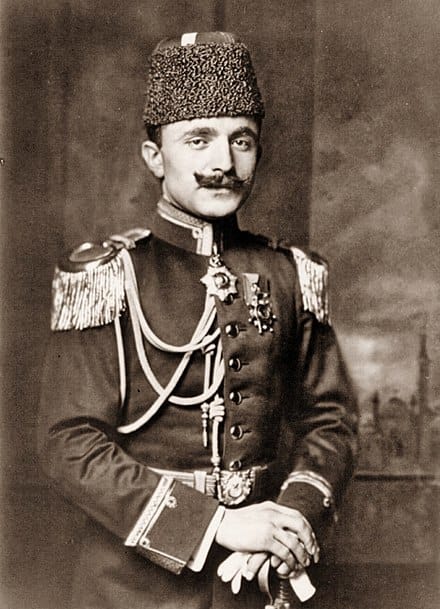
Enver Pasha succeeded in both his goals. Prince Sabahaddin and a friend were tried in a court-martial but were acquitted and released. A significant portion of the party members fled abroad. The Ahrar Fırkası, which suddenly became dust and smoke, was forced to dissolve itself in 1910.
The Army of Action, commanded by Mahmut Şevket Pasha, affiliated with the Committee of Union and Progress organization in the Balkans, came to Istanbul, entered Enver Pasha's service, and supposedly purged the reactionary elements. Unfortunately, Kolağası (Senior Captain) Mustafa Kemal, who served in the Army of Action in those years, also fell into the trap of Enver Pasha's lust for power. Many Republican historians presented the 31 March Incident as a reactionary rebellion merely to glorify Kolağası Mustafa Kemal.

Enver Pasha, with the raid on the Sublime Porte (Grand Vizierate), forced Grand Vizier Kamil Pasha to resign and rewarded Mahmut Şevket Pasha by making him Grand Vizier. However, Enver Pasha could not tolerate Mahmut Şevket Pasha's own ambition for dictatorship, and had him assassinated and eliminated in 1913. Now all power was concentrated in Enver Pasha's hands. (The raid on the Sublime Porte is, in a sense, the first example of military coups experienced throughout the Republican period.)


Looking back, the two fundamental views advocated by Prince Sabahaddin, liberalism and the project of strengthening local administrations, are still at the forefront of the political agenda. If Prince Sabahaddin and his friends had won the 1908 elections, with the policies of liberalism and strengthening local administrations they would have implemented, they could have given the Ottoman Empire a new direction, even prevented territorial losses in the Balkans and the Middle East, and most likely prevented the empire's disintegration by siding with England and America instead of Germany in the First World War.
Now, I want to introduce you to the second great personality, Said Nursi, whose intelligence and foresight I believe the Ottoman Empire failed to utilize.
SAID NURSI

Kurdish history in the 20th century had to face the "TWO SAIDS" event twice. The fact that Said Nursi and Sheikh Said lived in the same period at the beginning of the century caused confusion in later years. Even today, many writers and intellectuals confuse the names of both "SAID"s.
Perhaps it will suffice to say this much: Sheikh Said was the initiator and leader of the "Sheikh Said Rebellion," which is considered the largest Kurdish uprising that broke out in 1925. He and his friends were captured and executed. Said Nursi, who made a name for himself in the same historical period, not only did not participate in the Sheikh Said Rebellion but was another important figure who tried to dissuade those who set out to join the rebellion by saying, "It is a sin to draw a sword against a nation that has protected the Islamic Caliphate for a thousand years!"
The second "TWO SAIDS" event occurred in the 1960s. Sait Elçi, the secret leader of the Kurdistan Democratic Party in Turkey, and Sait Kırmızıtoprak (Doctor Şıvan), the leader of the Kurdistan Democratic Party in Turkey, confronted each other. However, given the content of this article, these names are outside our scope, so I do not want to elaborate further.
THE "LIGHT" BORN IN NURS VILLAGE
Said Nursi was born in 1878 in the village of Nurs, Hizan district of Bitlis, to Kurdish parents. He was the fourth of seven children. His mother's name was Nuriye, and his father's was Sofi Mirza. His father earned his living through farming.
Said Nursi showed his superior talents as a child. He read constantly. His curiosity was at a high level. At the age of 15, due to his extraordinary performance in a religious debate, his teacher deemed him worthy of the title "Bediüzzaman," meaning "The perfect man of the age."
Said Nursi received education in the most famous madrasahs of his time and trained himself to the highest level. Said Nursi divides his life into two periods: the period until 1923, the establishment of the Republic, and the period from 1923 until his death. He called the first "Old Said" and the second "New Said." In the first period, he used the nickname "Said-i Kürdi," and in the second period, because the expression "Kurdish" was forbidden, he used the nickname "Said Nursi."
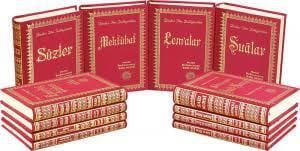
From 1923 until his death in 1960, Said Nursi's life was spent in exiles, prisons, house arrests, and courts. He endured countless hardships and sufferings. He was subjected to various insults. Said Nursi, with extraordinary will and determination, resisted the pressures against him, virtually carving the Risale-i Nur into prison stones with his fingers.
There are very few individuals in human history who have displayed a similar stance. Despite being poisoned numerous times and having his ties with his family and students severed, he passed away, leaving behind hundreds of thousands of Nur students. This article will focus more on the Old Said, or Said-i Kürdi, during the years 1900-1920.
However, I think it is useful to consider a few important points about the "New Said" during the Republican period.
First, I want to summarize Said Nursi's experiences between 1923 and 1960 under main headings:
- Said Nursi was invited to Ankara by Mustafa Kemal Pasha in 1923. A disagreement arose between the two regarding the role of religion in the new Republic to be established. Said Nursi returned to Van, climbed Mount Erek, and went into seclusion.
- Although Said Nursi did not participate in the Sheikh Said Rebellion, he was affected by the Law on the Exile of Aghas and Beys issued in 1926 and was exiled to the village of Barla in the Eğridir district of Isparta. During his eight years of exile, Said Nursi wrote the Risale-i Nur collection and also laid the foundations of the core Nur Community.

- His activities in Barla were deemed suspicious, and he was exiled to Isparta in 1934.
- In 1935, a lawsuit was filed against him in the Eskişehir High Criminal Court on charges of "forming a secret society and overthrowing the fundamental order of the regime," and he was sentenced to eleven months in prison.
- After serving his prison sentence in 1936, he was exiled to Kastamonu for 7 years.
- In 1943, he and 126 of his students were arrested on charges of "overthrowing the fundamental order of the regime" and sent to Denizli prison. He remained imprisoned for 9 months.
- Upon his acquittal, he was taken to Emirdağ and condemned to forced residence there.
- In 1947, he was again arrested with the same accusations and sent to Afyon prison with 54 of his students. He remained in prison for approximately 20 months. From there, he was again taken to Emirdağ.
- In 1952, he came to Istanbul for a lawsuit filed regarding his work "Gençlik Rehberi" (Youth Guide) and was acquitted in this case. In 1953, he returned to Emirdağ.
- He came to Istanbul for the second time and stayed there for three and a half months. His subsequent life was generally spent in Emirdağ and Isparta.
- Meanwhile, he was involved in delivering the Risale-i Nur to people from different segments of society, and also protected his students by meeting with official authorities due to lawsuits filed against some Nur students in certain provinces.
- Due to the Democratic Party government, which came to power in 1950, not having a negative view of the Risale-i Nur movement, the treatises were printed in printing houses during this period and sent to various countries such as Egypt, Pakistan, the USA, and Italy, as well as Anatolia.
- Said Nursi died in Şanlıurfa on March 23, 1960, and was buried in the Urfa Halil-ur Rahman Dergahı. Soon after, the May 27 Coup occurred. By order of the Military Junta, his grave was demolished on July 12, 1960, and his body was taken to an unknown location. Today, the location of Said Nursi's grave is unknown.
If we summarize Said Nursi's worldview in two words, we can say this: Science and modern sciences are beneficial for humanity. They cannot be rejected. However, "science" not clothed in the mantle of "faith" will be harmful, not beneficial, for humanity. Therefore, new generations will be successful in science and modern sciences as long as their faith is strong.
Indeed, it is possible to say that in countries like Japan, South Korea, and America, new generations are taking strong steps thanks to a "mantle of faith" that religion and traditions wear without making themselves overtly apparent. A few of the fundamental values necessary for "faith" can be listed as follows: honesty, diligence, discipline, respect, loyalty, generosity, courage, etc., which are human qualities emphasized since Greek Mythology.
FAITH AND SPIRIT
The lines you will read below are my personal opinions.
It is impossible to know or understand humankind without understanding the relationship between faith and spirit. In nature, every beauty feels safe and develops within a protective layer. Trees have bark. Bark protects the tree from cold and heat. Similarly, for example, the shell of a walnut protects the beauty, i.e., the seed, inside. This can be seen in all kinds of vegetables and fruits. If there were no atmosphere, there would be no life. The atmosphere surrounding our world acts as a natural environment, a protective shell, that ensures the continuation of living things.
The human spirit, left to itself, is naked and sensitive. It can be easily affected and easily harmed by everything. Humankind can protect its spirit from external factors only with the "armor of faith." To have faith, one does not need to be a devout Muslim or Christian. Having a conscience, sharing the pain of others, being helpful and generous also contribute to the development of this armor of faith over time.
CONCLUSION
If the Ottoman Empire had embraced Said Nursi's call for "faith" and Prince Sabahaddin's slogan of "liberalism, individuality, and strengthening local administrations" between 1900 and 1920, it would undoubtedly have entered a different turning point.
Because Said Nursi's path was blocked during the Republican period and the idea of "Nurculuk" was considered dangerous, just like "Communism," the "Nurculuk" movement did not have the chance to express itself well. Said Nursi's true and original insights were ignored, and as if that were not enough, his ideas were distorted and alienated from their essence by individuals or communities such as Fethullah Gülen, Adnan Oktar, etc., and the resulting errors were unfairly attributed to Said Nursi.
I would like to remind those who see Said Nursi as an enemy of the homeland and nation:
When the First World War began, Said Nursi joined the army as an Imam of the Regiment. Later, he was appointed as the commander of a volunteer militia regiment by Enver Pasha. He fought with his students on the Caucasian Front. Some of his students died, and he himself was wounded, captured, and sent to a prisoner-of-war camp in Kostroma, northeast of Moscow.
An interesting situation occurred while he was in the prisoner-of-war camp. One day, the Commander-in-Chief of the Russian armies in the Caucasus (also the Tsar's uncle) visited the camp. The prisoners stood up. Said Nursi, who was drawing something on the ground with a tree branch in his hand, did not move from his seat. The Commander-in-Chief asked through an interpreter why he did not stand up. Said Nursi replied, "I was drawing the project of the Islamic University I will establish. My project is more important than your person."
Said Nursi was sentenced to death and brought before the execution squad. He refused to have his eyes blindfolded. As the soldiers were about to aim and fire, the Commander-in-Chief, admiring Said Nursi's determination and courage, prevented his execution.
Due to his determination and resolve shown in the war, he was awarded the War Medal at the end of his captivity. He was appointed as a member of the Dârü'l-Hikmeti'l-İslâmiye (High Islamic Council). Said Nursi is also a founding member of the Green Crescent.
I would like to conclude my article with a few words from Said Nursi:
"This turban goes with this head."
"God does everything well. God does everything beautifully."
"I can live without bread, but I cannot live without freedom."
"I was born and raised in the free mountains of Kurdistan. I have no fear of you!"