Japanese Spirit - Samurai - Janissary
This essay explores the author's journey learning Japanese and delves into a comparative analysis of the Samurai and Janissary military philosophies and their lasting cultural impact.

JAPANESE SPIRIT - SAMURAI - JANISSARY
Dear readers!
Many of you already know about my fascination with foreign languages. Japanese was once among the languages I spoke fluently. As you can appreciate, living in Turkey, my ability to speak Japanese has almost evaporated. For the past twenty years, I haven't had the chance to speak a single word of Japanese. Perhaps you're wondering how my interest in Japanese developed? If you like, I'd like to start from the beginning, explain my own situation, and then present to your attention the SAMURAI philosophy, which laid the foundation for very important behavioral and ethical rules that Japanese culture has contributed to humanity.

I was a final-year student at the Electrical Engineering Faculty of Istanbul Technical University (İTÜ) (1981). We didn't have much money. In those years, the Libyan Consulate was located a little above the İTÜ Gümüşsuyu Building. One day, as I was walking up towards Taksim, I saw a sign pasted on the consulate wall that read, "Free Arabic courses." I was very happy. I immediately registered. For my housemates, learning "Arabic" meant "reactionaryism" in a sense. They were not willing to come with me.
One day, I had finished my Arabic lesson at the Consulate and was walking towards the İTÜ Gümüşsuyu campus. At the university's entrance gate, this time, I saw a sign that read, "Free Japanese courses." Since my housemates were also interested, we started the Japanese course, which was held two hours a week. The university had allocated one of its empty classrooms for the Japanese course.
My first entry into the classroom is as clear in my mind today as it was then. On the platform in front of the blackboard was an extremely beautiful Japanese lady. The classroom was packed. My two friends and I found a place and sat down. The lesson began. Our Japanese teacher, in broken Turkish, said, "My name is Mariko Erdoğan." She bowed and greeted all of us. She distributed a bundle of papers she held to the class. There weren't enough papers.
I will continue after a brief note. There are four different alphabets in Japanese. Terrifying! These are Romaji, Hiragana, Katakana, and Kanji, respectively. Foreigners and Japanese elementary schools first use the Romaji alphabet. Romaji is the Japanese language written in the Latin alphabet. The paper Mariko distributed had Latin letters. Our job was easy because the words on the paper were read as they were written.
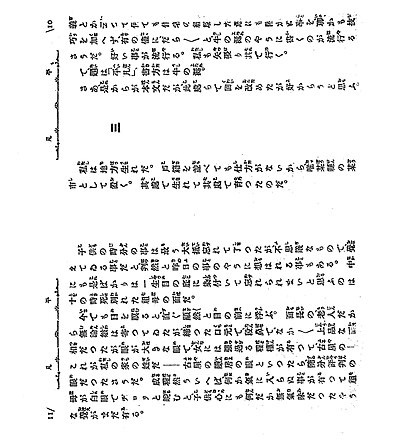
Mariko made a quick start. She approached a student and asked:
"Namae wa nan desu ka?" (What is your name?)
The student, of course, understood nothing, looking at Mariko and us with bewildered eyes. Mariko went to the blackboard, gave the necessary explanation. Moreover, she wrote the answer that should be given to such a question on the blackboard.
Mariko came back to the student and asked the same question. The student mumbled in a hesitant tone.
"Watashi no namae wa Hasan." (My name is Hasan.)
After testing a few students, Mariko asked everyone to ask this question to their friend next to them and get the answer. The classroom was filled with murmurs. When the lesson ended, we all left repeating the two sentences and bowing to Mariko.

(NOTE: Mariko Erdoğan was born in Tokyo in 1953. In 1979, she married a Turkish marine engineer and came to Istanbul. She first taught Japanese at İTÜ. In later years, she taught Japanese for 10 years at the Turkish-Japanese Women's Friendship and Culture Association. Since 1988, she has continued to work as a Japanese Lecturer in the History Department of Boğaziçi University's Faculty of Arts and Sciences. She is the first teacher to introduce Japanese to Turkey. I have always been proud to be one of her first students.)
When I came to the next lesson, I couldn't hide my surprise. Half of the class was empty. In the third lesson, half of the class emptied again. In the fourth lesson, there were only 6 of us left in the class. Mariko behaved with extraordinary patience to avoid losing us too, talking about Japanese traditions and customs in addition to the language, and even bringing some objects to the classroom to introduce Japanese art.
One day, we were invited to a film screening organized by the Japanese Consulate. The hall was full of people from all professions and age groups. The film began. It was impossible for us to understand the Japanese spoken in the film. There were English subtitles. However, the film was made with such a magnificent script that it was possible to understand and feel the film in your heart without reading the subtitles. After the film ended, I asked for the name of the film and the director. I realized that day we had watched one of the most important films of the famous director Akira Kurosawa, Seven Samurai. The impression the film left on me lasted for months. I was now deeply connected to Japanese culture through Mariko Erdoğan and Akira Kurosawa.

During the years I lived in Paris, there was an institution called "La Maison de la Culture du Japon." The Japanese Embassy sponsored it. It was a small building adorned with classical Japanese architecture, on the way to the opera house.
My real Japanese education began in Paris. The lessons were given by a young Japanese man named Kazuko, who was doing his doctorate in French Language and Literature. Since he spoke French well, he would explain things in French when necessary but quickly return to Japanese. He had a good grasp of the French psyche. The French are quite impatient. If they couldn't find an answer to a question that bothered them at that moment, their interest and desire would wane, and they probably wouldn't come to the next lesson. Kazuko, realizing this, explained unclear points in French, keeping the students' attention. He emphasized repetition and tried to get everyone to speak.
There was something else that motivated the French to come to class. Kazuko had placed a device similar to a samovar in a corner of the classroom. Anyone who wanted to, while watching the lesson, would get up without asking permission, fill their cup with aromatic Japanese green tea in the Japanese style, place it on their table, and sip their hot tea while watching the lesson.
Kazuko was an understanding teacher. The lessons were in the evening. Most of those who came to class were from the working class. Since they came to class without having a chance to grab a bite, hunger syndrome was bothering their nerves and distracting them. Kazuko had placed a basket next to the samovar containing very delicious Japanese cookies. Anyone who wanted to would drink their tea, eat their pastry, and watch the lesson. This increased the pleasure of learning in the classroom, creating a family atmosphere.
I was the best in the class. At home, on the subway, whenever I found time, I studied Japanese with pleasure, just as I used to read Texas and Tom Mix comics in my childhood. When I came first in the year-end exam, I won a three-month scholarship from the Embassy and went to Tokyo.
I stayed at a Japanese family's home and commuted to school. The owner of the house was a retired doctor. Whenever he had the chance, he would recount his memories of World War II. I would sit at the same table with them, using the chopsticks they called hashi. There were no forks or spoons at the table. At first, I held the chopsticks clumsily, and half of the rice would spill onto the table before I could get it to my mouth, which caused pleasant smiles from the couple.
As my Japanese speaking ability improved, our conversations about Japanese history and culture deepened. One thing caught my attention greatly. It was 1988. While everyone in France was competing to buy Japanese products, especially the latest model Sony televisions or Toyota/Honda cars, the television in the house where I stayed was probably a black-and-white television from the 60s. The answer I received when I asked why was very interesting:
"We lost the war. Two atomic bombs were dropped on our cities. We suffered greatly. A disciplined state policy was followed to rebuild Japan. According to this, the Japanese people would reduce consumption, produce export-oriented products as much as possible, thus ensuring a flow of foreign currency into the country, and with this foreign currency, oil, iron, and similar products would be purchased. That's why we were never eager to buy a new television. The car I use, as you can see, is very old. The state achieved its goal, Japan became one of the world's largest economies."
"Governments in other countries also followed similar policies but failed. What is the secret behind Japan's success?" I asked.
The doctor, with a war scar on his face, smiled and spoke in a whispering but praising tone: "We have the Samurai spirit."
As soon as I heard this sentence, my mind was in turmoil. I had watched Samurai movies, but I didn't know what the Samurai spirit was. During my stay, I sat with the old doctor every evening, discussing Japanese history and the Samurai spirit. I had learned a lot. Occasionally, I compared the Samurai to the Janissaries, the founding force of the Ottoman Empire, but as I understood the similarities and differences between them, my interest in the Samurai, who upheld the Japanese Spirit and power, grew. In this article, I will briefly compare the Samurai and Janissaries, reminding you of the importance of these two military organizations that once left their mark on history, and then conclude my writing.
SAMURAI
Samurai was a term used in ancient Japan for the noble warrior class. The word Samurai is derived from "saburau," which means "to serve." A Samurai was not just an ordinary soldier who killed enemies in battles. In addition to their impeccable warrior skills, they possessed a unique philosophy of life that encompassed social and ethical values. The short name for these ethical codes is Bushido. The Bushido tradition matured over the years and was passed down from generation to generation. Samurai viewed war as an art and were trained with this understanding.
You have probably all been to gyms or seen them in movies. Members who go to the gym exercise with heavy equipment and develop muscles. The bigger and stronger their muscles, the more superior and invincible they feel. This is not true for Samurai. To be superior and strong, one must first internalize the philosophy of Bushido.
In the Samurai tradition, there is a process of spiritual maturation. Above all, a Samurai must acquire self-discipline. A Samurai sees his own ignorance and inadequacy as his greatest enemy. In short, Bushido is a philosophy of enlightenment. The basic principles of Bushido philosophy are briefly as follows:
- Honesty and justice
- Courage and fearlessness
- Patience and endurance
- Benevolence and compassion
- Truthfulness and frankness
- Politeness
- Loyalty
- Self-knowledge and self-awareness
- HONOR
A good Samurai had to possess all the qualities listed above. These ethical values of the Samurai form the foundation of the Japanese Spirit and have continued uninterrupted to this day.
A good Samurai is not one who wields a sword well, but one who has internalized the fundamental values listed above. In Bushido philosophy, there are no thoughts or feelings such as losing, winning, the desire to live, or fear of death.
• Do not fall behind on the path of honorable warriorhood.
• Be useful to your lord.
• Show loyalty to your father.
• Fight passionately for people.
After explaining the Samurai spirit, which I summarized above, the old Japanese man with whom I was a guest in his home concluded his words as follows:
"The ethical values of the Samurai, called Bushido, have been adapted to today's modern Japanese society. Until the 19th century, Japan had different administrations under the Shogun. The modernization movement had begun in the world, the era of swords had ended, and firearms had come into use. After years of civil war, the Shogun administrations were overthrown in 1868, and the Meiji Empire was established. The Samurai did not want to surrender their swords. Through wars, the Samurai were destroyed or forced to commit seppuku (suicide). Thus, introverted Japan opened up to the outside world, and when it defeated the Russians in 1905, it became an invincible state that had to be taken seriously. Today, the Samurai are gone, but their philosophy lives in all our hearts."
Note: For those who want to understand the Samurai spirit, I especially recommend watching Director Inagaki's 1954 film "Miyamoto Musashi."
JANISSARY
Janissary was the name of a military class in the Ottoman Empire. As the Ottoman Empire expanded in the Balkans, Christian children aged 8-18 were collected and devshirme (trained). The Janissary Corps constituted the majority of the infantry section of the Kapıkulu Corps, which was loyal to the Sultan. The Janissary Corps was the most prestigious of the Kapıkulu Corps.

In battles, they were in the central column where the Sultan was located, and during the battle, the Sultan stood behind and in the middle of them on horseback. During campaigns and at encampments, the Janissaries would be around the Sultan and protect him.
The Janissaries protected Istanbul during peacetime. Until the 17th century, Janissaries consisted only of devshirme Christians. Later, with the inclusion of Muslims into the Corps, problems began to arise within the Janissary Corps. The Janissary Corps, like the Samurai, was not deemed suitable for modernization and was abolished by Mahmud II in 1826.
The foundation of the Janissary Corps was based on the Bektashi philosophy. In fact, from the 16th century onwards, Hacı Bektaş Veli was officially accepted as the spiritual leader of the Janissaries. The Bektashi order and the Janissary corps became so inseparable that when a dervish leader was elected as the head of the order, he would come to the Janissary barracks in Istanbul, and the Janissary Agha would place his crown on him. Bektashi dervishes and fathers always accompanied the Janissary Army on campaigns. This army was the primary force of the Ottoman State until 1826.
The organization of the Janissary Corps was built on three main pillars:
- Hunting
- Cooking
- Bektashism.
To accompany the sultans on their hunts, the Janissaries kept purebred dogs or hunting birds. Cooks formed the basis of the corps' organization. Head cooks were responsible for the moral education and discipline of the Janissaries. The cauldron was so important that Janissaries held their critical meetings in a circle around it. The famous idiom "raising the cauldron" was considered a sign of their dissatisfaction with state policies, an initial signal of rebellion.
The first Janissaries consisted of prisoners of war and slaves. Later, Christian children from the Balkan regions were recruited into the corps through the devshirme system. Greek and Albanian children were generally preferred. As the borders expanded, Bulgarian, Serbian, Croatian, and Armenian children were also taken into the corps. Later, though rarely, Russian, Ukrainian, Romanian, and Georgian children were also recruited. Children were first sent to Turkish families to learn Turkish and adopt Islamic and Ottoman culture.
Afterward, they would enter the Acemi Ocağı (cadet corps) and receive training there for 8-10 years before becoming Janissaries. After training in the Acemi Ocağı, Janissaries were directed to the area where they excelled, for example, archery, musketry, sapping, artillery, etc.
Janissaries had distinct differences compared to other units. They had uniforms that only they wore, they received regular salaries, they marched to the Janissary band, and they lived in barracks. Janissaries were very loyal to each other, seeing themselves as each other's family.
What happened to the Samurai also happened to the Janissaries. A new form of warfare emerged in Europe, heavily relying on firearms. In wars against European states, while European armies had musketeers, the Ottoman army only had Janissaries. To balance this situation, the state found a solution in increasing the number of Janissary corps. This was one of the main reasons for the deterioration of the corps.

The Janissary Corps was abolished by Sultan Mahmud II on June 15, 1826, with a decision that would be named Vaka-i Hayriye (Auspicious Incident). The abolition of the corps was not easy. The Janissaries resisted.
One day, Mahmud II warned the Janissaries for the last time, but the Janissaries objected. Thereupon, Mahmud II ordered the artillery to fire, leveling the Janissary corps with cannon fire, giving no chance for any Janissary to escape. Those Janissaries who managed to escape were killed wherever they were caught.
COMPARISON
If we were to make a rough comparison between the Janissaries and the Samurai, we could reach the following conclusions:
- The sense of "Loyalty" was very high among the Samurai. Whereas the Janissaries "raised the cauldron" every now and then, even demanding the Sultan's head. The Samurai were loyal to their lords unto death.
- If we compare their sword-wielding abilities, a well-trained Samurai, without a doubt, was strong enough to contend with ten Janissaries. When a Janissary, whose strength was based on brute force, swung his sword to cut off a Samurai's head, the Samurai would have already struck his sword into the Janissary's heart and pulled it out, ready to take on the next Janissary.
- Japan's land area is 378,000 square kilometers, but only 20% of it is suitable for agriculture or urbanization. In this sense, the actual land area of Japan is 75,000 square kilometers, which is about the size of "two Konyas." Today, 125 million people live in such a small area. Japan has neither oil nor other minerals. It has to import everything. What is the secret of Japan, which is a world giant in this state, do you know? Let me give you the answer without delay: Human wealth. The Samurai are gone, but their Bushido philosophy is taught to children in schools, and society rises on the Bushido philosophy. In Japan, girls become housewives after graduating from university, and educated mothers raise their children. When a Japanese person starts a job in a company, they show loyalty to the company and the boss and never change companies.
- Unfortunately, nothing of the Janissary spirit was passed down to us because, unlike the Samurai, they did not have an unwavering code of ethics.
- The fundamental principles of Bushido philosophy that I listed above were either absent or only partially present in the Janissary corps.
- HONOR, the most important value that sustains Japan today, unfortunately, never existed in the Janissary Corps. Even today, the Japanese are still an extremely honorable society that accounts for its duties. I would like to give an example. A Japanese company won the tender for the İzmit bridge. The world-renowned Japanese engineer Kishi Ryoichi, an expert in suspension bridges, was responsible for the timely completion of this project. One day, when a cable of the suspension bridge unexpectedly broke, the engineer, realizing that he would not be able to deliver the bridge on time, committed suicide, holding himself responsible for this error. This is the kind of dedicated people that Bushido culture has produced. In a sense, the Bushido philosophy has made Japan a world giant.
- Another important difference is that while the Samurai were Japanese, the Janissaries included people from every nation.
- Before Japan entered the imperial period, it was governed by feudal lords called Shoguns, parceled out. Each Shogun had a Samurai army. There was a power struggle between the Shoguns that lasted for centuries, meaning Japan experienced a long civil war. Due to this competition, the Samurai were trained with extraordinary discipline, and during this process, they developed the Bushido philosophy, which encompassed the good aspects of all Shogun domains. The Janissaries, on the other hand, always served in wars against foreign countries. Booty (i.e., plunder) developed as part of Janissary culture in a sense. A soldier fighting for booty does not have a code of "HONOR."
ANECDOTES & STORIES
BICIK'S STASH
I love cats. I've had many cats. My last cat was a Van cat. It was around the time I was planning to return to America permanently. I decided to leave Bıcık, who had spent years with me, with my sister in Germany. Although it was forbidden to take a Van cat abroad, I took the veterinarian's prescription, which started with, "Permission is granted for the cat to travel abroad for treatment...", to the necessary government institution, completed my documents, and we set off by plane.
Since I live in an apartment in Ankara, I don't have a garden. My sister Leyla had a house with a garden. Bıcık loved the garden. Every summer, my two sisters and their children came to Ankara, and Bıcık enjoyed being with Leyla and the children, not feeling like a stranger.
Other events intervened. I returned to Ankara. One day, I received the sad news. Bıcık had died of a heart attack. I cried. I was angry with myself. My sorrow was so deep and rebellious that I promised myself I would NEVER keep a cat again.
This January, my wife and I had to go to Iğdır. Unable to find a flight to Iğdır, we flew to Van, rented a car, and arrived in Iğdır. After finishing our business, we set off to spend the night in Van. The flight was in the afternoon. We had time. As we walked down the street, we saw a pet shop (a place where pets are bought and sold). Although I tried not to look inside, my eyes fell on a kitten, curled up in a corner of a cage, yellowed with dirt. Normally, the breeding season for Van cats is April.
The shop owner said the kitten was a Van cat and took it out and handed it to us. The kitten seemed to cling to us as if saying, "Please save me from here!" The shop owner was not willing to bargain:
"Brother, at this time of year, you won't find a single genuine Van cat even if you travel all over Van. There are kittens at the university, but their eyes are either amber (shades of brown) or blue. This is a genuine Van cat. Look, these small black spots between the two ears are only found in genuine Van cats. Also, the underside of the hairs at the base of the tail are layered brown. The one in your hand is a purebred Van cat. I cannot give a discount."
I had no choice but to take out the requested amount and hand it over. We went to the vet to have it tested for deafness and blindness. It had no problems. It was just abandoned on the street and neglected. We had no choice but to cancel our plane ticket and arrived in Ankara by bus. While still on the road, I named him: BICIK. You know, old loves are unforgettable.
Bıcık quickly got used to us and the home environment. What he loved most was playing with ping-pong balls. My wife brought three ping-pong balls of different colors. Bıcık's delight was indescribable. First, we threw a red ball in front of him. He ran left and right like Maradona, jumped when the ball bounced, accelerated the ball, then quickly ran and caught it – in short, our house turned into a football field.
On the second day, the red ball disappeared. We looked around but couldn't find it; we still had two more anyway. We threw a green ball in front of him. Again, he started chasing the ball with the same excitement and passion. On the third day, the green ball also disappeared. We were surprised. This time, we threw a blue ball in front of him. The next day, the blue ball also disappeared. Bıcık kept meowing, asking for a ball. My wife went and bought six more ping-pong balls. You won't believe it, but all six balls disappeared one by one. My wife and I were going crazy. How could a total of nine balls disappear in one house? The doors and windows were always closed. My back ached from bending under tables and sofas. Bıcık kept meowing, wanting a new ball. My wife had no choice but to buy six more balls. This time, we watched carefully, trying to understand how the ball disappeared. In vain! A total of 15 ping-pong balls had disappeared in the house. It was impossible to understand!

Excuse me, one day I needed to go to the bathroom. As I settled myself on the toilet, Bıcık also entered through the open door. He approached the toilet. He went to the back. He was trying to stir something with his paws. I heard the sound of two ping-pong balls touching each other. I gathered myself and stood up. I tried to put my hand behind the toilet. Meaninglessly, there was a deep hollow behind the toilet. Since I couldn't bend my arm, I asked my wife for help. When my wife said she could touch one of the ping-pong balls with her finger, the situation became clear. Bıcık had brought all the balls and hidden them here, but since he couldn't get them out himself, he would meow every time, asking for a new ball. Bıcık was not at all pleased that his stash had been discovered. He hit my hand, wanting me to stay away from the toilet.
I brought the hose. When I filled the hollow with water, the ping-pong balls floated silently to the surface like swans swimming in water. I counted. All fifteen balls were hidden in this stash.
Bıcık wandered around for a few days in a sad and sulky mood. His old interest in balls disappeared. I know if he finds a new stash, he will start playing with balls again. For now, we are waiting.
HOW OLD?
Azeris and Kurds, for some reason, follow a different path when stating their children's ages. Azeris are accustomed to stating their children's ages as younger, while Kurds exaggerate them as older.
One day, a Kurd and an Azeri, both of whom had a son, were walking to the market together when the Kurd, out of curiosity, asked:
"How old is your son?"
His son was 14, but the Azeri neighbor understated his age:
"He's 9-10 years old."
This time, the Azeri asked his Kurdish neighbor:
"How old is your son?"
His son was 9-10 years old, but he exaggerated his age:
"Mashallah, our boy is almost ready for military service."
There was silence. They walked a little further. This time, the Azeri asked:
"What grade is your son in?"
"He's in the third grade of primary school. What grade is your son in?"
"Hopefully, he will finish middle school this year."