Human, Art, Iğdır
This essay explores the deep connection between humanity and art, arguing that art predates writing and is fundamental to human development, before delving into the artistic and cultural renaissance of Iğdır between 1945-1955, highlighting key figures and their contributions.
HUMAN, ART, IĞDIR
The date is September 12, 1940. The place is a small town in southern France. Its name is Lascaux. An 18-year-old boy named Marcel Ravidat is walking his dog when the dog falls into a pit. He can't get his dog out. He asks three friends for help. The four friends divide the work, lower a rope, and descend into the 15-meter-deep pit. Despite falling from such a height, the dog escapes with minor scratches.
When the two friends who descended into the pit look around with their flashlights, they realize it is a cave connected by tunnels. Curious, they explore the cave. Animal paintings are drawn on the walls. Realizing this is a mysterious place, they return to the village. A few days later, they descend into the same cave with the parish priest. The priest wisely sketches the paintings he sees on paper. He shows them to a museum director. Soon after, the Ministry of Culture intervenes.
The Lascaux cave was opened to the public as a museum on July 14, 1948. Due to high humidity and visitors' carelessness, many of the nearly 600 original paintings were erased or damaged from the cave walls. The cave was closed in 1963. After necessary precautions were taken, certain sections of the cave were reopened to visitors. Research revealed that the cave paintings were made 17,000 years ago.
The animal paintings on the walls of the Lascaux cave closely resembled real animals. Moreover, they were colored using techniques unknown to us. These were undoubtedly works of art. More precisely, they were harbingers of the birth of art.
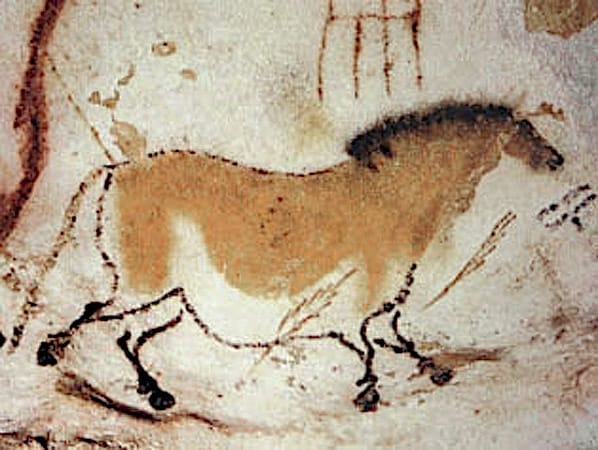
In those years, people lived in caves but did not yet possess the ability to speak. They used a communication system coded with single-word sounds. In other words, humankind discovered art before learning to speak and before transitioning to village life (the Neolithic period).
Now we come to the invention of writing: Writing was first invented by the Sumerians in history. The symbols used in this writing system resembled wedges, so it was named cuneiform. The Sumerians, who lived in Mesopotamia, began using cuneiform approximately 5500 years ago.
Humanity's First Alphabet: Cuneiform Tablet
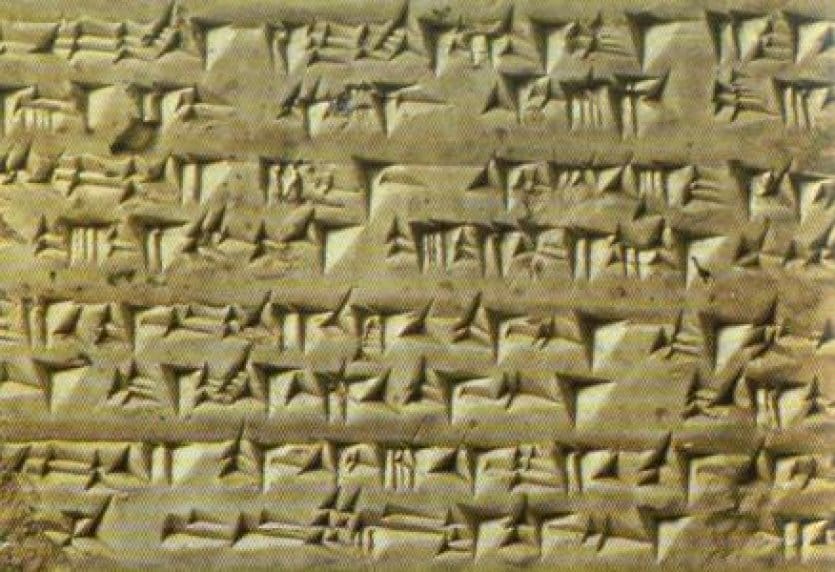
Humankind discovered writing after learning to form sentences with words, that is, to speak. Why am I making this reminder: There is an undisputed piece of information taught to us in schools: "History began with writing." Based on this statement, human history is divided into two different periods: "before writing" and "after writing." We were educated with an approach that "disparages" the period before writing.
My view is different: Human history began with ART. The paintings drawn on the walls of the Lascaux cave are works of art. Art was born 11,500 years before writing. Humankind developed and changed through art. It was art that made humans human. And this reality is still valid.
Everything we see in museums was created by artists. The beauties you know as the seven wonders of the world are the works of artists, not kings or feudal lords. Kings, the wealthy, and average people have been forgotten, but artists continue to live in our hearts in the realm of immortality through the works they created. Just think, what would be left of Istanbul if you removed Hagia Sophia and the works of Mimar Sinan!
When humanity was intimately involved with art, it developed, becoming "human"; when it distanced itself from art, it also distanced itself from its humanity, in a sense transforming into a creature living by its instincts.
Art has not developed along a single line: it has been divided into sub-branches such as architectural structures, sculpture, ceramics, painting, film, photography, music, literature, poetry, opera, theater, humor, caricature, and cinema.
In periods when art was strong, humanity was happier and lived a freer life. We can easily see this by looking at the history of societies. For example, with the Renaissance movement that emerged in Europe in the 15th and 16th centuries, a revolution occurred in architecture, sculpture, painting, and music. Thanks to this, humankind, awakening from the darkness of the Middle Ages, rediscovered itself, its creativity and imagination strengthened, and within this process, scientific discoveries and industrialization became possible. We have still not surpassed the creativity of the Renaissance period today.
We know that art has not been given the necessary importance in Turkey since the establishment of the Republic. Art activities were almost non-existent in cities outside Istanbul. City theaters were established in a few provinces, but their content was empty and bland. They had no connection with art. Painting workshops only existed in Istanbul. Classical music is still the monopoly of a few individuals or families. Draw a line passing through Karabük, Ankara, Karaman. If you ask how many of the provinces or districts on the right side have art activities such as theater, piano, painting workshops, or ceramic workshops, you will find that there are almost none. Therefore, we must be aware that we live in a country where the soul is stifled and creativity is killed.
As I wrote before, art means the outward expression of our emotions, imagination, and creativity, and the discovery of our inner world. Its most important feature is the creation of a new work that did not exist before, the reinterpretation and recreation of the external world by human hands.
The art movement in Turkey could never transform into a social movement. For this reason, most of us have become alienated from our inner world and have accepted an ordinary way of life without realizing our own talents. However, humans develop and exist through art. Since art has continued on a dead-end path until now, Turkey has not been able to transition to a strong democracy, because it has not had creative individuals and politicians capable of achieving this. Unfortunately, the same problem continues. In societies where art is not strong, social explosions, corruption, and unstable structures emerge, and politics also gets its share of this.
IĞDIR AND ART
In the period from 1900 to the present, Iğdır experienced a renaissance of art only between 1945-55. However, from 1955 onwards, amidst the political rivalries and turmoil throughout Kars (Iğdır was a district of Kars in those years), this artistic momentum lost its effect, and artistic activities fell into a deep silence that continues to this day. I would like to introduce you to a few of the valuable figures who pioneered Iğdır's Renaissance period (1945-55).
NAĞI (NAKİ) ODOĞLU
When we look at Iğdır under Russian rule between 1900-1917, we see the construction of remarkable buildings in terms of architecture. The facades of these buildings were crafted from cut stone and adorned with various motifs. Very few of these buildings still stand in Iğdır. Some are abandoned, while others are used as residences.
I would like to share a memory from my childhood. Since Hasan Alagöz and I were cousins, I often visited the home of the late Hacı Ömer Şark. This building, which was bought and restored by the late Nağı (Naki) Odoğlu, who moved to Iğdır from Istanbul with his family in the early 1930s, was purchased by Hacı Ömer Şark from Nağı Bey's son, Abbas Odoğlu, in 1956.
The current appearance of Nağı Bey's house (Due to the road, the front facade of the house has sunk about 1.5 m from its original position, and the exterior of the house has lost its grandeur.)
Nağı Odoğlu had the building he purchased restored according to his own taste. Right next to the front balcony, opening into the garden, there was a huge patterned wooden door that added a distinct beauty to the building's facade. The rear balcony was surrounded by patterned and carved wooden railings, each painted a different color. Upon entering the house, a hall greeted you, opening to three doors. The carved and differently colored wooden doors were tall and magnificent. The living room was large and refreshing. In one corner of the living room, there was a huge full-length mirror adorned with wooden carvings.
In the 1930s, a piano, a gramophone, a radio, and patterned armchairs added a distinct beauty to this living room. On special occasions, wealthy families from Iğdır would gather here and listen to piano recitals. Fashionable dances of the day were performed in this living room to the music playing on the gramophone.
Nağı Bey had transformed every corner of the house into a work of art. He had converted the small room facing İdirmava Street into a museum. In a sense, this was Iğdır's first museum. The four corners of the room were surrounded by closed and locked glass display cases, as seen in museums. He displayed valuable items belonging to his family and showed them with great pleasure to his visiting friends. There were valuable oil paintings on the walls.
He had a garden overlooking the back of the house, containing all kinds of fruit trees. He also owned two gardens known as Küçük Bağ (Small Garden) and Büyük Bağ (Large Garden) on the Alikamerli road, which contained various fruit trees. In the arrangement of the trees, their symmetrical pruning, and the stacking of fruits in crates, it was always possible to see the traces of an artistic hand and touch. When he started canning production, he drew and colored the picture on the can himself. These canned goods won first prize at the İzmir fair and were exported to Germany. In short, Nağı Bey, with his demeanor and personality, was the first person to instill the spirit of art in the land of Iğdır. I commemorate Nağı Bey, the doyen of the artistic spirit in Iğdır and an unforgettable name, with respect and mercy. I hope his name will be given to an academy related to art, immortalizing him.
CLOTHING IN IĞDIR
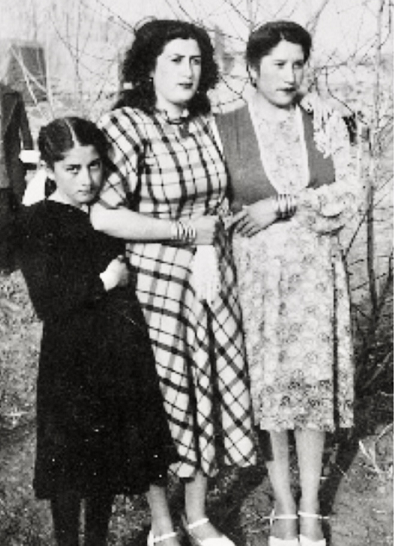
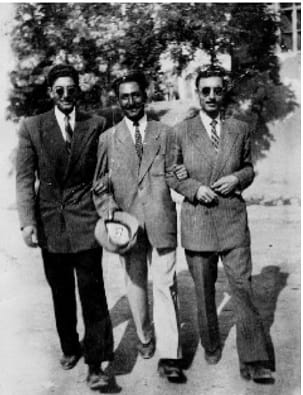
The spirit of art experienced between 1945-55 was also reflected in clothing. I would like to present to your attention the pictures from this period:
Ladies of Iğdır
THE ART OF GASTRONOMY (FOOD AND DRINK) IN IĞDIR
Between 1945-55, there were two magnificent establishments in the restaurant and coffee house business. One of them, the late Süphan Güneş's restaurant, was furnished in a European style, with proper alcohol service, and its variety of dishes rivaled even the most magnificent restaurants in Istanbul. The waiters had special uniforms. The food was extremely delicious and varied. A subtle artistic delicacy was evident in the preparation and presentation of the dishes. After 1955, this culture disappeared, and instead, with waiters shouting "Ustam, çek bir kuru!" (Master, pull a dry one!) from a distance, which continues to this day, gastronomy became ordinary and lost its distinctiveness.
Another figure, the late Feyzullah Zengi, is the namesake of IĞDIR TEA, whose reputation spread throughout Turkey in those years for his coffee house. For years, he served his customers without compromising on the quality, taste, and color of the tea. The deliciousness of the tea, the design of the plates and glasses, and the quality of the waiters' attire could only be found in the coffee houses of Beyoğlu and Pera. Unfortunately, neither Süphan Güneş's nor Feyzullah Zengi's interest in the art of gastronomy could be continued by the new generation after 1955.
IĞDIR HISTORY'S FIRST BOOK AND NEWSPAPERS: Although no novels were published between 1945-55, the book titled IĞDIR HISTORY was published in 1955 by the late Veli Orkun, the principal of Iğdır Secondary School. Unfortunately, it has not been possible to reprint this valuable book. I consider it my duty to call upon Iğdır's civil and official institutions for a reprinting of this book.
Iğdır's first newspapers met their readers again between 1945-55.
NEWSPAPER NAME OWNER FIRST ISSUE LOCATION
IĞDIR Newspaper Cengiz Ekinci September 28, 1950 Iğdır
ARAS Magazine Ramiz Özler October 30, 1950 Iğdır
DİL Newspaper Mecit Hun July 9, 1952 Iğdır
FIRILDAK Mecit Hun January 21, 1953 Iğdır
ŞARKIN DİLİ Mecit Hun May 16, 1953 Iğdır
PAMUKOVA Mecit Hun July 30, 1954 Iğdır
YENİ IĞDIR Cemil Aydın February 28, 1955 Iğdır
YEŞİL IĞDIR Fazıl Şıktaş September 1, 1955 Iğdır
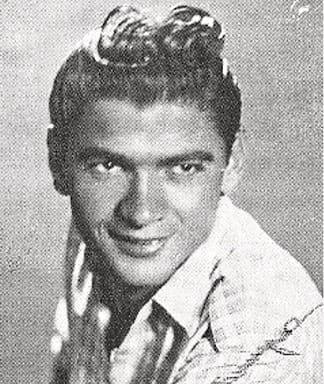
THEATRE ACTOR, PAINTER, CARTOONIST TURGUT SUNGAR
In 1948, the Aras Cinema, opened jointly by the late Aziz Güney and Ali Orkun, triggered the artistic spirit in the district, and art activities in Iğdır began to flourish in many directions. One of those affected by this artistic wind was Turgut Sungar, born in Iğdır in 1927. His father, the late Major Bekir Sıtkı Sungar, had settled in Iğdır during his years of service in Kâzım Karabekir Pasha's army, and when his daughter Hikmet Hanım married Naci Güneş, a notable from Iğdır, his family's attachment to Iğdır grew even stronger.
Turgut Sungar was the first person to do charcoal and oil painting in Iğdır. He describes this passion for art in his memoirs:
"I had started to be interested in painting since my primary school years. However, at that time, I mostly did charcoal drawings. After starting my professional life, due to the intensity of my work, I had to put my passion for painting aside for many years. After retiring, the desire to return to this first 'love' awakened within me. An event accelerated my decision and made me pick up a brush and canvas.
One day, I was sitting in front of the television, watching an art program. The program was introducing a painter named Kayhan Keskinok as 'Turkey's international painter and source of pride.' This name suddenly brought associations to my mind. Yes, I knew him! When I was a student at Iğdır Secondary School, Kayhan Keskinok was teaching at primary school. For this reason, I had met him, and he had not withheld advice and tips to develop my artistic taste.
The fact that this teacher, whom I had known years ago, had become famous as an international painter deeply moved me and made the courage and determination to say 'I can do it too' arise within me. But I had never worked with oil paints. Should I take a course somewhere?
My wife's family circle was quite extensive. Since my father's first wife was also my wife's aunt, I had a close relationship with the family members. One day, my brother-in-law, who was the mayor of Giresun, invited us to dinner. During the conversation, my brother-in-law, who was aware of my interest in painting, said, 'If you want to do oil painting, I advise you not to take a course! After learning your teacher's technique, it might be very difficult to find your own style. It's better to tackle this on your own!'
Following his advice, one day I sat in front of the canvas. Over time, I developed my brush technique. I began to transfer the hidden portraits and images of the past, which had been storming within me for years, onto the canvas. One of the first subjects I worked on was 'Mount Ararat.' A huge 'Mount Ararat' painting hangs on one wall of my house. Every morning, I wake up early, stand in front of the painting, and with a lump in my throat, I remember my days in Iğdır and my friends.
'How similar my Mount Ararat on canvas is to the real Mount Ararat,' I think with surprise every day. Both are so close to me, as if I could touch them if I reached out; but one is from the heart, the other is very far away in space...
In a short time, I had enough paintings to open an exhibition. In 1999, with the sponsorship of İş Bankası, I opened my first exhibition at the İş Bankası Gallery on Meşrutiyet Street. Since my life was spent traveling from one part of the country to another, and believing that there were beauties everywhere I went that inspired me, I named my exhibition 'A Sip from Every Spring.'"
IĞDIR COMMUNITY CENTER (HALKEVİ)
Turgut Sungar shares his observations about the Community Center opened in Iğdır:
"The Community Center provided great services in terms of sports and culture. During the Second World War years, Osman Ataman was the president of the Community Center. I was involved in the sports, theater, and travel branches. On weekends, horseback excursions were organized to nearby villages. These very enjoyable trips, in which women participated wearing riding pants, were mostly organized by Commissioner Latif Bey and veterinarian Muammer Bey.
Occasionally, the district governor would call us and ask us to organize a ball. The notables of the district would attend the ball with their wives and dance to modern music. Once, I saw Naci Bey and my elder sister Hikmet dancing and found it very strange. Naci Bey, with an agility unexpected of him, kept pace with the rhythm and danced wonderfully.
IĞDIR'S FIRST THEATER PLAY: FATHER'S HEART
Turgut Sungar continues his narrative:
"The Community Center had a rich library. We would stage the plays we borrowed according to our taste. Since families in Iğdır did not allow their daughters to participate in plays, we preferred plays with a small number of female actors.
At one point, I even wrote a play myself. We successfully staged this play titled 'Father's Heart.' The play garnered widespread interest in Iğdır and its surrounding districts.
Title of the play: Father's Heart
Written and staged by: Turgut Sungar
Actors:
Father Mustafa Avcı (Office Chief)
Elder son Saffet (Paşa Turan)
Younger son Sedat (Turgut Sungar)
Other actors: Hidayet Yalçın, İsmet Aydınlı, Metin Toksözlü, Nejat Birdoğan, and Ertuğrul Taner
PLOT OF THE PLAY
Turgut Sungar recounts the play's scenario as follows:
"A wealthy father, whose wife has died, lives in a farmhouse with his two sons. Sedat, who is successful in his studies, has the opportunity to continue his education in Europe. Sedat is not very keen on the journey because he has a girlfriend he talks to and loves.
While Sedat continues his education in Europe, he does not neglect to send letters to his beloved. However, he is unaware that his beloved is meeting with his elder brother Saffet. The girl loves Saffet.
Sedat, having completed his education, returns to his father's house. When he learns the truth, his heart fills with pain. Only one path remains: to confront his brother Saffet to the death. He puts his pistol in his pocket and stands before Saffet. Without hesitation, he pulls the trigger, killing his brother. Sedat ends up in prison.
Many years pass. Sedat, who has been released, has even changed in appearance. Although he is an engineer, Sedat, who struggles to find a job, finally accepts becoming a stable hand on a farm.
As soon as he enters the stable, he immediately recognizes his father's horse. While he is stroking the horse, his father unknowingly enters. Father and son initially struggle to recognize each other. When the father learns the truth, he asks his son to leave.
As Sedat prepares to leave, the father cannot bear it, collapses to the ground, and bursts into tears. The 'father's heart' has prevented his son from leaving."
Turgut Sungar elaborates further:
"The main theme of the play was built upon this event. However, there were some mishaps during the staging of the play. There was no electricity in the district. Gas lamps were used. These lamps would not work without a special accessory called a 'mantle' or 'tor.' Mantles that burned for a long time would spontaneously break apart, and the gas lamp would go out. Indeed, this disaster also befell us.
The play had just begun when darkness enveloped the stage. While the assistants were trying to repair the gas lamp with candlelight, Mustafa Avcı, who played the role of the father, improvised like a tuluat (impromptu) actor, turning to 'the house servant' and saying, 'My life was already dark. Don't you darken it further!' These words saved the situation. Some even thought that the gas lamp going out was part of the play.
The second mishap occurred in the scene where Sedat tries to kill his brother. Since I was playing Sedat's role, I had a pistol in my hand. I had attached a toy cap gun to the side of this empty but real pistol, which the audience could not see. When I pulled the trigger, the cap gun would fire, and the audience would think a real gun had been fired.
My brother Saffet (Paşa Turan) was standing in front of me. Saying, 'You betrayed me!' I took the pistol out of my pocket, aimed it at Saffet, and pulled the trigger. Something went wrong, the pistol didn't fire, but Paşa threw himself to the ground and said, 'Ahhh! I'm hit!'
It was a ridiculous situation. I whispered in Paşa's ear, 'The pistol didn't fire. How are you hit then!' Fortunately, the assistant actors popped the cap behind the stage, and we managed to get through this scene without incident.
Occasionally, we would also perform verse plays (poetry). Even after more than 50 years, the lines still echo in my ears:
If I say I slept, the wind took my life
In the frost of the night, I ran, crossed hills
There was no one on the roads, I was friends with wolves
Nationally renowned theater artists like Atıf Kaptan and Halide Pişkin would come to Iğdır on tour during the summer months. Once, when one of the actors fell ill, they applied to the Community Center for help; the president of the Community Center suggested my name. I memorized my role in one night and went on stage with them.
Dear readers!
As you can see, there was a theater in Iğdır in the early 1950s. They even prepared a play under difficult conditions. This was Iğdır's first and last theater. We also know that theater tours from Istanbul came to Iğdır in those years.
Based on the information above, we can say that the first theater artist of Iğdır was the late Turgut Sungar.
In short, the late Turgut Sungar was a versatile personality as a theater actor, poet, painter, and cartoonist. You can find his magnificent poem titled "Aras'ın Sevdası" (The Love of Aras) in my two books.
IĞDIR'S FIRST POETS
When Iğdır's first poets are mentioned, Kerim Yaycılı and Hamit Dönmez come to mind. We must also add Aşık Deryami, who was from Şavşat but spent a significant part of his life in Iğdır, to this list.
KERİM YAYCILI
The late Hamza Aygün describes Kerim Yaycılı in his memoirs as follows:
"Poet and Litterateur, Kerim Yaycılı, son of Hacı Abdullah Efendi from the Alhan family, was born in 1913 in the village of Yaycı, Iğdır. His childhood was spent amidst the suffering and pain of the First World War. These bitter scenes of the past fueled his love for serving his country as an officer. Kerim Yaycılı, who always graduated first in his class in the military secondary and high schools he attended, was discharged in 1931 due to lung problems caused by his hard work and weak constitution. During his convalescence, which lasted until 1934, he served as a teacher in primary schools in Karaköse (Ağrı), Karakoyunlu sub-district, and Erzurum. In the same year, after graduating from the Literature department of Erzurum High School, he was called for Reserve Officer service. Immediately after his discharge in 1937, he came to Ankara and entered the Turkish Language and Literature department of the Faculty of Language, History, and Geography.
Since Kerim Yaycılı was born and raised in Iğdır, he had endless love and respect for it and its citizens. The Aras River was his source of inspiration. He described Iğdır's transformation into Berfo during the years of invasion in his poem titled "The Liberation of Iğdır" as follows:
The cruel enemy mobilized one day
Every town burned, Oba, Yaycı, Hoşhaber
Help Allah, help Allahu Akbar!
Fire fell, on homeland, nest, and town
It was a doomsday when mother and son were lost
As if another time had arrived
We have no weapons, nor any doubt
Hands tied, mercy Allah, mercy
They painted mountains and stones with red blood
May God not give opportunity to the enemy
Kerim Yaycılı concluded this poem by expressing the efforts of the heroic Turkish army in liberating Iğdır as follows:
The mountains opposite woke up one by one
The dawn painted the sky red with blood
The Turkish Army, the Turkish Army endured
As cannon sounds enveloped the horizons
As Mehmetçiks (Turkish soldiers) swept the enemies
This land, burned and destroyed by cannons and rifles
Was fleeing on roads without cannons or rifles
Aras drank the blood of the enemies
The nation took its noble revenge
As the Red Flag was hoisted to the horizons
This land was reborn anew
Despite spending 36 years of his 66-year life sick and deprived of the ability to walk, Kerim Yaycılı never lost his will to live, with a great determination and resolve that few are blessed with, and knew how to cling to life.
I met Kerim Yaycılı on March 21, 1962. He had a wide circle of acquaintances at the State Opera and Theater where he worked. All artists felt deep love and respect for him. His room, which was empty when he was alone and did not go out, was never empty, overflowing with visitors.
When he had to complain to someone, to avoid hurting anyone's feelings, he would add great softness and a smile to his words, caressing the heart of the other person.
Kerim Bey passed away on the evening of Friday, July 13, 1979, due to a heart attack. His funeral was held on Monday, July 16, at 3 PM at the Ankara Küçük Tiyatro, with the participation of State Theater artists, friends, and compatriots. After the ceremony, his relatives took him to Iğdır, where he was laid to rest.
I wish God's mercy upon Kerim Bey, a good person and, above all, a good national poet. I cannot pass without presenting his poem "Araslı Kız" (Girl from Aras), which he wrote for Iğdır.
ARAS GIRL (KERİM YAYCILI)
White clouds cover the peak of Ararat
Azeri girls listen to the joyful voice of Aras
How endearing Iğdır is with its spring
Girl from Aras, adorn your hair, your chest with roses.
Songs spread from arbors to the plain
Come, Aras, let's watch Iğdır to our heart's content
Even the winds today imitate your coquetry
Tell me, Aras, to which land do your arms go
My heart still aches as I wander this shore
I saw her one day, girls going to the field
Under her white headscarf, her lips were crimson red
I didn't ask anyone, whose daughter was that girl?
As the star of the flag shone in her eyes
I loved that joyful Azeri girl right there
There was a loving tremor in her sweet voice
In the fragrant shade of the oleaster trees
Our memory of last summer then struck my soul
In her voice was the burning longing of our love
Whenever sheep and lambs spread across these fields
I await Nowruz, hoping to see her
I searched the mountain slopes like Majnun
They said she was washing her hair in Aras
Oh, if only I could hear her joyful voice again
If only I could taste her kiss before I die
I would say, even if I have no beloved in Paradise
I have only one beloved in both worlds
FOLK POET DERYAMİ
Turgut Sungar describes Aşık Deryami, by whom he was greatly influenced, as follows:
"Deryami, originally from Şavşat, had made Iğdır his home. His real name was Dursun Ali Erdoğan. He was a true folk poet who deeply impressed me with his talent and skill.
Inspiration would come to Deryami instantly, flowing like a waterfall. He could not repeat what he said even if he wanted to. That's why, when Deryami was about to recite a poem, he would turn to those around him and warn, 'Write it down!' Nejat Birdoğan, Bozkurt Hoca, and I had the chance to compile many poems from Deryami. Here is one of the poems I compiled:
My two bloodshot eyes,
Let my beloved see in tears, in tears,
I am leaving from here,
Let my beloved see in a dream, in a dream.
I burned, but you didn't care,
You never came to my side,
You didn't appreciate my worth,
Let my beloved see in stone, in stone.
You didn't look at my sick state,
You sent me to training with love,
I wish that to a cruel one,
Let my beloved see in a dream, in a dream.
Unfortunately, this valuable folk poet gave himself to alcohol. He could not use his talent as he wished.
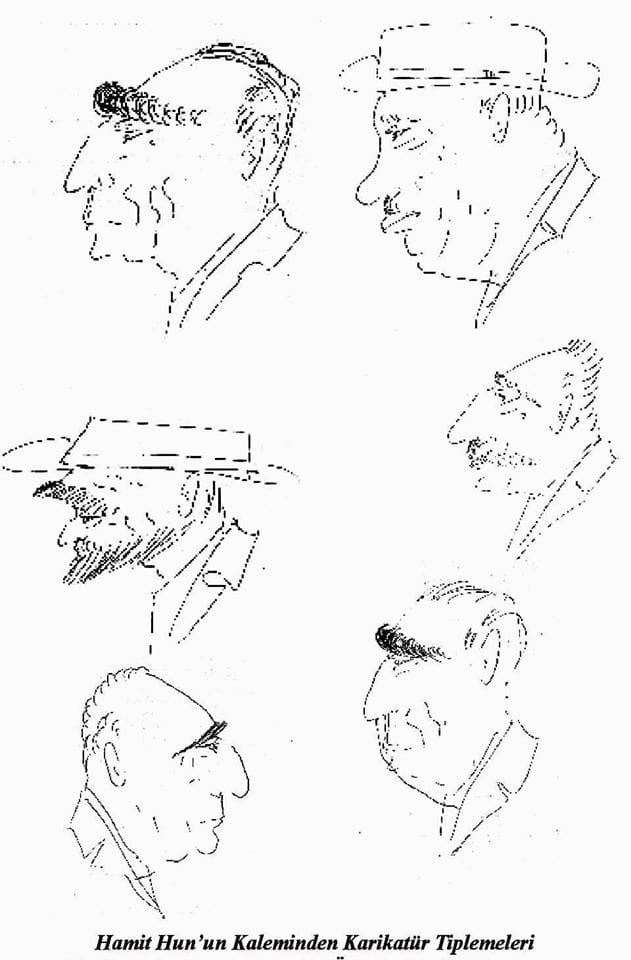
IĞDIR'S FIRST CARTOONIST AND HUMORIST: HAMİT HUN
He is the eldest son of Ahmed Şemo, leader of the Gêloî tribe. He was born in Iğdır in 1921. He continued his secondary education, which began at Kars High School, at Istanbul Private Pertevniyal High School, but returned to Iğdır without graduating. He married the daughter of Newo Ağa, a notable from Doğubayazıt. He engaged in trade and animal husbandry.
Hamit Hun possesses a deep sense of freedom and tolerance within his soul. Among the people, in the hearts of the people, he is the indispensable sultan of heartfelt conversations. He is never without a book or a newspaper. He knows the entire Ottoman poetry collection by heart. Sometimes a competent philosopher, sometimes a wizard of words who, with his deep and meaningful conversations, takes one away from the troubles and hardships of the world, even if only for a moment. He enlivens and liberates Iğdır, which is stuck on the tip of his tongue, with his anecdotes and caricatures. One cannot help but wonder how boring Iğdır would be without Hamit Hun.
AN ANECDOTE FROM HAMİT HUN
(This anecdote refers to a real-life event, and that too during the time of the Military Junta when everyone trembled with fear.)
These are the days following the 1980 Military Coup. Bad surprises await Hamit Hun, who is approaching sixty.
One of his three left-leaning sons is arrested and thrown into prison. Another son flees to Europe. The third son is on the verge of being caught. The family's economic situation is in disarray. He spends all his money on lawyers and court cases.
One day, when he is penniless, he falls ill. Because his condition is serious, he is transferred from Iğdır to a hospital in Erzurum with the help of friends.
He stays in the hospital for a week. He recovers a little. On such a day, a pleasant and cheerful nurse enters his hospital room with a survey paper in her hand. She asks Hamit Hun in a sweet tone:
"Uncle, our Council President, Mr. Kenan Evren Pasha, has launched a campaign for organ donation. Which organ would you like to donate?"
When he hears the name Kenan Evren, Hamit Hun's heart tightens, but he doesn't show it:
"My dear girl, my lungs work at half capacity due to tuberculosis I had in childhood. I have gastritis in my stomach. My intestines are also problematic. My heart is skipping beats. And you already know I was brought here due to liver and kidney failure. The only healthy organ I have left is my reproductive organ."
The nurse immediately notes it down:
"Would you like me to add anything to the comments section?"
"If the Pasha gets tired of using it, I allow his other three Council members to use it as well."
The nurse girl finds what he said very serious, leaves the room in fear, and returns shortly with the doctor.
Doctor: "Mr. Hamit, is what you said true?"
Hamit Hun: "The nurse was very scared, and rightly so! Actually, I didn't mean the whole thing. Of course, that would be terrible. In that case, let them use only half."
CONCLUSION
My dear readers!
The spirit of art that took root in Iğdır between 1945-55 has not been able to recover since then. Even in events like book fairs organized occasionally by the Municipality or Governorship, favoritism due to racism, discrimination, or political animosity has prevented any genuine breakthrough.
In short, I want to say this: In Iğdır, not only ethnic discrimination but also differences in political views, past events, and even simple and pathetic judgments like hatred for family surnames can come to the forefront. I consider individuals who think this way to be pathetic and ordinary people. It is certain that Iğdır cannot make progress in art with such approaches. It is also clear that our politicians do not particularly concern themselves with art.
The Municipality and Governorship did not invite me, but I distributed 830 copies of my book for free throughout Iğdır province. I sent my books free of charge to my compatriots who requested them. In this process, I learned this: The true audience of artists is the people themselves, not official and local administrations.
I would like to see a culture emerge in Iğdır where young people's interest is drawn to artistic endeavors, and all fields of art are recreated.
In conclusion, art is universal. It is independent of definitions such as religion, language, race, politics, and gender. I hope that our Iğdır will rediscover true art over time, and that such an understanding will slowly take root.
ANECDOTES... ANECDOTES... ANECDOTES...
Dear readers!
In such a sad and troubled period, where the fight against Corona continues and quarantine days are part of our daily lives, I wanted to write anecdotes that open our hearts and cheer our souls. The anecdotes you will read are original. They have not been published anywhere else. The copyright belongs to me. Of course, you can use them with reference. The anecdotes and jokes you will read are inspired by real life. Some words have been adapted to the local dialect to preserve the originality of the anecdotes.
FORTUNE TELLER BERFO NENE
Berfo Nene was a Kurdish woman. She had been widowed at an early age. She had a son named Ahmet. He was of marriageable age, but because he was poor, no one wanted to give him their daughter. So Berfo Nene would go from door to door, helping wealthy families with their house cleaning. Although people called her "Berfo Nene," she was a vigorous and active woman. She accepted every job given to her and earned her living.
One day, Berfo Nene found work in the house of one of Iğdır's wealthy residents. The homeowner was Azeri. He owned a haberdashery store and was well-off. He lived with his wife, son, and daughter-in-law.
While Berfo Nene was cleaning the balcony, she saw the lady of the house doing something with playing cards with another woman from the neighborhood. The neighborhood woman was laying out cards and telling fortunes. The woman came every day, and no matter what she said, right or wrong, the lady of the house would put a stack of money in her pocket and send her away. When Berfo Nene returned home, she told her son what she had seen. Ahmet was a smart young man:
"Mother, they're making it up! If one out of five turns out to be true, people forget the mistakes and remember the truth! There are many who make good money from this."
Berfo Nene asked curiously: "How do they do it?"
Ahmet laughed: "They carefully take a deck of cards in their hands, extend it to the customer and say, 'Choose one card,' they turn the chosen card face down and place it on the ground, and fill the area around it with cards they've opened from the deck. They recite some fake prayers, open the face-down card, then tell all the lies that come to mind, take their money, and leave."
Berfo Nene had various shawls. Since she wore a different colored shawl every day, it was impossible for people to recognize her. One day, she threw her red shawl over her head and went to the wealthy Azeri's house. Just as she was about to open the garden gate, she heard some conversations through an open window. She eavesdropped. The daughter-in-law of the house was crying. She was complaining to her husband, "Your mother doesn't let me breathe! I'm going to Istanbul to my brother's. I'll leave the children with my sister. I won't come back for a few months!"
Her husband was a gentle, mild-mannered man: "Do as you wish!"
Berfo Nene entered the garden. The son of the house was also coming down the stairs to go to work. They greeted each other. Berfo Nene began to clean the balcony. The lady of the house sat in a distant corner, waiting for the neighborhood woman who would tell fortunes. The garden gate opened, and a young girl entered the garden, saying that her mother, who was supposed to tell fortunes, was sick and couldn't come today.
Berfo Nene, seizing the opportunity, approached the lady of the house: "Oh, Yadigar Hanım! I am a very good fortune teller. If you wish, I can tell your fortune!" Yadigar Hanım was addicted to fortune-telling. She immediately pulled out a deck of cards she had hidden under her knee and placed them in front of Berfo Nene.
Berfo Nene remembered what her son had told her. She shuffled the deck and extended it to the lady of the house. Yadigar Hanım chose a card while reciting prayers. Berfo Nene also mumbled something as if reciting a prayer. She placed the card in her hand face down on the ground. She filled the area around it with cards she had opened. She opened the face-down card with a prayer. She pretended to think for a while, then leaned into Yadigar Hanım's ear so no one else could hear: "The fortune says there's a problem between you and your daughter-in-law!" Yadigar Hanım immediately confirmed with "Yes!" Berfo Nene thought a little more: "Don't worry, in two days the daughter-in-law will go to Istanbul." Yadigar Nene leaned forward with interest: "What about the children?" Berfo Nene drew another card. She leaned into Yadigar Hanım's ear: "She has a sister, she'll leave them with her!" Yadigar Hanım was happy with the news but didn't believe it could be true. "If what you say comes true, I'll shower you with money, oh Berfo!"
Two days later, the daughter-in-law set off for Istanbul, entrusting the children to her sister. Yadigar Hanım put a large sum of money into Berfo Nene's pocket. This news spread rapidly. Everyone in the neighborhood knew that Berfo Nene told fortunes. Especially young girls lined up in front of her house, eagerly asking about their fate. Berfo Nene would say whatever came to her mind and take her money.
One day, a wealthy young man came. "Berfo Nene, yesterday I had a dream. Someone I knew was swindling me. Please, tell my fortune, who is the man who will swindle me? I'm curious! I want to take precautions!"
Berfo Nene confidently laid out the cards. She shook her head meaningfully.
"I see that man, but I can't make out his face. I need to open the fortune again!"
The cost of each fortune-telling was 100 TL. Berfo Nene again laid out the cards, looking carefully: "Look at that scoundrel! How he hides himself. I saw his red tie, but I need to open the fortune again!"
The young man unhesitatingly offered another 100 TL. Berfo Nene again carefully shuffled the cards. She recited some prayers. She laid out the cards. She looked. She looked.
"It's clear from his ring that he's married, but his hat is worn sideways. I couldn't fully see his face in this fortune either, I need to open a fortune again!"
Berfo Nene was making something up each time and taking 100 TL from the man. Berfo Nene again laid out the cards. This time she frowned: "Now an old woman has come next to the man. She won't let me see!"
The young man finally realized he had been tricked. He had lost 1000 TL. He stood up angrily: "That old woman was you. The swindler I saw in my dream was also you."
Berfo Nene looked after the man who left angrily, then while counting the money, she muttered to herself: "Oh son, why are you angry! Your dream came true!"
COW AND CALF
A seven-year-old neighborhood boy had set out early in the morning with a cow and its calf in front of him. Berfo Nene was at the garden fountain for morning prayer. The boy called out from a distance: "Berfo Nene, when I left the house, my father was asleep. When you see him, tell him I'm taking the cow to the Pulur road." Berfo Nene replied in a pleasant tone, "Alright, my child." The boy had heard Berfo Nene's name but didn't know she was a fortune teller.
Towards noon, the boy's father arrived at Berfo Nene's house, out of breath. "Berfo Nene, I don't know where our boy went! I asked everywhere, no one saw him. Please, tell my fortune!"
Berfo Nene immediately took the deck in her hand, sat down gently on the ground. She recited prayers. She opened the cards. "Good news! I saw the cow." The man offered 10 TL. The man asked curiously: "Where is the calf?" Berfo Nene told the fortune again: "Good news! The calf is next to the cow." The man offered another 5 TL. The man asked again: "Where is the boy?" Berfo Nene told the fortune again: "The boy is right before my eyes! He's on the Pulur road." The man offered another 10 TL and quickly went to the Pulur road. Indeed, his son, the cow, and the calf were there. The boy asked curiously: "Father, why are you late?" His father laughed: "I looked for you and couldn't find you. There's a fortune teller in the neighborhood who found you as if I had placed you there."
WHOM WILL I MARRY?
Berfo Nene was making good money from fortune-telling. One day she heard bad news. Another woman in the neighborhood had also started fortune-telling. She knew the woman more or less. The woman also knew about Berfo Nene. A rivalry had begun between them.
One day, Berfo Nene took her son Ahmet aside: "Ahmet, go to this fortune teller woman and have your fortune told. Let's see if she knows the truth?"
Ahmet did as he was told. He went to the other fortune teller's house. The fortune teller woman knew that Ahmet was Berfo Nene's son but pretended not to. "Come in, young man! How can I help you?" Ahmet asked without thinking: "There's a girl I love. I want you to give me some information about her!" Ahmet offered 50 TL. The woman laid out the cards: "I see the girl. She's a very lovely girl. Blue-eyed, blonde." Ahmet's heart pounded because the girl he loved was indeed blue-eyed and blonde. Ahmet offered another 50 TL. "Does the girl have feelings for me?" The fortune teller woman opened the fortune again: "Yes, but she doesn't like your mother. You need to send your mother somewhere else! Your mother shouldn't stay in this neighborhood." The fortune teller woman had found a good opportunity to get rid of her rival, Berfo Nene, from this neighborhood.
Ahmet muttered to himself: "That's easy! I have a sister in Sarıkamış. I'll send my mother to her."
Before leaving, Ahmet asked curiously: "Aunt, how did you know that my beloved is a blue-eyed blonde girl?" The fortune teller woman, gathering the cards, replied in an indifferent tone: "The other day, when your mother was passing by the fountain, she was telling the neighborhood women all about it."