Those Who Left Their Mark in Iğdır: The Orkun Brothers – Part 4
This article delves into the lives and contributions of Ali and Veli Orkun, two brothers who significantly shaped Iğdır's cultural and educational landscape in the mid-20th century, including establishing its first cinema and writing its first modern history.
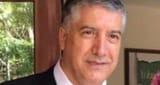
Dear readers! I would particularly like to ask my fellow citizens from Iğdır the answers to the following three important questions:
- Who wrote the first book about Iğdır in the Republican era?
- Who wrote the first book on the history of Iğdır in the Republican era?
- Who opened Iğdır's first cinema in 1948? (Also the second cinema in Eastern Anatolia)
To answer these three important questions, we will need to talk about two brothers. Their names, which should be honorably etched in our hearts, minds, and souls, are Ali and Veli Orkun, who rendered great services to Iğdır. Who were the brothers Ali and Veli Orkun?
In the 1940s and 50s, there were no high schools in Iğdır. Veli Orkun was the principal of Iğdır Secondary School. In those years, those who finished secondary school opted for high schools in Kars, Erzurum, or Trabzon. Veli Orkun had prepared such a disciplined education program that Iğdır graduates were among the most successful students in the high schools they attended. He prepared hundreds of young people for life, showing the necessary interest and effort in the importance of education, and thus brought an increasing number of students to higher education institutions. Veli Orkun, the principal of Iğdır Secondary School, was born in Tiflis (Tbilisi) in 1331 (1915). He was a history teacher. He has two published books:
- History and Geography of Gemlik (1947)
- Description and Geography of Iğdır (1955)
Another reason that immortalized Veli Orkun's name for the people of Iğdır is his book "Sürmeli Çukuru: Iğdır History and Geography," published in 1955. Veli Orkun, who authored the first book on Iğdır in the Republican era, thus rendered an unforgettable service and earned an honorable and memorable place in the history of Iğdır.
Ali Orkun, together with Aziz Güney, initiated a cultural movement that brought color to Iğdır: cinema operation.
Let's first take a look at what their nephew Ergün Öztürk said about his two uncles (from the book "Iğdır Sevdası"):
ERGÜN ÖZTÜRK NARRATES
I was born in Kars in 1940. I am retired from DSİ (State Hydraulic Works). I am married with two children. Ali and Veli Orkun are my maternal uncles. My grandfather Süleyman Bey was settled in the Qazakh region of the Caucasus. Süleyman Bey was Karapapak, and his wife Nazan Hanım was from the Ahiska Turks. The family, residing in a town called Göyye (or Gokya), migrated to Ardahan due to the civil war, and from there, first to Azad village and later settled in the center of Kars.
Süleyman Bey's first child was born in Qazakh. My mother, his eldest child, was born in 1327 (1911). His other children followed every two or three years. Ali and Veli Orkun were born in Tiflis.
My mother, Raziye Hanım, was a cultured woman who studied at Tiflis and Baku universities and spoke four or five languages.
Veli Orkun went to high school in Kars. Among his classmates, I can name Sırrı Atalay, Mehmet Hazer, Turgut Göle, and Abbas Çetin. After graduating from Ankara Gazi Education Institute, Veli Orkun worked as a teacher in Kayseri and Gemlik, and in the meantime, married Hikmet Hanım, who was originally from Kayseri. Veli Orkun was later appointed as the principal of Iğdır Secondary School.
Soon after, Veli Orkun brought his brother Ali Orkun to Iğdır with the idea of him engaging in trade, thus facilitating the opening of the district's first cinema with Aziz Güney.
THE FIRST ESTABLISHMENT OF CINEMA IN IĞDIR
The idea of a cinema was born during social gatherings. The individuals who put forward this idea and pursued it were Osman Ataman, Aziz Güney, Mecit Hun, and Veli Orkun. However, Aziz Bey covered the entire capital. He sold his flock and invested the money in this venture. With a machine brought from Istanbul, Iğdır got its first cinema.
Ali Orkun and Aziz Güney were partners in the cinema. Many tasks such as ticket sales, security, cleaning, and control were also carried out by children from the family, like me. Although our home was in Kars, I would definitely come to Iğdır during the summer months and fully experience the cinema days.
SUMMER CINEMA IN IĞDIR AND UNENDING LOVES
The summer program (open-air cinema) of Aras Cinema would begin in June and continue until the cold of September. In those years, Iğdır would be scorched by the heat during the day in summer. Everyone would stay indoors, waiting for the temperature to drop. Cinema hawkers, undeterred by the heat, would tour the neighborhoods on a daşka (horse-drawn cart) with film posters in hand, shouting out the name of the film to be shown that evening, to announce it to the public. In such days, when there was no television or even other social activities (weddings took place in autumn), everyone eagerly awaited the evening hour.
The most elegantly dressed men and women in Eastern Anatolia were in Iğdır. Close to the start of the cinema, the homeowner, his wife, and children would go out into the street in their extremely stylish clothes, walking slowly and proudly towards the cinema in the town center. Some days there were women's sessions and some days men's sessions at the cinema, but usually, it was a mixed audience of men and women.
Soon, every house door would open, the scent of perfumes would spread, young girls would link arms and huddle together, conveying the first messages of love with flirtatious glances and smiles to the stylish young men with brilliantined hair and patent leather shoes who were watching them from the roadside. This period in Iğdır was called the era of "loves and desires." Everyone had a sweetheart and a girl they had their eyes on. As they entered, sat in, and left the cinema, the young people's loving glances at each other were constant. Especially after a romantic film, the pain of love would be heartbreaking.
Turgut Sungar, who experienced one of these loves, penned the following poem.
SHE LEFT (Written by Turgut Sungar)
I withered like a rose with my sorrow
What will become of my heart without her?
Like a nightingale escaped from its cage
She left without looking back
She left, opening wounds in my heart...
With her hair falling on her shoulder
With her lip curving like a leaf
Ah, with that smile that killed me
She left without smiling at me once
She left without saying "I love you"
I built my greatest dream with her
I branded my soul with her love
I cried and cried after her as she left
She left without wiping my tears
She left without knowing my greatest love
My love, come now, enough of this separation,
Separation, worse than death, worse than anything,
If you return to my heart, separation will end,
She left without picking flowers from my garden
This heart left without reaching its desire
So it is, dear readers! Cinema brought both culture and vibrancy to Iğdır, and also gave rise to passionate and melancholic loves. Today, many of these people who experienced the indescribable loves brought about by cinema days are no longer with us, but all that remains for us is to bow respectfully before their sacred souls, and the purity and cleanliness of their loves.
ERGÜN ÖZTÜRK CONTINUES TO NARRATE
"HIT THEM, YOU ENEMY!"
One day, a man from a tribe, having sold his flock, with money in his pocket, a pistol in his belt, and slightly tipsy, entered the cinema. He staggered and found a place for himself.
The film was about the Korean War. In one scene, an enemy attack was vividly displayed. Soldiers carrying the Turkish flag were preparing to retreat. Unable to bear this dire situation, the young man stood up, drew his pistol from his belt, and emptied the bullets into the canvas screen. He became so enthusiastic that he both fired bullets and shouted "Hit them, you enemy!" to show his support.
"HEADS INTO THE POOL!"
Children's matinees were lively. The excited and curious children of the town would form a long queue in front of the cinema. Of course, those without money would watch their friends from afar with envy.
Aziz Güney was soft-hearted. He would somehow manage to let these sad children, who had no money, inside. But before doing so, he would impose a small test. Whoever fully submerged their head into the municipal pool right next to the cinema would earn the right to watch the film. Children, overwhelmed by the summer heat, would eagerly rush to dip their heads into the water and line up in front of Aziz Güney for inspection. Aziz Güney, never one to miss a prank, would say, "Not good enough! You only half-dipped it! Again!"
One day, one of the children lost his balance while leaning into the pool and was submerged in the water. Cries of "Oh no, he's drowning, run!" filled the air.
"OH, HORSE..."
Aziz Güney's brother, Hamit Güney, was a very good friend of mine.
One day, flocks of sheep descended into the town. Hamit Güney was accompanying the flock, carefully mounted on a yellow stallion. Since I had always been curious about riding a horse, I decided to seize this opportunity. I got on the horse that Hamit Güney handed over to me and said "giddy up." The horse, accustomed to the rules of the wild, must have been startled by the commotion in the town center, because it galloped off.
To avoid falling, I clung to its mane and pulled the reins violently, but the horse, overcome by fear, did not obey my command and plunged sharply into Iğdırmava. People and animals scattered to make way for us. The horse was running, and I was pleading, "Oh, stop! Don't do it, horse brother!"
I had never been so scared in my life!
TRIPLE KİRVE (GODFATHER)
Mir Ali Ural, the mayor, had a son named Zeki, who was married to my sister Öznur. This established a close relationship between the two families. Soon after, Ali Orkun organized a magnificent circumcision ceremony for his sons. He gained three kirves at once by having his sons Ergez, Ersoy, and Erdoğan sit on the laps of Mecit Hun, Aziz Güney, and Mir Ali Ural, respectively.
Veli Orkun had fallen in love with Iğdır. As a principal, he did his best to ensure that discipline and education reached young people, maintaining his seriousness. In the meantime, he wrote a book about Iğdır (1955) and published it in Kars. (Sürmeli Çukuru Iğdır'ın Tarih ve Coğrafyası, Printing House Aydın and Ülkü Matbaası Iğdır and Kars)
After 1955, social peace in Iğdır began to deteriorate. Street clashes, taking on an ethnic identity, occurred with stones and sticks, causing fear. I remember crying the day I witnessed one of my friends being brutally beaten.
The tension in the streets inevitably reflected in politics, with polemics, jealousies, and attacks targeting important figures.
Such adverse changes in conditions greatly disturbed Veli Orkun in particular. He left Iğdır in 1958.
Veli Orkun founded the Private Bilir College in Istanbul. He was also the principal of Pertevniyal High School. Renowned politicians like Mesut Yılmaz were among his students. Veli Orkun was a versatile and talented person. He served on the board of directors of Fenerbahçe Sports Club and had articles published in many magazines. He was also working on a comprehensive book about Azerbaijan. Veli Orkun passed away in 1994 due to high blood pressure.
Ali Orkun also left Iğdır and was appointed as the manager of a leather-suede factory in Kuşadası. Ali Orkun, who had performed the Hajj, passed away from a heart attack.
Ergün Öztürk concludes his memoirs by telling an anecdote:
"YOU BE ALABAŞ, AND YOU BE KARABAŞ"
A Kurd's dogs (Alabaş and Karabaş) would bite passersby, and due to complaints, the owner was brought before a judge. The judge reproached him:
"Why don't you tie up your dogs?"
The Kurd, intending to explain the incident in detail, began:
"Judge, bless you! You shout, you get angry... You don't even ask how this happened... Aha, the problem is, you be Alabaş, and you (pointing to the prosecutor) be Karabaş... And I'll be the traveler passing in front of the house... The problem is, you bite me, the problem is (pointing to the prosecutor) he just stands there barking..."
AZİZ GÜNEY AND ALI ORKUN
One of the most important turning points in the cultural history of 20th-century Iğdır is undoubtedly the introduction of cinema as a part of daily life. When Aziz Güney, with his partner Ali Orkun, brought us this valuable initiative (in 1948), he certainly did not calculate that it would take over the destiny of the district in a single day. In a short time, "Aras Cinema" became the most talked-about and intensely focused topic in the district.
Aziz Güney was born in 1925 in Karahacılı village, part of Aralık district, as the son of Têmire Gulê (Timur Güney), a prominent figure of the Gêloî tribe. He owes the month of his birth to a dating system widely used among Kurds at that time. This system is entirely oral. It is passed down from mouth to mouth and loses nothing of its accuracy over generations. According to this traditional system, Kurdish tribes remember family events such as marriages, deaths, and the births of their children in relation to important social and tribal events.
Aziz Güney's late mother, Berfo Hanım, used to describe his birth date as follows:
"That year, we were preparing to go to the yayla (summer pasture). The sheep had lambed. And you were born about a month after that!"
Based on this account, Aziz Güney must have been born in April 1925. His family resided in Karahacılı village until 1930. When he was six years old, the Ağrı (Ararat) Rebellion was suppressed, and Mount Ağrı and the surrounding villages were declared a forbidden zone. Consequently, Aziz Güney's family settled in Karakuyu village, which is part of Iğdır. Karakuyu village, which was an Ezidi village before 1920, was completely deserted at that time. Aziz Güney completed secondary school in Iğdır and high school in Kars.
AZİZ GÜNEY NARRATES
After my military service, I worked as a substitute teacher at Iğdır Secondary School for about 6 months. We had a secondary school principal named Veli Orkun, who came from Gemlik. He was from Kars.
Veli Orkun and I had become friends. We would occasionally sit and chat about what we could do. One day, he made a suggestion to me:
"Cinema is an enthusiastic business! Come and open a cinema in Iğdır with my brother Ali!"
I had first seen a cinema in Kars when I was a high school student. Later, as a reserve officer student, I saw it again in Ankara and loved it very much.
However, I had my hesitations.
"Mr. Veli, cinema is not out of my mind, but this is a job that requires expertise!"
"Don't worry! I have acquaintances in Istanbul. They will help you!"
The year was 1948. The first cinema in the East after Kars opened in Iğdır. Our machines came from Istanbul. At that time, Rıza Yalçın was the mayor.
When we applied to rent the cinema location from the municipality, we encountered some difficulties. Some of the Azerbaijani-origin municipal council members gathered among themselves and objected, saying, "We will open the cinema!" Fortunately, Rıza Yalçın overcame this opposition and rented the cinema location to us.
From the very first day, the cinema attracted extraordinary interest. It would fill up and empty out. There were separate matinees for women and men. The entrance fee was 25 kuruş.
"THE SON OF A BITCH'S CATTLE..."
Meanwhile, the cinema hall was the scene of interesting events. One day, some young people surrounded an old uncle and made fun of him. When the old uncle got angry, they said, to appease him, "Come, let's take you to the cinema!"
"I've heard of it, but I don't know how to go!"
"It's really beautiful! Don't worry, we'll take you!"
"On one condition, I'll sit in the very front!"
For some reason, this lovable uncle had convinced himself that the best place in the cinema was the front row. The young people, as promised, took the old uncle among them and seated him in the very front row. The uncle, who had a limp, rested his cane on his knees and began watching the film.
That day, there was a cowboy movie. When the credits appeared on the screen, thousands of cattle and calf herds grazing in the endless plains of Texas were visible in the background. Cowboys were controlling the herd on horseback.
As soon as the credits ended, the cattle herds began to stir, and due to the close-up camera shot, it felt as if the animals would come out of the screen and into the front rows.
The old uncle, who had been sitting calmly in the front row, suddenly became frightened. The galloping cattle were about to crush him. He jumped up, waving his cane left and right, shouting, "Oho! Oho!"
Those around him grabbed his arm to calm him down:
"What are you doing? What happened?"
"What else could happen! The son of a bitch's cattle almost crushed us!"
"HOLD ON, I'M COMING..."
One day, we experienced a similar incident. I was standing in front of the cinema selling tickets. Yusuf, my relative from Kolukent village, approached me with his stick. In Kurdish:
"Walle, Eziz bey, qe sînema ne dîtime!" (I've never seen a cinema!)
"If you have money, why not!"
"How much?"
"50 kuruş!"
"Too expensive!"
To prevent him from leaving disheartened, I let him in for free and gave him a seat in the front row.
That day, there was another cowboy movie. In a saloon in Texas, where there were bars and drinking tables, a fight broke out. The film's hero fought alone against a crowd of people.
Yusuf, unable to bear this injustice any longer, jumped up from his seat, violently threw his stick towards the screen, shouting:
"Lo! Ez hatım!" (Hold on, I'm coming!)
We had to pause the film and repair the screen.
"OH, OLD FOOL!" (AGED DOTARD)
My partner Ali Orkun was old.
That day was a women's matinee. I was sitting in a corner, reading my newspaper. Ali Orkun was at the machine, doing his duty.
An old love film was being shown. A young man and the king's daughter loved each other... The young man secretly entered the palace garden to see his beloved but was caught and sentenced to be whipped along with her. They were tied side by side to a tree and brutally whipped. With each whip lash, the audience would murmur, "Ohhh! My dear! Alas! Alas!"
The whipping continued for a long time. Finally, one of the spectators, unable to bear this cruelty (!), shouted at Ali Orkun:
"Oh, old fool! You won't eat what you earn! Enough, you're killing the woman, finally!"
Ali and Veli Orkun brothers and Hikmet Hanım were very good people. They all passed away. May God have mercy on them.
TURGUT SUNGAR NARRATES
Those were the days when I continued my professional life as a banker. As in every institution, there were some difficult moments in my bank. A panel was organized to discuss the problems. I was one of the speakers.
Our biggest problem was that the elderly members stubbornly implemented decisions without consulting their younger colleagues. Speaking openly about this problem from the podium could be hurtful. As I pondered what to do, the plot of a film I had seen in Iğdır during my youth came to my aid. I began my speech as follows:
"Distinguished guests, I am the son of a soldier father who settled in Iğdır by chance. I was born and raised in this charming district. One day, a cinema was brought to the district. I still remember the first film shown very well: 'The Dawn Messenger'."
The plot of the film was as follows: In the middle of a battle scene, there was a military unit surrounded by the enemy. The commander repeatedly made wrong decisions to break the encirclement, and the unit suffered unnecessary casualties.
A young lieutenant could not tolerate the commander's wrong decisions and opposed them. Towards the end of the film, the old commander gave up and handed over command to the young lieutenant, saying, "I am now a soldier under your command!" The young lieutenant succeeded in safely leading the unit out of the enemy's encirclement."
As I continued my speech in this manner, the elderly managers of our bank, sitting in the front row, said, "Mr. Turgut, thank you, the message has been received."
I descended from the podium, thanking Aziz Güney and Veli Orkun inwardly for having conveyed my message without hurting anyone's feelings.
OWNER OF DİL GAZETESİ: MECİT HUN
WRITTEN BY: MECİT HUN
November 8, 1952 Issue: 36
NEW CINEMA MACHINE ARRIVED
Aziz Güney and Ali Baburhan (Orkun), who went to Istanbul to bring a new cinema machine, have returned to Iğdır two days ago, bringing with them the newly acquired machine and equipment.
It has been learned that the cinema will become operational after the repairs being carried out by the municipality in the cinema building are completed. Along with our cinematographers, Mr. Cemalettin Güneş, one of our haberdashery merchant friends, has also returned from Istanbul.
OWNER OF PAMUKOVA GAZETESİ: MECİT HUN August 9, 1954
VELİ ORKUN APPOINTED TO ISTANBUL
According to semi-official sources, Veli Orkun, who has successfully served as the principal of Iğdır Secondary School for a long time, has been appointed to the Istanbul governorship at his own request.
OWNER OF PAMUKOVA GAZETESİ: MECİT HUN November 15, 1954
IĞDIR'S LIBERATION CELEBRATED WITH A LIVELY CEREMONY
On the occasion of the 34th anniversary of Iğdır's liberation, a lively ceremony was held on November 12 to celebrate this happy day. Following the symbolic entry of military units into the town, sacrifices were made, and speeches explaining the history and meaning of the day were delivered by Secondary School Principal Veli Orkun, Nurettin Kirman, and Mecit Hun.
OWNER OF PAMUKOVA GAZETESİ: MECİT HUN February 18, 1955
WRITTEN BY: VELİ ORKUN
LET'S GET TO KNOW MOUNT ARARAT - I
Mount Ararat is the fifth highest mountain in the world that can be climbed. From Mount Ararat, which constitutes the highest peaks of our Turkey, it is possible to see the Caspian Sea, Kars, the Caucasus, the Elbruz Mountains, and Bingöl. No definitive figure has yet been given for the height of Mount Ararat, whose field of view is so wide. Although geography books and many maps show a height of 5165 meters, in reality, the highest peak of Mount Ararat, Savaş Eri, is at an altitude of 5176 meters. Mount Ararat, which formed at the end of the Tertiary period and the beginning of the Quaternary period of the Earth's crust solidification and formation, was a volcano until recent times.
Its last eruption dates back to 1840. This roar caused very violent noises, large landslides, and earthquakes that shook the world. The black sponge-shaped stones seen on its slopes and at its foot today are the volcanic tuffs last ejected by Mount Ararat. Especially the large caves seen on its slopes are all traces left by this last tremor.
There are many legends and mythological rumors about Mount Ararat. Leaving this aspect for another time, let's briefly explain the geographical situation of Mount Ararat. The name "Ağrı" was given to this elevation, which has been called "Ararat" since ancient times, after the village of Ahura, located on its northern slope, was submerged during the eruption that occurred in 1840.
There are many peaks on Mount Ararat. The northern slopes of the mountain end in deep ravines and rocky areas in some places, and in gentle slopes and wide plateaus extending downwards in others. The eastern and southern slopes, however, are quite steep and covered with rugged terrain that offers few passes. There are various climates and different weather conditions on Mount Ararat. As one ascends from its foot to its peak, the air becomes harsher and the winds intensify.
Various plant communities are encountered up to an altitude of 3500 meters. Above 3500 meters, mosses begin to appear. In the lower parts, there are bushes, reeds, and oak trees. The most common are short bushes called "yavşan" (wormwood) which the local people use for fuel. The variety of plants is very high, and since no thorough study has been conducted, the plant species have not been classified.
Mount Ararat is also quite rich in animal species. Primarily, there are herds of wild goats, wild sheep, deer, roe deer, and other edible animals.
OWNER OF PAMUKOVA GAZETESİ: MECİT HUN February 21, 1955
WRITTEN BY: VELİ ORKUN
LET'S GET TO KNOW MOUNT ARARAT - II
Large-bodied bears, wolves, foxes, rabbits, martens, badgers, wild cats, and squirrels are found. Large and venomous snakes, scorpions, and lizards, not seen anywhere else in Turkey, live here. There are many rumors among the people about snakes. Some claim to have seen snakes with legs, horns, wings, and many other types.
Mount Ararat has been climbed 27 times by foreigners and 8 times by us Turks to date. The first ascent was made by Russians in 1829. The second was by the German professor Frederik Parrot. Later, the Russian astronomer Spaski Altonomof, then the German geologist Herman Abich, and subsequently the English scholar Syemoun climbed it. The separate studies conducted by these scholars have still not adequately recognized Mount Ararat.
In 1934, our Border Mountaineering Brigade, located near Mount Ararat, included climbing Mount Ararat in its program every August. In recent years, our officers in Doğubayazıt, and later American and French delegations, have succeeded in climbing Mount Ararat. We will announce another article about Mount Ararat to our esteemed readers in the same columns soon.
OWNER OF PAMUKOVA GAZETESİ: MECİT HUN April 14, 1955
REGULATIONS OF THE IĞDIR PRIMARY SCHOOL CONSTRUCTION ASSOCIATION
1- The name of the association: "Iğdır Primary School Construction Association."
4- The founding members of the association consist of the following individuals:
Musa Doğan Provincial General Assembly member
Eşref Kaya Provincial General Assembly member
Ali Işık Merchant
Hacı Nağdalı Parlar Merchant
Cihangir Turan Merchant
Hasan Öztürk Contractor
Haşim Yeşilyurt Tradesman
Hacı Ekber Çöllü Merchant
Abdurrezak Güneş Chamber of Commerce President
Veli Orkun Secondary School Principal
İhsan Arıcan Primary Education Inspector
Cemil Aydın Journalist
Hamit Çiftlik P.T.S. Cooperative Union Control Officer
OWNER OF PAMUKOVA GAZETESİ: MECİT HUN April 28, 1955
WRITTEN BY: MECİT HUN
A NEW BOOK
A book titled "Iğdır History and Geography," prepared by Veli Orkun, the principal of Iğdır Secondary School and also a history teacher, is about to be printed at Ülkü Printing House in Kars.
On this occasion, Veli Orkun, who has been on leave in Kars for a long time, will offer his work, which holds special value for Iğdır, for sale upon his return to Iğdır.
We recommend "Iğdır History and Geography," which compiles the historical transformations Iğdır has undergone from ancient times to the present day as a result of serious research, to all people of Iğdır.
OWNER OF PAMUKOVA GAZETESİ: MECİT HUN May 7, 1955
WRITTEN BY: VELİ ORKUN
ABOUT THE BOOK "IĞDIR HISTORY AND GEOGRAPHY"
With my small book titled "Sürmeli Çukuru Iğdır History and Geography," which I was able to create after long efforts, I wanted to render a small service first to my homeland and then to my fellow citizens of Iğdır.
Exactly seven years ago, in the autumn of 1948, the day my transfer order to Iğdır came out, I was very upset, even going as far as Ankara to try and prevent it. You can appreciate the sadness of coming from a region of Turkey with advanced civilization like Bursa to a place at the foot of Mount Ağrı and on the border.
This beautiful corner of the country left very negative impressions on me in the first days I arrived. It was justified in creating this reaction. Because at that time, there was no drinkable water, no walkable roads, no hotels to stay in, and no decent restaurants to eat in the town. Years passed quickly. In 7 years, the deficiencies mentioned above were successively eliminated. Iğdır made significant material progress. Many patriotic children like me, who witnessed this situation closely, rejoiced rightfully. I decided to be useful in my own way to this heroic border town, whose air I breathed for 7 years and where I made many valuable friends.
I thought, Iğdır's material deficiencies are being very well addressed by the nation and the state. In time, all of today's shortcomings will disappear. Only one point remains overlooked: that is Iğdır's spiritual aspect and spiritual deficiency. I heard from many elderly fellow citizens that Armenians were claiming Iğdır, even going further to claim that the name "Iğdır" meant "Paradise" in their language. As a Turkish teacher and a history teacher, this news made my heart tremble.
I thought long and hard. How can I refute this baseless claim? Here, esteemed people of Iğdır: The book "Sürmeli Çukuru Iğdır History and Geography," which many of you have read and will read today, was written to lay bare the truths before the eyes of these treacherous and ignorant dreamers.
My book targets three main points. Let me present them in order:
1- To answer the unfortunate ones and yesterday's servants who want to claim the Aras basin, which has always remained Turkish from the moment humanity entered the stage of history until today.
2- To show the astonishment of the factionalists and separatists who have been neglected for centuries and used as weapons by some ill-intentioned ignorant politicians, turning brothers against each other and dividing them.
3- It was written to present as a historical truth that the Aras region has always been at the forefront in terms of the spread of Turkishness in Anatolia and the awakening of national unity.
It is certain that there are many shortcomings in my book. Especially the events during the War of Independence and in later years have been covered somewhat briefly. God willing, I will try to compensate for these shortcomings with the two books I will write about Iğdır in the future. I would also like to point out that I do not want to leave Iğdır now, which I came to with sadness 7 years ago.
OWNER OF PAMUKOVA GAZETESİ: MECİT HUN June 22, 1955
WRITTEN BY: VELİ ORKUN
ALI ATAMAN PASSED AWAY
Two days ago, the merciless grip of death took another valuable child of the homeland from us. Like all mortals, he too passed into eternity. With our hearts aching, our eyes welling up, and our souls heavy, we carried his coffin to be laid to rest. Yes, to the earth... That earth which: yesterday, when it was subjected to enemy attack, he wielded a sword and rode a horse to protect it, made trenches and hid in it, and leaned on it as a pillow. Today, with honor and glory, it embraces its heroic son who protected it, it will shelter him in its bosom with peace and tranquility, and his sacred soul will live on in its skies. The answer to the great poet Akif's question, "Whose is this homeland?" is thus realized once again:
This homeland, in the dark bosom of the earth,
Belongs to those who stand like mountain ranges.
Throughout history, for its sake,
It belongs to those who gave themselves to history.
Ali Ataman, with his heroic qualities spread across the entire homeland, is part of our national history, not just Kağızman's or Kars's, or even the East's. As a human being, he possessed very superior virtues. On matters of homeland and nation, on issues of independence and freedom, he would surge like an unstoppable avalanche. Because he had tasted the bitterest of captivity.
He was handcuffed in Kars and Caucasus prisons, exiled to Siberia, and transported to Batumi to rot in Malta. He was subjected to insults for the sake of his homeland and independence, endured the most severe tortures for protecting his national honor, and when they failed, he was offered great wealth and fame to be deceived. But the heroic son of the homeland, without believing any of these threats or promises, pursued the cause he believed in.
Ali Ataman was an exemplary person for all of us, as mature as he was humble and experienced. I will never forget this saying of his:
"Stubbornness, if applied in the right place, gains great value, especially when it concerns the country and the nation."
When recounting his memories, he never spoke about himself. He attributed all accomplishments to his friends and regarded heroism as a great inheritance from his ancestors.
Today, Ataman, who has departed from us, will be remembered with respect by the Turkish Nation and National Turkish History as long as the world stands, and his blessed grave will be visited with great reverence. May he rest in peace.
VELİ ORKUN AND DENİZ GEZMİŞ (MÜCAHİT)
Everyone has heard the name of Deniz Gezmiş, the legendary revolutionary of the '68 Generation. Deniz Gezmiş, whose family was originally from Erzurum, was born on February 28, 1947, in Ayaş, Ankara. He was the second of three sons in the family. Deniz Gezmiş, who completed his primary and secondary education in Sivas, enrolled in Istanbul Haydarpaşa High School. When Deniz Gezmiş was in his first year, Mahir Çayan, another iconic figure of the Turkish Left, was a third-year student at the same school.
The year is 1963. A news report is published in Hürriyet Newspaper: "The dormitory principal of Haydarpaşa High School, the famous Fenerbahçe footballer Ömer Boncuk, took six boarding students from secondary and high school to his room, saying 'I will make you pass your class,' and sexually assaulted them. According to the news, 'This was a slander. Physical education teacher Ömer Boncuk, known as "Boncuk Ömer" at school, was loved by the students. He had lost a son at a young age, and therefore had given all his love to his students. He was also a friend of Cemil Gezmiş."
This slander, made upon a tip-off, stirred up his loving students. The dismissal of Boncuk Ömer after the news was the last straw. Students, believing their teacher was slandered, rose up in great anger and decided to protest. Over 500 students gathered at the school, crossed to Sirkeci by ferry, and arrived in front of the Hürriyet newspaper building in Cağaloğlu. Their banner read, "No Haydarpaşa without Boncuk, such nonsense cannot be spread." They threw stones at the newspaper's windows and burned copies of that day's Hürriyet.
The newspaper management sent a telegram to Prime Minister İnönü, asking for help. The angry students marched to the National Education Directorate after the protest. They fumed at those who dismissed Boncuk Ömer and met with the director, stating that their school was being slandered. The director guaranteed that if Boncuk Ömer was cleared in the investigation, he would be immediately reinstated. Boncuk Ömer watched the support demonstration for him from his office window, in tears.
However, the next day, the police launched a counter-attack. It was announced that students identified from photographs taken during the protest in front of the newspaper would be expelled from school. Consequently, the students collectively decided to get military-style buzz cuts (number three) to avoid being recognized. Among the leading students in that protest were Mahir Çayan, a senior student, and Deniz Gezmiş, a first-year student. Soon after, Deniz Gezmiş's relationship with Haydarpaşa High School was severed. Deniz Gezmiş continued his high school education at Private Bilir College.
In those years, Private Bilir College was opened in Aksaray (the college closed years later). According to rumor, a jeweler named Zeki Bilir, who had considerable wealth in the Grand Bazaar, bought an old factory building and converted it into a college to ensure his son Sedat, who couldn't settle in any school, would graduate. Private Bilir College included primary, secondary, and high school sections. It had both boarding and day students.
Veli Orkun, who left Iğdır in 1958 and came to Istanbul, first became the principal of Pertevniyal High School. Later, he was appointed as the principal of Bilir College. Deniz Gezmiş received his high school diploma from Private Bilir College with good grades on September 29, 1966. The names of the following individuals are on Deniz's Private Bilir College high school diploma as signatories: Zeki Tunç on behalf of the National Education Director, and Veli Orkun, Principal of Private Bilir College.
Veli Orkun was also Deniz Gezmiş's history teacher. Deniz Gezmiş was greatly influenced by Veli Orkun's extensive knowledge and personality. We can undoubtedly surmise that Veli Orkun's repeated saying, referring to Mustafa Kemal, "Independence should be in essence, not just in words," had a profound impact on Deniz Gezmiş's actions in later years, advocating for a Fully Independent Turkey against American Imperialism.
VELİ ORKUN'S IMMORTAL BOOK:
SÜRMELİ ÇUKURU: IĞDIR HISTORY AND GEOGRAPHY
Dear readers! It is not possible for me to include the entire 150-page book, adorned with pictures and poems, here. I would like to share some information that I deem important, skipping over its geological structure, medieval, and modern periods, which I think might be boring for the reader.
VITICULTURE (PAGE 29)
(...) Apart from a few vineyards established through the initiative of some curious individuals, no grapevines are seen anywhere else. It was the late Naki Bey (Nağı/Naki Odoğlu) who scientifically organized both the peach orchards and the vineyards, serving as an example in the region. The two vineyards he established are so regular and beautiful that they are rarely seen in Iğdır and even in many parts of Anatolia. It is rumored among the people that during the Tsarist Russian era, grapes grown in Iğdır were sent as far as Moscow.
EDUCATIONAL LIFE (PAGE 36)
(...) In 1925, two primary schools were opened in the center of Iğdır, and later a third primary school was added, ensuring that more children of the homeland received education. Since then, a secondary school and a continuous art course have been opened in the center. (...) The secondary school, opened in the 1937 academic year, had only about 100 students. (NOTE: Iğdır Secondary School graduated its first students in 1940. In the regular period (end of May), there was only one student who graduated from secondary school with excellent grades: Mecit Hun. Hamit Çiftlik also graduated with good grades. This means the Secondary School produced two graduates in its regular period, while other students had to take three stages of make-up exams.)
SOME EXCERPTS FROM IĞDIR KOŞMAS (PAGE 46)
IĞDIR'S RED APPLE
Iğdır's red apple
A honeyed apple to eat
It remained for my beloved to come
For my wound to heal
I will die, my love
Woe is me, my love
I am an orphan, my love
OH HUNTER
Oh hunter, do not shoot me
I am the deer of this mountain, my dear
I am a deer and wounded
The hunter shot me, my dear, I am wounded
GIRL FROM ARAS (Kerim Yaycılı)
White clouds cover the summit of Ağrı,
Azeri girls listen to the cheerful sound of Aras
How endearing Iğdır is with its spring
Let the girl from Aras adorn her hair and bosom with roses
MOUNT ARARAT (Hamit Dönmez)
All hands admire your beauty
Core of my soul, my dear Ağrıdağ
Your fame has spread to India and China
King of my country, my land, Ağrıdağ
IĞDIR DURING THE FIRST WORLD WAR AND THE NEW TURKISH ERA (PAGE 129)
"(....) After the Grand National Assembly was established in Ankara on April 23, 1920, the 15th Army, as the only military unit we had at that time, was given marching orders. Its commander was the late Kazım Karabekir Pasha, who lived in the hearts of all the people of the East. The corps was mobilized. The first military action and victories of the new Turkish State also began in the East. With the help and guidance of local forces and national militias, the places occupied by Armenians were completely recaptured within two months, from September to the end of October 1920.
I heard from the elders who closely witnessed and participated in the Armenian movement in the Iğdır region and the events that took place there:
The people rebelled when they heard that Armenians would establish a state encompassing these regions between 1918-1929. Forces loyal to Şamil Bey in Tuzluca, Kerem Bey, Ali Mirze Bey in Iğdır, and tribes and Hamidiye regiments coming from Karaköse began sabotage activities against Armenians everywhere. On the other hand, Abdülmecit, Abdülkadir, Hacı Tahir, and İsa Beys, who joined these heroes, continuously raided the enemy from the Başköy, Kamışlı, Orkof, and Taşburun fronts. Our military units in Karaköse and Doğubayazıt were about a division strong. The division commanders were Abdülkerim Bey and Cavit Bey. The regiment commanders were Furuz Bey and Reşat Bey. The national forces and the army had no patience left to march on Iğdır. Armenian units were retreating from all sides. The commander of this region, who was waiting for Kars to fall, finally received the order to attack Iğdır on November 10, 1920. In the early morning hours of the night connecting November 11 to 12, our forces coming from three directions, Orkof, Karakale, and Halfeli, established contact and marched on Iğdır. The enemy had fled across the Karakale and Markara bridges. No one was left in the town except the wounded and the dead. On the morning of November 12, the glorious Turkish Flag was raised on the Iğdır Municipality building by Ali Çavuş (Ilgaz) with the participation of local militias. Mehmet Çavuş from Çankırı fell as a martyr while entering the town. Today, a monument has been erected for the Heroic Martyr, who lies in the location where our military units are stationed. Thus, with the hope that this beautiful piece of homeland, which has been a homeland for Turks since 600 years before the Common Era, will continue to be auspicious for the Turkish nation, I respectfully commemorate our Esteemed Martyrs."
SOME EXPLANATIONS (MÜCAHİT)
Dear readers! I want to clarify an issue that has caused polemics for many years. I am aware of the sensitivity of the subject, but accurate information must reach the reader. In 1918, with the establishment of the Republic of Armenia, a Civil War began in Iğdır among the four ancient peoples. Forces loyal to Ali Mirze Bey, Ahmed Şemo, Kerem Bey, and Şamil Bey were left to their fate against fully equipped Armenian forces for two years. From November 1920 onwards, Kurdish and Azerbaijani militia forces from Iğdır, together with Hamidiye Regiments from the Ottoman Empire and units under Kazım Karabekir Pasha, coordinated to encircle Iğdır. Realizing they could not hold Iğdır after the fall of Kars, the Armenians completely evacuated Iğdır, also burning the wooden floor of the Markara bridge for security reasons.
The forces ordered to attack took over an empty Iğdır. Not a single shot was fired, not a single person was wounded, nor a single life was lost as a martyr. (Leaving aside accidental injuries and deaths). I had conveyed to you that Iğdır was evacuated at that time from the memoirs of Dr. Mehmet Derviş Kuntman, who served as a military doctor in the military units in this region. Dr. Kuntman recorded his observations in the form of memoirs, and this work was published as a book in later years. I would like to draw your attention to an important part of Dr. Kuntman's memoirs:
DR. MEHMET DERVİŞ KUNTMAN WRITES
(Source: General Staff Headquarters Military History and Strategic Studies Directorate Publications / General Staff Printing House 2009)
NOVEMBER 12, 1920
Kars had been captured, and the Armenians had fled towards Gümrü. Although they had also evacuated Iğdır, we were unaware of Iğdır's evacuation due to the vastness of our division's front and the disorganized state of most of our forces.
NOVEMBER 26, 1920
However, today the entire division, with its tribal regiments, flowed into the Iğdır Plain. Each regiment began to advance in the direction assigned to it. We did not encounter any Armenians. They had retreated a long time ago; there was no one left in the streets of Iğdır except for hungry cats and dog packs. Nevertheless, the state of the tribes was worth seeing: they charged into the empty Iğdır Plain like Don Quixote, at full gallop, with drawn swords, feigning heroism. In this way, we reached the Aras shore and stopped there.
***
Dear readers! Similarly, Kazım Karabekir Pasha also uses an expression that confirms this information. (Source: Kazım Karabekir Our War of Independence Vol. 2 Page 1001 Yapı Kredi Publications)
"(...) On November 11, I moved my headquarters to Gümrü. And I began preparations for an attack against the Armenians positioned on the eastern ridges of Gümrü, and I also had some positions occupied on the eastern side of Arpaçay. The Armenians also evacuated Iğdır on November 12 and retreated north of the Aras."
***
Veli Orkun also states, "The enemy had fled from the Karakale and Markara bridges," implying in a sense that Iğdır was taken empty.
***
The concepts of martyr, flag, and homeland are sacred to all nations and peoples in the world. Russia was almost going to declare war on Turkey because one of its pilots was martyred. The problem here is not making a mistake, but rather an insidious plan to deliberately and fraudulently add another meaning to the history of Iğdır, to create factionalism, and to try to make people forget and deny the existence of the Kurds' role in the Civil War and the Kurdish Hamidiye Regiments in the final attack. For this reason, by presenting someone who was not martyred as a martyr, the existence of the martyrs given by the real local militia forces has been sought to be forgotten, and their sacrifices ignored. Certain circles have turned the name Mehmet Çavuş into a cult, written books (unfortunately sponsored by the Iğdır Governorship), and made speeches, thus trying to make especially the new generation of Kurdish youth forget the sacrifices of their ancestors. The name Mehmet Çavuş has lost its meaning and value today because it is not used as an innocent martyr, but rather to deliberately and systematically cover up certain truths.
Regarding whether a person named "Mehmet Çavuş" served as a soldier during that period, the Iğdır Governorship Martyrs and Veterans Affairs Branch Directorate sent a letter to the General Staff ATASE Department Presidency on December 23, 2013, seeking information. I present the answer given by the ATASE Department Presidency to the attention of my readers below: (Since the newspaper column does not support image format, I am sending you the document I have in text format. My readers who wish can contact me via e-mail to obtain the original copy in image format: mucahithun@yahoo.com)
***
FOR OFFICIAL USE ONLY
T.C. GENERAL STAFF HEADQUARTERS
ANKARA
PER: 26702250-7940-2552-14/ATASE D.Arşiv Ş. 7065009 January 08, 2014
SUBJECT: Mehmet ÇAVUŞ Monument
TO THE IĞDIR GOVERNORSHIP
REFERENCE: Iğdır Governorship Martyrs and Veterans Affairs Branch Directorate's letter dated December 23, 2013, No: 49098178-519-7864, on the subject of "About the Mehmet ÇAVUŞ Monument"
1. In order to serve as a basis for an investigation being carried out by the Iğdır Chief Public Prosecutor's Office, the submission of copies of documents showing the reason for the construction of the Mehmet ÇAVUŞ Monument in the Provincial Center and Mehmet ÇAVUŞ's struggles during the war years, after their certification, is requested by the referenced letter.
2. In the research conducted in the Archive of the General Staff ATASE Department Presidency, no information or document related to the requested subject could be found.
I respectfully submit.
ON BEHALF OF THE CHIEF OF GENERAL STAFF
Necdet TUNA
Brigadier General
Head of ATASE Department
(Signature)
***
Dear readers! As confirmed by the ATASE Department Presidency, there is no one named Mehmet Çavuş. I once again present to the public, for the appreciation of our esteemed Governor, that we must correct this mistake. Changing the name of our monument to "Iğdır Martyrs' Cemetery," "Iğdır Republic Martyrs' Cemetery," or a similar name will prevent the distortion intended in Iğdır's history, eliminate the feeling of exclusion from the state that has been systematically imposed on our Turkish citizens of Kurdish origin for years, and strengthen the feelings of unity and democracy.
It would be wrong to think, "It's too late! The name Martyr Mehmet Çavuş has become a part of Iğdır's history." Iğdır must uphold its own truths. Iğdır is like a butterfly. One wing is Azerbaijani, the other is Kurdish. Its body is the Republic of Turkey. If the two wings move together, our Iğdır and our state will be able to rise. If discord, lies, racism, insidious factionalism are perpetrated, especially by so-called scientists and folklorists, and moreover, if books full of distortion and lies are printed on glossy paper with the sponsorship of the Iğdır Governorship and distributed by the state, one wing of the butterfly becomes dysfunctional. Iğdır cannot fly with one wing. At best, it writhes on the ground. As it has for the last 100 years. And when the time comes, with the anger and rage caused by exclusion, these people will turn to illegal organizations, trying to prove their existence that was sought to be nullified. Our country continues to pay this bitter price for years.
***
Dear readers! Veli Orkun, when introducing the forces that attacked Iğdır, mentions some names with a single word. First, I would like to quote the statement as it is:
"In Tuzluca, Şamil Bey, in Iğdır, Kerem Bey, Ali Mirze Bey, and the tribes and Hamidiye regiments coming from Karaköse began sabotage activities against Armenians everywhere. On the other hand, Abdülmecit, Abdülkadir, Hacı Tahir, and İsa Beys, who joined these heroes, continuously raided the enemy from the Başköy, Kamışlı, Orkof, and Taşburun fronts."
Since Şamil Bey (Ayrım), Kerem Bey (Güneş), and Ali Mirze Bey (Yiğit) are important figures in Iğdır's history, I do not wish to provide further explanation.
But who were Abdülmecit, Abdülkadir, Hacı Tahir, and İsa Bey? Abdülmecit Bey, Sheikh Abdülkadir, and İsa Bey were commanders of the Hamidiye Regiments.
WHO IS ABDÜLMECİT BEY?
Abdülmecit (Öztürk) Bey is the chief of the Sipkan tribe, and the Sipkan Hamidiye Regiment was established under his leadership. The center of this Regiment was Tutak. His son Halis Öztürk was both part of the forces that attacked Iğdır in 1920 and later participated in the Ağrı (Ararat) Rebellion, taking a role in the leadership cadre. After the Ağrı Rebellion ended in defeat, Halis Bey fled to Iran, was pardoned years later, and returned to Turkey. In 1950, he became a Member of Parliament for Ağrı from the Democrat Party. He was tried for execution along with Adnan Menderes in Yassıada.
WHO IS SHEIKH ABDÜLKADİR?
Sheikh Abdülkadir (Kotan) is the leader of the Sakan Tribe, and the Sakan Celalî Regiment was established under his leadership. The center of this Regiment is in Beyazıt Province. Sheikh Abdülkadir participated in the Ağrı Rebellion in 1929. He became one of the three important leaders of the rebellion. When the rebellion was defeated, he took refuge in Iran. In 1946, when the Mahabad Kurdish Republic was established, he became the responsible person for the Maku region. He passed away in Iran. His tribe returned to Turkey in the 1940s. His son Hasan Kotan was a classmate of Shah Reza Pahlavi. His grandson Mahmut Kotan served as the Mayor of Doğubayazıt for a period.
WHO IS İSA BEY?
İsa Bey is the son of Ahmet Ağa. The Kotan Celalî Regiment was established under the leadership of Ahmet (Konyar) Ağa (Ahmet Hesso), the chief of the Kotan tribe. After Ahmet Ağa's death, the leadership of the tribe and the Regiment passed to İsa Bey. The center of the Regiment is in Beyazıt Province. İsa Bey also played an important role during the Ağrı Rebellion years. Hüsrev Konyar (Xosrof Beg), well-known by the people of Iğdır, is İsa Bey's son. Hüsrev Bey's son Ali Konyar served as the Mayor of Doğubayazıt for a period.
WHO IS HACI TAHİR?
I would like to introduce Hacı Tahir, whose name appears in many documents and records from the Iğdır Civil War years (1917-1920), to my readers. Today, on the land where the Kazım Karabekir Agricultural Enterprise, or popularly known as the State Production Farm, is located, there were once 14 villages that served as winter quarters for the Brukan (Brukî) tribe. Hacı Tahir's father, Hacı Eset Bey, was settled in a village called Torunkent in this region. The majority of the village belonged to the Brukan tribe. However, a few families belonging to the Redkan (Redkî) tribe, like Hacı Eset Bey, also resided in the same village. Hacı Eset had three sons: Hacı Tahir, Hacı Osman, and Hasan Ağa. After Hacı Eset passed away, Hacı Tahir took over the family leadership.
In 1919, during the hottest days of the Civil War, when the Brukan tribe, unable to withstand the attacks of Armenian commandos, took refuge in Ottoman territory and settled in Van, Hacı Tahir took a different path. Hacı Tahir's cousin, Pero Hanım, was the wife of Ali Mirze Bey, the chief of the Gıskan (Gıskî) tribe. At Ali Mirze Bey's invitation, Hacı Tahir took his extended family and settled in the villages of Hıdırlı and Adetli. While the Civil War continued with full intensity, the Gıskan, Geloylu (Ahmed Şemo), Gelturan (Emere Besê / Emere Nevo) and other tribes belonging to the Celali tribe formed a significant militia force under the leadership of Ali Mirze Bey. Hacı Tahir, who belonged to the Redkan tribe and was not part of the Celali tribal confederation, wished to act together with Kerem Bey, the leader of the Torun Family. However, Kerem Bey was more active in the Central and Western Iğdır region. Since the majority of the Redkan tribe in the plain, such as Çamurlu village, took refuge in Muş, the remaining ones were scattered. Hacı Tahir, highlighting his leadership qualities, gathered the scattered families belonging to the Redkan tribe who could not leave or escape the region around him, forming a considerable militia force. Under Ali Mirze Bey's command and together, they participated in the Taşburun attacks and resisted the raids of Armenian commandos.
Hacı Tahir had five sons: Sabri, Hasan, Şevket, Yusuf, and Abbas. When the Surname Law was enacted, Şevket took the surname Güneş. The other brothers chose the surname Muço. Hacı Tahir's brother Hacı Osman's family also took the surname Salduz. Hacı Tahir's extended family currently resides in Kırçiçeği (Kıraçbağı) village.
IMPORTANT NOTE: Documents and books about Iğdır need to be published and reproduced. In the book "Iğdır Sevdası" which I wrote in 2002, I presented my late father Mecit Hun's work titled "My Memoirs" and all his available newspapers published in the 1950s, without touching a single comma, to the service of my people. The book "Iğdır Sevdası" should be considered, in a sense, as the archive of Mecit Hun and Iğdır.
Here, I would like to make a humble suggestion to our esteemed Governor: The first book on Iğdır and its history is "Sürmeli Çukuru: IĞDIR HISTORY AND GEOGRAPHY," written by the late Veli Orkun in 1955. The reprinting of this valuable book under the sponsorship of the Governorship will be a great cultural service and will find a place in the hearts of the people of Iğdır. Bringing this valuable book, of which there is not even a single copy in the National Library in Ankara or university libraries, back to readers after 64 years will immortalize your name in the hearts of us Iğdır residents. I am ready to fulfill my duty in this regard. If we do this, we will fulfill the late Veli Orkun's wish, expressed as the reason for writing the book: "To show the astonishment of the factionalists and separatists who have been neglected for centuries and used as weapons by some ill-intentioned ignorant politicians, turning brothers against each other and dividing them."
Furthermore, I would like to make an appeal to my esteemed elder and brother Nizamettin Onk: He possesses the memoirs of the late Hacı Ali Ekber Tufan. In 2002, while writing the book "Iğdır Sevdası," I asked my late uncle Talat Tufan's son, Cahit Tufan, who lives in Germany, to contact Nizamettin Onk Bey for the publication of these memoirs, and even stated that I wanted to undertake the publication myself, but I did not get any results. Some parts of the late Hacı Ali Ekber Tufan's memoirs were partially serialized in the PAMUKOVA newspaper published by Mecit Hun in 1955, but so far, his complete memoirs have not had the chance to be published as a book. Our esteemed Governor can take the initiative in this matter and bring these two valuable works to the people of Iğdır, and with this action, he will have rendered a valuable service to researchers in Iğdır, which is a university city. I convey my gratitude and respect to him in advance.
NOTE_2: My esteemed teacher Akay Aktaş, after explaining the rules of poker in his newspaper column titled "Haftaya Bakış," referred to one of my articles and implied that I had incorrectly defined the game of poker, jokingly concluding that I didn't know how to play poker. My teacher is right! I have never played poker. I prefer chess. What was written there was not by me, but by the late Cengiz Ekinci in his own newspaper under the title "SHEIKH LEFT NO MONEY TO HIS DISCIPLES." In this case, we have learned that the late Cengiz Ekinci also did not know how to play poker.
And finally, I conclude the article with an anecdote taken from my book "Kurdish-Azerbaijani Iğdır Republic," of which I am the author.
SHAH ABBAS'S PHOTOGRAPHY SHOP
(Explanation: Safavid dynasty Shah Abbas (1571 - 1629) defeats the Ottoman armies and regains lost territories.)
A student named Fayro, who was in secondary school, passed by Shah Abbas's photography shop and called out:
"Uncle Shah Abbas?"
Shah Abbas, who had his head inside the black cloth of the three-legged tripod camera, took this distracting call seriously, interrupted his work, and came to the front of the shop:
"What is it?"
"Today in history class, our teacher talked about you. You severely defeated the Ottoman armies, didn't you!"
Shah Abbas, half-angry, half-smiling, retorted:
"Hey, get out of my sight!"
The child was saddened by this harsh outburst and shouted from a distance:
"I won't have my picture taken by you again!"
Shah Abbas:
"Go, let the Ottomans take your picture."
Fayro replied, almost crying:
"But you left no Ottomans! You put them all to the sword."