Those Who Left a Mark in Iğdır: Nejat Birdoğan
This article celebrates Nejat Birdoğan, a prominent folklorist and intellectual from Iğdır, highlighting his significant contributions to Turkish folklore, literature, and his controversial theories on Alevism.
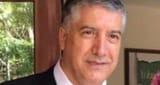
The land of Iğdır is rich. It has nurtured people of every talent, magically influencing their spiritual and intellectual worlds. The greatest talent it produced in folklore and literature is undoubtedly Nejat Birdoğan. (My elder brother Nizamettin Onk, the esteemed folklorist of Iğdır, also confirmed this.)
In 2001, while writing my book "Iğdır Sevdası" (Love of Iğdır), I asked the late Turgut Sungar, whom I interviewed in Ankara, "I'm going to Istanbul soon, who do you recommend I meet?" Turgut Sungar, with a deeply saddened gesture, slapped his knee: "We buried the greatest talent Iğdır ever produced in literature and folklore two weeks ago. Oh, if only we had met a month earlier! You absolutely should have known him. He was an ocean of knowledge."
Intrigued, I asked for the deceased's name. Turgut Sungar sighed as if I was tearing out his heart: "Nejat Birdoğan."
I hadn't heard this name before. I attributed it to having lived abroad for many years, and perhaps because my main profession was engineering and economics, the name of such a valuable folklorist hadn't caught my attention. My astonishment grew when I researched him. He knew how to captivate readers with his impressive writings and convincing theses. For this reason, I found myself in a state of self-reproach.
Nejat Birdoğan was not merely a researcher confined to Turkey; he succeeded in making an international impact with his theses and views. With more than half a dozen books, countless articles, poems, and his unique views and thoughts developed along a Kemalist-leftist line, Nejat Birdoğan continued his creative struggle with a diversity and richness that few could easily achieve, leaving a deep mark behind.
Nejat Birdoğan should be regarded as one of the rare intellectuals who demonstrated the courage to stand behind what he said and wrote, something Turkey desperately needs right now. We may not agree with everything Nejat Birdoğan said about Alevism. However, there is no doubt that he was one of the few folklorists, perhaps even the foremost, who delved into the subject of Alevism most deeply. His writings, books, and works will always retain their value and open up new avenues of thought for future generations. We know there is a segment of Alevis who disliked him because of his ideas and were disturbed by his writings. I believe that the tolerance and freedom of thought, which form the foundation of the Alevi faith, should be extended to Nejat Birdoğan.
Immediately after my meeting with Turgut Sungar, I wasted no time and went to Nejat Birdoğan's house in Avcılar, Istanbul. Ms. Şule, carrying the deep sorrow of having lost her husband, answered my questions, albeit with difficulty, and shared snippets from Nejat Birdoğan's life.
FOLKLORE IN TURKEY
Folklore is referred to as "folklore" in English and French, and "Volkskunde" in German. In English, folk means "people," and lore means "knowledge" or "science." After a certain period, folklore developed as an independent scientific discipline with its own unique methods. The word "folklor," meaning folklore, was first used in Turkey by Rıza Tevfik in 1913. Ziya Gökalp Turkified this term as "halkiyat."
Until the proclamation of the Republic, folklore studies in Turkey were carried out in a scattered and unsystematic manner. In 1938, folk literature courses were introduced in the Department of Turkish Language and Literature at Ankara University's Faculty of Language, History, and Geography, and in 1948, a Folklore chair was established. This chair, headed by Pertev Naili Boratav, was abolished at the end of the academic year. In subsequent years, folklore was taught not as a separate subject but as part of various departments.
Folklore is multifaceted. It is closely related to sciences such as Ethnology, Sociology, Social and Cultural Anthropology, Literature, Psychology, Linguistics, Religious Studies, History, History of Religions, Art History, Geography, Medicine, Law, etc. When necessary, it utilizes the methods and findings of these disciplines, makes comparisons, and tries to delve into the origins of concepts. Thus, it aims to contribute to the common culture of humanity by moving from local and national to universal.
WHERE WAS NEJAT BİRDOĞAN BORN?
Nejat Birdoğan was born in Kars on October 29, 1934. His family later moved to Iğdır due to his father's profession (Health Officer). Some sources state that Nejat Birdoğan was born in Iğdır. This is not correct. If it were, I would not have included him in the "Those who left a mark in Iğdır" series.
NEJAT BİRDOĞAN'S WIFE, MS. ŞULE, RECOUNTS
I was born in Zonguldak in 1934, the child of a father from Trabzon and a mother from Istanbul – of Rumelian and Cretan descent. I completed my primary and secondary education in Zonguldak. I graduated from Istanbul Faculty of Medicine in 1959. I completed my specialization at Hacettepe Children's Hospital and entered professional life as a medical doctor.
MEETING NEJAT BİRDOĞAN
I met Nejat in 1978. One summer season, I was staying at a tourist facility in Ayvalık. I was with a friend at the evening dinner reception. A lady caught my attention. With a glass in her hand, she moved from one table to another, joining conversations in her unique intellectual manner. Her self-confidence and courage impressed me, and I watched her with admiration.
The next day at breakfast, the lady from the evening passed by us. When my friend invited her, she sat down with us. My friend asked:
"What is your name?"
She replied, "İsmet Kür!"
This lady, whose voice I immediately recognized, was my Turkish teacher from Zonguldak middle school. I had not expected to meet Ms. İsmet, the mother of our famous writer Pınar Kür, at such a holiday resort and after so many years. We fell into a sweet conversation.
After the holiday ended and I returned to Istanbul, one day Ms. İsmet invited us to a "Literary Night" organized by her elder sister, the poet Halide Edip Zorlutuna.
During the years Nejat was the principal of Istanbul Esentepe High School, he met İsmet Hanım, a literature teacher, and together they organized meetings known as "Salıgiller" (Tuesday Gatherings), attended by famous artists and writers of the period.
During these bohemian gatherings, important art and literature topics of the day were discussed. Nejat, as the youngest participant in these meetings, was particularly sought after for poetry readings and criticism. (One of the regulars at the meeting was my Physiology professor, Prof. Sadi Irmak, one of the Prime Ministers of the 70s.)
I met Nejat at this invited meeting. Since we were compatible in terms of our worldview and personality, a romantic relationship developed between us, and we decided to get married in 1979.
In those years, Nejat was serving as the Head of the Folklore Department at the Ministry of Culture. During the September 12 Coup, Nejat became a target. First, he was asked to work as an advisor. When he refused, he was exiled to the Ethnography Museum. He was someone who loved to work. Taking his duty seriously, he managed to bring to light books and documents that had been gathering dust in the museum's archives for years. However, when a new exile appeared on the horizon, Nejat was forced to request his retirement.
NEJAT BİRDOĞAN'S LIFE
Nejat was born in Kars on October 29, 1934. He was the youngest son of Ahmet Bey, originally from Erzurum, who later worked as a health officer in Iğdır. His children's names are Düriye, Raci, Naci, Nejat, and Yıldız.
Nejat's family was of Alevi origin. Since Ahmet Bey frequently organized gatherings at home attended by saz and söz poets and folk bards, Nejat developed an interest in folklore from a young age, and his spirit was shaped by these values.
He completed primary and middle school in Iğdır and high school as a boarder at Trabzon Boys' High School. After graduating from Gazi University Faculty of Letters, he turned down a scholarship to study in America and went to Van. Nejat Birdoğan worked as a Turkish teacher at Iğdır Middle School between 1957 and 1960.
He served as a board member of the Pir Sultan Abdal Culture Association General Center and as honorary president of the Anatolian Culture Preservation Foundation (AKYAV). He also served as a jury member in the "Folk Dances and Folk Music" competitions organized by Milliyet Newspaper.
"WILL YOU TEACH BIRDSEED?"
After graduating, Nejat Birdoğan started working as a teacher at the Teacher Training School in Ernis (Ünseli), a village in the Muradiye district near Lake Van, on the Van-Erciş road. This would also be a turning point in his career, where he would meet his friend Ali Saraçoğlu, to whom he said, "I owe everything to him." Ali Saraçoğlu was originally from Van. After working as a journalist for many years at Vatan Newspaper with Ecevit, he returned to Van and took on the role of accountant at the Altındere stud farm. He met Nejat by chance and they became friends.
In those years, literature textbooks taught in high schools included a poem by Hüseyin Rahmi Gürpınar titled "Kuşyemi" (Birdseed). Ali Saraçoğlu, who was interested in folklore, made a sincere suggestion to his beloved friend Nejat during a conversation: "You should turn to folklore. You won't be teaching 'Birdseed' your whole life, will you?" Together, they traveled from village to village on weekends, conducting research and taking notes. This became Nejat's first step into folklore.
In Van, Nejat met and married his first wife, Gülsen Hanım. They had two daughters with Gülsen Hanım, who was originally from Samsun. One daughter, Ms. Vicdan, works as a computer engineer at IBM in Stuttgart; the other daughter, an architect, runs a beauty institute in Istanbul.
After Van, Nejat worked as a principal and administrator in high schools in Iğdır, Burdur, and Istanbul Esentepe.
While Nejat Birdoğan was teaching at Iğdır Middle School, he formed a friendship with the doyen journalist of Iğdır, the late Fazıl Şıktaş. When he was transferred to Kağızman Middle School, he continued his friendship with Fazıl Şıktaş. The two friends published a bi-weekly newspaper called SU in Kağızman.
In an interview I conducted with Nizamettin Onk while preparing the book "Iğdır Sevdası" in 2001, he mentioned that Nejat Birdoğan and Fazıl Şıktaş had published a newspaper called SU in Kağızman. However, since I could not find a copy in either the National Library or private archives, I had not included the name SU in the list of newspapers published in Iğdır. In a book prepared in memory of Nejat Birdoğan, a clipping of the SU newspaper was provided in image format. For future researchers, I would like to re-list the newspapers published in Iğdır. (Grand National Assembly and Republican Period)
- ARAS Newspaper Owner: Military Doctor Derviş Kuntman from Kilis 1921 (We have no issues. We know from the doctor's memoirs.)
- IĞDIR Newspaper Owner: Cengiz Ekinci September 28, 1950
- ARAS Magazine Owner: Ramiz Özler October 30, 1950
- DİL Newspaper Owner: Mecit Hun July 9, 1952
- Fırıldak Owner: Mecit Hun January 21, 1953
- Şarkın Dili Owner: Mecit Hun May 16, 1953 Iğdır/Ağrı
- Pamukova Owner: Mecit Hun July 30, 1954
- Yeni Iğdır Cemil Aydın February 28, 1955 (We have no issues. We know of its existence from polemics with the PAMUKOVA newspaper published by Mecit Hun.)
- Yeşil Iğdır Fazıl Şıktaş September 1, 1955 Iğdır
- SU Owner: Fazıl Şıktaş 1964 Iğdır/ Kağızman
SU NEWSPAPER
A Literary Newspaper published every 15 days
Owner: Fazıl Şıktaş
Responsible Manager: Nejat Birdoğan
Year: 1 Issue: 8 September 15, 1964
Typesetting and printing location: Narinkale Printing House, Kağızman
Letter sent by poet and writer Behçet Kemal Çağlar to Nejat Birdoğan after the second issue of the newspaper:
GREETINGS TO SU!
I have been thirsty from birth to death,
And my beloved is a sip of WATER, a sip
A drop of life for cracked lips
As soon as I held SU in my hand, I said this.
What a beautiful, what a magical WATER, that it does not flow away from my hands and palms. Like big newspapers full of trivialities, crystal glasses but cloudy, chalky presentations... Whereas, thank goodness, here is pure spring water in an earthenware pot; sparkling, crystal clear.
Our ancestors did not say for no reason: "May you be as precious as water."
Perhaps the idle big city newspapers, which live abundantly with bread from hand and water from the lake, will see this small SU and roll up their sleeves to address the realities of the country.
And our hearts will be sprinkled with water.
Greetings, congratulations, and love
Behçet Kemal Çağlar
***
HE WAS A FULL-BODIED PERSON
Nejat was a multifaceted person. Folklore, poetry, literature, field research, criticism, and music expertise were some of his pursuits.
At our home, there would be musical gatherings with friends like Fikret Otyam. Conversations about poetry, music, and literature would extend joyfully until midnight.
In 1992, one day Nejat dove headfirst into the sea near our house and suffered a severe blow to his left eye. Nejat, who was extremely myopic, neglected the pain in his eye and did not want to go to the doctor immediately. Finally, when we could no longer bear the pain and went to the hospital, the answer we received was very frightening: Nejat's left eye was damaged and had lost its vision.
NEJAT BİRDOĞAN'S MOST IMPORTANT THESIS
Nejat's most important thesis was: "Alevism is outside of Islam." Nejat was the first researcher to prove with documents that the Alevi belief system originated and existed before Islam.
Shamanist Turkic communities in Central Asia, during their westward migrations, encountered other religions and beliefs such as Buddhism, Manichaeism, Mazdakism, and Zoroastrianism along their path, forming a new synthesis. Nejat, who studied this historical development through years of research, ultimately put forth the thesis that "Alevism is outside of Islam and predates Islam."
Nejat's radical thesis caused a great stir. Alevi associations, which argued that the etymology of the word "Alevi" originated from Hz. Ali, strongly opposed Nejat's thesis. These views were discussed in various national and international symposia and became the subject of hundreds of articles.
Nejat was deeply immersed in his book work. Some of his published books were as follows:
- Anadolu'nun Gizli Kültürü Alevilik (Anatolia's Secret Culture Alevism) (1990),
- Anadolu ve Balkanlarda Alevi Yerleşmesi (Alevi Settlement in Anatolia and the Balkans) (1992),
- Şah İsmail Hatai (Shah Ismail Hatai) (1991),
- Anadolu Aleviliğinde Yol Ayrımı (Crossroads in Anatolian Alevism) (1995),
- Samahlar (Samahs) (1982),
- Notalarıyla Türkülerimiz (Our Folk Songs with Notes) (1987),
- Gülizar-ı Haseneyn (Rose Garden of Haseneyn) (1985),
- Çelebi Cemalettin Efendinin Savunması (Defense of Çelebi Cemalettin Efendi) (1994),
- İttihat ve Terakkinin Alevilik-Bektaşilik Araştırması (Baha Sait Bey) (Research on Alevism-Bektashism by the Committee of Union and Progress) (1994);
- Hasan Dede Kasabası ve Hasan Dede (Hasan Dede Town and Hasan Dede) (1992).
- Köroğlu
- Azerbaycan Gülmecesi ve Nasreddin Hoca (Azerbaijani Humor and Nasreddin Hodja)
- Alevi Kaynakları (İki Cilt) (Alevi Sources - Two Volumes)
Nejat, who wrote poems under the pen names "Zühtü" and "Cevri," has many articles published in various magazines. Musa Eroğlu composed several of his poems as folk songs.
Due to his research curiosity, Nejat learned Persian very well, also took an interest in the Cyrillic alphabet, and translated many books published in this alphabet into Latin Turkish. He also knew French and Kurdish well enough to communicate with people.
Various parties made great efforts to draw Nejat into politics. He was closely involved with the "Aydınlık" (Enlightenment) movement. Many of his articles were published in Aydınlık magazine.
In politics, Nejat was uncompromising on two issues, and this was also a summary of his political identity: Kemalism and Turkish-Kurdish brotherhood. (In later years, Doğu Perinçek would base his political propaganda on these two principles of Nejat.)
NEJAT BİRDOĞAN'S DEATH
Nejat did not like going to the doctor. For many years, he suffered from an intestinal ailment. He neglected it. In 1998, when he suddenly experienced an intestinal obstruction, we had to go to the hospital. The diagnosis was very painful: Nejat had intestinal cancer.
Chemotherapy and radiotherapy sessions were started without delay. However, Nejat was deteriorating day by day, approaching death step by step. On May 3, 2001, Nejat passed away forever. He was buried in Esenyurt - Yeni Mezarlık. Since 2014, the Avcılar Municipality has organized the Nejat Birdoğan Research Award in his memory every year.
NEJAT BİRDOĞAN'S DAILY LIFE
Nejat went to bed late and woke up late. Even when sleeping, if something bothered him, he would go to his computer and either read or write. He constantly made a list of things to do in his head, programming his life, so to speak.
He helped me with housework, some days he would prepare breakfast, and he would wash dishes when necessary. He especially enjoyed ironing.
"IT DOESN'T SUIT YOU!"
Nejat loved humor. He never let go of joking and witty conversation.
One day, our doorbell rang. A water seller, speaking in the Azerbaijani dialect, asked if we needed anything. Nejat spoke the Azerbaijani dialect very well. After all, his childhood was spent in Iğdır.
Their conversation in Azeri lasted a little longer. At one point, the seller, curious, asked:
"Tell me! Is this house yours?"
"Yes, it is! What happened? You didn't like it, did you?"
"I liked it, I liked it, but I couldn't reconcile it with your language."
"YOUR FAMOUS WRITER IS LIKE THIS, WHAT ABOUT..."
Nejat and Aziz Nesin went on a European tour together. As they entered Bulgaria by road via Germany, customs officers caused difficulties, slowing down their passage.
When the customs officer, who knew Aziz Nesin and spoke Turkish very well, asked, "What's in your suitcase?" Aziz Nesin, who had an irritable nature, sharply said, "Shit!" Then he opened his suitcase and showed it.
When it was Nejat's turn, the customs officer said, "Pass! Pass!" without searching. He turned to his friend and said, "The mouth of their famous writer is so foul, who knows what others will say to us!"
"IF YOU ARE, DON'T HIDE IT, SAY IT, BROTHER, SAY IT!"
During the European tour, Aziz Nesin was invited to the podium to give a speech on secularism. His speech drifted to issues of rights and law. Aziz Nesin added: "To summarize what I've said better, we find it natural for a prostitute to accept her identity and fight for it in her own way."
A journalist named Musa was very impressed by Aziz Nesin's reasoning.
The next day, at another meeting, during a speech on secularism, journalist Musa Bey took the podium. He wanted to repeat Aziz Nesin's words exactly, but since he forgot the word "prostitute," he saw no harm in using the word "homosexual" instead.
"We say that homosexuals should be able to reveal their identity without hesitation."
At that moment, a man with a bushy mustache sitting in the back rows said:
"Say it, brother, say it! Don't hide it! If you are, you are, my dear!"
NEJAT BİRDOĞAN NARRATES HIS OWN STORY
I was born in Kars on October 29, 1934. After completing the necessary stages of education, I worked as a teacher and administrator in secondary schools for many years. In 1977, I became the Head of the Folklore Department at the Ministry of Culture. This duty ended with my retirement in 1980.
I started with folklore encouraged by the environment I grew up in. My first endeavor in this field was Folk and Minstrel Literature. I also turned to folk dances with my study of the "Sheikh Shamil" play, which was much debated in Kars.
Since 1961, I have published articles and books on various topics of Turkish Folklore. I believe that in addressing folk dances, delving into and examining their meaning is as important as the events of compilation and exhibition.
For example, the view of nature, economic hardships, and societal conflicts are presented in these dances as the ballet of the people. By examining these dances reciprocally, we can also determine the migration routes of the people. We have the richest folk dances in the world.
The richness of our past culture can also be put forward through this. The State Folk Dance Ensemble only promotes. The research and examination we put forward above are still lacking from the authorities. Furthermore, we can also present the exhibition according to the rules of the modern age with new experiments. This is not seen as distorting authenticity.
THE BİRDOĞAN FAMILY IN IĞDIR PRESS
PAMUKOVA NEWSPAPER OWNER: MECİT HUN
Year: 1 Issue: 8 August 18, 1954
A TERRIBLE TRUCK ACCIDENT
At the time of the accident, the chief physician Abbas Çöllü, who had been working with great dedication, the hospital administrator Ahmet Birdoğan, midwife Müşerref, and nurses Şehriban and Kerem, whose efforts exceeded human capacity....
PAMUKOVA NEWSPAPER OWNER: MECİT HUN (November 29, 1954)
WE WISH HAPPINESS
The wedding ceremony of our valuable young people, District Governor Yavuz Nazaroğlu of Çıldır, and Yıldız Birdoğan, daughter of Ahmet Birdoğan, an officer at the Iğdır Health Center, was held three days ago in the presence of a distinguished group of guests.
We wish the young couple happiness.
PAMUKOVA NEWSPAPER OWNER: MECİT HUN (December 27, 1954)
HEALTH CENTER - HEALING CENTER
We entered through the door opening to the street with the center's amiable Chief Physician and our esteemed fellow townsman Abbas Çöllü. The compassionate and appreciative attention of administrator Ahmet Birdoğan, nurse Saadet Arısoy, and nurses Kerem Elmas and Güzel Karaduman towards the patients must certainly have contributed to the Health Center's current state.
FROM NEJAT BİRDOĞAN'S OWN ACCOUNT
Nejat Birdoğan was interested in folk culture, philosophy, literature, and folklore from his childhood. He explains the reasons that pushed him into the field of folklore as follows:
"The media, which we call written, audio, and visual broadcasting organs, were not like today in the period I grew up. I was born and raised in Kars. I saw the current radio when I finished high school. I knew of the radio's existence before, but we didn't have a radio at home. In this situation, I hadn't encountered a branch of music, a branch of poetry, or the art of ballet, which we could substitute for folk dance, until I went to higher education. What had I seen? I had seen all the local folk culture products. We lived intertwined with folk bards. My father was someone who wrote mediocre poems but had a very vast memory. Folk bards used to come to our house.
Later, two rooms in our house in Iğdır, where we moved, were reserved as 'untouchable rooms' for folk bards. Folk bards would come and stay with us. These bards would bring their cultural richness with them. Among the folk bards who came, there were Sunni folk bards as well as Alevi ones. Besides them, there were also those who performed 'usta malı,' meaning the works of others. It would be more appropriate to call them local artists. During long Ramadan evenings and winter days in Iğdır and Kars, folk bards who preferred to tell stories like Kerem and Aslı, Köroğlu Tales, and Islamic-origin events like Seyfüzül Yezen in Anatolian folk language would stay with us for a long time. They would tell the lives of Emrah and many other bards like him. While I was a middle school student, I started writing things. I attended high school as a boarder at Trabzon Boys' High School. After finishing high school, I went to Ankara as a university student. I graduated from the Literature Department of Gazi Education Institute. I worked as a 'Literature' teacher in different places. Later, I worked on folklore research at the Ministry of Culture. I served as a jury member in the 'Folk Dances and Folk Music' competitions organized by Milliyet Newspaper. I participated as a speaker in many conferences and meetings in Turkey and abroad."
NEJAT BİRDOĞAN (PEN NAME: CEVRİ)
The bard hides in his sigh
There are folk songs underground,
In his saying, in his samah
There are folk songs under the veil.
Hope, a lamb herding lover
A hope that goes to a friend
Endure, tender sapling
There are folk songs under the snow.
Spreading as it is chained
Heard in seven climates
Counted a thousand for one cut
There are folk songs under the pomegranate.
Salt was added to God's honey
What can the body do, the head was sold
A noose was thrown to the brave
There are folk songs under the gallows.
Cevri renews from hardship
This day is better than yesterday
The wheel of fortune groans
There are folk songs under the existence.
NEJAT BİRDOĞAN (PEN NAME: CEVRİ)
Hey saints, I have a market
I sell states to those who understand,
My scales, my weights are not found
I sell honey to its fill.
I speak words on the counter
I stake my words with roses
What do I care for enmity and complaint
I sell thornless roses.
Saints, I set up a market
I said God, God, and turned around
I stamped the seal of love
I sell stamps for a friend's envelope.
I am a jeweler, I strung pearls
I swam in the sea of jewels
I filtered through the sieve of reason
Cevri, I sell the reason of a servant.
THE KÖROĞLU BOOK
Nejat Birdoğan wanted to work on a book titled Köroğlu. He traveled through the Central, Aralık, and Tuzluca districts of Iğdır and prepared his book based on the information he gathered there. He collected information about Köroğlu from nearly sixty bards and people of heart. Among them, with the help of Âşık Kamil Dur, Âşık Ali Kurtak, Famil Filiz, Sucu Kamber, and others in Iğdır, he compiled the book and sent it to print. Later, he included Nizamettin Onk Bey, one of Iğdır's most important folklorists, in his team. In 1967-68, a new study on the subject was conducted in the region with his students from Iğdır High School. The book was completed in 1980. The Ministry of Culture wanted to publish the book in 1982, but later deemed its content dangerous and its language fabricated, and thus decided not to publish it. The book was later published by Kaynak Yayınları in 1996.
NEJAT BİRDOĞAN WRITES
While writing his book on Alevism, Nejat Birdoğan recounts a memory related to Iğdır:
"Here, I want to share a memory with you. I mentioned that I grew up in Iğdır. I was the high school principal there. There is an extreme Shiite community, pro-Iranian, in Iğdır. They don't like the first three caliphs. They don't even mention their names. On the tenth day of Muharram, you won't find a single student in the high school. Thousands of students don't come to school that day. Are all of them Shiite? No! There are also some students from other faiths, from Kurdish tribes, and from other places. Karbala ceremonies are held in the village of Melekli (now a town) in Iğdır. Students go there. Teachers also go with them out of curiosity, wondering 'What are they doing?'"
"Of course, we also have history lessons. One day, a history teacher came to me. 'Mr. Principal,' he said, 'I gave a written exam, I asked about the first four caliphs. All the students rebelled against this.' Everyone only writes about Hz. Ali (656-66). No one wrote about the first three caliphs. I explained the situation to the teacher. Then we went to the classroom together. This time we asked the question orally. We called on one student. He said, in the Azeri dialect, 'the fourth one, my sacrifice, Hz. Ali.' When asked about the first three, he bowed his head. Meaning, he doesn't utter their names. So, in Iğdır, the names of Osman, Ömer, and Abu Bakr are not mentioned."
NİZAMETTİN ONK RECOUNTS
I was in Iğdır on the day of the 1960 Revolution. As soon as I heard the news, I went out into the street and started walking around with a heroic air. I embraced Lieutenant İsmet and chatted with Battalion Commander Osman Hisarcıkoğlu. Colonel Hayri Armağan, the branch head, took over military and civilian administration as the martial law commander.
Soon after, my assignment was again to Iğdır. On June 30, a large celebration ceremony was held in Taşburun. Mecit Hun, Nejat Birdoğan, and I made speeches and stirred up the crowd.
When the revolution happened, Mecit Hun was the CHP district chairman, and Mehmet Ali Kutlay was the vice chairman. The DP district chairman was Eşref Kaya.
NİZAMETTİN ONK RECOUNTS
Nejat Birdoğan was cultured, and his oratory and writing skills were very strong. He conducted research on Emrah and Deryami and wrote articles on the Turkish language. He was one of the five folklorists in Turkey: Nejat Birdoğan, Fahrettin Kırzıoğlu, Cahit Öztelli, Pertev Naili Boratav, and Nizamettin Onk.
Nejat Birdoğan was appointed as the principal of Kağızman Middle School from Iğdır. There, he published a literary magazine called "Su" with Fazıl Şıktaş. Later, Nejat Birdoğan, who served as principal in Palu and Istanbul Alibey, was appointed to a private school (Esentepe).
Nejat was a very good orator. His speech would impress people and instill a pleasure in listening.
IN MEMORY OF NEJAT BİRDOĞAN (WRITTEN BY SERVER TANİLLİ)
(I conclude with the impressive writing of my late teacher Servet Tanilli, from whom I briefly took a course on the History of Civilization at the University of Strasbourg in France in the 1980s, in sacred memory of the late Nejat Birdoğan. Mücahit)
Nejat Birdoğan passed away.
An open, enlightened, modern pen, no longer writes. A stimulating producer of ideas, an original perspective, will now continue his actions through his writings and books from his time.
What can be said about him now? We knew him as a cultural historian. His eyes were turned towards our own homeland; his intellectual concern was about the past and present of Anatolian culture. He particularly focused on Alevism and Bektashism, researching their origins and their place in our culture.
What led him to this quest?
In a very concise article he published in our newspaper on August 16, 1989, titled "Alevism and Realities in Anatolia," he provides clues to this.
What he says is this: Alevi, as is known, means "supporter of Ali." Starting from this, most researchers put apples and oranges in the same basket; they link the emergence of a great cultural phenomenon to the caliphate right taken from Caliph Ali, the Fadak Date Palm Grove, and the Karbala Incident. Then comes the judgment phase: "We are a branch of Islam," they say, and get out of it.
However, this did not solve the problem; it complicated it further: For example, there are countless countries like Iran, Syria, Morocco, which are pro-Ali; in them too, the belief in "Ahl al-Bayt," "Twelve Imams," and "Karbala" holds a prominent place; but still, we have a difference with them.
Moreover, the unique beliefs and rituals of Anatolian Alevis are also observed.
So, what is the source of this difference?
Nejat Birdoğan's concern was to find the answer to this question. The truth he revealed was how our national culture was fermented – centuries ago.
In the said article, he underlines: "Anatolian Alevism was not born solely out of love for Ali. This collection of sacred traditions is a true national culture, a consciousness. More precisely, it is a reaction, a resistance against efforts to Islamize and Arabize."
According to him, when the difficulties of life and history pushed the nomadic Oghuz Turks from the Central Asian steppes westward, these egalitarian people, who did not believe in privilege, brought their own laws and customs to Anatolia. Whether we call this law Tengrism or Shamanism, things were running smoothly. However, the nomadic Oghuz Turks encountered a deeply conservative Muslim oppression in Anatolia.
Instead of disrupting the existing order, they sought a place for themselves within this spectrum. "They chose the region full of love for Hz. Ali, brought their old rural habits, and settled in that region. In later periods, they developed this love. They lived and breathed with this love. They adorned their ancient Asian traditions in their ceremonies with Ali's flowers. Sacrifices were made in his name. Samah was performed in his name. Judgments were given in his name. Ali suited our grand Turkish language very well. Anatolian Alevis Turkified Ali and immortalized him."
Thus, neither the Fadak Date Palm Grove nor Karbala!
Clearly, it was the historical and cultural conditions of Anatolian soil that shaped both the idea and the belief. If we look at it this way, the Alevi's hostility towards Sharia and their support for a secular democratic Republic fall into place. Nejat Birdoğan's pen has clarified all of this. He was, in a way, an Enlightenment figure who left us.
His name will not be forgotten!
And in the struggle against sleepwalkers, cunning tricksters, and charlatans, he will guide us and strengthen our resolve...
***
ÂŞIK CEVRİ (NEJAT BİRDOĞAN)
Salt was added to God's honey,
What can the body do, the head was sold.
A noose was thrown to the brave,
There are folk songs under the gallows.