Those Who Left a Mark in Iğdır: Cengiz Ekinci – Part 2
This article, the second part of a series, delves into the life and journalistic contributions of Cengiz Ekinci, a pivotal figure in Iğdır's cultural history, focusing on his newspaper "IĞDIR" and his later work in Kars.
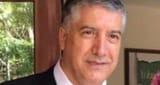
Dear readers! Today, I will introduce you to an important personality who left his mark on the history of Iğdır. Many of my readers may not have heard his name. In this mortal world, names are quickly forgotten. The feeling of loyalty is quickly eroded. But we, the people of Iğdır, will not allow this. Cengiz Ekinci, who spent a few years of his life in Iğdır, in a sense ignited the spirit of journalism in Iğdır and became its pioneer. Names like Mecit Hun and Fazıl Şıktaş followed in his footsteps and brought valuable newspapers to our Iğdır.
The name Cengiz Ekinci is written in golden letters in the cultural history of Iğdır. The reason for this is the newspaper named "IĞDIR," which he published in Iğdır on September 28, 1950, and which was Iğdır's first newspaper. Here, I would like to immediately remind you of a debt of gratitude. From the memoirs of Military Doctor Derviş Kuntman from Kilis, we understand that the first newspaper published in Iğdır was a weekly magazine named ARAS, published by Doctor Derviş Kuntman in 1921. However, when we consider the Republican era, the honor of publishing the first newspaper belongs to Cengiz Ekinci.
The only copy of this newspaper, which we estimate was published for one year (Issue: 32, dated January 15, 1951, published on Mondays and Thursdays), is currently in the private archive of our esteemed elder, the late Turgut Sungar.
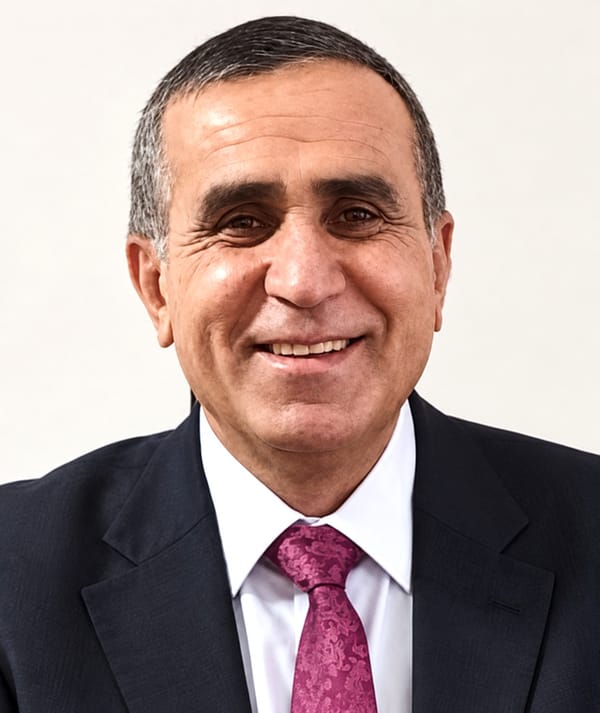
Cengiz Ekinci was, first and foremost, a versatile man of culture, a successful journalist, and a master of satire. Ekinci, who was involved in politics throughout his life, was a fighter, a lover of democracy, who did not compromise on his principles. He was also tolerant enough to tolerate those who could not tolerate his satires. It is an honor for us to commemorate this man of culture, raised in Kars, and the honorary father of journalism in Iğdır, on these pages.
Cengiz Ekinci, a graduate of Ankara University Law Faculty, chose Iğdır as his first place of duty as soon as he completed his legal internship (1949), and settled in this charming district of the East with his family (end of 1949). In the Ayhavar Newspaper dated April 9, 1953, Cengiz Ekinci, when writing his autobiography, included the interesting sentence, "He started life in Iğdır, he started his profession in Iğdır."
Cengiz Ekinci did not feel like a stranger in Iğdır. He collaborated with important personalities of Iğdır and made friends. Among them, it is possible to name figures such as Cafer Sadık Tezel, Hasan Tezel, Nurettin Kirman, Mecit Hun, Fazıl Baykal, Rıza Yalçın, Rahim Yadigâr, Hacı Nağdali, and the Parlar brothers.
Cengiz Ekinci, a master of the pen and satire, published Iğdır's first newspaper, "IĞDIR," as a single-page mimeographed sheet on September 28, 1950. Cengiz Ekinci left Iğdır in 1951 and settled in Kars. From February 9, 1953, he started publishing the EKİNCİ newspaper in Kars.
Based on this valuable copy we have, it is immediately clear that the "IĞDIR" newspaper pursued a multifaceted purpose. On the one hand, it addressed political and social issues concerning Turkey in general, and on the other hand, it approached Iğdır's problems, often with a humorous style. Seriousness, humor, and satire were intertwined. It seems as if the author implicitly wished for the reader to understand these boundaries well and not make mistakes.
CENGİZ EKİNCİ'S WIFE VUSLAT HANIM NARRATES:
"My father, Raci Çakıröz, was an officer in the Ottoman army. During the First World War, he was captured by the Russians in the Sarıkamış battles and exiled to Siberia. My father, who found an opportunity to escape from Siberia with a group of friends, went to Uzbekistan, stayed for a while in the cities of Samarkand and Bukhara, and married my mother, Râna Hanım, of Uzbek origin, whom he met there.
When my father set off for Turkey with his wife, my mother was pregnant with me. My father settled in Istanbul. I was born in Üsküdar in 1340 (1924), in the months following the proclamation of the Republic. Since my father was an officer, he served in various parts of Turkey. When I reached school age, my father was assigned to Kars for his Eastern service.
I finished primary school in Kars. I also started the first year of middle school in Kars. When my father was assigned to the Maltepe Shooting School, we moved to Istanbul. My father had learned Russian during his years of exile and captivity. When there was a need for officers who knew this language at the General Staff, we moved to Ankara. Finally, I was able to finish high school in Diyarbakır, my father's new assignment.
After my father retired, he continued to work in a civilian capacity at the General Staff in Ankara. My father passed away in 1977.
MEETING CENGİZ EKİNCİ
My first meeting with Cengiz dates back to my middle school years in Kars. When I was in the first year of middle school, Cengiz was a student in the grade above. Our acquaintance started like that.
After finishing high school, when I went to enroll in Ankara University Law Faculty in the 1943-44 academic year, I met Cengiz again after all those years. A warm and sincere friendship immediately developed between us.
Neither of our families was well-off financially. We were both working at the General Directorate of State Railways and attending school.
In our second year, we got married to Cengiz with a sudden decision. Due to these new developments in my life, I had to drop out of the Faculty.
WHO IS CENGİZ EKİNCİ?
Vuslat Ekinci narrates:
"Cengiz, born in 1919, would connect his birth to a historical event and say: 'Immediately after I was born, when I was only 40 days old, my family left Gümrü, which was at war with the Armenians, and set off for Kars.'
Cengiz's father, Esat Bey, was an Azerbaijani settled in Gümrü (Leninakan). When the Armenian war began, for security reasons, like all Muslims in the region, he took his family and sought refuge in Turkey. Esat Bey's brother, Süleyman Bey, was stranded on the other side of the border and was never heard from again.
Cengiz's family first settled in the hamlet of Şahanlar, near the border village of Akyaka. After staying there for a few years, they moved to Sarıkamış and finally were settled in Kars city center after being granted refugee status.
Cengiz's brothers, Mehmet, who retired, lives in Çorlu, and İsmail, who accepted German citizenship, lives in Germany.
CENGİZ EKİNCİ'S DISABILITY
Cengiz had been suffering from his right leg since he was 15. Due to incorrect treatment, his kneecap fused to the bone, and his leg shortened. This tragic event unfolded as follows.
There was a blind man in Cengiz's neighborhood. The children of the neighborhood would pull the skirt of the blind man walking in the streets and make fun of him. For some reason, the blind man always thought it was the same child doing this, and would only call out his name and curse.
One day, this blind man was passing in front of Cengiz's house. Coincidentally, the child whom the blind man habitually cursed was playing there.
Cengiz did what the neighborhood children did, he pulled the blind man's skirt. The blind man, as always, cursed by calling out that child's name. The cursed child, saying that Cengiz had deliberately bothered the blind man to make him curse, attacked Cengiz. He grabbed the blind man's cane and delivered a violent blow to Cengiz's knee. The fight that started this way continued for a while. People from the houses intervened in this violent fight and barely managed to calm the parties.
A few days passed. Cengiz's knee was bruised and swollen. They neglected the treatment for a while. The wound became severely infected due to tetanus, so much so that the doctors initially wanted to amputate the leg. His father, Esat Bey, objected, saying, "I don't want a lame child. If he's going to die, let him die with two legs!" The doctors, with a difficult operation, cut the leg in three places and drained the infection.
The doctors' advice was: "You must move the leg!" However, Cengiz refused to walk due to the pain. They put a pillow under his leg and rested it. Due to this neglect, both his kneecap fused and his leg remained curved. That's why his right leg was a little shorter.
As soon as Cengiz graduated, he started his legal internship. After receiving his diploma, he did a short research on where he should work. He wanted to go to Kars. When he learned that there were no lawyers in Iğdır and that this work was carried out by legal representatives, we set off for Iğdır without hesitation (1950).
Cengiz worked as a lawyer in Iğdır and also published a newspaper called "Iğdır." He prepared the "Iğdır" newspaper as a single page on a mimeograph machine. This daily newspaper attracted considerable attention in the district.
THE PIÇ HAMİT INCIDENT
Piç Hamit (Ünver) was originally from the village of Persili, which is within the borders of present-day Armenia. After completing his high school education, he strived for higher education, but before he had the chance, he married a Russian girl he met. In the early 1930s, he illegally crossed the Soviet-Turkish border and came to Iğdır with his wife, son Nazım, and daughter Sahibe, and settled there.
NEWS IN IĞDIR NEWSPAPER
He will donate blood! January 15, 1951 Cengiz Ekinci (IĞDIR newspaper)
As soon as the news spread that blood would be sent from the country to our heroic wounded in Korea, we learned that Hamit Ünver had also registered his name but was rejected. We investigated the reason: Some say he was rejected because the type of his blood was not understood, while others claim he was rejected because he wanted to sell his blood for money.
He himself was losing two kilograms a day because our heroes were deprived of this clean (!) blood. There was an immigrant in Iğdır known by the nickname Piç Hamit. Somehow, Cengiz wrote an article about him in the IĞDIR newspaper. Hüsnü Bingöl, the National Security Inspector, considering this as an denunciation, forcibly removed Piç Hamit from Iğdır to be deported.
I had no knowledge of this incident. One afternoon, the door of the house – we were tenants in Osman Atman's house – groaned under violent punches. "Who is it?" I called out. The young man, who shouted "I am Hamit's son," as I later learned, was enraged by his father's deportation and had decided to punish us.
I was pregnant with my son Azer. In fear, I sent someone to the printing house. Mecit Hun was also at the printing house at that time. He sent two of his men to guard the house. Due to this incident, I met Mecit Hun for the first time.
KARS DAYS
Towards the end of 1951, we first went to Ankara and then to Kars. Soon after, Cengiz rolled up his sleeves, bought an outdated printing press from Cumhuriyet Newspaper, and launched a daily newspaper called EKİNCİ in Kars. Along with this newspaper, he also started publishing a humor-oriented newspaper called AYHAVAR from time to time.
The AYHAVAR newspaper attracted great interest; on the day it was to be published, long queues formed in front of the printing house.
Cengiz did not practice law in Kars. He dedicated all his energy and strength to journalism. Since they used a pedal system, their work was very difficult. Compositors had to set everything one by one. Then these typesets would go downstairs and be printed on the press, which gained mechanical movement by foot. On such days, Cengiz would sigh and say, "Oh! If Gutenberg came, he would immediately recognize his own printing press!"
OUR FRIENDS
Dr. Abbas Çöllü and his wife Meral Hanım were our family friends. We would get together and have pleasant conversations. Meral Hanım was from Istanbul. She met and married Dr. Abbas Bey there. They had children named Buğra and Gamze.
Dr. Abbas Bey later moved to Iğdır. His marriage to Güzin Hanım surprised us all. As I later heard from Meral Hanım herself, Dr. Abbas Bey and Güzin Hanım had been emotionally attached to each other since their early youth. When Dr. Abbas Bey returned to Iğdır, this love rekindled and resulted in marriage.
Dr. Abbas Bey had a daughter named Azer from Güzin Hanım. In Kars, we were also very close with Ferruh Barlas and his wife Hamide Hanım, and Dr. Cengiz Askeran's family. In those years, Kars was a very vibrant place culturally. The opera "Meşedi İbat" performed by Artist Settar at the Community Center had a great impact in Kars.
YEARS IN POLITICS
Cengiz was elected as a Kars Deputy from the YTP in 1965. Later, Cengiz joined the AP ranks and was re-elected from Ordu as a quota candidate in the 1969 elections at the request of Süleyman Demirel. In the 1973 elections, Cengiz's name was fourth on the İzmir AP list as a quota candidate. However, he was not elected.
In later years, Cengiz worked as the party's legal advisor and in organizational matters. When Cengiz was elected Deputy, he left the responsible management of the EKİNCİ newspaper to Yusuf Karaoğlu. In the 70s, the printing house was transferred to Kemal Alkın.
WHITE NIGHT
Cengiz was a very skilled satirist. The poems he wrote in aruz meter were memorized by many. Especially these satires published in AYHAVAR newspaper were mostly political in nature, criticizing authorities such as the governor and mayor of the time. Cengiz's polemics, especially with Kars Governor Hilmi Dağcıoğlu and Mayor Navruz Gündoğdu, would take on a political character in the form of satire and become the talk of the town.
Cengiz drew his satirical terminology from local dialects and Azerbaijani, and also invented some terms himself. For example, Cengiz's phrases like "I'll 'dibiz' his ass" (Pöçüğünden dıbızlarım) resonated greatly.
Cengiz also had a very strong wordplay ability to comment on an event. For example, one day when lawyer İsmail Alaca married a girl much younger than himself, Cengiz announced this marriage in his newspaper column as, "Alaca and balaca (Azerbaijani for "small") got married."
Whenever he had the opportunity, Cengiz would send his satires to newspaper columns. He had three pen names he used since 1950: C.E., Hüdaverdi, and Ekinci Cengiz. While he was an Ordu Deputy (1969-73), his party, the AP, had its 12th Founding Anniversary on February 11, 1973. Demirel tasked Ekinci with publishing a "Commemorative Newspaper" for this special night. Cengiz published a newspaper called "Beyaz Gece" (White Night), exclusively for this night.
(I would like to present some of the articles published on the special page named "Beyaz Gece" by the late Cengiz Ekinci to my readers here. The satire named "Gördüm" (I Saw) implicitly targets the 1971 Military Junta. The satire named "Oğluma" (To My Son) in a way reminds one of Tevfik Fikret's satire "Oğlum Hâluk'a" (To My Son Haluk). The only difference is that Cengiz Ekinci makes his satire by attributing a positive (!) meaning to the verb "to eat." In one part of this newspaper, prepared in honor of the AP's founding anniversary, Cengiz Ekinci cannot help but tease his friend and fellow AP Deputy Musa Doğan, whom he had known since 1950.)
I SAW (Pen name: EKİNCİ)
I wandered the world, saw many strange lands.
Only in the Turkish land did I see weakness, and the powerful in authority.
The fate of the nation passed into the hands of the unfortunate.
Some I saw in heedless sleep, some restless.
I went to the high office of the Prime Minister;
I saw the esteemed one's mood complete, his state blissful.
I said: "There is no light, water is cut, the homeland has become Karbala!"
He said: "Think of yourself, I saw the country as a river."
We withdrew, they came to the seat of power,
I looked at the execution, saw the man in power completely.
Neither cabinet has the power to reach that destination,
Nor did I see a place for the elected in "Melen Azimül şânı."
TO MY SON (Pen name: C.E.)
Never hinder your ego, even if it leads to evil,
You will eat, even if humanity curses your ancestors.
The condition for reaching acceptance in the world is to eat,
The secret of success is not effort, but certainly to feed others.
The rightful owner will bow his neck, you will eat.
Not by your effort, but this way you will rise in life.
Respect will surround you as you eat.
If you don't eat, they'll call you a fool, and public opinion will remember you.
I OBSERVED THE ERA (Pen name: Hüdaverdi /Cengiz Ekinci)
I came to the city of politics, and observed an era.
I wandered with friends and foes, and watched with my eyes.
I saw that the CHP had fallen into the clutches of leftist heedlessness,
My heart burned with fire, I rebelled against fate.
He both raised and left it in Bülent's hands,
He took the pen, and criticized the Pasha's understanding.
With a phoenix, which he called the center-left;
He demolished the dervish lodge from its foundations, and I too wailed...
THE SHEIKH LEFT NO MONEY FOR HIS DISCIPLES
Kars Deputy Musa Doğan is from a tribal sheikh family, but not of the conservative kind: he loves poker, doesn't say no to raki, a sheikh with modern standards. Last summer, while in Kağızman, he sat down to play poker with his disciples at the City Club. At a moment when the second session was losing for him, and the bet he had his eye on was substantial:
"Raise," he said.
One of the disciples saw it.
"Call."
"What do you have?"
"Four aces."
Doğan opened his cards and, saying "I won," pulled the money towards him. None of his five cards matched.
The disciples looked at each other's faces. It was clear from their demeanor that they did not want to unknowingly disrespect the Sheikh. The one who saw the raise asked:
"Sheikh, what do you have?"
"Kançilarya."
"What is that?"
"Five unmatched."
"Is there such a hand in poker?"
"I see you don't know. In the new system, kançilarya beats four of a kind." The disciples looked at each other again. They respectfully thought that if it wasn't true, the Sheikh wouldn't say it. The game continued. After a while, a new raise was made, and in the showdown where Musa Doğan saw the raise with a full house, one of the disciples produced a kançilarya. As he was about to pull the money towards him, the Sheikh warned:
Look, I forgot to tell you. In the new system of poker, kançilarya only happens once. Since the disciples had no money left, they could not continue the game.
CENGİZ EKİNCİ'S DEATH
Cengiz had contracted a persistent cough. The illness would not go away. Since he disliked doctors and hospitals, he ignored my insistence and did not see a doctor. He tried to treat himself by taking medicines he knew from the pharmacy. However, the course of the disease was getting worse. When we were forced to go to the doctor, a bronchoscopy revealed a small tumor near his throat. Chemotherapy and radiation therapy, which continued for a year, unfortunately proved ineffective against the cancer that had already spread to his brain.
Cengiz, whose forgetfulness became increasingly chronic, passed away on December 13, 1999, at the age of 80, at Bayındır Hospital.
"IĞDIR" NEWSPAPER
WE ARE WAITING WITH LONGING (January 15, 1951) Lawyer Cengiz Ekinci Year: 1 Issue: 32
Our readers know that as long as budget discussions continue in the Grand National Assembly, deputies, on this occasion, specifically seek remedies for the problems of their constituencies, and work to be useful to their constituents who (with the old view) bestowed upon them that position of success, (with the new view) entrusted them with the service chair they occupy.
We, the people of Kars, thank God, have not yet achieved any fruit of either the success or service view. We wonder: How will our esteemed deputies take a stance in this year's campaign of wishes, and which of our countless needs will they focus on addressing?
You will say, why are you exploding, be patient for a bit, and if the esteemed ones spend their time raising their hands, following the tradition established by the former Kars deputies, then it will hurt.
My readers, everyone has beaten the child who broke the pot, but only the late Nasrettin Hoca thought that the pot would break. If the upcoming campaign of wishes passes unfruitfully for Kars and the pot breaks, then writing will be of no use, nor will beating ourselves... For this reason, I hope that our deputies will not come before us with this or that excuse, and will break the unfavorable impression that has settled in all our minds by being useful for Kars.
Since they are in Ankara, they may have forgotten Kars and its needs, out of sight, out of mind. Based on this possibility, I will try to convey what we need, step by step.
HEAD OF MILITARY SERVICE BRANCH ARRIVED
Major Hamdi Okay, who was appointed to the Head of Military Service Branch due to the retirement of the esteemed Colonel Evcim, has arrived in our district and started his duty. We wish him good fortune in his service.
LOOK AT THESE SITUATIONS
Those who cooperate with thieves, steal together, try to erase the traces of crime together, and mislead the relevant authorities together. When their threads are exposed, each of them shamelessly turns into an honorable person.
Some assume the role of guardian (!) of the high interests of the Turkish peasant, others that of protector of the producer...
Those who escaped the clutches of justice thanks to the amnesty law now comfortably talk about (honor) and (dignity).
What times have we fallen into, indeed?
WHAT HAS CHANGED?
Is the world changing, or society? In the past, when one said "beggar," one would imagine ragged, barefoot, with a huge dry bread bag around their neck, miserable and disheveled people.
But we see that today's beggars are wearing ties, fedora hats, and suits. It is as strange as it is a good thing. For the existence of these tied beggars at least indicates that our social level has risen.
TO IĞDIR NEWSPAPER
"I know the swindler reported to be wanted in your 31st issue. I request clarification of what my reward will be if I give his name."
Ekber Tuncer at Trabzon Hotel
Answer: My dear Ekber, even children in cradles know "him." However, if you inform the defrauded Armenian citizens of his address, I think you will get half of six thousand.
EŞREF KAYA'S STATEMENT
Our beloved Iğdır member Eşref Kaya, returning from our Provincial General Assembly meetings, gave the following statement to our newspaper: "We are all hopeful that this term of our work will be very productive. We gathered, referred the matters to the commissions (i.e., to God). We received our attendance fees and dispersed. May God be pleased with our voters..."
According to the news we received, our member Doğan will not be able to attend for some time longer, as he continues to apply everywhere to annul the permanent committee elections.
WHAT DO YOU THINK (Ekincioğlu (Cengiz Ekinci))
Do you think it's April when I spit on your face?
Oh branded one! Do you think you are human too?
Leaning on the monument of dishonor you erected,
Do you think the world is so foolish as to be stripped bare?
A beggar scavenging from thieves, wandering around,
Do you think being a louse in a seat is a good "title"?
Don't think society swallows your wickedness,
Do you think digesting a fishbone is easy?
The rain of curses falls on your ambitions constantly,
Do you think the curses uttered are sweet words?
Not a drop of lawful water entered the lion's throat,
Do you think the forbidden is a gift for yourself?
Creeping into the seat of an esteemed community,
Do you think you are equal to that assembly, God forbid?
Oh trickster clown! Oh hammer of the wretched,
What do you think you are? Do you still think you are human?
WHAT WE SEE IN DREAMS (January 15, 1951)
WRITTEN BY: Turgut Sungar (Pseudonym DELİGÖNÜL)
Cemal Toksöz: That rents were freed
Civil servants: That they benefited from income tax
Musa Doğan: That he was a permanent committee member
Musicians: That the month of Muharram had disappeared
Rahim Yadigâr: That the decision to come to Iğdır explicitly was annulled
Kerem Zengi: That he sold cotton for 750 kuruş per kilo
Nurettin Kirman: His old days and that his grocery store was a haberdashery
Osman Ataman: That his youth had returned and the municipal election was annulled
Cengiz Ekinci: That his lame leg had grown forty centimeters
Mayor: That Cengiz's newspaper was shut down
Tezel brothers: That Cengiz's newspaper was shut down
Fazıl Baykal: That he was a Member of Parliament
Prosecutor: That a hair-growing medicine was found
District Governor: That the ducks in Erhacı were blind
Judge: That his mustache had turned black
Rıza Yalçın: That he had grown taller
Cooperative members: That Cengiz had left Iğdır for good
Hamit Ünver: That Rahim Yadigâr was the General Manager of the Union
Mecit Hunoğlu: That he was elected as a controller to the Union
Dr. Kâmil Kaptanoğlu: That he won the national lottery and went to America for specialization
Hacı Gulem Parlar: That Nevruz's military service was extended by two years
Dr. Rahmi (Uluhan): That there was a sick person in every house
Mahmut Ön: That Kerem Zengi's "rualar" (jacks in cards) were three
Veli Orkun: That he had two extra "Sür Kontorlu" (Bridge game)
Eşref Başaran: That the board of directors joined the Union; that Hasan Mirza was exiled
Abbas Çınar: That he was re-elected as the president of the Youth Club
Hilmi Aterman: That he had reconciled with Hacı Gulem
Kurban Akar: London bar
İsmail Özgür (Tailor): That Eşref Başaran had died
Hüseyin Yaycı: That tomato paste was 150 kuruş
Chief of Police: That he was defeated in Bezique
Captain Toraman: That he was chosen as a referee for the Turkey-France match to be played in France
Veterinarian Celâl: That his horse-drawn carriage was converted into a helicopter
Bank and Property Manager: That alcohol prices had decreased
Writer Muzaffer: That he was sent to Korea as a war correspondent by the night post
Bozkurt Hoca: That he was appointed as a professor of Turkish Literature at Eastern University
Office Chief: That his belly had melted and he was assigned to Zile
Cinematographers: That they had separated from each other
Enforcement Officer: That cosmetics had become cheaper
Feyzullah İnan: That he was appointed as a lawyer to the Cooperative
Paşa Turan: That he played as a full-back in the national team
Naci Güneş: That restaurants were free
Bağır Aras: That a variety (with songs and dances) company had arrived
Ekber Çöllü: That the mullahs did not come to his shop
Hamit Çiftlik: That Iğdır DP was dissolved
Ali Işık: That his credit had increased
Cafer Sadık: That Ebdil was elected chairman of the board of directors
Ali Usta: That the number of cotton gins needing repair had increased
Hacı Nağdali Parlar: That İrza Gulu was appointed Chairman of the Union Board of Directors
Deli Gönül (T. Sungar): That Hollywood MGM company had hired him as an artist
IF EASTERN UNIVERSITY OPENS January 15, 1951 (Cengiz Ekinci)
Rıza Yalçın: Economics
Feyzullah İnan: Theology
Kerem Zengi: Transportation
Nurettin Kirman: Calamity (Heartbreaking situation)
Hamit Ünver: Ethics
Rahim Yadigâr: Scandal
Hacı Gulem (Parlar): Sociology
Bozkurt Hoca: Literature
Recep Gökgöl (Husband of Fahriye, Naki Odoğlu's eldest daughter): Logistics
Cengiz Ekinci: Will occupy the professorships of "Lâklâkıyat" (empty talk)
HE WILL DONATE BLOOD (January 15, 1951) Cengiz Ekinci
As soon as the news spread that blood would be sent from the country to our heroic wounded in Korea, we learned that Hamit Ünver had also registered his name but was rejected. We investigated the reason:
Some say he was rejected because the type of his blood was not understood, while others claim he was rejected because he wanted to sell his blood for money.
He himself was losing two kilograms a day because our heroes were deprived of this clean (!) blood.
MAY THE OUTCOME BE GOOD!
In 1950, there was a municipal election, and we, children and adults, took to the streets to protest. With a slight exaggeration, almost 1951 is ending, and still no official result has emerged in one way or another. Or has our municipality's election records been referred to the United Nations for examination and decision?
COTTON PRICES
The day before yesterday, a telegram from Istanbul to the merchants here reported that İzmir cotton had suddenly dropped by 30 kuruş. The news was given confidentially.
WANTED
A cooperative-owned goose, like "gic" chickens with their brains removed, swaying half a meter at every step, has escaped from the coop. Those who catch it before it falls into Rutto's hands and return it to its owner will be rewarded. Those who know its scavenging ground are requested to report it.
"AYHAVAR" NEWSPAPER
Dear readers! Cengiz Ekinci's immortal newspaper "AYHAVAR" (Help!) began its publication life in Kars on November 6, 1952. The newspaper, sometimes published weekly, sometimes bi-weekly, ended its publication life with its 46th issue on December 4, 1955, considering the available copies.
"AYHAVAR" is an unusual newspaper. It is heavily political satire. The articles are skillfully planned, and criticisms are put in their place with a few words. Words taken from rich Caucasian languages - the name of the newspaper is also based on an Azerbaijani word - are transformed to create political slang words.
Cengiz Ekinci brought a new horizon to Kars's rich cultural life with the "AYHAVAR" newspaper, raising the Caucasian laughter in the East. I consider it unfortunate for the region that such a newspaper cannot be published again.
The poem you will read below was written by Cengiz Ekinci and published in AYHAVAR newspaper. The word "Dıbızlarım" is Cengiz Ekinci's own invention. In his poem, he targets Kars Mayor Nevruz Gündoğdu. Nevruz Gündoğdu sues Cengiz Ekinci. The court panel does not know the meaning of the word "Dıbızlamak." They appoint an expert. The expert also cannot reach a conclusion. The incident escalates. Cengiz Ekinci's friends in Iğdır also learn about this incident. Everyone who comes across it writes poems containing the word "Dıbızlamak" and supports Cengiz Ekinci. First, I present the original poem to your attention.
I'LL DIBIZ YOU! (Cengiz Ekinci)
Once you were fed in the lap of those who gave you slop (Slop: Dog food)
Once you hooted like an owl in the streets (Küçe: Street)
Once you barked at your dear friend of today
Once you entered the lion's skin like a fox (Tülkü: Fox)
Now you bray constantly, and quickly pair your ears (Cütlemek: Pairing)
I will press down on vast mountains, I will stroke your head
In short, my child Narvız, I will buzz your Narvız
Narvız, I swear to God, I'll dibiz your tailbone (Pöçük: Tailbone)
"DİL" NEWSPAPER
DİL newspaper is Mecit Hun's first and Iğdır's third newspaper (after IĞDIR and ARAS). The DİL newspaper, which started its publication life on July 9, 1952, was printed as a single page on a mimeograph. The last available issue (Issue: 130) is dated April 17, 1953. Considering that Mecit Hun published the ŞARKIN DİLİ newspaper on a pedal machine on May 16, 1953, it is understood that the DİL newspaper ceased its publication life in April 1953.
The DİL newspaper was published twice a week, on Wednesdays and Saturdays, for 14 issues. From October 17, 1952, it met its readers as a daily political newspaper.
When Mecit Hun published the DİL newspaper, he was the Iğdır District Chairman of the Nation Party. The CHP, which suffered a major blow in the May 27, 1950 elections, seemed to have been erased from the political scene. The Nation Party was organizing the most effective opposition against the DP government. This period was also a process in which DP District Chairman Nurettin Kirman and Nation Party District Chairman Mecit Hun confronted each other due to political views, and fierce polemics took place between them.
The DİL newspaper opened its pages to pen lovers without political discrimination. Thus, names such as Hamza Mızrak, Turgut Sungar, and Pharmacist Cengiz Sümer joined the newspaper's writing family.
POEM (OWNER OF DİL NEWSPAPER: MECİT HUN)
MY CHILD (AYBALAM) Written by: DİLSİZ (Mecit Hun)
The Iron Horse (Demirkırat: Democratic Party) collapsed, my child, they drove Ekinci away,
For the sake of Narvız Bey, they closed his book.
We said Cengiz (Ekinci), politics has no good, my child,
Have other ambitions, there are many kozet, my child.
If you sometimes "dibiz" a little, if you inflame Narvız,
You will fix our heads, if you flatten Narvız.
Cengiz says, I cannot give up, I will remain alone,
Let this land be forbidden, I will scare them, that's all.
Enough, Narvız, what you plundered, my child,
What you collected, what you piled up, my child.
What you spat, what you licked, my child,
"I will die" if you give up, I from you.
Narvız also has the right to speak about this,
With his own money, he made Ekinci a trouble, Ayhavar!
He set a trap, begged a lot, took him to Kars,
Cengiz returned, and broke Narvız Bey's rope.
He gave a snake, elected a president, broke a neck for a while,
He understood that he couldn't cope, the only solution was Ayhavar.
You've become a market, you don't let us inflate the dumpling,
Before we reach fifty-four, let's cook the work a little.
You took the money and ordered, my child
Your name is on every cow, my child
The invention you brought out, AYHAVAR
You ordered with this money, my child
Those who ate the People's Party with travel expenses and such,
Those who tried hard for the sake of it and said they were Democrats,
Those who lived on free money and ate for free,
Now they turn and fight with Cengiz, Ayhavar,
And they settle down by spreading their mats, Ayhavar.
THE STATE OF THE DP (Democratic Party) WRITTEN BY: MECİT HUN
By cursing İnönü, a hunchback like Narvız (Gündoğdu),
Was elected president in Kars, and enjoyed himself.
Ekinci is very right to "dibiz" him,
If it were up to us, he did too little.
When Cengiz (Ekinci) received an invitation from the disciplinary committee,
He, like Baykal (Fazıl), played hard to get with the party.
The fault was with the small one, this Erzurum dadaş,
He "dosapladı" Cengiz, and made Zeki (Aras) a market.
What could the poor lame man do, when his voice was not heard,
He published Ayhavar and made some noise.
Alaca (İsmail) and Şükufe, to build a mill,
Made Marshall's purse a carved goose.
Narvız and his followers, to steal a little,
Left everything and made the party a saz.
His head will get better, my child, Tiryaki (Saffet) and Hamza's,
Honestly, the populists enjoyed this work.
When the temporary ones came to power in Kars,
They froze the state of Menderes's Party.
DİL NEWSPAPER OWNER: MECİT HUN POETRY CORNER
IT IS IN ME WRITTEN BY: FAZIL ŞIKTAŞ
If you are a lover, come here, the wine of love is in me,
If you don't believe, listen, the sound of the saz is in me.
Don't follow Satan, my child, one day he will lead you astray,
Listen to me, the Surah of Noah is in me.
If you are afflicted with a trouble, don't worry, come to me,
Don't be shy, tell me, the cure for trouble is in me.
Many wrote poetry, I became their master,
The rule of talented poets is in me.
I don't "dibiz" the people, I write the truth,
The essence of truth and righteousness is in me.
What business do I have cutting and slashing about the cooperative,
I became a partner in the Union, its corner is in me.
I need money, debtors have cut me off,
I will pay with great difficulty, the love of debt is in me.
Cotton was reported at one hundred ten, now its name is lost,
Don't worry, friends, the ace of cotton is in me.
Let's give a hundred kilos of cotton for a cart of manure,
I have no coat on, the shivering is in me.
There is a loss of two million, don't I have the right to cry?
The empty purse of crisp money is in me.
What a day we have come to, Lord! Forgive our sins,
I have looked over the wall, the love of my beloved is in me.
Order is well, three hundred people gathered,
We became a ram, raided the village, the sound of weapons is in me.
I heard a delegation came from Ankara to investigate,
No need. The lover of the modern farm is in me.
Dear readers! I will end the article with an anecdote.
BE CAREFUL!
Kars lawyer Cengiz Ekinci published Iğdır's first newspaper in 1950. He limped because one of his legs was lame. He was known among the people as Topal Kazetbaz (Lame Journalist).
Two Azerbaijanis are walking on the road:
"Why are these lame people so troublesome? There's a lame man in our neighborhood who makes the whole neighborhood fight."
"There's a lame man in our neighborhood. He makes his mother bleed."
They walk a little. This time, the conversation turns to journalists:
"Why are these journalists so troublesome? Whoever picks up a pen bleeds."
They walk a little further and come in front of Cengiz Ekinci's office.
One whispers to the other:
"This man is both a journalist and lame... Let's be careful about ourselves (muxat)..."
NOTE: Dear readers! As you know, some of our writers and scientists (!) have started to appear in the press again with their lies, emotional exploitation, and distorted writings. In the words of the late Cengiz Ekinci, you might one day see me "dibiz" them from their tailbones.