Those Who Left a Mark in Iğdır: Âşık Deryami – Part 3
This article delves into the life and work of Âşık Deryami, a prominent 20th-century folk poet from Iğdır, exploring his poetic style, personal struggles, and enduring legacy.
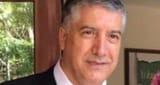
In the 1950s, Iğdır was a city of culture and a center of attraction. It was the second city in Eastern Anatolia, alongside Kars, to have a cinema. The number of newspapers was steadily increasing. A wealthy and educated population of Azerbaijani immigrants had made Iğdır their home. Poetry and literature held value and meaning. Considering that Nejat Birdoğan, one of Turkey's most renowned folklore researchers, was born in Iğdır and spent a significant part of his life and youth there, it is safe to say that Iğdır traditionally opened its heart to folk culture, poets, and minstrel poets (âşıks).
Âşık Deryami's real name was Dursun Ali Erdoğan. He was born in 1926 in the village of Armutlu (today a neighborhood of Şavşat) in the Şavşat district of Artvin. He was originally an Ahiska Turk. His childhood was marked by hardship and poverty. His father also had an interest in folk poetry and wrote poems.
Since famous bards of that era often visited their home, he developed a passion for folk poetry and the minstrel tradition at a young age. He began writing poetry himself while still a middle school student. At the age of seventeen, he recounts how "a light emerged from the horizon and entered his mouth," and thus, with the fire that fell into his heart, he began to compose verses. Deryami fell in love with İnayet, the daughter of Yusuf Ağa in his village, but they refused to give her to him because he was poor. Disappointed, Deryami left his village and wandered until he reached Iğdır. In later years, he had several marriages but never found the love and happiness he sought.
He recited his poems extemporaneously (from memory). He did not have a notebook where he wrote his poems. When Deryami began to recite poetry, those around him would hastily pull out paper and pen to take notes. In this way, Deryami's poems circulated from hand to hand. Although he wrote poetry on every subject, he gained particular fame and recognition for his satirical works.
At around 20 years old, he learned to play the bağlama from his master, Âşık Huzuri. He also received the nom de plume (mahlas) Deryami from his master, Âşık Huzuri. His fame began to grow when he won first prize in a competition held in Erzurum in 1950.
Deryami settled in Iğdır in 1947. There was no specific reason or relative that brought him to Iğdır. In 1962, he left Iğdır, residing first in Ağrı and then in Van. Finally, he settled permanently in Adapazarı. For many years, he combined street vending with his minstrelsy. He bought a truck and began working in transportation.
While in Iğdır, he experienced an unfortunate incident. He suffered a fit of madness. He assaulted his wife and set fire to their home. He was found guilty and imprisoned.
Âşık Deryami, who composed poems on almost every subject, was awarded first prize many times at the Konya Âşıklar Bayramı (Minstrel Festival). He also received various awards at competitions and festivals he attended in different regions of Turkey. He particularly drew attention with his satirical poems.
The philosophical depth and thought-provoking power he instilled in his seemingly simple verses, despite being a middle school dropout, caused him to attract considerable attention.
TURGUT SUNGAR RECOUNTS (FROM THE BOOK IĞDIR SEVDASI)
Deryami, originally from Şavşat, Artvin, had made Iğdır his home. His real name was Dursun Ali Erdoğan. He was a true folk poet whose talent and skill deeply impressed me.
Inspiration came to Deryami instantaneously, flowing like a waterfall. Even if he wanted to, he couldn't repeat what he had said. That's why, when Deryami was about to recite poetry, he would turn to those around him and warn, "Write it down!" Nejat Birdoğan, Bozkurt Ergenekon Hoca, and I had the chance to compile many poems from Deryami. Here is one poem I compiled:
Recited by: Deryami (Dursun Ali Erdoğan) Compiled by: Turgut Sungar
My two bloody eyes,
Let them see in tears, my beloved, in tears,
I am leaving from here,
See me in a dream, my beloved, in a dream.
I burned, but you paid no heed,
You never came to my side for a day,
You did not know my worth,
See me in stone, my beloved, in stone.
You did not look at my sick state,
With love, you sent me to training,
I wish that to a tyrant,
You fall and see, my beloved, you fall.
What a pity that this valuable folk bard gave himself to alcohol. He could not use his talent as he wished.
Mecit Hun, in a sense, took Âşık Deryami under his wing. He supported him financially and requested everyone to contribute at meetings he attended. In those years, my cartoons and articles were occasionally published in the newspapers Mecit Hun produced. Mecit Hun never asked us for money for this, but he had one condition: "You will not leave Deryami's side. When he recites poetry extemporaneously, you will put what is said down on paper." In this way, we created a considerable collection of poems, but unfortunately, a small fire caused by Filit, the newspaper distributor, broke out in the printing house, and the file containing Deryami's poems burned to ashes. Mecit Hun was so upset that he couldn't speak for days.
OWNER OF PAMUKOVA GAZETESİ: MECİT HUN
April 30, 1955 Year: 1 Issue: 110
COLLECTION OF NONSENSE AND A SURVEY
(Mecit Hun, owner of Pamukova Gazetesi, enters into a polemic with the newly launched Yeni Iğdır newspaper. The Yeni Iğdır newspaper is full of spelling errors. Mecit Hun lists the incorrect words used by the Yeni Iğdır newspaper in a column and writes their correct meanings in return, thus, in a sense, mocking the Yeni Iğdır newspaper. Soon after, Mecit Hun's close friend, Âşık Deryami, also writes a poem, settling scores with Yeni Iğdır in poetic language. Mücahit)
We will continue with the collection of nonsense. However, we believe we will provide a convenience to our readers by also giving the meanings of some words in the Yeni Iğdır Newspaper that are "errors from Turkish and Ottoman Turkish."
YENİ IĞDIR'S SPELLING CORRECT SPELLING
Mutaariz Mütecaviz (Aggressor)
Muvahebe Murakabe (Supervision)
Calışmaklar Çalışmalar (Works)
Natıkadat mevkut (We couldn't figure out the meaning of this compound)
Sobortor Sabatör (Saboteur)
Teş’i Teşyi (Escort)
Mualefet Muhalefet (Opposition)
Pilvevzetör Pülverizatör (Pulverizer)
Tedafu Tedafüi (Defensive)
Tevsir Tefsir (Interpretation)
We are publishing the articles received for the survey:
ANSWER 1:
This is from DERYAMİ
Who criticizes Yeni Iğdır,
A watermill in dry rivers,
A quarter of meaning in a thousand words,
A windmill turning in the air.
He wrote very well, in his own calculation,
He publishes without hesitation, Tab: Printing press
His words are neither in dictionary nor in book,
Its barley is not found, a barren mill.
The meaning is one, but you understood a thousand,
You understood day next to star,
I understood your zero words,
A desert mill in a ruined field.
How blessed are the writings you produce,
One leg short, one long,
One born in summer, one in autumn,
A honey mill for a flowerless bee.
If you remain yourself, you will ruin it,
You will see the near from afar,
You will brake for Iğdır's good,
A mill of trouble in its own head.
Don't say "küstüm" instead of "tüstüm" (I got offended),
Don't say "kestim" instead of "astım" (I cut),
Don't say "sustum" instead of "üstüm" (I am on top),
What an excellent dialect, a language mill.
Deryami, I have labored for poetry,
I have interpreted blessed words,
I have earned a year's subscription,
Because the slave mill has been explained.
OWNER OF PAMUKOVA GAZETESİ: MECİT HUN
December 2, 1952 Year: 1 Issue: 58
WRITTEN BY: RAMİZ ÖZLER
FOLK POETS I KNEW: SERVET VURAL (CÜNUN AŞIK)
Servet Vural was born in 1920 in the village of Hırtıs, Ahiska. His father's name was Halil. He was married and a father of two children. He sought asylum in Turkey in 1933. He has been residing in Iğdır since 1948. Servet does not write poetry for money. He is solely a lover of art. The poet, who previously played the saz, stopped playing it six years ago after the death of his first family. In Iğdır, Servet is also called "Cünun Âşık" (Mad Minstrel) or "Kılıç" (Sword). He is a master stonemason. He earns his living by working. He is an admirer of poets Abbas and Deryami.
His first poem, "On Love," was recited at the age of 13.
Listen, sirs, let me tell you,
This love is the head of seventy-two troubles,
It burned my body, turned it to ashes like a moth,
It has become an element of fire, this love will not extinguish.
Fate has built a fortress, my path is not open,
My feet and arms are bound, they will not open,
A nightingale's, my rosebud will not open,
Summer will not come, it is entirely winter, this love.
My helpless Servet, my limit pulls and makes a wire,
The tears of the flowing spring turn into a flood,
It burns and turns to ashes like the burning Kerem,
Those who see it think this love is a burden today.
Poet Servet Vural meets Zülali in Iğdır. Zülali's claim that he had "bound" (defeated in a poetic duel) Poet Abbas offends Servet, and he says he "bound" Zülali with the following verses:
Let me teach you, child, manners and customs,
Come, give news from the dead end you entered,
Let me finish the black thorn on your head,
Come, give news from the dead end you entered.
Child, you have branded your own body,
I said, I roared in the seas of tears,
I cut off your surroundings, bound your arms,
Come, you entered, give news from the dead end.
The master of love has no state left,
Old age is in the head, no strength left,
I cut off your surroundings, no path left,
Still, you came out, give news from the path you didn't enter.
Servet Vural's poem, recited with tears as he left Hırtıs and his relatives:
Hey sirs, exile appeared to us,
Let those who hear, my companions, weep,
My house was loaded, my migration set off,
Let relatives and siblings bid farewell and weep.
I go to exile, my liver branded,
Relatives, siblings remained with bound arms,
Mayıl, Muğdet, Mehti, and my uncle's son,
Let them say and weep whenever they remember.
Thanks be to God for the fate on my forehead,
We became dust on the tracks of the roads,
In a strange place, no one listens to my words,
As I wander, let my lonely head weep.
Servet speaks these words from his pain,
No greetings come from beyond the snowy mountains,
If father hears, "My child has left our homeland,"
Let his soul wander, let his tombstone weep.
OWNER OF PAMUKOVA GAZETESİ: MECİT HUN
Year: 1 Issue: 116 WRITTEN BY: MECİT HUN
It is always possible to find very beautiful and original examples of Turkish folk poetry in various periods of our literary history. In the expressions of our folk and saz poets, who sang in pure Turkish rather than being influenced by Arabic and Persian, it is sometimes possible to encounter very strong poetic technique.
While the stars of our Divan literature, such as Nef'i, Baki, Nedim, Nabi, and Ruhi, wove the most magnificent examples of ghazals and qasidas into our literary history, our folk poets also did not lag behind in adorning our poetry with epics, koşmas, and manis written in pure Turkish.
Even today, hundreds of folk and saz poets throughout Anatolia serve our national literature with their talent and art.
Folk poems, written mostly in syllabic meter rather than aruz, are generally created by skillfully working with meter and rhyme around a pre-selected "foot." In some, it is always possible to find very strong poetic art. The strongest art in this type of poetry is pun (cinas).
In this article, written to explain the importance of pun in poetry, we will give some examples from Deryami (Ali Erdoğan), who produced very original works in this field:
My pain is that this beauty doesn't know, it's better that she doesn't,
Let my eyes bleed, it's better that she doesn't wipe them,
This beauty wanders in my eyes with a hundred thousand charms,
I liked her smile, it's better that she doesn't smile.
In this quatrain, it is possible to see the art of pun skillfully employed. For example, let's take the first line. The poet wishes that his pain is not known by the beauty he refers to. However, if read carefully, we can also derive the following meaning:
My pain is this beauty, but know that her breast (meme) is more pleasant...
Here, the art of pun clearly manifests itself. The same art is dominant in the other lines as well.
Let's give a second example from Deryami:
Oh my beloved, if you gave me a kiss, give it to others (ele ver),
You have a sieve of conscience, think finely, give it to others (ele ver),
I did not become your enemy, are you my enemy?
If you caught me, take me immediately and give me to others (ele ver).
In every line of this quatrain, there is a more dominant and original pun. The phrase "ele ver" can mean "to betray," "to get caught," "to give to someone else," "to sift," and, according to local dialect, "to give without expectation of return." Since the meaning indicated by this line changes with each word, the poet has created a quadruple pun.
We can multiply examples from Deryami:
Don't burn, don't burn in my fire,
Come and burn in my fire,
If you're going to burn, burn properly,
In my unburning fire.
Take the dagger, wound my breast, give a wound (yara ver),
I wrote a letter, quickly take it, give it to the beloved (yara ver),
Since beauty brings me no benefit,
Let your beauty be forbidden, take it and give it to the wound (yara ver).
All these examples are distinct instances of technique and art in folk poetry. Whenever we have the opportunity, we will try to introduce the Deryamis we have nurtured to our readers by providing examples from folk literature in our columns.
OWNER OF PAMUKOVA GAZETESİ: MECİT HUN May 21, 1955
BAYRAM GIFTS FROM DERYAMİ
There are two roses in a garden, a joyful life is needed,
For both twins, a future wish is needed.
This is our Bayram gift to the esteemed Prosecutor Fuat Bey,
God gave two daughters, two sons-in-law are needed.
Starlight is not enough, a dungeon night, a moon is needed,
A target for elections is set, a bow to shoot arrows is needed,
Let's give a gift to our Mr. Ali Ural,
Let Iğdır people gather, many votes are needed for him.
A hat that stands as a soul to its beloved within the soul is needed,
Its language is sweeter than honey, a hat that stands with fame is needed,
This is our abundant gift to the esteemed Mr. Turgut,
A hat from Ali Işık's shop that stands sideways is needed.
He is devoted to worship, he has erased the feeling from his heart,
As if a divine ocean is bound within him,
He prayed Tarawih for a month, yet was never satisfied,
We extended the Commissioner Bey's Tarawih for a month.
Take the pen, go to your table, look, it's coming quickly,
They have tied them in rows, the crazy ones are coming from the plain,
May the esteemed branch captain be blessed,
Ten thousand draft dodgers are coming.
He never, ever likes dirt on city streets,
He loves the beautiful city, he loves adornment, by God,
I bestowed a tip upon Mr. Hasan Tezel,
May he see presidency in a dream on the eve of Bayram.
The heart's violin was played, a trumpet came out, thank God,
Thousands of infiltrators will cling to you again, thank God,
The club was abstinent for a month during Ramadan,
My esteemed Mr. Abbas, Ramadan is over, thank God.
I will give you the best of all, my rose,
My nightingale singing on a rose branch in winter,
Go give good news to the cinema owner Aziz Bey,
Pamukova donated an unedited film.
NOTE: Dear readers! In this poem, Deryami features some prominent figures of Iğdır. I would like to remind my readers of these names:
Fuat Bey Fuat Erbol (Prosecutor)
Ali Ural Mayor
Turgut Bey Turgut Sungar (Son of Major Bekir Bey)
Ali Işık Draper
Commissioner Bey
Branch Head Captain
Hasan Tezel Brother of Sadık Tezel
Abbas Bey Abbas Odoğlu (Son of Nağı Odoğlu)
Cinema Owner Aziz Bey Aziz Güney
AN EVALUATION OF ÂŞIK DERYAMİ
Âşık Deryami is one of the representatives of 20th-century minstrel literature. Many books have been written about him, and he has been the subject of doctoral theses. He was married and a father of six children. All elements of the tradition can be seen in his poems. He comfortably uses styles such as koçaklama (heroic poems), mani (quatrains), taşlama (satire), dudakdeğmez (lip-touching poems), muamma (riddles), atışma (poetic duels), koşma (folk poems), güzelleme (eulogies), and ağıt (laments). He has a fluent language. Examples of Ahiska dialect and Azerbaijani Turkish are found in his poems. His ability to recite poetry extemporaneously is one of his most prominent talents.
His poems can be grouped under three main headings. The first and most important heading is love. The second is satire, and the third is heroic poems. However, like every sensitive poet, Deryami also addressed existing problems in society, producing works on topics such as nature, education, faith and religion, mysticism, and eulogies. A meticulous examination reveals that the theme of love permeates all his poems. Love is his priority. A significant portion of his poems is about love.
He also used reduplications in his poems. He benefited from the meaningful effect of these words, which are created by repeating the same word, using synonyms, near-synonyms, antonyms, and onomatopoeic words, ensuring fluency in the poem and used as the last words of the quatrain.
In his poems, Şavşat, his birthplace, is the most frequently mentioned place name. This is followed by Mount Ağrı and Iğdır. He spent the last 25 years of his life in Adapazarı.
ÂŞIK İSMAİL AZERİ RECOUNTS (FROM THE BOOK IĞDIR SEVDASI)
(The following information was compiled with the joint participation of Ali Aydın and İsmail Azeri. Mücahit)
Âşık Deryami was originally from the Şavşat district of Artvin. He resided in the house of Accordionist Latif in Iğdır for about 15 years. At one point, he experienced a severe marital discord, lost control of his nerves, and set fire to the house, and his wife sued Deryami.
In the courtroom, when the judge asked Deryami for an explanation, he responded with the following quatrain:
Judge, there is a master, he should not build ruined walls,
There is a shepherd, he should not drive sheep to the pasture,
Judge, inform the country,
If such wives enter Heaven, their husbands should not.
Deryami tragically strangled his wife to death in Adapazarı during an argument one day. He received a 15-year sentence. After being released from prison, he bought an old Ford pickup truck and made a place near the Adapazarı train station his home. He continued his poor and miserable life, sleeping and living in the truck. He passed away in 1987.
Deryami was a very powerful minstrel. He would travel to assemblies with Âşık Müdami from Posof, delighting the public as the sole entertainment in those years when there was no television or cinema. Mecit Hun also never missed Deryami's assemblies, whom he loved very much, and sometimes featured his poems in his newspaper.
HIS POETIC DUEL WITH ÂŞIK UMMANİ
Âşık Ummani was originally from Posof. He developed an interest in the minstrel tradition and poetry at a young age. According to legend, he began composing poetry after a dream and quickly gained recognition in the region. Like Deryami, he participated in the Konya Minstrel Festival for many years, winning awards. In 1984, during an encounter with Âşık Deryami in Adapazarı, he struggled to respond and died of a heart attack.
FAREWELL TO DERYAMİ
Deryami, whose poems were published for a while in a local newspaper (PAMUKOVA) in Iğdır, later left Iğdır and settled in Karaköse, and from there to Van. Despite his strong extemporaneous ability, he was not very good at playing the saz. In later years, he settled in Adapazarı. At one point, due to domestic unrest, he burned his house and was imprisoned. After being released from prison, he worked as a street vendor and minibus driver. He started selling perfumes. He slept and lived in his pickup truck. During this time, he fell ill. He passed away on November 17, 1987, at Haydarpaşa Hospital in Istanbul, where he was receiving treatment. Deryami's grave is in Adapazarı.
According to the renowned literary researcher Ahmet Kabaklı, Deryami, along with Âşık Veysel, is one of the most important folk poets of 20th-century Turkey. Deryami had two misfortunes: he couldn't play the saz well, and he spent the most productive years of his life in prison and poverty. Despite this deficiency, he attracted the attention of literary researchers, and several books and dozens of doctoral theses were published about him.
The poems of Deryami discussed in this article are being published for the first time. We pray for God's mercy upon this great folk poet of the 20th century, who, even though he went far away, never forgot Iğdır and Mount Ağrı in his poems. I hope that students from the Literature Department of Iğdır University will conduct thesis work on Deryami and publish books. Iğdır should somehow pay its debt of gratitude to Deryami.
SOME VERSES COMPILED AMONG THE PEOPLE
Deryami is a master of poetry and satire. He expresses even ordinary conversations in poetic language. One day, he sits in the coffeehouse of the late Feyzullah Zengin, the inventor of Iğdır tea. He tells the waiter who approaches him his request in poetic language:
I have come from afar, from Şavşat,
Bring me that rabbit's blood in a glass.
He drinks his tea with peace of mind. He genuinely enjoyed the tea. He addresses the waiter who comes to take the empty glass, again in poetic language:
I traveled and saw the world,
I never drank such a tea,
By God, I will never forget Feyzullah Zengin again.
From here, I call out to the literature lovers, cultural figures, and authorities of Iğdır: Deryami stayed in Iğdır for 15 years. No competition was organized in his name, no thesis was prepared, nor was his name honored by being given to a street or cultural center. I hope we will soon remedy this deficiency and embed Deryami's name in our hearts as an honorable page in Iğdır's cultural life.
JOKE OF THE DAY: A WRITER IN PURSUIT OF ARCHIVES
Being a researcher-writer is difficult. Especially in Iğdır.
One day, a writer who wanted to conduct research about Iğdır went to official state institutions and wanted to work in the archives.
First, he stopped by the land registry office and asked the director for help.
The director called his assistant, whom he thought was relevant to the matter:
Assistant:
"Yes, sir!"
"Do we have an archive?"
"Archive? I've never heard that name. It might be the old name of one of the neighborhoods whose name changed."
The researcher-writer, leaving the land registry office disheartened, then went to the Municipality building. The Mayor called his assistant, whom he thought might be relevant:
"Do we have an archive?"
"We did, but it was swept away by a flood."
"Where could it be now?"
The deputy mayor asked for a few minutes, went to his desk, picked up a calculator, and plunged into a feverish calculation.
Seeing that the process was taking long, the Mayor called out from a distance:
"What happened, couldn't you find it?"
His assistant, scratching his head with a pen, came in and summarized the situation:
"Considering the flow rate and speed of the Aras River, according to my calculations, our archive should now be somewhere around the Mugan Plain (Azerbaijan)."
NOTE: The poems of Deryami published in this article are subject to copyright. Any interested researcher or reader may use Deryami's poems in their work by citing the source.
(TO BE CONTINUED)