Iğdır and the Mount Ararat Rebellion – Part 5
This fifth part of the series on the Mount Ararat Rebellion examines three key figures and their differing approaches to the complex, multi-faceted conflict.
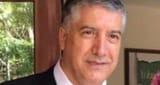
THREE PERSONALITIES, THREE APPROACHES
Dear reader! At the beginning of this series of articles on the Mount Ararat Rebellion, I drew your attention to some important points, which I presented in sequence. I believe I need to reiterate one important point: the Mount Ararat Rebellion was a spiral structure, intertwined, with different expectations and different behaviors. I have already largely expressed this reality. In this article, I want to examine "three different approaches" by focusing on three personalities. Again, it's a long article... I ask for your patience and understanding.
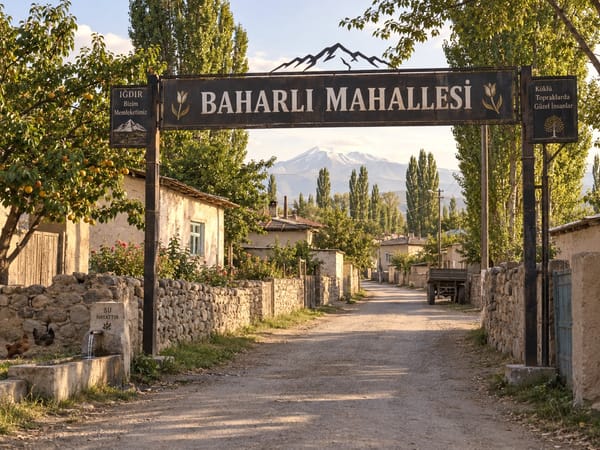
Mount Ararat is surrounded on all sides by the Celali tribe. The Celali tribe on the Iğdır side remained under Russian administration between 1829 and 1920; their leaders (Hamit Bey, Ali Mirze Bey, Kerem Bey) were educated in Russian schools and were deeply influenced by the cultural and social life of Tsarist Russia. Towards the end of the 19th century, while Tsarist Russia was shaken by the "Narodnik," or Socialist Revolutionary People's Movement, there was no trace of this in the Ottoman Empire. I would like to mention Hasan Bey, one of the leaders of the Güneş family, who represented all Kurds in Tsarist Russia before the Tsar. The late İbrahim Beyoğlu
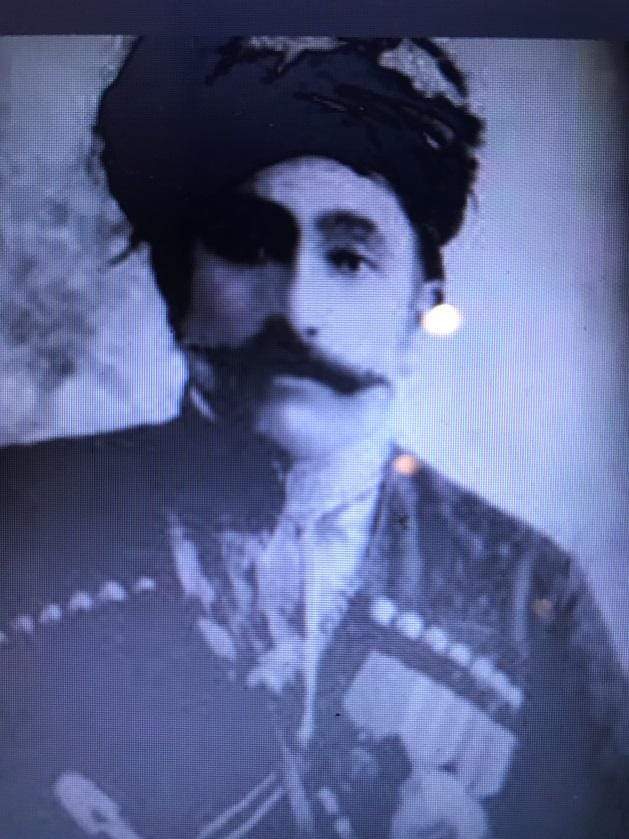
Hasan Bey from the Güneş Family
Mehmet Güneş states:
"Hasan Bey was one of the Tsar's most important pillars in the Caucasus. However, towards the end of the 19th century, Hasan Bey sympathized with the Narodnik revolutionary movement, which included Lenin's brother. This behavior did not escape the Tsar's notice. The Tsar sent a letter to Eleşref Bey, making a request: 'We have removed all generals sympathetic to the Narodnik movement in Moscow and St. Petersburg from the army. We expect you to strip Hasan Bey of his powers and punish him.' Eleşref Bey resisted the Tsar's request. The Tsar dismissed Hasan Bey twice, but both times Eleşref Bey supported Hasan Bey, helping him regain his prestige."
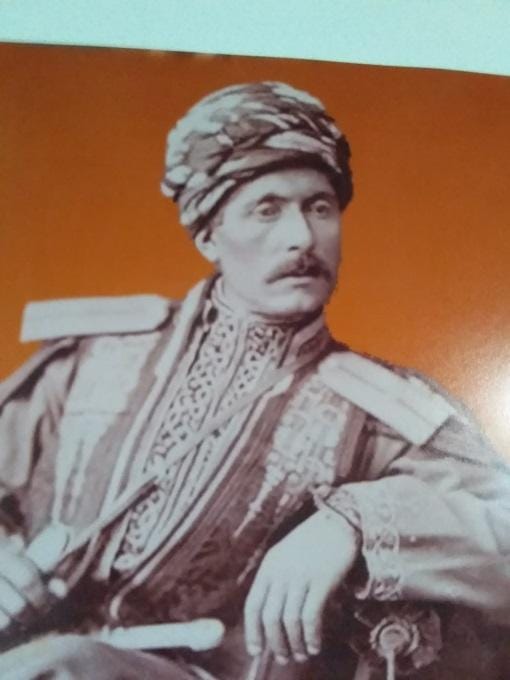
General Eleşref Bey
The events, social and political upheavals in Tsarist Russia until 1917 naturally affected the Kurds living there. In short, while Kurdish leaders living in Tsarist Russia encountered socialism at the end of the 19th century, Kurds in Turkey only had the chance to encounter socialism in 1960! A difference of almost 100 years!
The most important characteristic of the Kurds living in Tsarist Russia was the prominence of "logic" over "emotion," and their valuing this in daily life. We see this behavior most clearly in the persons of Eleşref Bey and Ali Mirze Bey. They either rejected or kept their distance from anything they were not convinced by or considered "illogical."
A part of the Celali tribe living on the other side of Mount Ararat remained under Ottoman rule, and another part under Iranian rule. Naturally, the tribes here were influenced by the value judgments of the empires they lived in, and the political events within the country left a different impact on the tribal leaders. While organization in the form of Hamidiye Regiments came to the fore among the Celali tribes remaining on the Ottoman side, the Celali tribes on the Iranian side preferred a "pastoral," or independent nomadic, way of life, completely detached from central authority. In short, there was no single spirit or single leadership among the Celali tribes surrounding Mount Ararat.
I would like to draw your attention to an important point: branches of the same tribe sometimes existed simultaneously within three empires (the Sakan Tribe), some were dispersed between the Ottoman-Russian, some between the Ottoman-Iranian, and some between the Iranian-Russian empires, or remained within the borders of only one of these empires. However, the interaction between them was limited, and the influence of the leadership differed.
The first resistance movement in the Mount Ararat Rebellion was initiated by the Celalis on the Ottoman side (İbrahim Ağa). In 1928, the Hoybun Society moved to turn this resistance into a full-scale Kurdish Rebellion. Its most important strategic pillar was as follows:
Mount Ararat borders three countries. It is surrounded on all sides by members of the Celali Tribe. If the Turks attacked, they could cross into Iran, receive support from their Celali "brothers" there, and then launch a counter-attack to keep the flame of rebellion alive and continuous. At first glance, this might be considered a quite reasonable and understandable tactic. In short, the Hoybun Society envisioned the Celali tribe surrounding Mount Ararat as a tribe united under "one spirit and one leadership." When they realized their mistake, it would, of course, be too late.
Now, let's examine the three personalities in turn, particularly evaluating the situation on the Iğdır side:
- ALI MIRZE BEY (1855 –1942)
(Note: The birth date on Ali Mirze Bey's tombstone in Karakuyu Cemetery is incorrect. The exact birth date is July 1, 1855)
Ali Mirze Bey lived a long life, reaching the age of 90. He was born in Tsarist Russia's Iğdır and attended a Russian school. He could speak Armenian, Persian, Russian, and Turkish fluently. During the Russian administration, he served as "glava," meaning "responsible head before the government," and successfully carried out his sensitive duty for the benefit of his people until 1920. Much has been written and is being written about Ali Mirze Bey, both in the past and today. My aim is neither to criticize nor to disparage anyone. If political evaluations are still being made about Ali Mirze Bey and his struggle, this only proves how important a figure Ali Mirze Bey was in his own time.
To properly understand Ali Mirze Bey and his historical role, it is essential to make a political and social assessment of the region at that time. In 1917, when Eleşref Bey declared the end of the "Güneş Family's" historical mission, the Celali tribes living under Russian rule unconditionally accepted Ali Mirze Bey as their supreme authority. While the Redkan tribe, not part of the Celali tribal confederation, organized under Kerem Bey, the Brukan tribe had already maintained an independent stance under its own leadership since 1900.
Under these circumstances, Ali Mirze Bey's prestige and effectiveness gained even more importance. A point that should not be overlooked is Ali Mirze Bey's undisputed authority over the Celali tribe in the Iğdır region. Between 1918 and 1920, with the collapse of the Russian government, a political vacuum emerged in the region, and civil war broke out.
In this new situation, Ali Mirze Bey's stance was clear and unequivocal: to protect and secure the lives and property of the Muslim population, consisting of Azerbaijanis and Kurds, against Armenian attacks. The best evidence for Ali Mirze Bey and his group's attitude and stance on this matter can be found in Kâzım Karabekir Pasha's book "İstiklâl Harbimiz" (Our War of Independence).
In response to a letter from Armenian leaders who had declared the Republic of Armenia and sought cooperation, Kurdish notables penned the following historic letter. To better understand the content of the letter, the following explanation is necessary: When the Russian army attacked the Ottoman Empire in 1915, Russian Armenians organized as militia forces and attacked Ottoman territory alongside the Russian army. Furthermore, Ottoman Armenians also struck the Ottoman army from behind with a similar militia organization. This situation naturally caused discomfort among the Muslim population in Iğdır. (Note: For the convenience of my reader, I have translated the letter into modern Turkish)
"Baran Khachador Agha,
I received your letter. Even while Armenians lived a very happy life in the embrace of Islam (in the Ottoman State), they did not refrain from carrying out all kinds of evil, openly or secretly, for their true intentions, and deserted the Ottoman army with weapons to join the Russian army. You cannot deny this reality. With their treachery thus openly revealed, there is no possibility of reconciliation between the Armenians and the Islamic-Kurdish nation. Kurds cannot unite with Armenians who, for five years (1914-1919), have massacred the Muslim population with axes and bayonets in a manner contrary to the principles of humanity and considered the rape of Ottoman women permissible. Kurds, who possess ten times the power of Armenians, cannot and will not come under the protection of Armenians. Yes, we are also not in favor of bloodshed. However, we will resist with all our might your efforts to make the Muslim population subservient to you. Armenians cannot achieve a majority or govern by annihilating the Islamic population with savage massacres. Our peaceful coexistence depends on certain conditions: 1. Until peace is established, Armenians must cross to the other side of the Aras River. 2. They must leave the Iğdır region to the Kurdish nation. 3. Until peace is established, Armenians will not cross to this side of the Aras. Armenians who wish to remain on this side will obey our organization and structure. 4. Armenians remaining with us will never carry weapons. Until peace is established, no Armenian armed forces will be sent to this region. 5. The rights, lives, and property of our Islamic brothers (Kurds and Azerbaijanis) remaining among Armenians on the other side of the Aras River will be protected. 6. If these conditions are accepted, the parties will not attack each other and will respect peace. As you see, Khachador Agha, our conditions consist of six articles. If accepted, the fire of war will be extinguished; otherwise, we will resort to every means to escape your yoke and seek help from Almighty God. On this occasion, I shake your hands, Your Excellency Khachador Agha. September 4, 1919
Signed by the Tribal Chiefs:
Hamit Bey (Father of the late Fettah Bey, Kerem Bey, Abdürrezak Bey, and Naci Bey)
Ali Mirze Bey (Grandfather of the late Mecit Hun)
Ahmet Haso Ağa (Grandfather of the late Hüsrev Konyar)
Yusuf Ağa (Leader of the Şemkan Tribe / Brother of the famous resistance fighter Gur Hasso)
(Source: Kâzım Karabekir Pasha, İstiklâl Harbimiz, volume one, page 378)
As this letter also shows, Ali Mirze Bey and his friends, as stated in article 5, held themselves responsible for the safety of Azerbaijanis and Kurds on the other side of the Aras River. Ali Mirze Bey's real contribution to the National Struggle began after this. Considering today's Iğdır province, Taşburun district was where Armenian committees were most organized at that time. After the Kaxtaxans (Ottoman Armenians) from the Ottoman State settled in Taşburun, it became an attack base against surrounding villages and towns. The Celali tribe predominantly resided in the villages surrounding Taşburun district. This meant that Ali Mirze Bey had to wage the most organized and determined struggle against the Armenian committees. Indeed, this is what happened; the Celali militia forces led by Ali Mirze Bey launched attacks on Taşburun and repelled counter-attacks with the same success. Ali Mirze Bey and his militia forces did not abandon their positions even when the Muslim population living in Iğdır and surrounding villages retreated to Iran due to Armenian attacks, and continued the struggle incessantly until the end.
However, after the Republic, misfortunes and misunderstandings would pursue Ali Mirze Bey. The Turkish Aeronautical Association launched a donation campaign across Turkey in 1925. For this purpose, they also came to Iğdır and sought the help of prominent Kurdish leaders of the region such as Hamit Bey and Ali Mirze Bey. Ali Mirze Bey participated in this campaign by donating 1000 liras. Since this amount was the highest donation given in the region, he was awarded a gold medal. Hamit Bey and other leaders were also honored with silver and bronze medals. Ali Mirze Bey contributed to this donation campaign because he did not abandon the principle of acting like a leader with civic common sense and responsibility. Unfortunately, this behavior was either ignored in later years, according to the political conditions of the day, or became an excuse for verbal attacks against him.
In 1926, when Ali Mirze Bey and other Azerbaijani and Kurdish notables were to be exiled to the West, Ali Mirze Bey fled to Iran. The state confiscated all his assets. When an amnesty was issued, he returned to Turkey in 1928. As he was about to cross the border, his younger son, Esed Bey, shot and killed his elder brother, İbrahim Ağa. Esed Bey wanted to join a group of looters who saw the Mount Ararat Rebellion as an opportunity. İbrahim Ağa found this behavior unbecoming of his family. As Esed Bey left the house with a gun in his hand, İbrahim Ağa followed him, tried to forcibly take the gun, the gun went off, and İbrahim Ağa died. Ali Mirze Bey, distraught and heartbroken, beat his head with his hands and cried: "Oh, this cursed fratricide!"
Esed Bey fled to Turkey. Ali Mirze Bey, having lost two sons and his fortune, settled back in Hıdırlı village. He was approaching 90 years old. His heart was filled with sorrow.
THE LATE GURCİ SELÇUK RECOUNTS HIS GRANDFATHER
Ali Mirze Bey was thin, tall, and handsome. His shoulders were narrow, and his head was slightly bowed. He had a calm disposition. In contrast, his son İbrahim Ağa was large-framed, broad-shouldered, and impetuous. Ali Mirze Bey had served as a glava long before I was born, and had gained fame in the region due to an incident.
One day, seven notables belonging to the Gelturan tribe were arrested by the Tsarist gendarmerie and sent to Tiflis. Eleşref Bey, a prominent Kurdish leader in the Russian administration, went to Tiflis and tried to secure the release of the seven people, including tribal notables like Bayê Bışo, but failed. He even offered his general's insignia as collateral, saying, "Just release these respected people!" but he could not save them. This time, glava Ali Mirze Bey went to Tiflis. He requested to be arrested and held as a hostage until the trial was concluded, in exchange for the release of the seven people. The seven people were released, and my grandfather was tried for "Tehtê Reş," meaning execution. My grandfather remained imprisoned for a year.
Ali Mirze Bey's selflessness and sacrifice earned him great admiration among the people of the region. His family was both proud of his actions and composed folk songs for him. My aunt Emine used to sing this folk song, composed for her father at that time: Glava, glava! Bejna bilind e, nav kelka wi zirav e.
(Oh, glava with the cypress stature and slender waist!)
WHY ARE YOU FIGHTING?
It was during the intense days of the Mount Ararat Rebellion. Sheikh Abdülkadir sent a special courier to Ali Mirze Bey in Hıdırlı village, asking him to come to Korhan as soon as possible to meet him. Ali Mirze Bey set off with his guards. When they arrived in Korhan, Ali Mirze Bey was surprised by what he saw. The Kurdish flag was flying over Sheikh Abdülkadir's headquarters. The guards on duty, the cavalry responsible for general security, and the internal service personnel were all members of the Sakan tribe.
Ali Mirze Bey asks the warriors:
"What are you fighting for?"
"Ji bo dinê Mihemmed" (In the name of Islam)
"Çima dinê Mihemmed hevîya merivên Sakîye maye!" (Is saving the religion of Islam only the problem of the Sakan tribe!)
Ali Mirze Bey enters the headquarters building. Bıro Hseki Telli and other notables are also there. In addition, the best warriors of the Gıskan and Şemkan tribes, Temır, Bıro Rındo, Fetto, Qemır, and Çalxa, are serving as guards around the Sheikh. Sheikh Abdülkadir addresses Ali Mirze Bey:
"Ali Agha, I know you're asking yourself why the Sheikh called me here, aren't you?"
"That's right, Sheikh, I'm a little curious!"
"Ali Agha, the matter is this. From tomorrow, my group will attack Beyazid, and İbrahim Ağa's group will attack Başkent (Aralık). You also gather your men and capture the Taşburun areas!"
Ali Mirze Bey listens silently to Sheikh Abdülkadir and Bıro Hseki Telli. (NOTE: The absence of İhsan Nuri Pasha at such an important meeting strengthens the claim that he had fallen out of favor during this period).
After the discussions ended, Ali Mirze Bey took an empty shell from his pocket and placed it before them:
"My Sheikh, do you have the power to make or fill this shell? You are facing armies armed to the teeth. Do you have weapons to protect the civilian population whose lives you are endangering?"
"We will kill the soldiers and seize their weapons and ammunition."
"You are making decisions without thinking. Don't let the people be slaughtered. Against a state, you need a state; against cannons, you need cannons; against an army, you need an army."
"Ali Agha! If you don't do what we say and oppose us, you will be executed!"
At this stage of the argument, the Gıskan tribe warriors protected Ali Mirze Bey and escorted him away.
THE ACCOUNT OF THE LATE MAHMUT ALAR
The late Mahmut Alar, leader of the Kızılbaşoğlu, recounts this memory:
"Ali Mirze Bey was a visionary. He anticipated that the rebellion would end in defeat. My late father, Ali Mahmut Bey, recounted this memory years later:
'In the spring of 1930, Ali Mirze Bey invited all the Kızılbaşoğlu and Sakan tribal leaders in the region to his home for dinner to discuss an important matter. Felt tents were set up in a place called "Gıskanburnu," above Karahacılı village, sheep were slaughtered, and food was being cooked. About 80 horsemen arrived at the meeting place. Before dinner, tea was served. Ali Mirze Bey took the floor:
'Gentlemen, it seems the end of the Mount Ararat rebellion is very near! My son İsa came from the Division yesterday. The soldiers are very determined to attack. They have completed all their preparations. Before the attack begins, let's all go to the Tuzluca plateaus together. We will have some difficulties, but if we get through next autumn and winter, everyone will be saved!'
'The assembled community did not warm to Ali Mirze Bey's suggestion. Moreover, they mocked him with their words. Ali Mirze Bey's honor was wounded. In the bitterness of being abandoned by his tribe and beloved relatives, he turned to me:
'Ali, will you come with me?'
'No, uncle, it's very hot there. I won't come!'
'At this answer, his heart completely darkened. Ali Mirze Bey's facial features changed, and a tear fell from his eye into the void.'
'Yet I always used to tell myself: Even if my son İsa doesn't come with me, Ali Mahmut will definitely come with me. So, you're not coming either!'
After a short silence, Ali Mirze Bey addressed the community again:
'Aghas, it seems to me that this is the last time we will gather around such a table.'
After this speech, Ali Mirze Bey turned to his wife:
'Pero, spread the felts outside! Let the Aghas eat their meal there!'
At the same time, he called out to his son Musa: 'Go get the camels!'
While we were eating, Ali Mirze Bey and his household began loading their belongings. By the time we mounted our horses and rode away, Ali Mirze Bey's caravan was already on its way to Tuzluca!"
This event recounted by my late father shows that Ali Mirze Bey was a visionary. He spent that summer in Tuzluca, on the Kandil plateau, and settled in Iğdır's Baharlı neighborhood in the autumn of the same year."
BE LOGICAL!
At the Gıskanburnu meeting, one of the participants pressed Ali Mirze Bey, who was acting indecisively. Ali Mirze Bey could not stand it, exploded, and ordered:
"Ez ji te ra dibejim, here serê kure xwe jêke!"
(I command you, go cut off your son's head!)
The man listened silently to this impossible request and remained stunned. Ali Mirze Bey spoke again:
"Just as you remain indecisive and choose to remain silent in the face of my illogical request, I am also indecisive in the face of your illogical request to 'Join the rebellion!' Because I already see that the end of this rebellion will be frustration and bloodshed."
THE DEATH OF ALI MIRZE BEY (Spring 1942)
Mehmet Yiğit, Ali Mirze Yiğit's grandson, describes the moment of his death as follows:
"My grandfather, Ali Mirze Bey, was staying with his son Musa in Baharlı Neighborhood. After the death of my grandmother Pero (1941), his health began to deteriorate. He suffered from a stroke-like condition. He passed away on a spring day. Ali Mirze Bey was angry with his son Esed (Eso). For many years, he had refused to see him. When my uncle Esed learned that his father was on his deathbed, he quietly entered the room and sat in a corner. He wanted to fulfill his last duty to his father. Ali Mirze Bey was lying semi-conscious in his bed. At one point, he opened his eyes, looked around, and wanted to read the Holy Quran from the shelf. There was no one else in the room except my uncle Esed. He called out to my uncle Esed in a sorrowful tone:
"My unfaithful son. Bring me the Quran."
Ali Mirze Bey passed away while reading the Quran that my uncle Esed brought him.
A BRIEF ASSESSMENT
Dear reader! Before delving into a more detailed explanation of Numan Efendi's life and struggle, there is a need for a superficial sociological and political assessment. Those who participated in the Mount Ararat Rebellion can be grouped into four main categories based on their aims and objectives, in connection with the idea of "Independent Kurdistan":
- The segment that wanted to implement a secular (separation of religion and state affairs) and modern nation-state project.
- The segment that struggled to hold three important powers: tribal chieftaincy, spiritual leadership, and state authority.
- The segment that was devoted to the cause of a Kurdistan to be established under the leadership of a committee composed of tribal leaders who supported the struggle after victory, and to be governed by a council.
- The segment whose aim was not an independent Kurdistan, but rather an effort of resistance and redress of injustice.
Now let's examine the supporters of these four approaches in turn:
- There are two individuals who struggled for the establishment of a secular, modern Kurdistan: İhsan Nuri Pasha and Numan Efendi. There is no third.
- Considering the Kurdish Rebellions that emerged from the 19th century onwards, we see that this segment, which held three powers, came to the fore. For example, Sheikh Ubeydullah, Sheikh Barzani, Sheikh Sait, Seyit Rıza, Qazi Muhammad, and others. The representative of this understanding in the Mount Ararat Rebellion was Sheikh Abdülkadir. In those years, Kurds were receptive to such a leadership that held three powers, and could cluster around such leaders without problems or competitive jealousy. This is why Sheikh Abdülkadir quickly seized leadership.
- A significant number of tribal leaders who participated in the rebellion supported the struggle, believing that they would be rewarded after victory and would hold high-level positions in the Kurdistan government to be established. This can be thought of as a cabinet composed of tribal leaders. Ferzende Beg, Halis Beg, and others envisioned a Kurdistan more in line with a "council of tribal leaders" structure and fought for it.
- There is a segment that viewed the struggle solely as a matter of resistance and honor, and its sole representative is Bıro Heskî Tellî.
NOTE: During this period, while socialist and communist parties and organizations had serious power among Armenians, Azerbaijanis, and Georgians, socialist thought was not even heard of among Kurds. There was no segment within the Torun (Güneş) family, who continued their lives within the borders of the Ottoman/Turkish Empire after 1917, that adhered to socialist thought. Similarly, Kinyas Kartal, who completed his military education in Russia, was distant and detached from socialist thought. In short, there was no socialist wing in the Mount Ararat Rebellion.
- NUMAN (DÜNDARZADE) EFENDI
At the end of the 19th century, the Gêloî tribe lived scattered between Tsarist Russia and the Ottoman Empire. Within the Ottoman borders, in Beyazid Province, there was a significant Gêloî population loyal to the late Hacı Ali Yiğit, Davo Ağa, Eli Bey, and Newo Ağa. However, the true backbone of the Gêloî tribe consisted of those residing in Iğdır and its surrounding villages under Tsarist Russian rule. From 1914 onwards, Ahmed Şemo became the leader of the entire Gêloî tribe.
In the Gêloî tribe, there was an old tradition. If a man had 12 sons, he was obliged to dedicate one of them to a madrasah. When Gelo had 12 sons, he sent his son Ceco to the madrasah in Beyazid Province. Ceco received a rigorous religious education. His son Yusuf followed in his father's footsteps. He became famous in the region under the name Hoca Yusuf. He had a son named Numan (1885) in Erciş, where he was assigned. Numan was a diligent student. He continued his education as a boarder at Erzurum High School (1903). After passing the Mülkiye (Faculty of Political Science) exam, he settled in Istanbul. He became closely involved with the Kurdish Teavun ve Terakki Cemiyeti (Kurdish Solidarity and Progress Association), founded in 1908. However, he soon returned to Beyazid Province and took on the role of deputy governor. Numan Efendi, who spoke seven languages, is referred to in official records as "Numan Feridun Es," "Numan bin Yusuf," or "Numan Dündarzade." He was the Governor of Beyazid when World War I began. He was captured by the Russians and exiled to Siberia (1915-1919). Numan Efendi, who was married to a woman from the Beyazıt gentry, lost his four sons, three daughters, and wife to Armenian committees in the same year.
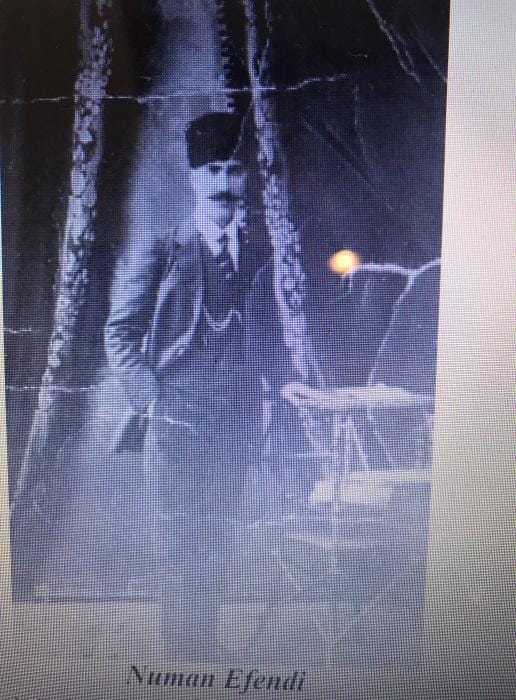
Numan Efendi
Numan Efendi, who escaped from Siberian exile, became the Deputy Governor of Beyazıt in 1920. When Iğdır was included within the borders of the Grand National Assembly on November 14, 1920, he was sent to Iğdır as a temporary district governor. From the very first day, Numan Efendi earned the respect and affection of the tribes in the region. He developed a special bond of friendship with Ahmed Şemo, the leader of the Gêloî tribe, and Kerem Bey. Meanwhile, he took on the representation of the secret Kurdish organization named Azadi (Freedom), chaired by Colonel Cibranlı Halit Bey, who was serving in Erzurum.
The late Aziz Güney recounts in his memoirs:
Ali Mirze Bey's son, İsa Bey, once recounted the following incident:
"I was going to Erzurum for some business. Numan Efendi, who was then the Land Registry Director in Iğdır, gave me a secret letter to deliver to Cibranlı Halit Bey. I hid this letter in my underwear, against all dangers.
Upon arriving in Erzurum, I presented myself to Cibranlı Halit Bey, who was serving in the Army. 'I brought you a letter from Numan Efendi.'
He took me to his private room and closed the door. Then, as if he had guessed where I had hidden the letter, he pointed to the next room and said, 'Go and get the letter!' His foresight and sensitive behavior deeply impressed me.
After taking the letter, he looked at me: 'Numan Efendi is one of a kind in Kurdistan. Take care of him!'
Shortly after this incident, Cibranlı Halit Bey was arrested and executed.
***
In 1923, when the permanent district governor arrived, he continued his duty as the Land Registry Director, deputizing for the district governor when necessary. In 1926, with the enactment of the Law on the Exile of Aghas and Beys, he was exiled to Balıkesir.
The exile unfolded as follows: One day, Numan Efendi went to visit the district governor, whom he held in high regard. Since the district governor was on inspection, he was asked to wait in his office. Numan Efendi saw a document on the desk marked "Top Secret." Curious, he read the document. It contained an order for the immediate and sudden arrest of eleven prominent Kurdish and Azerbaijani figures. Numan Efendi saw his own name on the list. He panicked. He immediately went home. The first thing that came to his mind was to send a message to Ahmed Şemo, whose name he had seen on the list. While preparing for his escape, he also wrote a letter to be delivered to Ahmed Şemo:
"Your name and Ali Mirze Bey's name are on the list of those to be arrested. Ali Mirze Bey should go to Iran, but you must not go to Iran! Hide for a while in Kırrê (on the slopes of Mount Ararat). Captain Nuri, the Gendarmerie Commander whom I knew from my years as district governor, is a close friend of mine. Now he cannot help any of us, but after things calm down, give him the second letter I sent you; it will help. God willing, I will also go to Mount Ararat."
While Numan Efendi was thinking about how to deliver the letter, Hesene Tozo, a prominent Kızılbaşoğlu who had decided to settle in Iğdır city center, came to his house. Numan Efendi quickly summarized the situation:
"Inform Ali Mirze Bey and Ali Mahmut Bey that soldiers will soon come to arrest them. They should flee to Iran. And give these letters to Ahmed Şemo!"
Soon after, the gendarmerie cornered and arrested Numan Efendi at his home, sending him into exile in Balıkesir. In Balıkesir, he married Melahat Hanım, of Albanian descent. Melahat Hanım had a daughter named Semiha. Numan Efendi returned to Iğdır after the amnesty law and began serving as a Legal Representative (there were no lawyers in those years). In the autumn of 1930, he fell victim to a murder. (I will address the murder of Kurdish Numan Efendi and Azerbaijani İshak Bey independently in another article.)
During the Mount Ararat Rebellion, Numan Efendi and İhsan Nuri Pasha were in constant communication through special couriers. Numan Efendi was, in a sense, the voice of Mount Ararat to the world. He was a Kurdish intellectual, rarely found among Kurds, with modern ideas and a humanist spirit. Through his impressive letters, he tried to make the world aware of the rebels' struggle and problems. His letters to the League of Nations (Cemiyet-i Akvam), an organization similar to today's United Nations, were effective, and he spearheaded the establishment of a camp affiliated with the League of Nations on the Iranian side to protect civilians fleeing massacres or struggling with hunger and disease during the most difficult days of the rebellion. The League of Nations sent children whose families were torn apart as refugees to member countries. I want to tell an anecdote. In the 1970s, the Malaysian Prime Minister, who visited Turkey, stated that his mother was a refugee girl who fled the Mount Ararat Rebellion.
Numan Efendi tried to persuade the rebels to resolve the problems by agreement with the state, but İhsan Nuri Pasha's rigid stance thwarted his efforts. Numan Efendi always resided in Iğdır. Hacı Abdullah Çoktin, son of İbrahim Ağa, states:
"Numan Efendi was our kirve (a type of spiritual kinship). My father loved him very much. They were constantly in touch, but Numan Efendi never visited the camp on the mountain."
IT'S AS IF I SMELL FLOWERS
The first educated person from the Gêloî tribe, which was under Tsarist Russian rule, was Şexali (Şıhali), son of Mihê Kazak. Mihê Kazak, whose son was educated in Russian schools, agreed to his son marrying an Azerbaijani girl from Karakoyunlu, hoping to strengthen the spirit of friendship and kinship. From this marriage, the late Hacı Nebi Göleli and his siblings were born.
Numan Efendi was also the first child of the Gêloî tribe to be educated in the Ottoman State. For this reason, when he came to Iğdır, he was received with great respect and affection by the tribal leader Ahmed Şemo. The late Gurci Selçuk, daughter of Ahmed Şemo, states in her memoirs: "My father loved Numan Efendi very much. Every time he came to our house, he would be filled with love, welcome him with respect, and honor him with everything he had. My father used to say about Numan Efendi: 'When he enters, it's as if I smell flowers, and my heart fills with pleasant feelings.'"
- KEREM (GÜNEŞ) BEY
Hamit Bey, a prominent figure of the Torun family, had four sons: Fettah Bey, Kerem Bey, Abdürrezak Bey, and Naci Bey. Kerem Bey played an important role in the resistance movement in Iğdır and proved his leadership qualities through his struggle against Armenian committees with his tribal forces during the Iğdır Civil War years (1918-1920). He acted as an exemplary Kurdish aristocrat with his stance and behavior. The late Turgut Sungar, Naci Güneş's brother-in-law, describes Kerem Bey as follows:
"Kerem Bey, the leader of the Güneş family, had a profound influence and prestige over the people of the region. People felt Kerem Bey in their hearts, seeing him as a part of themselves. I first met Kerem Bey in the highlands where we went during my primary school years. From my very first sight, Kerem Bey's facial features and appearance, so to speak, hypnotized me. Oh my God! Could a person be this handsome? His carefully curled mustache, impressive eyes, and the beauty of his skin, radiating health and life, made one's heart tremble. Even today, when I remember Kerem Bey, my hair stands on end, and his charisma envelops my being from within. Kerem Bey had his own philosophy of life. He loved to wash with cold water, regardless of summer or winter. His death was also due to this. One winter day, after breaking the ice and staying in the water for a long time, he contracted pneumonia and passed away."
MOUNT ARARAT REBELLION AND KEREM BEY
Kerem Bey was interested in the Mount Ararat Rebellion. Hacı Abdullah Çoktin, son of İbrahim Ağa, states clearly: "During the rebellion, we received the greatest help from Kerem Bey. Kerem Bey and İbrahim Ağa were very similar in their belief in the cause and their character."
Kerem Bey was an idealistic leader. The difference between him and İhsan Nuri Pasha and Numan Efendi was that while they largely envisioned a modern Kurdistan within a nation-state structure, Kerem Bey, though not very clearly in his mind, believed that Kurds should fight for their inherent rights, but he could not express this idea within a political framework. The fact that he had no correspondence or relations with the Hoybun Society and other Kurdish organizations strengthens this thesis. If Kerem Bey had actively participated in the Mount Ararat Rebellion, he would probably not have been able to get along with the aghas or sons of aghas coming from the "Sheikhdom" institution and the Hamidiye Regiments tradition, and would have been disappointed.
Different sources present Kerem Bey's interest in the Mount Ararat Rebellion and his desire to participate in it in different ways. I would like to present two of these, which I consider important, to your attention here.
MEHMET GÜNEŞ'S ACCOUNT
Mehmet Güneş, son of the late Enver Güneş, states in one of his accounts:
In the most active year of the Mount Ararat Rebellion (1929), on a summer day, Sheikh Zahır, one of the important figures of the rebellion, visited Kerem Bey's plain with 160 armed horsemen. Sheikh Zahır made a request to Kerem Bey, who was providing logistical support to the rebels:
"We have now established our state. We don't want you to stay here and remain separate from us. The time has come for you to pack your home and join us."
Kerem Bey joyfully accepted this invitation and began preparations for the journey. Kerem Bey's father, Hamit Bey, was extremely disturbed by his son's impulsive decision. While thinking, 'How can I delay Kerem a little?', a good idea came to his mind. He sent a message to his son Abdürrezak:
'Kerem is not staying put. Come quickly!'
He also called Kerem Bey to him:
"My son, don't pack your home and leave so quickly. Your brother Abdürrezak will arrive in a few days. Say goodbye and then leave!"
A few days later, Abdürrezak Bey unexpectedly appeared. Abdürrezak Bey was very angry that his brother wanted to leave his family behind with a sudden decision. He reproached Kerem Bey:
"So, you're going to go and be a leader and agha to the Kurds, huh!"
A verbal duel ensued between the two brothers. The argument spiraled out of control, weapons were drawn, and they threatened each other with death. The father, Hamit Bey, sadly raised his hands in the air and pleaded:
"Oh God, you have shown me my two sons engaging in an armed conflict. Oh God, I no longer want to live, take my soul!"
A few months later, Hamit Bey passed away.
THE ACCOUNT OF TALAT GÜNEŞ, A VILLAGER FROM RAMAZANKENT
Upon hearing the news that Kerem Bey wanted to join the Mount Ararat Rebellion, Eleşref Bey, a prominent member of the Torun family, organized a meeting. Eleşref Bey strongly opposed Kerem Bey's suggestion to join the rebels. Just like Ali Mirze Bey, he evaluated the situation based on logical rules:
"Are you going to fight cannons and rifles with hunting rifles? You are facing a state. How will you protect the civilian population? The responsibility for this will fall on you."
Due to Eleşref Bey's harsh outburst, Kerem Bey abandoned this desire. No one from the Torun family joined the rebels.
Kerem Bey sheltered the rebels in his highland house and provided for their food and clothing needs. One day, soldiers raided the place. The rebels hid in places like tandoors and wells. The commander was respectful to Kerem Bey. He leaned in and said: "I know the rebels are hiding here, give my soldiers food, and we will leave without disturbing you."
According to Hacı Hezal Hanım, Kerem Bey's youngest daughter from his three marriages, the household seriously knitted items like socks, gloves, and papak (a type of hat) to be delivered to the rebels, and aid was delivered to the rebels in a special way. Since Hacı Hezal Hanım, born in 1937, said, "My father passed away when I was one year old!", we must assume Kerem Bey's death date as 1938. He was 51 years old when he passed away (Born 1887).
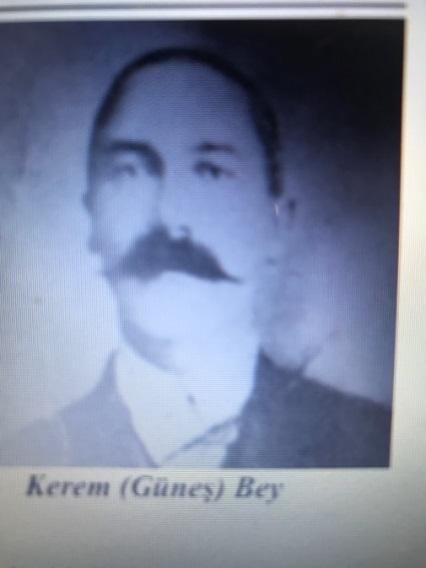
Kerem Bey
A HUMBLE LEADER
One day, Kerem Bey was walking alone on a dusty road. He saw an elderly couple. They had dropped their load from the donkey and were struggling to reload the heavy saddlebag (têr) full of wheat, but due to old age, they were having difficulty lifting it. When they saw someone approaching from a distance, they hoped for help. However, when they saw that it was Kerem Bey, they were disappointed. As ordinary villagers, they certainly could not ask someone like Kerem Bey to lift such a load and put it on the donkey! Kerem Bey greeted them and took off his jacket. He squatted down and called out to the elderly couple:
"Push the saddlebag towards my back!"
Kerem Bey lifted the saddlebag loaded onto his back and placed it on the donkey. The elderly couple was very happy. Kerem Bey lightly dusted himself off. He put on his jacket, which he had placed on a stone. He caressed the hearts of the elderly couple, who were speechless with embarrassment: "Don't worry! I lifted the load like a laborer and put it on the donkey, but I am still Kerem Bey!"
TO BE CONTINUED
Dear reader! The next section will be on THE HOYBUN SOCIETY AND SALİH PASHA'S military strategies.