History of Iğdır: 1945-65 – Part 1
This first part of a four-part series on the history of Iğdır covers the period 1945-50, focusing on the end of World War II, regional political developments, and the transition to multi-party democracy in Turkey.
INTRODUCTION
Dear readers! This series of articles will continue in four parts. Today, I will cover the period between 1945-50. Subsequently, it will sequentially cover the periods 1950-55, 1955-60, and finally 1960-65.
The history of Iğdır, from 1912 to the present, has unfolded in a chain-like manner, yet seemingly as disconnected processes. In my book titled IĞDIR 1919, I chronicled the events that took place in the Iğdır region between 1912 and 1920. Soon after, the Mount Ararat Rebellion, which made its impact felt throughout the region between 1926-32, became the subject of my book titled IĞDIR AND THE MOUNT ARARAT REBELLION. The period of Iğdır between 1932-1953 was marked by Hüsnü Bingöl, an inspector from the Ministry of Internal Affairs (MAH). I also included the events of this period in my book titled IĞDIR AND HÜSNÜ BİNGÖL.
In this series of articles, I will particularly bring to your attention the events that occurred in Iğdır during the years 1950-60. However, to help you better understand the ten-year period of the Democrat Party (DP), I decided to extend my writing to cover the years 1945-65. This way, we will have a better chance to understand the DP Era.
THE END OF THE SECOND WORLD WAR
The year is 1945. The terrible war that has been mercilessly ravaging the world from one end to the other for six years is approaching a definitive end.
The war, which began with Nazi Germany's invasion of Poland on September 9, 1939, and split the world in two like a knife, into the Allied and Axis Powers, claimed over 50 million lives. This was the deadliest war in human history.
Nazi Germany, having lost its morale with Hitler's suicide, surrendered on May 5, but Japan continued to resist. The US, calculating that it would suffer heavy losses if it invaded Japan by land, pursued another plan. On one hand, it desired revenge for the sudden and "treacherous" attack by the Japanese on the American naval base Pearl Harbor on December 7, 1941; on the other hand, it wanted to implement a military plan that would ensure Japan's surrender with fewer losses and without being targeted by Japanese organizational resistance and kamikaze attacks. Finally, the atomic bombs it desired were ready. Two nuclear bombs, named Little Boy and Fat Man, were dropped on the cities of Hiroshima and Nagasaki, respectively. The Japanese surrendered helplessly. Thus, the era of atomic warfare began in the world.
NEIGHBORING IRAN
Iran wanted to start a new era with Shah Reza, who came to power in 1932. During the years when Hitler was rising in Europe, a rapprochement occurred between the two countries due to their belonging to the Aryan Race, and hundreds of German diplomats, military personnel, and spies settled in Iran. When the war began, the strengthening of Germany in this region was not a situation that the Allied Forces, especially Britain and Russia, which had interests in the region, would welcome. Reza Shah ignored the warnings given to him. Thereupon, on August 25, 1941, the Soviets and the British simultaneously invaded Iran. The British occupied the oil-rich province of Khuzestan, and the Soviets occupied South Azerbaijan and Eastern Kurdistan, bringing them under their hegemony.
AZERBAIJANI NATIONAL GOVERNMENT OF SOUTH AZERBAIJAN
In November 1945, the Soviet Union established the Azerbaijani National Government in the Azerbaijan Region of Iran (South Azerbaijan). The head of state became the great Azerbaijani thinker Seyit Cafer Pişeveri.
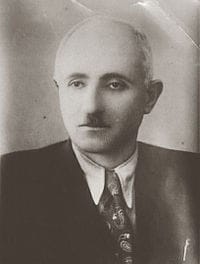
Also, the famous Azerbaijani poet Muhammed Biriya took on the role of Minister of Education. Tabriz became the capital. However, the life of the Azerbaijani State was not long. The Soviet Union preferred the regions it occupied in Eastern Europe. By agreement with the British, it withdrew its support for the Azerbaijani National Government. Iran, and in a sense Britain, occupied South Azerbaijan. Azerbaijani patriots continued to fight and resist, but they could not withstand the regular Iranian army for long. (End of 1946) Head of State Seyit Cafer Pişeveri moved to North Azerbaijan but died in 1947 as a result of a traffic accident (!). The Iranian government closed schools that provided education in Azerbaijani.
MAHABAD KURDISH REPUBLIC
The Mahabad Kurdish Republic was established in January 1946 with the support of the Soviet Union. It was defeated and overthrown by the Iranian army in the same year, following the withdrawal of the Soviet Union. The Mahabad Kurdish Republic holds the distinction of being an unrecognized Kurdish state by the United Nations. In this republic, a governing council consisting of 13 ministers was formed.
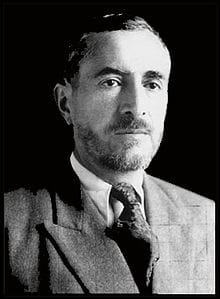
The head of state was Qazi Muhammad. Its capital was Mahabad. The military power of the Mahabad Republic was formed by the Herkî and Şıkaki tribes. The Soviets sent 1,200 rifles to the government in Mahabad. On January 22, 1946, the establishment of the Mahabad Republic was declared in Çarçıra Square in Mahabad. In February 1946, the Soviets sent another 5,000 rifles.
HISTORICAL KURDISH-AZERBAIJANI FRIENDSHIP IN IRAN
On May 3, 1946, an agreement was signed between the Mahabad Republic and the Azerbaijani National Government. Representatives of each party would be sent to each other's territories. Kurdish administration representatives would be present in Azerbaijani territories where Kurds were in the majority, and Azerbaijani representatives would be present among Azerbaijanis in Kurdish territories where Azerbaijanis were in the majority. Furthermore, the two governments agreed to establish a United Economic Committee to deal with economic issues. According to this agreement, mutual military assistance would be provided when necessary. All negotiations with the Iranian government would be conducted after obtaining the approval of both governments.
The Azerbaijani government undertook to take the necessary measures to organize initiatives in the field of education for the Kurds living in its territories. The Kurdish government promised to carry out the same initiatives for Azerbaijanis living in Iranian Kurdistan.
Anyone who attempted to disrupt the relations of friendship and cooperation established between the two peoples throughout history, or who extended their hand to their national unity, would be punished by both peoples.
NOTE: Dear readers, as clearly stated above, the friendship and trust between Kurds and Azerbaijanis in Iran are at an unshakable level. They have overcome minor border issues through diplomatic channels, laying the foundations for the peaceful coexistence of the two peoples as neighbors, and this trust continues to this day. Unfortunately, a similar situation could not be observed between Armenia and North Azerbaijan. The slightest border issues were considered a cause for war. This enmity continues with all its hatred. In this sense, the constructive will of the Kurdish and Azerbaijani peoples in Iran to overcome problems through diplomacy should serve as an example for the states of North Azerbaijan and Armenia.
When the Soviet Union withdrew from Iranian territory on May 9, the Iranian army occupied Mahabad on December 17, 1946, ending the Mahabad Republic. On March 31, 1947, President Qazi Muhammad and Defense Minister Muhammad Hussein Khan Seyfi Qazi were hanged in Çarçıra Square, the place where the republic was founded. Mullah Mustafa Barzani, who served as Chief of General Staff, and his 500 fighters returned to Northern Iraq in April 1947. When the Iraqi government arrested and imprisoned Sheikh Ahmed Barzani, Mullah Mustafa Barzani, feeling unsafe, left the region, crossed the Aras River, and sought asylum in the Soviet Union.
The biggest reason for the easy defeat of the Mahabad Kurdish Republic was tribal divisions, or rather, the conflicts and rivalries among tribal leaders, which became a significant obstacle to the national movement.
TURKEY AT THE END OF THE SECOND WORLD WAR
In my previously published book titled Hüsnü Bingöl, I wrote that even though Turkey did not actively participate in the war, Turanist-Misak-ı Milli views clashed within the country throughout the Second World War. Chief of General Staff Fevzi Çakmak, Enver Pasha's brother Nuri Pasha, and others (in those years, interestingly, high school and university students and soldiers, without exception, leaned towards the Turanist view) who held Turanist views believed that a good opportunity had arisen to establish the Turan State by cooperating with the Germans.
Fevzi Çakmak Pasha, despite not having the authority, sent active (currently serving) high-ranking officers to the Caucasus front, where they controlled the front with Nazi officers and conducted on-site inspections. Nuri Pasha, on the other hand, never left Hitler's side. Because he had experience in the Caucasus Wars and knew the region well, he guided Hitler to make the right decisions.
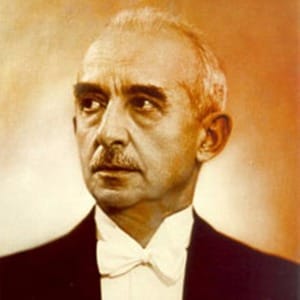
Only two people in the vast country of Turkey remained loyal to the concept of Misak-ı Milli, which Mustafa Kemal Atatürk valued: İsmet İnönü and Hüsnü Bingöl. At the beginning and in the middle of the war, both tried to pursue a balancing act, but once it became certain that the Germans would be defeated, both stepped forward and ruthlessly eliminated or dismissed their rivals. If it weren't for these two figures, Kars-Iğdır-Ardahan would have been occupied by the Soviets.
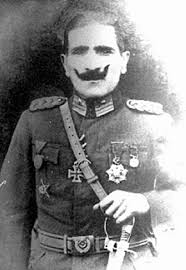
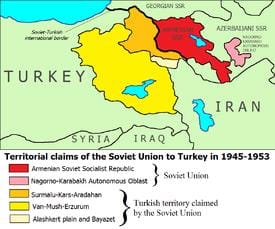
The primary goal of the Soviets was to occupy the Kars-Iğdır-Ardahan region, shown in orange in the picture. If conditions allowed, the Muş and Erzurum regions, shown in yellow, would follow.
NURI KILLIGIL PASHA
Nuri Killigil, Enver Pasha's brother, launched a campaign to liberate Azerbaijan from occupation at the end of World War I, forming an army called the Caucasian Army of Islam, consisting of Ottoman, Azerbaijani, and Dagestani soldiers, after Russian and Armenian units dominating Azerbaijan committed massacres of Muslims.
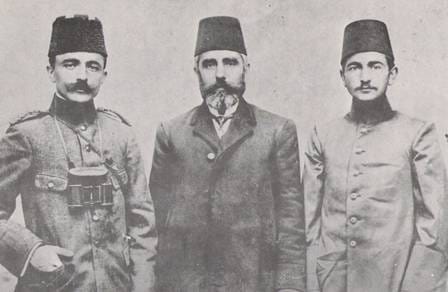
To intercept this army and assist the Russian and Armenian forces controlling Azerbaijan, the British sent a small contingent to Baku. However, as the Caucasian Army of Islam, under Nuri Pasha's command, gained widespread support and strength throughout Azerbaijan, they were defeated in the Battle of Baku and withdrew. After the liberation of Baku on September 15, 1918, an Ottoman detachment moved into Dagestan in October and liberated it from Russian occupation as well. Nevertheless, on the Syrian front, the Ottoman Yıldırım Army Group, commanded by Liman von Sanders, suffered a defeat at Nablus against the British army commanded by Edmund Allenby, leading to the Armistice of Mudros. Following the armistice, Enver Pasha left the country. When Turkey ceded Azerbaijan to the Soviet Union with the Treaty of Moscow, the Caucasian Army of Islam also disbanded.
THE SECOND "KAÇA-KAÇ" INCIDENT IN IĞDIR
Among the people of Iğdır, the belief that the Soviets would attack and capture Iğdır gained strength. The poor people of Iğdır had nowhere to flee. The wealthy planned to move their assets, whatever was light in weight but heavy in value, to more distant provinces, or even to Istanbul if necessary. Middle-class families, especially Azerbaijani ones, also sought a solution to leave Iğdır in convoys. I would like to give three examples from wealthy families:
Of two brothers, Hacı Gulem Parlar remained in Iğdır, while Hacı Nağdali Parlar took all his possessions, whatever was light in weight but heavy in value, and settled in Ağrı.
Similarly, of two brothers, Bağır Aras remained in Iğdır, while İbrahim Aras took his possessions, whatever was light in weight but heavy in value, and settled in Istanbul.
When World War II began, Nağı Odoğlu, as always, wanted to protect his family. He gathered his family. He summarized the situation. "I want to die in these lands! If it is God's will, my only wish is that you bury me in Iğdır!" he bequeathed. After preparations were complete, he sent his wife, his two sons named Bekir and Abbas, and his daughters named Fahriye, Süheyla, and Ayten to Istanbul. Bekir bought the famous Çiçek Pasajı on İstiklal Avenue with the money he brought. Abbas also got involved in real estate on the islands.
Nağı Odoğlu contracted diabetes in Erzurum prison, where Hüsnü Bingöl had unjustly accused and sent him. He had now accepted his illness and was receiving the necessary treatment. He lived alone in his large house with his cats. One day, he contracted a deadly diarrhea. As soon as the news of his severe illness arrived, Abbas Odoğlu flew from Istanbul to Erzurum. Unfortunately, by the time Abbas Odoğlu arrived home, Nağı Odoğlu had passed away 3-4 days earlier. Nağı Odoğlu passed away in Iğdır in 1944 at the age of 64, far from his beloved wife and children.
Nağı Odoğlu had bequeathed to be buried in Iğdır. He was buried in the old cemetery of the Iğdırmava neighborhood. This cemetery was open. Herds of animals passed through it. In time, neither stones nor graves would remain. Today, Nağı Odoğlu's grave site is unknown.
In those years, when middle-class families also joined the caravan of escape, Iğdır was, in a sense, emptied. In fact, if we make a general assessment, this situation, albeit on a small scale, is the "second kaça-kaç" incident in the history of Iğdır.
(I had personally heard from my late grandfather Mehmet Kakioğlu. News that the Soviets would attack Iğdır at any moment was on everyone's mind. In war, planes first carry out carpet bombing, then tanks and soldiers enter the area. My grandfather did not believe that Soviet soldiers would treat civilians badly, but he also had to protect his family from aerial bombardment. He dug a deep tunnel in the garden of the house he rented, so that as soon as warplanes appeared, the whole family was ready to take refuge in the tunnel.)
TRANSITION TO DEMOCRACY AND THE ESTABLISHMENT OF THE DEMOCRAT PARTY
When America emerged victorious from the Second World War, it mandated that elections be held and a transition to democracy occur in all countries except the Soviet Union.
When World War II ended in 1945 with the victory of democracies, Turkey was under a single-leader rule. On the other hand, Stalin, the leader of the Soviet Union, one of the victors of World War II, demanded Kars, Ardahan, and Artvin from Turkey. President İsmet İnönü, who was approaching the United States and the United Kingdom against the Soviet Socialist Republics, reluctantly gave the green light to the desire for democracy in his speech on May 19, 1945.
Indeed, the existence of an opposition within the Turkish Grand National Assembly (TBMM) had surfaced during the 1945 budget discussions. Celâl Bayar, Adnan Menderes, Feridun Fikri Düşünsel, Yusuf Hikmet Bayur, and Emin Sazak voted against the budget. Later, Celâl Bayar, Adnan Menderes, Fuad Köprülü, and Refik Koraltan submitted a motion called the "Quadruple Motion" to the CHP Group. The motion envisioned regulations that included a liberal understanding in the country's and party's administration. However, the Quadruple Motion was rejected (June 12, 1945).
Menderes, Koraltan, and Köprülü were expelled from the CHP (September 1945). Celâl Bayar, who was from the same group, first resigned from his parliamentary seat and then from the CHP. On December 1, 1945, Celâl Bayar announced that they would form a party. Bayar, who was summoned to Çankaya Mansion by İnönü, founded the Democrat Party (DP) on January 7, 1946, after receiving the necessary support from the president.
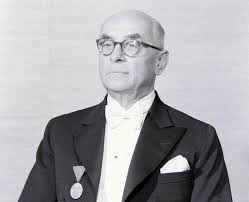
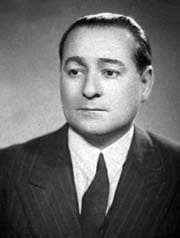
Thereupon, despite İsmet İnönü's reluctance, general parliamentary elections were held on July 21, 1946. On June 5, the Law on Parliamentary Elections was amended, and for the first time in the history of the Republic, an agreement was reached on holding a single-stage election.
This election, the first multi-party general election in the Republic of Turkey, was conducted on the basis of a single-stage, open ballot, secret count, and majority system. Of course, this was an absurd practice. That is, you cast your vote openly in front of the ballot committee, and after the voting was over, a secret count was carried out without anyone being allowed into the room during the counting of votes. This situation undoubtedly created a situation open to all kinds of suspicion.
During this period, the late Pharmacist Edip Koçkaya was the Iğdır DP District Chairman. Later, Nurettin Kirman joined the DP. Nurettin Kirman explains his joining the DP as follows: "In 1948, believing in its charter and program, I joined the Democrat Party and worked in opposition with my party friends until 1950, facing the most difficult conditions and engaging in tough struggles with politicians who now claim to be Democrat Party members."
In 1946, the CHP District Chairman was Resul Taner. Resul Taner was also the President of the Chamber of Commerce. Rıza Yalçın was the Mayor. Osman Ataman was the General President of the Community Center (Halkevi). Resul Taner passed away in 1950 while at the peak of his political career. Rıza Yalçın, who lost the municipal elections to Mir Ali Ural, became the CHP District Chairman.
EDİP KOÇKAYA
Edip Koçkaya was originally from Erzurum. He came to Iğdır in the 1935s, settled there, and opened the Emek Pharmacy. He was single when he arrived. At that time, there were no pharmacies in Iğdır. One or two general practitioners would dispense medicine to the public from small medicine cabinets.
When Edip Bey arrived, the situation changed. The number of medicines increased. He personally manufactured many of them. At that time, pharmacists had the authority to prepare many medicines according to doctors' prescriptions. Edip Bey, whose business was going well, brought a relative from Erzurum, whom they called "Dayı" (uncle), to Iğdır as an assistant. This uncle had two sisters-in-law: the late Aliye Hanım and Nimet Hanım.
The beautiful blonde Nimet Hanım had a slight hearing impairment. Soon after, she managed to make one of our valuable young men, Hamza Mızrak, fall in love with her. After teacher Hamza Mızrak married Nimet Hanım, he was assigned to Ankara and left Iğdır. Hamza Mızrak passed away in Ankara.
Edip Bey married Aliye Hanım. From this marriage, a son named Bertan and a daughter were born. Their daughter is married to a judge from Iğdır. Edip Bey passed away from a heart attack in 1950 while preparing to run as a parliamentary candidate for the DP. After her husband's death, Aliye Hanım ran the pharmacy alone for many years. She married Kemal Erkan Bey, a pharmacist originally from Antalya who worked with her, and left Iğdır. Aliye Hanım passed away in Antalya.
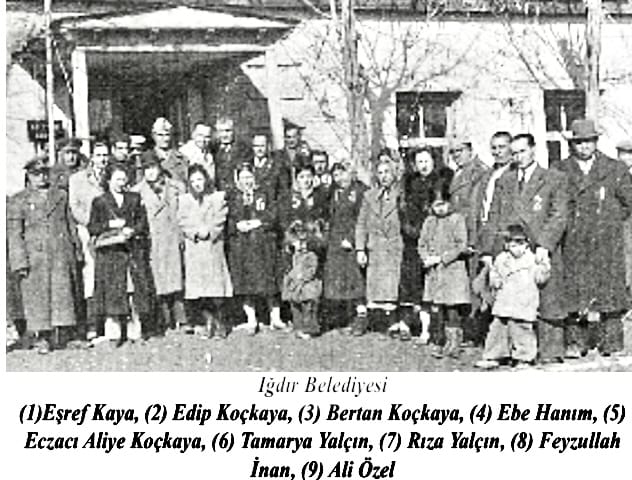
Pharmacist Edip Koçkaya served as the DP district chairman. In 1949, on his way to Kars for the provincial congress, Edip Bey got on a sleigh in Paslı Hanları and, in preparation for the long journey in cold weather, did not stint on cognac. Edip Bey, who overindulged in alcohol, fell into an alcoholic coma and passed away. Edip Bey had an article published in Tasvir Newspaper (1948-49) regarding the political situation of the period. After Edip Koçkaya, Nurettin Kirman was elected DP District Chairman.
1946 ELECTION RESULTS
Republican People's Party: 395 deputies (Chairman İsmet İnönü)
Democrat Party: 64 (Chairman Celâl Bayar)
Independents: 6
Total: 465 Deputies
In this first experiment in democracy, conducted with a single-stage (a voting system that allows voters to directly elect their representatives. In a two-stage election, voters first elect a group of electors called secondary electors. Representatives were then elected by these secondary electors. Not to be confused with delegate elections.), open ballot, secret count, and pluralistic system, the CHP won all the parliamentary seats in Kars. Since it has historical importance, I would like to provide this list. It should be reminded to my readers that according to the pluralistic system, the party that received the most votes in a province was considered to have won all the parliamentary seats. The list of 1946 CHP Kars Deputies was as follows:
- Fevzi Aktaş
- Mehmet Rüstem Bahadır
- Ali Akif Eyidoğan
- Aziz Samih İlter
- Şerafettin Karacan
- Esat Oktay
- Zihni Orhon
- Alay Abdurrahman Azizağaoğlu
- Tezer Taşkıran
- Hüsamettin Tugaç
Among these names, I would like to provide information about Tezer Taşkıran and her family, as she will reappear later.
AHMET AĞAOĞLU
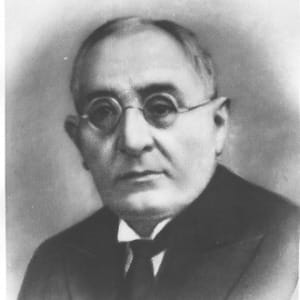
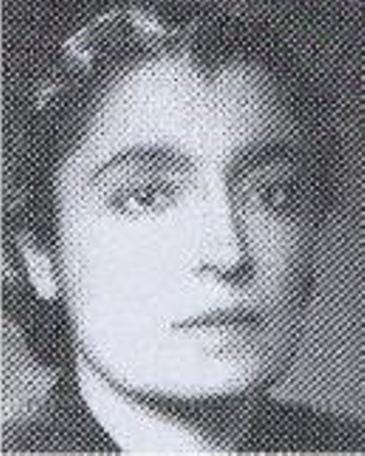
Ahmet Ağaoğlu was born in Azerbaijan in 1869. After the declaration of the Second Constitutional Era, he came to Istanbul and was among the founders of the Türk Yurdu and Türk Ocağı societies. He is considered one of the leaders of the Turkism movement, along with figures like Ziya Gökalp and Yusuf Akçura.
He gained fame as a Turkish politician, lawyer, writer, and journalist. In 1930, he played the role of theoretician for the Free Republican Party (Serbest Cumhuriyet Fırkası) during Turkey's first attempt at a multi-party system. He held liberal views. During the War of Independence, he went to Ankara and supported the struggle. He served as a deputy in the Turkish Grand National Assembly (TBMM) during its II and III terms.
His influence, views, and activities within the Free Republican Party in 1930 made him the most important figure alongside the party's founder, Fethi Bey. After the party closed, Ahmet Ağaoğlu withdrew from active politics and continued to advocate for nationalism and liberal thought through his writings until his death in 1939.
One of his daughters, Süreyya Ağaoğlu, was Turkey's first female lawyer. His second daughter, Tezer Taşkıran, served two terms in parliament as a Kars Deputy. His son Abdurrahman Ağaoğlu was an electrical engineer and businessman. His other son Samet Ağaoğlu was a politician, man of letters, and lawyer. Gültekin Ağaoğlu also served as a medical doctor.
RESUL TANER
Resul Taner's birth year must be between 1901-04. His exact date of birth is unknown. He was born in the town of Kamerli (within today's Armenian borders). Since his family was financially well-off, he went to Moscow for schooling, graduated from high school, and returned to Kamerli with his diploma. During the war years, all the siblings migrated together to Başköy.
After Hacı İbrahim's death, Resul Taner took over the factory management. Between 1933-36, in addition to a flour mill powered by a simple engine, he had a German-made ginning factory built. He also brought and installed the first Lathe-Milling system to Iğdır that year.
In 1936, he established the Rice Mill, which was considered a significant investment for Iğdır's conditions at the time. The Rice Mill was in the same garden as the other two factories. This huge building, built on an area of 100 square meters and under a single roof, was Iğdır's largest factory.
One of two specially produced engines by an Art School in Germany was installed in Bombay (India), and the second was mounted in the factory established in Iğdır. The assembly of the Rice Mill was done by a master named Kaptan, who came from Istanbul. Since the existing engine was not powerful enough to operate the three factories (flour, ginning, and rice) simultaneously, the factories were operated sequentially according to the season and need. Thanks to the dynamo connected to the factory engine, 10 kW of electrical energy met the lighting needs of both the factory and our home.
The maintenance and management of the factory were entrusted to a master named Russian Petro, who came from Kars. Russian Petro lived in a small lodge in a corner of the garden with his wife and two daughters. Various individuals served as foremen under Russian Petro. Among them, Hafız Taner, Kadir Usta, Müslüm Usta, Halil Usta from Rize, and Ahmet Usta, a Bulgarian immigrant in 1945-46, can be mentioned.
In the 50s, due to a malfunction in the factory engine, the factory managed to stay afloat for a while longer with the help of a tractor. Since the family did not own a tractor, Rıza Yalçın's tractor, and in later years Mustafa Akgün's tractor, were rented for this purpose.
After Hacı İbrahim's death (1933), the factory shares were re-arranged as Mürsel Saita 25%, Kamil Taner 25%, and Resul Taner 50%.
When Mürsel Saita sold his shares to Resul Taner in 1940 and withdrew, Resul Taner came to own 75% of the total shares. Resul Taner passed away in January 1950 from heart failure, before reaching the age of 50. The factory was later transferred to Mustafa Akgün in subsequent years.
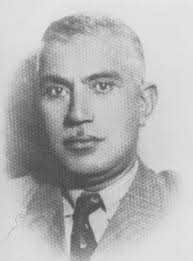
Resul Taner served as the president of the Chamber of Commerce and the CHP. He continued these duties without interruption until his death.
RESUL TANER, PRESIDENT OF THE CHAMBER OF COMMERCE
Mehmet Ali Saita, son of Mürsel Saita, worked as a tax collector at the Chamber of Commerce for one year (1945-46) after completing middle school. His duty was to register merchants as first, second, and third class and to collect membership fees. Mehmet Ali Saita summarizes that period as follows:
"Manufacturers and those working in wholesale haberdashery were considered first-class merchants. Their number was about 10-12. Among the first-class merchants of Iğdır, I can name the following: Resul Taner, Abdürrezak Güneş, Osman Ataman, the Parlar brothers (Hacı Gulem and Nağdali), the Çağlar brothers (Gulem and Hüseyin), Naki Odoğlu, Hüseyin Yaycı, Hacı Ekber Çöllü, the Sürmeli brothers (Ağacan and Ağayar), Timur Necilli, Bağır Aras, an Iranian company (Grocery market), and a businessman with the surname Ataman of Black Sea origin."
Haydar Yüksel was not included in this list as he had passed away earlier (1938). Also, merchants like Reşit Keki and İsmail Şefkatli were not registered with the Iğdır Chamber of Commerce. When Abdürrezak Güneş, the President of the Chamber of Commerce, passed away in 1945, Resul Taner became the new president.
Among the second-class merchants, I can name figures such as Tağı Demirel, Talip Kalafat, and Ağa Erkan. Ağa Erkan settled in Kağızman after marrying Nurettin Kirman's sister. He worked as a contractor for the military.
Between 1936-40, a food company was established in Iğdır, including Hacı Ekber Çöllü and Resul Taner. The company, where lawyer Zeki Bey served as an accountant, disbanded for reasons unknown to me, and everyone took their share and left."
CINEMA IN IĞDIR (1948)
Between 1946-50, Iğdır experienced economic, political, and cultural dynamism. The ARAS cinema, opened jointly by Aziz Güney and Ali Orkun, injected a new spirit into the district, leading to a cultural step forward. We commemorate its founders with mercy.
Dear readers! Next time, I will cover the period 1950-55. However, some other articles may also be interspersed, but ultimately, you will have a History of Iğdır up to 1965.