History of Iğdır: 1945-65 – Part 3
This part of the "History of Iğdır" series delves into the region's socio-political landscape between 1945 and 1965, focusing on the pivotal role of cotton farming and the Pamuk Tarım Satış Kooperatifi (PTSK), alongside local political dynamics and notable anecdotes.

HISTORY OF IĞDIR: 1945-65 (PART THREE)
Dear readers!
As I stated in my previous article, the Kars and Iğdır region was like a boiling cauldron between 1950 and 1960, the years when Menderes's Democratic Party was in power. Since Iğdır was a district of Kars during those years, political events in Kars affected Iğdır, and political events in Iğdır affected Kars.
In my previous two articles, I focused more on political parties and presented a snapshot of Iğdır politics during the 1950 General Elections. But there is a reality that should not be forgotten: one of the most important factors influencing Iğdır politics, perhaps the foremost, was the existence of the Cotton Agricultural Sales Cooperative (PTSK). For this reason, to analyze Iğdır in the 1950s in a social and political sense, I find it useful to look at the history of cotton farming in Iğdır and to include the establishment of the PTSK.
But before that, I need to clarify two points to guide you better:
FIRST POINT
With the General Elections held in 1946, there was a stir in Iğdır. Until 1946, Iğdır was indisputably under the control of Hüsnü Bingöl, but cracks slowly began to appear. The first crack was between Hüsnü Bingöl and the Azerbaijanis (both "O Taylı" and "Bu Taylı" together). Kurds and Terekemes were indisputably under Hüsnü Bingöl's control. This is a general framework. There are exceptions. For example, Hüsnü Bingöl was in a secret conflict with some Kurdish figures like Ahmed Şemo and Kerem Güneş (or rather, the Güneş family). By 1946, Ahmed Şemo and Kerem Güneş were no longer alive. Despite this, Hüsnü Bingöl trapped Naci Güneş and had him sent to Erzurum prison. Hüsnü Bingöl made Eşref Başaran and Eşref Kaya, who were of Terekeme origin like himself, the PTSK Union Presidents. By 1954, Hüsnü Bingöl had retired and withdrawn. The rivalry in the district first occurred between the "O Taylı" and "Bu Taylı" Azerbaijanis. Kurds and Terekemes had no influence. When Abdürrezak Güneş was vetoed by the DP in the 1954 elections, ethnic conflict became part of the political rivalries in the district for the first time in Iğdır's history. From 1955 onwards, the general picture was as follows: Kurds - O Taylı Azerbaijanis - Bu Taylı Azerbaijanis. Of course, there were exceptions, but this was the general view.
In the period when Hüsnü Bingöl was on one side and the Azerbaijanis on the other, Talat Tufan became the first target of tension. He was targeted for assassination by a Terekeme group under Hüsnü Bingöl's protection. You will understand this situation better in the later parts of my article. As years passed, the Hüsnü Bingöl era closed, but this time the "O Taylı" and "Bu Taylı" Azerbaijanis diverged, and a relentless struggle began between them, especially to seize control of the DP. Unfortunately, in the environment caused by this tension, Nurettin Kirman, who was "Bu-Taylı," was martyred by "O-Taylı" Azerbaijanis.
SECOND POINT
Cooperativism in Iğdır developed step by step. First, a factory was established. Later, four Agricultural Sales Cooperatives were founded: Taşburun, Tuzluca, Başköy, and Iğdır Center. The purpose of these four cooperatives was to sort the cotton they bought from farmers according to its class and to pay the producers on the spot.
The collected cotton was sent to the factory. Thus, for example, a cotton farmer in Aralık was spared the trouble of bringing their product to Iğdır Center. Later, the four Agricultural Sales Cooperatives and the factory were gathered under one roof under the name BİRLİK (Union), meaning there were a total of five managers: four Agricultural Sales Cooperative managers and one factory manager. All of them were accountable to the BİRLİK president. The BİRLİK president, in turn, had to report to the Ministry of Commerce. In cases of abuse, either the Ziraat Bank (Agricultural Bank) Manager acted as a proxy for the BİRLİK Presidency, or a trustee was appointed.
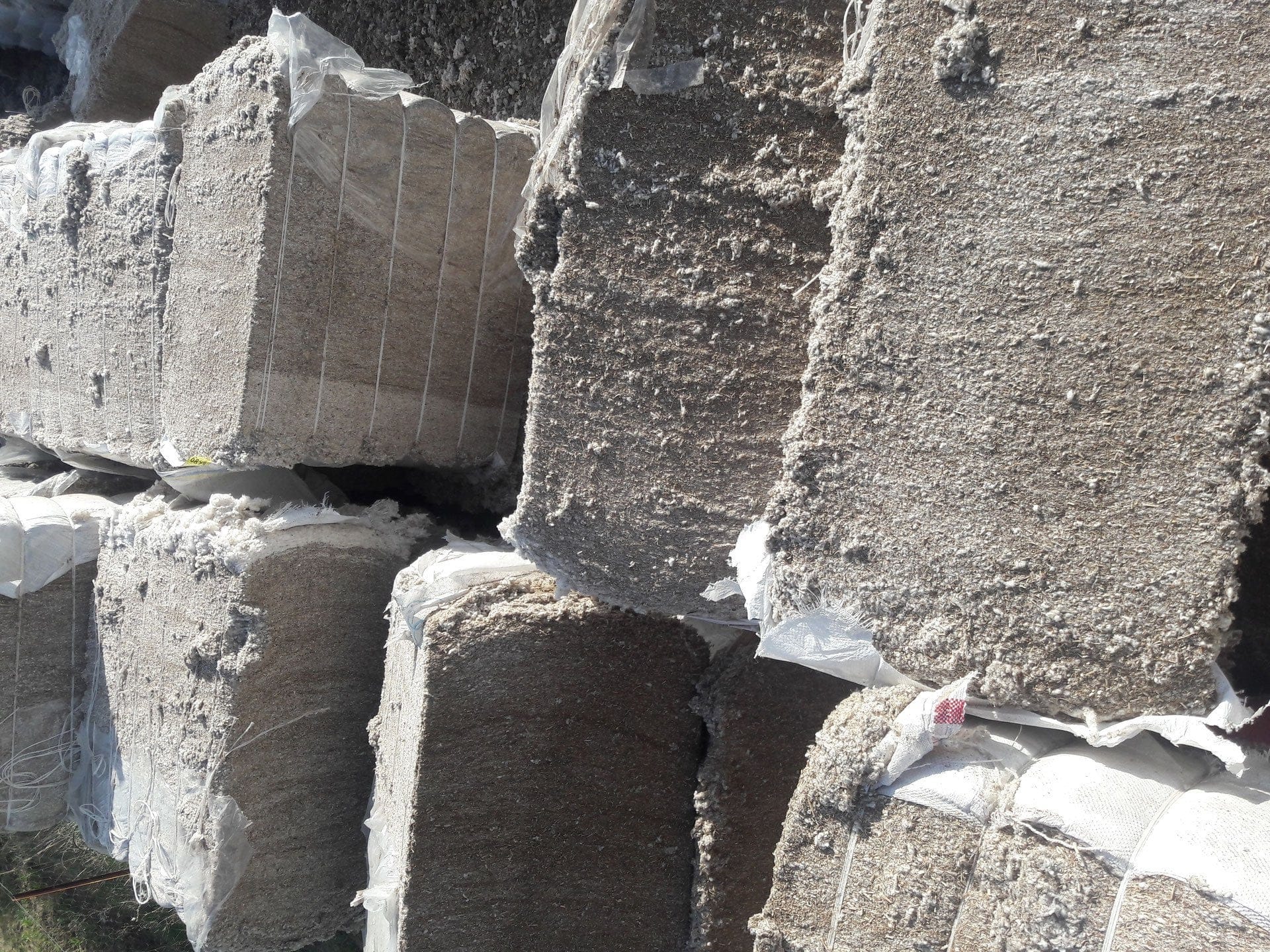
I should also add this immediately: not all cotton producers in Iğdır are members of BİRLİK. Farmers who wish to do so process their products in independently operating ginning factories, where the fibers are baled. In this case, the producers themselves or intermediary traders who collect these cottons from the market are responsible for the sale of the cotton. Intermediary traders have their own warehouses. They accumulate bales there and eagerly follow the cotton market. BİRLİK delivers the collected cotton to the state without adding a large profit margin. However, there are many private yarn factories in Anatolia that are not under state control. Iğdır's intermediary traders go around and check the market situation, finding opportunities to make significant profits by selling the cotton waiting in their warehouses at much higher prices than the cooperative.

THE IMPACT OF THE PTSK UNION STRUCTURE ON TODAY
It is impossible to understand Iğdır's past and present without understanding the structure and impact of the PTSK. The political and economic trunk of the Iğdır tree took root and branched out in the 1950s, especially with the existence of the PTSK. And those economic and political branches are still trying to develop separately, as if they do not belong to the same trunk and the same root. In other words, the trunk has died, but the branches are trying to grow. Of course, this is not possible. For this reason, politics and economy in Iğdır are stagnant, unable to renew themselves. They have pinned their hopes on state investments.
The spirit of Iğdır has been locked in the year 1950. The assassination attempt on Talat Tufan (1953) and the martyrdom of Nurettin Kirman (1957) solidified and worsened the political polarization in Iğdır.
COTTON FARMING IN IĞDIR
In the 1940s and 50s, the most important agricultural and commercial activity in Iğdır was cotton farming. We do not have definitive information on how long cotton has been cultivated in Iğdır's soil. However, historical records tell us that cotton farming has been practiced in the Sürmeli region since the 11th century.
Since the New Republic's biggest goal in the region was to grow high-quality and abundant cotton, it gave special importance to the Iğdır region. As far as we know, significant steps were taken in cotton cultivation in Iğdır with the establishment of the Third General Inspectorate (important political and administrative structures brought about by the socio-economic and administrative conditions in the country) in 1935. In the days following 1935, four independent cotton farming cooperatives were established in Iğdır. Şükrü Kasapoğlu, who served as a consultant, came to Iğdır to increase efficiency and investigate problems on site, analyzing the issues.
To increase the cotton potential in Iğdır, the New Republic accelerated diplomatic efforts in 1927 to establish the Serdarabat Dam on the Aras River in cooperation with the Soviet Union. An agreement was signed with the Soviets on this matter in Kars on January 8, 1927, but the project could not be implemented immediately. A security problem arose in the region due to the Ağrı Dağı Rebellion.
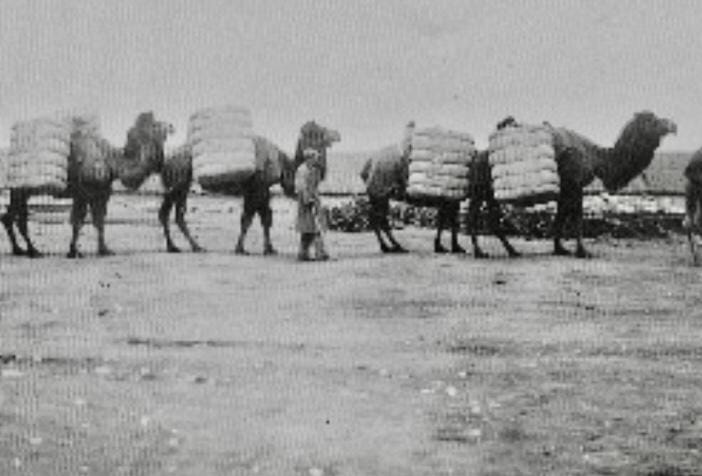
Because of the high quality of Iğdır cotton, it has always led to investment and special attention from Republican governments. Since seed quality was important, as early as 1925, 50,000 tons of cotton seeds were transported by ship from the İzmir region to Trabzon and brought to the Iğdır region by camel, where they were planted.
Since the cotton grown in the Iğdır region easily found buyers, it was exported, and a portion of the foreign currency needed by the country was thus secured. On the other hand, it was planned to establish yarn factories in the Eastern Anatolia region with Iğdır cotton, and the development of the textile industry was foreseen. A branch of Ziraat Bank was opened to provide the credit needed by villagers for cotton cultivation.
We know that some horse-powered ginning workshops were established in Iğdır even before 1920. But the main ginning factories where Iğdır cotton was processed were in the city of Yerevan.
The state believed that the textile industry needed to be developed in the region to utilize Iğdır cotton. This issue was even brought to the government's attention in a report prepared in 1953, and the necessary steps were requested.
In 1936, there were 7-8 ginning factories in Iğdır. The number of businesses trading cotton was also increasing day by day. But unfortunately, despite all efforts, the work done to increase the quality and quantity of cotton did not yield the desired results. The financial situation of cotton producers was also dire. While cotton traders earned a lot of money, the producers were in distress. Because pieces of stone or similar unwanted materials were found in Iğdır cotton exported to countries like Germany and Russia, the price of Iğdır cotton suddenly dropped.
ESTABLISHMENT OF THE COTTON AGRICULTURAL SALES COOPERATIVE (PTSK)
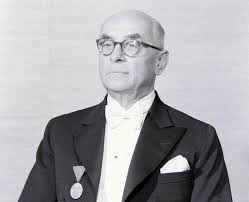
Minister of Economy Celal Bayar came to Iğdır in 1936 to examine the situation of cotton farming on site. He concluded that a Cotton Agricultural Sales Cooperative (PTSK) needed to be established in Iğdır as a solution. As a result of the work carried out, the PTSK began its operations on October 21, 1935.
The goals of the PTSK were clearly defined:
- To find buyers for the goods of the cooperative's member partners.
- To process cotton as raw material in ginning factories when necessary and sell it as raw material.
- To contribute to improving the situation of producers by transferring the money earned to them.
- To prevent price fluctuations and to bring Iğdır cotton to buyers at the best possible price.
- To implement standardization policies applied nationwide in cotton production in the Iğdır region.
- To provide all kinds of tools and equipment needed by the partners at a low cost.
Celal Bayar even referred to Iğdır cotton in a report he penned in 1937, writing: "Iğdır cotton constitutes one of the main products of the East. As a result of my on-site investigations regarding this high-quality cotton, I understood that we must, on the one hand, increase the amount of cotton production, and on the other hand, find a reliable market and outlet for the cotton. Today, the shipment of produced cotton to Istanbul, one of its main markets, is almost accidental.
It is impossible to accept an order and deliver it by a certain date. That is why Iğdır cotton is mostly offered to Russians at border gates, and Russians have the opportunity to buy it at whatever price they wish. We are working on initiatives to regulate the sale of cotton in this region, to establish a regular and reliable transportation system to Istanbul, to set up a sales cooperative and union, and finally, to establish a yarn factory in the East as a permanent buyer of this cotton.
It is certain that we will face the necessity of increasing cotton production in the region, especially after these measures are taken. Even if these measures were not taken, we would still need this high-quality cotton. The Iğdır cotton area is wide and fertile, and the population is sufficient. In this respect, it is possible to rapidly increase current production several times over."
In line with Celal Bayar's orders, experts were sent to the region, and on-site investigations were carried out and presented to the Minister in a report.
The establishment of the PTSK pleased cotton producers but disturbed intermediary traders, who had earned incredible amounts of money at the expense of producers for years. These traders even tried to prevent producers from joining the PTSK by spreading rumors. Upon learning of this, the Ministry, through the District Governor, advised them not to believe these rumors. Following this, Iğdır cotton producers gathered and prepared a report to be submitted to the Ministry, expressing their trust in the PTSK.
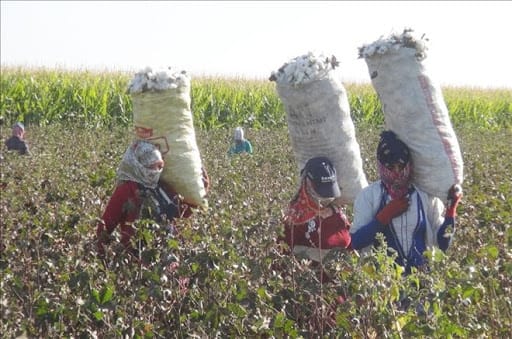
Celal Bayar had a draft program prepared for the Serdarabat Dam to become operational as soon as possible. Efforts to establish cooperatives also gained momentum. Experts sent by the Ministry made approximately 4000 cotton producers members of the PTSK. Of course, intermediary traders were extremely disturbed by all these developments. At one point, intermediary traders and cooperative founders even confronted each other at the Iğdır Community Center.
There were very heated discussions among them. Mr. Kasapoğlu, representing the cooperative, took the floor and made the final point: "My dear sirs (intermediary traders), if you don't interfere, I will fully agree with the villagers, and I have already agreed!" Thereupon, a quick-witted and humorous person, famous for his wit, spoke on behalf of the intermediary traders:
"Sir (Mr. Kasapoğlu), we have been in agreement with the villagers for years. You have come between us. Our factory has stopped, our trade has shrunk. What will we do now, you tell us!"
Of course, this speech was not taken seriously, and the PTSK was established in all its glory.
The Ministry sent another inspector, aiming to establish a factory to process Iğdır cotton. Later, it was concluded that it would be more suitable to establish this factory in Erzurum.
Meanwhile, the intermediary traders of Iğdır, from whom a great blessing had been taken, continued to spread rumors among the public: "The new cottonseed is expensive. The planting season has passed. There is disease in these new seeds."
To break the power of this rumor, Şükrü Kasapoğlu made every effort, gathered the timid and fearful farmers, and distributed disinfected cottonseed to them at 50% cheaper prices in front of their eyes.
To the rumor "The planting season has passed," Şükrü Kasapoğlu gave this famous answer: "Friend, do you see that mountain next to Ağrı? They call it Cotton Mountain. If you don't know, ask your grandfather, and if he doesn't know, dig up the bones of your ancestors and ask them, cotton can be planted in the Sürmeli Basin for 10 days after the snow on the top of Cotton Mountain melts."
In this way, the PTSK, established through the determined efforts of Şükrü Kasapoğlu, began collecting cotton from producers in 1937. Thanks to the newly introduced high-quality seeds, it was a bountiful harvest season.
The cotton was divided into three different classes according to its quality, and farmers were satisfied with a payment 20% higher than the money given by intermediary traders in previous years. Not only that, but PTSK partners were given an advance of 60% of the value of the cotton they delivered. In addition, it was decided to establish two ginning factories in Taşburun and Tuzluca. Until the factories were built, the Cooperatives were instructed to clean the ginned cotton they collected in their own factories and then send it to Iğdır, the Union Center, where the cotton was classified by the Union's experts and baled in the factory.
Meanwhile, necessary steps were taken to establish a central factory in Iğdır, and the factory was opened for service by Şükrü Kasapoğlu on October 29, 1937. Thus, a factory with a 55-horsepower diesel engine began operations in central Iğdır. With the opening of the factory, the 1937 cotton crop almost doubled the previous year's yield, reaching 3 million tons. Another reason for such a large yield was the first-time use of productive cotton seeds obtained from Russia in 1937 and favorable weather conditions. Such favorable weather was described by the people of Iğdır as "Kasapoğlu's luck."
One year after its establishment, Iğdır PTSK had 5 separate enterprises, 7 ginning machines, and 5 pressing machines operating under its command, producing cotton suitable for international standard types. The PTSK began to show its positive effect in the region immediately after its establishment. Previously, export transactions were in the hands of intermediary traders, and there were problems in exports due to a lack of attention to quality, but in 1938, Iğdır cotton earned the appreciation of Germany and thus became a commodity demanded by the Germans. The name "Iğdır" gained international renown thanks to the quality of its cotton.
So much so that the PTSK received a certificate of appreciation at an exhibition in Athens for the packaging and quality of its cotton. Before the PTSK was established, intermediary traders processed the cotton harvest randomly, mixing good with bad, clean with dirty. With the training of the PTSK, farmers cleaned and classified the cotton while it was still in the field. A news report in the Kars Newspaper (August 29, 1941) stated the following:
"Enter the Union's accounting office and tell them the name and surname of any of the more than 4,000 partners at random, and they will provide you with all the current and past year's accounts for that partner in exactly 10 minutes. The cooperative makes deliveries at least 8-10 times during a harvest season. In each delivery, the cottons are separated according to their sorts (types), and their accounts are shown separately. An advance is given according to the quantity and type of cotton in these receipt (delivery) transactions. The credit cooperative distributing the advance makes an appropriate deduction from the partner's debt. The cotton is processed in the factory, and various expenses are incurred during this process.
The farmer applies to the cooperative at various intervals, proportional to the new delivery, to obtain cottonseed, whether for feeding his animals, using as fuel, or for planting. The account that was provided to you in 10 minutes earlier is a categorical expression of such a vague, complex, and truly distressing transaction. And the accounting staff managing and organizing more than 4,000 such accounts is not an American system automatic accounting device, but a chief and two assistants. Thus, the Iğdır cotton farmer has been saved from wasting the most valuable days of the agricultural season at the cooperative's doors. Now, the villager comes to the cooperative only once for such a task, not 5 times."
The PTSK, established in 1937, was unfortunately greatly affected by the conditions of the Second World War. This was because Germany and Soviet Russia, the buyers of Iğdır cotton, were at war. As a result, the cotton produced in Iğdır remained unsold, and the yield decreased.
There were other reasons for the decrease in cotton yield (production). We can list them as follows:
● Farmers turning to rice cultivation instead of cotton
● Insufficient irrigation
● The spread of malaria in Iğdır, parts of which were completely marshland
● Farmers starting to cultivate barley and wheat due to high cotton production costs
● Use of low-quality seeds
● Inability to store goods due to insufficient storage facilities.
As can be understood from the above, the extraordinary conditions of the war years led Iğdır cotton producers to plant different crops. In this difficult process, the government, wanting to prevent the bread crisis, advised Iğdır producers to plant barley and wheat instead of cotton. Previously, Iğdır farmers would not even bother to plant barley on their land when they had rich crops like cotton, rice, and fruit. They would only plant corn around their gardens as a snack and for children's entertainment. However, after 1941, they were wondering what to do with hundreds of tons of corn.
Regarding this issue, a news report in the local press of the period (Kars Newspaper, November 24, 1943) provided the following information:
"The farmer's calculation is often more accurate than the calculation made for him at a desk. We can easily observe this calculation ability in Iğdır. In the years preceding the last world crisis, while wheat was sold for 2 kuruş per kilo and barley for 60 para, uncombed cotton was 45-55 kuruş per kilo. And in the face of cotton's generosity, the villager, quite rightly, devoted a significant part of his labor, along with his wife and children, to cotton.
Then the war broke out. As with everything else, the price increase in agricultural products took a dizzying pace. Cotton was the one that did not or could not keep up with this pace. Other places are unknown, but in Iğdır, the farmer abandoned cotton, which became so ungrateful in terms of the profit it brought to the farmer that it could not compete with barley. And this event is a loss for our country, whose industrialization area is expanding day by day. We can grow barley in Göle, but it is impossible to find an Iğdır everywhere in the country for cotton."
Kars Newspaper continued:
"Soviet Russia was one of the biggest buyers of Iğdır cotton. In 1935, 32,000 kilograms of cotton were stored in Trabzon to be sent to Russia. Iğdır PTSK, which wanted to revive cotton production that declined during the war years, made some moves to prevent the decrease in the yield of cotton grown in the district. The first of these moves was to bring in high-quality seeds. In 1941, the Ministry of Agriculture announced that it would send American Acala seeds, brought from America, to Iğdır, and then in 1943, 40 tons of original Acala seeds sent from the Nazilli Cotton Station were distributed to the public free of charge.
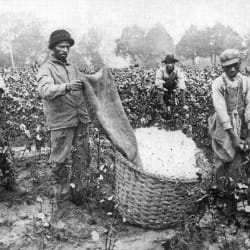
The second move made during this period was the agricultural machinery brought to Iğdır. Within the scope of the mechanization process observed in Iğdır, as in other cotton-growing regions, the Ministry of Agriculture began to take a series of steps to relieve cotton producers from manual cotton hoeing. Thus, the villagers would be saved from a laborious and burdensome task, and the yield of the crop would be increased, and production costs would be reduced. Following this decision, in the first days of 1944, it was decided to send 100 plows to Iğdır, and in addition to the plows previously brought, sample plows, as well as harrows and mowing machines, were purchased for the needs of the province and sent to Iğdır. While these developments were taking place in the field of cooperativism, one of the factors affecting cotton cultivation in Iğdır was undoubtedly the issue of irrigating the Iğdır Plain.
IRRIGATION OF THE IĞDIR PLAIN AND THE SERDARABAD DAM
The Iğdır Plain, approximately 50,000 hectares in size, enters this plain near Karakale after the Aras River, which forms the Turkish and Russian borders, passes through a narrow gorge.
The Turkish Government signed an agreement with the Soviet Union on January 8, 1927, to raise the agricultural potential of the Iğdır Plain to a higher level and to use the Aras River, which separates Turkey and the Soviet Union, for the irrigation of the Iğdır Plain. With this agreement, it was decided to build a dam on the Aras River.
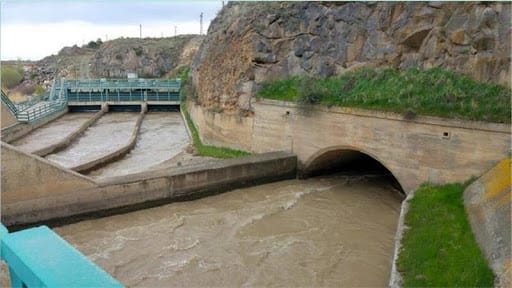
The opening ceremony of the Serdarabad Dam, whose construction began for the irrigation of the Iğdır Plain, was held in the last days of 1930. Following the opening ceremony, Soviet officials and border commanders were invited to Kars on December 6, 1930, due to the hospitality shown by the Soviets to Turkish officials. The Republic of Turkey attached great importance to the Serdarabad Dam, which was brought to life by the agreement signed between the two countries. The Turkish Government believed that this dam would irrigate the Iğdır Plain and thus increase the plain's productivity.
İsmet İnönü, who went on an eastern tour in 1935, made the following evaluations regarding the Iğdır Plain and the Serdarabad Dam in his famous Eastern Report:
"Another major issue of the Iğdır Plain is irrigation from the Aras River. Half of the water of the Aras River belongs to us. We are trying to utilize this half of the water with primitive ditches. The Russians take water from the dam on the Aras into a large canal and irrigate the plain from this canal. Since the same arrangement does not exist on our side, the people complain a lot. We examined the Serdarabad Dam in Karakale, on both Turkish and Russian territory, with the Armenian Deputy Prime Minister, the Minister of Agriculture, and the operating engineers. The dam was built for the account of both countries.
In this situation, we are indebted for our own account. On the Russian side of the dam, gates have been built to take and discharge water. This gate system and a main canal do not exist on our side. I could not find any supporting information to estimate how much money it would cost to build these. They mentioned seventy to eighty thousand liras for the gates. With the canal, it is all within one or two hundred thousand liras. It is possible to make the public pay these expenses by charging an irrigation fee per decare.
In this case, it can be said that the matter concerns a financial and commitment arrangement with the Ziraat Bank. The main issue is which engineer can carry out the construction with what materials. I think we would be right to resolve such a delicate border issue as the fair distribution of water together with the Russians. Besides, cement and iron materials can only be obtained from Russia. The construction of the Aras Canal is not only our economic interest but also our political duty towards the people. We must address this issue urgently."
OWNER OF PAMUKOVA GAZETESİ: MECİT HUN
DAM CONSTRUCTION October 15, 1954
It has been learned with satisfaction that the construction of the Serdarabat Dam Weir, which was started a few months ago by contractor Ragıp Hacaloğlu, is nearing completion, and the gates to be installed in the part of the dam belonging to us have been loaded from Istanbul today and are expected to arrive in Iğdır on October 25, and thus the construction will be ready for delivery by mid-November at the latest.
***
During the war years, the tension in Turkish-Soviet relations and the resulting issue of shared use of the dam eventually came to the agenda of the Grand National Assembly of Turkey.
Regarding these problems, Kars Deputy Hüsamettin Tuğaç submitted a parliamentary question about the Serdarabad Dam during discussions in the Grand National Assembly of Turkey in 1949. In this question, Tuğaç addressed the Prime Minister with the following questions:
"In the Iğdır District of Kars, our lands have not benefited from the Serdarabad Dam, which was built on the Aras River, forming our border with Soviet Russian territories, according to the 1927 Agreement.
I respectfully request the Prime Minister to provide oral answers to the following questions on this matter:
1. What are the reasons why our half-share of the water provided by the dam, as stipulated by the agreement, has not been secured until now?
2. What measures have been taken and what is being considered to secure the money that needs to be paid according to the agreement in 1950?
3. If, even after our commitments are fulfilled, the other party continues to cause difficulties and does not fulfill its commitments, what remedies can the government consider in such a case?"
According to Tuğaç, Iğdır was a place resembling Egypt. The Aras River, on the other hand, was a source of abundance like the Nile. Despite this, for 20 years, while Soviet Russia benefited perfectly from this dam, Turkish lands could not benefit sufficiently from it.
The Turkish Government accepted the condition of depositing 449 thousand dollars in the American National Bank at the disposal of the Soviet Government, with the aim of permanently benefiting from the Serdarabad Dam, which would play an important role in the economic development of the Iğdır Plain. The officials who signed the agreement stated that production would increase in the Iğdır Plain, which is a treasure of cotton and wheat, and that the money agreed to be paid to the Soviet Government would be amortized within a few years.
Upon the continuous contacts and insistence of the Turkish Government, after the Soviet Union agreed to the agreement in 1953, the Turkish Government immediately took action and sent a delegation to Iğdır. The delegation, which went to Iğdır and began preparatory studies to obtain electrical energy from the Serdarabad Dam, also worked on operating the planned yarn factory with 1400-2000 kilowatts of energy to be obtained from the hydroelectric power plant to be built in the Kiti region.
Immediately after this, the part of the dam belonging to Turkey was taken over, its gates were installed, and the missing parts of the dam were completed by contractor Ragıp Hacaloğlu. The canal projects and irrigation map, which would irrigate the part of the plain from the collection basin near Kiti to the Karasu region, were prepared by the water administration after nearly a year of work and sent to the Ministry of Public Works. It was decided to tender this enormous project, amounting to 3,200,000 liras, in this manner.
OWNER OF DİL GAZETESİ: MECİT HUN December 9, 1952
TAŞBURUN PTSK ELECTIONS RE-HELD
(Dear readers! As you read this article, you will understand how fiercely contested the PTSK elections were and how the developments left their mark on Iğdır politics. The most important point not to forget is that this election was about the election of the Taşburun PTSK management. Mücahit)
As a result of the elections, the Ali Karasu group won by a small margin. The general assembly of the Taşburun Cotton Agricultural Sales Cooperative, which gained importance throughout Iğdır, held its second meeting yesterday and, after determining that the number of members was sufficient to hold the meeting, re-held the elections that had previously been annulled by the Ministry of Commerce.
We can summarize the impressions we gained and the deficiencies we identified regarding the general assembly meeting and the course of the elections, which we personally observed on site, as follows.
As we went to the meeting place, many deficiencies and irregularities did not escape our notice at first glance and easily attracted the attention of someone familiar with the regulations.
Firstly, although the square in front of the Agricultural Credit Cooperative was chosen as the meeting place in the announcement made according to the law of associations, the gathering of the partners in the gendarmerie station garden can be considered the beginning of the irregularity. After it was determined that the number of partners participating in the meeting was 933, the congress presidium was elected. The second irregularity was committed by bringing Ali Karasu, a member of the Union's board of directors and the chairman of the Taşburun board of directors in the previous election, to the presidency of the congress amidst noise and chaos. After the congress presidium was formed, the elections immediately began.
It was clearly understood that this election, which seemed much more heated than parliamentary and similar elections, was not adopted as a goal by the partners, and actions were taken according to the instigation and wishes of certain individuals or groups.
Especially the night before the election, some individuals went to the villages of Taşburun district, going from house to house, kissing hands, and forcing partners to act according to the wishes of one or two people, even though they had no interest in the election, clearly proved that the instigators were working insidiously, aiming for personal gain.
During the election, situations that prevented a legal and legitimate outcome were easily observed, such as carrying sick people to the ballot box on their backs, preparing fake powers of attorney, and snatching undecided partners from hand to hand. In this context, ballot papers were cast in the name of some partners who had died years ago, and signatures or thumbprints were affixed in their place.
Mr. Hakkı Albayrakoğlu (District Governor), the commissioner of the Ministry of Commerce, who tried to act very honestly and impartially in the election, made a big mistake by rejecting the powers of attorney belonging to the partners of Karakoyunlu village with a subtle consideration, and caused a situation that completely influenced the outcome of the election.
As is known, according to the cooperative's articles of association, a partner can be represented by a power of attorney in elections. It is a condition that the powers of attorney to be drawn up must be approved by the headman. The powers of attorney held by 41 partners from Karakoyunlu village were rejected on the grounds that some powers of attorney of Karakoyunlu villagers were not approved by the headman, and allegedly the same procedure was applied to both sides, which is completely wrong and even illegal.
Because the headman is obliged to approve powers of attorney in his presence, it is impossible for him to approve a power of attorney if he does not know whether a partner remaining in Karakoyunlu has given a power of attorney to this or that person. On the other hand, the rejection of 41 legally drawn up powers of attorney means the unjustified abandonment of 41 partners.
Indeed, if it is considered that the election was lost by one side with a difference of 34 votes, these 41 votes, which were legally required to be used, could have changed the election result in favor of that side. For this reason, yesterday's Taşburun election is not viewed as legitimate. There is a second and important point. As we clearly stated at the beginning of my article, it was determined that 833 partners participated in the election.
Since this number includes 41 powers of attorney belonging to Karakoyunlu villagers who were not accepted later, and 39 powers of attorney not approved by the headman, it means that 753 partners participated in the election either physically or by proxy. However, no reason was given for the 104 extra votes that appeared, considering that 857 ballot papers came out of the ballot box.
In short, the Taşburun Cotton Agricultural Sales Cooperative election, which was very lively and engaging, did not proceed as we wished despite all the attention of our esteemed District Governor and the General Manager of the Union, and in our opinion, a legitimate result could not be obtained.
I would also like to state with an impartial consideration that our esteemed General Manager of the Union succeeded in leaving a very good impression on the partners by not taking sides.
We do not know whether these issues, which we personally observed at the election site, were recorded in the general assembly minutes. As a result of all this struggle and work, the goal pursued by one or more individuals will be achieved, and a few patriotic individuals (?) will serve 6000 partners for 7 liras a month. We hope that the result will be beneficial for the cooperative and our partners.
OWNER OF DİL GAZETESİ: MECİT HUN
ANNOUNCEMENT
From the General Directorate of the Union of Cotton Agricultural Sales Cooperatives: The annual regular general assembly meeting of the Iğdır PTSK Union will be held on Saturday, January 3, 1952, at 10:00 AM in the cinema hall in Iğdır. Therefore, partners elected as representatives to the Union by the PTS Cooperatives are requested and announced to be present at the meeting building on the aforementioned day and time.
***
Dear Readers!
Since I will address topics related to PTSK again in my later articles, at this stage I would like to share a few anecdotes with you:
THE 1960 COUP
My dear readers! I am suddenly taking you to the year 1960. Don't worry, we will continue from where we left off. I wanted to share an interesting anecdote about the PTSK during the 1960 Coup:
TURGUT SUNGAR NARRATES: "Go take over the duty!"
"When the 1960 Coup happened, the Branch Chief, Lieutenant Colonel, took over the administration as the Iğdır martial law commander. Since the battalion commander was a Major, the Lieutenant Colonel, who was our coach, suddenly became the most authorized person in Iğdır overnight!
During the coup, Cemalettin Güneş was the President of the Iğdır Chamber of Commerce. Since some undesirable incidents had occurred between Cemalettin Güneş and the Lieutenant Colonel before, in the days following the coup, the Lieutenant Colonel decided to use his influence to remove Cemalettin Güneş from his position.
Since my aunt Hikmet Hanım was the daughter-in-law of the Güneş family, Cemalettin Güneş, trusting my closeness with the Lieutenant Colonel, called me one day. He said sadly, "Peeeh! The Lieutenant Colonel will remove me from office!" I asked, "What can I do?" Cemalettin Güneş said, "What else is there? The Lieutenant Colonel likes you very much. He won't hurt your feelings. Ask him to keep me in my position!" The Lieutenant Colonel really liked me. My father had served as Branch Chief, and he had witnessed my success and discipline in sports firsthand. We had a friendly closeness.
While I was with Cemalettin Güneş, the Lieutenant Colonel had sent me a letter with his special courier. In the letter, which I would receive much later, the Lieutenant Colonel requested, "Take over the presidency of the Chamber of Commerce as soon as possible."
I left Cemalettin Güneş and went to the Lieutenant Colonel. The Lieutenant Colonel thought I had received the letter and appeared before him. However, I had no idea what was going on.
Innocently, I said, "Lieutenant Colonel, I have a request for you!" He replied, "Go ahead!" "Lieutenant Colonel, if possible, let Cemalettin Bey stay in his position!"
The Lieutenant Colonel shouted, "Höööt!" He was prone to swearing. He threatened me:
"Turgut, this is an order. I will not listen to your father's memory and our friendship; I will have you put inside. Go and take over the duty without wasting time!" he said.
Cemalettin Güneş was waiting for me with excitement and curiosity. "Cemalettin, don't ask, this thing has gone to hell! The Lieutenant Colonel assigned me to take over your duty," I said. Upon hearing this, Cemalettin Güneş, in deep disappointment, said, "I wouldn't expect this from you! I sent you to help me, but you went and convinced the Lieutenant Colonel for yourself."
At that moment, the Lieutenant Colonel's special courier, who had been chasing me all day, entered through the door and handed me the special courier. When Cemalettin Güneş saw the Lieutenant Colonel's signature on the letter, he understood the seriousness of the situation and calmed down. He collected his documents and left.
INVESTIGATION COMMISSION (Turgut Sungar narrates)
Immediately after martial law was declared, an Investigation Commission was formed to evaluate the reports received. I was also invited to this commission, which included prominent figures of the district such as the middle school principal and the population director. More precisely, the Lieutenant Colonel had a definite order for us to be on this commission. It was impossible for us to object.
Hundreds of reports came in every day. To evaluate these reports, which were about who was Kurdish nationalist, who was Pan-Turkist, who stole what, and who committed what crime, the commission members began to meet at regular intervals.
"COTTON SANK!" (Turgut Sungar Narrates)
The most serious of the reports was related to the alleged corruption in the Cotton Agricultural Sales Cooperatives. The accusation was very simple. Bales of pressed cotton had been transported to Trabzon, but this cargo, which was supposed to go to Istanbul, had disappeared in the port of Trabzon. We invited the person alleged to have committed the crime to the commission to give a statement. Then we sat him down and began to interrogate him:
"Sir, is it true that the cotton was pressed and baled in the factory in Iğdır?"
"Yes, that is correct."
"Is it also true that this quantity of cotton reached Trabzon safely by truck?"
"Yes, that is correct!"
"Then how is it that the quantity loaded onto the ships turns out to be less?"
"Allow me to explain. As we were loading the bales onto the ship, the boat capsized, and the bales sank into the sea."
"Did the bales sink into the water?"
"Yes!"
"How can that be? Does cotton ever sink?"
"These were pressed cotton, sir!"
Before reaching a definitive judgment on this incident, the commission decided to personally test whether pressed cotton sinks in water. Taking the person concerned with us, we set off towards the Aras River in a truck. We threw the baled cotton into the calm but deep part of the river. The cotton began to float. We climbed on top of it, but it still did not sink. Turning to the person concerned, we said:
"You see that the cotton bales do not sink, what do you say?"
"This is fresh water, sir! It means they sink in salt water..."
HAMZA AYGÜN NARRATES
FIRST STEP INTO ACCOUNTING (Hamza Aygün Narrates)
"In October 1949, I started working in the factory office, managed by Mr. Şamil Aslan, with a salary of 60 liras. There were four Agricultural Sales Cooperatives: Taşburun, Tuzluca, Başköy, and Iğdır
Center, and a separate 'Union' organization. The factory operated under the Union. The accounting manager of the Union was a valuable elder named Kasım Özel.
Kasım Bey had his own unique working style. Since he had no assistant, he would accumulate tasks; then he would hand them over to Mr. Şamil Aslan, the factory manager, who had beautiful handwriting and extensive accounting knowledge. Mr. Şamil would call me to his side and teach me the operations in detail.
Thus, I received my first accounting knowledge from Mr. Şamil. In my later life, I always remember Mr. Şamil, this very valuable person who gave me this strong accounting knowledge that formed the basis of my profession, with respect."
"KIRVE, THIS IS NOT LIKE WRITING" (Hamza Aygün Narrates)
Most of the workers in the factory worked temporarily. The campaign,
continued intensely from October to April, and in the remaining time, temporary workers were laid off. In October, new workers were hired, and a new season began.
One day, out of curiosity, I went out into the factory garden and mingled with the workers. The factory management would tender the job of filling the bales with the ginned cotton (seedless raw cotton) and sewing their mouths with a packing needle to contractors. Mehmet Atar (Mehmet, son of Atar) had taken on this job. He had brought his relatives with him and was employing them for this work. Since the money I earned seemed little to me, I went to Mehmet Atar, thinking I might get a daily wage:
"I'll sew sacks too!" I said. He replied, "Okay! A daily wage for you too!"
I took a packing needle and sat on top of one of the bales. It was really difficult to pass the packing needle through the hard bale and to close the mouth of the bag by pressing hard from both sides. Although I used all my strength, I couldn't manage this job.
I was covered in sweat, and I had hurt my hand. Mehmet Atar, probably anticipating the situation I would fall into, stood at a distance, watching me with a sidelong glance and a half-smile. When he saw that I couldn't do it, he came over to me. In his unique accent, he said, "Kirve, this is not like writing!"
Mehmet Atar was a very gentlemanly person. He occasionally had a gambling addiction, but this did not overshadow his character.
MY DAYS WITH MAHMUT UZMAN (Hamza Aygün Narrates)
Every year, inspectors from the Ministry would come and meticulously review the books. Kasım Özel, the accounting manager, was liked by the inspectors because he took his job seriously. Kasım Özel was disciplined and loved his work. At the end of each month, he would prepare a balance sheet of income and expenses, which we called a "trial balance," and at the end of the year, he would prepare a detailed balance sheet and send it to the Ministry of Commerce.
During one such routine visit, one of the inspectors, who had come to know Kasım Özel well and admired his accounting knowledge, encouraged him to work for another company in Istanbul, asking, "Why are you working here?" Upon Kasım Özel's transfer (1952), only Şamil Aslan, Aydın Akgün, Musa Başkent, and I remained in the Union with accounting knowledge.
After Rahim Yadigâr left his position, the Union's administration was managed by the Ziraat Bank managers. In 1955, Mahmut Uzman, as the bank manager, became responsible for the Union and factory management and assigned the accounting tasks to me. Although Musa Başkent was serving as the accounting manager, the main burden of the work was on me.
Every day, I would go to the Ziraat Bank and present the work to the manager's attention. One day, Mahmut Uzman told me, "Hamza, my transfer has come through, I'm leaving soon." Thinking that Mahmut Uzman could help me,
"Can you help me? Can you find me a job at the bank?" I asked. Mahmut Uzman,
"Do you really want to?" he eagerly interjected.
"Yes," I said, "the institution I work for (the Union) has no future. A new board of directors could very well terminate my employment." Mahmut Uzman, pleased with my decision, said, "Write a petition immediately and bring it, don't worry about the rest."
MY DAYS WITH CEZMİ ÖZTEKİN (Hamza Aygün Narrates)
I had gone to Malatya for cotton delivery. I received a telegram saying, "Your appointment to Gümüşhane Ziraat Bank has come through with a salary of 200 liras. Come quickly."
I returned to Iğdır and began preparations for the journey. While saying goodbye to friends, I heard that Cezmi Öztekin had been appointed as the general manager of the Union. A few days later, Cezmi Öztekin arrived in Iğdır.
Cezmi Öztekin had served as a manager at Iğdır Agricultural Equipment for a short period in 1952-53. However, when he got caught up in personal favors, many non-farmers, abusing Cezmi Öztekin's sincerity, secretly sold the agricultural equipment and medicines given to them, gaining personal profit. When such rumors became widespread, Cezmi Öztekin's employment was terminated. I knew Cezmi Öztekin from a distance. I had no personal friendship or conversation with him.
Cezmi Öztekin requested a private meeting with me.
When he asked, "So you're leaving?"
I simply said, "Yes." Cezmi Öztekin said, "If you leave, I will be in trouble. I will need a good accounting staff. If you help me, I will put things in order here. If you want, you can be the accounting manager or the factory manager. You will receive two bonuses in addition to a 400 lira salary."
This offer put me in a very difficult position. My friends and acquaintances urged me not to miss the opportunity and to stay in Iğdır. Everyone I met told me about the difficulties of civil servant life with a salary of 200 liras. I made a difficult decision and agreed to work with Cezmi Öztekin. I was appointed as the factory manager.
I went to see off Mahmut Uzman, whose transfer had come through. He said goodbye. "Your future would have been better at the bank!" he said. He also knew that I had taken an irreversible step.
Cezmi Öztekin was an extremely gentlemanly and kind person. His father had served as the Bitlis Deputy in the First Term of the Turkish Grand National Assembly. In Iğdır, he had a close circle of friends like Musa Malgaz, Mecit Hun, and Aziz Güney.
WORK ORDER (Hamza Aygün Narrates)
There were four Sales Cooperatives: Tuzluca, Başköy, Taşburun, and Iğdır Center. Their duties were to purchase the members' cotton and deliver it to the Union. The factory operated under the Union. After the cotton was processed in the factory, it was weighed, and its cost was calculated and numbered.
These operations were continuously under the supervision and control of the Ziraat Bank.
The numbered goods were locked in warehouses and pledged to the Ziraat Bank, and the corresponding money was paid to the Sales Cooperatives. Not a single kuruş worth of goods was lost during the transfer.
MY LOYAL FRIENDSHIP WITH MEHMET HUN (Hamza Aygün Narrates)
Mehmet Hun was both my primary school and military service friend. In primary school, we used to call him "pişmiş kelle" (cooked head). The reason for this was based on the following incident:
In those years, pests like lice and fleas were incredibly abundant. The administration
Every day, strict hair checks were carried out, and suspicious students were quarantined.
The checks must have gotten on Mehmet Hun's nerves, because one day he entered the classroom with a completely bald head! We all laughed at his appearance. He laughed back at us. When the teacher said, "Ula, why are you laughing like a cooked head!" that became his nickname.
Actually, one reason I stayed in Iğdır was Mehmet Hun. The day he learned I was going to Gümüşhane, he came to me and said,
"Hamza, if you leave, I won't be able to stay in the factory." I really loved Mehmet Hun. He was honest and a pleasant conversationalist. When I made my decision, Mehmet Hun's emotional words had also passed before my eyes. As soon as I became the factory manager, I appointed Mehmet Hun as the "Inventory Accountant." I guided him and taught him the intricacies of accounting. I worked closely with Mehmet Hun in this way for nearly two years.
I was very saddened when I learned of his passing. May God have mercy on him.
COTTON BAROMETER AND QUALITY (Hamza Aygün Narrates)
The cotton barometer (price chart) was announced by the Ministry of Commerce according to the stock exchange. Iğdır cotton was considered in the same category as İzmir cotton, which was of higher quality than Adana cotton. For example, when İzmir 1A cotton was set at 80 kuruş, Iğdır 1A cotton was valued at 75 kuruş, taking into account transportation costs.
kuruş was valued. Buying and selling transactions were completed based on this price.
The quality of cotton varied according to its type and harvesting season.
For example, there would be a slight color difference between A and B cottons. This would give information about their quality. One would be whiter, the other cream-colored. There were people specialized in this field. Elderly villagers, who had been involved in cotton farming for many years and were often illiterate, worked as experts in the factory; they classified cotton according to its quality. What they said was accepted without question. Recently, the Ministry of Commerce had assigned an Adana native named Basri to work in this job, but he did not have the personal skills to perform this duty properly.
COTTON QUALITY DETERMINATION (Hamza Aygün Narrates)
In each campaign, a committee consisting of the Chamber of Commerce, the Municipality, and the District Governorship would come to the factory to calculate the yield. For example, 100 kg of "1A" quality cotton would be ginned, and the output products would be percentaged according to their weights and recorded in the ledger: 45% lint, 55% cottonseed, 5% dust, etc. The same process would be repeated for other classes.
Worker wages were paid based on the prevailing rate determined by the municipality.
"THEY FIRED CEZMİ ÖZTEKİN" (Hamza Aygün Narrates)
While we were in the midst of this intense and feverish work, one day Cezmi Öztekin's younger brother, Necati Öztekin, suddenly arrived in Iğdır. When Necati Öztekin acted in a direction contrary to the expectations of the public in Iğdır, where all kinds of rumors spread exponentially, some politicians and a segment of the public turned against Cezmi Öztekin, the General Manager of the Union, in the conditions of that day when politics was hunting for people. This attrition policy quickly yielded the desired result. The Ministry of Commerce removed Cezmi Öztekin from his position and transferred him elsewhere. With Cezmi Öztekin's departure, my 1.5-year tenure as factory manager also came to an end.
In the newly formed administration, I served as "accountant cashier." From 1958 onwards, as cotton was replaced by sugar beet, cotton yield gradually decreased. Cooperatives and the Union had become cumbersome and expensive operations. At one point, it was even decided to dissolve everything and make purchases through Çukobirlik. Inspectors from Ankara came and reviewed the Union's accounts for the last ten years. We had successfully passed a difficult and challenging examination. The inspectors' conclusion was that, contrary to the rumors circulating, there was not a single kuruş of abuse in the cooperatives and the Union. However, it was very difficult to convince the public on the street of this truth.
AZİZ GÜNEY NARRATES
"Until the 1960s, the most important source of income for the Iğdır plain was cotton farming. There were many reasons for this. Cotton was an industrial product and did not spoil easily. In those days, when transportation was difficult, the fact that cotton could be stored and transported when desired encouraged farmers to plant cotton.
The same was not true for vegetables and fruits. These were mostly consumed locally, and occasionally sent to nearby district centers like Doğubeyazıt. In such cases, 40-50 donkeys would be loaded, and journeys would be made at night to protect them from the heat.
Cotton cultivation was increasing in the Iğdır plain. Consequently, Cotton Sales Cooperatives were established in the 1945s. However, this system degenerated.
Many incidents of abuse occurred. They were dissolved upon complaint. Despite this, cotton farming continued, but an event that developed in 1952 changed the fate of Iğdır.
In 1952 or 53, Menderes organized a rally in Erzurum. I was among the participants. The crowd was enthusiastically cheering, shouting, 'We want a factory! We want a factory!' Menderes couldn't restrain himself and said: 'I gave you a sugar factory, and it's gone!'
However, no study or preparation had been made on this matter. Moreover, sugar beet was not produced in the region. The construction of this factory took 2 years. Villagers were encouraged, and sugar beet cultivation was started.
An unfair situation had arisen: the Sugar Factory that should have been in Iğdır was opened in Erzurum, Kars, Ağrı, and Erciş in turn, due to the intervention of politicians. Today, these factories are still fed by Iğdır sugar beet.
PTSK and PTKK (Aziz Güney Narrates)
Iğdır cotton was second in quality after İzmir. 10,000-20,000 tons of cotton could be produced. In the early days, cotton purchasing was solely in the hands of independent traders. They imposed the prices they wanted.
For this reason, the villagers could not get the price they wanted and were exploited. It was the single-party era of the CHP. Importance was given to cooperativism. With state encouragement, PTSK (Cotton Agricultural Sales Cooperative) and PTKK (Cotton Agricultural Credit Cooperative) were established.
Credit cooperatives operated like a bank, providing credit to villagers who would plant cotton and collecting their debts later. But the sales cooperative was the most important. The villager sold his cotton to the cooperative at the current market price, and the cooperative then brought this cotton to the Turkish market, returning the profit it made to the villager as a premium. It was an excellent system!
Initially, everything went smoothly. The state appointed a general manager. Branches were established in the districts. Since raw cotton was difficult to transport, a ginning factory was established. Thus, cotton was first processed, its seeds were removed, and then it was classified. Meanwhile, the seeds were also improved. The yield increased. As a result, both the number of members and cotton growers increased.
Initially, the state appointed the general managers of the cooperatives. Later, the cooperatives gained an autonomous status independent of the state. A board of directors was first determined by elections, and the board of directors then elected a president. Two auditors closely monitored the operations.
ABUSES BEGIN (Aziz Güney Narrates)
Various abuses were committed during the time of the cadres who came to power through elections. I can list a few of them as follows:
1. Invoice fraud: Let's say the cooperative will sell 5000 tons of cotton. It agrees with the buyer. It gets an invoice for 300 liras for cotton that costs 500 liras per kilo. The difference goes into their pocket!
2. Yield fraud: There is a yield issue in cotton. If we say cotton has a 33% yield, it means that from 100 kilos of cotton, 67 kilos of cottonseed and only 33 kilos of pure cotton will be obtained. For example, 1000 tons of raw cotton arrived. After processing, 330 tons of cotton are obtained with a 33% yield. But they could cross out this 330 tons and write 270 tons instead. The justification: "the yield of cotton is low this year!" 50 tons of cotton into their pocket!
3. Night extraction: Unprocessed cotton was sent by trucks to unknown destinations at night.
When abuses increased in this way, the sales cooperative was dissolved. The state temporarily appointed a trustee (manager). First, a retired officer named Rahim Bey, and then Cezmi (Öztekin) Bey took on the role of trustee. Later, in 1961 or 1962, its assets and property were put up for sale under the control of the Ziraat Bank. Since it was an earthquake year, no one had money.
The manager of Ziraat Bank was İzzet Bey from Digor. He opened a 100,000 lira credit line for Cemalettin (Güneş) Bey. Cemalettin Bey bought the property with this money. Later, Ali (Karasu) Bey became partners with Cemalettin Bey. They built a mill.
Then they divided the property and separated.
WHY DID COTTON FARMING DIE? (Aziz Güney Narrates)
If sugar beet cultivation had not occurred, cotton farming would have continued in Iğdır. During the time of the cooperatives, traders also bought from the villagers. If sugar beet had not been encouraged, after the cooperative was dissolved, traders would have intervened again, and cotton farming would have continued.
At one point, Çukobirlik came from Adana. It made purchases for a year or two, then was dissolved. In my opinion, Iğdır made a mistake by abandoning cotton farming. Because sugar beet grows everywhere, but cotton was a product unique to Iğdır. Moreover, due to the state's wrong sugar policy, factories that were Iğdır's right were opened in other provinces. No one even raised their voice against all this.
IĞDIR MEETS MONEY (Aziz Güney Narrates)
Iğdır met money for the first time thanks to the cooperatives. After that period ended, people didn't blame each other. Because everyone had a hand in the fraud. What remained were sweet, non-offensive memories that we recounted and laughed heartily about. Here are a few of them:
AUDITORS LOOKING FOR THE PRESIDENT (Aziz Güney Narrates)
It must have been the first cooperative elections. Mecit Hun and Nurettin Kirman had been appointed as auditors. Their duty was to investigate and clarify the slightest abuse. The late Eşref (Başaran) Bey was the chairman of the board of directors.
One day, someone known as Piç Hamit reported the management, claiming "abuse was committed!" The allegation was that 100-200 tons of cotton had been sold illegally to a person named Panikoğlu in Istanbul!
The two sharp-witted detective auditors took over the case. However, President Eşref Bey was in Istanbul. The auditors, full of zeal for their duty, set off without wasting time.
Finally, they cornered Eşref Bey in a hotel. Eşref Bey did not deny his guilt.
Mecit Hun used to tell the rest of the story as follows:
"We started staying in the same hotel. It was impossible for us to get the money back. Nurettin and I would go to an entertainment center every night, thinking, 'At least let's make him pay for the expenses!' After a few days, Eşref Bey gave up!
'By God, there's no money left!'
Nurettin and I were in one room, and Eşref was in the adjacent room. That night, we all retired to our rooms. Around midnight, Nurettin said:
'Eşref hasn't slept. He's going out again!'
We looked through the keyhole of Eşref Bey's door; the room was empty! The bed was empty! Eşref had disappeared!
We immediately got dressed and set off towards Beyoğlu. We knew where he went. We went inside, and what did we see! Eşref had set up a big table, with beautiful women next to him, enjoying himself.
'Eşref, where did the money go! The money had run out! What is this situation!'
'Welcome! Come and sit down!'
We sat at the table. Towards morning, we were walking from Beyoğlu towards the hotel. Just as we were crossing the Galata Bridge, Nurettin grabbed Eşref and cornered him:
'We're going out to have fun tonight too!'
'By God, there's no money left!'
'You're lying!'
'I gave the goods, that's true, but I didn't get the money!'
'You're lying!'
'I swear. May everyone crossing this bridge dishonor me if I'm lying.'
We believed him again. In this way, we arrived at the hotel.
That evening, Eşref disappeared again. It turned out he was hanging out at another bar. We found the bar's address and dropped in. We caught Eşref in an inappropriate situation again!
'Eşref, what is this! You even swore on your honor!'
'That was an empty oath! When I swore, I looked around carefully, and all the people crossing the bridge were women!'"
A WIND CAME FROM ELEGEZ (Aziz Güney Narrates)
Again, one day there was an irregularity in the cooperative's construction work. Piç Hamit reported the situation. According to the file records, a hangar was supposedly built in the garden, but in reality, there was no such building! The Ministry intervened.
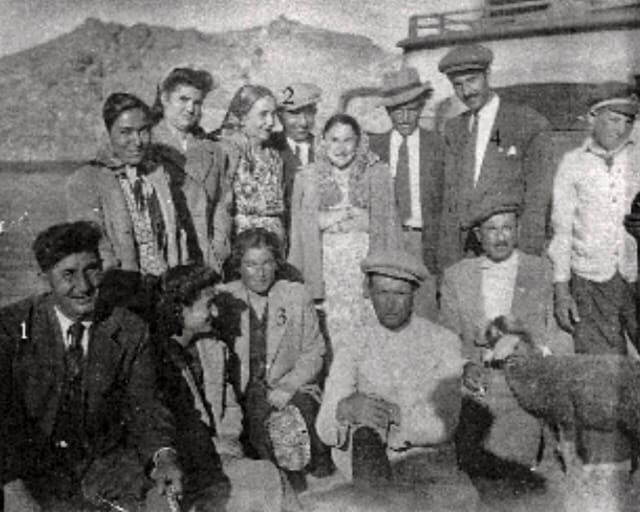
To identify the building that appeared to have been built on paper, the inspector and President Eşref Bey went out to the garden. In a distant corner of the garden, there was a pile of ruins of a very old building. Eşref Bey, confident, pointed to these ruins:
"Here, this is our hangar, Mr. Inspector!"
"I don't see any building here!"
"Mr. Inspector, you don't know Iğdır! A wind blew from Elegez (Alagöz mountains), hit it, and blew it away!"
"Well, it took the roof, but what about its walls?"
"It took all of them, Mr. Inspector."
PIÇ HAMİT (Aziz Güney Narrates)
Piç Hamit's real name is Hamit Ünver. The reason for his nickname 'Piç' (Bastard) was that nothing escaped his eye. For example, he was not a member of the Cooperative, but he knew what was going on there. He had ears everywhere. He was sharp-eyed, a cunning son of a gun. So, who was this Piç Hamit?
Piç Hamit had come as a refugee from Russia. But since he had not made any application, he had neither a refugee identity nor a Turkish passport! He also had no definite income. He lived off handouts. He would follow up on other people's business and take a commission. Sometimes he would sell the 'secret' information he possessed. Piç Hamit had ears especially in places where large sums of money were changing hands. In those years, large sums of money changed hands in the Cotton Sales Cooperative.
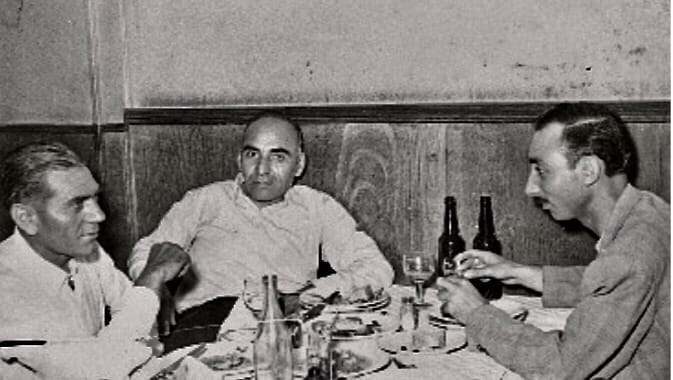
Cooperative presidents Eşref Kaya and Eşref Başaran, both Terekeme like MİT regional chief Hüsnü Bingöl, received great support from him. Piç Hamit did not give them peace. Piç Hamit's sensitive ears were closed by asking for help from MAH Inspector Hüsnü Bingöl:
"This man is a nuisance! Please investigate who he is!"
Hüsnü Bingöl had an investigation conducted on Piç Hamit. When he found no record of him anywhere, he prepared a report stating, 'The harmful person should be expelled from the country!'
In the winter of 1952, Piç Hamit was put on a camel and sent to the Iranian border gate with police escort. When Iran did not accept him, they set off towards Iraq. Northern Iraq was under Barzani's control. The Barzani administration accepted him on the condition, "Okay, we will shelter you temporarily, but you will return again!"
Piç Hamit applied for asylum in Turkey from Iraq. A few months later, the Turkish government granted him temporary asylum 'on the condition that he go to America via Turkey.' During this period, Piç Hamit was not to leave Istanbul and was to go to the police station every evening to sign that he was 'in Istanbul.'
I knew Piç Hamit very well. Although there was a 20-25 year age difference between us, we enjoyed chatting together.
Piç Hamit was not an uneducated ordinary person. He had received higher education in Russia and was quite cultured.
ORHAN PARLAR NARRATES
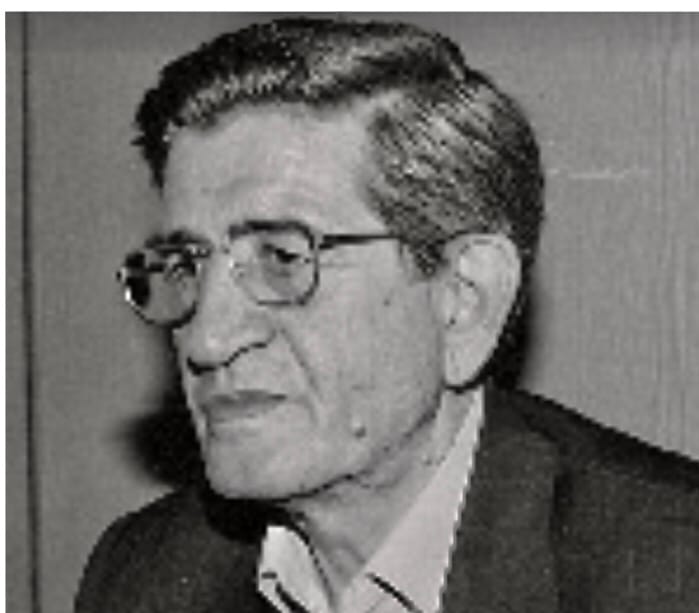
IĞDIR'S FIRST GINNING FACTORY (1928)
My father first ventured into small-scale trade. He entered into a commercial partnership with Naki Odoğlu, whom he met in Yerevan, and they opened Iğdır's first ginning factory.
(1928-29) The factory was built on the land behind today's Iğdır High School. (A few years later, Resul Taner put the second ginning factory into service.)
The factory's machines were Russian-made. Its capacity was suitable for obtaining 7.5 tons of fiber cotton from 20 tons of seeded cotton per day. A small factory (ding) was later established to obtain oil from cottonseed, but it could not be put into operation. Bahçeli Arslantürk from Başköy kept the ding with him to make it operational, but he also failed to get it to work.
I do not know what name the factory was commercially registered under when it first opened. After 1935, it became known as the Parlar Ginning Factory. My father had established a private cotton cooperative with Naki Bey. The shares of the cooperative, which remained active until 1938, belonged 51% to the two partners, and the rest to cotton traders spread across 7-8 provinces. As business grew, they also opened a rice factory, and at this pace, they earned exceptionally good money until 1938.
ŞARKIN DİLİ GAZETESİ OWNER: MECİT HUN
UNION PRESIDENTIAL ELECTION HELD January 7, 1953
Talat Tufan, Sadık Karasu, Kadir Erol, and Muhtar Yıldırım, who were elected to the board of directors at the Union's general assembly meeting on January 3, 1953, met at the Ziraat Bank yesterday and held the presidential election. The General Manager of the Union, who is considered a natural member of the board of directors according to Law No. 2834, also cast his vote, and Talat Tufan was elected president. The new board of directors has been in office and working since January 4, 1953, in accordance with the provisions of the articles of association.
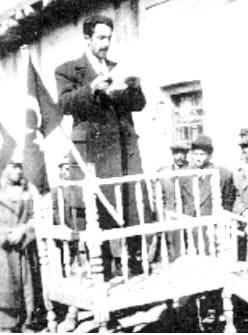
(Dear readers! Here, a note needs to be made. The information passed down orally for many years is as follows: Eleşref Başaran, who had served as the General Manager of the Union for many years but was dismissed due to allegations of abuse, also ran as a candidate in this election but lost the presidency to Talat Tufan. Talat Tufan is invited to the podium to give a speech. While Talat Tufan is on the podium, a gunshot is heard. MAH Inspector Hüsnü Bingöl is also observing the meeting as a government commissioner. According to rumor, a gunshot was heard from the crowd where Eşref Başaran and his friends, who lost the election, were located, and since the bullet targeted Talat Tufan, Talat Tufan wanted to protect himself from a second attack by hiding behind the podium.
Hüsnü Bingöl warned Mecit Hun, the owner of Şarkın Dili newspaper, the only newspaper published in Iğdır in those years, not to publish this incident. He did not mention the gun incident in the newspaper. A rumor that Hüsnü Bingöl, of Terekeme origin, protected Eşref Başaran, also of Terekeme origin and a close friend, existed in Iğdır for years as gossip. Mücahit)
PAMUKOVA GAZETESİ OWNER: MECİT HUN October 29, 1954
EŞREF BAŞARAN COULD NOT BE ELECTED DELEGATE FOR THE UNION GENERAL ASSEMBLY
In yesterday's Iğdır PTSK General Assembly meeting, although Eşref Başaran's name was on the list of delegate candidates determined for the Union, he lost the election and could not become a delegate. The fact that only Eşref Başaran among the 60-person list could not win is met with surprise among partners who are experts in cooperative elections, and it is claimed that Başaran was deliberately removed from the list by his rivals because he was a strong candidate for the Chairman or member of the Union's Board of Directors.
Eşref Başaran, whom we interviewed, stated that he was not affected, but that he would object, claiming that the election day was not announced according to the articles of association, and if this objection was not taken into account, he would try to replace one of his delegate friends by having him resign, and he said that he would definitely participate in the Union election.
PAMUKOVA GAZETESİ OWNER: MECİT HUN October 29, 1954
IĞDIR PTS COOPERATIVE ELECTION HELD
The Iğdır Cotton Agricultural Sales Cooperative election was held yesterday by the cooperative partners. As a result of the election, Hüseyin Turan, Cihangir Erkut, Ali Rıza Bagane, and Mehmet Sönmez were elected as principal members of the Board of Directors; Abbas Yıldırım and İsmail Akkuş as alternate members; and Cihangir Aras and Kenan Dadaş Gürcan as members of the Audit Board. In addition, 60 delegates who will participate in the Union General Assembly were also elected by the General Assembly.
DİL GAZETESİ OWNER: MECİT HUN October 4, 1952
P. T. S. COOPERATIVES GENERAL ASSEMBLY MEETINGS
The regular general assembly meetings of the Iğdır Cotton Agricultural Sales Cooperatives are continuing. In the meantime, new elections have been held in the meetings held in the Başköy and Taşburun districts and Tuzluca district, and Union delegates have also been determined.
According to letters sent to our newspaper with the signatures of many partners, in the meeting held in the Taşburun district, the district governor, who should have participated as the commissioner of the Ministry of Commerce, was replaced by the Taşburun district manager Nuri Atasever due to his illness, and because Nuri Atasever took sides, this issue was submitted to the district governorship in the form of a report prepared by 6 village headmen, and an objection was made to the Taşburun elections. In addition, since the information given to us verbally confirmed this, we estimate that the Taşburun election will be re-held before the Union general assembly meeting and delegates will be re-elected in this district.
On the other hand, in the general assembly meeting held two days ago in central Iğdır, a new board of directors and Union delegates were elected. According to the information we received, Ahmet Armağan, Ali Rıza Bagana, Mehmet Sönmez, and Cihangir Erkut were appointed to the Iğdır central cooperative board of directors, and Talat Tufan, Ahmet Armağan, Esat Ogan, Mustafa Gülmez, Timur Turan, Mehmet Sönmez, Hasan Şimal, Mustafa Şimşek, İsmail Aktaş, Ali Kızılay, Kadir Erol, Hasan Turan, Hasan Güneş, İsmail Ağırkaya, Kasım Turan, Sadık Tezel, Hasan Çetinel, Ali Rıza Bagana, Hüseyin Bağcı, Muhtar Yıldırım, Necef Yıldız, Hasan Yıldız, Mehmet Duman, Kurban Akar, Rahim Aydın, Hüseyin Turan, Eşref Başaran, İsa Yiğit, İbrahim Aras, Muharrem Varol, Nağdali Turan, Esadullah Aras, İbrahim Aksoy, İsa Karakuş, Bekir Akkuş, Abdullah Armağan, Cevat Han, Abdulhadi Kuş, Mehmet Ali Haçadağ, Şabap Alagöz, Cihangir Aras, Kerem Turan, Ahmet Işıkçelebi, Sultan Yıldız, Ziyadeli
Eroğlu, Yahya Kızılkaya, Caferkulu Sönmez, Ahmet Bakış, Abdullah
Yıldırım, Celil Aras, Rıza Taş, Celil Orhun, Ali Kum, Süleyman Demirel,
Allaverdi Gül, İsa Karakuş won. It was learned that Enver Sever was also elected as a delegate while our newspaper was being duplicated. The date of the Union General Assembly meeting will be announced soon.
(Dear readers! I wanted to draw your attention to this long list especially. As we will see later, the same individuals also take part in political parties, sometimes in the same party, sometimes in rival parties, thus transferring the tension within the PTSK to politics or the tension in politics to the PTSK. In the 1950s, the PTSK and political parties formed an intertwined spiral structure. Mücahit)
OWNER OF DİL GAZETESİ: MECİT HUN
UNION ELECTIONS CONTINUE HEATEDLY
Propaganda and efforts for the new board of directors elections of the Union, to be held on January 3, 1953, have reached their peak. For now, every means is being used to sit in this 7-lira seat, which all representatives are eager for. Among the candidates are Talat Tufan, Eşref Başaran, Ali Karasu, Sadık Karasu, and Sadık Tezel. Representatives continue to group around these individuals. It is estimated that money will play an important role in the elections. It is expected that the representatives elected by the Tuzluca and Başköy cooperatives will arrive in Iğdır in a day or two. The preparations for the election entering a new phase every day leads one candidate to despair each day.
"THESE PIMPS..." (Aydın Akgün Narrates)
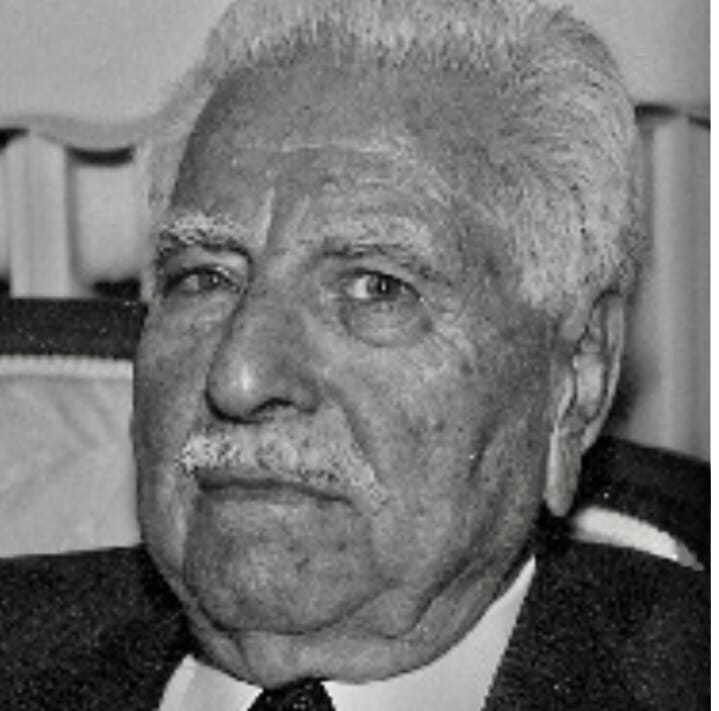
Iğdır's human wealth is endless. All kinds of people with all sorts of temperaments emerge from among us. However, there is one group whose characteristics are inexhaustible: they bring dynamism and vitality to Iğdır's stagnant provincial life. One of them was M. A. Hakkı Aranmaz, nicknamed "Deli Hakim" (Crazy Judge). As his surname implied, our fellow townsman held himself responsible for everything and tried to extract his "rights" with his own hands.
Eşref Kaya was the manager at PTSK; I was the Treasurer, and Paşa Turan was the Cashier. The cooperative's accounting and cashier's office faced the street. Anyone passing by the 80 cm high window could easily see what was going on inside.
Every evening, the three of us "buddies" responsible for the Cooperative's money matters would gather in the room; we would spread the money on the table and count it; after balancing the accounts, we would put the money in the safe and head home. Our fellow townsman Deli Hakim's house was a little further down the same street.
Every evening, on his way home, he had witnessed several times through the window how the three of us "buddies" were sharing the state's money among ourselves (!). Finally, his conscience could not bear it, and he sat down and wrote a complaint letter to the Ministry of Commerce:
"Dear Minister, Cooperative manager Eşref Kaya, Treasurer Aydın Akgün, and Cashier Paşa Turan divide the money among themselves every evening. I swear to God, I have seen this incident with my own eyes many times."
Upon this report, the Ministry immediately sent a three-person inspection team to Iğdır. Since my house was close to the Cooperative, one morning one of the workers came running: "The inspectors want you."
The inspectors were nervously pacing around, glancing at documents, and impatiently waiting for us. When they saw me, the first thing they did was to tie the safe door with string and seal the knot with wax.
"We are tired. We want to rest. Take us to a hotel," they said.
"There are no suitable hotels for you in the town. There are two inns where cattle dealers stay; but you won't be comfortable. The best thing is for me to host you at my house," I said.
The inspectors refused to be guests at home, stating that it would not be appropriate for the ethics of interrogation. "Put beds in one of the rooms. We will sleep and wake up there," they said.
We fulfilled their request, furnished the small room in the building with beds we brought from homes, and turned it into a temporary dormitory suitable for their needs. On the second day, the interrogation began with great seriousness. Three inspectors sat us down and reviewed all the documents one by one. They asked questions and took notes. Finally, they said, "Now, please find and bring us the witness, Mr. M.A. Hakkıaranmaz!"
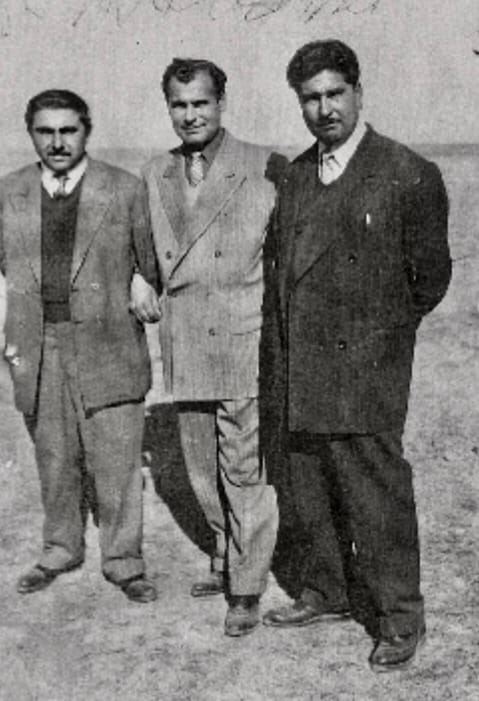
Upon hearing this name, Eşref Kaya and I looked at each other and smiled. After all, such a laborious interrogation had been initiated based on the testimony of one of the least serious people in Iğdır.
When "Deli Hakim" entered through the door, Eşref Kaya greeted him standing, and with a hand gesture behind him, as if to say, "Please don't take what this man says too seriously." Unfortunately, Deli Hakim turned his head. He caught Eşref Kaya making an inappropriate hand gesture. He got angry and hit the table hard with his hand:
"Do you see, Mr. Inspector! These pimps both eat our money and call us 'crazy'!"
We emerged from the interrogation with flying colors. But the inspector's raid caused by "Deli Hakim's" petition was talked about in the town for days.
***
Dear Readers!
The late Talat Tufan followed in the footsteps of his father, the late Hacı Ali Ekber Tufan, and rendered extraordinary services to Iğdır. These services were multifaceted, encompassing economic, political, and social aspects. I would like to briefly remind my readers that if it were not for the late Talat Tufan, Iğdır would have experienced more difficult days in the 1970s. Talat Tufan was an indispensable man of balance and a person of superior common sense among Kurds and Azerbaijanis, leftists and rightists. I commemorate his memory with respect and conclude today's article with an anecdote about him.
"I KNOW WHERE THE GUN IS" (Aydın Akgün Narrates)
The year is 1948. One day, my cousin Cihangir was traveling from Iğdır to Melekli village in a daşka (horse-drawn cart). Halfway, a gendarme, who was going to Melekli village for duty, also got into the cart, and they continued their journey together.
Since the daşkas had springs, they would bounce over potholes and rough terrain, shaking everything inside from side to side. The gendarme who got into the cart had placed his rifle, which he had taken off his shoulder, inside the daşka. The rifle, bouncing around, had fallen to the ground unnoticed by anyone.
When the daşka arrived at Melekli village, the gendarme was astonished to see that his rifle was not in the cart. Fearing the punishment he would receive, the gendarme arrested my cousin as a suspect in the theft (!) and took him to the police station.
The police station commander was determined to teach the villagers a lesson for this reckless (!) act. He came to the village with the gendarmerie units he had taken with him; he gathered the elders and began to beat them in a line.
My cousin Talat Tufan raised his hand and said, "I know where the gun is. If you give me a horse, I will go and get it." They sent Talat Tufan on his way. Talat Tufan quickly came to Iğdır and told what had happened to Prosecutor Abbas Fahri Akın, whom our family knew. He said, "If you don't hurry, the soldiers will ruin the villagers."
When the prosecutor arrived at the village, he was astonished by the scene he saw. The seriousness of the situation was so dire that it proved Talat Tufan right. The gendarmes had lined up the men of the village and were beating them in a line, regardless of their age. The prosecutor barely managed to save the civilians from the hands of this reckless commander.
TO BE CONTINUED