Iğdır History (1945-65) Part Eight: Mecit Hun (2)
This part of the Iğdır history series focuses on Mecit Hun's journalistic and political activities from 1952 to 1955, including his advocacy for the State Production Farm, his critiques of political discrimination, and his defense of Kurdish rights.

IĞDIR HISTORY (1945-65) PART EIGHT: MECİT HUN (2)
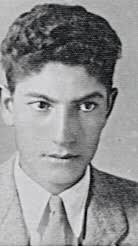
Year 1952... Mecit Hun is a young and idealistic journalist, 27 years old. He publishes a newspaper called DİL. He announces the good news of the establishment of the IĞDIR STATE PRODUCTION FARM (today known as Kazım Karabekir Agricultural Enterprise), which once held an important place in Iğdır's history, to his readers with the following news:
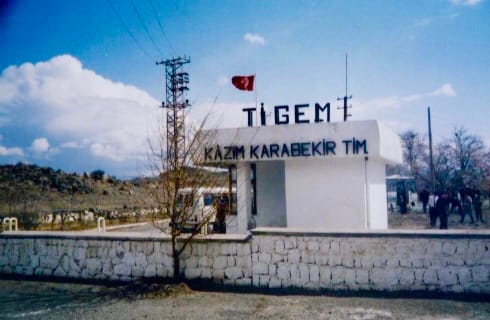
DİL NEWSPAPER, July 12, 1952
BY: Mecit Hun
DİL REGION IS OPENING
Investigations (studies) regarding the establishment of a production farm in the DİL region, which is part of the Başköy (today's Aralık district) sub-district of the district (i.e., Iğdır) and encompasses many villages, have concluded, and the matter (situation) has been presented to the Council of Ministers. We are pleased to announce that activities will commence immediately following the issuance of the decision. It is hoped that with the opening of the DİL PRODUCTION FARM, which is certainly considered to play a very significant role in Iğdır's agricultural development (progress), Iğdır will develop (progress) in every field.
***

Dear Readers!
Why was the State Production Farm (DÜÇ) important? Iğdır hoped that with the establishment of DÜÇ, it would make great strides in the livestock sector, and that cheese, butter, and other animal products would be packaged and offered for sale nationwide. However, there was an important issue they overlooked: DÜÇ was not established for the production and marketing of animal products. It was established to control the floodwaters of the Aras River and for border security (especially to prevent smuggling).
Iğdır may not have experienced wealth in terms of animal products thanks to DÜÇ, but it contributed to a very valuable personality entering the political arena: This personality was the late Ziya Ayrım, the director of DÜÇ.

The late Ziya Ayrım, born in 1920, was the son of Şamil Bey, a hero of the Turkish War of Independence.
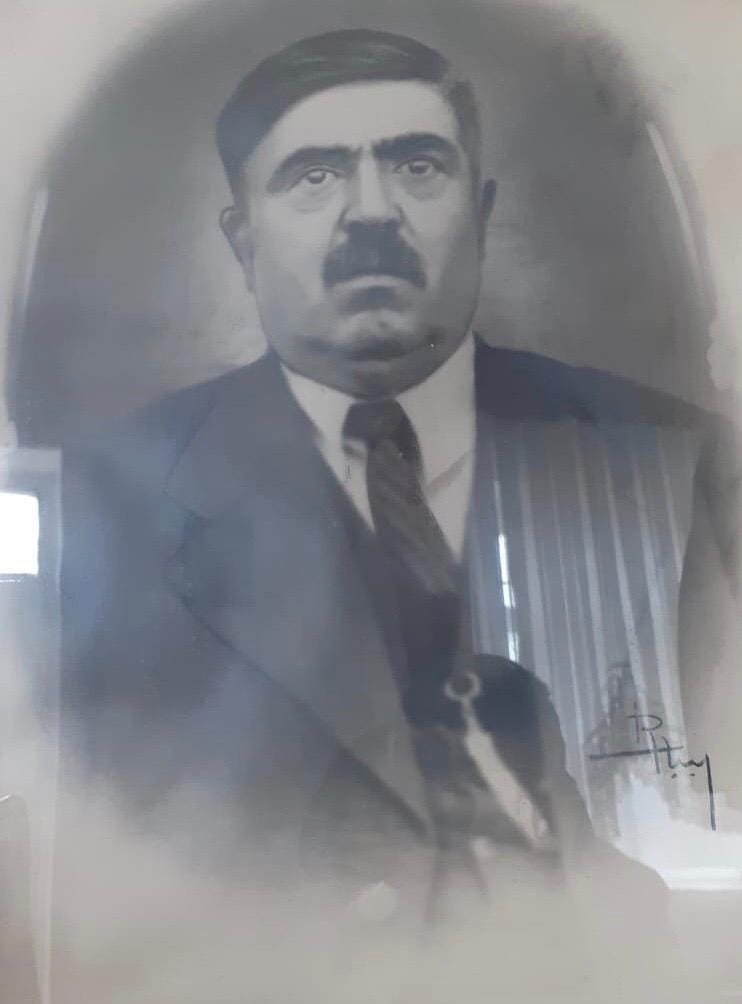
He was one of the rare individuals among his peers to complete higher education. Perhaps these two factors could have been sufficient for young Ziya Ayrım to succeed in politics in later years. However, the most important factor in Ziya Ayrım's name winning the hearts of voters was his success and impartiality during his years as the Director of DÜÇ. His attitude, free from factionalism, his steadfast and diligent work ethic, his generosity, and his sincere efforts to create employment for everyone earned him the love of the people. He made extraordinary efforts to transform DÜÇ into a source of wealth for Iğdır. We can say that he largely succeeded in this within the means at his disposal.
If you wish, let's hear the story of DÜÇ's establishment from the late Ziya Ayrım himself:
"I was the Director of Agriculture in Kars. One day, I was discussing a reforestation project for Kars with the Governor. We needed to go to Elazığ for saplings. The strange thing was that my per diem was 2.5 liras at the time, while hotels cost 3-4 liras a night! I didn't want to upset the Governor, so I went to Elazığ. I bought the requested saplings and sent them to Kars.
While in Elazığ, I met an acquaintance named İsmail Atalay. He was serving as a reserve officer. He insisted on taking me to the Osmaniye region. We had a pleasant time, visiting orange groves and the seaside. When I boarded the train to return to Kars, I saw that the wagons were full of soldiers. There was a commotion, everyone was talking about 'Iğdır':
'The Aras has flooded, Iğdır is underwater.'
The soldiers were being dispatched to Iğdır for assistance!
As we approached Erzurum, the sight of military vehicles (military vehicles) filled with boats, lined up and heading towards Iğdır, revealed the gravity of the situation.
The Governor and my friends met me in Erzurum. We went to Iğdır with the Governor. Approximately 120,000 decares of land were underwater. It was like a sea! We constantly pondered what we could do here. Amidst these discussions and conversations, the idea of establishing DÜÇ was born.

Fortunately, that year the Restricted Zone (Note: Due to the Ağrı Rebellion, Mount Ağrı, surrounding villages, and the Dil region were declared a restricted zone between 1930-1952. Mücahit) decision was lifted, so we obtained the title deed in one day and got to work.
I was appointed as the farm manager. We had no money. I rented a house belonging to Coffeehouse Owner İbrahim, across from the Iğdır district governorship, for 40 liras to use as an office. There wasn't a proper desk inside the house. We hammered logs into the ground, nailed planks on top, and that became our workbench.
Accountants on one side, newly appointed staff on the other, we started working. We had also filled the garden with the animals we would send to the farm.
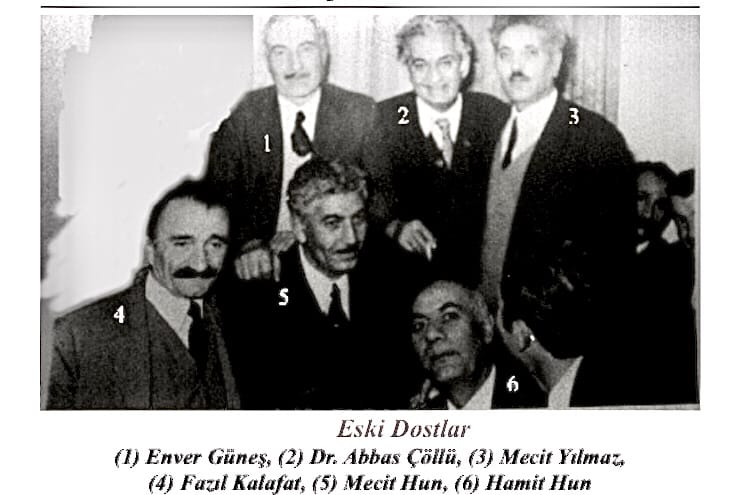
Ragıp Hacaloğlu undertook the construction work of the farm. He was an honest and knowledgeable person. The second contractor was Hacı Ekber Çöllü, the elder brother of Dr. Abbas Çöllü. However, Hacı Ekber went bankrupt for some reasons.
(Who are the Çöllü Family?
The late Meşe Hasan, who later became Hacı, migrated to Iğdır from the village of Şöllü Mihmandar, which is now within the borders of Armenia. We can list this family as follows: Hacı Hasan Çöllü and his wife Sakine Hanım; their sons Hacı Ekber Çöllü, Dr. Abbas Çöllü; their daughter, the late Sara Taner, wife of Resul Taner; their daughter Sura Çöllü, mother of Nuri Çöllü; and from this family, the late Kara Halil, his brother Ali Bey, Salih Çöllü, and Muzaffer Çöllü. The Çöllü family was primarily involved in trade. Dr. Abbas Çöllü, from this family, was one of the first highly educated young people raised in Iğdır. May God have mercy on all of them.)
A year later, we moved to the farm. Of course, there was no dam on the Aras River. Every spring, the Aras would flood, and everything would be submerged. We would have 300-400 people ready for these floods. First, we built a makeshift dam with brushwood, then with sandbags. Some years we managed to hold back the water, some years the dam would break, and our morale would hit rock bottom. Despite everything, we did serious work. We planted 100,000 poplars. We opened an Agricultural School. We trained many agricultural technicians.
Unfortunately, today not a trace remains of those hundred thousand poplars, and they even closed the school. In the early years of opening the farm, one of our biggest difficulties was appropriately receiving those who came to us seeking work.
Rich and poor alike came looking for work. Most were acquaintances. It was impossible to please everyone! I had an assistant manager named Enver from Posof. I called him.
"You will say no to no one. But you will squeeze those you hire so hard that only the truly dedicated can endure."
Every day I received reports: Today 40 people started work, but only 6 came on the second day, or 20 people started, but only 3 seemed eager. This way, I built a solid team.
It was time to find a guard. Our stud farm manager said, "Choose the guard from those who used to be bandits in this region!"
They brought someone known as Kürt İsmail. Over two meters tall... A veritable human demon! When he walked with his long legs, his shoulders swayed from side to side, as if the ground itself was shaking. He knew the region like the back of his hand because he had participated in the Ağrı Rebellion in his youth.
The District Governor also visited us frequently, eager to help, putting himself forward with "What can I do for you?"
The farm needed dogs. Someone named "Hane Nado" bred the finest dogs in the region. He was stubborn and wouldn't give them to anyone. I told the District Governor, "My only request is that you give us two puppies from these dogs."
DÜÇ was on the Iranian border. Smuggling and theft were frequent occurrences. It was the day we laid the foundation of the farm's administrative building. I had gone to Erzurum to procure some necessities.
Upon my return, they delivered the bad news. Iranian thieves had taken 20-30 sheep and the dogs! I was very upset by this incident. Guard İsmail came and said,
"Director, allow me to go and retrieve their horses and sheep." I, helpless, said, "Alright!"
Giant İsmail mounted his horse, took his weapon, and disappeared among the reeds and swamps separating us from Iran. He approached the herd of horses grazing freely in nature. The lead stallion of the herd attacked İsmail. During the struggle, İsmail, with an agile movement, leaped from his own horse onto the back of the wild stallion. He wrapped his long legs tightly around its body. He then struck the horse's head with the butt of his rifle, turning its direction towards the farm. When the leader of the herd went in that direction, the herd of 14 horses followed suit on their own.
We met İsmail at the water's edge with a ceremony. Everyone took a horse they liked. İsmail left again with his horse and weapon. This time, he went and brought back a flock of sheep. The shepherds had fled as soon as they saw İsmail.
Following these events, the Iranians came. Of course, most were poor villagers. They cried and pleaded for their sheep back. I intended to negotiate a good deal on the condition that there would be no more mutual theft.
Among Kurds, there is a tradition called "don't throw the stone in vain." Whenever a husband wants to divorce his wife, he takes three stones, throws them in three different directions, and is thus considered divorced from his wife. This tradition could also sometimes be used to mean, "I swear it will never happen again!"
I sat across from my Iranian counterpart. They brought me three stones. We would throw stones at each other. An elderly man objected to me. "You are deceiving us, how can there be such a young director? This is not the real director!"
I managed to convince them with great difficulty that I was the real director. An agreement was reached with the Iranians. We would return their sheep, but according to the laws, all transactions had to be done through official channels. The nearest official channel was in Doğubayazıt!
With great difficulty, we sent the ewes that had given birth back to their owners. Smuggling was widespread in the region. The most valuable items were tea saucers with pictures of Princess Süreyya on them.
I was quite determined against smuggling. I always told my employees,
"If I take one, you take a thousand!"
For a long time, smuggling was not effective in my region. In 1957, a group of directors and I went to America for professional training. A new engineer, seeing this as an opportunity, became interested in smuggled goods. Upon my return from America, I summoned guard İsmail:
"Go and bring me the headman of the village across the border!"
I had good friendships with the headmen of the villages along the border. I presented the gift I had brought from America.
"While I was in America, did our people buy smuggled goods from you?" I asked.
He handed me a list: Seven samovars, porcelain plates, etc.
I got up and went from house to house. I sent the samovars I found to the blacksmith to be crushed. There was a newlywed couple. Years later, they told me. That night, this couple broke the porcelain plates they had bought. This time, they were seized with fear, "What if he finds the broken pieces?" They ground the broken pieces into powder in an iron mortar and threw them into the toilet. When their neighbors, curious about the clatter, came, they said, "We received chickpeas from our hometown... we are grinding them."
While I was the farm manager, I often visited Iğdır. 10-15 people would wait for my arrival with hope. I would distribute my salary to my friends in need and return empty-handed. At that time, there was a shortage of cash, even the rich needed money...
One day, my elder brother Sucu got angry with me:
"Don't you have a wife and children that you distribute your salary to this and that person? Give me their list, and I will go and get the money back!"
At the top of the list, I wrote the names of thirty people, such as my uncle Edo Bey, Cimşid Bey, Sheikh Hüseyin Balamir, Cafer Sadık Tezel. My brother quickly glanced at the list from top to bottom, then from bottom to top, and then threw the list away, saying, "No money will come from any of these!"
THE FIRST STEP OF THE LATE ZİYA AYRIM INTO POLITICS (From his own account)
I first became interested in politics in 1946 while I was a student at the Faculty of Agriculture. The land reform law was being debated in the Parliament. Adnan Menderes, as an opposition deputy, made the following suggestion to the Minister of Agriculture:
"Let the students of the Faculty of Agriculture participate in these discussions as observers."
The aim was to familiarize agricultural engineers with the problem from an early stage. We occasionally attended parliamentary meetings and followed the discussions. During these debates, I was influenced by Menderes.
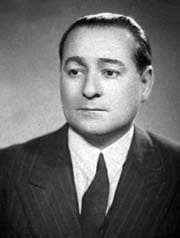
I graduated in 1947 and returned to Kars. Throughout the 1950s, I was a devoted Democrat Party member, but I did not participate in elections. I ran as an independent in the 1961 elections but lost due to the majority system.
I worked in Muş and saved some money. I participated in the 1964 Senate elections on the AP (Justice Party) ticket, but despite everything, I was short on funds. The money I had saved in Muş amounted to only 13,000 liras!
I was wearing a torn leather jacket and knee-high boots. I rented a jeep. The daily rent for the jeep was 85 liras, and the gasoline was my responsibility. It was a dilapidated jeep... It would run for two days, then break down for three.
One day, near Aratan, the jeep got stuck in the sand. Thankfully, the villagers carried it on their shoulders. While I was in this situation, my rival, the CHP, had 45 vehicles, and the YTP had 15. The bad part was that on such days, the number of people asking for money also increased.
I was in the district of Susuz. A folk poet asked me for travel money. "No problem," I said, "give me your vote, and go get the money from our party leader there," pointing to Mehmet Hazer, the CHP Senate candidate. When the confused poet came back to me, I told him:
"In politics, money and votes don't go together! You'll take the money from them, and you'll give your vote to us."
My election campaign continued at this pace. There was one week left until the election. I was walking down Karadağ Street in central Kars. It was a rainy day. I was walking anxiously in an old military coat. Behind me, two Terekeme men walked with whips and sticks in their hands.
When I reached the police station, they called out to me:
"Are you Ziya Bey?"
"Yes, it's me, what's up!" I said. One of the villagers replied:
"We want to help you with some money. Don't mind our appearance, we sold some rams (a flock of rams), so we're doing well."
"Why do you want to help me?"
"Because of our work, we travel through villages and towns. Everywhere, people say you are a good person, they say, 'He was a good man, but he had no money!'"
"Thank you very much," I said. "I don't need money! You supported me! I hope I will win!"
And I won the elections...
I served my people as a Kars Senator until October 1979.
When my wife passed away, I decided to return to the village. I didn't want to be idle.
I started working to establish an apple orchard in Atatürk's name. I got saplings from Yalova, and I had a beautiful orchard.
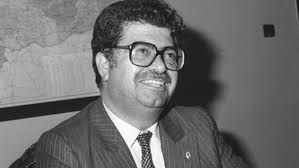
In the 1983 elections, Turgut Özal came to my garden and picked an apple from a tree. We had a private conversation under the tree:
"This is on you! Keep on good terms with the military!" I advised.
I could have run in the elections that year. But I didn't apply for fear of being vetoed.
As a politician, I always adhered to these words:
"Politics is not a place to gain prestige; on the contrary, those who have prestige should engage in politics. Politics is the art of governing people impartially. The only institution it should be biased towards is the state."
***
Dear Readers!
It has become necessary to discuss a terminology that entered Iğdır politics starting from the 1950s. The Azerbaijani community residing in Iğdır, especially those referred to as "O Taylı" (Those from that side), referred to the Azerbaijanis who came from Tuzluca and settled in Iğdır as "Dağlılar" (Mountain People). As migration from Tuzluca to Iğdır increased year by year, we observe that the group referred to as "Dağlılar" began to play a decisive role in elections.
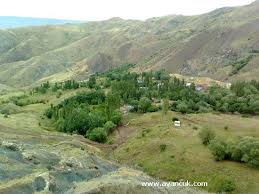
Hacı Sefer Yaşar from the Gaziler (Pernavut) sub-district offers the following interpretation of the term "Dağlı":
"The Azerbaijanis in Iğdır and the surrounding villages call us 'Dağlı'. Although this word may seem accurate at first glance – because our villages are built on mountain slopes – in reality, it is used with emphasis to imply a definition of 'backward, far from civilization'. To say 'They are mountain people!' expresses contempt. However, in matters such as spiritual values, love for humanity and nature, respect for elders, and the spirit of solidarity, we are more advanced than them. Therefore, in reality, we, the 'Dağlılar', represent civilization and what is beautiful. So, I would like to ask, who are the real mountain people?"
Dear Readers!
The late Nurettin Kirman served as the representative of the "Dağlılar" in Iğdır until his murder in 1957.
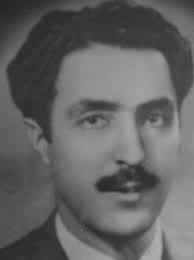
After Nurettin Kirman's death, the late Ziya Ayrım launched a political offensive to fill this void. In this regard, I would like to include two news reports from the EKİNCİ newspaper published by Cengiz Ekinci:
EKİNCİ NEWSPAPER (September 23, 1957)
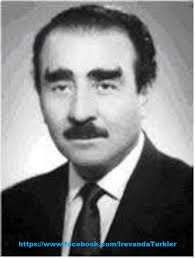
DP'S COMMAND TEAM IN A PANIC
BY: CENGİZ EKİNCİ
The only issue occupying the well-known (known) figures at the head of the DP these days is Ziya Ayrım's candidacy. Will they be able to present Latif Aküzüm and Ziya Ayrım on the same list? Since this possibility (imagination) cannot be conceived, will Ayrım's renunciation (giving up) be secured? If Ziya Ayrım insists on entering the election, what will be the situation (condition) of Latif Aküzüm?
Those who know Ayrım as a young man of ideas and determination state that empty words will not affect him.
EKİNCİ NEWSPAPER (September 30, 1957)
ZİYA AYRIM WAS OUTMANEUVERED BY HIS BROTHER-IN-LAW LATİF AKÜZÜM
BY: CENGİZ EKİNCİ
Ziya Ayrım, who served as the Director of Agriculture in our province (Kars center) for three years, then established the Dil Farm, which changed the economic aspect (direction) of Iğdır, and put great effort and diligence into making it productive (fruitful), and who, due to these and other services, garnered appreciation and sympathy in our province, as is known, relying on his strong position, had entered the parliamentary elections by seeking candidacy from the DP.
However, it was also the case that, like all other young people who grew up in the DP, a Latif Aküzüm and an Abbas Çetin had occupied the bridgehead before Ziya Ayrım. Moreover, Latif Aküzüm was Ayrım's brother-in-law, and despite having introduced himself as a political entity thanks to Ziya Ayrım's circle (environment) for a long time, he continued to belittle the family and circle (environment) he had acquired (gained) by saying, in his own words, "Who is Ziya when I am here, Tuzluca is essentially mine," whenever it was his turn to speak. This time, in the matter of Ziya Ayrım's candidacy, he acted from the same point of view (perspective), and as a result of supporting Abbas Çetin, he definitively (absolutely) outmaneuvered his brother-in-law.
The outmaneuvering of Ziya Ayrım, who was a force capable of carrying many of those imported into the DP list and causing them to win elections, caused astonishment and dissatisfaction throughout the province.
Those who entered the DP list through various combinations (arrangements) will deeply feel the pain of being deprived of Ziya Ayrım.
(Here, I would like to draw my readers' attention to one point. In my previous articles, I touched upon the "O Taylı-Bu Taylı" (Those from that side - Those from this side) rivalry in Iğdır's political arena. As can be clearly seen in the newspaper report above, we can clearly see how Abbas Çetin and Latif Aküzüm, representatives of the O Taylı group, created difficulties for Ziya Ayrım, whom we would describe as Bu Taylı or "Dağlı." Mücahit)
***
(Mecit Hun appreciates Ziya Ayrım's work at DÜÇ and writes an article about it in his newspaper. Mücahit)
PAMUKOVA NEWSPAPER (March 14, 1955)
AGRICULTURAL ACTIVITIES AT IĞDIR PRODUCTION FARM
BY: Mecit Hun
The farm land, which has been exposed to floods until now, has been secured (made safe) with a massive 6-kilometer long dike, and after rice cultivation, the irrigations prior to the scientific (technical) irrigation measures will be carried out by means of centrifuges and canals prepared within the existing possibilities.
The 1955 work program also included the establishment (creation) of a 50-decare poplar grove, and additionally, 2000 ash trees (a type of tree) were planted. Grafted fruit saplings obtained from the Iğdır Agricultural nursery are being planted in the farm's vicinity (region).
Vegetables requiring hotbeds for early cultivation (growing vegetables and fruits before or after their season) have been sown for experimental purposes, and preparations for road construction (work) have begun. In addition to these, road construction is also progressing rapidly. Within the farm, a 15-kilometer main road with perpendicular secondary roads and a 26-kilometer paved road connecting the farm to the Başköy sub-district have been completed. A grader working for the farm is working on completing other necessary roads.
In short, "Dil," which was once entirely a reedy, swampy, and wild piece of land, is now on the verge of becoming a tremendous production center. In two years, 20,000 decares of land have been made suitable for cultivation, and another equal amount has been improved and converted into pasture.
It is only right that we appreciate and congratulate the farm staff, especially Director Ziya Ayrım, who, facing all natural obstacles (barriers), did not shy away from working and struggling with nature even under the most unfavorable (unsuitable) conditions.
***
(Mecit Hun now tackles the issue of prostitution in Iğdır and brings it to the agenda. Mücahit)
PROSTITUTION AND THE STRUGGLE (October 21, 1952)
DİL NEWSPAPER
BY MECİT HUN
It is a regrettable (sadly) known fact that in our district, whose population has not yet reached 8-10 thousand, hundreds of houses of prostitution, which have become dens of immorality, are actively operating.
This open trade of chastity (honor) carried out in Halfeli and Melekli streets and partly in other neighborhoods, remaining unchallenged, poses a constant threat to honorable families and, on the other hand, continues to exist as a hotbed of disease.
Although the continuation of this situation, which plays a negative (adverse) role in the moral development (progress) of our young people in particular, does not go unnoticed, the indifference of the authorities almost encourages this immorality and it persists (continues).
We believe that most of the police incidents (events) are also a product (result) of this. We also have a commission to combat prostitution in the district, whose duty is related to these matters. This commission, which has not made its presence felt until today, is either unaware of what is happening or is turning a blind eye to the incidents.
Preventing this situation, which has become a serious danger and scandal for the district, has now become a serious duty for all of us.
***
(Now let's take a look at the telephone situation of the time. Mücahit)
DİL NEWSPAPER (October 22, 1952)
BY: MECİT HUN
OUR TELEPHONE PROBLEM
It cannot be denied that in the century (age) we live in, among all means of communication (communication), the telephone is the most essential (necessary) and undeniably a necessity.
We visited our post office several times to communicate (contact) with Kars or Karaköse (Ağrı). To tell the truth, the communication (switchboard) officer's hours of sweating to connect to the desired destination (address) both made us regret and rightfully made us ponder.
In this era when the civilized world communicates (communicates) with means like radio and radar, we are deprived of telephone communication (contact) with even the nearest places.
Despite the presence of our diligent and steadfast communication officers, it is no longer possible to benefit from our ancient (from Noah's time) facilities.
Our esteemed Governor also keenly felt this deficiency during many of his travels and promised to send the necessary materials. Since it is natural for an important district center like Iğdır to need telephone communication (contact) at all times, a little attention from the authorities will probably solve the problem, at least partially.
***
(Mecit Hun does not neglect to encourage poetry in the DİL newspaper. Mücahit)
DİL NEWSPAPER (October 24, 1952)
OUR POETRY CORNER
IĞDIR'S NAME IS ON MY TONGUE (Ramiz Özler)
I descended into Sürmeli pit,
My eyes were painted with light,
My heart tied to Iğdır,
I saw gardens full of fruit.
Here beats the heart of the Turk,
Sinek, Zor, Köroğlu, Ağrı,
Green hills and rumps,
I saw snowy, lofty mountains.
Iğdır's soil is pearl,
Full of cotton, rice,
It brought joy to my heart,
I saw the Aras water flowing.
I reached Kefşene to see,
Tomorrow I will braid your hair,
If you wish, I will give my life,
I saw my beloved cotton-like.
Iğdır's name is on my tongue,
Ramiz says it's in my poem,
Its greenery is in my rose,
I saw my little heart weeping.
***
(Mecit Hun was the Iğdır District Chairman of the Millet Party in 1952. The DP, in its first year in power (i.e., in 1951), wanted to send İsmet İnönü to the gallows with the "Boraltan Bridge" slander, which was voiced from the parliamentary rostrum by Tekirdağ Deputy Şevket Mocan, but abandoned this attempt when unrest arose within the Army. However, the DP government, starting from 1952, secretly orchestrated assassination and lynching attempts against CHP Chairman İsmet İnönü. Mecit Hun reported such an incident in the DİL newspaper.

We will later see that the DP government, by mobilizing civilian forces, would attempt the first and last experiment of FASCISM in the history of the Republic of Turkey between 1957-60. FASCISM, by definition, is when a political party seizes power by relying on civilian militia forces or, while in power, organizes civilian militia forces to exert pressure on opposition forces. It is not correct to consider military coups as Fascism because they do not seize power by relying on a group of civilian militias in the structure of Blackshirts and SS (Volkssturm) like Mussolini and Hitler. It is more appropriate to evaluate military coups as oppressive and authoritarian regimes. They do not come to power by relying on civilian militia forces, nor do they form civilian militia forces after a coup. Mücahit)
DİL NEWSPAPER (December 2, 1952)
THE MINDSET IN POWER
BY: Mecit Hun
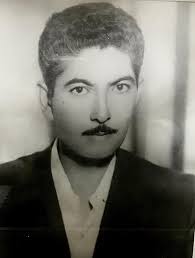
After the Balıkesir and Manisa incidents, the assassination attempt in Malatya once again stirred minds. Those who regarded the armed resistance (resistance) of some ignorant individuals to prevent İsmet İnönü, the Chairman of the Republican People's Party, from entering Balıkesir as an ordinary incident, after the Malatya incident, recanted (retracted) their views and were forced to seek political motives (reasons).
Especially the rejection by the government, which was considered responsible (accountable) for these actions, of the motions submitted to parliament regarding the Balıkesir and Manisa incidents, further increased the government's level of responsibility (accountability).
(Mecit Hun, the Iğdır District Chairman of the Millet Party, in another article, is somewhat a harbinger of the rising fascism, organized by the DP and subtly gaining momentum. Mücahit)
DİL NEWSPAPER (December 3, 1952)
OPPOSITION IN OUR COUNTRY
BY: Mecit Hun
As a natural consequence of the multi-party democracy regime, the CHP government, which lost its 27-year rule after the May 14, 1950 elections, handed over power to the DP with great dignity (seriousness), setting an excellent example of political maturity and making the world of democracy bite its nails. This political maturity shown after a free and fair election was a true source of pride for the Turkish nation.
However, the amateurish politics of the DP government quickly alienated even the most optimistic citizens, dashing the good hopes we had for our democracy. The opposition, which constituted more than 40% of the Turkish community, was subjected to unlawful treatment as if they were not children of this country. They faced difficulties (hardships) in every field. The opposition was deprived (isolated) of the protection (safeguard) of the law and political guarantees. In short (in brief), the democratic administration we dreamed of on May 14, 1950, became a fairy tale with the policies pursued by the leaders of the Democrat Party.
Despite all the repressive policies of the Democrat Party, there is a strong opposition today. In fact, the entire Turkish nation is opposed to the DP government. If you ask the DP leaders, they will say they have not seen anything called opposition. We have opposition, but verbal questions are not answered. The proposals and motions of our opposition are rejected in the DP group before they even reach the Grand National Assembly.
Official advertisements, which are a legal right, are not given to newspapers that are the voice of the opposition, and efforts are made to silence the opposition.
Freedom of speech is prevented by sending armed and stick-wielding elements to opposition rallies and meetings. Opposition leaders cannot travel safely (securely) within the country. If the government wishes, it can prevent the opposition leader from entering Balıkesir through organized (planned) interventions. To eliminate the opposition in our country, legislative proposals are made using methods never seen in any rule of law.
In our country, the opposition is under the unlawful intervention of the government in every field. If the government wishes, it can exile the opposition leader abroad, and if it were up to Adnan Menderes, the opposition, which received 40% of the nation's votes, could be removed from public service with a two-line law.
Whatever the opposition says in our country is a lie according to the government. It knows itself that there is no public order, but because it is put forward by the opposition, it is not valued, even if it is dangerous for the country. While the state radio broadcasts the propaganda speeches of the prime minister and ministers as if it were the propaganda organ of the ruling party, opposition parties are even forbidden to speak in the Grand National Assembly.
This is how the opposition in our country operates under these conditions. In the face of this situation, what is the democracy that the government talks about, if not a fairy tale?
***
(The Kurdish Question entered Turkey's agenda starting in 1953. Mecit Hun, using the resources of his newspaper, wrote an article with his friends to defend the rights of Kurds. It is noteworthy that Mecit Hun was the first Kurdish intellectual to take such a firm stance and show such self-confidence regarding the Kurdish Question, six years before the famous "49ers incident" in 1959. İsmail Beşikçi would later address the claim that the East and Southeast were colonies in more detail after a 17-year hiatus. Mecit Hun does not stop there; he also targets Mıstık magazine, which depicted Kurds as cavemen. Mücahit)
DİL NEWSPAPER (January 12, 1953)
REACTION TO HÜRRİYET NEWSPAPER CONTINUES
BY: Mecit Hun
Telegrams were sent yesterday regarding the editorial in the Hürriyet Newspaper dated January 3, which targeted factionalism (discrimination). The following telegram was sent jointly (jointly) by merchants Musa Malgaz, Aziz Güney, Süphan Güneş, Sait Zor, Cihangir Turan, Cemalettin Güneş, and DİL newspaper owner Mecit Hun to Prime Minister Adnan Menderes, Zafer Newspaper, Diyarbakır Deputy Mustafa Ekinci, and the Grand National Assembly Presidency:
"In the article titled 'Those Shot,' written by Sedat Simavi as an editorial in the Hürriyet newspaper dated January 3, 1953, it is stated that among the factors (agents) provoking (inciting) the esteemed Menderes, in connection with his account (narration) of the perpetrators (responsible parties) of the citizens shot without reason in Diyarbakır and its vicinity, there is a connection (relationship) with the Kurdish issue.

The publication (broadcasting) of this article, which we are convinced (believe) was written with a divisive (discriminatory) and factional purpose, in the Turkish press, and especially in a high-circulation newspaper like Hürriyet, is not compatible (suitable) with the national integrity of the Turkish nation. Moreover (especially), the threat in the same article that if a few Kurds rebel again, the same arm and the same fist are tasked with bringing them down, presents itself as an unnecessary warning (warning nature) from Sedat Simavi on behalf of the government. At a time when the Turkish-Kurdish division (discrimination) has long been relegated to history, the return (reversion) to the same subject (topic) by our enlightened (intellectual) journalists without any existing reason is described as "ugly" in Iğdır, a border town in the East. This article has plunged (sent) not a few Kurds, as Simavi puts it, but millions of citizens into sorrow (grief). We strongly protest the revival (resurrection) of divisiveness (discrimination), which we do not even wish to cross our minds, by enlightened (intellectual) pens, and we respectfully state that the Simavis, who follow the politics of Cevdet Kerim of the People's Party era, will not be able to negatively (adversely) affect our overall (entire) national unity."
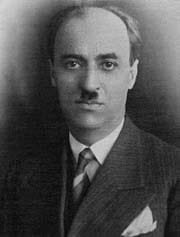
(Note: The full name of Cevdet Kerim mentioned above is Cevdet Kerim İncedayı. As a CHP Deputy (former Minister of Public Works), he uttered the following sentence in January 1949: "When I went to these regions, I was able to communicate with some people thanks to students acting as interpreters. If we set them free now, they will vote either for Hasso or Memo. Would your conscience allow Hassos and Memos to fill the Grand National Assembly?" Mücahit)
MECİT HUN'S ŞARKIN DİLİ NEWSPAPER
Şarkın Dili newspaper is Iğdır's fifth and Mecit Hun's third newspaper. It holds the honor of being the first newspaper published in Iğdır using the pedal technique. After 98 issues in Iğdır, the newspaper moved to Ağrı center. The September 6, 1953 issue of Şarkın Dili explains the reasons for this relocation as follows:
"The primary goal of our newspaper is to serve the East. (...) Iğdır, due to its geographical location, eliminated a large part of the possibilities for adequately serving the East, which was the main goal of our newspaper. Especially the difficulty of travel, which was clearly felt during the winter months, made it impossible to timely identify the problems and needs of the Eastern provinces and districts and to address them immediately in order to be useful. On the other hand, although the decision during the establishment of our newspaper was essentially to be published (published) in Karaköse (Ağrı), due to some incidents (events) that occurred in the days following the arrival of the machinery and materials, it was forced to start operations in Iğdır. On the first day that the state of necessity ended, we immediately left Iğdır to work with all our might to compensate for the losses during the days when we were partially unable to serve our goal, and to dedicate ourselves to the service of the country in order to be worthy of the favor (interest) that beautiful Karaköse and our esteemed readers did not withhold."
Hamza Mızrak and Pharmacist Cengiz Sümer, who wrote for the DİL newspaper, continued to be part of the ŞARKIN DİLİ writing family. The pen that truly gave weight to the ŞARKIN DİLİ newspaper was undoubtedly Cezmi Öztekin. Cezmi Öztekin, who would later become the General Manager of Iğdır PTSK Birlik, was notable for his seriousness and analytical ability. Additionally, the brothers Süleyman and Naci Kutlay also brought the region's problems to the columns with their strong and fluent writing. After changing hands several times, the newspaper ceased publication on January 1, 1954.
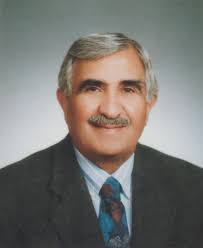
ŞARKIN DİLİ NEWSPAPER (September 7, 1953)
BY: MECİT HUN
WHAT DO THEY THINK ABOUT THE EAST?
(Dear Readers! The article below was written by the 28-year-old Mecit Hun. It is noteworthy that Mecit Hun was the first Kurdish intellectual to bravely write that the East (in today's sense, the geography inhabited by Kurds) was treated as a colony. The claim that the East and Southeast were colonies would be put forward again by İsmail Beşikçi after a 17-year hiatus. Mecit Hun does not stop there; he also targets Mıstık magazine, which depicted Kurds as cavemen. Mücahit)
The interview conducted by Cumhuriyet Newspaper in the East has been read with great interest throughout Turkey for days. We are, in a way, grateful to Yaşar Kemal, who conducted the interview. Because by reflecting the situation of the East to the public (public opinion) in all its nakedness, he is providing us with great help. As Easterners, we have only recently been able to express our problems. Until recently, let alone talking about the problems of the East, it was a crime to be a child of this land. What Yaşar Kemal, the interview writer (author) of Cumhuriyet Newspaper, writes today about the East, which for centuries received the slightest attention, was exploited in the strongest sense of the word, and was treated as a complete colony (colony) until very recently, unfortunately expresses a bitter truth, at least in part.
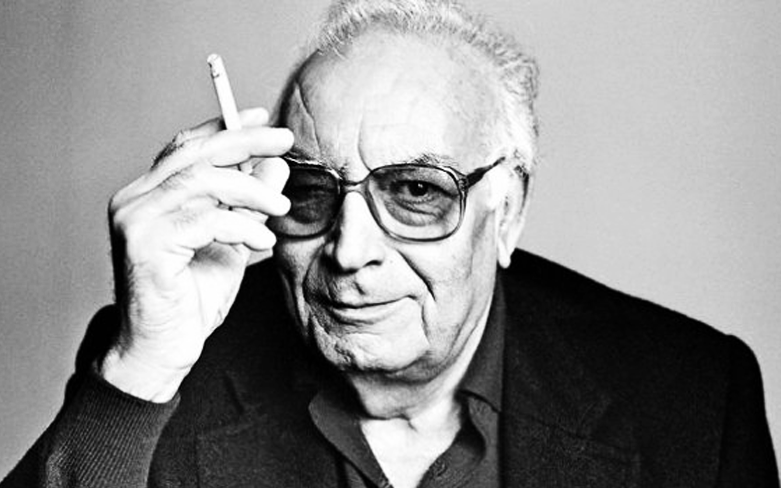
Yes, there are many caves in the East. And perhaps there are people living in cave-like hollows. It is also certain that the Cumhuriyet Newspaper's interview writer (author) encountered people who did not speak Turkish and had to travel with an interpreter. We want the columns of Cumhuriyet, one of Turkey's most distinguished (elite) newspapers, not only to report these things but also to dwell on the reasons for what they saw in the East and to present their views on how to act to prevent this situation. It would be appropriate for the aforementioned (mentioned) newspaper to know that this desire of ours does not stem from our inability to convey our problems to the current government, but from our belief that a newspaper that serves the country should act in this way as part of its duty (duty).
It is certain that the majority (most) of our esteemed readers saw the caricature in the 20. Asır magazine, issue number 54, dated August 28, 1953, which we received during the period of transitional activity (changes occurring) when our newspaper moved from Iğdır to Karaköse, depicting a "Eastern University" rising as a modern building in front of a few people resembling Stone Age humans in front of a few caves, drawn by Mıstık.
Who Mıstık is, is not important (of no importance) to us, of course. If he feels the need to defend himself one day, the way this person will express himself at that time will also be of no value to us. What makes us think, what saddens us, is neither the Cumhuriyet Newspaper's portrayal of the East as a land of caves nor Mıstık's caricature that deems the East unworthy of a university. These, without delving into the essence, will only make themselves ridiculous because they cannot go beyond being manifestations (appearances) of feelings utterly (absolutely) devoid of sincerity. We are not surprised by these, but by why these people can think this way about the East and why they can endure great hardships (troubles) with the sole aim of exposing its shortcomings, and we are saddened by it.
ŞARKIN DİLİ (September 14, 1953)
SERVICE AND ITS REWARD
BY: Mecit Hun
It must be admitted that this country, and especially Eastern Anatolia within this country, has been greatly neglected. It is an undeniable truth that during the Republican era, great works were done in Western (Western) Anatolia, many of our cities were developed in an excellent manner, and much work was done on roads, water, and electricity.
But unfortunately, this has not been the case for the East! The indifference (carelessness) that has continued for centuries in Turkey, transferred (passed on) to Eastern Anatolia during the Republican era, continued in all its glory until 1950.
The East was so left to its own devices, so scorned, the Easterner was so regarded (understood) as a different being from the Westerner (Western Anatolian) and subjected to special treatment, that even today, remnants of that borrowed (borrowed) mentality are still encountered, albeit rarely. But the Easterner is no longer saddened by these; when necessary, with both his tongue and his pen, he can give the necessary lesson to those unfortunate (ill-intentioned) people who continue to be slaves (lovers) of that mentality.
We would like to state that the Democrat Party government worked with all its energy to eliminate the East-West mentality and saw the fruits (desired results) of this work abundantly. The East (Eastern and Southeastern Anatolia), which for many years was subjected (targeted) to very bad treatment that could not even be done to a foreigner in its own homeland, will never forget this warm interest shown to it.
The current government sees the reward for the service it performs (carries out) by always appearing before the nation with a clear conscience and an open brow.
We are convinced (believe) that the main issue that needs to be addressed and resolved above all else in the East is education. The East is without schools; the East is still deprived of the level of education, in the strongest sense of the word.
Today, perhaps eighty percent of the villages in the East are still without schools.
The number of teachers is absolutely insufficient (inadequate). If primary, secondary, and high school education, along with the issue (topic) of an Eastern University, is not addressed through a definite program and concluded as soon as possible, the Democrat Party government should not claim to have rendered a great service to the East.
The main cause of the East is "school" (education). The day this cause is resolved, only the government that succeeds (achieves) this will have the right to boast. We know that the number of schools built in many Eastern provinces in one year is equal (equivalent) to those built in 27 years. We, regardless of the subject (topic), do not compare with the past; we expect and want to achieve and conclude. In this case, it must be absolutely known that there will be those who will make the comparison.
MECİT HUN'S PAMUKOVA NEWSPAPER
"PAMUKOVA" NEWSPAPER
PAMUKOVA newspaper is Iğdır's sixth and Mecit Hun's fourth newspaper. PAMUKOVA, which began its publication life on July 30, 1954, is the second newspaper to be published using the pedal system. We can summarize the characteristics of the period in which PAMUKOVA was published as follows:
When the Millet Party was shut down nationwide on January 27, 1954, Mecit Hun, the District Chairman of the Millet Party, continued his political life as an independent for a while. In the general elections of May 2, 1954, when the Democrat Party vetoed Abdürrezak Güneş, Mecit Hun and other notables joined the Republican Nation Party to protest this unfair situation of the DP. In the months following the elections, Mecit Hun broke away from the Republican Nation Party and joined the opposition front as an Independent Democrat, fighting against the DP district administration. This time, Mecit Hun, acting together with Nurettin Kirman, the former DP district chairman with whom he had clashed in the political arena two years earlier, tried to be the voice of the rising opposition against the new DP district administration. It was under these political conditions that Mecit Hun launched the PAMUKOVA newspaper.
Mecit Hun became an active member of the DP on October 25, 1954. However, this association was short-lived; he left the DP in December 1954 and continued his political work as an Independent Democrat.
Since the PAMUKOVA newspaper was published during the years 1954-55, which were the most important and intense period of political activity in Iğdır's history, it became the scene of significant polemics. For those curious about the roots of political groupings that extended into the 2000s, PAMUKOVA is an indispensable document.
In my opinion, PAMUKOVA, an intense newspaper of ideas and polemics, is the most important existing document of Iğdır's political history. (Unfortunately, other newspaper archives have been lost.)
Mecit Hun, in Pamukova, proves the power of his pen not only by reinforcing his mastery of political analysis and polemics but also by writing articles filled with humor and subtle wit whenever he finds the opportunity.
Mecit Hun's PAMUKOVA newspaper and Cemil Aydın's YENİ IĞDIR newspaper engage in a relentless polemic. Hasan Karalar and Enver Araslı on one side, Mecit Hun on the other, both sides use all their strength to make the other give up. These articles, which make references to historical figures like "Brutus" and intersperse verses from Ziya Paşa, are imbued with intense intellectual effort. Since we do not have copies of the YENİ IĞDIR newspaper, we will have to content ourselves with reading these polemics unilaterally in PAMUKOVA.
***
(The 29-year-old Mecit Hun writes a series of articles in Pamukova Newspaper under the title 'Our Main Causes'. In the first article, he draws the reader's attention to the issue of Iğdır becoming a province. He reveals how Iğdır's becoming a province was delayed due to factionalism, i.e., discrimination. Mücahit)
PAMUKOVA NEWSPAPER (August 9, 1954)
OUR CAUSE OF BECOMING A PROVINCE
BY: Mecit Hun
In our last issue, we touched upon the geographical and economic reasons necessitating Iğdır's elevation to provincial status and expressed our wish for the prepared draft to become law as soon as possible. In today's article, we will investigate the reasons for the prolonged delay of the draft and explain how politics has hindered the realization (fulfillment) of our main causes.
The fact that Iğdır, which was deemed suitable to become a province immediately after the 1950 elections, considering its geographical and economic situation, is still a district (ilçe) today, and that the Iğdır provincial draft is being referred from commission to commission despite the realization (fulfillment) of the desires of Uşak, Adapazarı, Adıyaman, and Nevşehir, whose drafts were prepared after Iğdır, undoubtedly stems partly from political reasons (is based on).
We can cite as the main reason the behavior of the deputies (parliamentarians) representing Kars in the 1950-54 period and their transferring (carrying over) their animosities (enmities) towards each other into national causes. The three deputies who changed parties (Abbas Çetin, Latif Aküzüm, and Veyis Koçulu) took a stand against the seven deputies who remained in the CHP, calling black what they said was white, even if it was beneficial for the country, and thus leaving our important causes, which were on the way to realization, unattended (unfollowed) by the government, has undoubtedly hindered our cause of becoming a province. Unfortunately, the fact that our deputies in this period pursued a regional policy rather than being representatives (representatives) of Kars as a whole (all together) also had an adverse effect (resulted in) on the realization (fulfillment) of this cause. For example, the preference of deputies connected with the northern (northern) districts for Ardahan over Iğdır, and their saying, alongside the Iğdır provincial issue (topic), which is still in draft form, "This right belongs to Ardahan more than Iğdır; because Ardahan raises cattle as much as Iğdır produces watermelons," thus mobilizing the people of Ardahan for the same purpose, has undoubtedly reduced the importance (significance) of this issue, which is being emphasized with sensitivity.
On the other hand; the opposition of the people of Doğubayazıt to Iğdır, which was said to be made a provincial center by including Doğubayazıt if it separated from Kars, and the support of these unreasonable (logical) attempts by influential deputies (parliamentarians) in the government, dealt the second major blow to Iğdır's main cause.
Finally, the people of Iğdır also failed to act unitedly (together). The idea of factionalism (discrimination), which was used as a weapon even in the smallest election, was also instilled in this cause, leading the people of Iğdır to act on two fronts, both for and against.
When these reasons came together, the draft was naturally referred from commission to commission or put on hold for now. If the people of Iğdır, both pro-government (agreeing), opposition, and neutral (impartial), unite sincerely at the same point and act without political considerations (evaluations), no force can hinder Iğdır from becoming a province.
***
(Mecit Hun this time writes an impressive article to draw public attention to the name Iğdır, which he assumes has been forgotten and ignored. Mücahit)
PAMUKOVA NEWSPAPER (August 9, 1954)
FROM BEYOND THE CAUCASUS MOUNTAINS
BY: Mecit Hun
Beyond the Caucasus Mountains, there is a piece of homeland as unknown (unknown) as the Caucasus Mountains. (Mecit Hun refers to Mount Ağrı as the Caucasus Mountains. Mücahit) This piece of homeland, which the ancients called "Sürmeli Çukuru" (Sürmeli Pit), remained an unknown (unknown) land (part of the country) for years; its golden lands, mountains, and plains could only leave a faint trace in memories.
If those who sought a land of gold in a new world in the 15th century (century) had known that the mythical (imaginary) Caucasus Mountains they thought existed were today's Ararat (Ağrı), they would have discovered the legendary gold treasures in the rich lands of Sürmeli Çukuru and saved this unfortunate land from remaining an unknown (unknown) piece of land until the 20th century.
Even the true children of the homeland, who know this corner of the country only vaguely through their geographical knowledge (information), still consider it a place where feudal lords and sheikhs rule, and they regard (assume) officials sent there for service as being sent to a land of exile.
It is our duty to rescue this unfortunate piece of land in the Aras valley from an unknown (unknown) world (beyond the Caucasus Mountains) that continued until the 20th century (century), to reveal its mountains, plains, lands as valuable as gold, and all its characteristics (features), and to make it benefit from the blessings of our age by highlighting (emphasizing) the geographical value of this corner of the homeland.
Pamukova will address all the unknown (unknown) characteristics (features) of Iğdır in these columns and present them to the public (public opinion).
***
(Mecit Hun this time, with his article series ISKAN DAVAMIZ (Our Settlement Case), conveys the settlement problem experienced in Iğdır to his readers and the public. Below, I present one of these article series to your attention. Interestingly, Mecit Hun is the first Kurdish intellectual to voice the forced settlement of Kurds, i.e., MECBURİ İSKAN, as a newspaper article. İsmail Beşikçi will address the forced settlement of Kurds in more detail at the end of the 70s. Mücahit)
PAMUKOVA NEWSPAPER (August 13, 1954)
OUR MAIN CAUSES
OUR SETTLEMENT CASE
BY: Mecit Hun
One of our main causes that needs to be highlighted in these columns is our settlement case, which we have been patiently and resignedly (submitting to fate) waiting to be resolved for 34 years, and which sends many citizens to their graves and as many to prison every year.
After the War of Independence, the haphazard settlement of immigrants (migrants) or local people in the villages abandoned (vacated) by Armenians and Yezidis, the inability of the relevant (concerned) authorities to pursue a good settlement (settlement) policy, and finally, the addition of restricted zone issues to the half-hearted and partisan (biased) settlements made from time to time for a few years, has turned our settlement affairs into a tangled mess, an issue that cannot be resolved.
To explain the reasons for such a delay in our settlement affairs and to make a useful publication (publication), it is sufficient to briefly look at the history of Iğdır's settlement.
While under Russian administration, the Iğdır region and some of its affiliated villages were inhabited (settled) by Armenians and Yezidis. Following the War of Independence, these villages remained abandoned (empty), but were unnecessarily (needlessly) occupied by local people who were not entitled (deserved) to settlement.
Alkamer, Halfeli, Hoşhaber, Karakuyu, Zor, Kuça, Hakveyis, Pulur, Panik, Evci, Tecirli, half of Kızılzakir, Mürşütali, Alican, Taşburun, Alikızıl, and a part of the District center are places that can be mentioned (referred to) in this context (meanwhile).
Until 1936, no settlement activity was shown, with the exception of Turkish immigrants who came to the Motherland from Russia individually (separately). Only in 1926, by applying some provisions of the Settlement Law No. 2510, some of the local people were subjected to forced settlement (forced settlement) in various places in Western (Western) Anatolia under oppression and torture, but after a while, they found opportunities to return to their former places.
In 1936, during the time of District Governor Nedim Akyıldırım, a second dark page was added to our settlement history by distributing (distributing) and transferring (giving as property) the abandoned (empty) places of Iğdır by Armenians and Yezidis to local people who were not entitled (deserving) to settlement. Settlement procedures (transactions) were carried out illegally and irregularly without investigating (researching) who came from where and how, whether they were immigrants or refugees. While these arbitrary actions continued, in 1937, it was decided to settle Turkish immigrants from Bulgaria and Romania in Iğdır, and preparations began.
The fact that the lands given to hundreds of families settled in houses built by the government on the fourth main street, through expropriation (expropriation) and allocation (setting aside), had been transferred (given as property) to others by Nedim Akyıldırım in 1936 was not even investigated (researched), and thus they made the already complicated settlement activity even more inextricable.
The people, subjected to discriminations (discriminations) such as Turk and Kurd by the irresponsible (irresponsible) administrators of the old government, were forced to wander without settlement, without a place, and without a home, hundreds of families removed from the villages declared a forbidden zone due to the Ağrı rebellion in 1929. Some opportunists, by giving the list of innocent citizens they killed during the Ağrı rebellion to the administrators of the era of oppression and terror, gained control of farms (!) with two and even three times the settlement rights (!). While abandoned (empty) places transferred (passed) to the state were seized through various means under the name of settlement, a second class of opportunists emerged, and with a few false witnesses, they embezzled thousands of decares of land from the treasury, claiming it as ancestral property.
A new settlement system applied every day has left Iğdır facing a settlement problem today. In our next article, we will again touch upon this subject (topic) and present our wishes for the improvement of settlement affairs to our esteemed readers.
***
(As you know, the idiom "Ali Cengiz Oyunu" (Ali Cengiz's Game) has found widespread use among the public. In this article, Mecit Hun shares an anecdote related to "Ali Cengiz Oyunu" with his readers. Mücahit)
PAMUKOVA NEWSPAPER (August 25, 1954)
THE FATE (FUTURE) OF IĞDIR COTTON CULTIVATION
BY: Mecit Hun
It is certain that the progress (advancement) and decline in cotton cultivation in the Iğdır Plain, which is considered the sole (only) cotton production (production) center of the East (Eastern Anatolia), have had significant effects on our national economy.
In recent years, the lack of interest shown by producers (producers) in cotton cultivation and the annual decrease in production (production) cause us concern about the future (future) of Iğdır cotton cultivation.
Our cotton producers (growers), who had no difficulty finding domestic and foreign consumption (consumption) markets for their produce (product) after liberation from Russian rule until 1937, are now on the verge of abandoning cotton cultivation as a significant (important) source of wealth due to the accumulation (addition) of many negative (adverse) reasons. We can summarize (summarize) the reasons why they continue to replace cotton fields with wheat and vegetable cultivation every day as follows.
Firstly, the fact that cooperativism, which theoretically (in theory) contained very good principles, yielded bad results in practice (in application) and that the producer's (producer's) goods were subjected to abuses (malpractices), and the desire of partners who were forced to avoid cooperatives to seek free hands, prevented the realization (fulfillment) of the expected good goals, and for this reason, the producer (producer), crushed under the heavy burden of balances resulting in losses every year, had to reduce cotton cultivation, and the Agricultural Bank had to cut the credits given.
Secondly (secondly), despite the price increases in all (all) food and clothing items caused by the Second World War, the fact that cotton prices remained incomparably lower (below) than other products (products) and the daily decrease in exports due to the abundance of world cotton production (production) weakened the interest and demand for cotton, and as a natural consequence of this, cotton cultivation was reduced in proportion (proportion) to the buyer's interest.
On the other hand, the continuation of favorable conditions in grain (cereal) prices, the fact that more wheat or vegetable produce (product) can be obtained from the same field with less effort compared to the effort spent on a cotton field, and finally, the constant availability of buyers for grain (cereal) and vegetables are also among the factors contributing to the decrease in cotton cultivation.
Therefore, it is necessary to find and eliminate the factors (factors) that are causing Iğdır's cotton cultivation to decline, and even to take new measures if necessary.
In our opinion, considering that Iğdır cotton, located thousands of kilometers behind the cotton consumption (consumption) and export centers compared to Adana and the Aegean, cannot be delivered to the buyer during the busiest times of the stock exchanges, and that a significant transportation difference of 20-25 kuruş per kilogram of cotton is added to the cost, if a spinning mill capable of processing Iğdır cotton is not established in Iğdır, it will not be possible for our cotton to escape the unfortunate fate explained above, and expecting a secure (reliable) future will only be a product of imagination.
The fact that the foundation of a factory to process Iğdır cotton was laid in Erzincan for sentimental reasons during the People's Party government, and that the attempt to establish a spinning mill in Iğdır could not reach the stage of realization (fulfillment) due to our indifference, despite the efforts of our esteemed District Governor Hakkı Albayrakoğlu, makes the unfortunate fate awaiting our cotton cultivation even more likely.
It is the duty of every patriot to demand that our stakeholders work together on this important issue (topic) that will affect the future (future) of the Iğdır plain.
***
(As you know, the idiom "Ali Cengiz Oyunu" (Ali Cengiz's Game) has found widespread use among the public. In this article, Mecit Hun shares an anecdote related to "Ali Cengiz Oyunu" with his readers. Mücahit)
PAMUKOVA NEWSPAPER (August 25, 1954)
ALI CENGİZ'S GAME
BY: Mecit Hun
Once, a Bektashi deceived (tricked) the Mufti on a Ramadan day, broke his fast, and then offered him a few glasses of wine. They both walked out into the street, arm in arm, drunk. In that era dominated by bigotry (fanaticism), they caught the Mufti and the Bektashi and took them to the Qadi (Judge). A court was immediately convened, and both culprits were brought before it.
The Qadi (Judge) first asked the Bektashi his name, and upon receiving the answer "Karabet," he said:
"You are Armenian, wait aside."
Then he turned to the Mufti:
"You infidel, aren't you ashamed? Does the Mufti of the city get drunk and break his fast on the blessed day of Ramadan? You will give this man 50 lashes!"
When the Hodja was laid on the bastinado and received one lash, his cries reached the sky.
The Bektashi couldn't bear it and immediately fell at the Qadi's feet.
"Oh, Qadi Effendi, what a beautiful religion you have! If the punishment for breaking a fast is 50 lashes, I regret being a Christian, I will become a Muslim," he said.
The Qadi, in the joy of bringing an infidel to the right path (guidance), stopped the lashes being given to the Mufti, and with a short religious ceremony (religious ceremony), the Bektashi, who introduced himself as Karabet, was supposedly converted to Islam.
After the ceremony (ceremony), when the order was given to continue lashing the Mufti, the Bektashi intervened.
"Oh, Qadi Effendi, look, you have gained great merit by converting me to your religion. Forgive this man for this once," he said, and his offer was accepted. As they left the Qadi's presence, the Bektashi addressed the Mufti:
"Look, my friend! I became an infidel, then a Muslim, and saved you," he said.
***
(After the 1954 elections, internal conflicts began within the Iğdır Democrat Party District Organization. Generally speaking, on one side of the conflict was Nurettin Kirman, and on the other was the DP District Chairman Hacı Nağdali Parlar. Mecit Hun was an active member of the DP. Mücahit)
PAMUKOVA NEWSPAPER (January 14, 1954)
IS NURETTİN KİRMAN ALSO NOT WANTED TO BE ACCEPTED AS A PARTY MEMBER? BY: Mecit Hun
Hacı Nağdali Parlar and his friends have recently launched a new campaign against Nurettin Kirman, spreading suggestions and propaganda in every village they visit that he is not a party member.
As is known, Nurettin Kirman was one of the founders of the DP and served as the district chairman (District Chairman) of the party almost continuously until 1952, successfully establishing the party organization in Iğdır on a solid foundation.
Meanwhile, as a result of a change (changes) in the DP organization in the province (Kars), Zeki Aras became the provincial chairman (DP Kars Provincial Chairman), and the ongoing disagreement (disagreement) and difference of opinion, due to Nurettin Kirman not supporting Zeki Aras's group in the provincial (provincial) congress, finally erupted a few months later, and the executive committee under Kirman's chairmanship was overthrown (deposed) by Zeki Aras, and Nağdalı Parlar, who had been an opponent of the Democrat Party for a long time, was brought in instead.
It is strange that Hacı Nağdalı Parlar, who had no connection whatsoever with the Democrat Party until that date, harbored animosity (enmity) towards Nurettin Kirman because Kirman thwarted his attempt to rent out his factory, which he had previously offered to the cooperative (Cotton Cooperative) for 15,000 liras, for 40,000 liras, and seizing the opportunity, he succeeded in overthrowing (removing from office) Kirman and his friends after consulting (discussing) with Zeki Aras.
It is strange that Hacı, who at that time stated to Zeki Aras that he could not work with anyone other than Mehmet Gülten, Naci Güneş, Süphan Güneş, and Musa Doğan, is today accusing his opponents of collaborating (cooperating) with these individuals to escape his difficult (difficult) situation and trying to deceive the public (public opinion).
In the face of this action by Zeki Aras, which will go down in Kars political history as a great mistake, Nurettin Kirman, who left the Democrat Party, remained independent for a long time and even rejected the persistent offers of the People's Party, showing the prudence (common sense) to work in favor of the DP.
On the eve of the May 2 elections, the DP, convinced of Nurettin Kirman's presence, invited him to the party, and Kirman thus resumed his work in the DP. Even today, Hacı and his friends, despite these truths, fall into the ridiculous position (situation) of claiming that Kirman is not a party member.
***
(The 30-year-old Mecit Hun once again conveys his thoughts to the reader, based on a news report published in a nationwide newspaper, to defend Kurdish identity and rights. There is a column called "Atatürkçülük Yaprağı" (Atatürkism Leaf) in Vatan newspaper. The discussion flares up due to a letter sent to this column. Mecit Hun is the only Kurdish intellectual in Eastern and Southeastern Anatolia who brought this issue to the newspaper and wrote a harsh response. Mücahit)
PAMUKOVA NEWSPAPER March 1, 1955
PURPOSEFUL PUBLICATION (PUBLICATION)
BY: Mecit Hun
A letter was written from Diyarbakır to the "Atatürkçülük Yaprağı" (Atatürkism Leaf) column of Vakit Newspaper, reporting that students in some mosques and madrasahs were being taught Kurdish-printed catechisms (books teaching the principles of Islam), mawlids (masnavis describing the birth and life of Prophet Muhammad), and epics, that Turkishness was taken as an insult in the Eastern provinces (provinces of Eastern and Southeastern Anatolia), and that landlords deliberately demolished primary school buildings.
The Cumhuriyet Newspaper of February 16 also made this news the subject (topic) of an article on its front page under the heading "Shame on You," and after accusing the East (Eastern and Southeastern Anatolia) of anti-Turkishness, anti-Atatürkism, anti-Misak-ı Milli (National Pact), and anti-revolution (revolution), it proposed that the past and present administrative officials, military and civilian personnel (civilian state officials), and journalists who failed to teach the Easterners (i.e., Kurds) their nationality (!) be punished as soon as possible through extraordinary (extraordinary) courts to be established.
The nationalist youth of provinces such as Diyarbakır, Siirt, and Mardin, seeing such (possible) publications (publications) as purposeful and provocative (inciting), protested the Cumhuriyet and Vakit Newspapers and even resorted to some measures to prevent them from being read.
In fact (actually), certain (certain) newspapers from Istanbul and, in some cases (situations), Ankara press, whenever they found an opportunity, did not hesitate to throw mud at the East (Eastern and Southeastern Anatolia) and to insult the nationality of citizens residing in the East. Regardless of the sincerity of the letter written to Vakit Newspaper, there is no doubt that it was the product (result) of a scheme (trick) resorted to in order to muddy public opinion (public opinion).
Wasn't the VARTO LETTERS issue, which still resonates in Turkish public opinion (public opinion), also the product (result) of such a scheme (trick) and purpose?
Didn't even Sedat Simavi, whom we knew as a nationalist journalist, mock the national feelings of the Easterners (Kurds) by referring to a few Eastern (Kurdish) deputies (Members of Parliament) in the cabinet as "Menderes and a few Kurds"?
How Mr. Samet Ağaoğlu, who was appointed Deputy Prime Minister, was subjected to the accusations of Sedat Simavi and Falih Rıfkı Atay are still unpleasant (unpleasant) incidents that have not been forgotten.
During the reign of the People's Party, a Cevdet Kerim emerged and mocked (mocked) millions of citizens by calling (naming) Easterners (Kurds) HESSO, MEMO, and shouted from the parliamentary rostrum that they would not be given a seat in the service of the country.
In the face of this series of incidents (worthless events), the East merely laughed at the accusations (accusations) and, without deviating from its loyalty (allegiance) to concepts (concepts) such as Turkishness and revolution (revolution), knew how to walk confidently on the path of democracy.
At a time when a reactionary (reactionary) movement emerged in Central Anatolia and Western (Western) provinces, Atatürk statues were broken, and polygamy (polygamy) and fezzes were demanded at party congresses in these provinces, the newspapers that could not accuse (accuse) the West (Western Anatolia) of anti-Atatürkism and reaction (reactionaryism) are now dedicating (allocating) their columns to a fabricated (tricky) letter and showering millions of citizens with accusations, which is of a nature (quality) that will harm our national integrity.
(In the paragraph above, Mecit Hun refers to the Kubilay Incident. Mustafa Fehmi Kubilay, while serving as a teacher and second lieutenant in the Menemen District of İzmir in 1930, was killed by a group of Sharia supporters led by Derviş Mehmet on December 23, 1930. Mücahit)

It has now become a necessity (obligation) for major national newspapers, considered (assumed) to be the voice of Turkish public opinion (public opinion), to act more sensitively and cautiously (carefully) on national issues (topics), and for the government to take new measures (do what is necessary) that will absolutely not permit (allow) such purposeful (such ill-intentioned) publications (publications).
TO BE CONTINUED
(PART NINE: 1957-60: THE FOOTSTEPS OF FASCISM AND IĞDIR)