History of Iğdır: 1945-65 – Part 5
This article explores the critical period of 1950-60 in Iğdır's history, highlighting the origins of ethnic divisions and political dynamics that continue to shape the region.
HISTORY OF IĞDIR: 1945-65 PART FIVE
NOTE: I would like to state from the outset that this is a must-read for anyone wondering how and when the Kurdish-Azeri division began in Iğdır.
Dear Readers!
I have previously stated that the years between 1950 and 1960 were the most difficult and at the same time most important period in Iğdır's history. If one were to write an article on the political, social, and economic preferences and tendencies of today's Iğdır, it would inevitably have to refer, perhaps unconsciously, to the 1950-60 period. Iğdır, in a sense, determined its own future through the events it experienced between 1950 and 1960. This decision is still in effect. Iğdır must open up for discussion the 1950-60 syndrome embedded in its subconscious and overcome it. Otherwise, the same mistake will be repeated endlessly.
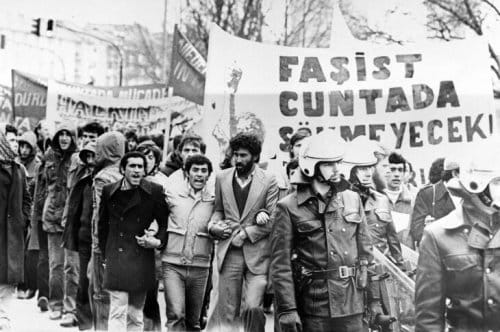
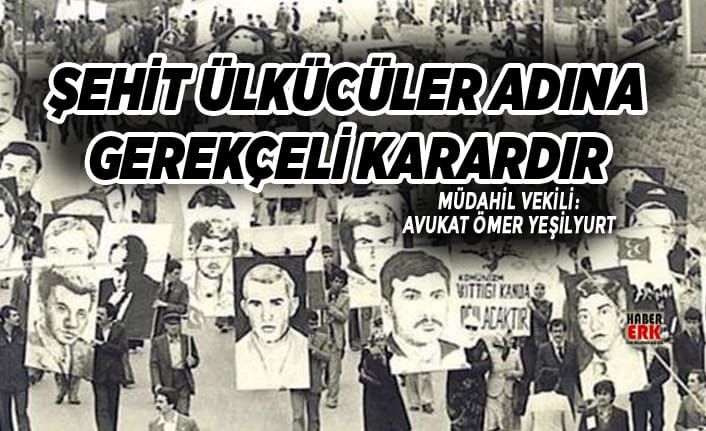
The source of the groupings and conflicts such as Right-Left, Idealist-Revolutionary, Communist-Fascist that occurred in 1970 also goes back to the years 1950-60. The reason for its inability to make economic progress is also linked to the events it experienced during these years. Do you think that Iğdır became a province in the 1990s with a sudden decision? The struggle for this began in the 1950s, and dozens of articles were written under the title "Our Cause to Become a Province." Similarly, the campaigns for establishing a Yarn Factory and a Sugar Factory in Iğdır were put forward in 1950 and fought for. If there had been no abuses in Iğdır PTSK-Birlik, and as a result, if the state, tired of appointing trustees, had not substituted sugar beet for cotton, Iğdır would have become one of Turkey's most important textile centers. Let's assume that even if Iğdır had grown both cotton and sugar beet, its agricultural potential was strong enough to support both products. If a Sugar Factory had been established in Iğdır, Iğdır would have become a center for chocolate, confectionery, jam, and other by-products. In today's article, I will bring to your attention why none of these came to fruition. Since a long and arduous article awaits you, I want to win your hearts with a political anecdote:
ANECDOTE… ANECDOTE… ANECDOTE…
NUMBER OF STEPS
One day, Erdal İnönü leaned into Süleyman Demirel's ear and said:
"Sir, you've been coming and going to Parliament for years, but you don't know how many steps there are to enter Parliament?"
Demirel felt uncomfortable, sensing an insinuation of "ignorance" in İnönü's remark. The next day, as he ascended to Parliament, he carefully counted the stairs. Then, with a smile, he approached İnönü and whispered:
"I learned the answer to your question. I counted them myself today. There are exactly 224 steps."
İnönü replied:
"Sir, serious statesmen should deal with the country's problems and the citizens' troubles. It is not right to waste this valuable time counting stair steps. You could have given the task of counting steps to an ordinary person with nothing else to do. Now, thanks to you, I have also learned that the number of steps is 224."
PARTY ORGANIZATION AT THE OCAK-BUCAK LEVEL
Dear readers!
I must reiterate a piece of information that I assume most of you already know, as I will be using it for comparative purposes. Let's say Party A is to be organized in Iğdır. Let's list the districts of Iğdır: Iğdır Central District, Aralık, Tuzluca, and Karakoyunlu, making a total of four districts. Please note that there is a district called the Central District. The only difference is that there is no District Governor (Kaymakam) in the Central District. In addition to the four districts, there is also a Provincial Organization. This means Party A has four central district chairmen and one provincial chairman. For a party to participate in elections, it is mandatory to establish an organization in one-third of the districts in a province. You'll notice I haven't mentioned villages and neighborhoods. Today, it is forbidden for parties to organize in villages and neighborhoods. So, for example, Party A cannot open a branch in Taşburun village or 14 Kasım Neighborhood. What I have described reflects the current situation. But in the past, the situation was different.
Between 1946 and 1960, there was an Ocak-Bucak (Hearth-Subdistrict) organization. This meant that parties could organize and elect officials in villages and neighborhoods, in addition to districts and provinces. With the adoption of the multi-party system in 1946, the importance and effectiveness of the Ocak-Bucak party organization increased. Indeed, the DP (Democrat Party), in a sense, was able to reach the people and increase its votes thanks to the Ocak-Bucak organization. The party organization established by parties in villages and neighborhoods was called an OCAK, and elections for OCAK Chairmen were held. OCAKs also had youth and women's branches.
To better inform you, I present a newspaper article from those years about OCAK chairmen:
PAMUKOVA NEWSPAPER 13 October 1954
OWNER: MECİT HUN
RUSH TO THE DEMOCRAT PARTY HAS BEGUN
According to information received from Hacı Nağdali Parlar, chairman of the DP district administrative board (Note: Iğdır was a district in those years), in these days marking the beginning of the election campaign for local elections, hundreds of citizens, including the individuals listed below, have resigned from their parties and joined (become members of) the DP.
The new DP members are:
Mehmet Ali Kutlay from the Iğdır district administrative board, Yahya Süvari from Yaycı village, Veli Çiftlik, headman and OCAK chairman from Çiftlik village, Nebi Yılmaz, OCAK chairman from Yukarı Çiftlik village, Abbasali Aras from Yukarı Çiftlik village, Mehmet Aras, OCAK chairman from Yukarı Aratan village, Hüseyin Turgut from Ortaköy, Yadullah Çelik, Ortaköy OCAK chairman, Abbas Aras, headman of Yukarı Aratan, Merdan Turan from Başköy, Süleyman Bayat, Başköy BUCAK chairman, Mehmet Turan from Başköy, Mürsel Yılmaz from Başköy, Ali Yılmaz, headman Kurban Yenigün, Yahya Akansu, Haydar Taner from the Başköy BUCAK administrative board, and Kerem Yılmaz from Bayat village.
***
As you can see in the statement above, there was an OCAK organization in every village. Similarly, there was an OCAK organization in every neighborhood. For example, the Karaağaç Neighborhood OCAK administration. Now let's move on to the BUCAK (subdistrict) organization. Between 1950 and 1960, the word "BELDE" (town) was not used. Currently, in Iğdır province, there are towns like Hoşhaber, Halfeli, and Melekli. But in those years, the definition of "town" had not yet entered political terminology. "BUCAK" was used instead of "BELDE." For example, Başköy (which later became a district under the name Aralık), Alikamer, SöğütlüMah (Note: Large neighborhoods were BUCAKs), and Taşburun were BUCAKs affiliated with Iğdır. Since Iğdır was a district in those years, there was no Central District structure. To make the matter clearer, I want to delve a little deeper into the example: The process worked as follows. First, in neighborhoods and villages, OCAK chairmen and delegates for the subsequent BUCAK elections were fiercely contested and elected. In the second stage, a BUCAK congress was held with the participation of delegates from the OCAK administrations. At the BUCAK congress, the BUCAK Chairman and delegates for the subsequent District Chairmanship Congress were elected. The party's Iğdır District Chairman was determined with the participation of delegates from the BUCAKs. I hope you have understood me.
Due to the OCAK administrations being at the village and neighborhood level, politics used to be much more heated and contentious than today. Everyone would do their best to undermine each other. Ultimately, each party would elect a District Chairman and an Executive Board.
There have been long debates about whether the old system or the new system was more democratic. Proponents of the OCAK-BUCAK system argue that OCAK chairmen had the opportunity to identify the problems of the local people and convey them to BUCAK and District chairmen or public officials for solutions. Moreover, in villages or neighborhoods, OCAK chairmen would receive donations of sheep, lambs, hides, etc., from citizens, sell them, and give the proceeds to the party. However, since this is not our main topic, I want to conclude the OCAK-BUCAK explanation here. Finally, I would like to remind you that in the days following the 1960 Revolution, a law adopted on July 4, 1960, prohibited "political parties from establishing organizations outside provincial and district centers, regardless of their name." Thus, the OCAK-BUCAK system was consigned to the dustbin of history.

MAY 2, 1954 GENERAL ELECTIONS
Since elections were held every four years under the majority system, the 1954 elections were held on time. I want to make two notes: First, going back, I will remind you of the 1950 General Election results and the vote percentages of the participating parties:
PARTY NAME VOTE PERCENTAGE NUMBER OF DEPUTIES
Democrat Party (DP) % 52.7 408
Republican People's Party (CHP) % 39.4 69
Nation Party %3.11 1
Independents 9
Total: 487 Deputies
QUESTION: The number of deputies Kırşehir province would elect in 1950 was calculated as 4. How was it that, as you will see in the table below, despite the DP receiving the most votes in Kırşehir, it did not win all the parliamentary seats due to the majority system, and the CHP and the Nation Party each won one parliamentary seat?
Kırşehir Elected Deputies (1950 Elections)
DP %34.1 2
CHP %31 1
Nation Party %25.6 1
In the 1950 General Elections, the Nation Party only managed to elect one deputy in Kırşehir: Osman Bölükbaşı. Since the DP received the most votes, shouldn't the DP have won all 4 parliamentary seats allocated to Kırşehir? I have used the term "Majority System" until now. Let me immediately remind you that there are dozens of types of Majority Systems. (There are also dozens of different systems within the Proportional Representation system.) The majority system applied in Turkey in those years was called the "List-based majority election system." What did this mean? If a party received more than 50% of the votes in a province, it would win all the parliamentary seats. But what if, as in Kırşehir, no party crossed the 50% threshold? How would the parliamentary seats be distributed then? In this case, an application similar to the Proportional Representation system would come into play. Parties receiving less than 25% of the votes would be eliminated. If two parties remained, the party with the majority of votes would win all the parliamentary seats. If there were three parties (as above), then the proportional representation system would come into play. This is why this system was called the "List-based majority election system." Because of this, independents were able to enter Parliament in some provinces. For example, in the Kırşehir case, if the MP had received less than 25% of the votes, then two parties would have remained, and the DP, having the majority of votes, would have won all the parliamentary seats. Absurd, but this was the reality!!
Before explaining what happened in Kırşehir in the 1954 General Elections, I must make two more notes: First, in 1953, the Nation Party was closed down due to its "anti-secular" behavior, and the CMP (Republican Nation Party) was established in its place, with Osman Bölükbaşı as its General Chairman. Second, the number of deputies elected by provinces varied from one election period to another. Kırşehir, which elected 4 deputies in the 1950 elections, had the right to elect 5 deputies in the 1954 elections.
Vote Percentage Kırşehir Deputy Count (1954)
CMP % 43.5 5
DP %30.4
CHP %23.2
As you can see, the CHP was eliminated because it received less than 25% of the votes. Among the remaining two parties, the CMP had more votes, so it won all 5 parliamentary seats. This situation bothered the DP. To prevent this in the next elections, a province named Nevşehir was created, and Kırşehir was made a district of Nevşehir.
My aim was to provide you with information about the electoral system between 1950 and 1960 using the Kırşehir example. Of course, our main focus is the situation in Kars and Iğdır.
Dear Readers! I would like to go back a little and remind you of the list of ten CHP deputies elected in 1950.
9th TERM OF THE GRAND NATIONAL ASSEMBLY OF TURKEY (1950) KARS DEPUTIES
In the 1950 General Elections, the CHP won all parliamentary seats in Kars because it received 54.8% of the votes.
1. Abbas Çetin
2. Latif Aküzüm
3. Hüseyin Cahit Yalçın
4. Tezer Taşkıran
5. Veyis Koçulu
6. Esat Oktay
7. Hüsamettin Tugaç
8. Sırrı Atalay
9. Mehmet Rüstem Bahadır
10. Fevzi Aktaş
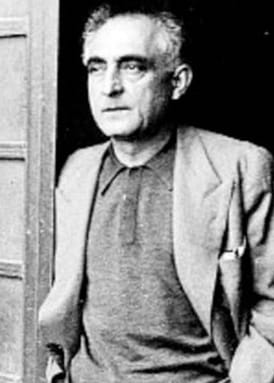
Later, Samet Ağaoğlu, the Deputy Prime Minister who politically held the reins of the AZERBAIJANI DIASPORA throughout Turkey, ensured that Abbas Çetin, Veyis Koçulu, and Latif Aküzüm resigned from the CHP and joined the DP, with the aim of redesigning Kars province, which was the center of the Azerbaijani Diaspora. His sister, Tezer Taşkıran, preferred to wait a little longer as she was a CHP deputy in the 7th and 8th term elections, but soon after, she also resigned and joined the DP ranks. Thus, the DP became the center of the Azerbaijani Diaspora. For this reason, the name of Hüsnü Bingöl, who closely monitored the Azerbaijani Diaspora on suspicion of being a communist agent during his tenure and executed those he caught, rightly or wrongly, was erased from all records, and his reports were torn up and discarded. From 1955 onwards, Hüsnü Bingöl's name and work were also removed from the archives of MAH (MİT) through the efforts of the Azerbaijani Diaspora and consigned to the dustbin of history. It is as if such a personality never ruled Iğdır's destiny for 23 years, as if such a person never existed. Efforts were made to make his name and grave forgotten. As you know, the name Hüsnü Bingöl came to the fore again as a result of my research in the book "Iğdır Sevdası" published in 2002, taking its place in history, and the documentary "Sınırdaki Işık" (Light on the Border) was prepared based on the book. Now let's return to the 1954 General Elections:
CHP 10th TERM (1954) KARS DEPUTY CANDIDATES (Pre-election)
- Sırrı Atalay
- Turgut Göle
- Fevzi Aktaş
- Ali Yeniaras
- Remzi Çakır
- İbrahim Us
- Hasan Erdoğan
- Kemal Güven
- Rıza Yalçın
- Mehmet Hazer
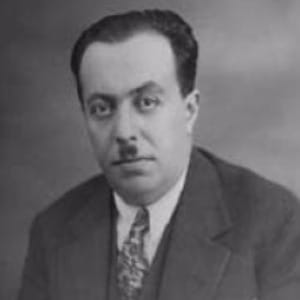
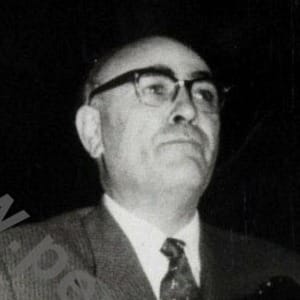
As you can see, Rıza Yalçın (Bu Taylı), who is from Iğdır, did not switch to the DP but chose to run as a CHP candidate. This means that during this period, the CHP became a center of attraction for Kurds and Azerbaijanis like Rıza Yalçın and Mehmet Hazer, who were "Bu Taylı" (from this side).
IMPORTANT NOTE: While many of my readers may still use the terms "O Taylı" (from that side) and "Bu Taylı" (from this side) in Iğdır, the term "Azerbaijani Diaspora" is more accurate for Turkey as a whole. A frequently asked question is: By what criterion do we determine whether an Azerbaijani belongs to the Azerbaijani Diaspora?
I will give you a very simple explanation: As you know, the provinces of Iğdır-Kars-Ardahan were under Russian rule until 1917. When Russian soldiers completely withdrew from the South Caucasus with the Russian Revolution, three independent states were first established. Soon after, in the Azerbaijani and Armenian states, since the Azerbaijani and Armenian populations lived side by side and intertwined, as a condition of being a nation-state, these populations had to go to the states they belonged to. Similar to the situation in Pakistan and India at one time, the Azerbaijani population living in the region within the current borders of Armenia either went to Baku or crossed the Aras River to Iğdır or Kars. Even before they arrived, there was an Azerbaijani population in Iğdır and Kars. However, they were the indigenous people of the region. For this reason, the newcomers were called "O taylı" (from that side). In short, Azerbaijanis who crossed the Aras River and sought refuge in Turkey between 1918 and 1920 are referred to as Diaspora Azerbaijanis. Because they were unjustly driven from their homelands, feelings of Turkism and Nationalism are strong within them. Hatred of Armenians is more deeply rooted, and loyalty to the Azerbaijani State and Flag continues to exist more strongly. For example, Rıza Yalçın was in Karakoyunlu even before the civil war. Similarly, Mehmet Hazer was born and raised in Kars. Since neither of them crossed the Aras to come to this side, it is not possible for us to include these names in the Azerbaijani Diaspora group.
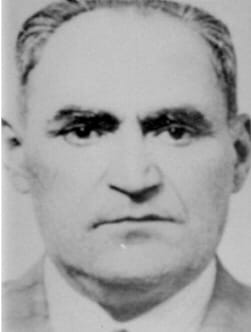
DP 10th TERM (1954) KARS DEPUTY CANDIDATES (Pre-election)
- Abbas Çetin
- Veyis Koçulu
- Latif Aküzüm
- Kemal Kaya
- ABDURREZAK GÜNEŞ (Nevruz Gündoğdu)
- Fevzi Yeşilkaya
- Tezer Taşkıran
- Gen. Muharrem Mazlum İskora
- Ali Topçu
- İlhan Aksu
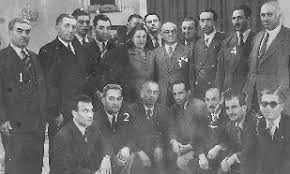
If you notice, I wrote Abdürrezak Güneş's name in capital letters. This is a list of parliamentary candidates. They were elected by delegate votes. Soon after, Samet Ağaoğlu and Abbas Çetin, the leader of the Azerbaijani Diaspora in Kars, and his friends vetoed three individuals because they were of Kurdish origin. Abdürrezak Güneş was one of them. Nevruz Gündoğdu was put on the list instead of Abdürrezak Güneş. To be honest, young people like Ziya Ayrım were also victimized. (Important Note: Ziya Ayrım's mother is Kurdish). Let's see how the EKİNCİ newspaper reported this news.

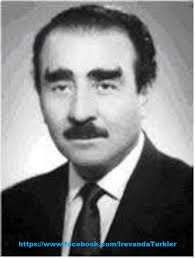
EKİNCİ NEWSPAPER 30 September 1957
OWNER: CENGİZ EKİNCİ
HEADLINE: Ziya Ayrım, Outmaneuvered by his Brother-in-Law Latif Aküzüm
Ziya Ayrım, who served as the Director of Agriculture in our province for three years and then made great efforts and contributions to establishing and making the Dil Farm productive, thus changing Iğdır's economic face, and who was appreciated and sympathized with in our province for these and other services, as is known, had entered the parliamentary elections by seeking candidacy from the DP, relying on his strong position.
However, like all other young people who grew up in the DP, Ziya Ayrım was preceded by Latif Aküzüm and Abbas Çetin, who occupied the bridgehead. Moreover, Latif Aküzüm was Ayrım's brother-in-law, and despite having introduced himself as a political figure thanks to Ziya Ayrım's circle for a long time, he continued to belittle the family and circle he had acquired, saying, "Who is Ziya when I am here? Tuzluca is essentially mine," whenever it was his turn to speak. This time, in the matter of Ziya Ayrım's candidacy, he acted from the same perspective, and as a result of Abbas Çetin's support, he definitively outmaneuvered his brother-in-law. The outmaneuvering of Ziya Ayrım, who was strong enough to carry most of the candidates included in the DP list and win the election, caused surprise and dissatisfaction throughout the province. Those who entered the DP list through various combinations will deeply regret being deprived of Ziya Ayrım.
ETHNIC BREAKING POINT IN IĞDIR'S HISTORY
Whether you accept it or not, the ethnic conflict that continues in Iğdır to this day has been primarily caused by the Azerbaijani Diaspora policy and approaches pursued by Samet Ağaoğlu and the Abbas Çetin group. In short, if there had been no "Diaspora Azerbaijanis," the Kurdish-Azeri-Terekeme-Local communities living in the Iğdır and Kars region would have been engaged only in a natural competition brought about by politics. Concepts such as hatred, othering, Oghuz Turkism, and Pan-Turkism were instilled in Iğdır and Kars by the Azerbaijani Diaspora, and this inoculation continues to have its effect.
The DP vetoed three Kurdish candidates chosen by the delegates without giving any reason. Abdürrezak Güneş was one of them. As a result of this veto, Iğdır politics were turned upside down:
- The ethnic conflict between Kurds and Diaspora Azerbaijanis emerged at the elite, i.e., intellectual, level. It had not yet affected the youth and the general public.
- A sharp distinction between "O Taylı" (Diaspora) and "Bu Taylı" (local) Azerbaijanis was experienced among the Azerbaijanis in Iğdır. This conflict continued for a long time, and as we will see later, Nurettin Kirman was martyred as a result of this conflict. The rivalry between "O Taylı" and "Bu Taylı" in Iğdır largely disappeared after 1970, and the political philosophy of the Azerbaijani Diaspora asserted itself. The fundamental premise of this political philosophy is "Oghuz Turkism," which in a sense is the unity of Azeri-Turk-Turkmen.
- The Azerbaijani State also supports the Azerbaijani Diaspora in Turkey, presenting special medals to elected deputies, and in a sense, keeping alive a public opinion of the Azerbaijani Diaspora loyal to itself.
I would like to draw my readers' attention to another issue: The Kurdish-Azeri ethnic conflict in Iğdır has occurred in three stages:
FIRST STAGE: Conflict existing only among elite circles between 1950-1970 (Especially between Kurds and Diaspora Azerbaijanis)
SECOND STAGE: Conflict existing between Kurdish and Azeri youth between 1970-2000 (Oghuz Turkism and Pan-Turkism, the political philosophy of the Azerbaijani Diaspora, came to the forefront)
THIRD STAGE: Conflict continuing between the two peoples from 2000 to the present (especially for the Mayoralty). We have already seen the seriousness of this conflict in the last municipal elections. Our hope was that the conflict that emerged among the elite circles in the 1950s would disappear on its own. If there had been no external intervention in Iğdır by Samet Ağaoğlu and Abbas Çetin, Iğdır would have largely continued its normal life without much polarization. However, unfortunately, we will see later that two events in the 1950s disrupted the Kurdish-Azeri (Diaspora Azerbaijani) balance: First, Abdürrezak Güneş was openly vetoed by the Diaspora Azerbaijanis. Second, the slander against Sırrı Atalay, the Kurdish-origin leader of CHP Kars politics, by Enver Sever, and the ongoing three-year court case in Iğdır. Sırrı Atalay was acquitted, but the three-year court case caused ethnic tension to peak every time Sırrı Atalay came to Iğdır for court (In those years, the immunity of deputies was immediately lifted when a lawsuit was filed. If Sırrı Atalay had been found guilty, he would have been imprisoned). According to accounts, when the court decided on Sırrı Atalay's acquittal, Kurdish intellectuals and tribal leaders from all parties turned the courthouse into a festive atmosphere.
While the CHP did not veto Azerbaijani-origin parliamentary candidates like Rıza Yalçın and Mehmet Hazer, the DP vetoed three Kurdish-origin candidates. This is a sign of who consciously initiated discrimination in Iğdır and Kars.
First, if you wish, I would like to give a brief information about Sırrı Atalay and Turgut Göle, two important Kurdish-origin CHP deputies in Kars, and Rıza Yalçın and Mehmet Hazer, Azerbaijani-origin (Bu taylı) deputies. Here I must make an important note. Sırrı Atalay, of Kurdish origin, in a sense designs the CHP's Kars politics, while Abbas Çetin, born in Iğdır but a Diaspora Azerbaijani, designs the DP's Kars politics.
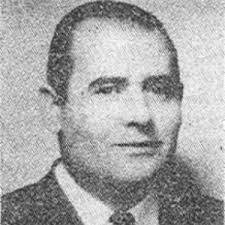
WHO IS SIRRI ATALAY: Born in Pasinler in 1919. He completed primary school in Göle, high school in Kars, and graduated from the Faculty of Law in Ankara in 1942. He served as a prosecutor in Lice and a judge in Kığı. In the 1950 elections, he was elected as a Kars Deputy. He became a member of the executive board of the CHP's group in the Grand National Assembly of Turkey and, for the first time, entered the highest level of a party, the general executive board, as a Kars native at a young age.
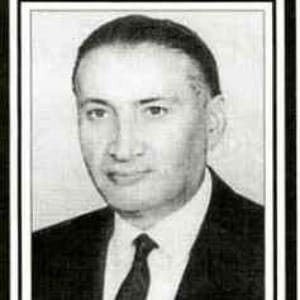
WHO IS TURGUT GÖLE: Born in 1329 (1914) in the Göle district of Kars. He is a graduate of the Faculty of Political Sciences and the Faculty of Law. He served as an administrative officer in Ankara, a sub-district director in Cebeci, and district governors in Bala, Hafik, and Çubuk. He completed his master's specialization in America for 3 years and served as the 9th and 1st branch director in the General Directorate of Security and as a traffic instructor at the police institute. Upon his assignment to the Bitlis Security Directorate due to complaints from partisan DP members, he resigned and started working as a freelance lawyer in Ankara.
WHO IS RIZA YALÇIN: Born in Karakoyunlu in 1906, he served as mayor of Iğdır for 11 years, joined the CHP in 1946, and served as the chairman of the CHP district administrative board in Iğdır. He was the head of the People's House for 4 years and a member of the provincial general assembly for 4 years. He is a fellow citizen known for being loved in his community, hardworking, and mature.
If you wish, let's get to know such an important personality as Rıza Yalçın through the words of his son, Lawyer Ataman Yalçın:
"My father, Rıza Yalçın, is a native of Karakoyunlu district. His father, Haydar Bey, and his brothers belonged to the 'Beys of Karakoyunlu.' This 'Beylik' in my family was so prominent in those years that, due to the Exile Law, members of my family almost became targets and were to be sent into exile!
Since my father was born in 1906, he attended Russian schools for primary and secondary education. He even went to Yerevan for secondary school. One of my father's school friends was Kinyas Kartal! Both later became members of parliament and continued their friendship in the Grand National Assembly of Turkey. My father could not continue his education after finishing secondary school (Rıznakiye). He knew Russian but did not speak it. (His parliamentary identity card had a record stating 'knows a little Russian.') After completing his military service as a clerk in the branch, he married the daughter of his uncle, Aziz Yalçın.
My father had one brother named Eşref and three sisters. My uncle Eşref, who worked for the "Kömürcüoğlu" company in Bursa for many years, contracted cancer. He passed away in Iğdır. My father served as the Mayor of Iğdır between 1939 and 1950. In 1950, he became the CHP District Chairman. He continued this duty until 1954. In that year, he was elected as a member of parliament from the CHP. This duty ended in 1957. In 1961, my father entered parliament again, this time from the YTP (New Turkey Party). My father passed away in Ankara in 1966, on the eve of the day he was preparing to return to Iğdır."
WHO IS MEHMET HAZER: Mehmet Hazer was born in Kars in 1333 (1917). He completed his primary and secondary education in Erzurum. He is a graduate of the Faculty of Law. He served as district governor in many districts and as acting governor. He is a very valuable and hardworking administrator. He is the district governor of a large district like Akhisar.
EKİNCİ NEWSPAPER 15 March 1954
WE INTRODUCE DP KARS DEPUTY CANDIDATES
ABDURREZAK GÜNEŞ
His joining the DP after leaving the CHP has a history of three years. He is from the notables of Iğdır, and his educational level is primary school. This candidate, who is engaged in trade, is one of the respected individuals in Iğdır.
LATİF AKÜZÜM
After completing the Faculty of Law after a considerably long time, he did his legal internship with Lawyer İsmail Alaca. In the by-elections before 1950, he was defeated by Fevzi Aktaş. In the 1950 elections, he was elected as a deputy from the CHP, and later he switched to the DP and started working in the ranks of this party.
ABBAS ÇETİN
He is a graduate of the Faculty of Law and has worked as a judge and lawyer. In the 1950 elections, this young man, who became a CHP deputy on the CHP list with the votes of CHP members, switched to the ruling party after his party remained in opposition and gained great prestige in the new party. He is now working as a DP Inspector to win the elections.
THE MOST IMPORTANT BREAKING POINT IN IĞDIR'S HISTORY AND THE EVENT WHERE ETHNIC CONFLICT BEGAN:
ABDURREZAK GÜNEŞ'S VETO BY THE DP
Dear readers!
It's a common saying: "Those who don't know their past cannot build their future." If you want to understand the political history of Iğdır from 1950 to the present, I ask you to pay special attention to what I will write here.
Abdürrezak Güneş was no ordinary person. He was the leader of the Torun (Güneş) family. He was the third son of Hamit Bey. Hamit Bey's sons, in order of age, were Fettah Bey, Kerem Bey, Abdürrezak Bey, and Naci Bey. In 1954, Hamit Bey, Fettah Bey, and Kerem Bey were no longer alive. Abdürrezak Bey belonged to the same family as Gulicevher Ağa, Hesen Bey, and General Eleşref Bey, who had led all Kurds before the Tsarist regime during the Russian administration. All Kurds who lived under Russian rule had great respect and love for this family. Abdürrezak Bey, with his mature personality, foresight, and constructive character, proved worthy of this family. He was the President of the Iğdır Chamber of Commerce. The DP made a big mistake and vetoed three Kurdish-origin candidates who had made it onto the list through delegate votes. Abdürrezak Güneş was one of them. Unfortunately, the ones who implemented this veto were Samet Ağaoğlu, the leader of the Azerbaijani Diaspora, and Abbas Çetin, his representative in Kars. The veto of Abdürrezak Güneş stirred up all Kurdish tribes in Iğdır. The Kurdish tribes withdrew from the parties they belonged to and held a large meeting. The Kurdish tribes put aside their enmities and convinced Abdürrezak Bey to run as an Independent Candidate, but the application deadline had long passed. Mecit Hun took on the opening speech of the meeting held in front of the municipality:
"Our response to these reckless people who trample the honor of Kurds for five cents' worth of politics will be severe. Not a single Kurd's vote in Iğdır will go to the DP. We will cast our votes for the CHP." (With this speech, Mecit Hun took a stance close to the CHP for the first time.)
Other speakers then took the floor.
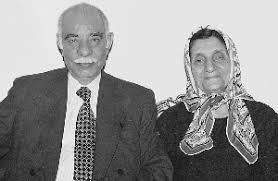
The late Hacı Cihangir Turan, who personally experienced those days, summarized the situation as follows:
"It was 1954. General elections were approaching in Turkey. Abdürrezak Bey, the son of a prominent Iğdır family, had applied to be a candidate from the DP in these elections and had managed to get on the list in the primaries. However, Adnan Menderes vetoed Abdürrezak Güneş. This news caused deep indignation in the town.
A considerable time had passed since the elections. One day, I found Abdürrezak Bey very thoughtful.
"Abdürrezak Bey, I found you very distracted and thoughtful."
Abdürrezak Bey lifted his head, looked at me as if he wanted to confess something, and then said,
"Mahmut, in the past, when I was upset, Kerem Bey would send his white horse, and I would ride to the Zor plateau. After staying on the plateau for 40 days, I would forget all my troubles and feel like a 35-year-old young man. But after this veto incident, I feel a weight and numbness on me, as if Mount Ararat is on my shoulders. I can no longer bear this burden."
Abdürrezak Bey had taken his veto by the DP as a serious matter of pride. Perhaps due to this sorrow, he passed away in 1955 with a sudden death.
BİRLİK NEWSPAPER 29 September 1955
(Note: Local Elections were held in 1955. Mücahit)
IĞDIR GENERAL ASSEMBLY MEMBERS (PROVINCIAL GENERAL ASSEMBLY MEMBERS)
DP candidates who won full membership in the General Assembly election held on Sunday, September 25, 1955:
Iğdır: Hacı Nağdali Parlar, Hacı Ekber Çöllü, Musa Doğan
Tuzluca: Tevfik Ayrım
Out of a total of 33 General Assembly memberships, DP candidates won 27, and independents won 6. (NOTE: The names of CHP Iğdır Provincial General Assembly members are not given in this article. Also, Aralık had not yet become a district. Mücahit)
KARS NEWSPAPER 28 December 1955
OWNER FUAT ARASLI
WRITTEN BY: KARS DEPUTY SIRRI ATALAY
NEWS OF ABDURREZAK GÜNEŞ'S DEATH
On Friday, the sixteenth of December, towards evening, a telegram from Erzurum (source) erased the possibilities of saying, "How can it be? Is it possible? Is it believable?" from my tear-filled eyes and numb feelings, word by word, line by line, as if sorrow was forcing me to accept a very heavy truth.
So, that mature, trustworthy, immediately inspiring person has now passed into eternity... We will be deprived of him... In this world, whether poor or rich; famous or remaining in a corner on their own; happy or unhappy; lives spent beneficially or unbeneficially are sooner or later condemned to an end. For everything is temporary. What is eternal is a name adorned with honor, a past that evil cannot overshadow, a past that integrity can guard. The lives of those who cannot leave such a name and past as a legacy may pass in pomp and circumstance, under the fleeting protection of daily opportunities... The truly fortunate and great person is one who leaves behind "a pleasant sound, a reason for respect and remembrance!" Beyond that, it is the fortune, desire, and opportunity of the material world, nothing more...
The great pillar (most important name) of a large and deeply rooted family, Abdürrezak Bey, left behind not only a name full of respect and maturity. We did not just lose a loyal and compassionate elder. We lost a perfect and virtuous protector (guardian), a guide (mentor), whose place is difficult to fill, and whose pain is hard to forget.
The loss is not only of the Güneş Family. The pain is not only of his friends and relatives. The pain and loss belong to everyone who knew and loved him, who witnessed his "humanity." When we learned of his illness, we were saddened, and when we heard he had recovered, we rejoiced. But behind that joy, there was dark news...
I am saddened, distressed, and in pain at this moment, deprived of a dignified, insightful, far-sighted, truly distinguished person, a loyal elder, a grateful guide... But we have consolations. For years, we will recount his virtues like legends, and we will be able to take him as an example. We will not forget his pure character; we will strive to acquire them. The great guide of yesterday, today and tomorrow, his life story will remain fresh and vivid in our memory as a "guide" to be remembered with reverence.
He had striven to perform his services and duties in peace and contentment. In the most productive and mature period of his life, fate suddenly took him from us...
His pure and noble name, his precious memory, will live on in hearts like a torch, burning as a flame of honor and glory. Those who respect and love him will always keep his great name as a trust (legacy) in their memory and conscience.
The name "Abdürrezak Güneş" will remain and live on as a symbol of "Respect," "Trust," "Maturity," "Insight," and "Loyalty."
SECOND ETHNIC BREAKING POINT: SIRRI ATALAY'S TRIAL IN IĞDIR
Dear readers!
When two grave events occurred consecutively in 1950, the conflict between Kurds and Diaspora Azerbaijanis took root irreversibly. In the first event, Abdürrezak Güneş, the most prominent Kurdish leader in Iğdır, was dealt a blow. In the second event, Sırrı Atalay, the most important Kurdish-origin leader of the CHP in Kars, was targeted. If Sırrı Atalay were imprisoned, it was hoped that the DP would win the next elections.
On July 21, 1955, the Iğdır CHP Congress was held. Sırrı Atalay, as a Kars Deputy, attended the Congress and gave a speech. Enver Sever, a DP member, and some of his friends were also present at the Congress. According to their claims, Sırrı Atalay insulted Adnan Menderes by calling him a 'gambler' in his speech and also insulted the Government by saying that Prime Minister Adnan Menderes "is not as competent as the Commander of the Kiti Gendarmerie Station." They prepared a report and opened it for signatures. A lawsuit was filed against Sırrı Atalay. During the trial, Sırrı Atalay's immunity was lifted. The trial lasted two years. The scheme prepared jointly by Hacı Nağdali Parlar, Sadık Tezel, and Enver Sever caused great discomfort among the Kurdish notables in Iğdır. Because the aim was to imprison Sırrı Atalay in Iğdır, following orders from the Samet Ağaoğlu-Abbas Çetin duo. This development added a new dimension to the tension that had already begun with Abdürrezak Güneş. There was now an undeniable reality: Kurds and Diaspora Azerbaijanis were irreconcilably opposed. This animosity continues to this day with full force.
EKİNCİ NEWSPAPER 4 March 1957
SIRRI ATALAY'S TRIAL TO BEGIN TODAY
WRITTEN BY: CENGİZ EKİNCİ
The trial of our deputy Sırrı Atalay, whose immunity was lifted and criminal proceedings were initiated against him on the allegation of "insulting the moral personality of the Government" during a speech he made on July 1955, will begin today in Iğdır. For this reason, our newspaper owner Cengiz Ekinci is accompanying Atalay and his fellow deputies (Kemal Güven and Rıza Yalçın), who went to Iğdır yesterday morning.
Unless it is decided that the case to be heard in the High Criminal Court will be conducted in secret, we will inform our readers about the stages of the hearing. We have learned that Atalay will be defended by Kars lawyers Turgut Artaç and Osman Yeltekin, along with Kemal Güven.
EKİNCİ NEWSPAPER 7 March 1957
SIRRI ATALAY'S HEARING IN IĞDIR
(...) The High Criminal Court Panel consisted of Aladdin Tuzcu as president, and Celal Nuri Koç and Mustafa Özer as members. The public prosecutor, Cemalettin Oktay, was in charge of the prosecution.
Following the reading of the indictment, Sırrı Atalay, who was given the first word, said:
"My esteemed Judges! I spoke at the Iğdır CHP congress on July 21, 1955. Before presenting and explaining what I said and what I did not say in these speeches, with your permission, I will briefly try to explain under what conditions and why I made this speech. Some of us, by struggling, some by making efforts, some by wishing, hope for the establishment of a state order bound by law, that is, a democratic administration. This has been our hope for a century. We hope to discuss national issues fearlessly, we hope to criticize and supervise (control) the aspects of those in power that we dislike, without enduring any hardship.
Disliking is a natural human trait. It is a fact that even the actions of a village headman of ten houses are disliked and expressed. It is this feeling in humans that elevates humanity and brings civilization to this level.
Democracy has made this feeling an element of state administration. This is why we are devoted to democracy and suffer for it. It is everyone's right to criticize and supervise the disliked actions of the ruling party. As a member of the opposition, this right, which belongs to everyone, constitutes my duty. With this sense of duty, if I did not criticize the faulty course of the government, I would not have fulfilled my duty before God and my conscience, and ultimately, I would not have appeared before you. The opposition will, of course, express what it dislikes, but it will not curse.
I spoke at the Iğdır CHP congress on July 21, 1955, but I did not use the words attributed and accused to me. At that time, I had said,
"Just as an heir or a gambler does not meticulously care about their own resources, those who lead and manage the DP have not shown sensitivity regarding the economic resources of the country, and have dried up our economic resources with unplanned and daily policies."
But the matters attributed and accused to me are completely different.
(...) For example, Enver Sever, one of the signatories of the minutes of this case, stated in his testimony: "Sırrı Atalay insulted the Government by saying that Prime Minister Adnan Menderes is not as competent as the Commander of the Kiti Gendarmerie Station." It is seen that Enver Sever, one of the signatories of the minutes, accepts and expresses a statement about the person of the Prime Minister as "insulting the Government." However, Adnan Menderes is not the Government."
EKİNCİ NEWSPAPER 16 April 1957
NEWSPAPER OWNER CENGİZ EKİNCİ
SIRRI ATALAY'S TRIAL
The second hearing of Kars deputy Sırrı Atalay, against whom a public lawsuit was filed on the charge of "insulting the moral personality of the Government" during a speech he made at the Iğdır CHP District Congress on July 21, 1955, and who is being tried in the Iğdır High Criminal Court, was held yesterday.
(...) Now, let's listen to the witnesses in order:
FEYZULLAH İNAN: "At that time, I was the Chairman of the DP District Administrative Board. I was not personally present at the congress on 21.7.1955; my friends who followed the congress had prepared a report. They submitted this report to the prosecutor's office."
JUDGE: These individuals stated in their preliminary statements that the report was kept in your office. What do you say?
FEYZULLAH İNAN: The report was not kept in my office. Sadık Tezel, Enver Sever, Cihangir Aras were assigned for the CHP congress. They prepared it.
JUDGE: Who brought the report to your office for signature?
FEYZULLAH İNAN: Enver Sever and Nurettin Kirman.
JUDGE: Was it handwritten or typed?
FEYZULLAH İNAN: Typed.
JUDGE: What is the brand of your typewriter?
FEYZULLAH İNAN: Erika.
JUDGE: Was it typed on the same machine?
FEYZULLAH İNAN: A long time has passed, I cannot determine it clearly.
ALİ IŞIK: I was also present at the congress in question. Indeed, Sırrı Atalay made a speech at this congress, but I did not hear him utter words to the effect of, "Just as a gambler closes his eyes and throws the dice by chance, the DP Government also..." While I was at the congress, Sırrı Atalay was talking about Adnan Menderes's personal abilities, and how Mükerrem Sarol, despite saying he had no more than 10 liras, was very rich today. Towards the end of the congress, I went to the shop. Enver Sever brought me a report, saying it was about Sırrı Atalay's congress speech, and asked me to sign it. I read it; the report contained words I had not heard. I told Enver Sever, "If what I heard is written, I will sign it." Thereupon, Enver Sever left and soon after brought a new report. It was a busy time in the shop; after reading a few lines from the top of the new report, I understood that the previous one had been changed and signed it.
JUDGE: Where was the report prepared?
ALİ IŞIK: I didn't see. When I asked Enver Sever, he told me, "We kept it at Feyzullah İnan's place." He didn't say who kept it.
ENVER SEVER: On 21.7.1955, Feyzullah İnan, who was then the DP District Chairman, specially sent me and Nurettin Kirman to the CHP District Congress. We were to listen as observers, record the speakers' words, and later respond to them in our own congresses. Ali Işık had gone before us. First, Rıza Yalçın and Mehmet Hazer spoke. There were no insulting words in their speeches. Subsequently, Sırrı Atalay took the floor, first talking about his own party's past government and finally about the new government. He stated that Adnan Menderes, who had gained the majority in parliament, prevented the freedom of the opposition, and that this was even more distressing than what happened behind the iron curtain, and that the press was very restricted. After that, he mentioned the wealth of two DP deputies whose names we cannot write, thus implying that the government condoned the acquisition of illegitimate wealth. (...) Nurettin Kirman and I had noted down these words of the defendant. Sadık Tezel, Cihangir Aras, and Ali Işık were with us. After the congress, Ali Işık went to his shop, and as he left, he said, "Write down what was noted in the minutes, and we will sign it." We typed it on the typewriter in Feyzullah İnan's shop. I took this report to Ali Işık for him to sign. Ali Işık said there were some punctuation errors and asked for them to be corrected.
JUDGE: Who took notes at the Congress?
ENVER SEVER: I did.
JUDGE: What is your education?
ENVER SEVER: I left after one year in junior high school.
JUDGE: Who dictated and who typed the minutes?
ENVER SEVER: Nurettin Kirman and I dictated, Feyzullah İnan typed it.
SADIK TEZEL: This witness also stated that he went to the CHP congress at the request of DP District Chairman Feyzullah İnan, that Enver Sever, who took notes of Sırrı Atalay's speech, later dictated them to Feyzullah İnan, and that they signed the written report. When asked about the defendant's (Sırrı Atalay's) speeches, he replied, "I don't remember, I accept the contents of the report as is," and to a subsequent question, he gave the following answer:
JUDGE: How was the report written in the shop? Was a draft made first?
SADIK TEZEL: Enver Sever's notes did not record the entire speech in detail. In Feyzullah İnan's shop, these notes were combined to create a handwritten draft first, and then it was typed. We also signed it.
MECİT HUN: At that time, I was publishing the Pamukova newspaper. I was at the congress and took notes of Sırrı Atalay's speech. It was natural that I would not publish the parts of this speech that constituted a crime. With this consideration, I did not include his words about Mükerrem Sarol in my newspaper. I had also stated this in my testimony during the incident. Sırrı Atalay did not use the term "gambler" about the government. He only said, more or less, "The DP does not have an economic program. The economic course of this party resembles throwing dice."
JUDGE: With whom did you take notes at the congress?
MECİT HUN: With Mehmet Gülten, Aziz Güney, İsmail Özgür.
JUDGE: Did the signatories of the report ask you for these notes?
MECİT HUN: Enver Sever and Nurettin Kirman asked, but I did not give them, saying it was for publication in my newspaper. They were going to make a report themselves. Three days later, upon the request of the police, I gave a copy to the police.
(...) Afterwards, all witnesses were brought in and asked whether Sırrı Atalay had used the word "gambler." Mecit Hun and Ali Işık stated that the defendant had not used such a word. Enver Sever, Sadık Tezel, and Cihangir Aras stated that Sırrı Atalay had used this word. It was not possible to resolve this discrepancy.
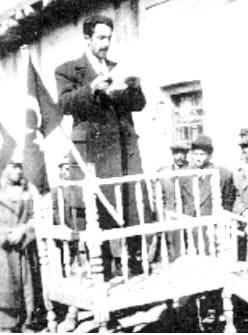
EKİNCİ NEWSPAPER 19 July 1957
OWNER: CENGİZ EKİNCİ
SIRRI ATALAY ACQUITTED IN IĞDIR
The lawsuit filed against Sırrı Atalay in the Iğdır High Criminal Court concluded yesterday, and according to reports, Atalay was acquitted in this court.
NOTE: Dear readers! When Sırrı Atalay, the Kurdish-origin CHP Deputy who was slandered by the Azerbaijani community belonging to the Azerbaijani Diaspora in Iğdır for two years, instigated by Samet Ağaoğlu and Abbas Çetin, was acquitted in Iğdır, hundreds of Kurdish notables, intellectuals, and tribal leaders carried Sırrı Atalay on their shoulders from the courthouse to the CHP District Building. This was, in a sense, a victory for Kurdish public opinion against the Diaspora Azerbaijanis and their supporter, Samet Ağaoğlu. From this day forward, Kurdish intellectuals gradually began to shift towards the CHP.
CONCLUSION:
Dear readers! As you can see, two grave events occurring consecutively led to the deep-rooted discrimination between Kurds and Diaspora Azerbaijanis in Iğdır. Despite winning the delegate election, Abdürrezak Güneş was removed from the DP candidate list at the request of Samet Ağaoğlu and Abbas Çetin. Less than a year later, Sırrı Atalay, who was in a sense the political leader of both the CHP and the Kars Kurds, was slandered by Enver Sever and his friends, again following instructions from Diaspora Azerbaijani leaders, and was tried in Iğdır. This trial, which lasted two years, further deepened the existing animosity. Sırrı Atalay was acquitted in 1957, but he left behind a deep, hard-to-repair scar. Kurds, accustomed to living in peace and kinship with "Bu Taylı" (local) Azerbaijanis (Rıza Yalçın, Hacı Ali Ekber Tufan, Şamil Ayrım), were suddenly confused when they encountered Diaspora Azerbaijanis who belittled and ignored them. Some friendships existed, but whenever PTSK-Birlik or elections were concerned, Diaspora Azerbaijanis, on one hand due to their good financial standing and on the other hand being protected by influential politicians like Samet Ağaoğlu, became the party that created ethnic hostility and animosity in Iğdır. As you will see in my next article, with the martyrdom of Nurettin Kirman, the symbolic figure of "Bu Taylı" Azerbaijanis, by "O Taylı," i.e., Diaspora Azerbaijanis, the "Bu Taylı," the ancient Azerbaijanis of Iğdır, became fearful and timid, leaving the political stage, in a sense, to the Diaspora Azerbaijanis. The Diaspora Azerbaijanis organized among the youth in 1970, seized leadership, and this situation continued in subsequent years. As a result, an irreversible Azeri-Kurdish division took root in our Iğdır and continues to this day.
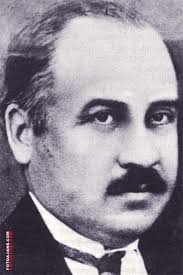
The basis of the political philosophy of the Azerbaijani Diaspora, especially deepened by the books and magazines published by Mehmet Emin Resulzade and Ahmet Ağaoğlu, is to unite Anatolian Turks-Turkmens and Azerbaijanis (North and South) to establish an Oghuz Turkish Republic. The true owner of this view is Ziya Gökalp. The third stage would be to establish the Turan State. The late Ziya Gökalp overlooked a very important point: Shiites and Sunnis can never coexist within the same state structure. There is no historical precedent for this. If there were, one would be the oppressor and the other the oppressed. If that were the case, Yavuz Sultan Selim and Shah Ismail, both Turks, would have agreed and established the Great Oghuz State. Mustafa Kemal Atatürk, who knew this, not only never favored this view but also, on one hand, expelled Mehmet Emin Resulzade from Turkey, and on the other hand, closed down the Free Republican Party (Serbest Fırka) that participated in the 1930 elections, distanced its theoretician Ahmet Ağaoğlu from himself, and never wanted to meet him face to face again. Ağaoğlu also resigned and withdrew to his corner.
Another issue is that the President of Azerbaijan, Ilham Aliyev, who is of Kurdish origin from the Aliyev Tribe, repeatedly invites Azerbaijani-origin deputies elected from Iğdır or Kars to Baku and honors them with medals. This behavior is done to keep alive a secret, insidious Azerbaijani Diaspora within the Republic of Turkey and to use it for political lobbying purposes. This is an inappropriate situation. We are all citizens of the Republic of Turkey, and we do not have the right to use the interests of this country for the benefit of other states. For better or worse, our faces should be turned towards Ankara, not Baku or Tabriz. This also applies to Kurds. They must turn their faces towards Ankara, not Erbil or Sulaymaniyah. Azerbaijanis and Kurds must see themselves not as diaspora but as original citizens of this state. One of the reasons why Iğdır cannot find its identity is that Diaspora Azerbaijanis feel themselves in the diaspora in Iğdır, carrying in their subconscious the thought that one day they will return to the lands they came from.
My personal opinion is that without the intervention of a third external force, there will never be an Azeri-Kurdish integration in Iğdır. We saw this in the last appointment of a trustee. Almost all Azerbaijanis rejoiced, and almost all Kurds were saddened, regardless of their political views. This situation indicates a serious danger. So, let's ask a question: What could be the third force that will change Iğdır, and let's think about the answer, what do you say?
One of the questions being sought an answer to is, "Why don't local or foreign investors make large investments in Iğdır?" As my readers with economic education will appreciate, an investor conducts a "Political Risk Analysis" before risking their money. This can be a country, a region, or a city. As long as there is a deeply entrenched Azeri-Kurdish structure in Iğdır, no investor will risk their money and invest in Iğdır. Iğdır will never escape being a province where medium-sized industry struggles along or, if a door opens, survives on rent.
This internal, insidious tension, always ready to explode, has consumed all of Iğdır's energy and beauty like a hungry lion devouring its prey. The existing politicians are neither strong enough to overcome this "hidden enmity" nor do they want this tension to disappear, because they themselves were elected to represent this political polarization.
TO BE CONTINUED
ANECDOTES.. ANECDOTES.. ANECDOTES
(Note: These anecdotes were published in the January 16, 1964 issue of the EKİNCİ newspaper, owned by Cengiz Ekinci.)
NEWS OF DISASTER
A wealthy Mexican farmer is returning from a trip to New York. At the airport, he asks his steward, who has come to meet him:
"What's the news? What happened on the farm while I was away?"
The steward:
"Nothing important, boss," he replies cheerfully. "Only two farmhands died from eating burnt meat."
"Where did they get burnt meat?"
"The barns burned down, boss."
"Did you say barns?"
"Yes, sir, they caught fire from sparks that jumped from the big mansion."
"Did the whole mansion burn down? Where did the fire start?"
"From the candles around the coffin, sir. The whole mansion burned to ashes while all the farm people tried to save it."
"Oh my God! What is happening to me? Whose coffin was it?"
"Your mother's. I think she died from the shock."
"What shock?"
"Your wife ran off with the servant, sir."
SCOTTISH WIT
A Scotsman resting in a park in Aberdeen takes a watch from his right pocket, looks at it, and puts it back. Then, seeing him take another watch from his left waistcoat pocket, his neighbor becomes curious and asks:
"Are you setting one watch with the other?"
The Scotsman replies, "Not at all!" "One watch is missing its hour hand, and the other is missing its minute hand..."
CHURCHILL'S WIT
At a social gathering, a pretentious woman cornered the statesman Churchill and criticized him incessantly. At one point, she said:
"You know, Mr. Churchill, if you were my husband, I would immediately kill you by giving you poisoned coffee."
Churchill calmly replied:
"If you were my wife, madam, I would gladly drink that coffee."
YOU'D PITY ME IF YOU SAW MY WIFE
Zülfikâr Pasha, one of Sultan Abdulhamit's friends, was an extremely ugly man. One day, while the Sultan was talking to him:
"You know, Zülfikâr, every time I see you, I pity your wife."
Zülfikâr, a witty man, did not let the remark pass:
"Ah, Sultan, if you saw my wife, you would pity me even more."
EARNING MONEY WITHOUT EFFORT
Sultan Mahmud, when the term "officials without duties" came up in conversation, asked his accountant Sait Efendi:
"Can there be an official without duties?"
"Of course, Your Majesty. For example, the Grand Vizier's imam, the Sheikh al-Islam's barber, and also your humble servant..."
"I don't understand why they would be without duties?"
"Your Majesty, prayers are not performed in the Grand Vizier's office, but the imam receives his salary; the Sheikh al-Islam is bald, but the barber receives his salary; and your humble servant does no work. I speak words and receive my salary."
THERE'S A REASON
Vartan Efendi, one of the old journalists, met an acquaintance he hadn't seen for a long time while descending the Babıâli slope. The friend said:
"Hey, Vartan Efendi, I haven't seen you for a long time, but you haven't changed at all. Will you never grow old?"
"We don't live, so we don't grow old."
CLEVER DONKEY
One day, one of the old pashas happened upon a vegetable garden. Seeing a bell around the neck of the donkey turning the waterwheel, he asked the gardener what it was for. The gardener explained:
"When the donkey turns, the sound of the bell is heard. If the sound stops, I know the animal has stopped. I immediately run and make it walk again."
The pasha thought:
"What if the donkey stands still and shakes its head from side to side to deceive you?"
The gardener replied:
"Oh, Pasha, where would you find a donkey as clever as you?"