Iğdır History 1945-1965 Part Seven: Mecit Hun (1)
This article, part seven of a series on Iğdır's history, focuses on Mecit Hun's life, his political and journalistic career, and his pioneering role as a social democrat in Kurdish politics from 1945 to 1965.
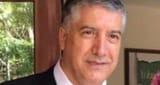
IĞDIR HISTORY 1945-1965 PART SEVEN: MECİT HUN (1)
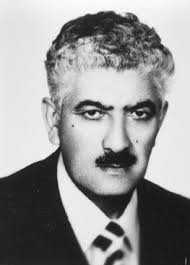
Dear Readers!
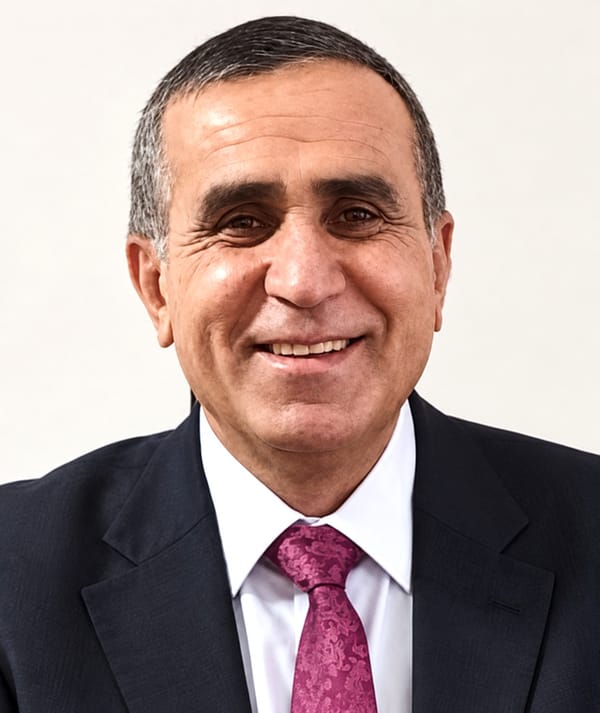
A writer must be impartial. Otherwise, their writings hold no value, neither before history nor in the conscience of the public. Mecit Hun is my father. I wish it hadn't fallen to me to write an article about him. Long before, master writers should have given him his due, honoring his struggle in this world. I know this didn't happen.

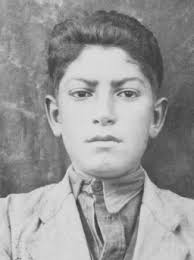
History does not always operate with "correct and straightforward logic." It betrays, it makes us forget. However, let us not forget that history also has a magical side. No matter how much time passes, an unknown hand will one day dig up the soil, unearth rotten bones, give them a new spirit, and revive them. I did this for the character named ZIRYAB (a book I wrote under the pseudonym Ben Kevan). Through extensive research, I recreated one of the most important, perhaps the most important, figures in Kurdish history, forgotten or made to be forgotten for over 600 years, in my book titled THE SUN OF ANDALUSIA.
Today, I know I have a similar task. My aim will be to revive Mecit Hun in your minds, who has been deliberately tried to be forgotten for years, and to examine his contributions to Iğdır, regional, and Turkish politics between 1945 and 1965. If what I write evokes a sense and feeling of exaggeration in your minds, I believe it would be unfair to hold me responsible. I want you to know that we cannot judge Mecit Hun without truly knowing him. It is time to properly recognize one of the most important figures in 20th-century Kurdish history, leaving aside neighborhood, clique, tribal, and petty political gossip.
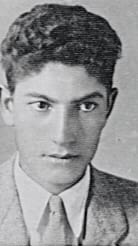
The only positive article written about Mecit Hun was penned by my esteemed teacher Akay Aktaş in the Çağdaş Iğdır’ın Sesi Newspaper upon his passing. I would like to remind Akay Hodja that this appreciative gesture will never be forgotten:

A STAR FELL January 29, 1998
BY: Akay Aktaş
The hall was packed. So were the other rooms. In fact, the abundance of shoes outside the door gave enough of an idea. After reciting the Fatiha, I surveyed the hall. Almost all the visitors were ethnically Azeri.
I had visited this house quite often, though rarely. As a child, to play. In our youth, to convey our political troubles. In our maturity, to eat kebabs. But I had never imagined I would be reciting Fatiha and drinking tea. Mecit Abi had definitely left his mark on Iğdır's politics and administration since 1958. He was not an ordinary provincial politician. You wouldn't find even a trace of Aziz Nesin's famous ZÜBÜK in him.
He was a high school graduate of his time. If he had been employed by the state, he would have long since become a general director. But he preferred to serve the people. He read constantly. He was cultured. Consequently, he had a democratic and enlightened personality. He didn't jump from one party to another. He joined a party close to his worldview. And he remained so until the end. Instead of changing parties, he chose to inject his own views into his party. I understood that he had such a broad-minded and combative character back in the 1970s when he supported KARAOĞLAN against PAŞA (İsmet İnönü). Nevertheless, he was not rigid. He hosted M. ALİ AYBAR and BEHİCE BORAN in his famous patisserie. As well as the heavyweights of the AP. Beneath his tall, imposing physique lay a delicate, fragile, and gentle soul. He loved and protected people, especially the youth. The years he was a political administrator were dark and murky.
Confrontations, juntas, right-left, Turkish-Kurdish, Alevi-Sunni discrimination were being used and fueled as much as possible. However, he never gave credit to these cheap tactics. He was unifying, conciliatory, and tension-reducing. He became a full patron of the enlightened and democratic segment in political, economic, and legal terms. He rushed to the police station. He wrote the petitions. He followed up on documents. He spent from his own pocket. He traveled to Ankara. He identified with his staff and his ideas. Uncompromising, selfless, undeterred.
He was also a political school. Young people who grew up under his wing always boasted: "I worked with Mecit Ağabey..." Even those who thought they would surpass him sought his help and approval. What can be said at this point? Mecit Abi, you left not only your children but also a staff, a community orphaned. You can rest peacefully in your resting place. You leave behind a clean, noble, honorable past.
Our consolation, however, is that the seeds of brotherhood, love, and peace you sowed will sprout and grow in Iğdır. The scene and crowd at the condolence gathering are the greatest proof of this. May your soul rest in peace, and may your earth be abundant.
Of course, there were others who wrote about Mecit Hun besides my teacher Akay Aktaş. However, they took up their pens to put an end to the Mecit Hun legend that had been blowing for years. Conspirators, devils whose hearts were filled with envy, those who were crushed in Mecit Hun's shadow, those whose hearts constricted even at the mention of his name, and so-called overt or covert power holders with political, military, and financial might did not stand idly by. Unable to politically contend with the most important Social Democratic figure in 20th-century Kurdish history, they eagerly sought to physically eliminate him or at least have him imprisoned. For this, who didn't line up from 1950 onwards? Right-wingers, left-wingers, tribes, dark illegal organizations, the PKK, MIT, the state (martial law officials), and even Mehmet Ali Ağca...
Mecit Hun's inability to fully realize his talents and his confinement to Iğdır when he should have been at the pinnacle of Turkish politics was the unfortunate aspect of his destiny. As he was buried, the last words and slanders of his enemies lingered in people's minds. A huge cross was placed over Mecit Hun's name. His friends who knew and loved him remained silent. And they are still silent... Even his closest ones, even his own tribe whom he valued and honored, joined the race to put a cross over Mecit Hun's name.
A political genius like Mecit Hun, whom Kurds rarely produce once a century, was unfortunately pushed aside, rendered insignificant. I must confess that they succeeded, albeit temporarily, but I must also confess that Mecit Hun's spiritual legacy is so strong that the slanders made have had a ridiculous effect, like trying to blow down Mount Ararat. The plans to defame, slander, kill, and destroy have not yet ended, despite all these years. From his early youth, spider webs and poisonous ivy had surrounded this unfortunate genius. He could not breathe. Humanity and Turkey did not have the chance to benefit from Mecit Hun's talent under different circumstances.
It may sound paradoxical to you, but I truly got to know my father in 2000, when I was 42, while writing the book IĞDIR SEVDASI (Iğdır Love). I learned that he had published four newspapers in the 1950s, about his education, and many other things through interviews and research I conducted in 2000.
Being a boarding student at Kabataş Erkek Lisesi at the age of 15, then studying at ITU Faculty of Electrical Engineering, and subsequently living abroad for many years, I never had the chance to truly get to know my father. Besides, there was an indescribable distance of respect between our father and us children. It was impossible for us to bridge this distance. I couldn't even be with him when he passed away because I was abroad.
While writing the book, I first interviewed Mecit Hun's friends and fellow townspeople who were involved in politics in Iğdır. I delved further back into his childhood years. In the second stage, I found his classmates from Erzurum High School. Suddenly, a completely different Mecit Hun emerged before me. When I painstakingly gathered the newspapers he had published in the 1950s, I got to know another aspect of my father. In short, I realized that the father figure I had known through my own experiences since childhood was a complete illusion and deception.
I know that my duty in this series of articles is to address the history of Iğdır and to inform you about a certain period. I want to confess that, not because I am his son, but because the twenty-year history of Iğdır (1945-65) would not have much meaning without giving Mecit Hun his due. We will all witness this reality together in this article.
I would like to briefly summarize Mecit Hun's life, childhood, early youth, and what happened to him until 1950. I want to present my feelings about "who Mecit Hun was for me and what he represented" with a section from the book IĞDIR SEVDASI:
MY FATHER AND MY MASTER (NOTE: Taken from the book Iğdır Sevdası, published in 2002)
Everyone's definition of a father is different; it doesn't evoke the same emotion and love for everyone. Who was my father to me? When I think about this, I am shaken by the reality of how limited the events are that tell me about my father. There are many reasons for this:
My father acted like an unapproachable person in the home environment, keeping himself distant from the household and especially from the children. He did not interfere with decisions at home. His real and longed-for world was outside the home. The home for him was a place where he could rest his tired mind and body at the end of a busy day, a time when he could calmly review tomorrow's plans. He had no time to spare for us children.
As if this social disconnect at home wasn't enough, at the age of fifteen, I went to Istanbul, the other end of Turkey, for my high school education. I saw my father much less frequently and gradually drifted away from his physical and social presence. The idea and concept of a father took on a utopian form in my heart and mind.
He was now a mystical concept for me. He was like a missionary sent to us from another, distant planet. This enigma surrounding my father continued until his death. I was never able to be intimate with him. I couldn't share his dreams, his worries, his love, and his emotions. With his sudden death, the dream of a real meeting between father and son, always postponed until tomorrow, was also cut short.
When I question myself about how much I truly knew my father through my own senses over a forty-year period, I encounter a pile of separate and disconnected events, like frames of a film strip. Each of these frames highlights a particular trait and character of his. In each disconnected film strip, I catch traces of a great master who guided me and my dreams.
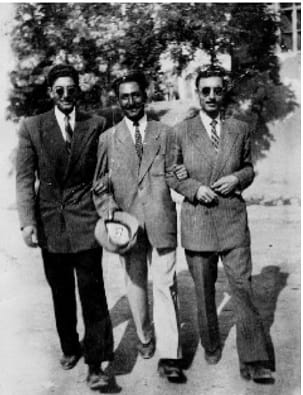
MECİT HUN'S BIOGRAPHY
Mecit Hun was born in May 1925 in the Ağrı Mountains – Guhıra-EvdiAğa plateau. His father was Ahmed Şemo, leader of the Gêloî tribe; his mother was Fatma Hanım, daughter of Ali Mirze Bey. He belonged to a family of eight children, including the only daughter born to his stepmother Zeyno (Zeynep) Hanım. His siblings, in order of age, are Susan, Gurci, Hamit, Cemile, Mecit, Seyran, Gulizar, and Almas. (Zeyno Hanım's father, Derbaz Ağa, is a first cousin of Kinyas Kartal, former Van Deputy.)

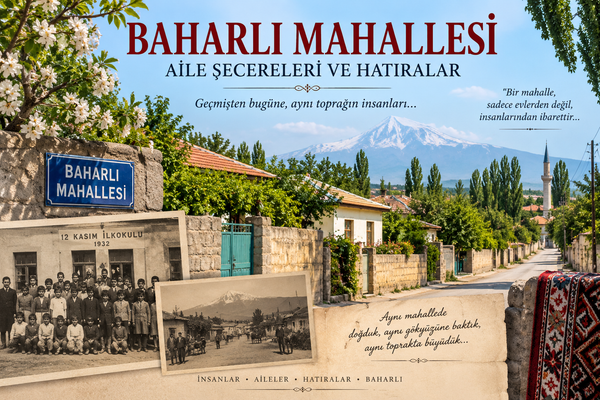
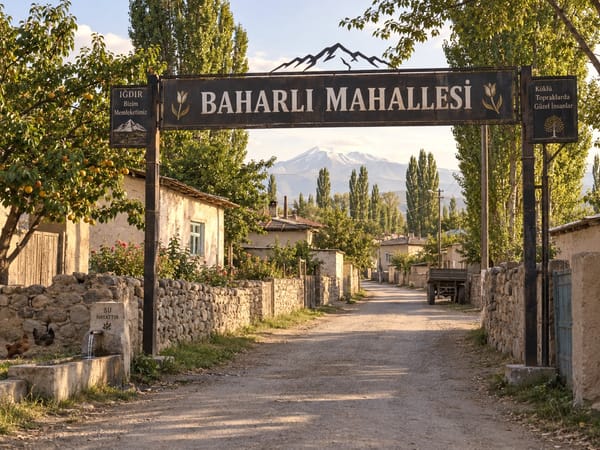
When his family's settled village of Adetli was declared a forbidden zone due to the Ağrı Mountain Rebellion, Ahmed Şemo settled in Baharlı Neighborhood (1930). Mecit Hun started 12 Kasım Primary School in 1932. He finished primary school with excellent grades. In 1940, he graduated first from Iğdır Middle School with excellent grades (the middle school had two graduates that year in its regular term: Mecit Hun and Hamit Çiftlik). He continued this success at Erzurum High School, graduating first in 1943 with excellent grades. He wished to study at the Faculty of Law. Fate did not permit it. In the autumn of 1943, he worked as a Mathematics and Physics teacher (assistant teacher) at Iğdır Middle School. When his father passed away in the spring of 1944, the responsibility of "Konerêş," meaning tribal leadership, fell upon him prematurely, and he gave up on going to university. He completed his military service.
In the autumn of 1948, Mecit Hun returned to Iğdır Middle School as a substitute teacher. In the same year, he started working as a Sales Manager at Zirai Donatım (Agricultural Equipment). There, he met Cezmi Öztekin, with whom he would later publish a newspaper. In the spring of 1949, he got engaged to Naciye Hanım, the third daughter of Mehmet Kakioğlu from Bitlis. They married in September of the same year.
PHOTO: Mecit Hun at Zirai Donatım
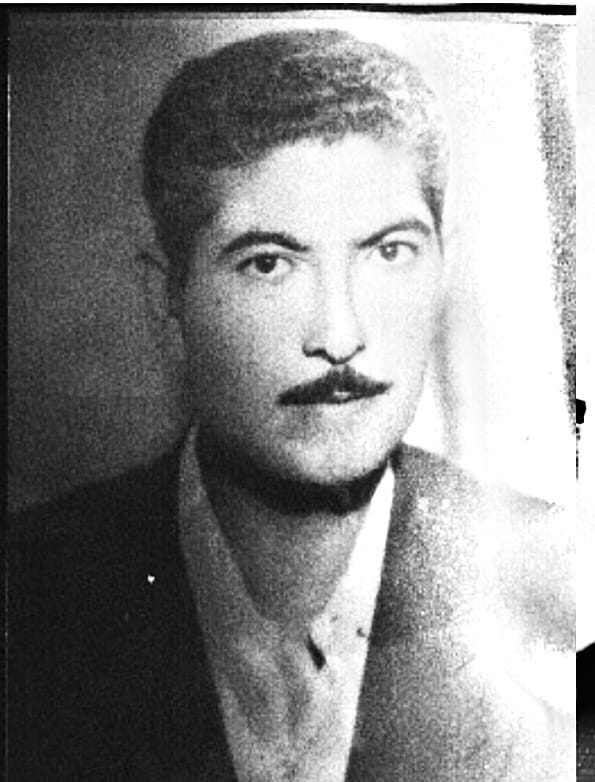
In 1950, he left Zirai Donatım. He became the founding District Chairman of the Millet Party. Together with Nurettin Kirman, he worked as a "controller" at the Cotton Agricultural Sales Cooperative. He developed an interest in journalism, publishing the newspaper DİL (Language) in October 1952 using a duplicator. Simultaneously, he published the humor newspaper FIRILDAK (Pinwheel). On February 16, 1953, together with Cezmi Öztekin, he launched the newspaper ŞARKIN DİLİ (Language of the East) using a pedal-operated press, and on July 30, 1954, the newspaper PAMUKOVA.
Mecit Hun was the District Chairman of the Millet Party in Iğdır between October 1950 and January 1953. When this party was closed, he joined the DP on October 25, 1954, but his active membership lasted only until December 1954. He disagreed with the party leadership and left, continuing his political struggle along the lines of "Independent Democrats."
In 1958, he joined the CHP as vice-chairman, where Musa Turan was the district chairman. In October 1959, he became the CHP Iğdır District Chairman. He continued this duty until 1980 (Aziz Güney was chairman for a short period).
Mecit Hun also actively participated in local elections. In the mayoral and council elections held in November 1955, he formed an independent list with Fazıl Baykal, and they won the elections. Mecit Hun was the vice-mayor during Fazıl Baykal's term as mayor. Mecit Hun's membership in the council and executive board continued uninterrupted until 1980.
In the 1963 local elections, Mecit Hun and Hüseyin Akbulut ran against each other for mayor. Hüseyin Akbulut won the elections. In the 1977 general elections, he became a candidate for Kars deputy but lost in the primary election.
The 1980 coup, like for many politicians, disrupted Mecit Hun's political career, and his difficult years began. From this date until his death, Mecit Hun felt obliged to guide politics from the outside and draw the general framework, rather than conducting it firsthand. (In the 90s, with the lifting of the ban on the CHP, he took on the responsibility of organizing the party as the Iğdır CHP Provincial Chairman.)
Mecit Hun's business life had its ups and downs. In 1954, the flamboyant "Hunoğlu Manifatura" he opened with his brother Hamit Hun lasted less than a year, going bankrupt and closing down. He worked as a catering contractor for the military with Paşa Turan; in 1967, he had a short-lived club management experience with Aziz Güney and Paşa Turan. In 1969, he opened Piknik Patisserie, which also closed in 1977.
Mecit Hun's most important commercial venture was the export activity he undertook with the multi-partner Ararat Company. This company, partnered with Medet Serhat, Aziz Güney, Şevki Alagöz, and Bekir Can, started in 1974 with the export of apples from Bursa to Iran. However, disagreements arose among the partners, and this important venture fell apart, with Mecit Hun being the first to leave. In the same years, we should also mention the HAYKO (Livestock Cooperative) initiative, which also ended in failure.
Mecit Hun moved to Ankara in 1992 and resided there until his death on January 29, 1998. His grave is in Karakuyu village, Iğdır. He was a father of six children, two of whom were girls.
Mecit Hun began writing his memoirs in Ankara starting in 1995. Due to his untimely death, the book remained unfinished on the typewriter. His 30-page memoirs were published in the book Iğdır Sevdası.
AHMED ŞEMO'S APPLE OF HIS EYE
From the day Mecit Hun started 12 Kasım Primary School in 1932, he was the apple of his father's eye because his grades were excellent, and he was the best in his class. As Mecit Hun wrote in his memoirs, he learned Turkish in primary school. His father, Ahmed Şemo, was illiterate. While the Gêloî tribe, which he led, dispersed to villages like Karakuyu, Taşlıca, and Aliköçek, Ahmed Şemo settled in Baharlı Neighborhood with his father-in-law Ali Mirze Bey. He adopted a semi-nomadic life, spending summers in the highlands and winters in Baharlı Neighborhood.
Ahmed Şemo was extremely curious about world affairs and news. In those years, newspapers from Istanbul would arrive in Iğdır, even if only 2-3 days a week. Ahmed Şemo would bring the newspapers home under his arm. When it was time to rest, Ahmed Şemo would sit on the floor cushion and call his son Mecit to his side. He would ask him to read the newspapers aloud. While Mecit Hun read the newspapers, Ahmed Şemo would not neglect to interject his own opinions. This continued for several years. One day, Mecit Hun respectfully complained to his father: "Father, you already accurately predict what is written in the newspaper and what is happening, why do you make me read it?" Ahmed Şemo smiled: "My son, when you read aloud, your Turkish will improve, and you will gain oratorical skills. God willing, my son will be a powerful orator like his grandfather Mısto Şexali!"
Ahmed Şemo allocated one of the rooms to his sons Hamit, Mecit, and their classmates: Aziz Güney, Mehmet Hun, İsmail Ağırkaya, Paşa Turan, and others were regulars in this room. When evening came, the children studying in primary school would lie packed like sardines on the floor mattresses. Ahmed Şemo would occasionally send his daughter Seyran into the room to bring him information. Seyran would report: "Father, my brothers Mecit, Aziz, and İsmail are studying. My brothers Hamit and Mehmet are joking, and my brother Paşa is laughing at the jokes."
One day, an unpleasant incident occurred. The children lay down on the floor mattress in the order of Mehmet Hun, Aziz Güney, Mecit Hun, İsmail Ağırkaya, Hamit Hun, and Paşa Turan. In the middle of the night, Mehmet Hun couldn't hold it and wet himself. When he woke up in the morning, he realized what had happened. He was filled with shame. As he pondered how to get out of this situation, a good idea came to him. He went to the other end of the bed. He pushed Paşa Turan, making room for himself. Sleepy Paşa Turan pushed Hamit Hun next to him, Hamit Hun pushed İsmail Ağırkaya next to him, and then Aziz Güney ended up on Mehmet Hun's wet mattress. When they woke up in the morning, even though Aziz Güney swore a thousand oaths that he hadn't wet himself, the shame remained with him.
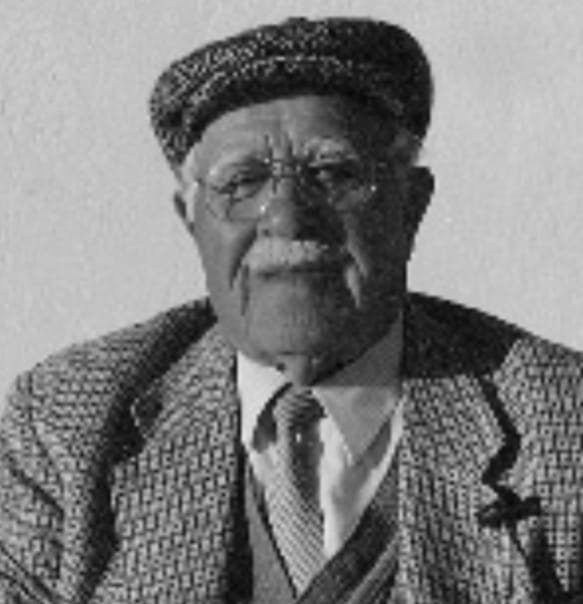
İSMAİL AĞIRKAYA NARRATES
"MECİT HUN BECAME DISTRICT GOVERNOR"
Mecit Hun was a very successful student during his primary and middle school years. His diligence and intelligence were legendary among teachers. I can never forget one academic year. Mecit Hun was one grade ahead of me, a fifth-grade primary school student. The Iğdır Liberation Day was being celebrated with ceremonies. Just as a primary school student symbolically sits in the President's chair on April 23rd, it was decided to seat Iğdır's most successful primary school student in the District Governor's chair on Liberation Day. The teachers unanimously chose Mecit Hun. Mecit Hun, with a serious demeanor, sat in the District Governor's chair and performed this duty for a short time. Among the people, this event was praised for a long time, saying, "Ahmed Şemo's son Mecit became the district governor."
***
Mecit Hun is lucky. The year he graduated from primary school, the Middle School in Iğdır had opened a year earlier. There is a four-year age difference between him and his older brother Hamit Hun, but his brother is one year ahead in school. Mecit Hun continued his success as a super student in Middle School. Süheyla Odoğlu, daughter of his classmate Nağı Odoğlu, describes Mecit Hun in a memoir from those years:
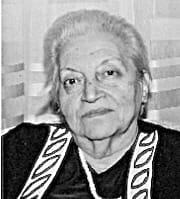
SÜHEYLA ODOĞLU KARAPOLAT NARRATES
MY YEARS AT IĞDIR MIDDLE SCHOOL
I was slowly getting used to provincial life, stumbling along. Leaving behind the disciplined and splendid education of the French Girls' High School to attend a provincial primary school suffocated my soul and choked me. I finished primary school, but there was no middle school I could attend. The person most saddened by this situation was my father, who paid special attention to his children's education. Since the idea of "Iğdır for a few years" was now behind us, my father took the matter seriously and rolled up his sleeves to open a middle school in the town.
He made efforts at the provincial level. When he got no results, he sent letters left and right, asking for help from his friends in higher positions. To leave nothing to chance, he telegraphed the Minister of National Education, Hasan Ali Yücel. All his efforts and struggles were not in vain. The following year, Iğdır Middle School was opened with a ceremony. I started middle school in 1937.
With time, I was adapting to the simple yet sincere and colorful life of the province. My classmates were also cheerful and playful children. In our class, there were 64 students, four of whom were girls. The names of the girl students are still in my mind today: Vecihe, daughter of photographer Sadık Bey, Fürüze, and Nihal (Niş). Among the male students, those I remember are Mecit (Hun), Dadaş, and İbrahim. (My classmate Nihal Niş was the daughter of Kemal Niş, who came from a military background, and also the niece of Necdet Niş, the coach of Fenerbahçe club.)
MECİT BEY'S LOVE FOR "PALM TREES" (Süheyla Odoğlu Narrates)
I was in the same class as Mecit Hun at Iğdır Middle School. Mecit Hun was an unusual student. I witnessed this on many occasions. However, there was one incident I witnessed in class one day that completely astonished me. This event, which describes the interesting inner world and imagination of a student born and raised in a small, remote town in Eastern Turkey like Iğdır, remained a question mark in my mind for years. The incident was as follows:
We were in Turkish class in the last year of middle school (1940). Our teacher had given the class a composition assignment. The topic was free, and anyone could write on any subject they wished. Everyone frantically tried to scribble something with all their might. A few days passed. Our Turkish teacher entered the classroom with a stack of papers in his hand. He called Mecit Hun to the blackboard, handing him the composition Mecit Hun himself had written:
"My child, read it aloud!" he said.
As Mecit Hun read, I was startled by a strange feeling. How could I not be! This young boy was describing Hatay in the composition he had written, talking about the beauty of the palm trees there and I don't know what else! The classmates didn't understand anything. Because in Iğdır, not only were there no palm trees, but people didn't even know such a tree existed. To be able to write such a composition in a period when contact and communication with the outside world were very difficult seemed astonishing to me.
I had heard about palm trees in French school and in family conversations, and I had read about them in books. I was aware of their existence. But what about this young man? At that moment, I thought for a long time: "My God, what thought and longing is igniting Mecit's mind?"
Mecit Hun had a special interest and talent in mathematics. Many times, I would get up from my front-row seat and sit near him, benefiting from his knowledge.

PAŞA TURAN NARRATES:
MY PRIMARY AND MIDDLE SCHOOL YEARS
I was enrolled in kindergarten in Yerevan. Every day we learned one lesson in Russian and one in Armenian. When I came to Iğdır, they registered me at 12 Kasım Primary School. I was in the same class as Hamit Hun. In fifth grade, I failed. This time, I started studying in the same class as Mecit Hun.
Iğdır Middle School opened in the 1936-37 academic year. Mecit and I registered for the 1937-38 academic year of the Middle School. I was in class 1-A with student number 4. Mecit Hun was in class 1-B with student number 48. We studied for three years without any problems. However, in the final year, we fell victim to the elimination exam system newly implemented by the Minister of National Education, Hasan Ali Yücel. According to this, students had to take a three-stage elimination exam. Anyone who failed one of them automatically failed the year. That year, Iğdır Middle School had two graduates: Mecit Hun and Hamit Çiftlik.
In those years, report cards were given out three times. Mecit Hun would get his best grades in the last period. The reason for this was that Mecit Hun's family was very large. He couldn't prepare well for his lessons during the autumn and winter. In the spring, when his family went to the summer pasture, Mecit Hun would stay at the house of Esat Ogan, one of his Azeri kirves (godfathers), until school ended. It was during this last period that Mecit Hun would get the highest grades in class, raising his annual average.
After Mecit Hun graduated first from Middle School, he wanted to enroll in Kars High School. However, due to a mistake his older brother Hamit Hun had made a year earlier (he slapped the principal), Kars High School refused to enroll him. Mecit Hun was forced to go to Erzurum High School.
***
Dear readers!
As his classmates stated above, Mecit Hun graduated first from primary and middle school. He continued his education at Erzurum High School. In 2000, I found and interviewed his living classmates from Erzurum High School. First, I would like to give the names of a few of his classmates from Erzurum High School:
1. Prof. Dr. Şerafettin Turan: Dean of the Faculty of Language, History, and Geography / Founding President of the Atatürkist Thought Association
2. Prof. Dr. Mustafa Parlar Professor of Mathematics (There is a bust in his honor in the METU garden as he was one of Turkey's most important mathematicians)
3. Ali Rıza Uzuner Former Minister of Labor (1971-73)
4. Sait Erdinç Former Van Deputy
Dear readers!
I am now presenting the accounts of Mecit Hun's classmates, former Minister of Labor Ali Rıza Uzuner and Prof. Dr. Şerafettin Turan, in order:

FORMER MINISTER OF LABOR ALI RIZA UZUNER NARRATES
MY CLASSMATES
Among my classmates, to whom I was deeply devoted, I can recall the following:
MECİT HUN: Mecit Hun was an extraordinary person. He had a welcoming and trustworthy side. People with that kind of character are very rare. He had a special place in all our hearts. I was a scholarship boarding student, Mecit Hun was a paying boarding student. His family's wealth was evident from his clothing. He dressed well. His money arrived regularly. In winter, he always had a beautiful coat that he never took off. I would look at that coat with envy, and sometimes jokingly say, "Mecit, let's cut this coat in half. Give me a share too!" Mecit was a very successful student. He didn't overexert himself. He passed his classes without any trouble.
Mecit Hun's social side was dominant. He had a wide circle of friends. He helped his friends, but he did it discreetly. There were many very poor and orphaned students among us. They didn't even have money for a cup of tea. When we went to the coffee shop, Mecit Hun would pay for their tea in a way that wouldn't hurt anyone's pride. I even had the impression that he secretly gave money to poor friends without our knowledge.
After high school, Mecit Hun and I would correspond and sometimes meet to catch up. During my years as a minister, I visited Iğdır and chatted with Mecit Hun.
We were able to meet only twice in Ankara. There was great respect and love for Mecit Hun among politicians from the Eastern region.
ŞERAFETTİN TURAN: It was clear even then that Şerafettin Turan would become a good historian. He constantly read history books, and we would tease him, "Why are you reading?" We separated when he studied in the Literature department in his senior year of high school. Mecit Hun and Şerafettin Turan were very good friends. They always walked side by side.
SAİT ERDİNÇ: He was a colorful and lively friend. His conversations were always enjoyable.
MUSTAFA PARLAR: Mustafa Parlar became a very successful mathematics teacher in later years. He served for many years in the Mathematics Department at METU. A bust stands in the Faculty today in his memory. The strange thing is that Mustafa Parlar, who became a renowned mathematician in later years, had failed physics in high school. Our physics teacher was the high school principal's wife. She was bothered by Mustafa's slouching posture and his not-so-sympathetic (!) facial expression. From the moment she entered the classroom, she would "pick on" Mustafa, and as if that wasn't enough, she would hit him on the head with the book in her hand whenever she had the chance.
ŞEVKET ÇELİKKANAT: Şevket Çelikkanat was from Siverek. He was a diligent friend. Since he was older and bigger than us, he took on the role of class representative. I ate çiğ köfte for the first time from Şevket's hand. He prepared çiğ köfte with his own hands in the physics laboratory and threw a food party for the class. After graduating from ITU Mechanical Engineering, Şevket joined the General Directorate of Highways. One day, a dispute broke out between two engineers at the Antalya Regional Directorate, and Şevket, who intervened to separate them, was hit by bullets and lost his life.
MUSTAFA BIÇAKÇI: He was one of our youngest. He studied at ITU with a scholarship from DarülŞafaka.
MAHMUT NEFESOĞLU: Mahmut Nefesoğlu from Giresun worked as an architect in Ankara.
SABRİ YALÇIN: Graduated from ITU Faculty of Civil Engineering.
HASAN ERK: Served as a principal at Ankara College.
NAHİT TEOMAN: Became an agricultural engineer.
CAHİT YÜCEDİLLİ: He was the child of a prominent family from Erzurum. He got along well with Mecit Hun.
SABİT OSMAN AVCI: Sabit Osman Avcı was tall and well-built. He served as the Speaker of the Grand National Assembly of Turkey in the 60s.
Dear Readers!

Now I will present the narrative of Prof. Dr. Şerafettin Turan:
PROF. DR. ŞERAFETTİN TURAN NARRATES:
OUR MATHEMATICS TEACHER MEHMET KUMBASAR
The greatest pleasure of the group (Mecit Hun included) was solving mathematical problems. Our self-confidence was so high that we not only studied the books of the upper class but also ordered books taught at the Faculty of Science.
Trabzon-born Mustafa Parlar and Siverek-born Şevket also joined our mathematics group. All of us dreamed of studying Engineering at ITU. I was one of those who dreamed of it. Our teacher Mehmet Kumbasar was the one who inspired and instilled in us the love for mathematics. With his calm and polite demeanor, his special interest in the science of mathematics, and his seriousness in answering our questions, our teacher was very important to us.
He belonged to a well-known and wealthy family from Trabzon. (Even today, the 'Kumbasar' family is well-known in the region.) His greatest characteristic was his openness to all kinds of questions, his unique strong reasoning power, and his effective logical deduction. He would calmly write the problems we couldn't solve on the blackboard, step back three or four paces, put his hand on the back of his neck, think for a moment, and then with a sudden movement:
"Look, children, this is how it's solved!" he would say.
Our beloved teacher fell ill in the last weeks of the second year of high school. A week later, he passed away. Our sorrow was immense.
Latif Bey from Erzurum Middle School became our Mathematics teacher. He was not proficient in the subjects. To cover up his lack of knowledge, he would pressure us and dislike being asked questions. As if this wasn't enough, I had the impression that he had it in for me in class. I was worried, saying, "If I study with this teacher in the third year, woe is me!"
We had a history teacher from Erzurum named Abdurrahim Şerif Beygu. He was a middle school teacher, but he had educated himself very well. He had researched local history on donkey and mule back, going as far as Ahlat and examining the "Ahlat Inscriptions" on site. He had written the history of Erzurum based on archives and monuments. I also had an interest in history. He must have understood this, because one day our teacher said, "My son, you would make a good historian!" encouraging me to study history. When my disagreement with my mathematics teacher also arose at the same time, I decided to study in the literature department in my final year. Mecit Hun and the others continued in the science department.
Two people from the group were preparing for politics: Mecit Hun and Sait Erdinç. In fact, Sait was openly saying even then, "I will be a deputy, you'll see!" After graduating from the Faculty of Law, he entered politics. He was elected mayor of Erciş from the CHP. When he resisted the DP's election frauds and sent a telegram to President Celal Bayar saying, "Despite all your pressures, I won the elections!", he was imprisoned for 1.5 months for insulting the presidency. Sait became a Van deputy from the CHP list in the 1957 elections. In 1960, he was also a member of the Constituent Assembly.
For Mecit, the situation was a little different. I didn't have the chance to go to Iğdır, but I assume that due to regional characteristics (meaning tribal influence), Mecit Hun found it appropriate to enter politics without going to university. He must have relied on his family's influence in the region. (Note: As we will see shortly, the reality is different.)
From the group, Ali Rıza Uzuner from CHP and Rafet Sezgin from AP served the country with valuable contributions as ministers.
Mecit Hun was a unique person. He was very hardworking. He was not quarrelsome, but he knew how to defend his views. He would argue with us, his other friends, and his teachers without raising his voice, and he would carry out his struggle silently but with determination.
Mecit and I would walk arm in arm in the school corridors and garden. Mecit was the tallest in high school. I would seem small next to him. Due to our deep affection for each other, and also this difference in our heights, they had given us a nickname: 'Opposite Brothers'.
***
Dear readers!
Although I interviewed him, I want to include an interesting anecdote from Sait Erdinç, a member of the 1960 Constituent Assembly and Van Deputy, whom I could not include in the four-volume Iğdır Sevdası book, making it three volumes due to concerns that it would be too unwieldy:

"It was the year Mecit Hun and I were together in the second grade. Without a doubt, Mehmet Kumbasar was the best Mathematics Teacher in our high school, and even in high schools across Turkey. He had published books. He was also our Mathematics teacher.
One day, a third-grade student asked his teacher Mehmet Kumbasar an extraordinarily difficult math problem from a Faculty of Science textbook. Mehmet Kumbasar looked at the question, took the chalk, wrote and scribbled, put his hand on the back of his neck, scratched his head, spent the entire lesson on it, but no matter what he did, he couldn't solve the problem. He humbly asked the student who posed the question, 'Please, could you ask this question to Mecit Hun in the second grade!' The student found Mecit Hun during the break, showed him the question, and Mecit Hun solved it in three moves. When the lesson started, the student showed Mehmet Kumbasar Mecit Hun's solution. The teacher looked at the paper, couldn't hide his admiration for Mecit Hun's concise solution, and shook his head meaningfully: 'Mecit Hun is our Einstein,' he merely said. From that day on, Mecit Hun's nickname among his friends became 'Einstein'."
A SPECIAL MEMORY I SHARED WITH PROF. DR. CEVDET KOÇAK
Dear readers!
When I was a student at the ITU Faculty of Electrical Engineering (1978), one of the courses we took was 'Differential Equations', which was Advanced Mathematics. This difficult course was taught by Prof. Dr. Cevdet Koçak, the best Mathematics teacher at ITU. He was a short, lively man. He always had an empty pipe in his mouth. Students, likening the pipe to a bone, had called our teacher "Dog Cevdet" for years. He had accepted this name. In fact, one day when a student objected to the solution of a problem, our teacher jokingly replied, "Dog Cevdet never makes mistakes! Didn't they tell you that?" The class erupted in laughter.
It was impossible to get a high grade from Cevdet Hodja. He was my teacher in the second year. I had no information about his person or his past. I had scored nine out of ten on one of his exams. He had a habit of calling out the name of the student who got the highest grade when he entered the classroom, making them stand up and seeing them. Since I had the highest grade, Cevdet Hodja announced my name as soon as he entered the class. I shivered when I heard my name. I stood up, he looked carefully, and gestured with his hand for me to "Sit down!"
At the end of the lesson, as he was collecting the papers on the table, I was passing by him. "Where are you from?" he asked. When I said, "I'm from Iğdır," his facial expression changed, and considering the similarity in surnames, he asked:
"Do you know Mecit Hun?"
When I replied, "He's my father!" he slammed his hand hard on the stack of papers.
"Your father was my classmate at Erzurum High School. He was our Einstein. Where is your father now, what is he doing?" he questioned me quite a bit. (I learned that day that my father was a graduate of Erzurum High School.)
In an emotional tone, he said, "If he comes to Istanbul, be sure to bring him to me!" He must have remembered his boarding school life at Erzurum High School during the Second World War, because his facial expression changed, his eyes moistened slightly, and his gaze drifted out the window.
He was from Van. He knew Kurdish. After solving difficult problems, his eyes would search for me, and he would jokingly ask, "Raste e?" (Is that right?). Most students didn't understand anything from this word.
NOTE: Prof. Dr. Cevdet Koçak (1925-1991) has a worldwide reputation in the fields of analytical continuation of divergent series, differential equations, and partial differential equations. May God have mercy on him!
***
Mecit Hun graduated first from Erzurum High School. In those years, each university conducted its own entrance exams, but top students had the right to attend any university they wished without taking an exam. Mecit Hun's heart desired to study at Ankara Faculty of Law. However, he experienced the most significant misfortune of his life during university registration.
He went to Ankara to register for university. He settled in a hotel in Ulus (in those years, Ulus was the center of Ankara). He went to the faculty and applied for registration. Since he was the top student in high school, he did not need to take an exam. The lady official at the student office said: "We will send a telegram to Iğdır and request a Certificate of Good Conduct about you. Please come back in two weeks."
(NOTE: In those years, the Certificate of Good Conduct was issued by MAH (MIT). Since MAH, which sided with İnönü in the 1946 and 1950 elections, did not issue Certificates of Good Conduct to some of the Democratic Party deputy candidates, these names could not be included in the DP list. When the DP came to power in 1950, it transferred the authority to issue Certificates of Good Conduct to the Public Prosecutor's Offices.)

In those years, a disagreement arose between Hüsnü Bingöl, the General Inspector of MAH (MIT), and Ahmed Şemo. In fact, Hüsnü Bingöl, who came to Iğdır in 1932, had two individuals or groups among the Kurdish community in Iğdır whom he could not make obey him: Kerem Güneş (or the Güneş family) and Ahmed Şemo. Kerem Güneş and Ahmed Şemo spent a year in the same cell in Erzurum due to the Numan Efendi Murder and the killing of İshak Bey. After being released from prison, both of them always maintained a dignified stance against state pressure.
Hüsnü Bingöl wanted to use them as agents but failed. Hüsnü Bingöl was looking for an opportunity for revenge. Ahmed Şemo was the first to fall into the trap. To put it very briefly, Ahmed Şemo's first wife, Zeyno Hanım, was a cousin of Kinyas Kartal, the leader of the Brukan Tribe settled in Van. One day, a qualified swindler named Ahmet Kartal, a distant nephew of Zeyno Hanım, came to Iğdır. While he was chatting with Hamit Hun at the same table, Eşref Kaya, of Terekeme origin, whom Hüsnü Bingöl was very fond of, also sat at the table.
While they were talking about various things, the conversation turned to money. Eşref Kaya said that he had a lot of money but didn't know how to invest it. When Ahmet Kartal convinced him that buying lambs in the spring, raising them in the summer pastures, and selling them in the autumn would bring ten times the money, Ahmet Kartal took the money and disappeared. Eşref Kaya, who was defrauded, asked Hüsnü Bingöl for help. Learning that Hamit Hun was also at the table, Hüsnü Bingöl filed a lawsuit against Ahmed Şemo in the Doğubayazıt court. The year was 1943. Ahmed Şemo traveled back and forth to Doğubayazıt for a long time by phaeton over the difficult Çille pass in those years.
It was at such a time that the Ankara Faculty of Law Student Registration Office requested information about Mecit Hun from Iğdır MAH. Hüsnü Bingöl sent a telegram about Mecit Hun: "I do not approve of Mecit Hun, whose family is Kurdish nationalist, registering for university. MAH Inspector Hüsnü Bingöl."
Mecit Hun, certain that he would be accepted to the Faculty, bought the first-year textbooks for the Faculty of Law and spent his days studying at the hotel. Two weeks later, he went back to the Student Office. The lady official, with a sad expression, handed the telegram they had received from Iğdır to the student who had graduated first from high school. Mecit Hun glanced at the telegram, his heart sank, he couldn't find words to say, and returned to the hotel. He probably burst into tears, stayed in Ankara for a few more days, and then returned to Iğdır. He told his older sister Gurci, whom he loved and trusted the most, what had happened. Gurci was a sensible and far-sighted woman. "Mecit, right now, our father and Hüsnü Bingöl are not on good terms. If you tell our father that you couldn't register because of Hüsnü Bingöl's telegram, our father will be very, very sad because he loves you so much. Find another excuse!"
Mecit Hun did as his sister said, making up a lie to his father that he couldn't register for the Faculty of Law because there was no room, but that he could go to the Faculty next autumn. He started teaching mathematics at Iğdır Middle School while staying at his godfather Esat Ogan's house. In the spring of 1944, Ahmed Şemo, returning by phaeton from the court in Doğubayazıt, fell ill and passed away.
Mecit Hun wanted to try his luck at university again in the autumn of 1944. One day, the elders of the Gêloî tribe gathered Mecit Hun among them and pressured him to take over the leadership of the tribe. Unable to break the hearts of his elders, Mecit Hun gave up his dream of going to university. He went to the army. (The fear that he would be rejected by the university again due to Hüsnü Bingöl's report also influenced this decision.)

MECİT HUN IN THE MILITARY
Mecit Hun completed his military service as a Second Lieutenant in the Artillery branch in İzmit Gebze and Polatlı between February 28, 1945, and October 30, 1948.
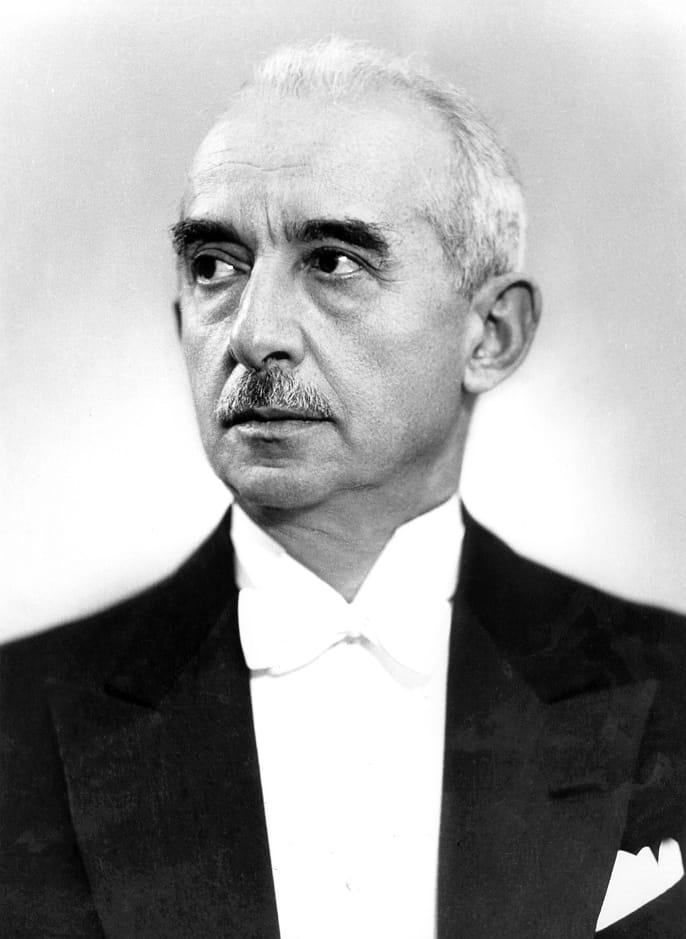
During a visit to the military unit in Polatlı, President İsmet İnönü asked his fellow commanders, "Do you have an officer who is good at mathematics? Our children (the late brothers Ömer and Erdal İnönü) need a good mathematics teacher." Following this request, Mecit Hun spent most of his time at Pembe Köşk (Pink Mansion) giving mathematics lessons to the two brothers. İsmet İnönü's daughter, Özden Toker Hanım, recalls those days:
"A dark-haired, tall young man, whose name I later learned was Mecit Hun, regularly came to our house at Pembe Köşk to give mathematics lessons to both of my older brothers. One day, my mother asked this young man, 'How are the children doing?' Mecit Hun replied in a serious tone: 'Erdal is not bad, but Ömer doesn't get it.'"
AGRICULTURAL EQUIPMENT AND THE MILLET PARTY
After completing his military service, Mecit Hun returned to Iğdır and again took on the role of a Mathematics teacher. Soon after, he became an official at Iğdır Zirai Donatım (Agricultural Equipment), where Cezmi Öztekin was the president. He married the daughter of Mehmet Kakioğlu from Bitlis. In 1950, Mecit Hun was a tenant in Şeyh Xano's house, directly opposite Hüsnü Bingöl's house.
Cengiz Ekinci, originally from Kars and a graduate of Ankara Faculty of Law, chose Iğdır as his first place of assignment immediately after completing his legal internship (1949), and settled in this charming district of the East with his family (late 1949). In 1950, he published a newspaper named IĞDIR. Cezmi Öztekin and Cengiz Ekinci had a great influence on Mecit Hun during these years.
Mecit Hun left Zirai Donatım. He became the founding District Chairman of the Millet Party. At the age of 25, Mecit Hun soon developed an interest in journalism as well as politics. His two sons, Atila and Selahattin, were born in Şeyh Xano's house. In 1952, he became a tenant in the house of Bağır Aras, one of Iğdır's prominent figures, in İdirmava. I was also born in this house in 1958.
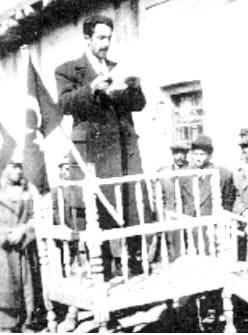
HIS FRIENDSHIP WITH NURETTİN KİRMAN
Nurettin Kirman was the founding District Chairman of the Democratic Party in 1948. In 1950, the Iğdır Public Prosecutor's Office assigned Nurettin Kirman, the DP District Chairman who had gained the trust of the district, and Mecit Hun, the Millet Party District Chairman, as "Controllers (Auditors)" to investigate corruption in the Cotton Agricultural Sales Cooperative (PTSK). This also marked the beginning of an immortal friendship between two idealistic young men, one Azeri and one Kurd.
The two prominent young men of Iğdır were assigned to go to Istanbul together to find and interrogate Eşref Başaran, the former president of PTSK, who was accused of embezzlement. The two friends went to Istanbul together in January 1950. They found and interrogated Eşref Başaran. When the two auditors returned to Iğdır, they prepared a report stating that "he is not responsible for embezzlement" regarding their old friend Eşref Başaran, whom they did not want to be punished. This time, the Iğdır Ziraat Bank Manager filed a lawsuit against Nurettin Kirman and Mecit Hun, accusing them of protecting Eşref Başaran. The trial continued for some time but resulted in an acquittal.
NOTE: Ziraat Bank was responsible for examining the financial files of PTSK. If necessary, it acted as a trustee (temporary president) on behalf of the Ministry of Commerce until a new president was elected.
Soon after, Turkey entered an election atmosphere. On the eve of the May 27, 1950 elections, parties began their platform speeches. Mecit Hun spoke on behalf of the Millet Party, and Nurettin Kirman on behalf of the Democratic Party, dominating the platforms. Politically, they attacked each other. After the two magnificent orators delivered their speeches, they would link arms and go for tea. In a sense, Iğdır became acquainted with democracy and political gentlemanship thanks to these two figures.
THE LATE İSMAİL AĞIRKAYA NARRATES
Nurettin Kirman was a very good orator in his platform speeches. Only Mecit Hun could speak against him. The speaking styles and manners of both were quite different. Nurettin Kirman would say what he had to say like a machine gun, in one breath, and sentences would be more meaningful than individual words. Mecit Hun, on the other hand, would speak slowly and deliberately, emphasizing each word. His speech was more convincing and sensible. We all admired Mecit Bey's oratorical power.

THE LATE ALI YİĞİT NARRATES
Abdürrezak (Güneş) Bey had seen the talent in Mecit Hun and, when necessary, supported him and paved his way. When platform speeches were held, Abdürrezak Bey would close his shop and go to listen to Mecit Hun with a large crowd around him. Abdürrezak Bey's presence in the election square would cause the crowd to become enthusiastic and increase interest in the speech. This interest was instrumental in Mecit Hun's star rising as a new leader and opening his way.
One day, Timur Necilli and Abdürrezak Bey were sitting and chatting. Mecit Hun and Nurettin Kirman were walking arm in arm a little further away.
Timur Necilli:
"Abdürrezak Bey, will ours (Azeri) deceive yours (Kurdish) or will yours deceive ours?"
"With God's help, ours (Mecit Hun) will defeat yours!" Abdürrezak Bey replied proudly.
THE LATE ALI YİĞİT NARRATES
The two powerful orators of the 1950s, Mecit Hun and Nurettin Kirman, despite one being from the Millet Party (later independent) and the other from the Democratic Party, loved and respected each other.
One election day, the two orators confronted each other (1955 local elections). First, Nurettin Kirman took the stage. He spoke harshly against his friend Mecit Hun. After he stepped down, Mecit Hun took the stage. Mecit Hun also delivered a harsh and merciless speech against the DP and Nurettin Kirman, and then descended from the stage, tired. Nurettin Kirman was standing near the stage. Mecit Hun, descending from the stage as if nothing had happened, took Nurettin Kirman's arm:
"My dear Nurettin, let's go have something to drink. We're very tired!" he said.
Nurettin jokingly didn't want to give his arm:
"Heartless man! You've been tearing me and my party down all morning, and now you come and say, 'Let's go have something to drink.'"
The two friends laughed and walked away arm in arm.
MECİT HUN'S DİL NEWSPAPER
DİL newspaper is Mecit Hun's first and Iğdır's third newspaper. DİL newspaper, which began its publication life on July 9, 1952, was printed as a single page using a duplicator. The last available issue (Issue: 130) is dated April 17, 1953. Considering that Mecit Hun published the newspaper ŞARKIN DİLİ on a pedal machine on May 16, 1953, it is understood that DİL newspaper ceased publication in April 1953.
My esteemed elder brother Nizamettin Onk personally handed me 57 copies of the total 130 published issues of DİL newspaper, a generous and appreciative gesture. I considered it my duty to make these valuable documents, which he kept in his private archive for nearly half a century and of which no other copy exists anywhere else, shedding light on a period of Iğdır, available to my readers in their entirety in the book IĞDIR SEVDASI.
DİL newspaper was published twice a week, on Wednesdays and Saturdays, for 14 issues. From October 17, 1952, it met its readers as a daily political newspaper. When Mecit Hun published DİL newspaper, he was the Iğdır District Chairman of the Millet Party. The CHP, which suffered a major blow in the May 27, 1950 elections, seemed to have almost disappeared from the political scene. The Millet Party was organizing the most effective opposition against the DP government. This period was also a time when Nurettin Kirman, the DP District Chairman, and Mecit Hun, the Millet Party District Chairman, confronted each other due to political views, and fierce polemics took place between them.
DİL newspaper opened its pages to writers regardless of their political views. Thus, names like Hamza Mızrak, Turgut Sungar, and Pharmacist Cengiz Sümer joined the newspaper's writing family.
MÜCAHİT'S PRELIMINARY EXPLANATION: When the Ağrı Mountain Rebellion failed in 1930, Kurdish villages in and around Ağrı Mountain were evacuated. The area was declared a forbidden zone. The Gêloî, Gelturan, and some other tribes were most affected by this situation. In a sense, they had nowhere to go. They temporarily settled in villages like Karakuyu and Hoşhaber. The tribes longed to return to their ancestral villages where their forefathers were buried. Mecit Hun, at 27 years old, brought this issue to the agenda in the DİL newspaper.
DİL NEWSPAPER July 12, 1952
THE ISSUE OF VILLAGES IN THE AĞRI FORBIDDEN ZONE HAS BEEN ADDRESSED
BY: MECİT HUN
We are pleased to announce that the investigations and communications conducted to enable the administrative formation of the villages whose prohibition has been lifted in the Ağrı forbidden zone have been concluded, and a delegation, to be formed with the participation of one person each from the Ministries of Agriculture, Public Works, and Health, and the General Directorate of Land and Settlement Affairs, will soon arrive in our district to conduct their final investigations. After determining the road, land, and sanitary conditions of the places where villages will be established by this delegation, a considerable number of inhabited areas will be combined to ensure the establishment of a limited number of villages in accordance with administrative regulations.
Mr. Ahmet Tekirdağ, one of the Provincial Settlement Officers deemed appropriate to join the delegation coming on behalf of the province, arrived in the district a few days ago and has begun his investigations and necessary preparations. We wish success to the incoming delegation and congratulate our esteemed Governor Niyazi Akı for resolving this important issue by showing close interest in this very appropriate initiative.
MÜCAHİT'S PRELIMINARY EXPLANATION: While the Governor of Kars took positive steps towards the return of exiled tribes to their villages in Ağrı Mountain, the District Governor of Iğdır, Hakkı Albayrakoğlu, resisted. Mecit Hun targeted the District Governor. He reminded his readers of the concept of a "Rule of Law State."
Dear readers!
Here, I must open a parenthesis and continue my writing. In the National Library in Ankara, there is a copy of most, though not all, local newspapers since the establishment of the Republic. As it is an area of my interest, I have scanned the local newspapers of all Kurdish provinces, especially Diyarbakır, for the 1940s and 1950s. I encountered an interesting situation. When Mecit Hun's first newspaper, DİL, began publication in 1952, there was no other person, either locally or throughout Turkey, who published a newspaper as a Kurdish intellectual. For example, the first serious local newspaper published in Diyarbakır was İleri Yurt. It began its publication life on August 31, 1959. Its editor-in-chief was Musa Anter. I want to draw your attention to some points I find important, using this as a reference.
The DİL newspaper, an article from which you have just read and will continue to read, began its publication life on July 9, 1952, seven years before the İleri Yurt newspaper. The comparison does not end there. Musa Anter wrote his articles in a Kurdish nationalist and emotional style. In an "emotional" approach, development is not the essence, but rather revenge and settling scores. There is no culture, accumulation, or perspective of defending universal human rights, the rule of law, and the identity and living rights of the Kurdish people within the rules of democracy. Although Hüsnü Bingöl introduced Mecit Hun as "belonging to a Kurdish nationalist family" in his GOOD CONDUCT report, Mecit Hun never based his politics on Kurdish nationalism or the "exploitation of nationalist sentiment," which is the weakest point of the Kurds, throughout his life. Mecit Hun's approach was to believe in the existence of political parties, which are indispensable elements of democracy, and the principles of the Rule of Law, to approach the Republic of Turkey as a whole, and to struggle for the natural and human rights of the Kurdish people, as well as local problems, based on universal values. He had a special terminology and a special perspective. As you will see in the article below, Mecit Hun encourages the Governor, a state official, when he does the right thing, and criticizes the District Governor, also a state official, if he acts unjustly. While doing this, he bases his arguments on concepts such as the "Rule of Law."
SOCIAL DEMOCRACY AND THE KURDS
Dear readers!
Hoping to add depth to the article series, I want to make a brief reminder about Kurds and Social Democracy:
Today, when "Social Democracy" is mentioned, we generally know what kind of government and state form is being discussed. Let's not forget that until before the Second World War, the word "Social Democracy" was mostly used synonymously with "Socialism and Communism." To give an example, the name of Russia's first socialist/communist party was the Russian Social Democratic Labour Party. Lenin was also a member of this party. Later, this party split into Bolsheviks and Mensheviks in 1898.
The birth of Social Democracy in its current sense is after the Second World War. When the Socialist International was founded in 1951, the true definition of modern social democracy was made and entered the political agenda for the first time.
The most important characteristics of Social Democracy are the principles of "Rule of Law" and "Social Justice." In socialism, liberalism, conservative parties, and fascism, these principles are either absent or borrowed from social democracy. (In Turkey, conservative parties like the AKP borrow and use the fundamental principles of Social Democracy, such as the Rule of Law and Social Justice, but since Social Democrats have nothing to borrow from Conservative Parties, they cannot succeed in Turkey.)
Rule of Law means that citizens are equal before the law, benefit equally from laws, and conduct their struggles within the legal framework. There are no problems that cannot be solved within a Rule of Law state. With discussions and the enactment of new laws, the definition of a Rule of Law state gains breadth and depth. Since the problems of each country are different, social democracy may include different laws according to the characteristics of each country, but ultimately it is a universal style of governance.
I would like to examine what kind of picture emerges when the principle of the Rule of Law in Social Democracy is applied to the four-part Kurdistan after the Second World War. When we consider the four-part Kurdistan as a whole in 1952, all the parties in Syrian Kurdistan, Iraqi Kurdistan, and Iranian Kurdistan are either Kurdish nationalist or predominantly Islamic conservative parties. They are unaware of the universal terminology and perspective of SOCIAL DEMOCRACY, which was a rising new political opening in Europe.
In Turkey and the world, the first true Social Democrats of Kurdish origin emerged from among the Kurds living in the Ardahan, Kars, and Iğdır regions, who joined the Republic of Turkey from the administration of Tsarist Russia. I would like to mention a few of these names that I consider important:
- Sırrı Atalay Judge Göle
- Turgut Göle Lawyer Göle
- Osman Yeltekin Lawyer Kars
- Hasan Yıldırım Lawyer Kars
- Mecit Hun High School Graduate Iğdır
These individuals adhered to the concept of "Rule of Law," a fundamental principle of Social Democracy, throughout their lives. None of them changed direction, neither flirting with conservative parties nor prioritizing Kurdish nationalism. Among the second generation of Kurdish intellectuals (born 1935 or later) living in this region, Kurdish nationalism came to the forefront.
It is certain that the Kurds living in the Kars, Ardahan, and Iğdır regions were deeply influenced by Tsarist Russian culture. During the Kurdish rebellions, the Kurds in this region remained silent. Even during the Ağrı Mountain Rebellion, Kurdish tribal leaders who joined the Republic of Turkey from Tsarist Russian rule preferred not to participate in the rebellion. For example, Ali Mirze Bey, Ahmed Şemo, and Kerem Bey (Güneş) did not actively participate in the Ağrı Mountain Rebellion. Similarly, Kinyas Kartal, the leader of the Brukan Tribe, whose ancestral lands were in Iğdır and who grew up with Russian culture, remained indifferent to the rebellions. To further reinforce this example, we can ask the question: What was the attitude of the Kurds of Digor, Göle, Sarıkamış, and Kağızman, for example, during the Kurdish Rebellions? The answer is a resounding NOTHING.
Social Democratic terminology is a new field far beyond the capacity of classical Kurdish intellectuals (Bedirxan brothers, İsmet Şerif Vanlı, etc.). I have reviewed almost all the books and articles written by Kurdish intellectuals living in Europe or the diaspora at the beginning of the 20th century. In these writings, the Kurdish issue was approached from a single perspective. In the Bedirxan family, Nurettin Zaza, İsmet Şerif Vanlı, and others, there is no culture of defining the rights of the Kurdish people and struggling for them within the norms of Democracy or Social Democracy. In all of them, Kurdish nationalism is fundamental. Just as Kemal Burkay (who, despite having deep knowledge of Kurdish history, was the first Kurdish intellectual to prioritize Socialist principles over Kurdish nationalism) was the first conscious and well-equipped Socialist figure when considering all of Kurdistan, Mecit Hun was the first true Social Democrat. The reason for this is that Mecit Hun was the first to articulate and use (in 1952) the concept of "Rule of Law," an indispensable principle of Social Democracy, in written language.
Mecit Hun adopted the principle of the Rule of Law and struggle within the framework of laws, believing that the Kurdish issue could also be resolved within the framework of the Rule of Law. We will later see that many of the 49 Kurdish youths (Naci Kutlay, Fetullah Kakioğlu) who were tried in 1959 published their first writings in Mecit Hun's newspapers. Mecit Hun advocated for the natural and human rights of the Kurdish people to be expressed within Social Democracy, that is, within the state mechanism and democratic rules. He did not resort to nationalist emotional exploitation. He based his approach on logic and coexistence.
If the Kurds had learned the concepts and rules offered by Social Democracy in the 1950s, Turkey could be in a very different place today. However, the unjust arrest and trial for execution of 50 Kurdish intellectuals in 1959 gave the Kurdish Issue an "emotional," that is, "Kurdish nationalist," dimension, and a "Kurdish nationalist and nationalist" understanding based on past rebellions and massacres became dominant.
The second person of Kurdish origin, like Mecit Hun, who adopted the fundamental principles of Social Democracy is Sırrı Atalay. However, Sırrı Atalay, who was elected Kars Deputy from the CHP in 1950, does not have an article or writing containing the principle of "Rule of Law" before 1952. Furthermore, he does not possess Mecit Hun's level of knowledge regarding Kurdish history and the tribal structure of the Kurds. This reality also applies to the other figures on the list. Mecit Hun saw Social Democratic principles as a tool to expand the identity and social rights of Kurds. However, it cannot be said that the other names on the list shared a concern that could meet this expectation of the Kurdish people. Moreover, none of the names in the list above (and I include Hikmet Çetin in this statement) were targets of the PKK's armed actions. Their homes were not bombed. They were not entrapped by martial law officials who falsely claimed they possessed weapons and bombs in their homes. Their spouses were not imprisoned due to political conspiracies. This also shows that Mecit Hun's determined Social Democratic stance disturbed the state and the PKK much more than the other names on the list. Mecit Hun never bowed to either of them and never compromised. His commitment to Social Democracy never wavered in the slightest.
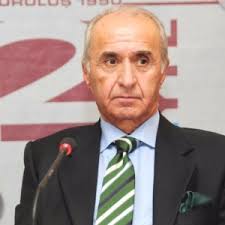
Among the second-generation Social Democrats, Hikmet Çetin from Diyarbakır is a figure of Kurdish origin who adopted the fundamental principles of Social Democracy, similar to Mecit Hun. When Mecit Hun published the DİL newspaper in 1952, Hikmet Çetin was a 15-year-old young man. Moreover, Hikmet Çetin did not have a Hüsnü Bingöl in his life to hinder his higher education. While Mecit Hun used the phrase "Rule of Law" in writing in 1952, Hikmet Çetin's first articles on Social Democracy were published as articles in the late 1980s. In this sense, Mecit Hun is the first figure among 20th-century Kurdish intellectuals to adopt and articulate Social Democracy and prove it in practice. He never compromised on the principle of the rule of law and adherence to laws.
Figures like Celal Paydaş, Musa Anter, Ahmet Türk, Şerafettin Elçi, and Mir Dengir Fırat followed a fluctuating path, oscillating between Social Democracy, Conservatism, and Nationalism. Neither the 49ers Movement nor subsequent Kurdish movements produced a principled Social Democrat at Mecit Hun's level, or at least they did not champion and struggle for the principle of the Rule of Law in newspaper columns in 1952.
Based on his worldview, Mecit Hun, who was 27 years old in 1952, was the same Mecit Hun who passed away at the age of 73 in 1998. He did not compromise on his principles in the slightest. If my readers know of another Kurdish figure who used the terminology of "Rule of Law" in written language among Kurdish intellectuals since the establishment of the Socialist International in 1951, then I can certainly retract this claim. For Mecit Hun, the Rule of Law came first, then Kurdish nationalism. In a sense, he had a vision far ahead of the society he lived in.
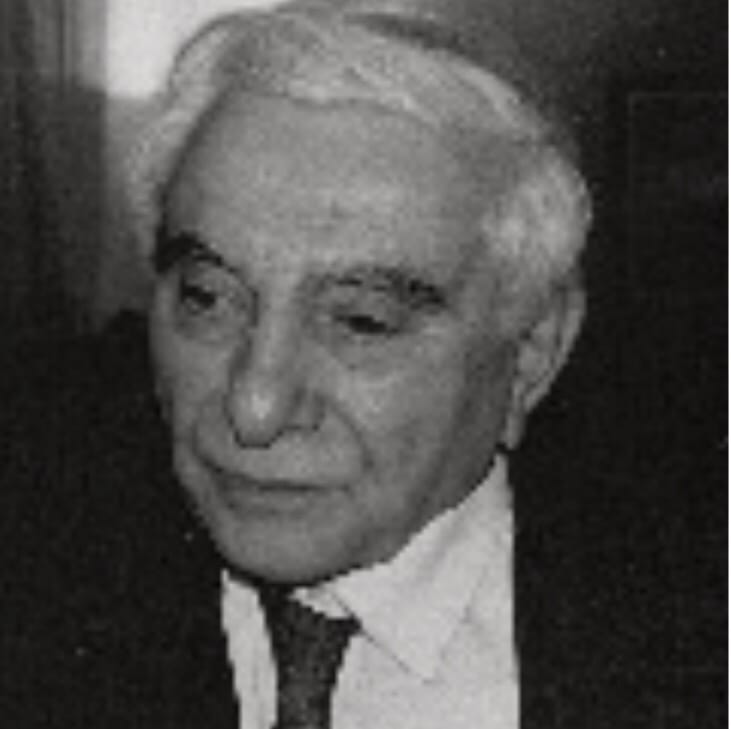
MECİT HUN AS NARRATED BY HAMZA AYGÜN
Ahmed Şemo's soul and spirit were upon Mecit Hun. He always doted on his son, who was always first in his class, and spoke of him with praise, saying "Mecit, Mecit" wherever he went. He did not show the same love and sensitivity to his elder son, Hamit.
Mecit Hun's biggest mistake was not continuing his education after high school. His persuasive ability was extremely high. If he had studied, he could have been a good statesman. Another mistake of Mecit Hun was entering politics from a party that was increasingly losing favor, namely the CHP. Not only that, he tied himself to Sırrı Atalay's political calculations. However, both his family and his own talent were many times superior to Sırrı Atalay's. He failed to put himself forward. May God have mercy on him!
***
DİL NEWSPAPER July 12, 1952
BY: MECİT HUN
Don't be surprised. We have learned that our beloved district governor, Hakkı Albayrakoğlu, by an order he issued, has halted settlement affairs, thereby preventing relevant officials from implementing the laws related to this matter:
Don't be surprised…
Indeed, in a country where law prevails, or in RULE OF LAW STATES like ours, such a thing would not happen, but since there is democracy and since those who enact laws are, after all, human like us. Then it should be possible and natural for a District Governor to repeal a few of the nearly 6000 laws.
And what need is there to implement settlement laws in a place like Iğdır where settlement affairs are going well…
Oh, District Governor…
***
MÜCAHİT'S PRELIMINARY EXPLANATION: Mecit Hun did not pray, but he was not an atheist. He believed in the existence of an absolute power in the universe. He had a secular and lay worldview. He hated the instrumentalization of religion in politics. I have not witnessed him going to the mosque. The Turkish translation of the Quran was always at hand in the library in his room. His knowledge of the history of religions was excellent. He was extremely respectful towards religious scholars.
I witnessed a theological (religious) conversation he had with a famous religious scholar from Bitlis whose name I cannot recall at the moment. When the religious scholar, speaking about the fundamental rules of Islam, implied that Mecit Hun was not fulfilling his religious duties, Mecit Hun remained silent for a while. At an opportune moment, he took the floor. The scholar realized his helplessness in the face of Mecit Hun's knowledge of the history of religions (Judaism, Christianity, Islam, and other religions) and chose to remain silent.
Mecit Hun respected people's religious choices. If there was an inadequacy for worship in society, such as the construction of a mosque, he expressed it as a social need but never exploited religion. Traces of this can be seen in the article below.
DİL NEWSPAPER
BY: MECİT HUN July 12, 1952
THE UNFINISHED MOSQUE CONSTRUCTION
Our Iğdır, described as the pearl of the East, unfortunately has not acquired a mosque in the desired manner to prove that it is a Muslim land since its liberation from infidel (non-Muslim) rule.
I remember associations formed for the construction of a mosque in Iğdır for years, and meetings held through individual initiatives or guidance. But the only work produced by all these activities is a one-meter foundation wall built on the foundations of a demolished church and a project preserved in its file.
Especially in a rich place like Iğdır, and more accurately in a Muslim land, this situation is unforgivable and unbecoming of our people. In Iğdır, where enormous factories and facilities were built through individual initiatives, our mosque construction should have been completed long ago and served as an example to other places.
Our wish is that the friends involved in this work, with their efforts and labor, and our esteemed people, without withholding their valuable support, will collectively bring this work to fruition.
THE LATE ALI YİĞİT NARRATES
NOTE: Halife İbrahim Güneş, born in Kağızman in 1925, was an outstanding personality and religious scholar who strived for the spiritual roots to take hold in Iğdır (Mücahit).
During an election period, Halife İbrahim (Güneş) was visiting Kurdish villages one by one, asking for votes for a relative who was running as a candidate from a right-wing party. Since Kurdish villages had traditionally voted for the CHP, Halife's political move was met with fear and anxiety among us party members. We were not without panic, thinking that the deeply religious Kurdish villagers would vote according to Halife's persuasion.
Mecit Hun received the news with a calm and confident demeanor. "Let Halife do his work as he wishes," he said. It was incomprehensible that Mecit Hun would take such a serious threat lightly.
It was the last day of the election campaign. Mecit Hun called us to him, "Friends, now we will visit all the villages Halife has been to."
Our election tour, which started early in the morning, continued feverishly until late at night. Wherever we went, as soon as the villagers saw Mecit Hun, they would set aside all the persuasions made to them earlier and promise, "Mecit Hun, we will cast our votes as you wish."
When the ballot boxes were opened, it became clear that the villages had indeed voted for the CHP by a large majority. Of course, this result did not please Halife. He felt that his respected authority was being threatened and trampled upon. He went to the city center and caught Mecit Hun:
"I like you, but what you did against me was not pleasant!"
"Teacher, if I had opened another madrasah against you, if I had incited religious scholars against you, if I had collected zakat and fitra against you, you might have been right in your complaint. But I am a politician. This is my profession. On the other hand, Teacher, politics is an unfaithful profession where lies and empty promises are made, where people succumb to their ambitions and jealousies. My wish is that you stay away from this ugly profession. At least let us have a valuable teacher like you whom we can come and kiss his hand, and who can forgive us for the sins we committed in politics."
Mecit Hun loved Halife İbrahim and could not tolerate any attack on his personality. Yes, their paths were separate, but Mecit Hun, after all, had grown up with tribal upbringing; he would protect the Caliph when necessary and show his respect for him.
Once, the Caliph was preparing to go on the Hajj but could not get a passport. There were two days left until the Hajj journey was to begin. As soon as Mecit Hun learned of the situation, he called Sırrı Atalay:
"Our most respected teacher is being forbidden from performing the Hajj. This is a disgrace for us. We ask you to take the necessary steps to get the passport issued as soon as possible."
Mecit Hun went to Kars the same day, brought the passport, and personally handed it to the Caliph.
MÜCAHİT'S PRELIMINARY EXPLANATION: Mecit Hun is the founding District Chairman of the Millet Party. İsmail Gödekli, who joined the DP in 1946, switched to the Millet Party in 1952, forging a political destiny with Mecit Hun. At the party joining ceremony held during a rally, İsmail Gödekli addressed the public from the podium with an effective speech about his joining the Millet Party. As we will see in the article below, political tension and skirmishes emerged in Iğdır as early as 1952 and continued unabated. The late İsmail Gödekli became one of the indispensable figures of Iğdır and Aralık politics with the speech you will read below. İsmail Gödekli, of Terekeme origin, was the most important balancing figure among groups and sects in the Aralık district. (Note: İsmail Gödekli, born in Yerevan in 1909, passed away on March 25, 1975. Today, there is a mosque named after him in the Aralık district. May God have mercy on him!)
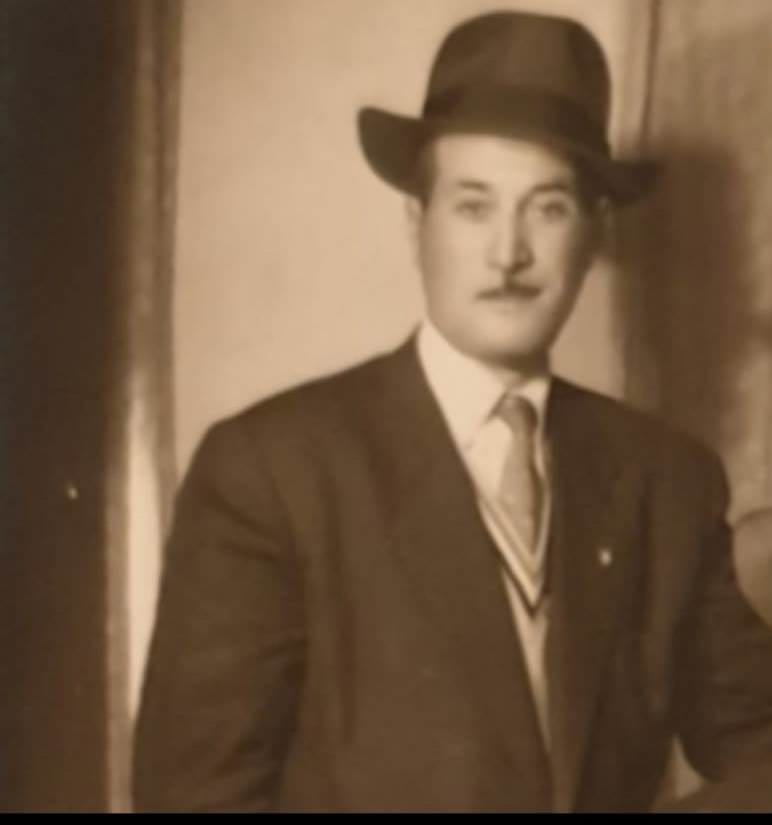
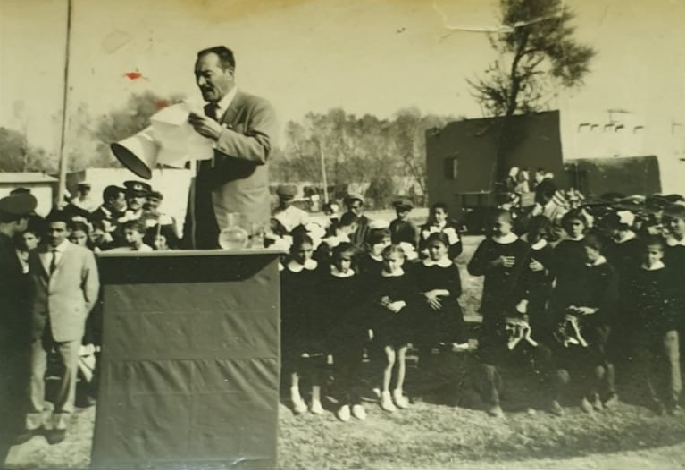
DİL NEWSPAPER July 12, 1952
BY: MECİT HUN
OPENING OF THE MİLLET PARTY'S SÖĞÜTLÜ BRANCH
The Iğdır district executive board of the Millet Party organized an open meeting and speech in the square in front of the Municipality on Wednesday, July 9, 1952, at 5 PM, on the occasion of the opening of its Söğütlü Neighborhood Branch.
The meeting, despite being scheduled for the least active hour of the day, taking into account the summer characteristics of Iğdır, was followed by a large audience until the end.
Mecit Hun, the chairman of the Millet Party district executive board, who made the first speech, explained the goals of the Millet Party and the positive results of its opposition activities, then stated that the DP government was not acting sincerely and continued his words as follows:
"While it was hoped that a multi-party system instead of a single-party system in our country would yield more beneficial results for the nation and the country, the administration established by the Democratic Party today and the policy it pursues have led us to despair. As long as those who come to power from among hesitant political parties do not act in the manner required by multi-party politics, the established administration will produce worse results than a single-party regime.
Unfortunately, the DP, with its course of action, aims to crush and even eliminate the opposition. Opposition parties and the public are deprived of activity under peace and guarantee.
Party cadres will not be able to achieve any other result than preventing our officials from working in peace by constantly keeping them under pressure and forcing them to act according to the party's wishes, thereby laying the foundations of a partisan administration."
After this, Mecit Hun shifted the discussion to the Iğdır DP organization, accusing the DP administrators of sowing discord between their own party members and the general public.
"Our party, which relies on the support of our esteemed people, will always work in the service of the nation," he said, then descended from the podium. When Gödekli (İsmail Gödekli), who was thought to be in the DP until then and was one of the founders of the DP's Başköy sub-district, took the podium, the DP members, initially surprised, did not immediately grasp the significance of the event. However, when they realized the seriousness of the matter, they attempted to create unpleasant incidents, trying to interrupt the speaker from time to time. Nevertheless, he read his speech to the end with complete seriousness amidst applause and public cheers, and the meeting concluded.

The text of İsmail Gödekli's speech is below:
"My esteemed fellow citizens: Today, I sincerely thank all of you on behalf of my party for honoring the opening ceremony of the Millet Party's Söğütlü Branch. Friends, in 1947, in the Başköy sub-district, we established the DP with purity and sincerity, hand in hand with my dear Başköy brothers whom I trusted and believed in their unwavering determination and civic courage, in the DİL region, which is the headquarters of all freedom and courage.
From the day we founded it until the 1952 congress, we worked in this party with great sincerity and harmony. Indeed, I admire the main principles, statutes, and program of the DP. Both the People's Party, the DP, and the Millet Party are sacred to me. I respect all three of these parties and their founders. Since a party spirit and atmosphere, according to our current structure, is living and rising in our country. Therefore, this momentum undoubtedly requires them to march forward, relying on very strong foundations, for the welfare and development of our nation. In this case, it means that parties are performing the most sacred service. However, unfortunately, the new government did not carry this mentality and goal, did not show this existence. It could not fulfill the promises in its statutes and program. It deceived us with gilded words.
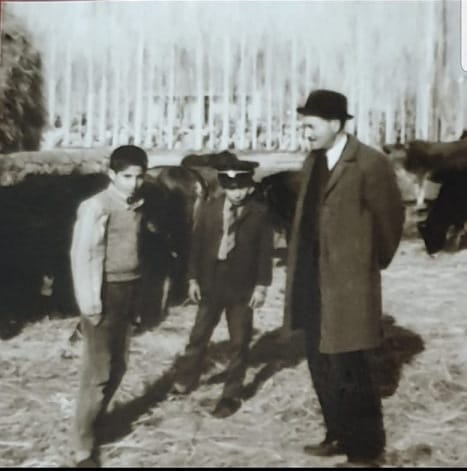
It brought reaction, slander, discord, and unrest to the country. Today, the nation lives in despair, in great disappointment. The incompetent people at the head of the hierarchical organization of the new government, who are responsible for this mercilessness and injustice, are nobodies who pursue the ambition of usurping the interests of the country and the nation. These nobodies, by not complying with the provisions of the statutes, played with and stained the idea of that beautiful virgin statute. In the 1952 district congress, they received votes for a 'bozbaş' (a dish, implying something worthless).
These nobodies, who could not even break Nasrettin Hodja's oath, made Ankara a waterway and claimed and are claiming a share and stake in power.
These nobodies, in their ambition to please Ankara, acted frivolously in newspapers and manipulated the government in this way.
These nobodies, in the 1950 elections, pitted two brothers against each other, abolished partisanship, and engaged in partisan and local politics, thereby gaining positions by exploiting this pure nation. And by later squandering the efforts of this nation, they abused our trust by coveting the jeweled seats of power.
In its speeches on May 14, the ruling party claimed that I and my friends who joined the Millet Party were supposedly expelled from the DP. Those who spread and attributed this sentence to the public are truly dishonorable and characterless individuals. What decisions exist regarding my and my friends' expulsion from the party, and what is the reason? Please explain. I have neither sold a factory nor sinned against this innocent nation, nor have I acquired a factory by pressure, deceiving the government. Nor have I robbed the nation through intermediation in government corridors, relying on their power.
I entered this cause believing it to be an honorable cause. It is because I saw the people and nobodies at the head of this cause that I cannot tolerate these injustices in the new government, and I am leaving the party I worked for continuously for 6 years, and I am joining the Millet Party in your presence. To succeed in these main causes in the country, struggle is certainly necessary. If you review the Millet Party's statutes once, I am sure that you, like me, will despise the actions of the government and consider it a conscientious duty to join the Millet Party to create a strong opposition in the country. I sincerely wish that you too will join the Millet Party."
During İsmail Gödekli's speech, Mehmet Gülten, from the DP Internal District Administration, who was among the listeners, insulted and slandered the speaker. However, since it concerned a personal complaint, the incident was settled without the parties resorting to court.
However, angered by the interest and support shown to the Millet Party and İsmail Gödekli's speech, the Democrats applied to the prosecutor's office, demanding prosecution on the grounds that Gödekli had insulted the government and the moral personality of the party.
Although such a situation was not likely, as confirmed and stated by the political representative present at the meeting on behalf of the government, the Democrats, bewildered by their defeat, resorted to fabrications and slanders with a few DP witnesses they secured at the last minute. However, as a result of the investigation conducted personally by the esteemed Prosecutor and our Chief of Police, the claim was not deemed likely, and a decision of non-prosecution was issued.
Well-thinking DP members, neutral citizens, and CHP members consider this situation suffered by the Democratic Party a defeat and state that the already small number of Democratic Party members will never be able to hold their ground in the Iğdır region after these incidents.

İsmail Gödekli (standing) and Cafer Sadık Tezel (sitting)
On the evening of the meeting, around 9 PM, a fight broke out in front of Fazıl Baykal's casino between Latif Polat, one of the DP administrators, and Ahmet Kumtepe, an extreme supporter of the CHP who made a living as a porter. Although the windows of the coffee shop were broken, the incident was settled without going to court.
TO BE CONTINUED