An Interview with Mücahit Özden Hun, Lover of Iğdır
Mücahit Özden Hun discusses his passion for documenting Iğdır's history, his motivations for publishing and distributing books for free, and his critical perspective on historical narratives, particularly concerning the city's liberation.
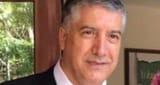

Dear Mücahit Özden Hun,
1-I have been following you closely for years. You collect documents and information that shed light on Iğdır's history, publish books, and distribute them. To do this, you travel between Ankara, Azerbaijan, Iğdır, and Georgia. After publishing the books, you distribute them for free. These books are works that illuminate and document Iğdır's history, leaving solid information for future generations. But you don't earn money; you distribute them for free. In modern terms, this attitude goes against the usual flow of life. What do you say?
First of all, I would like to thank you personally for giving me this interview opportunity. I also wish Iğdır’a Bakış newspaper success in its publishing life. To answer all your questions, I must first explain how everything started. When my late father, Mecit Hun, passed away on January 29, 1998, I was in America. I had already been away from Turkey for many years, having gone to the USA after Belgium and France. I had completed my master's, gotten married, and started my career. I hadn't seen my father for many years. Since childhood, like all my siblings, I never had the chance to chat or talk with my father. There was a serious and respectful distance. For this reason, phone conversations were not satisfying either. When I received the news of his death, I set off for Iğdır. I only managed to arrive in Iğdır on the second day of the funeral. After the condolences, I came to my father's house in Ankara. My father's typewriter was on the table. He had started writing his memoirs. A paper was left unfinished in the typewriter. My father had fallen into a coma due to a brain hemorrhage and passed away in the early hours of the morning. The paper was left in the typewriter. I curiously shuffled through the papers. They were about Iğdır. He had made a long list of names. He was writing about these names in order, bringing these personalities back to life with a simple and fluent style. Until those years, I had not published a book. Only during my years in France had I conducted serious research on a historical figure named Ziryab, learning Arabic and Spanish and researching in Spain, Tunisia, and Morocco. This book was later published in Turkey under the name Endülüs Güneşi Ziryab (Ziryab, Sun of Andalusia). Let's talk about my psychological state at that moment. The loss of my father left a deep void within me. There were about 30 typewritten pages of writing. I started reading. My father's style and humanist narrative touched me deeply. Before returning to America, I put all my father's personal belongings in a cupboard at home for special protection, and I sighed to myself, "I hope one day I will come back and publish at least a 100-150 page book in memory of my father."
I sorted out my affairs in America and came to Ankara in 2000. I planned to spend a few months, publish the book, and then return to the USA. Since I had also attended high school in Istanbul, I had, in a sense, been very far from Iğdır. When I took my father's list and looked at the names, I realized I didn't know anyone. I showed the names on the paper to friends. Most of these names had passed away. I tried to reach their children. This is how everything started with such an innocent feeling and idealism. Soon I realized a reality: there was a colossal task ahead of me. On one hand, untouched subjects and personalities, on the other hand, my own roots, and on the other hand, the people of my childhood were passing before my eyes. It was as if an unknown force was pushing me from behind, saying, "This is your duty! Don't leave without finishing!"
I continued my work in the USA for a while, going back and forth, but I dedicated the entire year 2001 to the book project. I didn't know that my father had worked as a journalist in the 1950s. As I got hold of the newspapers he published, I was more and more affected, and the feeling of spirituality increasingly weighed on me. I was earning very good money in the USA. I had savings. My mother went to stay with my sisters in Germany, so I was alone in the house in Ankara. I could work comfortably. The book was ready in February 2002. I had thought of a 100-page book, but I had a 3000-page book in my hands. Since I didn't want it to be four volumes, I either shortened some sections or set them aside with the intention of publishing them later. Thus, my magnum opus (my most known work), the book Iğdır Sevdası (Love for Iğdır), was published.
I distributed the book I dedicated to Iğdır to my people for free. Not a single penny went into my pocket. In later years, my mother returned to Turkey. I had also divorced my American wife. I didn't want to leave my mother alone. I settled in Ankara but maintained my ties with international consulting firms. One day, while in Moscow for a regional energy meeting, I visited a library. I knew Russian. I had the chance to read and take notes from valuable books about the Caucasus region. As a result, I wrote the book titled ARAS ARAS. This book, like ZIRYAB, emerged from serious research. On one hand, I was earning a little money, and on the other hand, I was saving money to publish books. Some years I skipped summer holidays and continued my work life. After learning Ottoman Turkish, I had the chance to enter archives and work. Currently, I have a total of 15 books. The publication costs of two of my books were covered by my sister Süheyla, and one by my brother Selahattin. I am grateful to them for their help. I must state that I have not earned money from my books. I did not write books to earn money. My sole aim was to convey the history, spirituality, and life stories of the people I love in Iğdır to new generations, and to contribute to Iğdır becoming not an abandoned, orphaned child of Turkey, but rather a cherished city. I want to add an important point immediately: I have no sponsors other than my family. I have never had any relationship with secret organizations, political parties, companies, states, or institutions for the writing or publication of my books.
I am working on a very comprehensive book. It required me to travel to 10 countries. The expenses were covered by my nephew Rabun Aksoy in Germany. I consider it my duty to thank Rabun in your presence. I also don't want to close this section without adding this. Mr. Hasan İlhan, the owner of Alter Yayınları, was carefully following my articles published in Yeşil Iğdır / Doğuş / Iğdır’a Bakış newspapers. One day, he frankly made the following offer: "These articles are magnificent! I want to publish them as a book, with the expenses and five years of copyright belonging to me." I accepted. My books titled Hüsnü Bingöl, Ağrı Dağı İsyanı (Mount Ararat Rebellion), and my latest book IĞDIR 1919 were published with Mr. Hasan's contribution and support. I thank him.

2-In your latest book, IĞDIR 1919, you state that Iğdır's Liberation Day, November 12, was achieved without a single shot being fired, and you present certain information and documents. So, what were all those speeches, plastic bullet war and liberation reenactments during the Liberation Day celebrations until now? Would it have been less important and heroic if they had said that the Armenians, seeing the Turkish army approaching, crossed the Aras River in great haste? And why didn't the old elders, who personally witnessed those days and are living history, object to this show?
I want to answer your excellent question with an anecdote from my childhood memories. It was another Liberation Day ceremony. I was a student at November 12 Primary School. After the parade was over, I came to our patisserie. The holiday crowd and the cheerful chatter of children still filled the streets. The late Şıh Hüseyin Balamir stormed into the patisserie. He was a good friend of my father. He also loved me very much. He sat down at the table angrily: "Son, give me a tea!" he said. The patisserie was packed. Uncle Şıh Hüseyin was sipping his tea and muttering curses at someone in an incomprehensible voice. He turned to the crowd inside: "Tell me the truth, who liberated Iğdır?" There was no answer. Uncle Şıh Hüseyin continued: "Our grandfathers liberated Iğdır! They are now pronouncing names I've never heard from the podium, insulting our past. And no one is telling them to stop!" At that moment, my father entered. He sat at Uncle Şıh Hüseyin's table. My father also asked for a tea. Uncle Şıh Hüseyin asked my father in a voice everyone could hear: "Şıh, where was your father, the late Ahmed Şemo, during the years of liberation? Where was your grandfather, Ali Mirze Bey? Tell them so the people can hear." My father smiled: "Şıh, now lies are profitable, and truths are forgotten. Don't worry!" he merely said.
It was on that day that I first understood there was a rivalry between the Azerbaijani and Kurdish communities regarding the liberation of Iğdır. The political conditions of the time also accelerated this competition. Although important Kurdish figures like the late Enver Güneş, Hacı Cihangir Turan, and Aziz Güney did not care about these manipulations and lies, were not involved in what was happening, and even made fun of them. There was only one Kurdish figure who rebelled against injustice: the late Uncle Şıh Hüseyin.
In later years, especially when I started writing the book Iğdır Sevdası, it became clear how right the late Uncle Şıh Hüseyin was.
Between 1918 and 1920, the real situation in the region was as follows: The Armenian State was established in 1918. The Sürmeli region (Iğdır, Tuzluca, Aralık) was shown within the borders of this state. Tensions between the Muslim (Kurdish and Azerbaijani) population in the region and the Armenian administration increased day by day. The summer of 1919 became a turning point. The Armenians launched a campaign of total annihilation or forced deportation against the Muslim population they could not persuade. Genocide was carried out against the Muslim population through massacres in Oba, Hakmehmet, Kucak, and other villages. During these years, there was not a single Ottoman soldier in the region. Some writers claim that the local people organized and established republics. These are exaggerations and fabrications. Some writers mention such numbers as if these regional republics had 20,000 soldiers... If there had been such military power, genocides would not have occurred, and the Azerbaijani and Kurdish populations living in the plain would not have had to seek refuge in Iranian Azerbaijan and the Ottoman Empire. During these years, there were three main militia forces fighting against the Armenian forces: Şamil Bey in Western Iğdır, Kerem Bey in Central Iğdır, and Ali Mirze Bey in Eastern Iğdır. The true martyrs should be sought among these militia forces. The late Hacı Ali Ekber Tufan had turned Melekli village into a center of resistance. Defenseless Azerbaijani villages either took refuge in Melekli or set off towards Iranian Azerbaijan. The armed forces under Ali Mirze Bey, Kerem Bey, and Şamil Bey were fighting a guerrilla war in the mountainous region. However, Melekli was established on a flat plain. In August 1919, Armenian forces besieged Melekli. Hacı Ali Ekber Tufan was helpless. He went to Ağrı hoping to get help from the Ottoman army but returned to Bayezid province empty-handed. Bıro Heski Telli, a member of the Hamidiye Regiment, with his cavalry forces, broke through the Armenian siege and brought the 3000 people in Melekli to the Erhacı plain. He saved them from massacre. Until 1920, these four figures continued their struggle with great dedication. Still, not a single Ottoman soldier had set foot in Iğdır. Finally, in November 1920, the Hamidiye Regiments in Bayezid province (these were military forces formed from Kurdish tribes loyal to the state, with ranks and salaries paid by the state), the military forces under Kazım Karabekir Pasha, and the militia forces in Iğdır cooperated to besiege Iğdır from all sides. The Armenians asked for a week to evacuate Iğdır. A week later, when the units attacked Iğdır city center and villages from all sides, there was not a single Armenian in front of them. Iğdır was taken empty. The Armenians had cut off the connection by burning the wooden floor of the Malkara (Alican) bridge. The story of Sergeant Mehmet is a fabrication. The aim was to create the impression that Iğdır was taken from the Armenians through clashes and martyrdom and incorporated into the homeland. The plastic bullets used in Iğdır's Liberation Day were actually fired at our own history and reality. Iğdır has been the scene of tragicomic events for many years. The Liberation Day ceremonies and speeches were one of them.
3- During this period, there were Azerbaijanis, Kurds, people from Kağızman, Tuzluca, and Doğubeyazıt who were martyred for Iğdır. Why do you think there was a need for an imaginary imported hero from Çankırı when these people were present?
Some writers seriously put forward the thesis that the Ottoman army could not enter Iğdır territory but assigned three soldiers, dressed them in civilian clothes, and sent them to Melekli with as many weapons and ammunition as they could carry. With the weapons these three soldiers carried and the training they provided, the people of Melekli fought against the Armenians, broke through the Armenian siege, and brought the people to the Erhacı plain. Completely fabricated! Supposedly, one of those three civilians was Sergeant Mehmet. However, the late Hacı Ali Ekber Tufan never mentions such a thing in his memoirs, writing that the people of Melekli were saved with the support of tribal forces. Later, books were written aiming to prove that Sergeant Mehmet came from a village in Çankırı, from a family that had once migrated here from Azerbaijan. Their aim was to prove this: An Azerbaijani liberated Iğdır! Thanks to them, the governors of the time, for some reason, printed these books with their own pictures and introductory texts on glossy paper and distributed them to libraries all over Turkey, thus earning the authors a lot of money. I will address why this happened in the series of articles titled IĞDIR 1945-65, which I plan to publish as a serial in your newspaper soon. In a sense, everything started with the coming to power of the Democratic Party in 1950. Before that date, how and by whom Iğdır was defended was accepted without question. Oh, that Democratic Party era!!
4- Various authors have written that there were 270 people from Iğdır who received the Medal of Independence. I am 74 years old. I have never heard or seen in any source that such a medal was given to anyone or that any of our fellow citizens owned a Medal of Independence. What can you say about this?
The imagination of the authors making this claim is incredibly strong! Each one mentions a different number. After all, fabrication is free! There was only one person with the Medal of Independence in Iğdır: the late Ali Rıza Ataman. Ali Rıza Ataman received this medal because he was a member of the First Parliament. Moreover, although the late Ali Rıza Ataman lived in Iğdır for many years and passed away there, he was originally from Kağızman. His funeral was held in Kağızman. I would like to add this immediately: By a decision taken during the First Parliament, it was decided to award the Medal of Independence to those who participated in the Sivas and Erzurum Congresses and to the members of the First Parliament. Sometimes, among our fellow citizens, opinions such as "my grandfather participated in the Erzurum congress" can be put forward. For this to be true, the family must have been honored with the Medal of Independence.
I want to return to our authors' list of villages that received the Medal of Independence. Firstly, most of these village names do not exist; they are fabricated. Secondly, for some reason, only the names of Azerbaijani villages are on the list. An attempt is made to convey the meaning: Azerbaijanis liberated Iğdır, and the state awarded them the Medal of Independence. Of course, all of these are fabrications and lies.
5- You imply that "the political views of Nizamettin Onk, Ziya Zakir Acar, and similar researchers are clear. Their statements are exaggerated and distort facts, made to appear sympathetic to the right-wing idealist front and to manipulate society." Could you make this more concrete?
If you allow me, I do not want to mention the authors by name in this article. What interests me are the thoughts of our authors and the writings they have penned. The answer to this question lies in the Turanist-Misak-ı Milliist conflict during the Second World War. When the Democratic Party came to power in 1950, the Turanist faction gained strength, seized control of the entire state mechanism, and in this process, incredible distortions were made regarding Iğdır's history. The Turanist faction, organized around Ahmet Ağaoğlu's son Samet Ağaoğlu and daughter Tezer Taşkıran, tried to forcibly instill a new and artificial understanding in Iğdır by gathering certain circles around them. Even Hüsnü Bingöl, who was a Misak-ı Milliist, suffered from this attack, and all files about him were burned and destroyed. As you know, with the book Iğdır Sevdası, we restored Hüsnü Bingöl's reputation and placed him back in his rightful place as an important figure in Iğdır's history.
Hopefully, in my articles that I will publish as a serial in your newspaper soon, I will present this process in more detail to my readers. My biggest contribution so far has been to bring to light the conscious distortions that have been made for years and to pave the way for scientists to research the facts.
6- Is there anything else you would like to add?
I want my fellow citizens of Iğdır to know this: Iğdır cannot make progress without confronting its own past, with its rights and wrongs. When I was writing the book about Hüsnü Bingöl, I went to Koçkıran village. While talking to an uncle whose family members Hüsnü Bingöl had secretly executed at the time, I witnessed that his heart was still filled with fear, even after more than 80 years. It was as if Hüsnü Bingöl would enter through the garden gate at that moment, take the old uncle, and lead him to execution. Iğdır had not had the chance to confront this fear. Similarly, in my books, I tried as much as possible to write about the events hidden in Iğdır's past. In the series titled Democracy Martyrs, I brought to the attention of the reader our martyred values such as the late Nurettin Kirman, Mirze Akıncı, and Hacı Vahap Akar, enabling them to confront the past. Iğdır can step into the future as it confronts its past. If I can contribute to this, how happy I am!
7- Thank you for your valuable time dedicated to me and the history of Iğdır.
Thank you for giving me this opportunity and for allowing me to convey messages that I consider important to my readers. I wish you success in your endeavors.