The Iğdır Creole and Two Writers: Asım Keser and Mehmet Kum
This essay explores the concept of "Iğdır Creole" as a linguistic and cultural hybrid born from the diverse communities of Iğdır, exemplified in the works of writers Mehmet Kum and Asım Keser.

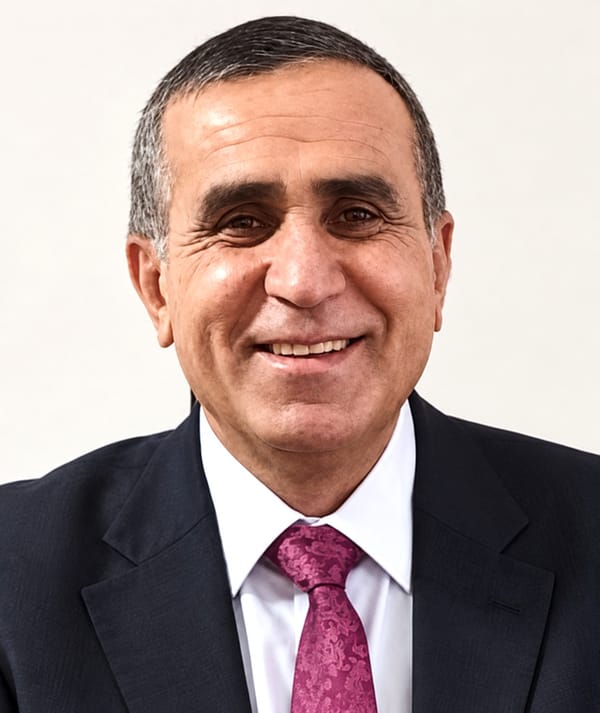
Dear Readers, Languages are not merely tools for communication; they are also mirrors of histories and encounters. When human communities come together in different geographies, a new language and culture often emerge. The concept of "creole" has thus appeared on the stage of history as a product of these encounters. Creole is a phenomenon that particularly arose during the age of colonialism. From the 16th century onwards, when European colonizers settled in Africa, the Caribbean, Latin America, and the Far East, they began to live alongside indigenous peoples. The first generation of colonizers spoke the languages they brought from Europe, while the indigenous people maintained their own languages. However, over time, new generations were born between these two worlds: the children of the colonizers. They were neither entirely European nor entirely indigenous. As this generation, growing up between two cultures, sought its own identity and expression, a new linguistic hybridity emerged. Initially, this hybridity was a simple "pidgin" language formed with borrowed words from different languages. But as generations progressed, this pidgin became the mother tongue of children and evolved into a fully-fledged language. This is when "creole" was born. Today, languages such as Haitian Creole, Jamaican Patois, Mauritian Creole, and Seychellois Creole are the best-known examples born from the fusion of different languages during the colonial process. Creole languages are a mixture not only of words but also of identities. They are the product of forced migrations, compulsory coexistence, and cultural resistance. Therefore, the concept of creole carries a sociological and cultural meaning beyond linguistics: it is a new common identity produced by people from different roots living together. The Echo of Creole in Iğdır In this context, Iğdır also has its own "creole." Of course, it is not a colonial geography in the classical sense, but it is a laboratory where different peoples have come together through migrations and the redrawing of borders, sharing the same table, and shopping in the same market. Azeris, Kurds, Terekemes, Lazes, Ahiska, and Bulgarian immigrants have lived side by side for many years, and in this process, their languages, idioms, songs, and memories have intertwined. The expressions heard on the streets of Iğdır today, much like the creole languages in the Caribbean, are a product of hybridization. Therefore, the phrase "Iğdır Creole" is not just a linguistic definition, but also a symbol of a cultural heritage and a common identity. The Birth of Creole Culture in Iğdır From the 1920s onwards, Iğdır, as a border region of the Russian Empire, became a crossroads of migrations. This small city, incorporated into the borders of the Grand National Assembly in 1920, became a place where different communities reshaped themselves. Karapapaks (Terekemes), Azerbaijani Turks, and Kurds settled in Iğdır through voluntary or forced migrations. In later years, Bulgarian immigrants were added to this migration saga in 1938, and Ahiska Turks in the 1990s. Lazes also came from the Black Sea coast, embracing the hopes of a new life in this plain. Every migration brought words with it. The Azerbaijani address "qızım" (my daughter) turned into a warm smile when speaking to a customer in the market. The Kurdish "silav" (hello) became a friendly greeting in coffeehouses. Karapapak argot found its place in weddings and neighborhood chats. A few words from Laz carried the scent of a distant sea to the banks of the Aras River. The language heard on the streets of Iğdır today is not limited to standard Turkish. An Azerbaijani word might appear in the middle of a sentence, a Kurdish suffix at the end. This linguistic hybridity is, in fact, an indicator of cultural hybridity. Iğdır Creole in Literature: A New Reflection In recent years, traces of this cultural hybridity have begun to appear more clearly in the works of writers from Iğdır. Dr. Mehmet Kum, of Azerbaijani origin, and Asım Keser, of Kurdish origin, though coming from different communities, nourish the same vein in their works: the common memory of Iğdır, a new language born from the intersection of peoples. Mehmet Kum and Danabaş Gamber Born in Iğdır in 1964, Dr. Mehmet Kum is a graduate of Atatürk University Faculty of Medicine and currently works as a physician. However, in addition to his medical profession, he has established a strong connection with literature, keeping the memory of Iğdır alive in his stories. His latest book, Danabaş Gamber, is not just a collection of stories, but also an archive of Iğdır's oral culture.
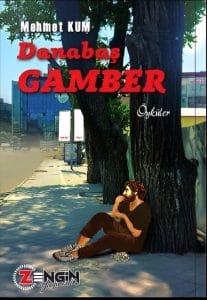
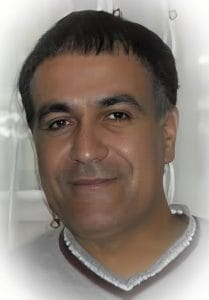
The names and expressions in the book alone reveal the traces of Iğdır Creole: Anahanım, Meşedi, Cafer Emmi, Nazlı Bacı, Guldur (hooligan), Kerim Kirve, Kiro kerê, Yetim Sefer, Nöker, Gur Gotuk, Ağca Hala, Rıtto, Suto, Koturlu İbo, Kilamekî Bêjim, Korhan Yaylası, Molla Kasım, Söğütlü Kahveleri, Bağşo Bey, Danabaş Gamber, Gurumsak, Ölenin Dördü de Kürt’tü Bizden Ölen Yoktu, Tavuklarımıza Kıran Girdi, Berivan, Lotu İdris, Kürt Mehê… These words and names are like a map of Iğdır's multi-ethnic structure. Azerbaijani, Kurdish, Turkish, and local dialects coexist. Mehmet Kum's stories are a literary reflection of the hybrid culture produced by different peoples living together. Asım Keser and Anadolu Güzellemeleri (Anatolian Eulogies) Born in Iğdır in 1968 to a Kurdish family, Asım Keser is a graduate of Istanbul University Faculty of Political Sciences. In his book Anadolu Güzellemeleri, published this year, he similarly brings the traces of Iğdır Creole into literature.
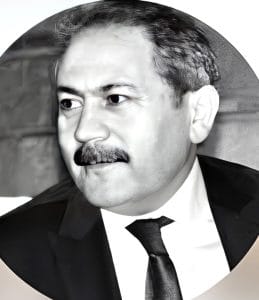
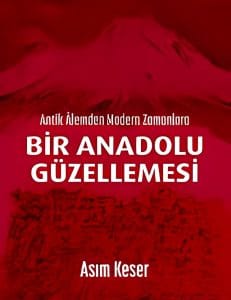
The expressions he uses in his work clearly demonstrate this: Meşşedi, Sürmeli Çukuru, Ağrı Dağı, “Iğdır’ın henüz vilayet olmadığı şu nevzuhur çok katlı beton yığını ucubelerin henüz pıtırak gibi mümbit ovayı işgal etmediği” (when Iğdır was not yet a province, when these newly-emerged multi-story concrete monstrosities had not yet overrun the fertile plain like weeds), Ewdo, Psikfiroş, Melle Abdo, Way malaminêê, Yuhha Dede, Molla Kasım, Gödeh Hesen, Çopur Cabbar, Molla Meyti, Hüseyni Kıyam babında. In these expressions, Kurdish, Azerbaijani, and the local Iğdır dialect are intertwined. On the one hand, he creates a nostalgic atmosphere reminiscent of the Iğdır of the past, and on the other hand, he provides clues to today's cultural hybridity. Conclusion: The Resilience of Creole and Two Dynamic Forces Iğdır has lived for many years under the shadow of ethnic and sectarian tensions. There have been periods when Azerbaijani and Kurdish nationalism sometimes veered into chauvinism, sharply dividing society. This polarizing dynamic still persists and threatens the peace of society today. But at the same time, another dynamic is at work: a dynamic that transcends boundaries with the power of the pen, bringing peoples together in a common language and culture... Writers like Dr. Mehmet Kum and Asım Keser, by carrying Iğdır's multi-ethnic structure into literature with the expressions they use in their works, are actually creating a new common identity. In their lines, the warmth of Azerbaijani, the resilience of Kurdish, and the unique subtleties of the local Iğdır dialect combine to form the "Iğdır Creole." This creole is not just a linguistic hybridity; it is also a cultural project that integrates societies, a written peace-building. While chauvinistic ideologies seek to polarize society, writers like Asım Keser and Mehmet Kum repair the invisible bridges between peoples with the power of the pen. Through the Iğdır Creole, they show that differences are not separation but richness. The future of Iğdır will be shaped by the struggle between these two dynamics. On one side, polarizing ideologies; on the other, integrating pens. If the Iğdır Creole is kept alive and embraced, this small city will not only be a place at the corner of borders but also an exemplary model where peoples can produce a common language and culture.
Therefore, the Iğdır Creole is not just a memory of the past, but also a harbinger of the future. This culture, where languages, idioms, and stories are blended, is no longer the monopoly of only Azeris, only Kurds, only Terekemes, or only Lazes. This hybrid language and culture creates its own roots by drawing from different sources.
And the name of that root is clear: IĞDIRLI (from Iğdır).
This creole culture is inevitably preparing to bring its own identity to the stage of history under the name "Iğdırlı." Because amidst all this diversity, the strongest common denominator is this new identity created by the peoples together. This identity, growing in the waters of the Aras, in the shadow of Mount Ararat, and in the bounty of apricot orchards, makes Iğdır not just a city, but a homeland where differences unite.
Just as Haitian Creole became the name of an identity in the Caribbean, Iğdır Creole is on its way to establishing a similar identity in this geography.