The Iğdır Civil War and Iğdır's Inclusion within the Grand National Assembly Borders
This article recounts the Iğdır Civil War and the region's incorporation into the Grand National Assembly of Turkey's borders, highlighting overlooked historical details and figures.

Dear Readers:
Today marks the 101st anniversary of Iğdır's inclusion within the borders of the Grand National Assembly (BMM). On such a special day, I find it useful to revisit the events of a century ago.
Our Iğdır is an unfortunate place. The true heroes of the Iğdır Civil War have always been overlooked, while unknown names have been brought to the forefront and declared heroes, or continue to be. Unfortunately, it is saddening to see this habit persist with stubborn defiance. Let's take a brief look at what happened in Iğdır:
TRANSCAUCASIAN DEMOCRATIC FEDERATIVE REPUBLIC
While World War I (1914-1918) was ongoing, the Russian Bolshevik Revolution occurred in October 1917. Lenin's order was clear: "This is an imperialist war of partition. We are unconditionally withdrawing soldiers from the fronts."
The Tsarist Russian army had defeated the Ottoman army and advanced as far as Sivas. In 1915, the Ottoman Government forced the Armenians within its borders into deportation, claiming they were collaborating or would collaborate with the enemy (the Russians), and the Anatolian geography was cleared of its Armenian population. (The events during this deportation are a separate topic for discussion.)
As the Russian army withdrew, it left its weapons and ammunition to the Armenian militias who had fought alongside them. Suddenly, in Eastern Anatolia, the Ottoman army and Armenian militia forces found themselves face to face.
The three important peoples of the South Caucasus—Georgians, Armenians, and Azerbaijanis—acted together to establish the Transcaucasian Democratic Federative Republic on April 22, 1918. This Republic was short-lived. The three peoples, united in a federative state structure, quickly reached an agreement among themselves regarding borders.
Once the borders were secured, Georgia withdrew from the Federal Republic on May 26, 1918, declaring its independence. Following this, Azerbaijan and Armenia also declared their independence two days later, on May 28, 1918.
REPUBLIC OF ARMENIA AND THE SÜRMELİ REGION (May 28, 1918 - November 14, 1920)
A new era began in the Sürmeli Region (within the borders of present-day Iğdır province). I would like to inform my readers about the peoples living in the Sürmeli Region on May 28, 1918:
When the Russian army and Russian civilians withdrew from the Sürmeli region with the 1917 revolution, they left behind a population consisting of four different ethnic and religious groups.
- Muslim Sunni Kurds
- Yazidi Kurds
- Azerbaijanis
- Armenians
On May 28, 1918, the villages and settlements of the ethnic groups in Iğdır, Tuzluca, Karakoyunlu, and Aralık were as follows (from Mecit Hun's memoirs):
ARMENIANS: Iğdır center (excluding Iğdırmava and Sultanabat), Alkamerli, Halfeli, Hoşhaber, Hakveyis, Özdemir, Pulur, Yüzbaşılar, Kadıkışlak, Tecirli, Evci villages; Mürşitali, Alican, Taşburun villages of Karakoyun district, and Yukarı Topraklı village of Aralık district;
AZERBAIJANIS: Iğdırmava and Sultanabat neighborhoods of Iğdır center, and Küllük, Çalpala, Bayraktutan, Aşağı and Yukarı Çarıkçılar, Yaycı, Çavuşbahçe, Kasımcan, Kazancı, Kuzugüden, Erhacılar, Melekli, Taşlıca, Sıçanlı, Kundo, Alıköçek, Oba, Sarıçoban; in Karakoyunlu, Karakoyun district center, Bayatdoğanşalı, Zülfikar, Cennetabat, Gökçeli, Kacardoğanşalı, Koçkıran and Şireci villages; in Aralık, Aralık district center, Aşağı Çiftlik, Emince, Ortaköy, Tazeköy, Yukarı Çiftlik and Hasanhan villages;
KURDISH TRIBES: In Iğdır; Asma, Çilli, Gülpınar, Mezra, Örüşmüş, Suveren villages; in Bulakbaşı village of Karakoyun district; in Adetli, Aratan, Babacan, Gödekli, Hacıağa, Karahacılı, Kıraçbağı, Kulukent, Ramazankent, Tarlabaşı, Yenidoğan, Çamurlular, Aşağı Topraklı villages of Aralık district;
YAZIDI KURDS: Resided in Karakuyu, Bendemurat, Karaçomak, Güngörmez, Harmandöven, Nişankaya villages.
There were almost no Armenians in Tuzluca. Yazidis lived in Aslanlı and Sinek villages, while Kurdish tribes and Azerbaijanis lived in other villages.
**
As can be clearly seen from Mecit Hun's memoirs, the four peoples lived intertwined during that period.
Until this date, the Muslim population in the Sürmeli region had not yet faced any oppression or massacre.
Everything changed with the elections held in the Republic of Armenia between June 21-23, 1919. The Muslim population (Sunni Kurds and Azerbaijanis) protested the elections. This was perceived as a blow to the legitimacy of the Republic of Armenia. The Armenian Government decided to clear the Sürmeli region of its Muslim population.
The four ancient peoples of the Sürmeli Region were divided into two: Armenians and Yazidi Kurds on one side, and Sunni Kurds and Azerbaijanis on the other. A brutal civil war began between the two sides.
Until this date, as some have claimed, there was no militia force, committee, or similar military/civil organization in Iğdır. The Sürmeli region was under the influence of the South-Western Caucasian Government and the Aras-Turkish Republics, established in Kars and Nakhchivan respectively. The Sürmeli region sent representatives or delegates to both Republics, but these were of no significance.
From July 1919 onwards, Armenian forces launched a general attack against the Muslim population. The Muslim Kurdish and Azerbaijani populations, whose villages were located in the plain, became targets.
The first target was Kucak village, inhabited by Kurds, established on the border of the Ottoman Empire and Tsarist Russia but affiliated with Tsarist Russia. The entire population of the village (over 250 people) was massacred by having their throats cut. The Armenian forces, without losing time, turned to Oba, Küllük, Hakmehmet, and other Azerbaijani villages, continuing the genocide.
Unable to withstand the attacks of the Armenian forces, the Redkan (Redkî) tribe (the old Çamurlu village, located on the plain side, on the banks of the Karasu Stream) and the 14 Brukan (Brukî) villages, located where the present-day Kazım Karabekir Agricultural Enterprise is, could not defend themselves and sought refuge in Muş and Van, within the borders of the Ottoman Empire.
A large part of the Azerbaijani population took to the roads in desperation to seek refuge in Iranian Azerbaijan (Kaça-Kaç / Kırxın). Some also took refuge in Melekli, the largest Azerbaijani village in the plain. In a short time, the population of Melekli village exceeded 3000. Armenian forces besieged Melekli.
While all this was happening, the tribes whose villages were located on the side of the Karasu Stream towards Kıre (the stony slope of Mount Ararat) formed militia forces with their own means:
The Geloylu militia force commanded by Ahmed Şemo (Hun);
The Redkan (Redkî) militia force commanded by Hacı Tahir (Muçu);
The Gelturan (Gelturî) militia force of Emere Besê (Ömer Bülbül) and İsa (Turan) son of Emere Nevo;
and the Gıskan (Gıskî) tribe militia forces all united under the command of Ali Mirze Bey, the leader of the Gıskan Tribe.
The most important center of the Armenian forces was Taşburun. Therefore, the most difficult task fell to Ali Mirze Bey.
In Central Iğdır, there was the Zilan militia force, centered in Orgof (Suveren), under the command of Kerem and Fettah Beys (Güneş).
In Western Iğdır, there was a Kurdish (Şemkan Tribe and Yüceler) and Azerbaijani militia force, centered in Pernavut, under the command of Şamil Bey (Ayrım).
In August 1919, there was no other armed force apart from the militia forces mentioned above.
The Civil War continued at full speed. The Armenian forces had a definite superiority.
To save the besieged Melekli, Hacı Ali Ekber Bey (Tufan) set out to seek help.
In the November 17, 1954 issue of Pamukova Newspaper, published by Mecit Hun, Hacı Ali Ekber Tufan published his memoirs in his own words:
"I will not speak of the efforts I made and the humble services I rendered in the matter of the awakening of national sentiment and the inclination of the Islamic-Turkish world towards unity after the tension and struggle between Turks and Armenians in 1905. However, I deem it useful to speak of some memories of salvation.
In 1334 (1918), our army withdrew from the Caucasus and Iran, and Division Commander Ali Kemal Bey asked Major Mehmet Bey for 4 people to organize the people.
With Mehmet Bey's approval, Fettah Güneş, son of Hamit Bey, Tayfur (Burukan Tribe's Eli Ağa's son Tayfur Kederli. Mujahid), Ağabey from Melekli village, and I were assigned. It was decided to send a delegation to Yakup Şefki Pasha in Kars to bring officers to organize the people in an orderly manner with ammunition and rifles.
The delegation that went consisted of the late Alieşref Bey (Güneş) and Rıza Bey from Revan. Since Yakup Şefki Pasha could not provide assistance due to the situation at the time, the delegation returned empty-handed, and the disheartened people had to leave Iğdır and go to Iran. The people of Çobankereli and Revan settled in Xoy; the people of Saraşlı, Gödekli, and Ahuralı settled in Karaköse and Erzurum. Of course, we, who were weak, could not succeed in establishing the organization.
Meanwhile, I went to Şeril with my family, and my relatives Esat, Kurban, Medet, and Celil went to D.Bayazıt. After a while, they came and brought us to Doğubayazıt via Iran.
Meanwhile, the Armenians began to oppress Muslims in Iğdır and its surroundings and prepare for massacres, and they had besieged Melekli, the most common refuge for Turks, from the Kire side (from Mount Ararat). At that time, I, along with Tüccar Abbas from Söğütlü Neighborhood, who was a refugee in Beyazıt, went to Division Commander Cavit Bey and explained the situation. After a few days of waiting, they officially informed us that they could not do anything but that it would be useful for us to meet with the tribal leaders. Immediately, we applied to Şevket Bey, who later became the Deputy of Bayezid. Şevket Bey called Sheikh İbrahim Bey, Abdülvahap Bey, and Zorzade İzzet Efendi, and after a short consultation, they decided to rescue Melekli by participating in person. However, since this required Şevket Bey's resignation, İbrahim Ağa, known as Bro Hesso Telli, was sent in his place.
This tribal force inflicted heavy casualties on the Armenians, rescued nearly 3000 Turks, and brought them to Erhacı. At that time, the Armenians had also started massacres. Those who escaped the sword and oppression took refuge in Erhacı.
An officer named Cengiz Bey was establishing an organization in Kerimbeyli, and soldiers were being sent to Bulakbaşı. This new organization also spread to Erhacı, and soldiers were sent to gather the scattered forces there in an organized manner. Hacı Xanlar Bey, Şefi Öcal, Hasan son of Mirza Memet from Melekli, and Hanife son of Ali Hüseyin had great efforts in the organization in Erhacı. They were also collecting provisions. A few days later, the accumulation in Erhacı attacked Iğdır. Although the Armenians, who initially thought this community was soldiers, fled, they later learned the situation and returned to Iğdır. Thereupon, the people in Erhacı had to withdraw to Orgof. From there, they went to Bayazıd and crossed into Iran. Thus, due to both Armenian atrocities and lack of provisions, all the people of Iğdır withdrew to Iran. We mostly settled in Senger, Tazeköy, and Kişmiş Tepe near Hoy. After spending the winter here, we returned to Bayezid. At this time, the Army began preparations for the occupation of Iğdır, and Gündeli Süleyman, along with a few soldiers, accompanied by Cevat Han from Melekli, Yusuf son of Abdullah, and Feyzullah son of Salman, came to Beyazıd.
My brother Eset, Hüseyin son of Bahçeli, and Haşim son of Abbas were also volunteers in the military unit marching on Iğdır. We could not take Iğdır the first time. The second time, with the participation of the Tribal Regiments (Hamidiye Regiments), Iğdır was occupied on November 12, 1920."
**
As Hacı Ali Ekber Tufan states in his memoirs, Bıro Heski Telli (İbrahim Ağa), serving under the Hamidiye Regiment commanded by İbrahim Bey in Bayazıt, came to the aid of the people of Melekli, broke the siege, brought approximately 3000 people to the Erhacı plain, and later helped them cross into Iranian Azerbaijan.
When the Armenians were repelled from the Kars and Ardahan regions, the military forces affiliated with the BMM, the Hamidiye Regiments, and Iğdır's local militia forces cooperated to besiege Iğdır.
LETTER WRITTEN BY KURDISH TRIBAL LEADERS
The Republic of Armenia was established on May 28, 1918. Elections were held in the Republic of Armenia in June 1919. The Muslim population (Azerbaijanis and Kurds) boycotted the elections. Thereupon, Armenian statesmen and notables sent a letter to the Kurdish notables living in the region, asking them to support the Republic of Armenia. This was because the real interlocutors and organized forces they faced were Ali Mirze Bey, Hamit Bey, and the leaders of the Hamidiye Regiments in Bayazıt who supported these local militia forces.
Baron Haçador Ağa, of Armenian origin, also sent a letter to Kurdish leaders in August 1919. The Kurdish notables replied to Baron Haçador Ağa with the following letter:
"Baron Haçador Ağa, I received your letter. Even when Armenians lived a very happy life in the embrace of Islam, they did not refrain from committing all kinds of evil, both hidden and open, for their original intentions, and in this war, they deserted from the front with arms and joined the Russian armies. You cannot deny this. Therefore, there is no possibility of reconciliation between the Islamic-Kurdish nation and the Armenians, whose betrayals are complete and whose intentions are clearly understood.
And for five years (1914-1919), the Kurdish nation cannot unite with the Armenians, who, whenever they found an opportunity to destroy Islam, considered it permissible to kill Muslims with axes and bayonets in a manner contrary to the principle of humanity and to assault Ottoman women. The Kurdish nation, which is ten times superior to the Armenians, cannot and it is impossible for it to come under Armenian protection. Yes; we are also not in favor of bloodshed. But we will prevent your determination and actions to organize the Muslim population, which is your entire hope, with all our might. Armenians cannot gain a majority by massacring the Muslim population in such a barbaric way. Thus, you cannot govern at all. Our peaceful coexistence with you depends on the following conditions:
- Until peace is established, Armenians must cross to the other side of the Aras River.
- They must evacuate the Iğdır region and leave it to the Kurdish nation.
- No Armenian will cross the river until the end of peace. Local Armenians who wish to remain in this region will obey our organization and command.
- Armenians will absolutely not be authorized to carry weapons among us. And Armenian soldiers will not be sent to this region until the outcome of peace.
- The rights, lives, and property of our Muslim brothers remaining on the other side of the Aras River, that is, among the Armenians, will be preserved.
- If these conditions are accepted and implemented, the parties will not attack or aggress and will await peace respectfully. So, Haçador Ağa! Our point of view and our conditions consist of six articles. If accepted, the fire of war will be extinguished; otherwise, it will spread, and the Islamic nation will resort to means of escaping your yoke of slavery and will pray to Almighty God for help. On this occasion, I shake your hands in return, esteemed Hoçador Ağa.
September 4, 1335 (1919) Signatories of the letter:
From the Tribal Chiefs
Also: Hamit Bey
Also: Ali Merze Bey
Also: Ahmet Haso Ağa
Also: Yusuf Ağa
(Source: Kâzım Karabekir Pasha, İstiklâl Harbimiz, volume one, page 378)
Now I want to introduce my readers to the tribal chiefs whose signatures are under the letter:
Hamit (Güneş) Bey: Father of the brothers Fettah, Kerem, Abdurrezak, and Naci Bey.
Ahmet Haso (Konyar) Ağa: Father of the late İsa Konyar from the Doğubayazıt region and grandfather of the late Hüsrev (Xosrov) Bey.
Yusuf (Çekim) Ağa: Leader of the Mala Resê Çelê tribe and brother of Gur Hesso.
Ali Mirze (Yiğit) Bey: Leader of the Celali tribe under Russian rule. Geloylu Ahmed Şemo, Gelturanlı Emere Bese (Ömer Bülbül) / İsa son of Emere Nevo, and Redkanlı Hacı Tahir (Muçu) led the civil war under Ali Mirze Bey's leadership.
As this letter also shows, Ali Mirze Bey and his friends, as stated in article 5, held themselves responsible for the safety of the Azerbaijanis and Kurds on the other side of the Aras River. Ali Mirze Bey and Hami Bey from the Sürmeli Region declared their opposition to the Armenian massacres and genocides that began in August 1919.
OCTOBER 1920
From this point on, I want to quote from Mecit Hun's own column in the November 12, 1954 issue of the PAMUKOVA newspaper, which he owned:
"After the Armenians were completely repelled from the old border (Kars and Ardahan) and pushed into the Iğdır plain and partly across the Aras River, the organizing spirit dominated the entire Aras valley. The Hamidiye Regiments in Karaköse (Bayezid Province) also began to march on Iğdır.
In October 1920, the situation was as follows:
Karakale-Küllük line: Honorary Ayrım units under the command of Şamil Bey (Ayrım), son of Hasanali Bey;
Karakale-Tuzluca line: Hamidiye regiment under the command of Resul Bey, son of Eyüp Pasha;
Küllük-Iğdır line: A cavalry company and 4 cannons under the command of Brigade Commander Abdulkerim Bey;
Orgof-Erhacı-Halfeli line: Honorary Zilan unit under the command of Kerem Bey (Güneş), son of Hamit Bey;
Kültepe-Yarmalar line: Celâli Hamidiye Regiment under the command of Sheikh Abdülkadir (Kotan);
Karakoyun-Taşburun line: Celâli Hamidiye Regiment under the command of İsa Bey (Konyar), son of Ahmet Bey;
Karakoyun-Taşburun line: Celâli Hamidiye Regiment under the command of İbrahim Ağa (Bıro Heski Telli);
Taşburun-Hasanhan line: Honorary Celâli (Geloylu, Gıskanlı, Gelturanlı, Redkanlı and others) units under the command of Ali Mirza Bey (Yiğit);
The local forces on the Iğdır-Taşburun line were reinforced by military units under the command of Firuz Bey, commander of the 17th Regiment, stationed on the Karakoyun hills, and the Saraçlı Hamidiye Regiment under the command of Veli Bey from Gilesor,
İsrafil Bey from Gerger (Retired Chief Physician İsrafil Gökçe) and Hüseyin Bey. Division Commander Cavit Pasha's headquarters was in Orgof (Suveren). The military and local forces, having taken their positions in an orderly manner, waited for the liberation of Kars for a while. However, there were minor clashes. The Armenians, realizing that they could not resist the National Struggle forces, crossed the Aras and defended Iğdır with a small force. Finally, after a 7-day armistice signed on November 5, the Liberation forces, marching on Iğdır from three directions, occupied this corner of the Homeland. Since there were no Armenian military forces in the town, there was no fighting, and thus Iğdır was annexed to the Homeland today, 34 years ago."
Dear reader! As can be understood from the information I have conveyed above, the role of the Hamidiye Regiments in the Iğdır Civil War was decisive.
The Armenians requested a week to evacuate Iğdır. This request was accepted. The Armenians moved their civilians and military forces across the Alican bridge to the Yerevan side. They also burned the bridge. A week later, the forces besieging Iğdır launched a coordinated attack. Iğdır was included within the BMM borders without a single shot being fired. (The claim that someone named Mehmet Çavuş was martyred is fabricated information.)
Between May 28, 1918, and November 14, 1920, there were only the four ethnic and religious groups mentioned above in the Sürmeli region. For example, the British set foot in Kars but did not come to the Sürmeli plain. The Russian army had already withdrawn. The Ottoman army and later the BMM army that replaced it were also not present in the Sürmeli region. The civil war continued with all its intensity and determined the fate of Iğdır.
Unfortunately, disinformation has continued for years. The South-Western Caucasian Republic, established in Kars, and the Aras Turkish Republic, established in Nakhchivan, could neither prevent the genocides that occurred in Iğdır in August 1919 nor participate in the siege of Iğdır (October 1920), because these republics had collapsed by those dates.
South-Western Caucasian Government: Establishment: December 1, 1918. Collapse: April 19, 1919
Aras Turkish Republic: Establishment: November 22, 1918. Collapse: June 26, 1919
As seen above, the two Republics were not in existence during Iğdır's most difficult moment, i.e., August 1919.
Another error is the claim that Kazım Karabekir Pasha personally entered Sürmeli territory at the head of his armies. This is also not accurate information. First, let's look at Kazım Karabekir Pasha's first arrival in Iğdır: In the second volume, page 1236, of the İstiklal Harbi book published by Yapı Kredi Yayınları, Kazım Karabekir Pasha describes his first arrival in Iğdır. This was also the first time Kazım Karabekir Pasha set foot on Sürmeli soil. The date was May 17, 1338 Rumi, which is May 17, 1922. The Iğdır Civil War ended on November 14, 1920. This means that Kazım Karabekir Pasha came to Iğdır 1.5 years after Iğdır's inclusion within the BMM borders.
During the years when the Ottoman Empire collapsed and was replaced by the BMM Government, no other part of the country experienced a civil war. Furthermore, since Iğdır was not shown within the borders of the Misak-i Milli (National Pact), it was the least prioritized region by the BMM forces.
Today, looking back 101 years, the picture that emerges is summarized above. We commemorate with mercy those who were martyred and those who contributed to Iğdır's inclusion within the borders of the BMM Government.
Iğdır, just as it looks back 101 years, should also learn to look forward 100 years. Past events are important, they should be remembered, and lessons should be learned. But what is most important is to make our Iğdır of today a city of peace and embrace the future.
Sincerely,
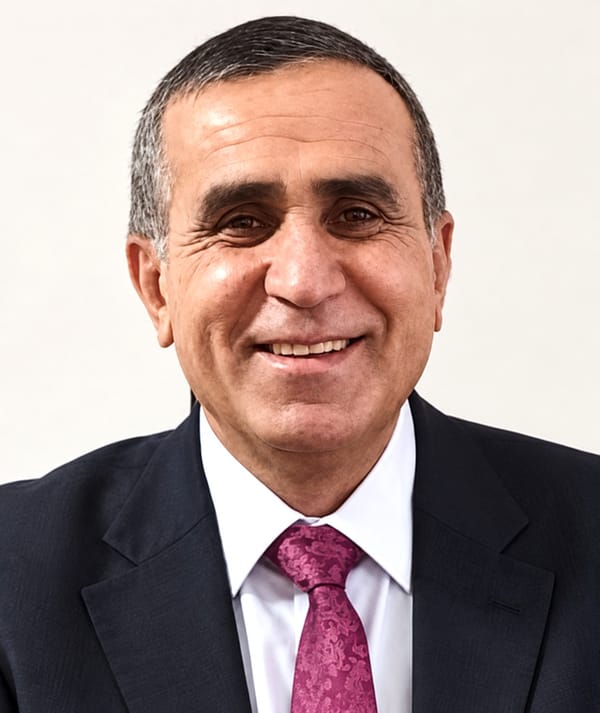
Mücahit Özden Hun