Iğdır's Martyrs of Democracy (1): Nurettin Kirman
This essay introduces Nurettin Kirman, Iğdır's first martyr of democracy, detailing his life, political struggles, and tragic assassination in 1957, and its profound impact on the region.
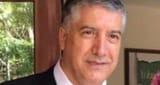
INTRODUCTION
Dear readers! I have planned the article "Iğdır's Martyrs of Democracy" as a series. I initially wanted to cover each martyr individually, but I couldn't find detailed information about some of them. Therefore, in some of my articles, I will present a single martyr, and in others, several together. It is a historical and indispensable duty for us to commemorate our martyrs, who are the pride of Iğdır in its struggle for democracy.
Many murders have occurred in Iğdır's history. Most of these do not have a political dimension. For example, Numan Efendi, Haydar Yüksel, Abbas Çınar, and many others fell victim to "ordinary" murders. I remember all of them with mercy. The phrase "Martyr of Democracy" invites us to a different definition. On one side, there are hitmen backed by political or dark forces, and on the other, civilians who do not compromise their political beliefs and stance.
In this series of articles, I have covered the murders committed in Iğdır. I cannot include the late Bülent Aydın in the list because he was not martyred in Iğdır. He is already a martyr of Turkish Democracy. Similarly, I cannot include my dear brother and fellow townsman Kenan Çatak, who was martyred due to a stampede on Kazancı Slope in Taksim during the bloody May 1, 1977 events. I also remember these martyrs with mercy.
In today's article, I will introduce you to the late Nurettin Kirman, who was martyred in Iğdır. I would like to remind my non-Iğdır readers: The Nurettin Kirman murder occurred in the most remote district of 1950s Turkey, but it deeply affected the soul of the people of Iğdır. This murder is essentially a summary of the political turmoil Turkey was experiencing in those years. There was a fierce struggle, especially among the Azeri community, to seize control of the ruling Democratic Party's Iğdır District Presidency. The late Nurettin Kirman paid the price for this reckoning with his life.
NURETTİN KİRMAN
The late Nurettin Kirman is the first martyr of democracy in Iğdır's history. In my book "Iğdır Sevdası" (Love of Iğdır), I introduced him as follows:
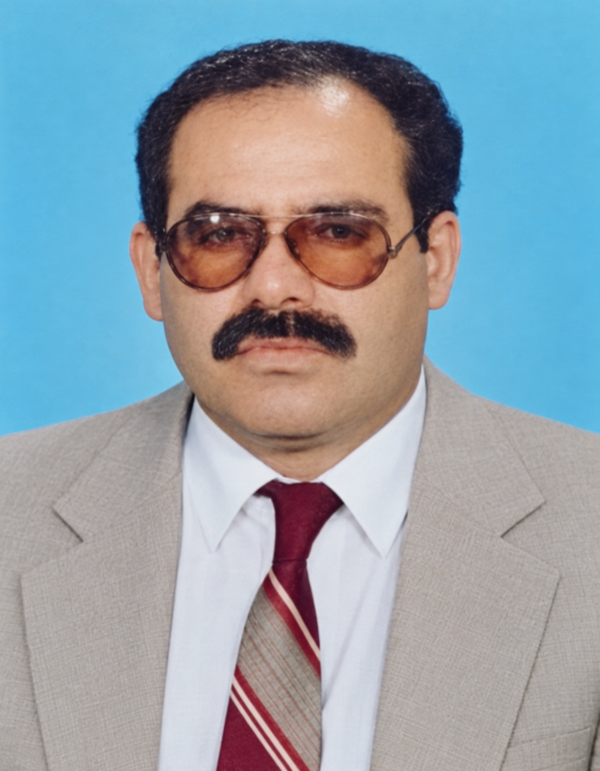
"Nurettin Kirman... 33 years old, tall and slender, with neat, short-cut mustache, wavy long hair combed back, and deep-set eyes in his oval face... Yes, this young man carries the fire of a cause in his heart... The 1950 democracy movement opened new horizons for both Turkey and this young man... The tired and aging imperial generation has extended its torch, waiting for a Republican youth to embrace it. Nurettin Kirman has taken a step and extended his hand. His long, slender fingers are about to touch the torch... This determined and faithful young man became a voice, a cry for the aspirations of his people from political platforms, and his enthusiastic speeches echoed far and wide.
Nurettin Kirman holds the fate of his people in his hands, walking with confidence. He is fearless. He has never liked compromise. His thought and word are one. Unopened doors, resistant old structures tremble before him, questioning this idealistic young man within themselves, 'How far will Nurettin go?' They both love and envy him. His charm and charisma have settled over the people like a cloud.
He leaves every meeting with admirers and enemies behind. This dark-haired young man is a mystery to most people. He shouts new things, full of self-confidence, brave and enterprising... He is the first item on the list in all political calculations. The question 'What will we do with Nurettin?' makes some people think bitterly.
Nurettin Kirman does not like compromise, backing down, submission, flattery, or political self-interest. He pushes them all away with a flick of his wrist. For him, life will be lived once, but honorably. The existence of his enemies, those who envy him, those who cannot stand him, does not frighten him. New identity, new life, new hope, new people... Nurettin Kirman felt these new aspirations, relived these new values in the flow of his blood and every beat of his pulse. Who can stop this booming and faithful voice growing like an avalanche?
March 25, 1957... The hours have stretched past midnight. The air is cold, the surroundings dark... The city club breathes heavily with thick cigarette smoke. In one of the dimly lit rooms, Nurettin Kirman is engaged in a lively conversation, sometimes pleasant, sometimes contentious, with his bureaucrat and politician friends. The Angel of Death leans against the door, smiling at him. Nurettin neither saw nor believed in the Angel of Death who wanted to claim his soul. In the heart of this 33-year-old young man, there is the calculation and curiosity of what role fate will assign him in the upcoming general elections. The words "death" and "Angel of Death" are foreign to him.
At that moment... Nurettin Kirman collapses to the ground with a single bullet to his heart, his head resting in the hands of his friends, looking at his beloved friend standing with a gun in his hand, as if to say, "You too, Brutus?" He murmurs, "Why did you shoot me?" in a deep groan.
Nurettin Kirman took his honorable place in Iğdır's history as a "Martyr of Democracy" under conditions caused by a mentality that could not manage, understand, or adapt to democracy. Nurettin Kirman, as a great man of principle, lives on in the memory of his people, having lost nothing of his power and existence despite all these years. Everywhere I went, in every heart I questioned, there was a "voice of Nurettin Kirman" crying out, as if to say, "You will mourn me!" Nurettin Kirman, rest in peace! The cause of democracy you defended is now the cause of all of us..."
NURETTİN KİRMAN'S WIFE, ÜLKER KİRMAN, RECOUNTS
I was born in 1932 in the village of Gaziler (Pernavut), part of the Tuzluca district. My father, Hanlar Ayrım, was the brother of Şamil Bey. I attended the village primary school until the third grade, but since families didn't attach much importance to girls' education, I had to drop out.
Nurettin's father, Meşe İbrahim, along with his siblings, came to Iğdır as immigrants from the village of Çobankere, which is now within the borders of Armenia (estimated 1921-22). After marrying Şamil Bey's sister, Semizer Hanım, he bought land in central Iğdır and settled there.
Although Meşe İbrahim's siblings left the Iğdır region much later, going to Trabzon and Istanbul, Meşe İbrahim remained in Iğdır until his death. Meşe İbrahim had five children, two of whom were boys. One son also passed away at the age of 17. In the years he was married, he worked as a coachman. When his children grew up, he quit this job and tried to support his family through farming and agriculture.
Nurettin was a middle school graduate. Before marrying me, he worked as a teacher in Evci and other villages (Note: Nurettin Kirman was the primary school teacher of the late Hüseyin Akbulut). Since we were cousins (uncle-aunt's children), Nurettin often visited Pernavut. Our meeting and marriage happened for this reason. After marriage, Nurettin left his teaching profession and opened a drapery (Bahar Manifatura) store.
Our house was on Şehit Mehmet Çavuş Street, where the Military Lodgings are located. Across from us was the ice and soda factory belonging to Kazancılı Ali Yılmaz. In one room of the house, my father-in-law, mother-in-law, and sister-in-law stayed together. My children and I shared the other room of the house.
Nurettin loved parties and meetings very much. Whenever he had the opportunity, he would invite the town's civilian and military bureaucrats and party friends to a feast in the garden. He paid special attention to the richness and preparation of the table. Eşref Bitlis, who later became the Gendarmerie Commander, was stationed in Iğdır and was a very close friend of Nurettin. Ziya Ayrım, the DÜÇ director, was also a frequent visitor to our house. Nurettin had friends from all walks of life. During election times, our house was always full of crowds. Especially Latif Kesemen and his relatives from Evci village supported Nurettin and gave him all kinds of assistance.
Nurettin was extremely devoted to his parents and siblings. Many times, I heard him say, "May God not show me your death!" for his family members. He was especially loyal and respectful to his father.
Nurettin was quite calm and reserved at home. He would carefully read the newspapers and books he brought from the market, and occasionally write and draw. He often asked me to make yogurt soup and dry meatballs. He also loved rice with green herbs.
He was also extremely meticulous about his clothing. He would never wear his trousers unless the crease was perfectly straight and single-lined. He would put on a tie with his various colored shirts and go out to the market like that. In winter and autumn, he would not step out without his long coat and slightly tilted hat.
Nurettin was tall. Only Mecit Hun and Nurettin would slightly duck their heads to enter our house's door.
THE MURDER OF NURETTİN KİRMAN
The weather was cool. Nurettin had left the house that day (March 25, 1957) in his overcoat and hat. In the evening, as he was leaving the drapery shop and heading home, he ran into a friend.
"Nurettin, let's go to Rahim's (Akyüz) club!" his friend said. Nurettin had been estranged from Rahim due to an earlier argument over party matters. When Nurettin said, "I'm angry with Rahim. I don't want to go there," his friend replied, "Oh, Nurettin, look at what you're saying! You're the king of clubs and cafes. There's no question of you being angry!" and took Nurettin's arm, and they set off together towards the club.
Nurettin and his friends went into a private room and chatted around a table. The town's judge and prosecutor were also there. While they were all having a pleasant time, a curly-haired, short waiter entered the room and whispered in Nurettin's ear: "Your wife is waiting for you outside." Nurettin didn't believe what he was told:
"Don't lie!" he said, dismissing the waiter. But the waiter persisted, and soon re-entered the room, saying more seriously, "Brother, I swear your wife is waiting outside!"
Nurettin involuntarily got up, leaving his friends, and left the room. As he put on his overcoat and tried to settle his hat on his head with both hands, a pistol fired from behind, aiming at his heart from his left shoulder. As Nurettin collapsed, he painfully asked his friend, who stood before him with a gun in his hand, "Why did you shoot me?"
They put Nurettin in a phaeton and took him to Abbas Çöllü's clinic.
At the time of the incident, we had retired to our rooms and were preparing to sleep. My sister-in-law entered my room, screaming, "They shot my brother!" My father-in-law quickly prepared and left the house like lightning. We women stayed at home, waiting for news.
When my father-in-law went to Abbas Çöllü's clinic, he found Nurettin lying on a table, covered in blood. The doctor was trying to treat him, but since the bullet had damaged his heart, there was not much to be done, and he was helplessly rushing around. Nurettin, struggling for breath, turned his head when he saw his father, forced himself to say "Father! Father!" twice, and then gave up his soul. (March 25, 1957)
Nurettin's murder plunged the entire family into shock and deep sorrow. My mother-in-law said, "The people of Iğdır killed my son. I will not let him be buried here," and requested that Nurettin be buried in Pernavut, in the same cemetery as his uncle Şamil Bey. We sent Nurettin on his last journey accompanied by a large crowd.
After Nurettin's death, it was as if misfortune had fallen upon our family. While Nurettin's pain was still in our hearts, my father-in-law passed away. Since my mother-in-law was paralyzed, it fell to me to deal with the household problems. With the thought of being close to my father's house, we moved to Pernavut, thus enabling the children to go to primary school.
Years full of pain and hardship passed. I wanted my children to acquire a profession, good or bad, and earn their living. My son Ertuğrul did not continue his education after finishing middle school. He married a relative and moved to Istanbul. While working at the State Airports Authority, he passed away in a traffic accident in April 1993. Since that day, the pain in my heart has increased even more, and I am trying to endure life with the despair and anxiety of having lost my two most precious beings.
AZİZ GÜNEY RECOUNTS
Nurettin Kirman was related to the Ayrım family on his mother's side. His father, who supported his family by working as a coachman, was a truly good person. Nurettin was a middle school graduate. Because he was a good orator and organizer, he quickly gathered a significant portion of the Azeri community around him. He was brave and enterprising. This nature of his disturbed some circles. In those years, there was a social polarization among the Azeris, called "local-immigrant," which flared up from election to election. Azeris who fled from the Russian Revolution and Stalin's oppression were culturally and socially different. Therefore, there was a natural polarization between them and the local Azeris.
Nurettin represented the local segment in this polarization.
On the other hand, a political polarization was felt within the ranks of the DP. The Rahim Akyüz and Sadık Tezel group struggled as a strong opposition against Nurettin Kirman. The murder of Nurettin Kirman should be seen as a continuation of these conflicts.
Between 1950 and 1959, we fought together with Nurettin Kirman in the ranks of the DP. We only confronted each other once, and for a short time. After Nurettin Kirman's death, the local-immigrant rivalry among the Azeris also ended. He was a good friend and a good party member.
May God have mercy on him.
YEŞİL IĞDIR NEWSPAPER (April 1, 1957)
Written by: Fazıl Şıktaş
From ear to ear, from mouth to mouth
A whisper circulates
Not a whisper, but a groan circulates...
They shot Kirman!...
He left us forever,
His shoulder stained with red blood,
He will no longer greet party members,
He will no longer speak from the podium, wagging his finger,
He will no longer answer party members!..
There is a crowd, a gathering,
The hospital entrance was like Doomsday...
Hearts broken, eyes moist
They are waiting for someone!..
The autopsy is over, everyone is excited,
Cries erupted instantly!
Nurettin, the victim of the murder, in a coffin,
On the shoulders of the youth,
Heading towards Kars Street...
Sobs are caught in throats!
Hearts are saddened as his body is sent off to Pernavut
THE LOST YOUTH
Written by: Sadık Akın
How the night of March twenty-fifth stormed,
His breath cut short by an unexpected bullet.
The world would not agree, his rose plucked untimely..
We lost the nightingale who loved the podium from our hands too!
Does one shoot a freshly bloomed rose?
Does the blood of a renowned Turkish youth flow in vain?
The youth who rushed to help cried for the groaning one,
With moist, tearful eyes, they carried him to the hospital.
Kirman, it was as if your leaving us was a lie!
Your name and memories are entwined in our hearts...
Middle school would not agree to such a bitter storm,
Innocent, poor students, pray for the president
TO HIM
Written by: T. Turan Atasever
To you is this mist that moistens the eyes,
To you, this sorrow that settles on hearts,
Oh, child of Aras, strong in resolve,
All for you are the tears in the eyes...
Throughout your life, every moment, every time,
You found yourself with Iğdır's troubles...
Before you could fully enjoy this heartfelt life,
Did you become a victim of fate's wrath?
Oh, Kirman, who left us untimely,
We buried you in our hearts, you are with us...
This early sorrow became tears in our eyes,
With all your longing, you are within us!
Dear readers! In the 1950s, there were two rising young men in politics: both tall, handsome, and masters of the podium: one was the Azeri Nurettin Kirman, and the other was the Kurd Mecit Hun.
ALİ YİĞİT RECOUNTS
When Abdürrezak (Güneş) Bey was vetoed by the DP in the 1954 elections, Kurdish voters in Iğdır and its villages reacted by switching to the CHP. Abdürrezak Bey, the President of the Chamber of Commerce, had endeared himself as undoubtedly the most respected person among the Kurds at that time. Meanwhile, young people from the new generation were also rising, thus increasing the political influence of the Kurds in the city center. Four Kurdish youths with high school diplomas were particularly prominent: Mecit Hun, Aziz Güney, Cihangir Turan, and Musa Malgaz.
Abdürrezak Bey had seen Mecit Bey's talent and, when necessary, supported him, paving his way. When platform speeches were made, Abdürrezak Bey would close his shop and go to listen to Mecit Hun with a large crowd around him. Abdürrezak Bey's presence at the election rallies would cause the crowd to cheer and increase interest in the speech. This interest led to Mecit Hun's star shining as a new leader and opening his way.
One day, Timur Necilli and Abdürrezak Bey were sitting and chatting. Mecit Hun and Nurettin Kirman were walking arm in arm a little further away.
Timur Necilli:
"Abdürrezak Bey, will ours deceive yours, or will yours deceive ours?"
"By God's will, ours (Mecit Hun) will defeat yours!" Abdürrezak Bey replied proudly.
Abdürrezak Bey approached Mecit Bey's troubles with paternal affection. One day, Mecit Bey needed to provide collateral to get a loan from the bank. Hearing this, Abdürrezak Bey,
"All my real estate is at his disposal, let him do as he wishes!" he sent word.
"MERCILESS MAN!"
The two powerful orators of the 1950s, Mecit Hun and Nurettin Kirman, despite being political rivals, loved and respected each other. In those years, Mecit Hun was an independent and opposition Democrat Party member. Nurettin Kirman was actively involved in the DP administration. (Note: Mecit Hun became the CHP Iğdır District President in 1958.)
In the 1955 local elections, the two orators confronted each other. First, Nurettin Kirman took the podium. He spoke harshly against his friend Mecit Hun. After he stepped down, Mecit Hun took the podium. Mecit Hun also delivered a harsh and merciless speech against the DP and Nurettin Kirman, descending from the podium tired. Nurettin Kirman was standing close to the podium. Mecit Hun, descending from the podium, went and took Nurettin Kirman's arm as if nothing had happened:
"Nurettin, let's go have a drink. We're very tired!" he said.
Nurettin jokingly didn't want to give his arm:
"Merciless man! You've been slandering me and my party all morning, and now you come and say, 'Let's go have a drink.'"
The two friends laughed and walked away arm in arm.
HAJI ÖMER ŞARK RECOUNTS NURETTİN KİRMAN
It was towards the mid-1950s. It was summer. Our houses had moved to the Aladağ plateaus. One day, friends from Ağrı came to visit us in the plateau. During the conversation, one of them brought up politics:
'Last week, Prime Minister Menderes came to Kars. As party members, we went from Ağrı by bus to greet him. At a meeting, a young man from Iğdır named Nurettin Kirman gave a speech, oh my, oh my, what a speech he gave, oh my, oh my... Menderes and everyone there, we were all amazed.'
This success of a young man from Iğdır made me proud. I turned to my friends from Ağrı and spoke with praise:
'What did you think Iğdır was? Your vegetables and fruits come from us. We also give you your masters of politics. Nurettin Kirman is the son of our coachman, but if the son of our aga or pasha were to take the podium, then you would see!' I said."
ABOUT NURETTİN KİRMAN IN DİL NEWSPAPER
When Mecit Hun published the DİL newspaper, he was the Iğdır District President of the Millet Party. The CHP, which suffered a major blow in the May 27, 1950 elections, seemed to have been erased from the political scene. The Millet Party was organizing the most effective opposition against the DP government. This period was also a time when DP District President Nurettin Kirman and Millet Party District President Mecit Hun confronted each other due to political views, and intense polemics took place between them.
Hamza Mızrak occasionally sent articles to the DİL newspaper. The following poem was also published in those years:
DİL ACCIDENT (November 5, 1952 Year:1 Issue:33)
Written by: Hamza Mızrak
POETIC DEBATE
We present to our esteemed readers a poetic debate that took place between Mr. Nurettin Kirman, DP District President, and Mecit Hun, owner of our newspaper.
NURETTİN KİRMAN:
Not even a year has passed since this wretchedness came,
Let one be free from accusation, let one be at ease,
Oh "Tongue," I will cut your tongue, do not spill honor and shame
Our troubles are enough for us, do not sow new disease
HUNOĞLU (Mecit Hun)
Oh, you have struck wrinkles, thirty somar settlement
You have tied it to the shadow, all sides have become yours
You were speechless, you crushed us, you cut us when we spoke
Works that proceed according to rules are not ineffective
NURETTİN KİRMAN
In our head full of wisdom
No salt in our food
We became diplomats
At this tender age
HUNOĞLU (Mecit Hun)
Enough, you have shed my flesh
You cannot be president
I will take from you by force
The orphan of your mother
EKİNCİ NEWSPAPER
In the February 26, 1953 issue of Ekinci Newspaper, published by Lawyer Cengiz Ekinci, Nurettin Kirman, in his capacity as former DP Iğdır District President, penned the following article and declared his resignation from the DP:
"In 1948, believing in its statutes and program, I joined the Democratic Party and worked in opposition with my party friends until 1950, under the most difficult conditions and in fierce struggles with politicians who now claim to be Democrat Party members.
In a corner of the country as remote and free from political activities as Iğdır, for the establishment of democratic principles, for the people to be able to govern themselves, and for their political opinions to be freely expressed, in short, for the organization of the Democratic Party in our region, with my very limited number of friends, we endured all kinds of material and moral sacrifices, without regard for time, day and night, often on foot, and succeeded in establishing the DP organization in the district, sub-districts, and villages.
When we went to Zülfikar village with our friends Musa Doğan, Hamit Dönmez, and Yusuf Aksu, the villagers told us exactly this:
"Gulam Parlar and Nağdali Parlar say that the government will turn those who join the DP into soap, kill them," and despite all such negative propaganda, with the help of my friends Zülfikar Meydan Emmi and Talip, we were able to establish a branch.
Naturally, the politicians who today wear the DP badge on their chests and appear to be wholeheartedly embracing the DP were members and active elements of the then-ruling party (CHP).
After the DP came to power in the 1950 general elections, which were the result of our arduous efforts, the political situation changed. Politicians began to appear with DP badges, hiding the badges of their historical party (CHP) under their lapels. It is from this date that our sincere party membership gave way to an artificial and self-serving policy.
Despite this, I persevered until today with the determination to work for the DP. The DP Iğdır organization, which I chaired in 1950, became hateful due to the intrigue and factional mentality of those who sought refuge in the party after May 14. At a time when the party presidency was the sole goal of these fake politicians, I resigned from the presidency of my own free will and despite the repeated insistence of the true party circles that I should not leave, seeing my self-respect above all else. This is a truth that expresses that I am not a person who is obsessed with the presidency.
During a congress period, I did not withhold maximum service to the party as a mere party member, and at the congress a year ago, at the general request, I was brought to the presidency by the votes of the appreciative party delegates, despite all opposition, with one abstention and two votes against me, and the rest of the general assembly voting in my favor, in the District Congress which included eighty delegates prepared by the District Executive Board in which I was not present. (Ismail Alaca and Tanrıverdi Gökçay, who were provincial observers, know very well how this congress proceeded.)
Many of the fake Democrats who are currently assigned to the temporary executive board, although they tried to muddy the waters at that time, were expelled from party congresses at every level.
Following the district election, we participated in the provincial congress. In the congress, two conflicting factions were struggling. On one side was İsmail Alaca, and on the other, Nervuz Gündoğdu. As Democrat Party members, without getting carried away by any service, we elected an executive board that was enlightened, had character, and was truly worthy of being at the head of the party.
In this election, Zeki Aras and his entourage, who lost the election due to their lack of representativeness, caused undesirable incidents to arise by sowing discord among the new Provincial Executive Board members.
For example, the resignations of individuals with character such as Alaca and İbrahim Taşdemir, whose necessity for the party I truly believed in, from the Provincial Executive Board, are a result of this attempt. The instigators did not stop there. They influenced the newly joined members of parliament to the DP and secured the dissolution of the Kars Provincial Executive Board at the General Headquarters. It is from this date onwards that the Kars Democratic Party organization was dragged into a real disaster.
How sad it is that the members of the General Executive Board, the deputies of Erzurum, Mustafa Zeren and Rıfkı Salim Barçak, who were unable to resolve the party conflict in their own province of Erzurum at that time, were supposedly appointed to resolve the conflict in Kars.
Here I must mention the peculiarities of the events in Kars. Indeed, Mr. Zeren, acting with the aim of making Mr. Rıfkı Salim Burçak, who was a true party member and a valuable asset to the country, conform to his wishes, resorted to all means. Then, at a banquet organized by Nusret Metan at the Şerefler City Club, he raised his glass to Rıfkı Salim Burçak with these insincere words:
"Very soon we will see the esteemed Rıfkı Bey as our Minister of Foreign Affairs, I congratulate him in advance and raise my glass to his honor."
After this brief but insincere and meaningful address, Zeren, having achieved the desired result, immediately dissolved the old executive board the next day and succeeded in bringing to power the current Provincial Executive Board, headed by Zeki Aras, whose majority were his supporters.
I would also like to add that what Mustafa Zeren Efendi did to Rıfkı Selim Burçak, Zeki Aras also did to Mustafa Zeren. Our friend Zeki Aras, who resorted to every trick to become president, had promised Mustafa Zeren, to entice him, that if he became president, he would nominate his son Edip Zeren as a DP parliamentary candidate from Kars in the 1954 elections. Mustafa Zeren proved his loyalty, and the Kars organization was established within this comedy.
How strange it is that the genuine Provincial Executive Board, chaired by Cengiz Ekinci, was approved by the general presidency, and just as it was beginning its activities, it was again dissolved by the General Executive Board, and people who were not brought to power by the votes of the delegates were brought to power, which remained a mystery for that day.
Today, this mystery has been solved, and the matter has entered an undeniable stage. The incident is as follows: Three newly joined members of parliament to the DP and other ambitious individuals felt the need to overthrow the Executive Board chaired by Ekinci, as they considered the 1954 situation critical for themselves. In fact, these ambitious individuals of 1954 did not foresee the adverse effect of this action, which further discredited them, and could not appreciate the magnitude of the mistake they made.
As a result, Zeki Aras and his entourage, who gained influence in the board by taking advantage of some of the provincial board members going to Istanbul, began to implement principled decisions aimed at overthrowing party members who could be dangerous for them in a normal congress. In the meantime, the Aras supporters, who considered me a primary threat, acted like Mustafa Zeren and, without any investigation, within half an hour, deliberately and knowingly committed a second shameful error in the history of the DP Kars by dissolving our non-temporary board, which came to power with the votes of all DP representatives in Iğdır, unlike themselves.
(Zeki Aras comes to Iğdır upon a telegram sent to him by his relative Sait Güneş from Iğdır, the content of which is written below. The telegram reads: "We wrote to you recently that you would come and do that job. You promised but did not come, if you do not come, you are not our relative!")
The other strange aspect of the matter is the inclusion of Zeki Aras's two closest relatives in the newly formed temporary board. The mistake was so great and regrettable that the majority of our fellow citizens who were elected to the temporary Executive Board for the first time immediately resigned, thus answering the Aras supporters. A temporary board could only be established with the addition of Zeki Aras's two close relatives, a few discarded members donated by the People's Party, and a Haji who had a grudge because his idle factory could not be leased to the cooperative for 35 thousand liras as a result of my personal intervention, and unfortunately, it was called the DP District Executive Board.
(Those who wish to read my articles about this Haji will be able to do so in the Kars, Ekinci, and Dil newspapers when the time comes, and only then will they learn about his reputation in Iğdır.)
We, the dissolved executive board, relying on the right granted by the valid statutes, drew the attention of the general presidency with urgent telegrams from the three existing Sub-district executive boards regarding the resolution of the dispute or its investigation by an inspector on site, stating that nearly a hundred branch presidents, party leaders, and provincial general assembly members did not approve of the situation and that this arbitrary decision aimed at collapsing the party should be corrected, and that the general assembly should convene extraordinarily in accordance with Article 34 of the Statutes, considering that the party would collapse in this situation, yet silence has been maintained for fifteen days.
Given this situation, it appears that in the last year, the party statutes have not been applied at all in the Kars and its affiliated organizations, and the general presidency applies the statutes according to individuals in relation to the disputes in this region, and shies away from the actual application of the statutes.
It is regrettable that the actions of the temporary provincial executive board, which had no other activity than to destroy the DP in the region, must have been approved by the general headquarters, as their terms of service have been extended.
The mentality that exists today in the DP, which I have served for five years, is this: to promote those who joined in the last two years for personal gain and political expediency, instead of the party members who personally founded or joined the DP during the most dangerous and dark days, and to liquidate the old party members. In this way, a bitter truth emerges, which is to accept everyone into the DP without investigating their background. The DP may suffer the consequences of such a wrong policy in the 1954 elections.
I have come to the conclusion that I cannot serve my nation as a DP member within the uncomprehending organization of the DP in Kars. I am resigning from the DP, which stubbornly defends a society that tramples even the simplest rules of party membership by discrediting individuals and wasting efforts for the sake of kinship and friendship, and out of resentment, with half an hour's work.
I will consider it an honor to perform the national duties entrusted to me by my nation and fellow citizens, without expecting anything in return, as a child of this country. As I bid farewell to my true DP friends, I hope that the DP will reform itself in a way that can be beneficial to the Turkish Nation."
EKİNCİ NEWSPAPER (November 26, 1956)
Written by: Ekinci Editorial Family
(..) In Iğdır, we encountered the opposite atmosphere. It was seen that the former Members of Parliament group, whose spokesmen were Nurettin Kirman and Alkamerli Enver Sever, and which included one or two esteemed "Haji" among the regional leaders, did not work well, or in other words, President Alaca and his friends succeeded in crushing their opponents.
The Iğdır Congress opened under the chairmanship of Musa Doğan. The result of the Başköy Sub-district congress was also submitted to the council as a subject of dispute that needed to be decided. It would be appropriate to state that Mr. Doğan, in this matter, with a partisanship worthy of criticism, would have overshadowed the absolute victory of the group he belonged to by drawing conclusions from the imperative provision of the statute according to his own understanding. Once, at least 90 out of 105 delegates openly supported the Alaca front. When Nurettin Kirman left the hall, we counted, he was left with 13 people. In this situation, even if all the delegates from the disputed Sub-district were taken and all were against, the side considered hostile would have been able to obtain a total of at most 30-35 people. However, they had a delegate majority of around 70.
(...) In Iğdır's new DP Provincial Executive Board, Hacı Nağdali Parlar, Ahmet Armağan, Kurban Akar, Mecit Hun, Musa Başkent, Naci Güneş, and Cihangir Aras took office. Former president Feyzullah İnan had been overthrown, and the older president Hacı Nağdali Parlar had again taken charge of the district organization. Naci Güneş had been appointed as the second president.
It was Mecit Hun who explained the wishes of the people of Iğdır in a coherent manner at the congress.
After the delegate from Şiracı, who said, "If the government cannot build a school, we will provide the room, and let the Ministry of National Education kindly send a teacher," Hunoğlu (Mecit Hun) took the floor and expressed the general wishes as follows:
"In 17 villages from Orgof to Taşlıça, our children do not speak Turkish. If we wait for the population density of these villages to reach a level where a school can be built, our children who cannot speak Turkish now will not be able to learn their mother tongue when they go to the army. Iğdır's settlement policy must be taken seriously. We have left the issue in chaos with simple measures. The agricultural irrigation issue of the plain is on its way to realization. All Iğdır residents note this with gratitude, but our drinking water problem has still not gone beyond the promise stage."
EKİNCİ NEWSPAPER (March 27, 1957)
TERRIBLE MURDER IN IĞDIR: Nurettin Kirman Killed in City Club
Written by: Cengiz Ekinci
It is reported that Rahim Akyüz, the club's tenant, shot Kirman with a pistol. The body of the unfortunate Nurettin was brought to Pernavut yesterday and buried in the family cemetery. All of Iğdır is deeply saddened by the incident.
When our newspaper's telephone rang around 10 AM yesterday, calling for someone to talk to, we thought it was just one of the usual conversations and somewhat indifferently brought the receiver to our ear. When we listened to our friend who called us on the other end of the phone, we encountered the most astonishing news of our professional life. It was reported that Nurettin Kirman had been killed, and the killer was Rahim Akyüz. Our friend was giving this news, citing a telephone call he received from Kağızman. Both of us were in deep sorrow. There must have been a mistake. We could not imagine the possibility of Nurettin Kirman being killed, or Rahim Akyüz being the murderer.
Since we were not yet granted the opportunity to speak directly with Iğdır by telephone at that time, we requested the assistance of the Gendarmerie Commander. Half an hour later, unfortunately, the esteemed Commander confirmed the news; he said that Nurettin Kirman had been killed on Monday night (March 25), as we had learned.
According to the information we could gather as these lines were being written, Rahim Akyüz, the tenant of the Iğdır City Club and owner of the Trabzon Hotel, shot and killed Nurettin with a pistol during a fight that occurred at the City Club on the night of the incident. The body of the unfortunate Kirman, which was transferred to Pernavut, was buried in the family cemetery yesterday.
The cause of the fight and the manner in which the incident occurred are unknown to us at this moment. As we are in contact with Iğdır, we will inform our readers of any details we can learn.
LAST MINUTE
The information we obtained after our attempts until late last night to learn how the Iğdır City Club murder was committed is as follows:
"A drinking table set up in one of the small rooms of the City Club in the evening continued until around 10:30 PM. At this moment, an attempt to take Nurettin Kirman, who had become very drunk, outside caused an argument to begin between the Club tenant Rahim Akyüz and Kirman. Following this beginning, with each passing second, the argument escalated, and the words turned into an offensive stream with various insults. And at these very moments, the unfortunate outcome occurred; Rahim Akyüz, who is presumed to have felt a sudden outburst of anger from the insults hurled at his face, drew his pistol and killed Nurettin Kirman, who was said to be so drunk that he was unaware of himself."
It is reported that the gun was fired from the front, the bullet entered from the right shoulder, traveled through the chest, and exited from under the left shoulder. It is also reported that Kirman, who was immediately taken to the hospital, died after living for about 20 minutes.
Another piece of news, if true, is that Iğdır judge Celâl Nuri Koç, one of our young jurists, was also at the same table or present at the time of the incident. Rahim Akyüz has been arrested.
We should also point out that all this information is based on the accounts of those who have knowledge of the incident and has not yet been confirmed by us.
If we receive supplementary and other information, we will present it to our readers.
EKİNCİ NEWSPAPER (March 28, 1957)
HOW WAS NURETTİN KİRMAN KILLED?
Written by: Cengiz Ekinci
The body of Nurettin Kirman, who was shot and killed with a pistol by Rahim Akyüz, the tenant of the Iğdır City Club, was brought to Pernavut on Tuesday by a large crowd to be buried in the family cemetery. At that time, we had set off from Kars to fulfill our last duty to our unfortunate friend and to learn the cause and manner of the murder. We could only reach Pernavut after 11 PM.
The boundless sorrow of the last 24 hours had laid Nurettin, a few hours earlier, on pillows in a helpless state, and the rooms of his close relatives were filled with grieving men lying on carpets and rugs without undressing. We were met by the relatives of the deceased who were still awake at that hour. There was nothing else for us to do but wait for the morning.
As the first rays of a beautiful spring morning filled the room, we were thinking:
"What's done is done, Iğdır's most popular young man took a bloody corpse to the other world in a few minutes. The hand that took his life extinguished its own hearth at the same time, but since there was no known enmity, why did at least two hearths suddenly go out?"
A little later, when we asked for explanations from those who came from Iğdır, they told us what they had heard:
"Those who witnessed the murder were detained in Iğdır due to the rapidly initiated investigation. We were listening to hearsay."
"On Monday evening, a few friends, Nurettin Kirman, Sadık Tezel, Celâl Nuri Koç (Judge), Hüseyin Altay (Mayor of Sarıkamış), Nevzat Şamiloğlu, and Topal İskender, set up a small table in one of the small rooms of the club. After sitting until around 10 PM, the Club Tenant Rahim Akyüz ordered one of his waiters to take Nurettin out. Although Nurettin did not leave at this request, when they later got up together, they met Rahim Akyüz in the cloakroom. This encounter also marked the beginning of a fight."
Let us interrupt the story of the incident as it was conveyed to us here and emphasize that the statements in this part are inconsistent. Some recount that "Nurettin cursed those who wanted to remove him from the club, and then Rahim committed the murder," while others state that "when Rahim Akyüz saw Nurettin in the cloakroom, he asked, 'What are you doing here?' and immediately after, knocked Kirman to the ground with a powerful punch, then drew his weapon and emptied it on him."
What is certain is that Nurettin and Rahim met in the cloakroom, and the murder was committed at that moment. Let's continue the story of those who narrated the event:
"Those who came out of the small room and a person named Aliasker, who came from the hall behind Rahim, were in the cloakroom at this time. It is observed that the killer first hit the victim with a powerful punch, knocking him to the ground, and then reached for his weapon. At this moment, Nurettin, who had collapsed to the ground, was in a position to retaliate by taking a chair. And at that moment, Rahim Akyüz, standing, fired his weapon in the direction of Nurettin's shoulder, who was in a collapsed position. The first bullet entered the victim's body, and the second bullet was embedded in the ceiling when a person named Aliasker hit Rahim's arm from bottom to top. At these moments, everyone who came to the cloakroom with Nurettin had cowered to one side."
The trajectory of the bullet was determined in the autopsy performed the next morning; it was reported that the bullet, which entered the body from the hollow of the left shoulder, followed a downward path, destroying the heart and stomach, and then lodged in the spinal column.
Nurettin Kirman, who collapsed at the club's exit door from the fatal bullet, was expected to die any minute. Dr. Abbas Çöllü, who arrived immediately, took Kirman to his nearby clinic, probably with the thought of emergency aid, and gave him an injection. At this moment, his unfortunate father was brought. Nurettin began to cry when he saw his father. His last words heard on the way to the hospital after the injection were: "Abbas (Çöllü), save me!"
A few minutes later, it was no longer Nurettin Kirman but a pile of flesh and bones lying on the operating table.
When these lines were written yesterday around 4 PM, the killer Rahim Akyüz was giving an account of the murder he committed, subject to the provisions of flagrant crime, at the Iğdır High Criminal Court. The preliminary investigation had been swiftly completed, and the file had been submitted to the court. The court, which continued until 11 PM on Tuesday night, was adjourned until 2 PM on Wednesday. Yesterday morning, as we were leaving Pernavut for Kars, those who brought the body of the Young Deceased to the family cemetery were also heading to Iğdır in trucks. The spring sun of a new day was rising over the suffering truck passengers, unaware of the extinguished Sun of the Kirman family.
EKİNCİ NEWSPAPER (March 29, 1957)
Written by: Cengiz Ekinci
NURETTİN KİRMAN MURDER CASE
The trial concerning the murder of Nurettin Kirman, who was shot and killed by Rahim Akyüz, the tenant of the Iğdır City Club, was adjourned until 9 AM today after the second hearing held on Wednesday.
It is estimated that the trial, conducted under the provisions of flagrant crime, will be completed and decided by next week at the latest.
According to what we have learned, Nurettin Kirman's father and his wife, who was left with three children, have requested to intervene in the case as plaintiffs.
EKİNCİ NEWSPAPER (April 1, 1957)
Written by: Cengiz Ekinci
THE TRIAL OF NURETTİN KİRMAN'S MURDER
An On-Site Investigation Will Be Conducted Tomorrow at the Place Where Nurettin Kirman Was Murdered
It is reported that the killer Rahim is brought to court under gendarmerie cordon. The news we receive from Iğdır these days, when the trial of the murder committed at the Iğdır City Club is being continued with great attention and importance, also carries a significant nature.
It is reported that the killer Rahim Akyüz, who caused deep indignation among all the people of the district, especially the youth, due to the murder he committed, is being taken to and from the court surrounded by a large gendarmerie cordon, in case the victim's supporters try to do something.
Since the High Criminal Court decided to conduct an on-site investigation at the place where the murder was committed, an applied investigation will be carried out tomorrow in the hall of the City Club and at the point where Nurettin Kirman was murdered.
On the other hand, we learned that Mehmet Aklan, a lawyer from Kars who was invited to Iğdır to defend Rahim Akyüz, returned to our city without undertaking the defense, stating that "the killer wanted a guarantee that he would not serve more than 12 years in prison," and that he refused to take on the case, saying, "I am a lawyer, not an acrobat."
EKİNCİ NEWSPAPER (April 8, 1957)
Written by: Cengiz Ekinci
NEW PHASE IN THE NURETTİN KİRMAN MURDER CASE
Since the killer Rahim also named the President of the High Criminal Court and the Prosecutor as "witnesses," the transfer of the case to another court is in question.
The public lawsuit filed against Rahim Akyüz for the murder of Nurettin Kirman in the Iğdır City Club has entered a new phase in last Friday's hearing.
According to what we have learned, since the killer Rahim Akyüz named the President of the High Criminal Court and the Prosecutor, who were hearing the case, as witnesses to the events preceding the murder, on the grounds that they were present at the City Club on the night of the incident, and requested their testimony in his defense, (...) accordingly, the file will probably be sent to the Karaköse High Criminal Court, as it is "the nearest court," for the necessary decision, and the necessary action will be taken according to the decision made by this court.
EKİNCİ NEWSPAPER (April 17, 1957)
Written by: Cengiz Ekinci
NURETTİN KİRMAN CASE
We had informed our readers that when the case filed against the killer Rahim Akyüz for the murder of Nurettin Kirman in the Iğdır City Club was being heard in the Iğdır High Criminal Court, Rahim's naming the court president and the prosecutor as witnesses led to the matter being examined in the Karaköse High Criminal Court.
According to what we have learned, the Karaköse Court has completed this examination and, accepting the claim, decided to transfer the case from Iğdır, and that the trial will henceforth be heard in the Erzurum High Criminal Court.
EKİNCİ NEWSPAPER
Written by: Cengiz Ekinci
KIRMAN'S KILLER TO SERVE 20 YEARS IN PRISON
The trial of Rahim Akyüz, who shot and killed Nurettin Kirman, one of the young men from Iğdır, has concluded in the Erzurum High Criminal Court, and we have learned that the killer has been sentenced to 20 years of severe imprisonment.
As remembered, this murder, which was a tragic blow for both families, was committed on March 25th in the Iğdır City Club. Following a meal in one of the club's rooms, an argument that arose between Rahim Akyüz, the tenant, and Nurettin Kirman, resulted in Kirman being killed by Rahim Akyüz.
TO BE CONTINUED: WE BOW WITH RESPECT BEFORE THE POLITICAL STRUGGLE OF THE LATE NURETTİN KİRMAN, IĞDIR'S FIRST MARTYR OF DEMOCRACY, AND REMEMBER HIM WITH MERCY. MAY HIS PLACE BE IN HEAVEN!
IN MY NEXT ARTICLE, I WILL COVER THE MURDER OF THE LATE HAJI VAHAP AKAR, A MARTYR OF DEMOCRACY.