Iğdır 1945-65 Part Six: Nurettin Kirman
This essay details the 1957 murder of Nurettin Kirman, a prominent local politician in Iğdır, exploring its political context, the ensuing power struggles between local and diaspora Azeris, and the lasting impact on the region's political landscape.
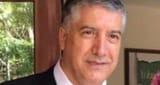
IĞDIR 1945-65 PART SIX: NURETTIN KIRMAN
27/07/2020
NOTE: Dear readers! In the section concerning the late Nurettin Kirman, who was martyred 63 years ago, real names have been used, both in the newspapers of that period and in other accounts. The purpose of this article is not to implicitly or explicitly judge or accuse individuals or families, but to reveal the reality of an era. Nevertheless, if any discomfort is still felt, the responsibility is, of course, mine. Iğdır must confront its realities. I want you to know that I am ready to pay the price.
INTRODUCTION
In Part Five, I detailed and presented to your knowledge two fundamental events that caused the general Kurdish-Azeri polarization in Iğdır (the veto of Abdürrezak Güneş and the trial of Sırrı Atalay). I also stated that in the early 1950s, Iğdır had a tripartite structure secretly competing with each other in terms of political and economic preference. I would like to remind you of this tripartite structure again:
- Kurds (in those years, the number of Kurds in the district center was small)
- "Bu Taylı" (Local) Azeris
- "O Taylı" (Diaspora) Azeris
In this section, I will discuss the "O Taylı-Bu Taylı" rivalry and, as a result, the martyrdom of the "Bu Taylı" Nurettin Kirman. Nurettin Kirman's murder emerged as a result of the rivalry and competition between "O Taylı" and "Bu Taylı" Azeris. It was a planned murder.
The murder of such an important figure as Nurettin Kirman led to the political and economic competition resulting, in a sense, in favor of the "O Taylı," or Diaspora Azeris. Over time, especially in the 1970s, when Azeri revolutionary youth living in provinces outside Iğdır came to Iğdır during the idealist-revolutionary or Azeri-Kurdish conflict, they were subjected to pressure from the Diaspora Azeri youth, i.e., the idealists. They preferred not to come to Iğdır, or if they did, not to leave their homes, out of fear of the idealist youth. The idealists had no tolerance for an Iğdır Azeri being a revolutionary. Revolutionary Azeris were under direct death threats.

Hürriyet Newspaper
1957 TURKISH GENERAL ELECTIONS
The 1957 Turkish general elections were held on October 27, 1957. The DP brought forward the normal election date. A significant feature of the 1957 election was that it was Turkey's first early election. The parties participating in the election and their general chairmen were as follows:


- Democrat Party (DP) Adnan Menderes
- Republican People's Party (CHP) İsmet İnönü
- Republican Nation Party (CMP) Osman Bölükbaşı
- Freedom Party Fevzi Lütfi Karaosmanoğlu
- Homeland Party Hikmet Kıvılcımlı

MENDERES'S MISTAKE
Menderes began to increase pressure on the opposition. One of the striking events of this period was the arrest of CHP Secretary-General Kasım Gülek in Sinop after his speech in Zonguldak on August 12, 1955, and his transfer to Istanbul, where he was imprisoned in Paşakapısı. Although Gülek was released by the court a day later, the arrest of the Secretary-General of the main opposition party is an event that needs to be considered.
On September 6, the İstanbul Ekspres newspaper published with large headlines that Atatürk's house in Thessaloniki had been damaged by a bomb thrown by Greeks. The events of September 6-7, whose perpetrators are still not fully known, damaged Turkey's prestige in the international arena and its rightful stance on the Cyprus issue.
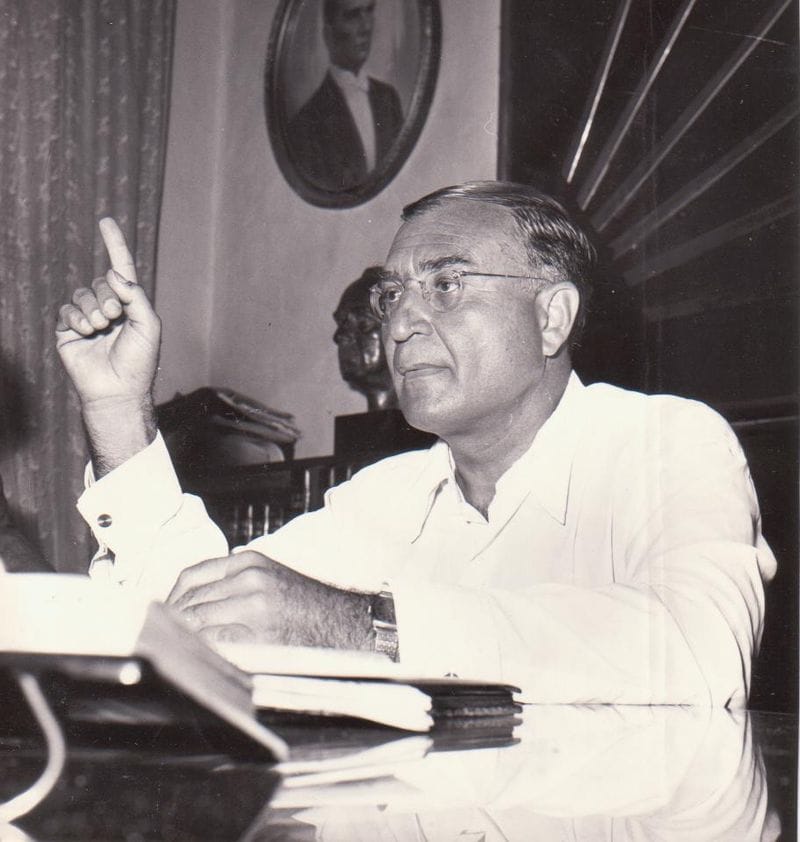

The incident started in the afternoon, turned from a demonstration into destruction around 19:00, and at 22:00, the army intervened, with military units trying to suppress the incidents everywhere. Martial law was declared at midnight, but the incidents could only be suppressed by dawn. In the September 6-7 events, which are still among the unresolved events in our history, our non-Muslim citizens left Istanbul, and martial law was declared in the provinces where the incidents occurred.
WHAT IS FASCISM?
Dear readers! Unfortunately, I know that in our political literature, we have a habit of calling people fascist and the administration fascism in situations involving brute force and injustice. Fascism has an important aspect that distinguishes it from other despotic regimes: in fascist administrations, civilian forces are mobilized. For example, in Germany, the SS Youth, in Italy, the Blackshirts, and in Spain, the Falangist civilians seized power. It is not correct to describe military coups in Turkey as "Fascism" because there were no armed civilians in the streets. Military coups in Turkey should be regarded as "ruthless despotic" administrations.
The first attempt at Fascism in Turkey was the September 6-7 (1955) events. Civilians spearheaded these events, and the government deliberately remained a spectator. After the September 6-7 events, the Democrat Party gradually moved towards fascism by mobilizing civilians in the streets. Due to the civilians incited by the DP occupying the streets and their clamor not listening to the army and police, İnönü could not enter the provinces, was stoned, and attempts were made to lynch him.

Menderes introduced a new strategy with the Gaziantep rally in April 1956. He harshly criticized the CHP and the press. The vast majority of newspapers that supported the DP until 1950 became the voice of the opposition. With the election date set for October 27, 1957, the CHP, HP, and CMP united against Menderes. At the same time, the Cyprus issue had also become quite complex. In 1957, economic difficulties in the country increased. Economic difficulties reached such a point that the public could not find bread and meat. The anti-DP alliance, in their declaration, demanded that the Parliament function as a constituent assembly, establish the foundations of the regime within six months, and grant workers the right to strike. The 1957 elections created a complete rupture between the government and the opposition. Turkey was suddenly divided into two warring groups.
The DP resorted to fraud. Election results were announced on the radio before voting was completed. Despite the election ban, from 14:30 onwards, only the places won by the DP were announced on the radio, thus creating psychological pressure on citizens who had not yet voted, suggesting that "the DP is winning."
The election was supposed to end at 17:00, but at 14:30, the state's sole radio station began announcing the provinces won by the DP while voting was still ongoing. CHP leader İsmet İnönü called Minister of State Fatin Rüştü Zorlu:
"I demand that you prevent this crime from being committed."
Minister Zorlu went to Adnan Menderes and conveyed İnönü's words. Menderes insisted: "Let the radio continue to announce the results!" The CHP then appealed to the Supreme Election Council. The radio broadcast was stopped, but the DP had already achieved its goal. Some CHP members did not go to the polls, thinking "the DP won."
Also, in the 1957 elections, there were obvious frauds in the voter registers. While the voter registers were being prepared, CHP voters were removed from the registers. In their place, the names of DP voters were included, even in several registers. This meant that a DP member could vote in several ballot boxes. The DP's mobile teams transported these voters from one ballot box to another. CHP voters, unable to find their names in the registers, returned home without being able to vote.

In short, the DP resorted to every means to win the election. This was, in a sense, a sign of desperation.

ELECTED CHP DEPUTIES (WITH 58% OF THE VOTES)
- Fevzi Aktaş
- Sırrı Atalay
- Şemsettin Ataman
- Kemal Güven
- Hasan Erdoğan
- Turgut Göle
- Mehmet Hazer
- Rasim İlker
- Behram Öcal
- İbrahim Us
- Osman Yeltekin
- Ali Yeniaras
1957 KARS DP CANDIDATE DEPUTIES LIST
- Lâtif Aküzüm
- Zeki Aras
- Zarif Akman
- İsmail Alaca
- Abbas Çetin
- H. Dursunoğlu
- Mecit Gezer
- Veyis Koçulu
- C. Nuri Koç
- Alaaddin Metan
- Rüştü Öktem
- İsa Taşdemir
Dear readers!
I want to make a reminder in case a name catches your attention. Our fellow Iğdır native Rıza Yalçın, who was elected as a Kars Deputy from the CHP list in the 1954 General Elections, is not on the CHP list in this election. Instead, Behram Öcal, also from Iğdır, is included in the list. I will explain the reason towards the end of the article.
Cengiz Ekinci
EKİNCİ NEWSPAPER September 19, 1957
WRITTEN BY: CENGİZ EKİNCİ

BEHRAM ÖCAL JOINED CHP
Behram Öcal, who resigned from his civil service position as our province's Technical Agriculture Director to participate in the elections, joined the CHP the day before yesterday. Behram Öcal is one of our young people whose work during his service was highly appreciated by both the Ministry he belonged to and the Executive Council. Despite all the suggestions and promises from his pro-government friends, he gained special appreciation and trust by starting his political life on the opposition front. Indeed, such an thoughtless act as participating in the evils of the DP era could not be expected from an enlightened person.
We congratulate Öcal and wish him success in his political life.
***
Now, if you wish, let's try to get to know the "ÖCAL" family through the narration of the late Hamza Aygün:
"Şefi Öcal Bey, one of the Sultanabat Beys of Iğdır, was a bey with large lands in Iğdır. He and his family were enlightened people. He had studied up to high school during the Russian administration and was a cultured person knowledgeable about world affairs. He followed Istanbul newspapers, and when he sat in coffee houses, his table would be overflowing with curious listeners. He attached importance to education. Therefore, he was closely interested in the education of his children.
His eldest son, Yunus Öcal Bey, retired after serving in various parts of the country as a Forest Engineer. Yunus Bey, who resided in Ankara, passed away there. His younger brother, Yakup Bey, was one of the drivers of his time.
His third son, the late Behram Öcal Bey, was an Agricultural Engineer. He was very much loved and respected among agriculturalists. His friends and admirers in Ankara were deeply saddened by his death. In his memory, a room named "Behram Öcal Library" was opened in the Chamber of Agricultural Engineers. This room continues its activities and service.
Behram Öcal became a Deputy from Kars in the 1957 elections. At that time, he served in the Budget Committee representing the CHP in the Parliament. Behram Bey, a valuable fellow countryman who had the honor of working with İsmet İnönü, unfortunately passed away in a traffic accident on the Yalova road with his son, daughter, and wife, all at the scene. We wish them all mercy from Allah. I wish his only remaining daughter, Gözde, a long life. Gözde is married to a gentleman from Elazığ in Bursa. His youngest son, İslam Öcal Bey, moved from Iğdır to İzmir due to his business affairs. He was very much loved by his fellow countrymen there; however, he passed away prematurely due to an illness. May Allah have mercy on him."
My dear readers!
For those who have read the book "Iğdır Sevdası," this will be a repetition, but I want to include the article I wrote in 2001 and published in 2002 about the late Nurettin Kirman as it is. Later, we will approach the event from different angles:
FROM THE BOOK "IĞDIR SEVDASI"
INTRODUCTION (Mücahit Özden Hun)
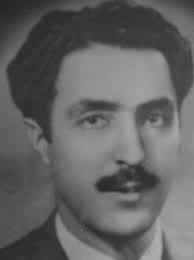
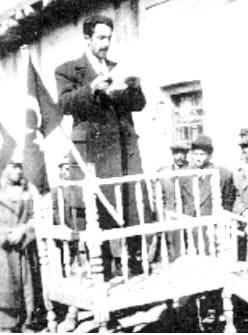
Nurettin Kirman… 33 years old, tall and slender, with neat, short-cut mustaches, wavy long hair combed back, deep-set eyes in the middle of his oval face… Yes, this young man carries the fire of a cause in his heart… The 1950 democracy movement opened new horizons for both Turkey and this young man’s heart… The tired and aging imperial generation has extended its torch, waiting for a Republican youth to embrace it. Nurettin Kirman has taken a step, extended his hand. His long, slender fingers are about to touch the torch… This determined and faithful young man has become a voice, a cry for the aspirations of his people in political forums, and his enthusiastic speeches have resonated far and wide.
Nurettin Kirman holds the fate of his people in his palm, walking with confidence. He is fearless. He never liked to compromise. His thought and word are one. Unopened doors, resisting old structures tremble before him, questioning this idealistic young man within themselves, "How far can we go with Nurettin?" They both love and envy him. His charm and charisma have settled over the people like a cloud. He leaves every meeting with admirers and enemies behind. This dark-haired young man is a mystery to many. He cries out new things, full of self-confidence, brave and assertive… He is the first item on all political calculations. The question "What will we do with Nurettin?" makes some people think bitterly.
Nurettin does not like compromise, backing down, submission, flattery, or political self-interest. He pushes them all away with a flick of his wrist. For him, life will be lived once, but honorably. The existence of his enemies, those who envy him, those who cannot stand him, does not frighten him. New identity, new life, new hope, new person… This is Nurettin Kirman, who felt these new aspirations, relived these new values in the flow of his blood and every beat of his pulse. Who can stop this strong and faithful voice growing like an avalanche?
March 25, 1957… The hours are nearing midnight. The weather is cold, the surroundings dark… The city club breathes heavily with dense cigarette smoke. In one of the dimly lit rooms, Nurettin Kirman is engaged in a lively conversation, sometimes pleasant, sometimes contentious, with his bureaucrat and politician friends. Azrael leans against the door, smiling at him. Nurettin has neither seen nor considered the possibility of Azrael wanting to claim his soul. In the heart of this 33-year-old young man is the calculation and curiosity of what role fate will assign him in the upcoming general elections. The words "death" and "Azrael" are foreign to him.
That moment… Nurettin collapses to the ground with a single bullet to his heart, his head resting on his friends' hands, looking at his beloved friend standing with a gun in his hand, as if to say, "You too, Brutus?" He murmurs, "Why did you shoot me?" in a deep groan.
Nurettin Kirman took his honorable place in Iğdır's history as a "martyr of democracy" under conditions caused by a mentality that could not manage, understand, or adapt to democracy. Nurettin Kirman, as a great man of cause, lives on in the memory of his people, having lost nothing of his power and existence despite all these years. Everywhere I went, in every heart I questioned, there was a "Nurettin Kirman voice" crying out, as if to say, "You will mourn me!" Rest in peace, Nurettin Kirman! The cause of democracy you defended is now the cause of all of us…
NURETTIN KIRMAN'S WIFE ÜLKER KIRMAN NARRATES

I was born in 1932 in the village of Gaziler (Pernavut), part of the Tuzluca district. My father, Hanlar Ayrım, was the brother of Şamil Bey. I attended the village primary school until the third grade, but because families did not attach much importance to girls' education, I had to drop out of school.
Nurettin's father, Meşe İbrahim, along with his siblings, came to Iğdır as immigrants from the village of Çobankere, which is now within the borders of Armenia (estimated 1921-22), and after marrying Şamil Bey's sister, Semizer Hanım, he bought land in the center of Iğdır and settled there permanently.
While Meşe İbrahim's siblings left the Iğdır region much later, going to Trabzon and Istanbul, Meşe İbrahim remained in Iğdır until his death.
Meşe İbrahim had five children, two sons and three daughters. One son also passed away at the age of 17. In the years he was married, he practiced the profession of a coachman. When his children grew up, he ended this business and provided for his family through agriculture.
Nurettin was a middle school graduate. Before marrying me, he was a teacher in Evci and other villages. Since we were cousins (uncle-aunt's children), Nurettin often visited Pernavut. Our acquaintance and marriage happened for this reason. After marriage, Nurettin left his teaching profession and opened a haberdashery (Bahar Manifatura) store.
Our house was on Şehit Mehmet Çavuş Street, where the Military Lodgings are located. Across from us was Ali Yılmaz of Kazancılı's ice and soda factory. In one room of the house, my father-in-law, mother-in-law, and sister-in-law stayed together. My children and I shared the other room of the house.
Nurettin loved party and meeting affairs very much. Whenever he had the opportunity, he would invite the town's civilian and military bureaucrats and party friends to a feast in the garden. He paid special attention to the richness and preparation of the table. Eşref Bitlis, who later became the Gendarmerie Commander, was serving in Iğdır and was a very close friend of Nurettin. Ziya Ayrım, the director of DÜÇ, was also a frequent visitor to our house.
Nurettin had friends from all walks of life. During election times, our house was always full of crowds. Especially Latif Kesemen and his relatives from Evci village supported Nurettin and gave him all kinds of assistance.
Nurettin was extremely devoted to his parents and siblings. Many times, I had heard him say, for his family members, "May God not show me your death!" He was especially loyal and respectful to his father.
Nurettin was quite calm and reserved at home. He would carefully read the newspapers and books he brought from the market, and occasionally write and draw.
He often asked me to make yogurt soup and dry meatballs. He also loved green herb pilaf very much. He was also extremely meticulous about his clothing. He would never wear his trousers unless their creases were perfectly straight and single-lined. He would put on a tie with his shirts of various colors and go out to the market. In winter and autumn, he would not step out without wearing his long coat and slightly tilted hat.
Nurettin was tall. Only Mecit Hun and Nurettin would slightly duck their heads to enter our house.
NURETTIN'S MURDER (Ülker Kirman Narrates)
The weather was chilly. Nurettin had left the house that day (March 25, 1957) in his overcoat and hat. In the evening, as he was leaving his haberdashery shop and heading home, he met a friend.
"Nurettin, let's go to Rahim's club!" he said. Nurettin had previously argued with Rahim over a party matter and was estranged from him. When Nurettin said, "I'm angry with Rahim. I don't want to go there," his friend replied, "Oh, Nurettin, look at what you're saying! You're the king of clubs and coffee houses. There's no such thing as being angry for you!" and took Nurettin's arm, and they set off together towards the club.
Nurettin and his friends went into a private room and chatted around a table. The town's judge and prosecutor were also there. While they were all having a good time, a curly-haired, short waiter entered the room and whispered in Nurettin's ear: "Your wife is waiting for you outside." Nurettin didn't believe what he was told: "Don't lie!" he said, dismissing the waiter. But the waiter insisted, and soon after, he re-entered the room, with a more serious demeanor, saying, "Brother, I swear your wife is waiting outside!"
Nurettin involuntarily got up, leaving his friends, and exited the room. He put on his overcoat, placed his hat on his head, and tried to adjust it with both hands. At that moment, a pistol fired from behind, aimed at his heart from his left shoulder. As Nurettin collapsed to the ground, he looked at his friend standing before him with a gun in his hand, as if to ask, "Why did you shoot me?" with pain.
They put Nurettin in a phaeton and took him to Abbas Çöllü's clinic.
At the time of the incident, we had retired to our rooms and were preparing to sleep. My sister-in-law entered my room, screaming, "They shot my brother!" My father-in-law quickly prepared and left the house like lightning. We women stayed at home, waiting for news.
When my father-in-law went to Abbas Çöllü's clinic, he found Nurettin lying on a table, covered in blood. The doctor was trying to treat him, but since the bullet had damaged his heart, there was not much to be done, and he was helplessly rushing around. Nurettin, struggling for breath, saw his father, turned his head towards him, and forced himself to say twice, "Father! Father!" and then gave up his spirit. (March 25, 1957)
Nurettin's murder plunged the entire family into shock and deep sorrow. My mother-in-law said, "The people of Iğdır killed my son. I will not let him be buried here," and requested that Nurettin be buried in Pernavut, in the same cemetery as his uncle Şamil Bey. We sent Nurettin on his last journey accompanied by a large crowd.
After Nurettin's death, it was as if misfortune had fallen upon our family. While the pain of Nurettin's loss was still in our hearts, my father-in-law passed away. Since my mother-in-law was paralyzed, it fell to me to deal with the household problems. With the thought of being close to my father's house, we moved to Pernavut, thus enabling the children to go to primary school. Years full of pain and hardship passed. I wanted my children to acquire a profession, good or bad, and earn their living. My son Ertuğrul did not continue his education after finishing middle school. He married a relative and moved to Istanbul. While working at the State Airports Authority, he passed away in a traffic accident in April 1993. Since that day, the pain in my heart has increased even more, and I try to endure life with the despair and anxiety of having lost my two most precious possessions.
"ÜLKER KIRMAN" END
***
EKİNCİ NEWSPAPER March 27, 1957
WRITTEN BY: CENGİZ EKİNCİ
THE HORRIBLE MURDER IN IĞDIR
NURETTIN KIRMAN MURDERED IN THE CITY CLUB
It is reported that Rahim Akyüz, the club manager, shot Kirman with a pistol. The unfortunate Nurettin's body was brought to Pernavut yesterday and buried in the family cemetery. All of Iğdır is in deep sorrow over the incident.
When our newspaper's telephone rang around 10 AM yesterday, calling for someone to speak, we thought it was one of the usual conversations and somewhat indifferently put the receiver to our ear.
When we listened to our friend who called us on the other end of the phone, we encountered the most surprising news of our professional life. It was reported that Nurettin Kirman had been killed, and the killer was Rahim Akyüz. Our friend was giving this news, referring to a telephone call he received from Kağızman. Both of us were in deep sorrow. There must have been a mistake. We could not imagine the possibility of Nurettin Kirman being killed, or Rahim Akyüz being the murderer.
Since we were not yet granted the opportunity to speak directly by phone with Iğdır at that time, we requested the assistance of the Gendarmerie Commander. Half an hour later, unfortunately, the esteemed Commander confirmed the news; he said that Nurettin Kirman had been killed on Monday night (March 25), as we had learned.
According to the information we could obtain as these lines were being written, Rahim Akyüz, the manager of the Iğdır City Club and owner of the Trabzon Hotel, shot and killed Nurettin with a pistol during a fight that occurred at the City Club on the night of the incident. The body of the unfortunate Kirman, which was transferred to Pernavut, was laid to rest in the family cemetery yesterday.
The cause of the fight and the manner in which the incident occurred are unknown to us at this moment. As we are in contact with Iğdır, we will inform our readers of any details we learn.
LAST MINUTE
The information we obtained after our attempts until late last night to learn how the Iğdır City Club murder was committed is as follows:
"A drinking party set up in one of the small rooms of the City Club in the evening continued until around 22:30. At this point, an attempt to take Nurettin Kirman, who had become very drunk, outside caused an argument to start between the Club manager Rahim Akyüz and Kirman.
Following this beginning, every passing second witnessed the argument escalating, with words turning into various insults and offensive language. And it was at these moments that the unfortunate outcome occurred; Rahim Akyüz, who is presumed to have felt a sudden indignation from the insults hurled at his face, drew his pistol and killed Nurettin Kirman, who was said to be so drunk that he was unaware of himself.
It is reported that the gun was fired from the front, the bullet entered from the right shoulder, traveled through the chest, and exited from under the left shoulder. It is also reported that Kirman, who was immediately taken to the hospital, died after living for about 20 minutes.
Another piece of news, if true, is that Celâl Nuri Koç, the Iğdır judge, one of our young jurists, was also at the same table or present at the time of the incident. Rahim Akyüz has been arrested.
It should also be noted that all this information is based on the accounts of those who have knowledge and narrated the incident, and has not yet been confirmed by us. If we receive complementary and further information, we will present it to our readers.
EKİNCİ NEWSPAPER March 28, 1957
WRITTEN BY CENGİZ EKİNCİ
HOW WAS NURETTIN KIRMAN MURDERED?
On Tuesday, as the body of Nurettin Kirman, who was shot and killed with a pistol by Rahim Akyüz, the manager of the Iğdır City Club, was being brought to Pernavut by a large congregation to be buried in the family cemetery, we had set off from Kars to perform our last duty to our unfortunate friend and to learn the cause and manner of the murder. We could only reach Pernavut after 23:00.
The boundless sorrow of the last 24 hours had left everyone, including Nurettin, in a state of exhaustion, sprawled on pillows a few hours earlier. The rooms of close relatives were filled with grieving men lying on carpets and rugs without undressing. We were met by the deceased's relatives who were still awake at that hour. There was nothing else for us to do but wait for the morning.
As the first rays of a beautiful spring morning filled the room, we were thinking: "What's done is done, Iğdır's most popular young man took a bloody corpse to the other world in a few minutes. The hand that killed him also extinguished his own hearth at the same time, but since there was no known enmity, why did at least two hearths go out at once?" A little later, when we asked for an explanation from those who came from Iğdır, they told us what they had heard: "Those who witnessed the murder were detained in Iğdır due to the rapidly initiated investigation. We were listening to hearsay."
"On Monday evening, a few friends, Nurettin Kirman, Sadık Tezel, Celâl Nuri Koç (Judge), Hüseyin Altay (Sarıkamış Mayor), Nevzat Şamiloğlu, and Topal İskender, set up a small table in one of the club's small rooms and sat until around 22:00. Then, the Club Manager Rahim Akyüz ordered one of his waiters to take Nurettin out. Although Nurettin did not leave upon this request, when they later got up together, they encountered Rahim Akyüz in the cloakroom. This encounter also marked the beginning of a fight."
Let us interrupt the story of the incident as it was conveyed to us here and emphasize that the statements in this part do not match each other. Some narrate that Nurettin cursed at those who wanted to remove him from the club, and upon this, Rahim committed the murder. Others state that when Rahim Akyüz saw Nurettin in the cloakroom, he asked, "What are you doing here?" and immediately after, knocked Kirman to the ground with a strong punch, then drew his weapon and emptied it on him.
What is certain is that Nurettin and Rahim encountered each other in the cloakroom, and the murder was committed at that time. Let's continue the story of those who narrated the event:
"Those who came out of the small room and a person named Aliasker, who came from the hall behind Rahim, were in the cloakroom at this time. It is observed that the killer first hit the victim with a strong punch, knocking him to the ground, and then reached for his weapon. At this moment, Nurettin, who had fallen to the ground, was in a position to retaliate with a chair. And at that moment, Rahim Akyüz, standing, fired his weapon in the direction of Nurettin's shoulder, who was in a crouched position.
The first bullet entered the victim's body, and the second bullet was embedded in the ceiling after a person named Aliasker hit Rahim's arm from bottom to top. At these moments, everyone who went to the cloakroom with Nurettin had cowered to one side."
The trajectory of the bullet was determined in the autopsy performed the next morning; it was reported that the bullet, which entered the body from the hollow of the left shoulder, followed a downward path, destroying the heart and stomach, and then lodged in the spinal column.
Nurettin Kirman, who collapsed at the club's exit door from the fatal bullet he received, was expected to die at any moment. Dr. Abbas Çöllü, who arrived immediately, took Kirman to his nearby clinic, probably with the thought of urgent help, and gave him an injection. At this moment, they brought his unfortunate father. Nurettin began to cry when he saw his father. His last words heard on the way to the hospital after the injection were: "Abbas (Çöllü), save me!" A few minutes later, on the operating table, there was no longer a Nurettin Kirman, but a pile of flesh and bones.
Yesterday, around 16:00, as these lines were being written, the murderer Rahim Akyüz was giving an account of the murder he committed, subject to the provisions of flagrant crime, at the Iğdır High Criminal Court. The preliminary investigation had been rapidly completed, and the file had been submitted to the court. The court, which continued until 23:00 on Tuesday night, was adjourned to 14:00 on Wednesday. Yesterday morning, as we were leaving Pernavut for Kars, those who brought the body of the Young Deceased to the family cemetery were also heading to Iğdır by trucks. The spring sun of a new day, unaware of the extinguished Sun of the Kirman family, was rising over the suffering truck passengers.
***
AZİZ GÜNEY NARRATES (IĞDIR SEVDASI)
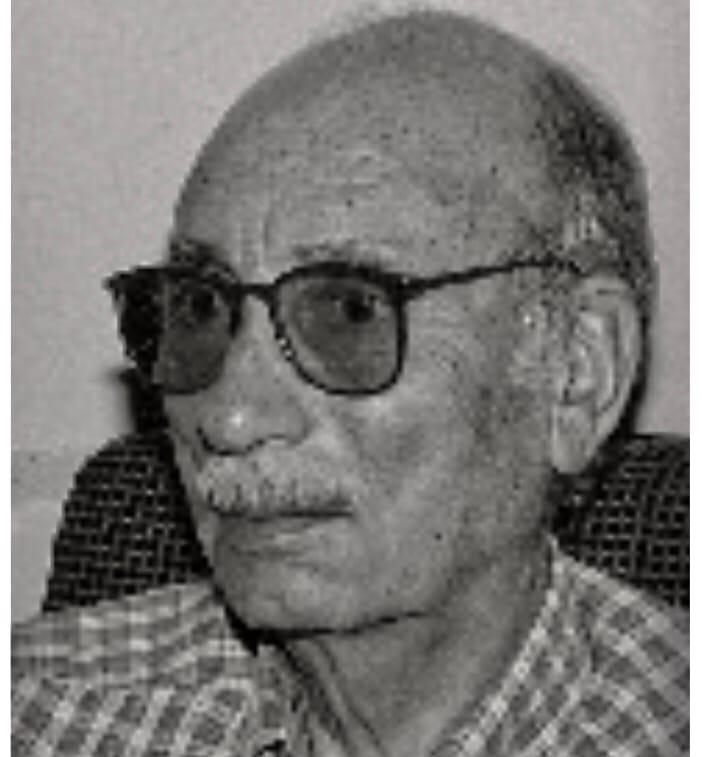
Nurettin Kirman was related to the Ayrım family through his mother. His father, who supported his family by working as a coachman, was truly a very good person. Nurettin was a middle school graduate. Because he was a good orator and organizer, he quickly gathered a significant portion of the Azeris around him. He was brave and assertive. This nature of his disturbed certain circles.
In those years, there was a social polarization among Azeris, referred to as local-immigrant, which flared up from election to election. Azeris who fled from the Russian Revolution and Stalin's oppression were culturally and socially different. For this reason, a natural polarization occurred between them and the local Azeris. Nurettin represented the local segment in this polarization.
On the other hand, a political polarization was also felt within the ranks of the DP. The group of Rahim Akyüz and Sadık Tezel fought as a strong opposition against Nurettin Kirman. Nurettin Kirman's murder should be seen as a continuation of these conflicts.
Between 1950 and 1959, we fought together with Nurettin Kirman in the ranks of the DP. We only clashed once, and for a short period. After Nurettin Kirman's death, the local-immigrant rivalry among Azeris also ended. He was a good friend and a good party member. May God have mercy on him."
***
YEŞİL IĞDIR NEWSPAPER April 1, 1957
WRITTEN BY: FAZIL ŞIKTAŞ
TO PERNAVUT
From ear to ear, from mouth to mouth
A whisper circulates
Not a whisper, but a groan circulates…
They shot Kirman!…
He left us forever,
His shoulder stained with crimson blood,
He will no longer greet party members,
He will no longer speak from the podium, wagging his finger,
He will no longer answer party members!..
There is a crowd, a multitude,
The hospital entrance was a pandemonium…
Hearts broken, eyes moist
They are waiting for someone!..
The autopsy is over, everyone is excited,
Cries erupted all at once!
Nurettin, the victim of the murder, in a coffin,
On the shoulders of the youth,
Heading towards Kars street…
Sobs are caught in throats!
Hearts are mournful as his body is sent off to Pernavut
THE LOST YOUTH
WRITTEN BY: SADIK AKIN
What a storm the night of March twenty-fifth brought,
His breath cut short by an unexpected bullet.
The world does not accept this, his rose plucked untimely..
We lost the nightingale who loved the podium!..
Would a human shoot a freshly bloomed rose?
Would the blood of a renowned Turkish youth flow in vain?
The youth who rushed to help cried for the groaning one,
With moist, tearful eyes, they took him to the hospital.
It was as if Kirman leaving us was a lie!
Your name and memories are intertwined in our hearts…
The Middle School does not accept such bitter calamity,
Innocent, poor students, pray for the president.
TO HIM
WRITTEN BY: T. TURAN ATASEVER
This mist that moistens the eyes is for you,
This sorrow that settles in hearts is for you,
Oh, child of Aras, strong in resolve,
The moisture in the eyes is all for you…
Throughout your life, every moment, every time,
You found yourself in the troubles of Iğdır…
Before you had enough of this heartfelt life,
Did you become a victim of fate's wrath?
Oh, Kirman, who left us prematurely,
We buried you in our hearts, you are with us…
This early separation became tears in our eyes,
With all your longing, you are within us!
SIRRI ATALAY'S CHOICE OF RIZA YALÇIN-BEHRAM ÖCAL


Rıza Yalçın was elected as a Kars Deputy from the CHP list in the 1954 General Elections. However, a rivalry soon emerged between Rıza Yalçın and Sırrı Atalay. The reason for this is as follows: The Iğdır DP administration, as I explained earlier, with instructions from Samet Ağaoğlu and Abbas Çetin, used Enver Sever and the Iğdır DP Administration to slander Sırrı Atalay, leading to his trial in Iğdır. Sırrı Atalay's trial lasted 2 years. Sırrı Atalay came and went to Iğdır many times for the court.
While the trials were ongoing, Rıza Yalçın remained neutral, leaving Sırrı Atalay alone. He was not present at any of his court hearings. Only Kurds from all parties supported Sırrı Atalay, whereas Sırrı Atalay had included Rıza Yalçın in the CHP deputy list in the 1954 elections.
Sırrı Atalay's natural expectation was that Rıza Yalçın would also be present at the hearings, showing solidarity as a "Bu Taylı" Azeri against the "O Taylı" conspiracy. When Rıza Yalçın left Sırrı Atalay alone, Sırrı Atalay, who had the final say in preparing the CHP deputy lists in Kars, prioritized Behram Öcal over Rıza Yalçın from Iğdır in the 1957 elections and placed him on the list. (Reminder: Mecit Hun was not a CHP member in those years). Rıza Yalçın's resignation news and Cengiz Ekinci's commentary are as follows:
EKİNCİ NEWSPAPER FEBRUARY 15, 1958
WRITTEN BY: CENGİZ EKİNCİ
RIZA YALÇIN RESIGNED FROM CHP
When we spoke to Sarıkamış CHP district chairman Ruhi Bey after his return from Iğdır, and he said that Mr. Rıza Yalçın, one of the deputies of the 10th term, had resigned from the CHP, we couldn't help but say, "He's a bit late." The former esteemed Deputy's attitude after the 1957 election polls showed that he was offended by the party that had elevated him to deputyship. This resentment was so advanced that he even engaged in "negative" activities during the elections. After working for the defeat of the party he belonged to, a person should have put his hand on his conscience and withdrawn. Rıza Yalçın did what was expected of him in this aspect of the matter.
However, there was also something unexpected from Rıza Yalçın: The esteemed former Deputy, like his fellow countrymen Abbas Çetin or Lâtif Aküzüm, should have been a party member not necessarily for ambition and deputyship, but also somewhat for his party.
What had Rıza Yalçın done for the People's Party? District chairmanship in Iğdır, anything else? Five or six village supporters, let's push it a bit more, ten village supporters… Did the people of Posof, Sarıkamış, Digor, Arpaçay, Çıldır, and other districts know Rıza Yalçın?
No. Was Rıza Yalçın sent to Ankara with the title of deputy because he was a person whom the entire province knew and wanted to elect as deputy, or because he was on the CHP list? He himself would admit that it was because he was on the CHP list. In this province, who was more well-known and popular, Abbas Çetin or Rıza Yalçın? Abbas Çetin by a hundredfold. So how did it happen that Abbas Çetin did not win, and Rıza Yalçın was elected Deputy?
Because Rıza Yalçın was on the CHP list. And this party was determined to make Mr. Rıza Yalçın a deputy. After this reasoning, logic leads us to the conclusion: If there had been no CHP, Mr. Rıza Yalçın would not have dreamed of being a Deputy. But if there had been no Rıza Yalçın, the CHP would have found a district chairman and still won the elections.
The last proof is the October 27 examination. Although Mr. Rıza Yalçın and his esteemed fellow countryman Mr. Abbas Çetin worked tooth and nail to bring the CHP to its knees in Iğdır by uniting their forces, the "grateful" judgment of the Kars people gave them a lesson by responding to their opposition with a surplus of 35,000 votes, thanks to the CHP (Note: Abbas Çetin had become a deputy from the CHP list in the 1950 elections).
If the CHP had come to power in 1957, would Mr. Rıza Yalçın have resigned from his party? It is not likely. Or if Mr. Rıza Yalçın had been the CHP candidate in the 1957 polls as well, would he have withdrawn, leaving his party under the accusation of "domination"? A hundred times no. This means Mr. Rıza Yalçın was a party member not for the CHP, but for his own sweet self. Since this was the case, when he was not re-elected as deputy, his "partisanship" lost its meaning, and he withdrew. We wish him well in his decision.
CONCLUSION AND EVALUATION (Mücahit)
When Menderes announced that early elections would be held on October 27, 1957, the political arena became active again. Menderes, who had been defeated in Kars in the 1950 and 1954 elections, attached special importance to Kars and hoped to elect deputies. Of course, Samet Ağaoğlu undertook this task. Samet Ağaoğlu then involved Abbas Çetin.
At that time, the Iğdır DP District Chairman was Hacı Nağdali Parlar. He had strong names around him such as Sadık Tezel, Enver Sever, and Feyzullah İnan. Together, they made an election plan. The bad part was that the DP District Congress had to be held before the General Election. For example, I would like to give the news announcing that the CHP District Congress would be held on August 19, 1957.
EKİNCİ NEWSPAPER August 9, 1957
WRITTEN BY: CENGİZ EKİNCİ
CHP DISTRICT CONGRESS DATES ANNOUNCED
The Kars CHP Provincial Congress will open on Sunday, August 24, at 9 AM.
The districts where CHP district congresses will be held in chronological order are:
August 19: Iğdır
August 20: Tuzluca and Kağızman
Similarly, the DP's Iğdır District Congress will also be held in August. The District Chairman is Hacı Nağdali Parlar. However, Nurettin Kirman, the founder and first district chairman of the DP in Iğdır, also announces his candidacy. His aim is to be elected district chairman and to be included in the DP's Kars Deputy list.
Nurettin Kirman is widely expected to win the election. Therefore, Nurettin Kirman needs to be neutralized before the District Congress. Above, I tried to provide some information from both the newspaper reports of the period and the accounts of his family and some important figures.
Among the 100 Basic Questions I prepared while writing the book "Iğdır Sevdası" was the event of "Nurettin Kirman's Murder." I asked hundreds of my fellow citizens "who killed Nurettin Kirman and why." Taking into account all the statements, the scenario closest to the truth is as follows:
The late Nurettin Kirman closes his haberdashery shop. The weather is chilly. He has his overcoat on, a slightly tilted hat on his head, and a bundle of newspapers under his arm. As he walks calmly towards his home, he meets his friend Sadık Tezel. Sadık Tezel invites Nurettin Kirman to go to the club. Nurettin Kirman insists on going home but does not want to offend Sadık Tezel, so he goes to the club.
The club's operator is Rahim Akyüz. Rahim Akyüz is known in the district for excessive alcohol consumption and carrying a weapon. The district's Prosecutor and Judge are also at the club. They sit at the same table, and a conversation atmosphere typical of bureaucrats of that period develops. Then they all get up to go home. They head to the cloakroom in the club's entrance hall to put on their overcoats and hats. Suddenly, the light in the hall goes out, and a gunshot is heard. While those inside are in a panic, shouting "What happened? Turn on the light!" and in a state of delirium, the light comes back on. There is an ownerless pistol on the floor. Nurettin Kirman is lying on the ground, severely wounded.
Nurettin Kirman, still in his overcoat, is urgently taken by phaeton to Abbas Çöllü's clinic. The phaeton driver is Hacı Ali Asker Bağcı. I had also interviewed him and included it in "Iğdır Sevdası." No one saw Rahim Akyüz with a gun in his hand. If they had, the case would have been heard in Iğdır. All individuals present at the scene are suspects. The Ağrı Prosecutor's Office takes over the case, albeit late. Statements are taken from everyone present at the scene, including the Iğdır Prosecutor and Judge. Rahim Akyüz confesses to the crime. He receives a sentence. He is released with the 1974 Ecevit amnesty.
When Nurettin Kirman was murdered, certain segments in Iğdır deliberately spread the following rumors in sequence (I am sharing a few of the answers my fellow citizens gave me when I asked them who killed Nurettin Kirman and why, while writing the book "Iğdır Sevdası" between 2000-2002):
- Mecit Hun killed Nurettin Kirman. (However, when it was learned that Mecit Hun was in Kars, a second wave of rumors spread.)
- Mecit Hun gave a weapon to a Kurd and had Nurettin Kirman killed, and he himself went to Kars to avoid suspicion.
- When the Prosecutor and Judge stated in their testimonies that no one from outside came to the club, the rumor spread that Nurettin Kirman was killed over an honor issue.
- When the honor slander also failed, it was said that he was killed over borrowed money. These rumors continued until Rahim Akyüz confessed to the murder.
The bitter truth is that Nurettin Kirman's most sincere friend and most trusted companion was Mecit Hun. They would argue during speeches, but then they would link arms and go for tea together, so deeply connected were their hearts.
According to the late Hüseyin Akbulut's account, the late Rahim Akyüz, after being released from prison, told everything that happened and the truth only to Mecit Hun. This secret also went to the grave with Mecit Hun. The late Ali Yiğit recounted in his memoirs that when the late Rahim Akyüz finished his private conversation with Mecit Hun in front of the patisserie and left bent and tired, Mecit Hun shouted loudly, "Oh, merciless ones! How could you harm a valuable person like Nurettin?"
When the scenario of the incident was planned, Rahim Akyüz was given the following assurance: "Judge Celal Nuri Koç is a staunch DP member. (He will be on the 1957 DP Deputy list anyway.) When there is a crowd in the cloakroom, a single bullet will be fired, and the pistol will be thrown to the ground. To prevent the direction of the bullet from being determined, it will be fired downwards from the shoulder. When the lights come on, no one will know what happened. Since the case will be heard in Iğdır, Celal Nuri Koç will help cover up the incident, and after a few months, a decision of non-prosecution will be issued, and the file will be closed. Don't worry!"
Rahim Akyüz hoped to escape punishment for this murder, but there was a situation no one had accounted for. Since the pistol was on the ground, everyone was a suspect. The Ağrı Prosecutor's Office, not the Iğdır Prosecutor's Office, took over the case. The plans were ruined.
I want to refute a few false theses that have been discussed among the public for years. The purpose of these theses is to convince the people of Iğdır that the murder was "ordinary" and not "political":
FIRST CLAIM: "Nurettin Kirman drinks excessively, Rahim Akyüz wants to throw him out of the club. A fight breaks out. Rahim Akyüz punches him. Nurettin Kirman falls to the ground. Rahim Akyüz grabs his gun and fires." This claim is impossible from many angles. Firstly, Nurettin Kirman is not a person who would drink so much as to embarrass himself at a table with a Judge, Prosecutor, and the Mayor of Sarıkamış. Secondly, let's assume there was a fight or an argument. In such a situation, those sitting at the same table would be expected to intervene and try to calm the parties. It is narrated that while Rahim Akyüz and Nurettin Kirman were fighting with punches, the others merely watched what was happening from their seats at the table. Thirdly, if the Prosecutor and Judge had seen Rahim Akyüz with a gun, the case would have been heard in Iğdır.
SECOND CLAIM: "There is a long-standing enmity between Nurettin Kirman and Rahim Akyüz. Rahim Akyüz is disturbed by Nurettin Kirman coming to his casino despite this enmity, a fight breaks out, and a gun goes off." This claim also does not seem possible to be true. Firstly, if Rahim Akyüz was disturbed by Nurettin Kirman's arrival at the casino, he would have prevented him from entering at the very beginning. However, Nurettin Kirman sat and chatted with his friends until midnight. Secondly, Rahim Akyüz, as a casino operator, is not in a position to engage in an argument or exchange insults that would damage his respectable reputation.
THIRD CLAIM: It is claimed that two shots were fired. Allegedly, a person named Aliasker hit Rahim Akyüz's hand before he could pull the trigger a second time, and the bullet lodged in the ceiling. In subsequent investigations conducted days or weeks later, no trace of a second bullet was found.
If the late Nurettin Kirman had been shot and killed by unknown persons in the dark of night while going home, this would have been perceived as a "political" murder, openly implicating certain segments. Therefore, such a method of killing was never intended to be implemented.
In short, Nurettin Kirman, a "Bu Taylı" (local) Azeri, was killed as a result of a plan by an influential "O Taylı" (diaspora) group within the Iğdır DP. He is Iğdır's first Martyr of Democracy. May God have mercy on him! The murder of Nurettin Kirman is a turning point in Iğdır's political history. After this murder, the local Azeris take a step back, and control passes into the hands of the Diaspora Azeris. This situation continues and strengthens to this day.
Before concluding my article, I would like to present one more truth, especially to the attention of my Iğdır readers:
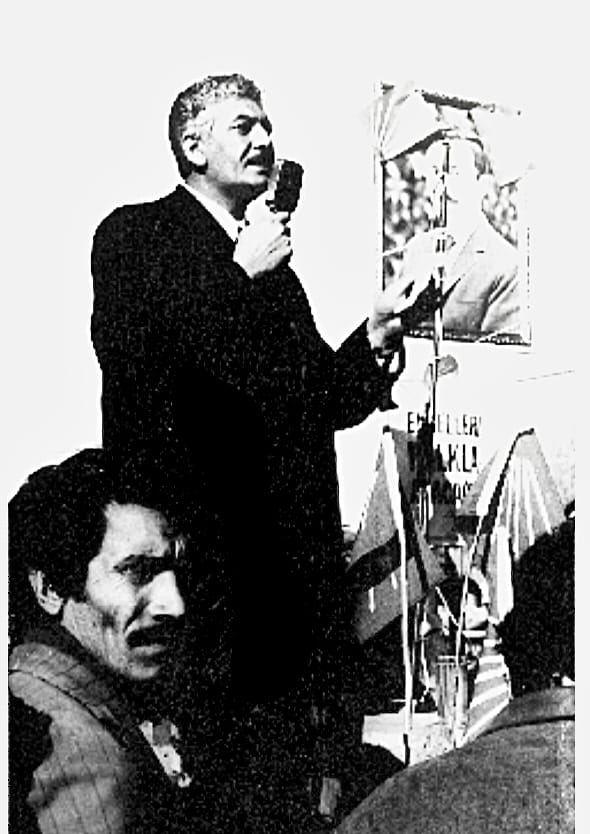
Iğdır, both as a district and later as a province, has known hundreds of politicians of Iğdır origin on its platforms. I assure you with all sincerity that no Azeri politician could even come close to the eloquence, speaking ability, quality of content, and ability to excite the masses of the late Nurettin Kirman in their platform speeches. Likewise, I assure you that no Kurdish politician could even come close to the eloquence, speaking ability, quality of content, and ability to excite the masses of the late Mecit Hun in their platform speeches. The voices of these two deceased politicians, one Kurdish and one Azeri, rising from the platforms, still echo in Mount Ararat, still stand written in golden letters on the honorable pages of Iğdır.
TO BE CONTINUED