Hüsnü Bingöl's Dark Page
This article explores the controversial legacy of Hüsnü Bingöl, a Republican-era official in Iğdır, focusing on accusations of injustice and arbitrary executions.
INTRODUCTION
Hüsnü Bingöl had dedicated himself to the cause of protecting and safeguarding the young Republic. He had internalized and adopted the world and domestic policies pursued by Mustafa Kemal Atatürk and İnönü. As we will see in my subsequent series of articles, especially during the Second World War, the ideas of Modern Turkism and Pan-Turanism clashed. Like Mustafa Kemal and İnönü, Hüsnü Bingöl chose Modern Turkism, feeling responsible for protecting Turkey's borders. His gaze was not on distant lands, nor his mind on dreams. He adopted the duty of protecting the young Republic as a sacred ideal. To successfully continue his duty, he pushed the boundaries of his authority. There is a famous saying that has entered political literature: "The ends justify the means." This idiom, in a sense, summarizes Hüsnü Bingöl's philosophy of life.
Hüsnü Bingöl made multifaceted efforts to achieve his goal. The conditions of the day were extraordinarily difficult. Iğdır was swarming with spies. Turkey, having emerged painfully from the First World War, was now rapidly rolling towards the Second World War. Hüsnü Bingöl gradually succumbed to excessive suspicion. While catching and punishing real spies, he also unjustly made many people pay a price, leaving behind tears, pain, feelings of revenge, and hatred. In today's article, I will focus more on Hüsnü Bingöl's dark page and tell my readers about his injustices. I believe that not only the tearful people he left behind, but also the spirit of Hüsnü Bingöl, who always carried a sense of justice in his heart, will welcome the writing and recording of these pains with tolerance.
TAŞBURUN VILLAGE IN DEATH AND FEAR
Taşburun, once a town, is now a village connected to the Karakoyunlu district (since 2008). Its population is around 1900. It is 22 km from Iğdır city center and 8 km from Karakoyunlu district and the Armenian border. It is located in the middle of a plain. The villages of Koçkıran and Cennetabat are right next to it.
Taşburun was the headquarters of Armenian General Dro during the Iğdır Civil War in 1918-20. In those years, it had military importance and logistical value. According to the Russian census of 1886:
Taşburun Total Population: 20520 (11% Armenian, 63.5% Azerbaijani, 25.4% Kurdish)
After 1920, Taşburun remained empty for about 10 years, then in 1930, it opened its arms to Azerbaijani civilians who were subjected to atrocities in Armenia and forced to leave their villages. The border is the Aras River. Many drowned in the raging waters of the Aras, while those who could save their lives settled in Taşburun. The escapes, of course, did not happen en masse and in one day. Small groups crossed the Aras at intervals, and gradually settled in Taşburun and its surrounding villages as their new homes. Civilians from different Azerbaijani villages on the Armenian side gathered in Taşburun after the escape. For this reason, today there are approximately 14 different Azerbaijani tribes in Taşburun. They thought they had returned to their homeland and were safe, but they were certainly unaware that a different danger awaited them.
ÖZAY ALTUNTAŞ NARRATES (TAŞBURUN VILLAGE)
Özay Altuntaş was born in Taşburun. He is around 45 years old. Since childhood, he has been interested in his family tree, in a sense growing up at the knees of the elders. The conversations of the elders left an indelible mark on his mind. As he began to speak, he did not feel the need to hide his anger:
“Hüsnü Bingöl left many families in Taşburun in tears. He incurred their curses. He unjustly executed many people on charges of espionage. Everyone in Taşburun knows all these things I'm telling you. Even children know, because the injustices committed over the years have been passed down from generation to generation in family gatherings. I am young, but because I have heard these stories many times, they are etched into a corner of my brain. I will probably pass this information on to my children too. Injustices and pains are not forgotten.
Today, there are elderly people in Taşburun who were born in Yerevan. I have heard the tragic events they experienced many times from them. As Taşburun, we were helpless. We buried the pain within us. The ghost of Hüsnü Bingöl still roams the village; elders who hear his name fall silent, their hearts filled with fear. I am not exaggerating these things. Taşburun is not far; anyone who wishes can go and investigate. Everything is still clear in the memories of our elders like Şaban Öztürk, Emir Güneş, Tanrıverdi Eyrice. The interesting thing is that talking about Hüsnü Bingöl with a stranger still causes them fear and hesitation. They suppress the pain in their hearts and fall silent.
According to what we were told, Hüsnü Bingöl came to Iğdır as a MIT (MAH) Inspector. He was a dictatorial person who was absolute in his decisions. Since the entire village of Taşburun came from Yerevan, he used some of the inhabitants as agents. Some rejected the offer. One of those who did not accept the offer was my grandfather, Şirzat Altuntaş. My grandfather was a young man of 27-28 years old in those years. A man named Usta Kurban Altun also did not accept the offer.
Hüsnü Bingöl had five people from Taşburun who refused his offer of espionage thrown into the prison in his own garden. My uncle was a child of 7-8 years old in those years. Every day, he would bring food to those in prison by horse-drawn cart and meet their needs. Family members of those arrested would visit Hüsnü Bingöl every day, asking about their fate. Each time, Hüsnü Bingöl would reassure them, sending them back by saying, "Don't worry, they will be released soon."
After the interrogation was completed, they took the five people to a swamp above the village of Suveren (Orgof). They executed them by firing squad and buried them in the swamp. They did not return the bodies. Years passed. My uncle made many correspondences during Erdal İnönü's time to shed light on this incident, but he got no results. Finally, we received an official letter: "The aforementioned individuals were killed because they attempted to escape during their transfer to Ağrı Prison."
(Dear reader! The swamp mentioned in Mr. Özay's narration is a short distance from the villages of Karakurt and Kurtkapanı (Bozkurt) on the left side when traveling from Iğdır towards Doğubayazıt. In those years, many unsolved executions took place here, and bodies were thrown into the swamp. The characteristic of the swamp is that it slowly pulls the body to the bottom, causing it to decompose rapidly. Some tribal executions also occurred in the Doğubayazıt region, and they were buried in this swamp. In short, this swamp is, in a sense, a cemetery.)
Hüsnü Bingöl used many people in Taşburun as agents. Hüsnü Bingöl created such fear that if he called someone to his office, that person would say goodbye to his family before leaving. One day, my uncle brought food to the prison. He saw that the room where my grandfather and his friends were staying was empty. He returned to the village crying. He told his grandmother what had happened. The women of the village gathered and went to Hüsnü Bingöl. Hüsnü Bingöl reassured them: "Don't worry! They will all come back."
But those people he said would "come back" never returned. Meanwhile, Usta Kurban Altun found a way to seek refuge in the Soviets. His family and children remained in Turkey. The latest information we received is that the Soviets gave Usta Kurban Altun a house in later years, and a caregiver served him when he got old. Five people, including my father's aunt's husband and my grandfather, were executed by firing squad and buried in the swamp.
Years passed. One of our family members settled in Bursa. One day, an elderly neighbor came to visit them. When asked, "Where are you from?" the answer was "Iğdır." According to what was told, when the elderly man heard the word "Iğdır," his face turned pale. After composing himself, he continued speaking in a trembling voice:
"I did my military service in Iğdır in the 1930s."
My relative inquired:
"Then you know Hüsnü Bingöl!"
Hearing these words, the elderly man became uneasy, stood up, and looked around fearfully. As if Hüsnü Bingöl would appear before him at that moment.
My relative calmed the elderly man.
"Hüsnü Bingöl passed away a long time ago. There's no need to be afraid!"
The truly important part is that when my grandfather and his friends were executed, the elderly man was a soldier under Hüsnü Bingöl's command (1938-40). When my relative received this information, he asked the elderly man: "In those years, there were executions by firing squad. Were you there?"
The elderly man nodded in affirmation.
"We took the prisoners to the mountain. The order for execution had been given. One of the prisoners was a big, burly man. We lined them up and shot them. The big man was very strong. We were shooting him, and he would get back up and curse at us. This happened five times. (According to estimates, he must have been the father of Hoca Mustafa from our village). After completing the execution, a cavalryman arrived. Hüsnü Bingöl had sent him. He was requesting the execution to be stopped, but it was too late for everything."
Hüsnü Bingöl may have done successful intelligence work, but we must also remember the unjust executions he carried out. I have heard all these stories many times from my late uncle. My grandfather has no grave! Let's assume my grandfather was spying (!). Giving such execution authority to one person without a trial and judgment was incompatible with the founding values of the Republic."
A TENT IN YEREVAN
One day, Hüsnü Bingöl assigned two people from Taşburun:
"Take this envelope. Cross the Aras. There's a tent in a certain place. It won't be hard to find. You'll find a man sleeping in the tent. Put the letter under the pillow of the man sleeping in the tent. Be careful not to lift the blanket and look at the man's face!"
The two men had to accept the task, otherwise, execution awaited them.
They took the envelope, crossed the Aras, and indeed saw a tent in the specified location. They entered. Someone was sleeping with their face covered by a blanket. One of the two men became curious. He signaled his intention to his friend with a gesture.
"I'm going to lift the blanket and look at the man's face."
The other was uneasy:
"Don't do it!"
His friend ignored the warning, took the edge of the blanket, and lifted it slightly, but at that moment, Hüsnü Bingöl's warning came to mind: "Be careful! You will not look at the man's face!"
He gave up. They returned to Iğdır. They appeared before Hüsnü Bingöl and told him they had completed the task. Hüsnü Bingöl was angry:
"I warned you not to touch the blanket!"
The two villagers' knees almost buckled with fear.
"I cannot lie to my master! I intended to look, but I didn't."
Hüsnü Bingöl softened:
"Pray that my mother is praying! I forgive you for now."
The two villagers returned to Taşburun. Everyone knew that Hüsnü Bingöl occasionally crossed the Aras to the other side. Was that sleeping man Hüsnü Bingöl?
I heard all these events from my uncle Cevat Altuntaş. He passed away 3-4 years ago.
Now, whenever I go to the cemetery, my eyes search for my grandfather, who disappeared and never returned. May God have mercy on him!
When my grandfather's family crossed the Aras and settled in Taşburun, the state gave them land as a right of settlement. They took a family photo to attach to the title deed. I always carry this photo with me, which includes my grandfather Şirzat Altuntaş, his father Kelba Hüseyin, my father, and my uncle. My uncle's heart was wounded. He recounted this event many times until his death. Each time, he would curse Hüsnü Bingöl.
Hüsnü Bingöl had a reason for specifically targeting Taşburun: people from 15 different villages had come here. Their villages were just beyond the Aras. They knew the region well, as well as Russian and even Armenian. They possessed the desired conditions for espionage. The name of my father's village was Kargapazarlı. In addition, those who came from Almemetli, Şitili, Karxın, and other villages also settled in Taşburun."
ŞABAN ÖZTÜRK NARRATES (TAŞBURUN VILLAGE)
Dear reader! Taşburun is a beautiful village surrounded by greenery. To conduct an interview, I first stopped at the village coffeehouse. While sipping the tea offered, I inquired about who the oldest person in the village was. I even delved deeper into the topic, expressing my interest in whether anyone remembered the Hüsnü Bingöl era. One of the gentlemen sitting there said, "My father remembers that period well, but he is bedridden. He might have difficulty speaking and remembering." I insisted on seeing his father.
Oktay Öztürk kindly took me with him, and we began to walk through the narrow streets of Taşburun. We entered through a garden gate surrounded by an earthen wall. It was spring. The scent of trees and gardens caressed my soul. There was tranquility and peace all around. A few chickens roamed here and there, pecking at the ground, oblivious to the new guest. A house stood a little further away. In front of it, a wide balcony, a three-seater sofa, and chairs caught the eye. An elderly man lay silently on the sofa, his head resting on a pillow. He didn't even notice our approach. His son showed his father care and affection. He offered me a chair. He took his father's arm and helped him sit up. He was bedridden. His legs were not working. Suddenly, his eyes met mine. He became curious. His son introduced me:
"Mecit Hun's son! Do you remember Mecit Hun?"
He searched his mind. He spoke with difficulty, in a trembling voice.
"I don't remember anything!"
His son provided a little more detail to help his father recall:
"One of his sons (Selahattin Hun) had a sugar beet weighbridge built in our village. Do you remember?"
"No, I don't remember."
"Who do you remember in Iğdır? Cihangir Turan, Aziz Güney, Mecit Hun??"
The elderly man repeated with difficulty but stubbornly in a trembling voice:
"I don't remember anything!"
I realized my task would be difficult. I wanted to get straight to the point.
"Uncle, how old are you?"
"I was born in 1925 in the village of Karabazar in Yerevan. When I was a two-month-old baby in my mother's arms, my family illegally crossed the Aras and settled in Taşburun. While crossing the Aras, the swaddling clothes I was wrapped in were swept away by the turbulent waters. My mother cried for help:
"Save my son!"
Someone grabbed me and threw me ashore. That's how I came to Turkey. For a while, we stayed in the house of Kazak oğlu Süleyman. Then we came and settled in Taşburun. My family was engaged in farm labor. When I grew up, I continued the same work.
"Do you remember the name Hüsnü Bingöl...?"
Before I could finish my sentence, Oktay interjected.
"Oh! The subject is very sensitive! It's not right to jump in so suddenly. If you want, I can gradually introduce the topic."
"Of course!"
Oktay leaned close to his father's ear:
"Father! What happened to Usta Kurban and Ağa Eli?"
Hearing these names, Şaban Amca flinched. It was clear that his heart was shaking with fear.
"They disappeared! They were taken away (apardılar)."
"Who took them?"
"The police took them?"
"What was the name of the police inspector?"
Şaban Amca did not want to pronounce the name "Hüsnü Bingöl." The microphone I had attached to his lapel and my questioning demeanor also made him suspicious, and he tried to cut his speech short. His voice trembled and he began to stammer. He did not answer the question but continued to speak in his own way:
"They say they did some wrong things."
His tone changed; he became lost in sadness and thought. Oktay made a preliminary explanation:
"In those years, Hüsnü Bingöl wiped out my father's family. That name makes his heart tremble like an angel of death. He thinks the door will open and he will enter. I tell him he's dead, but he still can't shake off the fear inside him. My grandfather used to tell us. Hüsnü Bingöl would often call the villagers of Taşburun and force them to become agents. Once, they took 7-8 people to the reeds and swamps near Karabulak village, which is connected to Doğubayazıt. They executed them by firing squad. Ağa Eli, Usta Kurban, the father of Meşe Abdullah, and others were killed and buried in the swamp."
Oktay continued.
"Hüsnü Bingöl would give agents a task to test their loyalty. He would call them and instruct them: 'Cross the Aras and place this letter under the pillow of the man sleeping in the tent in such-and-such a place, or at the feet of the man sleeping on the arbor!' I know from different accounts that he did this several times. One day, he called my father's aunt's son to him.
"Take this letter! After crossing the Aras, place it at the feet of the man sleeping on the arbor in such-and-such a place, then return! Be careful not to lift the blanket and see who is sleeping!"
The man set off alone, found the said arbor, but could not overcome his curiosity and lifted the blanket. When he saw Hüsnü Bingöl in front of him, he was speechless with surprise.
Hüsnü Bingöl exiled the man to other provinces. When he returned, he imposed the condition that he not leave Taşburun. The man married a Kurdish girl. He did not leave the village as long as Hüsnü Bingöl was alive.
Hüsnü Bingöl established a network in Taşburun loyal to him and obedient to his word. There are 14 tribes in Taşburun. Conflicts of interest are quite frequent. Hüsnü Bingöl's men, acting with impunity, terrorized the village. The villagers lived in fear for years. Their doors could be knocked on at any moment, and they could be taken to the swamp for execution at any moment.
This time, Oktay was particularly stubborn in trying to make his father pronounce the name "Hüsnü Bingöl." He listed dozens of names of people executed by Hüsnü Bingöl, one by one:
"Father, did you know Şirzad?"
"Yes!"
"What happened to Şirzad?"
"The police took him!"
"Is the police you're talking about Hüsnü Bingöl?"
The old man trembled again when he heard the name Hüsnü Bingöl, his tongue stumbled, his voice trembled, and he looked around fearfully:
"I don't know!"
"Who took Usta Kurban?"
"I don't know!"
"Paşa oğlu Eli Esker?"
"That man took him!"
"Hüsnü Bingöl?"
The old man panicked again. His bedridden body tensed as if electrified.
"I don't know! I don't know!"
"Father, why did they take them?"
"I don't know! I don't know!"
"What happened to Guguş Emmi?"
"He didn't touch him!"
"What happened to Ağa Eli?"
"Ağa Eli was from Karxın. He was a kirve (a type of ritual kinship). He also left!"
The old man was extremely uncomfortable with this interrogation. His son noticed this too. He wanted to change the subject.
"Father, you had a poem, didn't you: 'A pair of doves call out on the high mountains,' read us that poem!"
Şaban Emmi had been confined to a bedridden life for 9 years. He forced himself and could only recite one line. That was all the strength he had.
His son, this time, asked him to recite the Atatürk poem. Şaban Emmi recited a poem in a trembling voice, swallowing his words.
"Father! Why did you flee from Armenia?"
"The Armenians didn't leave us in peace. They were putting us to the sword."
Oktay interjected:
"Due to oppression in Armenia, the Azerbaijani population fled and came to Taşburun between 1927 and 1932. Those who fled were crossing the Aras near the village of Dize. They usually preferred the winter months. In this season, the water of the Aras decreases, making the crossing easier. But the water is ice cold. In fact, one of my father's uncles died of freezing. He is buried in the village of Cennetabat. Most of the brides, girls, and elderly women drowned or were swept away by the current. Once, it was impossible to pull a drowned woman out of the water. They tried to remove the ring from her finger, and when they failed, they cut off her finger to get the ring. My grandfather took the civilian population under armed protection to save them from the massacre. Once, he got into a conflict with the Armenians. He was wounded in the leg but managed to cross the Aras and come to Taşburun. As children, we would gather around my grandfather and show the wound on his leg:
"Grandpa! What kind of wound is this?"
"Oh, son! An Armenian dığa's (Dığa: young man, lad) bullet hit me."
Oktay turned back to his father:
"Father, did any of your relatives remain on the Armenian side?"
"A part of Kargapazar village did not come with us."
"My aunts Peri and Nazlı first went to the city of Servan and from there to Azerbaijan. Years later, when the doors opened, they came and saw me."
Oktay handed over his father's ID:
Name: Şaban
Surname: Öztürk
Father's name: Esadullah
Mother's name: Mahbup
Place of birth: Revan
Date of birth: 01.07.1929
This time I did a genealogy check. Şaban Amca listed them without hesitation:
"My father's name was Esadullah, his father was Şaban, his father was Ekber, his father was İrza."
Oktay made a clarification: "The family tree records of those born in Armenia are cut short. Also, I would like to remind you: In our village, there is the domed tomb of the Great Azerbaijani Hero Kerbela İsmail. In those years, he was one of the most important devoted followers of Abbas Kulu Bey, who fought against the Communist regime and the Soviet government."
Oktay recounts a family memory:
"They wanted to give my grandfather land in Iğdır, but he refused. One day, he dreamed of returning to Armenia, to his ancestral land. In 1979, his brother's daughter came to visit from Armenia. My grandfather hugged her and cried like a child for hours. There was a ditch called Karasu near their village in Armenia. One end of the ditch was covered with trees. His childhood years were spent among the trees at the head of the ditch."
Oktay paused for breath:
"Now I'm going to take you to my uncle. He was also born in Armenia. They were two brothers. One went to Azerbaijan and the other to Taşburun. After 45 years, the two brothers reunited. In their childhood, one of my uncles had his finger caught in a machine, leaving a deep scar. When the two brothers met, my uncle with the injured finger extended his finger and asked:
"Do you remember this?"
"Of course! You got it caught in the machine."
They hugged and cried. One married his daughter to the other's son. Their children also settled in Istanbul."
HACI YAKUP SELÇUK (TAŞBURUN VILLAGE)
I bid farewell to my uncle Şaban. We left the garden gate and walked along the dirt road with Oktay for a while. We entered another garden gate. My uncle Hacı Yakup was sitting on the sofa, enjoying the coolness of the trees. His wife was sitting on a cushion, busy finishing her work. When they saw us, they warmly showed us where to sit. My uncle Hacı Yakup began to speak:
"I was born in Taşburun. I am 84 years old. In the 1920s, my father and Kinyas Kartal sought refuge in Iranian Azerbaijan from Armenia, but when Iran did not accept them, they returned to Armenia. That's why I hold a grudge against Iran. They couldn't stay long in Armenia. They crossed the turbulent waters of the Aras and passed into Turkey. According to what they told me, most of the caravan were swept away by the waters and died. Mustafa Kemal took care of the refugees. He ordered that they be given a place to settle. The Armenians were also of various kinds. According to what we heard from our grandfathers, the most ruthless were the Ottoman Armenians called Kaxtaxan. My father Himmet Bey passed away in 1976.
Hüsnü Bingöl formed a group of agents loyal to him in Taşburun. They regularly went to and from Armenia. Some of them even had a lot of money in their pockets. Hüsnü Bingöl executed seven people in Taşburun. We also know that many people from surrounding villages were killed on charges of espionage. A person named Nesip was also found hanged from a tree. Hüsnü Bingöl was an intelligence officer. He took his job seriously. He made some mistakes, but the conditions of the time were difficult."
HACI MEHMET TAĞI (TAŞBURUN VILLAGE)
Hüdaverdi Eyrice guided me. We walked and chatted:
"I was born in 1941. I was 14 years old when Hüsnü Bingöl passed away. His funeral was held with a military ceremony."
Our conversation did not last long. We climbed the stairs and became guests at my uncle Hacı Mehmet's house. He had heard I was coming and was, in a sense, eagerly awaiting me. As soon as we sat down, he began to speak:
"I was born in Murşitali village in 1931. My fathers came from Armenia and settled here. I first saw Hüsnü Bingöl in a Major's uniform in the Municipal Garden when I was going to military service. The events actually unfolded as follows: In those years, many people from Taşburun and surrounding villages were crossing the border into Armenia, either for theft or to see their relatives there. Some of them had accepted Soviet espionage. Hüsnü Bingöl received this intelligence and formed a counter-espionage network. He detained those he suspected. Hüsnü Bingöl also had agents on the Armenian side. He had pictures taken when some civilians from Taşburun met with Soviet intelligence officials.
When they returned to Iğdır, Hüsnü Bingöl lined up the suspects. He showed the pictures to those who had been photographed. They remained silent, bowing their heads as if admitting their guilt. Hüsnü Bingöl had them executed in the swamp near Karabulak.
I must speak conscientiously. According to our traditions, money is given to those who perform the yallı (halay) at weddings. The most money would be found in the pockets of these executed individuals. This also created a suspicious situation. Among those executed, I remember names like Usta Kurban, Ağa Eli, Şirzat, and Hacı. Of course, people from other villages were also arrested. Hüsnü Bingöl was an honest man, but due to his duty, he had to train agents from among the people. This situation was sometimes open to abuse, and false information circulated. It was difficult to distinguish between the innocent and the guilty.
I would like to mention my lineage: My father's name was Necef, his father's name was Hasan, and his father's name was Rüstem. All of them were born and raised in the village of Kölanlı, which is now within the borders of Armenia."
EXECUTION AT IĞDIR SLAUGHTERHOUSE
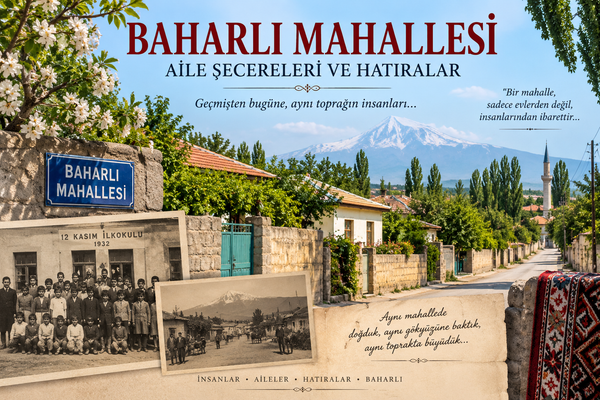
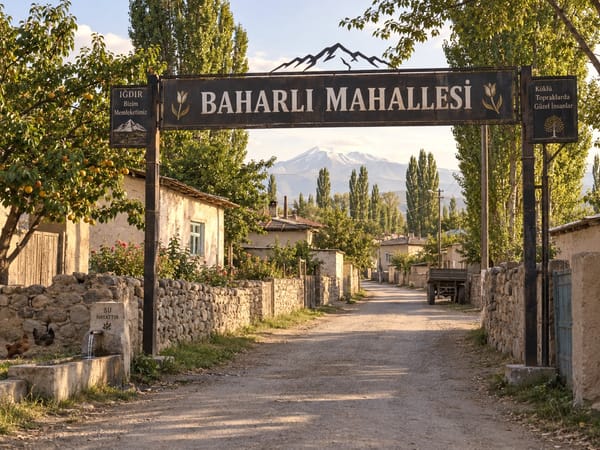
Dear reader! For many years, Iğdır's slaughterhouse was on the road to Baharlı Neighborhood. The slaughterhouse building was a remnant from the Russians. Its walls were sturdy, and its ceiling was high. Huge wooden beams stretched from one end of the building's ceiling to the other, forming a roof-like structure with triangular supports. On one side of the slaughterhouse was a small guardhouse, and on the other side was a grove popularly known as "Meşe Kerem's cabbage patch." It was surrounded by a wall and filled with poplar trees. Directly opposite the building, the house of the legendary figure of Iğdır's history, the late Kör Hacı, surrounded by high walls, stood out. On one side of the slaughterhouse was a large area known as "Mal Meydanı" (Animal Square), which served as an animal market on certain days of the week. (This dirt and hard ground would become the football field for the neighborhood's youth in the afternoons.)
Since the slaughterhouse service was affiliated with the Municipality, the Municipal Administration would allow anyone it deemed appropriate to live in the guardhouse with their family, thus ensuring the security of the slaughterhouse. My uncle Hacı Kadir worked at the slaughterhouse since his childhood. In a sense, he was the doyen, the most experienced, of the slaughterhouse. He had retired and was living in a beautiful house with a walled garden in Baharlı Neighborhood. He was vigorous for his age. Everything that had happened was vividly alive in his memory.
HACI KADİR YÜCE NARRATES
"I was born in 1933. I am a member of the Gıskan (Gıskî) tribe. In those years, my father Bedir Bey lived in Baharlı Neighborhood. My lineage continues as follows: My father Bedir Bey, son of Abdi, and Abdi is the son of Mirze. We are relatives of the Gıskan tribal leader Ali Mirze Bey. The name of our village is Karagüney. When going to Korhan, after passing the village of Gevro, there are houses on the hillside. That is our village. Gevro was the village of Mıhemmede Eset (Eset Özdemir).
Hüsnü Bingöl was originally from the village of Poxan in Ağrı. He was the nephew of the Sheikhs. He held the rank of Major. Intelligence matters were his responsibility. Whoever he called to him never returned. He was tall and handsome. He dressed in civilian clothes. His boots were eye-catching. Even seeing him approach from a distance would evoke a mixed feeling of awe and trepidation. He wouldn't look left or right, he would walk straight ahead. If he suddenly turned his head and looked at someone, that person would be immediately detained and interrogated. Hüsnü Bingöl protected the poor and the destitute. Names like Sheikh Ailesi, Rutto, Yusufe Tehir, Sheikh Musa, Ehmede Keçel, Abdülhadi Kuş, Kereme Şengoi from Erhacı, Mecite Almas were constantly by his side, like his protectors.
I was a young man. In those years, a person named Bekir was working as a guard at the slaughterhouse. The incident unfolded as follows:
Ahmet Yiğit, the 10-year-old son of Ali Mirze Beyoğlu Eset Bey (1948), wanted to go to his house in Baharlı Neighborhood one evening, but Guard Bekir blocked his way, threatening him, "You will not pass through here at this hour again!" Ahmet turned back. He wanted to go to Baharlı Neighborhood via the immigrants' road. Hüsnü Bingöl, who was out for an evening walk, saw Ahmet alone in the dark street and questioned him:
"My child! What are you doing on the street at this hour?"
"I wanted to go home, but Guard Bekir blocked my way and prevented me from using that road."
Hüsnü Bingöl couldn't make sense of this, delivered Ahmet to his father's house, and headed towards the slaughterhouse. He approached the door with stealthy steps. From inside, he heard the sound of Morse code. He took out his weapon and quickly opened the door. Guard Bekir tried to reach for the weapon he had placed on the table, but Hüsnü Bingöl acted faster, shooting Guard Bekir. The body was immediately removed from the scene that night and buried in an unknown location.
Years passed. In 1961, when the late Mehmet Çavuş (Şur) was the guard at the slaughterhouse, children playing in the grove next to the slaughterhouse stumbled upon a body. When they pulled it out, they found a male corpse with its clothes and shoes on. The slaughterhouse workers gathered at the scene, but no one dared to report it to the prosecutor's office. They reburied the body, but this time deeper. It is rumored that this body was that of Guard Bekir, killed by Hüsnü Bingöl."
THE NAĞI (ODOĞLU) BEY INCIDENT
Dear reader! It is impossible to summarize a personality like Nağı (Naki) Bey in a single sentence or paragraph. Nağı Bey was the most humanist and deeply nature-loving personality of Iğdır in the 20th century. He was a flawless and ideal human type. He harbored no resentment or hatred, dedicating most of his time to his family and his beloved vineyards and gardens. I don't like repetition, but if you allow me, I will introduce him to you a little.
Nağı Bey was born in Yerevan. As you know, in those years, the Iğdır and Yerevan regions were under Russian rule. The majority of Yerevan's population consisted of Muslim inhabitants, especially Azerbaijanis. Nağı Bey completed his education in Yerevan. His father was a Hacı. He was involved in trade and agriculture. He possessed considerable wealth with his bread factories, vineyards, and gardens. He had five children: Abbas, Bekir, Fahriye, Süheyla, and Ayten. (Bekir Odoğlu was the owner of Çiçek Pasajı in Beyoğlu.)
Nağı Bey's family had a magnificent mansion in Yerevan. The villa, crafted by an Armenian master, was adorned with various carvings and artisanal works. The rooms opened onto special balconies called "şahniş," and the bay windows, covered with colored glass on three sides, gave the house a palatial atmosphere, captivating those who saw it.
Unfortunately, when civil war broke out in the region in 1917, the entire family abandoned their mansion with a pool surrounded by flowerbeds and scattered in all directions. The family finally reunited in Iğdır in 1920. They settled in Istanbul. However, Nağı Bey's heart remained in Yerevan, in his ancestral home. He was well-off in Istanbul. He continued his aristocratic life, but an unknown force was drawing him to Yerevan. With the establishment of the Republic, when Yerevan remained within the borders of the Soviet Union, Nağı Bey, hoping to be close to Yerevan, loaded his children, who were studying in Istanbul's most prestigious schools, into a truck and set off for Iğdır. The children were, of course, uncomfortable with their father's decision, but they could not object.
Nağı Bey settled in an Armenian house in İdirmava – now owned by Hasan Alagöz. He had the house restored with the help of Hungarian craftsmen. The house even had a radio, a gramophone, and a piano.
Nağı Bey was filled with a love for nature. He took up viticulture and gardening. He had two large vineyards and gardens, one large and one small. He applied special grafting techniques to peach, apricot, apple, and grape varieties, creating unique flavors specific to Iğdır. He spent most of his time between the two vineyards. He had two phaetons. Due to his love for animals, he did not allow the use of whips. The horses would walk at a leisurely pace along the dusty roads of Iğdır. His love for nature was so intense and sincere that it was difficult for him to pick fruits from the trees. One day, while driving his large phaeton to distribute crates of fruit to friends and acquaintances, one of the horses stumbled, the crates overturned, and the fruits scattered onto the street. Nağı Bey looked at the fruits on the ground and muttered aloud:
"Oh, if only I hadn't picked you from your branches."
Nağı Bey established one of Iğdır's first rice and cotton gin factories. Using a method he developed, he packaged peach preserves and participated in the İzmir International Fair in 1935, winning first prize. Immediately afterwards, he began exporting preserves to Germany.
While pursuing all these endeavors with great enthusiasm, he would go to Dize village whenever he had the opportunity. His daughter Süheyla, who accompanied her father, describes one of those moments as follows:
"There was a village called Dize on the banks of the Aras River. The city of Yerevan stretched out in all its splendor on the opposite bank of this village. On a good day, it was possible to see all kinds of activities in the city center from the banks of the Aras with the naked eye. My father would come to this village on some days and sit silently on one of the slopes of the hill facing Yerevan. We were together again that day. My father's eyes lingered on Yerevan for a while. His face became calm. I felt unknown longings and storms raging in his heart: his ancestral home, vineyards and gardens, his childhood and youth... And one day, everything was cut off like a knife, his ancestral home was forbidden to him, the borders were closed. This incomprehensible injustice weighed heavily on his heart like a stone. My father suddenly broke his silence. He buried his face in his elbows and, unable to bear it any longer, burst into sobs. That day, I had solved the riddle that connected my father to Iğdır: the longing for his ancestral home!"
Nağı Bey spent most of his time among the trees, working tirelessly and without getting bored. Indeed, this love for trees also made his children jealous. His daughter Süheyla recounts:
"I had an important matter to discuss with my father. I went to him in the garden. He was walking among the trees with a large pair of scissors in his hand, carefully and lovingly. I waited in the distance. I said to myself, 'I'll talk to him when he takes a break from his work!' Minutes passed, my father neither took a break nor noticed me. I stood in front of him angrily, forcing my way between him and the trees:
"Daddy, do you love these trees more than us?"
"Why do you feel that way, my beautiful daughter?"
"Didn't you promise me something yesterday? Did you forget?"
"No, no, my daughter! I love these trees for you, they are all yours, that's why I love them!"
My father was quick-witted. He never lost his sense of humor. But his love for nature was above everything else.
SÜHEYLA ODOĞLU (KARAPOLAT) NARRATES
Iğdır was a small town, but it was at a crossroads where roads met. Illegal immigrants gathered in Iğdır and from there went wherever their hearts desired.
In those years, the issue that most troubled the government was the suspicion that there might be spies among those coming from Russia. MIT (MAH) Inspector Hüsnü Bingöl carefully monitored and managed espionage and counter-espionage activities. It was clear that he was performing his duty. However, one mistake cost our family dearly.
It was during the days when Hüsnü Bingöl was organizing counter-espionage activities. The border bridge between Iğdır and Yerevan was closed to normal crossings but was still open for trade. One day, Hüsnü Bingöl summoned my father:
"Naki Bey, I know you have cousins on the other side of the Aras. As a merchant, go there and persuade your relative to gather information for us!"
"I'm sorry, but I won't get involved in such a business!"
One of my uncles was staying with us. We knew we had cousins and uncles beyond the Aras, but that was all! We had no communication whatsoever.
My father feared no one. He spoke his mind and never deviated from what he believed to be right. Perhaps because of my father's fearless attitude, Hüsnü Bingöl was disturbed by my father's refusal.
One day, plainclothes police forces arrested one of my father's cousins in Russia through a clever scheme and brought him to Iğdır, accusing him of espionage and taking him into custody. Soon after, the investigation extended to my father. After all, his cousin had been arrested on charges of espionage!
I was 16-17 years old in those years. Police officers swarmed into the house. They took my father and my uncle Hüseyin into custody. My uncle was epileptic and needed close supervision. But they didn't want to understand this.
As soon as the police entered the living room, they surrounded the radio and shouted with joy:
"We found the transmitters! We caught the spies!"
No one else in Iğdır had a radio in their house except us. There was a belief that such devices could only be used for military purposes. I couldn't stand still; I was rebelling against this injustice. I intervened:
"That's not a transmitter! It's a radio!"
No one was listening to me. This time, their attention was drawn to the loudspeakers my uncle had carefully placed in the rooms. They examined this system with great astonishment. In their minds, they had captured a large espionage network!
I loved listening to the radio. I spent a significant part of my day by the radio. I would move the radio's large knob back and forth, listening to the world from one station to another. Most of all, I listened to Italian radio. The Rome station, when its time came, would begin its broadcast with an announcement that made my heart flutter:
"Ci diffisone Rome. Posto di Turchia" meaning "This is Radio Rome, Turkish broadcasts."
That year, the Second World War had just begun. Every day, I would sit by the radio with a pen and paper, noting down the latest developments in my own way: "The Germans attacked such and such a country, the British sent so many soldiers to such and such a place," I would write down such absurd information.
One of the policemen got hold of my notebook. He shouted with joy:
"That's it! We found it! All the information is here!"
They couldn't stop themselves. Like madmen, they rummaged through every corner, every chest. Our French novels and school books flew through the air. They took my father, my uncle, the radio, and my notebook and left. They arrested my father and sent him to Erzurum. Our radio also went to Erzurum, attracting attention! The whole family was plunged into great mourning.
My father did not remain silent about this injustice. He wrote letters and sent telegrams to many politicians, including National Chief İnönü:
"How can you do this to a person who stood by you in difficult times like me? I gathered orphaned children and took them under my protection, I extended a helping hand to helpless immigrants!"
My father remained in custody for nearly 10 months. During this time, we were all in a miserable state. How could we not be! Who could know better than us how nationalist and patriotic our father was...
While the trials were ongoing, my sister Fahriye's husband, Recep abi, took care of our household. Finally, one day, the news came that my father had been released. My father was found innocent. Five people arrested at the same time with similar charges had been executed! There was even an Azerbaijani religious scholar among them. We celebrated with joy and sacrificed animals.
The ugly slander and prison days had deeply shaken my father. Moreover, he had contracted diabetes during these troubled days.
The day after he returned, he confronted Hüsnü Bingöl with his head held high:
"Mr. Hüsnü, I am here. What evil did you see in me to do this?"
"Mr. Naki, there was a mistake! I apologize!"
"Because of this mistake, my family and I suffered so much torment!"
This black mark on our family continued to exist for a while. In Iğdır, where even the slightest rumor would branch out and spread, unfortunately, the effects of this incident were felt in different ways. One memory that remains in my mind like a bitter pain was this:
I was in my last year of middle school. During the exam, two teachers were chatting with each other. One pointed at me and said to the other:
"Fail that spy's daughter!"
When I came home, I told my father what I had heard. My father collapsed into the armchair lifelessly, as if his entire soul had been torn from his body:
"My daughter, how could they say that to you!"
At that moment, I saw how my father was devastated by the pain. This was the greatest punishment that could be given to a person.
The life of an immigrant family is full of difficulties. Whether rich or poor, families need peace and love in the depths of their souls. Forced migrations from one place to another and the events experienced unknowingly make them fragile. They cling to life with both hands, yet at any moment they are ready to be enveloped in deep disappointment and withdraw from life with an undefined melancholy.
My father was someone who took all our family's troubles upon himself, trying not to let us feel anything. He held himself responsible for the unhappiness and disaster that befell his family, and he repaired our mistakes with great compassion.
My father had been battling diabetes since his prison days. Although he had accepted his illness and was receiving the necessary treatment, one day, due to a bit of neglect and bad luck, he contracted a deadly diarrhea. As soon as the news of his serious illness arrived, my elder brother Abbas flew to Erzurum. Unfortunately, my father passed away in Iğdır in 1944 at the age of 64, far from his beloved wife and children. My father had wished to be buried in Iğdır. If only my father had been buried in one of his beloved gardens! He was buried in the old cemetery of İdirmava neighborhood. The cemetery was open. Herds of animals would pass through it. In time, neither stones nor graves would remain! Today, my father's grave is lost.
HÜSNÜ BİNGÖL AND AHMEDE ŞEMO (HUN)
There were two groups within the tribe whose closeness and friendship Hüsnü Bingöl could not win: the Güneş family and Ahmed Şemo. Although I had written in my previous article that he had entrapped Naci Güneş and sent him to Erzurum Prison. He was also looking for an opportunity to corner Ahmed Şemo. Finally, such an opportunity presented itself.
Since Ahmed Şemo's first wife, Zeyno Hanım, was the cousin of Brukan tribal leader Kinyas Kartal, his son Hamit Hun had a close relationship with this family. He befriended a person named Ahmet Kartal. Ahmet Kartal, who was from Van, was skilled in deception and fraud.
One day, during a visit to Iğdır, he met Eşref Kaya, a person of Karapapak origin whom Hüsnü Bingöl highly valued, through Hamit Hun. Ahmet Kartal convinced Eşref Kaya that if he gave him money, he would buy a flock of sheep and graze them in the yayla (summer pasture), and they would earn a lot of money by selling them in the autumn. Eşref Kaya handed over his accumulated money to Ahmet Kartal. Ahmet Kartal, of course, did not buy any sheep. In fact, one day in the middle of summer, Eşref Kaya, curious, went to the yayla and wanted to see the sheep Ahmet Kartal had supposedly bought. Ahmet Kartal showed a flock belonging to another ağa as his own. Eşref Kaya was convinced and returned to Iğdır.
When autumn came, Ahmet Kartal disappeared. Eşref Kaya, realizing he had been defrauded, asked his friend Hüsnü Bingöl for help. Hüsnü Bingöl's first question was through whom he had been introduced to Ahmet Kartal. When he learned it was Hamit Hun, Hüsnü Bingöl did not want to miss this opportunity and filed a lawsuit in Doğubayazıt against Ahmed Şemo, who, along with the Güneş family, resisted his authority in the Kurdish community.
The trial lasted a long time. Ahmed Şemo went back and forth from Iğdır to Doğubayazıt by phaeton almost every week. This hardship reached such a point that as the phaeton descended the arduous Çillê pass towards Iğdır, Ahmed Şemo sighed, "Oh, if only I could fall from this phaeton and roll into the abyss, so I would be rid of Hüsnü Bingöl, and he of me." Again, on the return journey from such a trip, he fell ill and passed away in the spring of 1944 at the age of seventy-three. Since the lawsuit was filed against Ahmed Şemo, Hamit Hun escaped punishment.
The incident did not end there. Hüsnü Bingöl added the note "Extreme Kurdish nationalist and dangerous" to the file of Ahmed Şemo and his family.
Ahmed Şemo's beloved son, Mecit Hun, graduated from Erzurum High School as the top student (1943). During his high school years, he had five inseparable friends:
- Ali Rıza Uzuner: Former Minister of Labor (1971-73)
- Refet Sezgin: Minister of Energy and Natural Resources (1967-69)
- Prof. Dr. Şerafettin Turan: Dean of the Faculty of Language, History and Geography (1969-72) and President of the Turkish Historical Society
- Prof. Dr. Mustafa Parlar: Rector of METU and Istanbul Deputy. A bust of him is located at the faculty entrance.
- Sait Erdinç: Van Deputy and Constituent Assembly Member (1961)
Mecit Hun went to Ankara as soon as he received his high school diploma. He wished to study at Ankara Law Faculty. The Student Affairs office told him that a security investigation would be conducted, which could take about two weeks. Mecit Hun settled in a hotel in Ulus. With great excitement, he bought law books before school even started and began reading them with interest. Two weeks later, he went to the Law Faculty. The Head of Student Affairs came with a telegram in his hand. He did not want to deliver bad news to a student who had graduated from high school as the top student. He handed over the telegram. Mecit Hun saw the following statement:
"The person in question and his family are Kurdish nationalists and have a stance against the fundamental principles of the Republic. Registration is deemed inconvenient. MAH Regional Chief Hüsnü Bingöl."
It was as if a knife had been plunged into Mecit Hun's heart. He returned to the hotel crying. All his friends had registered at the best universities. He was helpless. He packed his books and returned to Iğdır (Autumn 1943).
He did not mention Hüsnü Bingöl's telegram to his father. His father already had an ongoing lawsuit with Hüsnü Bingöl. He was being tried as a defendant in the case filed by Hüsnü Bingöl. He did not want to upset him further, but Ahmed Şemo sensed that his beloved son's right to education had been taken away because of Hüsnü Bingöl.
During the 1943-44 academic year, Mecit Hun became an assistant teacher at Iğdır Middle School, staying at the home of Esat Ogan from Melekli village, who was his kirve (a type of ritual kinship). He taught Mathematics and Physics. He planned to try his luck at university again the following year. He had almost memorized the law books. However, fate drew him another path. His father, Ahmed Şemo, passed away in the spring of 1944. The tribal elders pressured Mecit Hun, asking him to take care of his tribe. Under these circumstances, it became impossible for him to go to university.
(Note: Mecit Hun had only one person in his family or life with whom he shared all his secrets: his elder sister Gurci (Hun) Selçuk. When he couldn't figure things out, he would go to his sister Gurci and ask for her opinion. Gurci had never seen the inside of a school. Her life was spent traveling between the yayla (summer pasture) and Kafirköy/İslamköy (Karakoyunlu). She didn't know a single word of Turkish. Until her death, she lived with her kofis (traditional Kurdish headscarf) and derye (traditional Kurdish women's clothing) on her head. She had extraordinary intuition and memory. Mecit Hun explained to his sister about Hüsnü Bingöl's telegram and why he couldn't enroll in university. Gurci strictly warned him: 'Don't tell our father about this! He will be very upset!' This remained a family secret.
I first learned this truth during an interview with my aunt Gurci (2000) after my father's death. I was shocked. My father never mentioned this telegram during his lifetime and never uttered a single word condemning the injustice done by Hüsnü Bingöl. You, my dear readers, can appreciate that when I heard my aunt Gurci's explanation, a great anger and resentment towards Hüsnü Bingöl arose within me at that moment. Not as his son, but as someone who knew Mecit Hun for his charisma, superior intelligence, persuasive ability, effective eloquence, and boundless knowledge, I perceived the obstruction of such a talent's career as a murder.)
Mecit Hun writes in his memoirs:
"At that time, I had graduated from high school and was working as an assistant teacher in middle school. I was in my most enthusiastic age. I was practically rebelling against the injustice done to my father and my family. That year, my father had passed away, and I had fallen into the position of being responsible for the management of the family and the tribe. There was great pressure and provocations against Mr. Hüsnü. Finally, I made my decision. I requested a meeting with him. He smiled and said he would be pleased, and that we could meet in his office or wherever I wished. I was happy and excited. I would at least get to know a little about the nature of this legendary man.
We met in his office. He offered me a military cigarette from his case. I started the conversation. I stated that it was unbecoming of him to support Eşref Kaya's unjust lawsuit against my father. I spoke fearlessly, almost judging him.
He listened to me calmly. When I finished speaking, the first question he directed at me was, "Is what you're saying true?" I was surprised. Mr. Hüsnü seemed unaware of what had happened. Then he began to speak. He wasn't trying to impress me; on the contrary, he was trying to convince me that the comments and rumors about him were unfounded. When the conversation ended, the Hüsnü Bey that had taken shape in people's minds was replaced by a humble, helpful, gentle-tempered Hüsnü Bingöl. He said he would meet with Eşref Kaya and the judge of the case to find a solution to eliminate the opinion I had formed about him. Within that week, an agreement was reached between us, and the lawsuit was dropped."
Mecit Hun completed his military service as a Second Lieutenant in the Artillery branch in İzmit Gebze and Polatlı between February 28, 1945, and October 30, 1948. During a visit to the military unit in Polatlı, the President of the Republic, İsmet İnönü, asked his fellow commanders there, "Do you have an officer who is good at mathematics? Our children (the late Ömer and Erdal İnönü brothers) need a good mathematics teacher." Upon this request, Mecit Hun spent most of his time at Pembe Köşk giving mathematics lessons to the two brothers. İsmet İnönü's daughter, Özden Toker Hanım, says in her memoirs about those days:
"Later, a dark-haired, tall young man, whose name I learned was Mecit Hun, regularly came to our house in Pembe Köşk and gave mathematics lessons to both of my elder brothers. One day, my mother curiously asked this young man:
"How are the children doing?" Mecit Hun replied in a serious tone:
"Erdal is not bad, but Ömer doesn't get it."
In the autumn of 1948, Mecit Hun returned to Iğdır Middle School as a substitute teacher. He continued his mathematics and physics teaching for one year. In 1949, he worked as a Sales Manager at Agricultural Equipment; there he met Cezmi Öztekin, the director with whom he would later publish a newspaper.
In 1950, he left Agricultural Equipment. He worked as a "controller" at the Cotton Agricultural Sales Cooperative with Nurettin Kirman. He became interested in journalism and published the DİL newspaper in October 1952.
Hüsnü Bingöl prepared a new file on Mecit Hun. In the "Kurdish Report" published by journalist Murat Bardakçı on March 18, 2012, Hüsnü Bingöl introduces Mecit Hun as follows:
"MECİT HUN: Son of AHMET ŞEMO, chief of the Geloi tribe, an extremist Kurdish nationalist and owner of the DİL newspaper."
After the first notary of Iğdır, the late Mustafa Şimşek, got married, he left his wife and children in Iğdır and enrolled in Ankara Law Faculty. Mecit Hun was also married and a father of four children. At Mustafa Şimşek's suggestion, he enrolled in Ankara Law Faculty in 1958. However, his tribal and family responsibilities were so intense that he dropped out after his second year. He returned to Iğdır. Studying at university remained an unfulfilled desire for him.
SALAMULLAH EMMI'S SAD JOURNEY
My dear readers! After all these readings, my heart does not allow you to leave my page with a sad and bitter feeling. Without straying too far from our topic, I would like to conclude today's article with a pleasant anecdote:
Hamza Aygün narrates:
"Salamullah Emmi was a Caucasian immigrant. According to what was told, before coming to Turkey, he had a position similar to 'glava,' meaning village headman or district director. His mother, Zinnet Hanım, was married to Zülfikârlı Hacı Hüseyin, and she earned her living as a midwife.
After coming to Turkey, Salamullah Emmi earned his living by working as a farm laborer in Kazancı village. He was very humorous. He was always listening. Regarding this characteristic of his, there was even a saying among the people: "Don't stir the tea, Salamullah will come out of it!"
One day, an interesting incident happened to Salamullah Emmi, who had taken on the job of night watchman in the village for a while. Salamullah Emmi used to tell it like this:
"It was long past midnight. Kazancı village was silent and deeply asleep. With my watchman's rifle on my back, I was patrolling the side of the village closer to the Aras River. Suddenly, I noticed a dark figure in the darkness. From his demeanor and actions, it was clear he was a stranger. I aimed my rifle and shouted, "Stop!" The figure approached me with his hands in the air. My guess was not wrong. Before me stood a fugitive who had just crossed the Aras River, the border between us and the Russians.
In those years, there were skilled human networks. In the middle of the night, at an opportune time, they would secretly transport civilians from one side to the other for a fee. In such a period, when espionage incidents were quite intense, one of my duties was to report suspicious individuals to the authorities.
I was suspicious of the man's movements. The stranger pleaded, "Help me!" I merely said, "Come to my house!" I took him home with me.
I closed one of the rooms and quickly set off for the district center. I informed the National Security Inspector Hüsnü Bingöl of the situation. They arrested the suspicious man and sent him to Erzurum.
Some time passed. The court issued a summons for me to testify, in my capacity as the person who caught the fugitive. Gendarmes came and took me from the village. I walked in front of two mounted gendarmes and arrived in Iğdır. This time, the mounted gendarmes changed; two other gendarmes, also mounted, took me in front of them and brought me to Orgof. The mounted gendarmes changed again; the newly assigned gendarmes also took me in front of them to Çille village; the gendarmes changed again; in this way, each time delivering me to the nearest gendarmerie station, from one station to another, walking on foot, I arrived in Erzurum in 20-30 days.
My clothes were in tatters, my feet covered in blood. Without wasting time, they brought me before the judge.
The judge pointed to the man I had caught on suspicion of espionage:
"Did you catch this man?"
"Yes, sir!"
After thinking for a moment, the judge asked,
"Was there anyone else with him?"
"No, sir!"
The judge looked at his papers, then raised his head and called out to me:
"Alright, son! You may go!"
Had they put me through all this torment just to ask these two questions! And the return journey was another ordeal...
I was not the kind of person to accept this injustice. I stepped forward:
"Judge, I have a request!"
"Yes, my son?"
"I am a village watchman. I did my duty by catching this man. But for the two questions you asked, they sent me here on foot from Iğdır. Look at the state of my feet! I was brought here in misery for days on the roads. Now you say, 'Alright, you may go,' but how am I to go? I don't even have five kuruş in my pocket!"
The judge spoke in astonishment:
"Did you come all this way on foot?"
"Yes, sir!"
In those years, courts did not provide financial assistance such as "travel allowance" or "subsistence" to those they summoned. The judge, gathering money with his own means, handed it to me and sent me off to Iğdır.
(TO BE CONTINUED)