A Unique Man: Attorney Ataman Yalçın
This article presents a biographical account of Attorney Ataman Yalçın, focusing on his father Rıza Yalçın's political career in Iğdır, his own professional life as a lawyer and teacher, and his experiences with local politics and journalism.
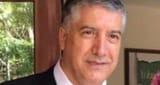
Attorney ATAMAN YALÇIN
In the person of Rıza Yalçın, Iğdır both embraced and reinforced the concept of politics and honesty. Based on the principle of "politics for honesty," Mr. Rıza, who served Iğdır as mayor and deputy, brought to our Iğdır the identity of a politician, which is now sought with a candle; with his dignified, serious, and trustworthy personality, he left his mark on Iğdır's political history.
My Life
I was born in Iğdır in 1937. I come from a family of six children. I have been residing in Bursa since 1976. I am married with three children.

My father, Rıza Yalçın, is a native of Karakoyun district. His father, Haydar Bey, and his brothers belonged to the "Karakoyun Beys." This "Beylik" (chieftaincy) in my family was so prominent in those years that, due to the Exile Law, members of my family were almost targeted and sent into exile!
Since my father was born in 1906, he attended Russian schools for primary and secondary education. He went to Yerevan for secondary school.
One of my father's school friends was Kinyas Kartal! Both later became deputies and continued their friendship in the Turkish Grand National Assembly.
My father could not continue his education after finishing secondary school (Rıznakiye). He knew Russian but did not speak it. (There was a record on his deputy identification card that said "knows a little Russian.")
After completing his military service as a clerk in the branch office, he married the daughter of his uncle, Aziz Yalçın.
My father had one brother named Eşref and three sisters. My uncle Eşref, who worked for the "Kömürcüoğlu" company in Bursa for many years, contracted cancer. He passed away in Iğdır.
My father served as the Mayor of Iğdır between 1939 and 1950.
In 1950, he became the CHP District Chairman. He continued this duty until 1954. That year, he was elected as a deputy from the CHP. This duty ended in 1957. In 1961, my father entered parliament again, this time from the YTP (New Turkey Party).
Attorney Ataman Yalçın
Iğdır Sevdası
591
My father passed away in Ankara in 1966, on the eve of his planned return to Iğdır.
Rıza Yalçın, Mayor (1939-1950)
My father served as the Mayor of Iğdır during the "National Chief Period."
There was a single-party government. My father, as a leading figure of the CHP, served as both the Mayor of Iğdır and the head of the People's Houses.
The municipality's capital was very small. Despite this, he bought a place called "Keşiş Bağı" and personally planted poplars with his own hands.
In our photo archives, there were a few pictures showing my father planting saplings in those years, beautifully illustrating his determination to work. It was clear that he loved his job and was happy to serve his people.
He acquired "Narınçoğlu Bağı" from the Sultanabat Beys and planted poplars there. Soon after, he opened it to the public as a modern cemetery.
My father also tackled Iğdır's water problem. I remember, on November 12, when I was a student, we used to drink muddy, worm-infested water from the stream flowing behind the school. When my father had artesian wells dug in three places in the city, the public finally had access to clean water.
Feyzullah Zengi had a coffeehouse next to Emek Pharmacy. My father would host his friends and guests there. Tea and other expenses were recorded as debt in a ledger, and at the end of the month, his first order of business with his 180-lira salary was to call Mr. Feyzullah and clear his debt. He would then hand me the very small amount of money left in his pocket to spend on household chores.
Towards the mid-1950s, Fazıl Baykal briefly took over the mayoralty. When news came that he had cut down and sold the poplars in Keşiş Bağ, my father, I will never forget, said with great anger,
"Why are they doing this! I created a work, you should add a work to mine."
Rıza Yalçın
Attorney Ataman Yalçın
592
My father never spoke ill of his political rivals. Throughout my life as his son, the only words I heard my father say behind a politician's back were those he uttered out of anger towards Fazıl Baykal.
It was true that my father had been in a rivalry with Osman Ataman for the mayoralty in the 1930s and 1940s. However, my father never said a single word against Osman Ataman at home. In fact, at one point, they had taken the mayoralty from my father and given it to Osman Ataman. His brother Ali Ataman's respectability with the state and the special attention he received from Hüsnü Bingöl as a result, caused the "Ataman" family to appear in a more neutral position both among the public and the state.
Despite this unfair situation, my father neither complained nor spoke against it.
Love for İnönü
My father was as if born a CHP member. He dedicated himself to the party's values, sacrificing his property for this cause.
During his first term as a deputy (1954-57), he took me with him to the Parliament and introduced me to İnönü. I respectfully kissed the Pasha's hand and stood shyly beside him.
My father had a special affection for İnönü. In fact, in the 1960s, during his second term as a deputy from the YTP (1961-1965), when signatures were being collected to initiate an investigation against İnönü, my father firmly objected, saying,
"He is a historical figure, I will not sign for him to be brought low!"
"Tell them I'm not here!"
My father was not at peace with politics. He tried to stay away from political activities as much as he could. But people would run after him, encouraging him into politics. I personally witnessed one of these instances.
I was a final-year law student. There were great preparations for general elections in Turkey. My father, to avoid being caught by any party, had returned to Iğdır and was hiding in his ancestral home in Karakoyun.
Indeed, soon after, politicians in Ankara started looking for my father. Among them, members of the YTP, founded by Ekrem Alican, were particularly insistent.
Before my father left, he had warned the household:
"If they ask, don't tell them where I am."
One day, a flamboyant party delegation came to our house. They were searching for my father everywhere in Iğdır.
593
We just spread our hands and said, "Honestly, we don't know either!" One of them, smiling as if he understood the situation, said, "We know how to find him," and left.
They found my father and placed him third on the list.
When the YTP won three parliamentary seats in those elections, my father re-entered parliament as a deputy.
My father was not enthusiastic about election campaign activities. I remember very well the evening the election results were announced. Carefree, he went to bed early and slept. In the morning, party members from Kars congratulated my father, saying,
"Congratulations, you've been elected!"
My father was not keen on me entering politics in the future. Whenever he had the chance, he would advise me, "If you enter politics, I will not forgive you!"
"Kasım Gülek was showering under the shower.."
It was sometime towards the end of the 1950s.
The DP, which came to power alone, was trying to close down the People's Houses, which it saw as a CHP stronghold, with the laws it enacted, and at the same time, it was blockading the CHP nationwide. The CHP, experiencing the biggest defeat in its history, had fallen out of favor and lost its importance.
CHP Secretary-General Kasım Gülek hoped to get things back on track with a counter-campaign, which he would later summarize as "we put on our clogs and hit the road." He was traveling everywhere, trying to reorganize the party. The first person he visited in Iğdır for this purpose was my father.
That summer, I had gone to Zor plateau with my sister and brother-in-law. On a hot August day, I came down from the plateau to Iğdır.
My body was burning with the heat of Iğdır. I was impatient to take a cold shower.
Hoping to cool down a bit in the scorching summer heat, I had set up a provincial-style shower in a secluded corner of our garden, mounting a water tank and a tin funnel on the wall.
I quickly passed through the garden gate and headed towards the shower area. Oh, what did I see? Someone I didn't know at all was taking a shower naked! For a moment, I did hesitate, wondering, "Did I come to the wrong house?"
I came to the front of the house and sat on the stairs. At that moment, my father entered through the opened garden gate. It turned out that this man was Kasım Gülek, the CHP Secretary-General! He had come to discuss political matters with my father!
My father accepted the position of CHP district chairman and rolled up his sleeves to reorganize the party in the Iğdır region. He continued this duty uninterrupted until 1954, when he was elected as a deputy from the CHP.
Attorney Ataman Yalçın
594
My father's inclusion on the list, or rather, his receiving an offer to become a deputy, was somewhat coincidental. In 1950, the three deputies who entered parliament from the CHP, Abbas Çetin, Latif Aküzüm, and Veyis Koçulu, later switched to the DP. During the preparation of the 1954 election lists, a void was created in the CHP regarding the name to represent the southern districts, and thus my father's name came to the forefront.
Business or Politics?
There was no doubt about my father's talent for commercial creativity. Unfortunately, politics was a clear obstacle to his developing and highlighting this characteristic.
Whenever he found an opportunity away from politics, he organized his business life and generated new ideas. These efforts quickly began to yield results.
He opened and operated three flour mills in Karakoyun, Dize, and central Iğdır.
We had a tracked tractor of the Lanz brand. Flour and paddy machines were operated with this tractor.
He opened a shop and became a bicycle and radio dealer. This business quickly gained significant momentum, but the trouble of politics would soon get in his way and divert my father's attention elsewhere.
My Father, the Deputy
In the 1954 elections, the CHP left my father to his own devices with his work in the three districts.
Unfortunately, my father did not have the cash to carry out this work. He took out money by mortgaging our house and lands. He won the election by borrowing.
The deputy's salary was 2200 liras. This money was far from covering the expenses of our house in Ankara and the comings and goings. For this reason, my father tried to pay his debts and stay afloat by selling a part of the lands every year.
In the 1957 elections, the CHP was inclined to nominate Behram Öcal from the Iğdır region. When the application for candidacy was made, my father acted cautiously. Since every candidate had to deposit a large sum of money with the party as a formality, my father told Mehmet Hazer,
"If you have promised Behram Bey, I should not waste my children's livelihood for nothing."
Perhaps because he did not receive the assurance he wanted that he would be nominated again, my father did not become a candidate.
In 1958, he returned to Iğdır from Ankara and started a new business by opening the Güven Real Estate office.
Iğdır Sevdası
595
This endeavor continued until the 1960 Revolution.
My Father's Death
My father's second term as a deputy ended in 1965.
We were living on the fifth floor of an apartment building in Seyranbağları.
As soon as the election period closed, my father wished to return to Iğdır. As preparation for this, he had sent me to Iğdır beforehand, asking me to tidy up the house there. At that time, I had just gotten married and hoped to settle in Iğdır as a lawyer.
On the eve of their move to Iğdır, my father, mother, and sister, after loading their belongings onto a truck, decided to spend that evening at an open-air cinema, hoping it would relieve their boredom.
Returning from the cinema, my father, tired, lay down in bed and called my sister to his side, asking her to "rub my feet." My sister sat by his bedside and attended to my father. My father, who suffered from high blood pressure, suddenly collapsed motionless in bed. A ruptured cerebral vessel caused my father's sudden death.
When I learned that Mecit Hun had passed away in the same way, I couldn't help but say, "When the profession is the same, death is also the same."
My School Life
I finished primary school on November 12. However, after studying the third grade of primary school in Kasımpaşa, Istanbul, with my uncle, I returned to Iğdır.
Among my classmates in middle school, Nizamettin Onk, Behman Turan, and Tağı Toktamışoğlu from Aralık are the first ones that come to mind. Except for Sevim Özel, the daughter of Nurse Hanım, the entire class was male.
After middle school, I faced financial problems. Families who were well-off sent their children to high schools in Erzurum and Istanbul.
My father was in financial difficulty. As they say, "Politics leaves a person hungry!" My father was a good example of this proverb. Everyone thought my father was prosperous because he came from the "Beys" family, but in reality, my father could not make ends meet.
Fortunately, my mother's aunt's son, Muhtar Demirbulak, lived in Kars. I stayed with him and studied at Kars High School during the 1953-1954 academic year. When my father became a deputy in 1954, we moved to Ankara. I registered at Atatürk High School and completed my second and third years there.
"My father decided my professional life."
The profession I desired was agricultural engineering. Since my childhood, I was filled with a love for nature and animals. I wished my profession to be related to these subjects.
Attorney Ataman Yalçın
596
Like Behram Turan, Adnan Başkentli, and many other friends, I also wished to continue my higher education at the newly opened Atatürk University in Erzurum. But just in case, I had also registered at Ankara Law Faculty.
When my father saw my indecision, he recommended law. Indeed, legal education was the foundation of many professions. I would have the right to choose to be a prosecutor, judge, district governor, governor, or work in a freelance profession.
With this thought, I started Law Faculty. I graduated in 1962.
After graduation, what concerned me most was what I would do. I wanted to earn money and be independent as soon as possible.
My father was a deputy, but he didn't show much interest in my efforts to find a job. He had a principle of his own. Even if his child's future was at stake, compromising his political integrity bothered him.
At one point, he asked Sırrı Atalay to find me a job. He offered a position as an administrative officer in the Ministry of Interior, but I rejected the offer because, by the nature of the profession, I would have to be under the influence of politicians.
Military conscription calls came every six months. I had five more months ahead of me. I had no intention of spending all that time sitting at home. I entered the Ministry of Reconstruction and Settlement, Personnel Department, as a civil servant. I postponed my military service for a year and continued my civil service.
I graduated from the reserve officer school in Halıcıoğlu, Istanbul, as a Supply Second Lieutenant. I drew Maraş by lot. That year, preparations for the Cyprus landing were underway. Our units were constantly on the move. When the 14th Infantry Regiment, to which I was attached, was moved to İskenderun, I spent six months in the mountains and rocks. When my assignment came to the Ministry of National Defense, I returned to Ankara.
After military service, I started my internship at the Ankara Bar Association in 1965.
For freelance law, I needed to intern for six months with an experienced lawyer of ten years. Thus, I had the chance to complete the second part of my internship with Attorney Tevfik Araslı, my mother's aunt's son.
I returned to civil service. During a government change, when the staff of the institution I was affiliated with were all reassigned from scratch, I reacted and resigned from my position.
I had decided to go to Iğdır as a lawyer.
My Days in Iğdır
Iğdır was the land where I was born and raised. But I had been away for many years.
Before I set off, my father handed me a list of names. "If you have trouble,
Iğdır Sevdası
597
ask these gentlemen for help!" he said. But he also did not neglect his warning and advice:
"Don't get involved in politics, I will not forgive you!"
Iğdır was rapidly dividing into two hostile camps. Either you would take a side and enter politics, or you would stay out of trouble.
I had a difficult choice ahead of me. Even if I considered politics, the situation didn't save me. Ideologically, I was a CHP member. After all, it was a party my father had dedicated years to. I, too, had grown up reading CHP-leaning newspapers and magazines that my father brought home from a young age. I had embraced this party, but in those years, the CHP administration in Iğdır was closed to Azerbaijanis. It was impossible for me to take a position there.
My Years as a Teacher
The money I earned from law did not cover my expenses. I decided to increase my income with an additional job.
There was a teacher shortage in middle school and high school. I became a French teacher for first-year middle school students.
I took my teaching seriously, dedicating myself to my students as much as I could.
In my second year, I started teaching Sociology, Logic, and Philosophy to senior high school classes. I made special efforts to equip my students with skills for the test questions in entrance exams.
Working as both a lawyer and a teacher, I would return home exhausted.
My Years in Journalism
I had made an attempt to publish a newspaper in high school.
In 1968, I brought a "pedal" (printing press) from Istanbul and started publishing a newspaper named "Güven" in addition to Atalay Sever's "Hudut Postası" and Fazıl Şıktaş's "Yeşil Iğdır" newspapers.
The idea of publishing a newspaper had matured during conversations with Atanur, Ali Yardım's son. When Atanur later backed out, I took a young man named Fikret with me and continued our work in this direction.
Publishing a newspaper in a small community like Iğdır was truly difficult. Being the target of people whose political calculations and interests were harmed was not overwhelming me. But I had made a decision. I would continue on my path without compromising my principles and honesty under any circumstances.
I would like to illustrate my difficulties:
There was a manager of İş Bankası in town who was known as a bribe-taker. When I got the opportunity and evidence, I wrote against him. Another newspaper, on the contrary,
Attorney Ataman Yalçın
598
praised the manager to the skies.
The manager had sent a message through his employee:
"I learned that you don't have a car. Let me open a credit for you to buy a Renault."
This was an overt bribe offer. The next day, I announced it in my newspaper. Soon after, inspectors intervened. The manager was assigned to another position.
My friends opposed me:
"Man, he was bringing and distributing financing to Iğdır."
I didn't want to see such a manager, who kept 10% of the credit for himself, in my district, but I was alone in my struggle.
One day, I also had a falling out with the district governor. Attorney Türkan Hanım told a story called "Nişankaya Lottery." The district governor had skillfully embezzled a car. I wrote a lot about this. But nothing came of it.
My Years as a Lawyer
Since most cases were against the treasury, I couldn't take on cases for six months. I was forced to turn to this area. This time, I was making enemies in two ways.
The plaintiff would deny my efforts by saying, "Actually, you didn't do much; if I hadn't seen the judge, this case wouldn't have been resolved in my favor," or the defendant would curse me, saying, "You took my property and gave it to the treasury. May God..."
There were six lawyers serving in the district: Türkan Aydın, Muzaffer Öztekin, Caner Öcal, Ali Karageyim, Zeki Kara, and myself.
Additionally, three non-Iğdır lawyers, Ahmet Tunçezen, Haki Başer, and Şirzat Turan Sadak, were working in the district.
A certain segment was uneasy about my arrival in Iğdır. I heard rumors like:
"This man came here to do politics. His father was a mayor and a deputy, a child of a prominent family in the region. Moreover, he has the support of the villages and the people behind him."
To prevent this possibility, a rumor was even spread about me, saying, "Ataman Yalçın is a communist."
In my newspaper, I meticulously criticized the municipality's work.
Restaurant owners were pouring greasy, dirty kitchen water onto the main street, claiming, "we are watering the roads." Flies swarmed, and a heavy smell of dishwater spread everywhere. I wrote about these in my newspaper and warned the municipality. According to what I was told, the mayor, upon reading my newspaper, hit his hands on his head and knees, saying,
"What does he want from me? Everyone says this man is good, but look, he's even bothering me."
Iğdır Sevdası
599
By nature, I keep my distance from those older than me. For example, due to the age difference between Mecit Hun and me, I never had the chance to meet him even once. We exchanged greetings a few times, but we never discussed any topic face-to-face.
In those years, the political arena in Iğdır was between Mecit Hun and Hüseyin Akbulut. The rest were stuck between the two.
My Years in the Güven Party
My involvement in the Güven Party was mostly due to friendship. At one point, Ecevit came to Iğdır with our fellow townsman Fikret Ekinci.
Fikret Ekinci is the son of Paşa Bey, Iğdır's first mayor.
He was a retired captain and, during the 1960 Revolution, had risen to the position of Chief Advisor to the Presidency with the help of Türkeş. He was an intellectual who wrote articles in Forum magazine. He told me that he would soon be a candidate for the CHP (1969 elections) and therefore wanted me to join the party and help him.
However, it was impossible for me to join the CHP. That election period passed just like that.
This time, in 1972, we reconnected. This time, Fikret Ekinci had left the CHP and joined Feyzioğlu's Güven Party. He asked me to join this party and help with its organization in the southern districts. One day, he invited me to his house, and I explained my principle to him:
"I have a promise to my father. I will definitely not enter politics, but I can help by providing external support."
In 1969, I participated in the GP's organizational efforts with Rıza Karasu, who was a candidate for mayor. I was not a member of the party or an executive on its board. I offered my support from the outside. I also gave speeches at a few rallies held for the party.
In the 1973 General Elections, I was nominated as a candidate for the Provincial General Assembly from the GP list. Karakoyun voters openly voted for me.
I received 3000 votes from my village and 2000 votes from Iğdır, winning a seat in the provincial general assembly with as many votes as a deputy could get.
On the other hand, Attorney Mustafa Şimşek had prepared a list for the Municipal Council Membership. He wanted to start a new era by placing young and dynamic names at the top of the list. I won the elections from the AP list, placing third.
Hüseyin Akbulut had won the mayoralty, but he had a short-term legal obstacle to immediately taking office. We, the council members, had to gather and elect a new mayor.
We gathered at a club. The DP had 10 council members, and the CHP and AP together had 20. There was also Cemalettin Güneş from the Millet Party.
Attorney Ataman Yalçın
600
At the meeting, we began bargaining to distribute the mayoralty and council membership among ourselves. In the end, Mecit Hun's name was accepted as mayor.
However, when political rumors and pressures overwhelmed me, I resigned from the municipal council. At the next meeting, Cemalettin Güneş was elected Mayor.
Exhausting Rumors
After coming to Iğdır, I was slowly drawn into an unwanted atmosphere of gossip and polemics.
I had a school friend named Hayati. We had shared many things in the past, and he was someone whose humanity and friendship I valued. While touring the Iğdır region as a member of the Workers' Party, he saw my sign and came to visit me.
This news quickly spread. My relatives:
"What are you doing with that communist? He's a Workers' Party member."
Such warnings created distress in my heart because they damaged my personal rights. Moreover, as a family tradition, I had a CHP inclination. The Forum magazine published by Çetin Altan and İlhami Sosyal was always in my hands.
"What's it to you! As a person, I love and value Hayati. In this respect, he is more valuable than you in my eyes."
"Be honest, don't be afraid of anything else."
When I went to Iğdır, I had no money in my pocket. In fact, I had bought the typewriter from a friend, half cash, half promissory note, and went to Iğdır. I had even bought my books on credit. Of course, these aspects were unknown. The general opinion was that my financial situation was very good, and that half of Karakoyun village (!) belonged to us.
However, only 30 decares of land remained. And today, that is also gone.
Difficulties never scared me. Because wherever I go, I carry with me a valuable piece of advice my father gave me:
"Be honest, don't be afraid of anything else."
Honesty may not make one rich, but it is a fact that it does not leave one hungry either.
Mücahit Özden HUN : http://www.igdirsevdasi.com/cilt2/42ataman.pdf