Dracula Mafia
This essay explores the historical origins of the Dracula myth, contrasting it with the real Vlad the Impaler, before drawing a parallel to modern-day "Dracula Mafia" figures who exploit vulnerable youth through drug addiction.
Dear readers!
First and foremost, I wholeheartedly wish you a happy Eid al-Adha. (Cejna we ya Qurbanê pîroz be!)
I know that an Eid article should be heartwarming and joyful. This is a tradition. On such days, when people gather with their families and have a pleasant time, beautiful anecdotes and articles caress the hearts of readers, instilling in them feelings of hope and love. However, unfortunately, I will not be writing such an article. The events I witnessed in the last ten days have remained a burden on my conscience. In this article, I will bring to your attention a truth that is a common sorrow of society. Before moving on to the main topic, we will take a journey into today's world, starting with a mythological character. First, I want to delve into the origins of the word "Dracula."
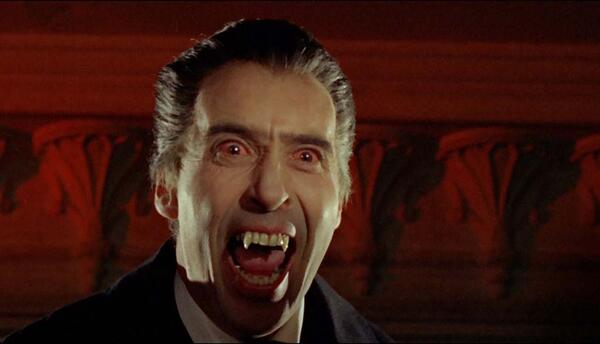
Dracula is the name of the first vampire. There is no definitive information about the origin of the word "vampire." It is thought to have come from Slavic languages, probably Serbian. A vampire is a mythological creature believed to rise from the grave between sunset and dawn, attacking people and sucking their blood. The etymology of "Dracula," the first vampire, means "son of Dracul." The word "Dracul" in Romanian means "Dragon." As you know, the human mind always likes to break away from reality and wander in the world of "fiction," or "imagination." This has also been the case for the "Dracula" stories.
THE REALITY IS THIS: During the years when the Ottoman Empire expanded in the Balkans, one of the lands it conquered was the region of Wallachia, located in present-day Romania, between the north of the Danube River and the south of the Southern Carpathian Mountains. The word Wallachia is the Turkish interpretation of the Romanian word "Ulah." During the Ottoman attacks, Vlad Țepeș, the son of a prince in the region, was taken captive. He was brought to the capital Edirne to be devşirilmek (converted to Islam and trained to become an administrator in the Palace). It is even claimed that he received education in Mathematics, Islamic History, and Aristotelian Logic alongside Sultan Mehmed the Conqueror. In later years, Vlad Țepeș escaped from the Ottomans, took refuge in Wallachia, and organized a military resistance there. He was filled with hatred against the Ottomans. He treated the captives he caught mercilessly. Torture was his greatest hobby. Imagine, while the poor prisoners of war writhed in agony impaled on stakes, their cries echoing through the heavens and earth, Vlad Țepeș enjoyed eating his meal with relish, watching them.
In Ottoman history, this cruel military commander was given the nickname "Vlad the Impaler." We learned this name from history books and could not hide our astonishment at his savagery. One day, Vlad the Impaler was captured by Ottoman soldiers and beheaded, but he left behind an interesting mythological trace.
THE FANTASY IS THIS: Vlad the Impaler dies, but the legend of Dracula is born from the terrifying memories of his cruel tortures left on the people. The human mind enriches this legend every year, resulting in books and films about Dracula. Today, the name "Dracula" is one of the indispensable characters of popular culture.
IMPALEMENT ON GREASED STAKES
I believe it would be difficult to understand the reason for the birth of the Dracula legend without explaining the act of impalement, which terrified the public and prisoners.
Impalement was not an easy task. It required special skill and care. The purpose of impaling people was to make them suffer for as long as possible, to make them groan in agony.

First, the stakes were prepared and greased. The victim to be impaled was laid face down on the ground, their hands and feet tightly bound. The executioner, performing this task, skillfully inserted the greased stake above the tailbone, pushing it upwards parallel to the spine but without damaging the bone, and bringing it out from under the victim's nape. Then the stake was set upright and fixed to the ground. Under normal conditions, the victim would writhe in agony for 2-3 days and then die.
VOLTAIRE and KARL MARX
In the 18th and 19th centuries, Europe was grappling with vampire stories and horror. Every house, every village, every city was shaken by people claiming to have seen vampires and by terrifying tales. In such a period, which made human hearts tremble and caused people to shut themselves in their homes out of fear, two famous figures ironically adapted vampire stories to the social events of the day. For them, the terrifying entities were not real blood-sucking vampires, but economic vampires that sucked human labor and capital.
The French philosopher Voltaire, one of the most important figures of the Enlightenment, scoffed at vampire stories and said:
"Real bloodsuckers are not in graves, but among us. Stock market speculators (profiteers), merchants, and businessmen suck the blood of the people every day. These certainly do not die, but rot while alive."

The communist thinker Karl Marx's approach to the subject was not much different:
"Capital is dead labor. It comes to life only by sucking living labor, and lives the more, the more labor it sucks."
MY VISIT TO ROMANIA
I was invited to the European Energy conference. The conference was to be held in Bucharest in June 2013. I flew to Bucharest for 4-5 days. After settling into a hotel named Diesel and completing the one-day conference, we began touring the tourist attractions of Bucharest with the guidance of a Romanian friend. Since the Romanian language belongs to the Latin language group, many words show similarities with French or Spanish. Furthermore, after World War II, many dissident intellectuals from the communist regime settled in Paris, making French the most widely spoken language among the public.
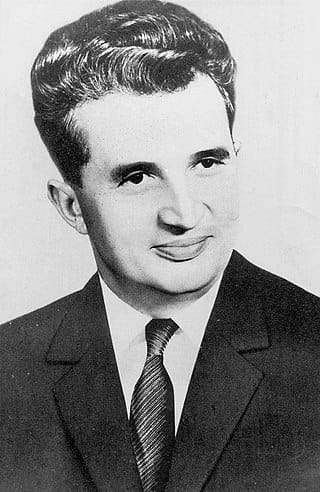
The most striking structure in Bucharest that caught my attention was the Parliament building. Just as the Presidential Complex is an important structure for Ankara, the same applies to the Parliament building in Bucharest. According to the Guinness Book of World Records, this structure is the largest, most expensive, and heaviest civilian administrative building in the world. The palace, as a political and administrative complex, was planned and completed during the Ceaușescu Regime. Ceaușescu named the palace the House of the Republic (Casa Republicii). Today, the building is known as the People's House (Casa Poporului).

In 1971, Ceaușescu traveled to North Korea. He was impressed by the magnificent building named Kumsusan, built by leaders whom the people almost idolized. He planned to build a similar one in Bucharest. The project of a 28-year-old female architect named Anca Petrescu was accepted. The palace was completed in 1984. Inside the palace, Ceaușescu saw himself as a divine figure, like the Egyptian Pharaohs. However, even gods are mortal. On December 25, 1989, he was overthrown by a popular uprising and, along with his wife, was summarily executed by firing squad.
One day was enough for Bucharest. There was a great similarity with Paris. The city plan was almost identical. They had even erected a replica of the Arc de Triomphe in Paris in Bucharest. For this reason, Bucharest was nicknamed "the Paris of the East."
My friend, realizing I was bored, offered me a surprise trip. I accepted. We set off north by car. After about a 2.5-hour journey, a magnificent castle appeared on a distant hill. A strange feeling of fear filled me. There was no reason to be afraid because I didn't know what the castle was.
As we parked the car and headed towards the castle entrance, I noticed a sign that read, "Count Dracula Castle" in English. My friend's surprise was now evident.
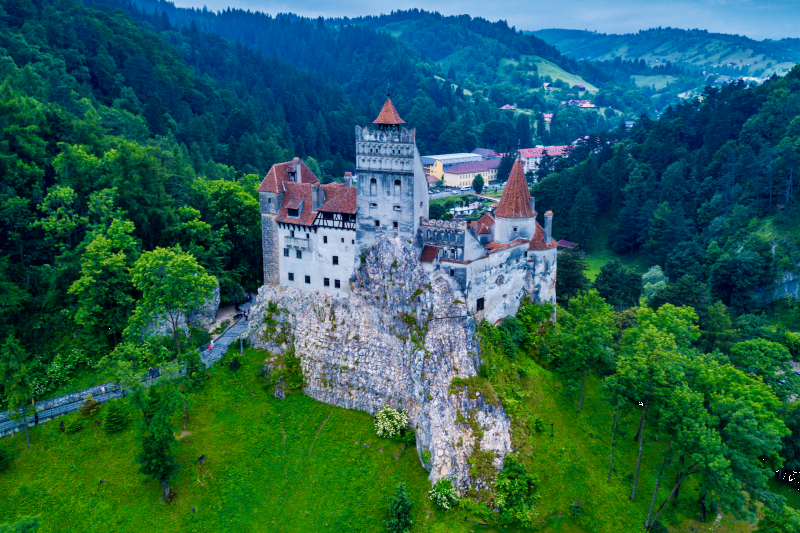
The castle was built in the heart of Transylvania, the region where vampire stories originated. Transylvania is the name of a region in the very center of Romania, surrounded by mountains, with dense forests divided by deep valleys, instilling a deep sense of fear and mysticism in the human soul. Strangely, the Earth's magnetic field is felt most strongly in Transylvania. In every century, a creature emerges in this very region, sharing its emotions and bargaining with the devil, and its influence and power continue for centuries. Dracula was born in this region. The vampire spirit was born here and spread from here to the world. Of course, Dracula had long been dead. The castle was being used as a museum, receiving over half a million visitors a year.
We bought our entrance tickets and went inside. The corridors and the stairs leading to Dracula's tomb were dimly lit. Suddenly, someone dressed in a vampire costume appeared in front of me. My heart almost stopped. Apparently, the bad surprises were going to continue.
The museum officials led the tourists into the room where Dracula's tomb was located. The doors closed. A dim light filled the room again. As we were intently looking at the tomb, it suddenly opened, and a real man in a vampire costume emerged from it. Since our subconscious had been fed with vampire fears since childhood, we all wanted to scream and run away. When my friend grinned at me, I understood the situation and calmed down. It was, of course, a cold joke. Later, we would learn that Dracula's real burial place was unknown, and we would laugh.
***
DRACULA MAFIA AMONG US
It was about ten days ago. It was close to midnight. My phone rang. My wife, Şeval, answered the phone. Şeval's facial features suddenly tensed. Her tone of voice changed. The person on the other end was speaking in a panicked and pleading tone, trying to explain something. It was clearly a difficult matter. Şeval handed me the phone:
"Hello, yes, who am I speaking with?"
"Uncle, my name is Hasan. I'm calling from Manisa. I'm also from Geloy. I need help."
"How can I help you?"
"I have a cousin. His name is İsmet. His family lives in Ardahan. İsmet has been working in construction in Istanbul for many years. İsmet has been missing for eight months. Recently, our relatives accidentally saw İsmet lying wrapped in a blanket under the Galata Bridge. They wanted to go and talk to him, but İsmet insisted that they leave: 'I am in the hands of the Mafia. Right now, the Mafia's men are watching us. It's impossible for me to leave here. If I come with you, the Mafia will shoot us all.'"
Hasan briefly summarized the situation and asked:
"Uncle, what can we do to save İsmet?"
Hasan expected me to answer immediately. I had read life stories or watched documentaries about people held captive by the Mafia, but of course, I had never imagined such a situation would happen to a relative of mine.
"How old is İsmet?"
"25-26 years old!"
"Give me some time to think! I'll call you back."
Şeval and I sat down and assessed the situation. Since Şeval had lived in Istanbul for many years, she had witnessed many similar incidents. She said that if we went to the Galata Bridge, we would definitely be targeted by the Mafia's bullets. I had an important meeting the next day.
"Şeval, buy a ticket to Istanbul for the day after tomorrow! I will pull İsmet out of the Mafia's hands."
"No! You can't do that! Even the state can't deal with them. If you want, call the Karaköy Police Station and ask for help! You'll see, they won't even lift a finger. In many places in Istanbul, the Mafia and the police work together."
"Şeval, please be quiet! You can't stop me! Saving a young person's life is more valuable than anything else."
I was sad that I had raised my voice at Şeval, but it was unacceptable to leave a young person helpless.
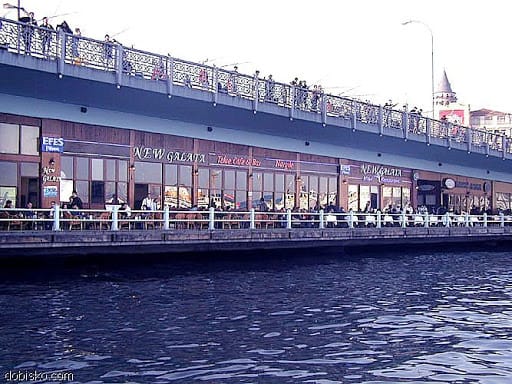
I sat on the armchair, muttering "Allah! Allah!" and fell into thought. Everyone knew about the cooperation between the Mafia and the police in America in the 1930s. Was this situation really still ongoing?
I called Hasan:
"Does İsmet have a drug problem?"
"I don't know, uncle!"
"Does he sell drugs for the Mafia?"
"I don't know, uncle!"
"Hasan, I'll be in Istanbul the day after tomorrow. Connect me with one of the young people who saw İsmet under the bridge. Let them show me İsmet from a distance. Leave the rest to me!"
"Okay, uncle!"
It was some time after the meeting the next day. Hasan called:
"Uncle, I came to Istanbul by bus from Manisa last night. I picked up İsmet and put him on the bus. We are both on our way to Manisa by bus right now."
"Didn't you have any problems with the Mafia?"
"When I saw İsmet in such a miserable state, I couldn't bear it. I grabbed him by the arm and put him in a taxi, disregarding the danger. Uncle, İsmet has needle marks on his arms. His arms are all bruised. They got him addicted to heroin. İsmet both uses heroin and sells heroin for the Mafia. Uncle, I'll call you again when I arrive in Manisa."
It was the afternoon of the next day. Hasan was on the phone. His voice was laden with pain:
"Uncle, when I left home for work, İsmet made an excuse and left the house. Now he's missing! I searched everywhere but couldn't find him. He only has his driver's license on him. He has no money! I reported it to the police. I don't know what to do? Even if I catch him again, I don't know what to do. Uncle, is there a cure for this?"
"Heroin addicts need to be willing to get treatment first. Only 1% of those who are willing can recover from addiction and return to normal life. Since İsmet ran away from home, I don't think he will be willing. Even if he is hospitalized, he will run away again. I am also helpless. What we need to do now is find İsmet again!"
Hasan was a loyal cousin. He printed brochures and distributed them everywhere in the city, pasting İsmet's picture on walls and poles. Even after 5 days, we still haven't found any trace of İsmet. Hasan was also warning his friends in Istanbul, asking them to check the taverns under the Galata Bridge. İsmet might have found a way to return to Istanbul.
I sat and thought. Were there other young people from Geloy who had fallen into the heroin trap? Through phone calls, I sadly learned that many of our young people had fallen into the Mafia's heroin trap. All of them, as if on a journey of no return, had broken away from their friends, families, and life, leading a vagrant and miserable existence. The feeling of rebellion roared within me. Why weren't the institutions that stood on our taxes doing their job perfectly? Was it ethical for a civil servant to both receive a salary from the state and profit from the Mafia? The psychological loss that a young person's heroin addiction imposes on society is so deep and grave that it can nullify the social gain provided by hundreds of young people graduating from university.

Heroin and drug use is a serious trap facing all young people. The DRACULA MAFIA continues to suck the blood of our youth right before the eyes of state officials. There is no brave heart to say "STOP" to this! I want a state that protects its youth. Ending the suffering of a heroin/drug addict and their family and breaking the hegemony of the Dracula Mafia over youth is undoubtedly more meaningful and beneficial than the CANAL ISTANBUL project.
NOTE: DEAR READERS! I WROTE THE ABOVE ARTICLE ON JULY 19TH. İSMET HAS NOW (JULY 25TH) FLED OR BEEN TAKEN BACK TO ISTANBUL. HE IS SLEEPING IN HIS OLD SPOT AT THE GALATA BRIDGE. I AM VERY SAD.
ANECDOTES & JOKES
(Note: The terms 'Azeri' and 'Kurdish' in the jokes and anecdotes do not imply ethnic discrimination; on the contrary, they summarize the fraternal relationship of Iğdır's two indispensable ethnic values. The following jokes and anecdotes are published for the first time.)
THE KURD'S DONKEY
An Azeri wants to borrow his Kurdish neighbor's donkey to take watermelons to the market. He shouts from the garden gate:
"Hey kirve! Are you home?"
"Come in! The dogs know you. You don't need to be afraid!"
The Azeri opens the garden gate and walks cautiously towards the house, keeping an eye on the dogs. Although the dogs have seen the Azeri neighbor a thousand times, they hesitate between attacking and not attacking. It's as if if one of the dogs accidentally barks, they will all attack at once.
The Azeri reaches the Kurd's door without incident.
"I'm taking watermelons to the market tomorrow. It would be great if you could lend me the donkey!"
"No problem!"
They head to the stable together. The donkey is grazing outside. The Kurd points with his hand:
"Neighbor, take the donkey by its halter!"
The Azeri approaches the donkey. As he moves towards the donkey's head to grab the halter, the donkey turns its rear. This chase continues for a while. The donkey gets fed up and kicks the Azeri hard. The Azeri, falling to the ground, struggles to get up and mutters to himself:
"May Allah curse both the Kurd's dog and his donkey! Just when I barely escape one, the other kicks me."
STORKS
It's the first days of spring. Azeri and Kurdish children from the neighborhood have gathered to play football. The Kurdish goalkeeper looks up at the sky for a moment, watching the storks that have newly migrated to Iğdır. At that moment, he concedes a goal. His friends surround the goalkeeper and beat him thoroughly. When the child returns home in the evening, his father sees that the child's eye is swollen:
"Kuro! Kî te lêxist?" (Who beat you?)
The child recounts what happened. His father frowns:
"Son, what do storks have to do with you! Do they do us any good? Did we eat their meat, drink their milk, or eat their eggs?"
RECONCILING TRIBES
(The late Hamit Hun was one of the great figures Iğdır produced. He was a sought-after name at meetings. His wit and caricatures seemed to summarize the human comedy. Also, his passion for meat and kebabs was well-known.)
One day, two tribes quarrel, and they ask Hamit Hun to mediate a peace. Hamit Hun announces his decision:
"First, let me be a guest of one of you. Let them cook kebabs and so on. Let me listen to the problem in detail. Then, let me be a guest of the other side. Let them also cook kebabs and so on. Let me listen to the problem in detail. Then, I will make the fairest decision and reconcile you."
The parties accept the proposal. After two excellent feasts, Hamit Hun calls the parties to him. He finds one side right and the other wrong. The side found wrong is sad. They ask Hamit Hun why he found their tribe wrong. Hamit Hun shakes his head thoughtfully:
"You're right! Actually, I wasn't entirely sure when I made the decision. For justice to prevail, both sides need to invite me again, cook kebabs and so on, and then I will announce my decision with a clear conscience."
HAMIT HUN IN COURT
One day, Hamit Hun receives a summons. The court requests his testimony as a witness. Hamit Hun has always had an aversion to state institutions like tax offices, courts, and land registries. Even though he knows he will be testifying, a strange feeling of fear fills him. Moreover, he doesn't know what event he is being asked to testify about.
As Hamit Hun sits on the bench in front of the courtroom, the bailiff opens the door and shouts: "Witness Hamit Hun!"
Hamit Hun enters the courtroom with timid steps. His two neighbors are standing before the judge. After the judge completes the necessary formalities, he asks Hamit Hun:
"Mr. Hamit, do you know these people?"
"Yes! They are both my neighbors."
Hamit Hun does not get along with the fat neighbor due to water sharing issues. In fact, they have had many verbal altercations. The judge points to the fat neighbor and asks:
"This gentleman has filed a complaint, saying he is bothered by the other's aggressive dogs. According to his account, a week ago, the dogs attacked and knocked him to the ground, leaving him bruised and injured. You were passing by at that moment. Did you witness this incident?"
Hamit Hun swallows:
"Judge, the incident unfolded as follows: As the gentleman was walking, the dog appeared in front of the door and barked once. Barking once in dog language means: 'Don't even think about passing in front of our door!' However, this gentleman continued to walk. This time, the dog barked twice in quick succession. Judge, barking twice in quick succession in dog language means, 'I warned you, you wicked man, if you're a man, take one more step!' But unfortunately, this gentleman took his third step. The dogs, rightfully, attacked this gentleman who did not heed the warning."
The judge becomes uncomfortable:
"Mr. Hamit, I didn't ask you if the dogs were right or not. We want to know if you saw this gentleman on the ground or not."
"Judge, as you can see, this gentleman's width is greater than his height. It is against the laws of physics for this man to fall to the ground. We have been neighbors for 40 years, and I have never once seen this gentleman sitting or rolling on the ground. It is a blatant slander against the dogs, sir!"
AN UNPLEASANT DAY
(The late Kinyas Hun carried within his soul a cultivated anarchist stance and a ruthless intuition for criticizing society.)
Kinyas Hun sat in one of the tea houses in Söğütlü Neighborhood, watching the passersby with an unpleasant expression. Those who walked crookedly, those who covered one nostril with a hand and blew their nose onto the ground, those who strained their throats and spat phlegm onto the ground like bullets, all aroused disgust in Kinyas Hun's heart. He couldn't take his revenge on the people walking in the street, so he unconsciously picked on the waiter.
He asked the waiter for tea. The waiter placed the tea on the table as if throwing it. Kinyas Hun snapped: "This is too light! Bring me a strong tea!"
The waiter brought a strong tea, again placing the saucer on the table as if throwing it. Half the saucer was filled with water. Kinyas Hun snapped again: "Bring a new tea immediately. I don't want to see a single drop of water in the saucer!"
This time, the waiter served strong tea in a clean saucer. Kinyas Hun was lost in thought. He watched for a while the meaningless shouts and cries, the hustle and bustle of the crowd filling the street, and the behaviors that aroused an artificial feeling in the human soul. He came to himself and wanted to drink his tea, but the tea had grown cold. He gestured to the waiter: "The tea is cold! Bring a hot tea!" The waiter grumbled but did as requested. He placed a new tea on the table. Kinyas Hun again drifted off. The waiter kept warning him so the tea wouldn't get cold: "Brother, your tea will get cold! Brother, your tea will get cold!"
After persistent urging, Kinyas Hun reluctantly sipped his tea, stood up, and left. The waiter ran after him: "Brother, you forgot to pay for the tea!"
Kinyas Hun slammed the roll of newspaper he held in his right hand into his left palm: "Man! You forced me to drink tea under torture and persistently! And you still want money?"