The State's Reserve Force: The Mafia
This article explores the historical and contemporary relationship between the state and the mafia, particularly in Turkey and the US, arguing that states often rely on organized crime in times of need.

Dear Readers:
Do not ask if the mafia can ever be the state's reserve force. When necessary, under difficult or opportune conditions, even mighty states take refuge in mafia leaders and seek their help. There are thousands of examples of this in history.
THE STATE-MAFIA RELATIONSHIP IN TURKEY
The Republic of Türkiye also sought refuge in the mafia and asked for its help in the 1980s to kill ASALA members abroad, and in the 1990s to execute prominent Kurdish figures, patriots, and intellectuals. Everyone knows this reality. In fact, these mafia leaders are still glorified; if they are no longer alive, their death anniversaries are celebrated lavishly, and if they are alive, they are embraced by political parties and walk alongside them.
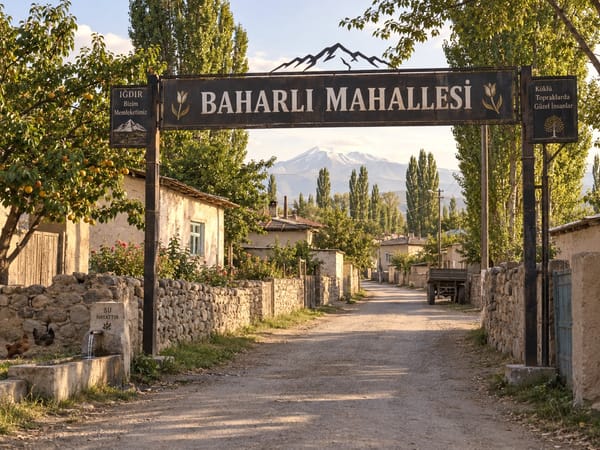
The writings of the Jewish journalist Abdi İpekçi disturbed the state. The state decided to silence İpekçi. It assigned this task to the mafia. Mafia member Mehmet Ali Ağca, with his friends, carried out the mission, ambushing and killing Abdi İpekçi. He hid for a while. He was caught. In 1979, he escaped (was released) from Maltepe Military Prison, where he was incarcerated, with ease. With the help of his friends, he came to Iğdır and crossed into Iran. The rest, as we all know, is history.

Abdi İpekçi (Jewish)
Despite the murders he committed, Ağca is still glorified as a "prophet" by some and leads a "glorious and honorable" life. Unfortunately, such collaborations, meaning the state protecting the mafia, dangerously encourage young people to join the mafia and seek their careers within it. The prevailing thought is, "One day the state will do me a favor; either turn a blind eye to my escape or reduce my sentence."

Ogün Samast, who murdered journalist Hrant Dink, has become popular enough that if he were released from prison, he could be elected as a Member of Parliament for a party. Moreover, this crowd does not see themselves as "murderers" because they protect the "glorious and honorable" state; on the contrary, they look at their "nationalist hero" silhouettes in the mirror with admiration. (Another journalist whom the state deemed dangerous and assigned to the mafia for elimination was Uğur Mumcu.)
Sometimes, mafia members or leaders, like Sedat Peker, hide in a safe place and sing. They both recount their joint ventures with state officials with laughter and pleasure, and try to leave a "nationalist" impression with statements like, "If I harm my state, I will commit suicide." They become more statist than the state itself. Such individuals are given the nickname "Rat" in mafia terminology. Whether they inform on the mafia they work for or expose the identities of those in the state who collaborate with the mafia, they cannot escape the label of "turncoat, traitor." The first example of this in history is a mafia member named Joseph Valachi.
The state used Sedat Peker in many of its projects; in return for this service (!), it opened doors for him in financial matters. Today, Sedat Peker, as a billionaire "rat," adds to his pleasure, and by embedding mafia culture in the hearts and minds of youth, he has become one of the representatives of a school of thought that says, "If you want to be famous and rich, you don't need to study. Appear 'nationalist' and lean on the state, commit a few murders assigned to you, and the rest will follow naturally."
When intellectuals came together and published the "Academics for Peace Declaration," the state, unable to find a legal justification or basis to prevent these academics, asked Sedat Peker for help. He, in turn, spread fear (!) by threatening to kill the signatories, thus supporting (!) the state. While doing all this, he, of course, never removed his "idealist" mask. He even took on the arms deliveries that the state should have made, providing logistical support such as radios and unmanned aerial vehicles to the Turkmen Mountain Brigades. He is generous (!). He distributes some crumbs of his billions to the poor or gives scholarships to students, making himself loved.
Once upon a time, Al Capone followed the same method, distributing money to Americans struggling with the 1929 global economic crisis. Such love for him rose in society that Al Capone announced he would run for president in the next elections.
Considering the indicators, we can say that our "nationalist" mafia leaders are also slowly warming up to politics.
THE BIRTH OF THE CONCEPT "THE STATE'S RESERVE FORCE: THE MAFIA"
The question of when this concept first emerged might bother your mind. The purpose of this article is to examine and present to your attention when the state-mafia collaboration first openly appeared. For this, we need to go back a bit, to the 1920s in the USA, to the dark period called "Prohibition."

The word "Prohibition" means "Yasak" in Turkish. Just as there was a special period called the "Tulip Era" in the Ottoman Empire, American history also experienced a special period called the "Prohibition Period," which became the subject of films and novels. This period is also the process in which "Mafia" in the modern sense was born and emerged.
THE "PROHIBITION" PERIOD
From the 19th century onwards, especially fanatical religious groups in the USA formed lobbies to implement alcohol prohibition, pressured politicians, and continued these efforts almost uninterrupted for a century. The most famous of these lobbies, the "Anti-Saloon League," finally succeeded in its goal in 1919, ensuring the implementation of the 18th Amendment. According to the new law, the production, sale, and transportation of alcoholic beverages were completely banned in the United States. The law was strictly enforced for 13 years, between 1920 and 1933.
Imagine, in a huge country, even beer production was banned, and it became impossible to find a drop of alcohol. Doctors rightly rebelled when it became impossible to use alcohol even for disinfection purposes in surgeries.
Interestingly, the Tulip Era, which had the exact opposite characteristic of the "Prohibition" period, with unlimited pleasure, wine, and tobacco consumption, also lasted 12-13 years (1718-1730). (Note: This reality also proves that humanity can endure 'alcohol prohibition' or 'unlimited drinking freedom' equally for 12-13 years. A strange manifestation of creation!)
THE BIRTH OF THE MODERN MAFIA
We would not be wrong if we say that the modern mafia was born with "Prohibition" (alcohol ban) in the USA. Before that, there were "gang" structures called "Gangsters." With the alcohol ban, gangs rapidly became mafias.
There was no alcohol ban in Canada and Mexico, America's two large neighbors. Also, the Caribbean islands (Cuba, Bahamas, Haiti, etc.) were suitable locations for alcohol smuggling. In those years, the Bahamas were a British colony. The USA complained to Britain, saying, "Alcohol is produced in the Bahamas and brought into our country." Churchill gave his famous reply: "Prohibition is an insult to the entire history of mankind."
Soon, gangs centered in New York rolled up their sleeves for alcohol smuggling. Pushing aside simple tasks like theft and bribery, they spread out in all directions for million-dollar alcohol deliveries. Al Capone preferred Chicago. Control of the Detroit River, which forms the border between Canada and the USA, seemed impossible. Cases of liquor could easily be brought into the USA.
LUCKY LUCIANO

One of those who got involved in alcohol smuggling was a gang leader named Lucky Luciano. (In 1998, TIME magazine listed Luciano as one of the 100 most influential people of the 19th century. The magazine cited Luciano's modernization of the mafia and transforming it into a smoothly operating national crime organization as the reason. The word "Lucky" is English and means 'Şanslı'.)
Luciano was born in Sicily on November 14, 1896. When he was ten, his father immigrated to the USA and settled in a New York neighborhood with a large Italian population. He changed his name from "Salvatore" to "Charles." (In later years, his close friends would call him 'Charlie'.)
Luciano dropped out of school at 14. After a short job, he got involved in dice and gambling on the street... Soon, he formed his gang called Five Points. His work was interesting: The gang's task was to protect Jewish children who were beaten by Irish and Italian gangs in schools. For this task, he collected 10 cents a week from each family.
No need for further words! When the Prohibition era began, Luciano and his friends got involved in liquor smuggling, quickly starting to earn millions of dollars. In 1931, after having his biggest rival killed, he earned the title of "boss of all bosses" in the mafia world. When the alcohol ban was lifted in 1933, he then entered the casino and drug business. However, no matter what he did, Luciano could not escape justice. On April 18, 1936, he was imprisoned.

And then, in 1939, World War II broke out. The USA initially remained neutral, watching from the sidelines. When the Japanese attacked the US fleet stationed at Pearl Harbor in Hawaii, the USA entered the war on December 7, 1941.
It was at such a time that the mighty US Government knocked on the door of Luciano, who was in prison, for help. The US Naval Intelligence Branch had detected enemy Italian and German agents secretly entering the country from the New York coast. There was fear of sabotage to important facilities. It was at such a moment that Luciano in prison came to mind. The reason for this was that Luciano and his mafia knew the New York docks and coasts step by step, with the experience they had gained since the days of liquor smuggling.
The US Government and Luciano reached an agreement. According to this, Luciano would assemble his team and secure the New York coasts, and in return, his sentence would be reduced at the end of the war. Luciano not only secured the coasts but also imposed a strike ban on the workers at the docks. When the USA landed in Sicily in 1943, Luciano then activated his connections in Italy and Sicily, ensuring they acted as agents for the USA. This secret agreement between the Navy and the Mafia went down in history as "Operation Underworld."
The USA emerged victorious from the war. It was time to pay its debt. The US Government's offer to Luciano was deportation to Italy. Luciano refused the proposal, stating that he was a US citizen. Despite his insistence, the USA forcibly sent Luciano to Italy. After a 17-day sea voyage, Luciano arrived in Naples, but his heart desired to live in Sicily.
Luciano could not adapt to life in Italy, and in October 1946, he secretly went to Havana (Fidel Castro's revolution had not yet happened). His friends had gotten involved in the hotel and gambling business in Havana. Luciano's goal was to be close to the USA, revive his mafia, and, if possible, return to the USA.
In 1946, a significant portion of US mafia bosses met in Havana. Luciano's goal was to unite the Irish-Jewish-Italian mafias and establish a criminal organization that could even defy the state.
There were three topics on the table: the division of heroin trade, the operation of Havana gambling centers, and the rival mafia members' hotel project in Las Vegas (Flamingo). (Those who have watched Francis Ford Coppola's THE GODFATHER film will see that these three themes are the main subject of the film.)
When the US Government learned that Luciano was in Havana, it pressured the Cuban Government, demanding Luciano's deportation. Cuba initially resisted, but when the US imposed an embargo, it was forced to send Luciano back to Italy. Luciano settled in Rome in 1948. When he did not stay quiet, he was held under supervised detention in Naples.
Luciano was now tired. An American director wanted to make a film about his life. Luciano accepted the offer. While waiting for the plane at Naples airport, he suffered a heart attack and passed away (January 26, 1962). He was buried in Naples. Upon his family's application, the US Government issued a special permit, and Luciano's coffin was transported to the family cemetery in Queens, New York.

CONCLUSION
As far as I can follow from the press, our Prime Minister from the 1990s, who had mafia connections, is striving to establish a new party. I assume the list of Kurdish names that need to be killed, which she holds, must have grown considerably! The lady clearly indicates her desire to become Prime Minister as soon as possible and eliminate new Musa Anters, Medet Serhats, Yusuf Ekincis, and Şevket Epözdemirs; she is impatient and cannot sit still. She shouldn't worry, the "Nationalist Mafia" members who will undertake this task are already wandering around idly like unemployed Japanese samurai, or "Ronin," waiting for the "sacred" mission to be assigned.
I wanted to report that everything is ready.
THOSE WE BURIED IN OUR HEARTS:


The understanding and mission of the Committee of Union and Progress, which was restructured in 1912 on the basis of Armenian, Kurdish, and Jewish enmity, is now undertaken by the "Nationalist Mafia."
ANECDOTE… ANECDOTE… ANECDOTE…
“THERE IS GOOD IN EVERYTHING!”
There is a frequently used expression in Anatolian culture. In undesirable events or disasters, to keep their hopes alive, our people try to maintain their optimism about the future by saying, "There is good in everything!"
A King in Africa is fond of hunting. One day, he goes hunting with his retinue, taking his assistant (Prime Minister) with him. He sees a deer in the distance. He speeds up his horse to get within arrow range. Unfortunately, the King falls from his horse and breaks two fingers. When there is a danger of gangrene, his two fingers are amputated. His assistant approaches the King: "Your Majesty, get well soon! There is good in everything!"
Angered by such a simple (!) dismissal of the disaster that befell him, the King orders his assistant to be imprisoned. As he goes to prison between the guards, the assistant turns to the King and says, "There is good in this too!"
Time passes. The King recovers. He goes hunting again. He sees a deer in the distance again. With his new assistant and retinue, he gallops his horse. The deer runs, the horsemen follow... The King and his retinue find themselves in a forest, in an unknown place. They fall captive to cannibals. As the cannibals prepare their cauldrons to eat their prey, they notice that the King is missing two fingers. According to cannibal belief, a person's limbs must be complete and intact to be eaten. They release the King but cook and happily eat the others.
The King, returning to his palace, orders the release of his assistant whom he had imprisoned.
"You said there is good in everything. You were right. If my two fingers had not been cut off, I would now be in the stomachs of cannibals. What I don't understand is, when I ordered your arrest, you also said, 'There is good in this too.' Why did you say that?"
"Your Majesty, if you had not imprisoned me, I would have been with you, and the cannibals would have released you but eaten me."
Dear Readers!
Our country and the world are going through a very difficult economic period. What do you say we try to maintain our optimism by saying, "There is good in everything!"?