Uncle and Nephew
This is a true story about an uncle and nephew, refugees from the Ağrı Rebellion, who find a new life in Argentina after the 1955 Istanbul pogrom.
Dear Readers:
In every culture, the uncle-nephew relationship develops uniquely. Below, I leave you with a true story of an uncle and nephew.
***
My first wife, Marianne, was Chinese-American. She worked as a flight attendant on Delta Airlines' international flights. Although she received much better job offers, she preferred the profession of flight attendant. The main reason for this was her passion for photography.
In every country she visited, she would wander the streets of the city, taking hundreds of pictures. In those years, digital cameras were either not yet on the market or were not preferred due to their low resolution.

One of Marianne's award-winning photographs in the USA
One day, Marianne decided to buy the most expensive analog camera, a Nikon. When she also bought "zoom lenses" of different sizes, enrolling in a photography course became a necessity. A few months later, she had learned all the intricacies of the camera.
First, she flew to Paris, Moscow, Tokyo, and even Warsaw, wandering the streets and taking interesting pictures. Over time, she developed a professional talent. She flew to every country Delta Airlines went to, developed the pictures she took in a darkroom she set up in a corner of the house, and then shared her feelings with me with great pleasure.
Easter holiday was approaching. I would have 3-4 days free. Marianne suggested:
"How about flying to Argentina?"
Delta Airlines allowed first-degree relatives to fly for free in First Class. It was impossible for me to say "No!" to the suggestion. I had never been to Argentina before.
A few days later, we were walking the streets of Buenos Aires. Our hotel, named "Mine," was in the respectable Palermo district by the sea.
On the second day, I couldn't leave the hotel due to a headache. My wife was determined to make the most of her time, going to the city's outskirts to take pictures. I saw her off in a taxi recommended by the hotel, telling her to be careful.
(Previously, in Warsaw, two young men on a motorcycle had approached Marianne quickly; the one sitting in the back had tried to snatch her camera. Luckily for Marianne, the driver couldn't make the turn, and the motorcycle skidded on the ground. The police intervened and returned the undamaged camera to Marianne.)
In the afternoon, as my headache subsided, I went down to the lobby with a book about the historical and tourist sites of Buenos Aires. The weather was sparkling. I could see the blue of the sea in the distance.

A view from the Palermo district in Buenos Aires
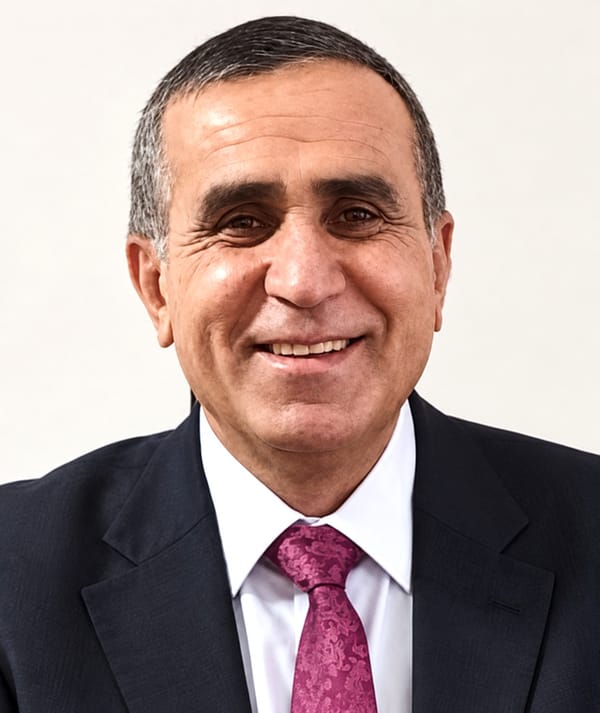
As I sipped my coffee, a white-haired gentleman in his 70s or 75s approached and, in Spanish, asked, "I know you're a foreigner, I was curious where you're from?"
"I am an American citizen, but I was born and raised in Turkey."
"Then we can speak Turkish, can't we?"
I was surprised. Someone who spoke Spanish perfectly wanted to speak Turkish. I replied in Turkish:
"Of course!"
"Excuse me! I bothered you. Your posture, facial expression, and demeanor didn't seem very foreign to me."
The interesting thing was that, even though he was Argentinian, the gentleman spoke Turkish beautifully. Moreover, I felt a sincere connection with him, as if we had met before. The gentleman introduced himself:
"My name is Kadir. I own the hotel. I was also born and raised in Turkey. I have been living in Argentina since 1956. I can say I'm a local now."
I put the book aside.
"Where in Turkey are you from?"
"I'm from Ağrı. Originally from Diyadin."
"Where are you from?"
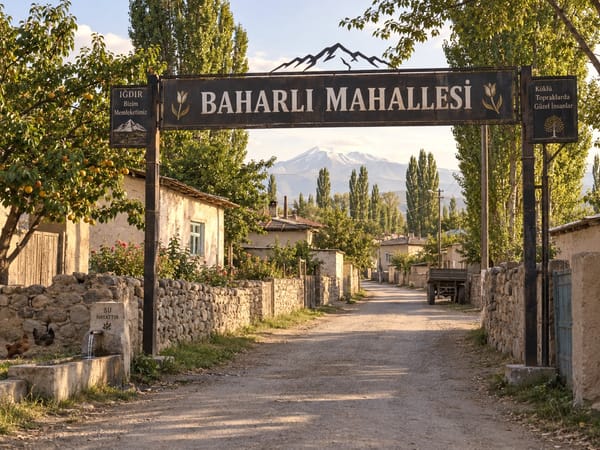
"Not too far! I'm from Iğdır."
Kadir gestured to the waiter. He whispered something in his ear. When the waiter left, Kadir asked abruptly:
"Are you Kurdish?"
"Yes!"
"I knew it at first glance! I'm Kurdish too."
"So you know Kurdish?" I asked half-jokingly.
"I left Diyadin as a child. I always spoke Kurdish with my late uncle. After his death, I forgot Kurdish."
"Did your uncle pass away here?"
"Yes! He got cancer ten years ago. Now I'm alone! I have two children."
The waiter served tea. It didn't look like black tea. A straw called a "Bombilla" was dipped into the tea. I was curious and tasted it. Kadir immediately got to the point:
"They call this Mate tea. Argentinians love this tea very much."
Later, I would learn that offering Mate tea to someone in Argentina meant a sign of respect. (A situation similar to the "sake" tea tradition in Japan.)
Kadir, with a longing to speak Turkish, took control of the conversation and tried to direct it. He questioned and learned almost everything about my life. When there was a silence, I felt as if it was my turn. I involuntarily asked:
"How old were you when you left Diyadin?"
I noticed a sadness settle on Kadir's face.
"There's a lot to tell, but I don't know if you want to hear it?"
"There's nothing that would bother me. We are children of the same region. To be honest, I'm curious about your life."
"Then let me tell you everything from the beginning.
It was the months when the Ağrı Rebellion ended (September 1930). Soldiers were shooting civilians on sight.
I was 9 years old. My uncle Mehmet, who was 17-18 years old, took me with him, and we hid in a rocky area. We watched our family members being shot from a distance. There was nothing we could do.
At night, we walked towards the city center of Ağrı. We stopped at village houses, asking for food. Most of the time, they closed the door in our faces because they saw us as rebels. Those who harbored rebels or gave them food were also shot. With the dry bread given by merciful old people, we headed towards Erzurum without stopping in Ağrı. It was October. We had no choice but to walk in the cold at night. After a journey that lasted for days, we finally arrived in Erzurum.
My uncle spoke Turkish well. Whenever he found an opportunity, he taught me Turkish. He knew it was necessary for a new life.
There was a slaughterhouse in a peripheral neighborhood of Erzurum. For 8-9 years, my uncle and I worked at the slaughterhouse in Erzurum. We slept and lived in a small room. Because of the event we witnessed, neither of us spoke a word, there was no conversation between us. We would sit silently, eat our meals silently, and retreat to a corner silently. In short, our days passed silently.
It was November. My uncle got into a fight with someone, there was a stabbing incident, and we had to leave Erzurum.
Sometimes walking, sometimes by horse-drawn carriage, we arrived in Erzincan. This time, we found work at the slaughterhouse in Erzincan and started working. My uncle was extraordinarily strong. Only he could grab a bull by its horns and bring it to the ground.
It was 1939. Towards the end of December, there was a severe earthquake. Later, we would learn that more than 30,000 people had died. For a few months, we struggled for survival in Erzincan. Our lives were already filled with suffering, pain, and hiding. To be honest, the earthquake seemed like an ordinary event to us.

1939 Erzincan earthquake
I was 18 years old. My uncle wanted to go to Istanbul, but we had no identification. We took the IDs from the dead and set off for Istanbul.
In Istanbul, we earned our living as porters. In 1952, when my uncle found a job as a doorman in an inn on İstiklal Avenue, he took me with him. The owner of the inn was a Greek man named Yorgo. He was rich. He owned the six-story building next to Çiçek Pasajı.
It was 1955. My uncle and I were staying in a small apartment on the ground floor of the inn. We had a life of our own. Our family had been destroyed, and we had accepted life as it was.
I will never forget, it was September 6th. Suddenly, a large crowd started looting the shops and houses belonging to non-Muslims on İstiklal Avenue, shouting slogans. Later, I would learn that the state radio had reported that a bomb had been thrown at Atatürk's house in Thessaloniki, and nationalist Turks had attacked Greek businesses and homes in particular for revenge.

There were no police around. The frenzied crowd was smashing shop windows, looting, and setting inns and buildings on fire. It was like hell.
I was 34-35 years old. My uncle must have been 42-43. Both of us took sticks and went out in front of Yorgo's Inn. We fought with the approaching crowd. I must confess, my uncle alone repelled dozens of attackers, swinging his stick tirelessly. I was no less effective. My uncle was already strong. During our years as porters, climbing the hills of Istanbul, both of us had developed a resilient physique. No matter what the looters did, they couldn't enter our inn.
The events continued the next day. There were still no soldiers or police around. My uncle had taken a hard blow to his shoulder. It was bleeding. He didn't care. Both of us were spewing out the hatred and revenge within us, as if these attackers had shot our families.
Our building was the only one on İstiklal Avenue that could not be looted or burned.
On the second day, a group of 40-50 people attacked our inn again, shouting "Down with the Greeks!" My uncle and I repelled them too.
On the third day, tanks entered İstiklal Avenue. Things calmed down.
Yorgo was at his house in Heybeliada when the events happened. He couldn't come out of fear. A week later, he finally dared to come to the inn. When he saw that nothing had happened to the inn, he hugged us, crying.
A few days later, Yorgo took us to his house in Heybeliada. It was a beautiful house like a castle. He had only one child. His daughter, Mine, had finished university and was preparing to go to America.
Yorgo took us to the guest room. Soon after, Mine also came in and welcomed us. Yorgo said that it was no longer possible to live in Istanbul, and he would sell his property and go to his relatives in Argentina. Mine sat on the sofa, listening to us silently. Yorgo turned to his daughter at one point:
"These two heroes stood against hundreds of looters and saved our Inn from being plundered and burned."
I felt Mine give me an admiring look. Yorgo, without further ado, made a suggestion:
"Would you like to come to Argentina with me?"
I left the decision to my uncle. We had been together for years, but I had never failed to show respect. My uncle, after thinking for a while, said he accepted the offer.
A few months later, Yorgo sold all his assets. We set off for Argentina by ship. While the ship was still sailing, a closeness developed between Mine and me. I had never been to school, my life had been full of hardships. Mine was a university graduate girl who had been raised with great care.
One day, while we were chatting on the deck of the ship, she told me she wanted to marry me. There was a 9-10 year age difference between us. Moreover, due to the suffering I had experienced, neither I nor my uncle had ever thought about marriage. I told my uncle what had happened. He smiled bitterly and hugged me. There were tears in his eyes. It was as if he was saying, "Our family has been destroyed, but our lineage will continue."
"Let's do it according to our custom. I will go and ask Mr. Yorgo for his daughter."
A few days later, our wedding ceremony was held in the ship's ballroom. It was a strange feeling. While the memories of the Ağrı Rebellion were always in my heart, now we were sailing towards an unknown country inside a ship. And married to a Greek girl...
After arriving in Buenos Aires, Yorgo, with the help of his relatives, opened a large haberdashery store. He bought a beautiful house for Mine and me. My uncle stayed in a house alone.
Years passed. My wife died in a traffic accident. I opened this hotel and named it 'Mine'. When my uncle also died of cancer, I was left alone with my two children."
As Kadir finished his story, Marianne entered the hotel.