A Mother in Prison
Mücahit Özden Hun recounts his mother's unjust imprisonment in Iğdır during the late 1970s, a period marked by political turmoil and state-orchestrated conspiracies against his father.

I recently read in one of the Iğdır newspapers that the old Iğdır Prison had been closed, and 100 inmates were transferred to the new prison on the Airport road. Of course, I wish them all well and hope they can reunite with their loved ones as soon as possible.
When I read this news, my eyes welled up slightly. No, I was never imprisoned in that jail. My throat wasn't choked up because of such a memory. The reason was different. Towards the end of the 1970s, a special group, formed within the state and consisting of civilians and soldiers, was constantly plotting to get my late father, Mecit Hun, thrown into prison. Once, due to one of these plots, my brother Hacı Ahmet Hun was arrested and sent to Erzurum prison.
A military officer named Lieutenant Cebrail gave a special task to a soldier whose trust he had gained. Under Lieutenant Cebrail's command, gendarmes raided our house unexpectedly, turning it upside down. That special gendarme I mentioned then tucked the bag he was carrying between one of the wooden beams under the shed, which had been blackened by smoke for years, above the hearth in a corner of our garden, as was common in every house in Iğdır. It was summer. My mother and I were constantly staying in the dilapidated one-room house in the Karakuyu village countryside, which we called Çimen. It was haymaking time. My father, having received news that a dear friend from Diyadin was on his deathbed, set off for Erzurum towards evening that day without telling anyone. Lieutenant Cebrail thought my father was at home. However, Ahmet was alone at home. He would come to Iğdır every evening by tractor, buy household necessities, and return to Çimen early in the morning.
According to Ahmet's account, the door was knocked. The gendarmes poured in. A soldier beat and pushed Hacı Ahmet, who asked, "What do you want?" They kept asking, "Where is Mecit Hun? Where is Mecit Hun?" Ahmet replied that my father would probably come home late. The gendarmes turned the house upside down. At that moment, a soldier shouted from outside: "Commander, I found the bag we were looking for!" He was clearly a naive and ignorant soldier! How could anyone give themselves away by shouting like that! Lieutenant Cebrail carefully opened the bag, which had been tucked by their own hands into the shed, on the balcony: it was full of pistols, bullets, dynamite sticks, and hand grenades. Supposedly, this bag belonged to us, and we had hidden it somewhere above the hearth fire where my mother lit fires and boiled water! The real mission given to Lieutenant Cebrail was to bring Mecit Hun along with this arsenal.
In vain! Mecit Hun was at the Erzurum Numune Hospital at that time, by the side of his dying friend from Diyadin. Ahmet was arrested. A lawsuit was filed against him. He was detained. He was sent to Erzurum Prison. I want to tell another incident: these were the days when the CHP was in power by transferring 11 deputies.
The gendarmes raided our house again. (Note: Since martial law was in effect in those years, the police were not involved.) When my brother Atila was only 13-14 years old, he, imitating the neighborhood youths, bought a "switchblade," a knife that, when a button on it was pressed, ejected a finger-length dagger with a special mechanism. Somehow, this childhood knife of Atila, who worked as an engineer at MTA, found its way to the bottom of my mother's hope chest. My father was also at home. I was there too. One of the gendarmes insulted my father, pushed him, and swore at him. My father was a god to me. I went to the kitchen and took a bread knife. My intention was to stab that soldier from behind. Süheyla noticed my intention, snatched the knife from my hand, and put it back in its place in the kitchen. One of the gendarmes shouted loudly: "Commander, I found a switchblade!" All the gendarmes gathered around the commander. They pressed the button on the knife and looked at the ejected dagger. They liked it. They closed the knife, pressed the button again, opened it again, closed it again...
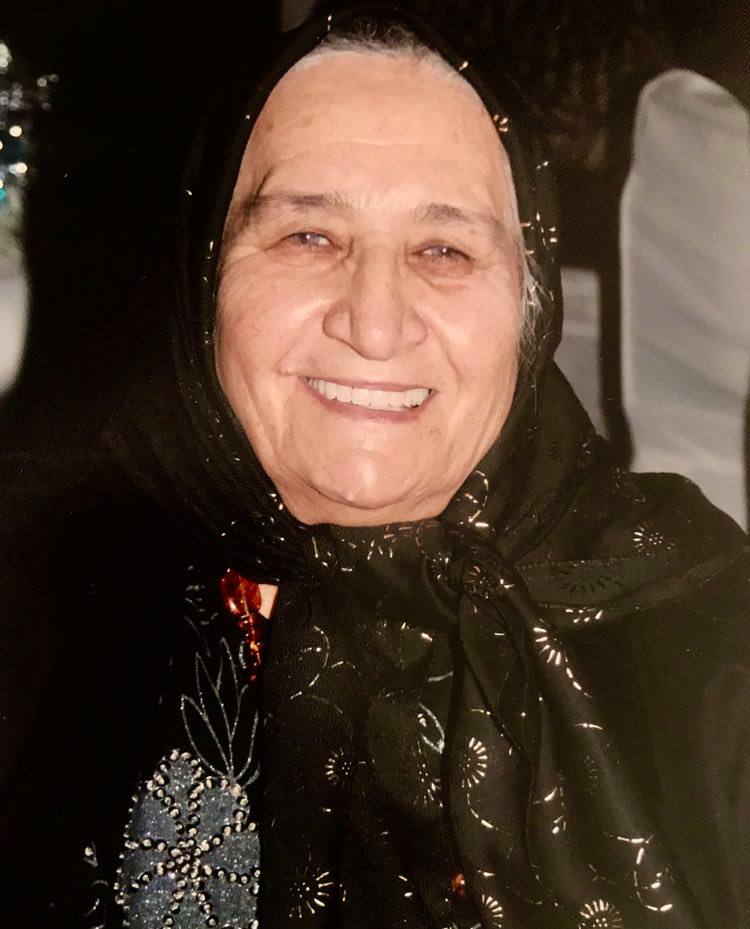
The commander was very happy. He called out to my father: "You're coming with us right now!" My mother unexpectedly stepped forward: "That knife came out of my hope chest. That knife belongs to me. You should take me." The commander's plan had fallen through. They took my mother without even giving her a chance to change her immigrant undergarments. My mother was held at the Gendarmerie Station for one night. The next day, they arrested her and put her in the prison that is now abandoned. My mother was imprisoned in that jail for 3 months. I remember with mercy my mother, who stood up for her husband and prevented my father from being taken to prison.
My dear mother, they are planning to build a park where the prison you were incarcerated in for 3 months once stood. I will go to that park and always remember you. I wish they had named the park after you? They would have partially paid the price for the injustice done to you.