Buffalo Soldiers and the Republic of Turkey
This essay draws parallels between the Buffalo Soldiers' role in American history and the formation of the Republic of Turkey, arguing that both involved a complex interplay of identity, power, and the marginalization of indigenous populations.

BUFFALO SOLDIERS AND THE REPUBLIC OF TURKEY
Dear readers!
Today, I will first bring to your attention important information from two different pages of world history that can be considered turning points. Towards the end of my article, I will combine this information and apply it to the history of the Republic of Turkey. I hope you will find the article interesting.
NATIVE AMERICANS
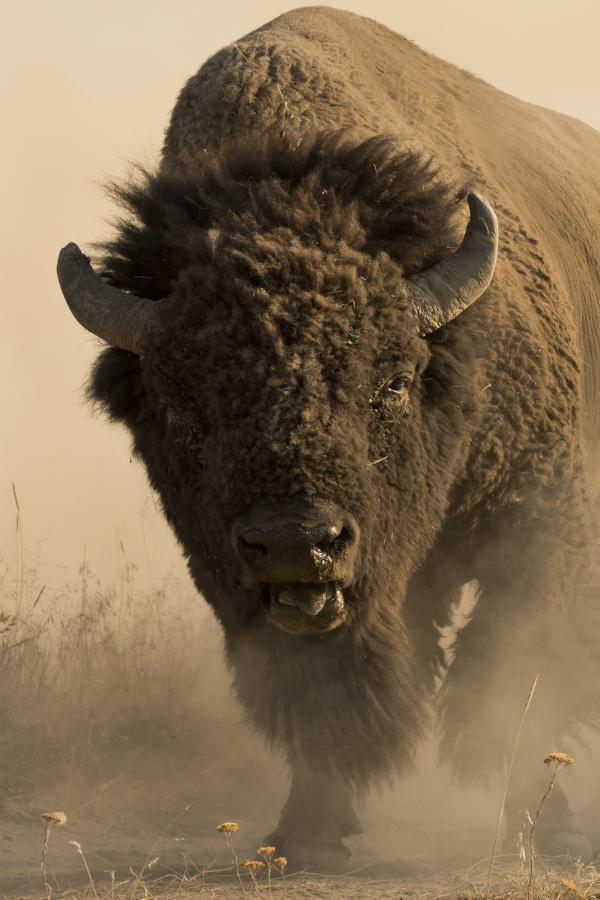
To make my writing clear, I want to proceed step by step. First, I would like to introduce you to the American bison, also known as the buffalo. It is the largest land mammal in North America. It is one of the wildest bovines in the world. In the past, it was the main food source for the Native Americans, the true people of America.
For Native Americans, the ancient people of America, the buffalo was a sacred animal. For thousands of years, it was seen as a religious symbol. The buffalo was hunted for its meat, its hide was used to make tents called "tipis," and its horns were used to craft weapons, shields, and various tools.

The buffalo was a powerful animal. It could jump up to 2 meters and run at speeds of 65 km/h. With weights reaching 550 kilograms, they had the power to demolish any obstacle in their path.

SLAVERY IN AMERICA
Dear readers!
Let's not forget that the birth and emergence of today's America were for commercial reasons. In the Western American territories, which were colonies of England, England first wanted to cultivate tea, and for this purpose, huge farms called plantations were established. Later, product diversification occurred, and in addition to tea, cotton, tobacco, and sugarcane plantations were also opened, especially in the southeastern region of America. The problem was finding manpower to work on these huge farms. The necessary labor was provided by slaves of African descent, who were kidnapped and brought from Africa.
Slavery in the United States was a legal institution from the birth of the American nation in 1776 until the Civil War in 1865, mostly involving Africans and African Americans as chattel property. Slavery had been practiced in British America since early colonial days and was legal in all thirteen colonies by the time of the Declaration of Independence in 1776. An enslaved person was legally a type of property and could be bought, sold, or transferred like other personal property. Like a horse, a skilled enslaved person could be put to work and bred for the production of new enslaved people. Slavery persisted in about half of the states until 1865.
THE AMERICAN CIVIL WAR AND THE ABOLITION OF SLAVERY
The American Civil War (1861-1865) was a widespread civil war that broke out between the United States government in Washington and 11 Southern States that wished to secede from the country. It lasted four years.
We can summarize the cause of the war as follows: I mentioned that in the mid-19th century, an agricultural economy dominated by large farms was established in the southeastern regions of the United States. On these farms, especially cotton, tobacco, and sugarcane were cultivated, and the necessary labor was provided by slaves of African descent, who were kidnapped and brought from Africa. In other regions of the US, the economy had shifted towards industry, and slavery had been abolished to provide the free labor required for this. New states continued to be established in the western part of the US, and slavery was prohibited in most of these new states. In this environment, the Southern states were concerned that slavery would eventually be banned in the South as well. This fundamentally threatened the South's slave-based mode of production. Abraham Lincoln ran for election promising to abolish slavery, and when he won, seven Southern states immediately declared their independence from the US, certain that the new president would abolish slavery. This led to the outbreak of the Civil War. At the end of the war, slavery was abolished, but five days after this victory, Lincoln was assassinated.
At the end of the war, all slaves in the South were granted freedom. Shortly thereafter, slaves gained the right to vote. The slave-based agricultural economy in the Southern US came to an end. The United States overcame the threat of division and reunited as a single country. Although many rights were granted to African Americans in the South at the end of the war, these were quickly taken back by Southern whites. Furthermore, while the North and South of the US were equally wealthy before the war, the South suffered economic devastation after the war, and the North surged ahead.
BUFFALO SOLDIERS

When slavery was abolished, African Americans began to be treated as citizens. White administrators formed armies composed of freed African Americans. Their aim was to use these African American armies to clear America of Native Americans, the original owners of America. The armies formed for this purpose, consisting solely of former African American slaves, were nicknamed "Buffalo Soldiers." Between 1867 and 1896, they fought against Native Americans in the American West. These African American soldiers, commanded by a white American officer as required by law and consisting of cavalry units, were given the nickname "Buffalo Soldiers" by the Native Americans. This was because the curly, black hair of the African Americans resembled the dark, curly mane of a buffalo. During this process, the freed African Americans, adopting a "more royalist than the king" attitude, massacred Native Americans more brutally than the whites.
A white commander who witnessed one of these massacres wrote the following note in his diary that evening: "We whites were merciful. We killed a Native American once, but the Buffalo Soldiers killed a Native American four or five times. It is very difficult to make sense of shooting a Native American corpse that had already died from the first bullet, and not even stopping there, but cutting off their heads. Witnessing this savagery chills me to the bone." Yes, African Americans brought as slaves from Africa, once freed, tried to become the founding force of the US by massacring Native Americans more brutally than the whites. In 1898, the total number of soldiers in the US was 25,000. 10% of these (i.e., 2,500) were African American soldiers. African American soldiers were prevented from participating in World War I so that it would not be said, "We are the true founders of America because we fought and died for America."
Here I must add a note: In America, voluntary military service is the norm instead of compulsory military service, but there is always a permanent military staff (soldiers for life). In times of war, volunteers are recruited into the army; if the desired number is still not reached, the rule of compulsory military service based on age is put into effect. For example, in 1898, while the number of permanent soldiers was 25,000, this number increased to 75,000 in the same year due to the US-Spanish War, with the participation of volunteers.
NATIVE AMERICAN / WHITE AMERICAN / AFRICAN AMERICAN SLAVE / FREED AFRICAN AMERICAN
Native Americans are the true owners of America. In a sense, they are the ancient people of the continent. Whites (English) came later. In later years, whites brought African Americans from Africa and enslaved them. In 1865, slaves were freed, and an African American army (Buffalo Soldiers) was formed. African Americans, to the benefit of the whites, fought against the Native Americans, the true owners of America, and almost completely annihilated them. Isn't that an interesting situation? In this way, African Americans, while repaying their debt of gratitude to the whites for freeing them, also started a new life by settling on the lands vacated by the Native Americans. Since the common enemy was the Native Americans, cooperation initially emerged between whites and freed African Americans, but once there were no more Native Americans to kill, whites changed their attitude towards African Americans, treating them as "second-class citizens," another form of slavery, and discriminated against them. Obstacles were placed in the way of African Americans attending school, etc., and their presence in the same restaurants or places as whites became forbidden not by law but "de facto," that is, in practice. This discrimination against African Americans had to wait until the famous "I Have a Dream" speech by the African American pastor Martin Luther King, who won the Nobel Peace Prize in 1964, to be eliminated. Today, African Americans and whites work hand in hand everywhere.
The true owners of the country, the Native Americans, are confined to parcels of land called "Reservations." I want to add something without exaggeration: Today, African Americans in America uphold the history and true values of America, such as homeland, flag, national anthem, etc., more than whites. Although African Americans constitute 14% of the total population (330 million), due to affirmative action, they feel stronger and more self-confident than whites today. If a white person is unjustly killed, no one bats an eye, or it doesn't make world news, but when even a criminal African American is killed, America is shaken to its core. Today, de facto, African Americans are first-class citizens, whites are second-class citizens, and the 5 million Native Americans (1.6%) living on reservations are third-class citizens.
THE FOUNDING PHILOSOPHY OF THE OTTOMAN EMPIRE
Do not be surprised by my sudden change of subject. I will not go into very detailed historical topics. I will present some of my theses to your knowledge and then return to our main topic.
Although the Ottoman Empire was founded on Islamic elements, it is a fact that it was truly a Balkan state. The Ottoman Beylik, which took root in Söğüt, İnegöl, Bursa, and their surroundings, gained the opportunity to grow by stepping into Thrace, leaving Istanbul in the middle. At that time, due to the conflict between the Istanbul and Roman (Orthodox and Catholic) churches, there was a serious crisis and political vacuum in the Balkans. It was not difficult for the Ottomans to grow first in Thrace and then in the Balkans. The Janissaries, the main striking force of the Ottoman Empire in war, consisted of young recruits from Christian communities in the Balkans (especially from the Serbs, who were the most warlike people). The Muslim population in Anatolia migrated to the Balkans. In the entire region from Italy to the Austrian border, Muslim villages were intertwined with Christians. There was harmony and solidarity. In fact, this difference turned into a synergy, a new power, causing the Ottomans to find supporters among the Christian population and take root.
We cannot see the same situation in Ottoman territories outside the Balkans. For example, there were no Turkish villages in Yemen, Libya, or Algeria, etc. Therefore, when the Ottomans were defeated in the Balkan Wars of 1912, the Muslim Turkish population in the Balkans migrated towards Istanbul. (One of the most important points is that after the Greeks gained their independence in 1829, the Muslim Turkish population living in the Balkans was reduced to second-class status within the Christian communities they inhabited.) I should also immediately state that hundreds of thousands of Muslim Turks were massacred during this migration. Since the nation-state concept necessitated a single type of religion and language, this displaced population lived in a miserable state in the region extending from Istanbul to Edirne. When the Ottomans were defeated in World War I (1918), there was no civilian Muslim Turkish migration from the south, i.e., from Arab countries, because only the Ottoman army was present in these countries.
COMMITTEE OF UNION AND PROGRESS
The Committee of Union and Progress, which still determines the fundamental principles of governance philosophy in Turkey today, was founded in September 1906 in Thessaloniki as the Ottoman Freedom Society, a revolutionary society aiming to overthrow the autocratic regime. Mehmet Talat, İsmail Canbulat, and Rahmi Bey took over its leadership. Around the same time, Mustafa Kemal founded an organization called the Fatherland and Freedom Society among the officers of the Fifth Army in Damascus and then briefly went to Thessaloniki to open a branch there. The Ottoman Freedom Society first merged with Fatherland and Freedom. The association, which spread rapidly in Macedonia and found supporters among young officers, officially merged with the Ottoman Committee of Union and Progress, whose center was in Paris, on September 27, 1907, thanks to the efforts of Doctor Nazım, who secretly went to Thessaloniki for discussions. During the merger, the name of the society also changed and became the Ottoman Committee of Union and Progress. Paris was accepted as the external center of the Committee, and Thessaloniki as its internal center. The Committee held another secret congress in Thessaloniki on September 22, 1909. Mustafa Kemal attended the congress as the delegate from Tripoli.

Upon the rapid defeat in the Balkan War, which broke out in October 1912, the Committee of Union and Progress adopted a fierce nationalist policy and blamed the government for the defeat. On January 23, 1913, with Enver Pasha at the forefront, an armed group raided the government meeting at the Sublime Porte, killed Minister of War Nazım Pasha, and forced Grand Vizier Kamil Pasha to resign at gunpoint, thus seizing power through a military coup.

During the establishment phase of the Committee of Union and Progress, Albanians and especially Kurds were also part of the management staff, but after the coup carried out by Enver Pasha in 1913, foreign elements were removed from the Committee of Union and Progress. The Committee of Union and Progress came under the control of a cadre consisting of Balkan immigrant Turks who migrated to Thrace and Anatolia after the Balkan Wars, and the political structure and principles of the organization were arranged to favor Balkan immigrant Turks. Mustafa Kemal, himself a Balkan immigrant, remained committed to the political philosophy of the organization, even though he initially appeared to distance himself from it. Balkan immigrant Turks seized control of the state after the establishment of the Republic, and the Republic of Turkey was governed by the political philosophy matured by the Committee of Union and Progress. When Kazım Karabekir Pasha, an ancient Anatolian Turk, was placed under house arrest in the Republic of Turkey, Balkan immigrants became first-class citizens, Anatolian Turks second-class, and minorities like Kurds became third-class citizens. Despite 100 years having passed and different parties coming to power, even if they pursue a different policy in their first few years, they somehow remain trapped within the general political framework of the Committee of Union and Progress. The current political power has also undergone such a transformation. In short, the founding philosophy of the country has been determined as: either you govern this country with the philosophy of the Committee of Union and Progress, or you will perish.
Enver Pasha, who spent a large part of his life and education in the Balkans (he holds the title of Hero of Macedonia), witnessed the drama experienced by the Muslim Turkish population in the Balkan Wars. In the years of World War I, immediately before the war, in response to the massacre and forced displacement of the Turkish Muslim population in the Balkans, he confronted the Armenians, the largest Christian community in Anatolia, in 1915, subjecting them to similar massacres and forced displacement. The Armenian displacement or genocide is a response to the displacement or genocide applied to the Muslim Turkish population in the Balkans.
THE REPUBLIC OF TURKEY IS A REPUBLIC OF BALKAN IMMIGRANT TURKS
The most important figures of the cadre that initiated the Anatolian Revolution were either born and raised in the Balkans or had been members of the Committee of Union and Progress for a short or long period. In this sense, the Republic of Turkey was founded under the leadership of the Muslim Turkish population of Balkan origin, based on the philosophy of the Committee of Union and Progress. There is no true Anatolian spirit. One of the problems experienced in Turkey is that this population, whose ancestors lived as second-class citizens in the Balkans for many years and were then subjected to massacres and forced displacement, seized important positions in the state after the establishment of the Republic of Turkey. They see themselves as first-class citizens, the original founders of the Republic, and treat the ancient peoples of Anatolia, such as indigenous Muslim Turks and Kurds, Assyrians, Armenians, etc., as second or even third-class citizens, or ignore their demands.
Certain segments, in particular, try to marginalize Kurds with a specific perception operation, asking, "Were there Kurds in the Gallipoli War, were there Kurds in the War of Independence?" and attempting to embed the proposition "The original founders of this Republic are Balkan immigrant Turks" into the collective memory.
CONCLUSION
Just as African Americans in America, after being freed from slavery, served as Buffalo Soldiers to destroy the original and ancient people of America, the Native Americans, and believed that they would have equal rights with whites after the Native Americans were eliminated, when the Native American problem was gone, African Americans were then treated as second-class citizens. A similar situation, from another perspective, was experienced in Anatolia.
The Muslim Turkish population who came to Anatolia with the Balkan migrations of 1913, relying on the fact that a significant portion of the cadres who founded the Republic were of Balkan origin, forgot that they were once (1829-1913) second-class citizens and saw themselves as first-class citizens, treating the indigenous Muslim Turkish and Kurdish peoples of Anatolia, Assyrians, Armenians, etc., as second-class. In other words, in a sense, especially the Kurds, in their ancient lands, were either annihilated like the Native Americans or ignored because the ban on education in their mother tongue continued.
The "Hamidiye Regiments" established for the Kurds in the 1890s played an important role in the Armenian massacres. In this sense, the Hamidiye Regiments took on a role similar to that of the Buffalo Soldiers in America.
AUNT FROM THESSALONIKI
It is very strange that when many Turks living in Western Anatolia are asked, "Where are you from?", they somehow manage to claim that one of their grandparents was from Thessaloniki. One of those who got caught up in this craze was my late Aunt Nazire. Her eyes were blue, like Atatürk's.
One day she came to visit me at Kabataş High School. She pressed some money into my hand. At that moment, my history teacher, İsmet Hanım, who liked me, passed by and approached my aunt. After praising me, she asked my aunt where she was from. My aunt, showing off, replied, "We are from Thessaloniki. We are distantly related to Atatürk!" My history teacher said, "How wonderful! How wonderful!" and walked away, shaking her head. I looked at my aunt and smiled: "Auntie, you were from Bitlis, how did you become from Thessaloniki?" When I asked, she said, "I'm not going to lie, am I? Look, my eyes are blue too."
My late Aunt Nazire had never married. She spent most of her time either in her house in Iğdır or staying with her brother (my uncle) in Istanbul. It was a weekend. I had come to my uncle's house with a one-day leave from boarding school. The doorbell rang. I opened the door. There was a middle-aged lady in front of me. She asked in very polite Istanbul Turkish: "Is the Aunt from Thessaloniki here?" I was initially bewildered but quickly composed myself and was able to answer. It turned out that my aunt introduced herself to all the neighbors in the neighborhood as "from Thessaloniki and a distant relative of Atatürk," sometimes earning money by reading coffee fortunes, sometimes by reciting the Quran, and sometimes by sewing clothes.