The "Boraltan Bridge" Legend, Lies, and Truths
This article delves into the "Boraltan Bridge Incident," examining various claims and historical accounts to separate fact from fiction regarding this controversial event in Turkish history.
PART 1
Dear readers! While writing about the Hüsnü Bingöl Era during the Second World War years, I inevitably came across dozens of articles in the media and popular readings under the name "Boraltan Bridge Disaster." Although I had previously received dozens of phone calls on this subject from journalist friends in Iğdır and academic colleagues at various universities. The reason for this was my detailed work on Iğdır and the publication of a comprehensive book titled "Iğdır Sevdası" (Love for Iğdır) in 2002.
When they asked, "Is there a bridge named Boraltan on the Aras River in Iğdır?", I always answered with the same surprise:
"So far, I have heard neither the name Boraltan nor the name Boraltan Bridge!"
At first, you might wonder what connection the long-standing "Boraltan Bridge" debate in the media and political world has with Hüsnü Bingöl. As you will see when you examine the claims below, the date of the Boraltan Disaster (!) varies between 1941-47, depending on the claimants, and it is often written that this event took place on the "Boraltan Bridge" which is allegedly located on the Aras River within the borders of Iğdır province. During these years, Hüsnü Bingöl was at the head of his duty in Iğdır, and even in the Eastern Anatolia Region, with all his splendor and determination. If the event called "Boraltan Bridge Disaster" took place on the Aras River in those years, Hüsnü Bingöl would have been primarily involved in this matter.
Answering the "Boraltan Bridge" question, in a sense, means questioning the seriousness of Hüsnü Bingöl's duty during that period and Hüsnü Bingöl's personality. Furthermore, as the article series continues, we will see that Hüsnü Bingöl's greatest contribution to the Republic of Turkey was during the Second World War years.
The "Boraltan Bridge" claim is actually a hidden reckoning between the supporters of two major approaches that have continued since the establishment of the Republic of Turkey: Misak-ı Millî and Turanism. Therefore, the "Boraltan Bridge Incident" debate is not a small detail that allegedly occurred during the war, but an outward manifestation of a serious reckoning secretly existing within the Republic. For this reason, the "Boraltan Bridge" should be addressed in all its aspects. Before going into all these details, I must present the claims as they are. Thank you in advance for your patience.
Let's take a look at some of these claims with their summaries, if you wish:
CLAIM_ 1:
First of all, I would like to remind my readers that the "Boraltan Bridge" debate entered Turkey's agenda – after a long hiatus – with a speech made by the then Prime Minister, now President, Mr. Recep Tayyip Erdoğan at the AK Party Headquarters in September 2012:
On that day, the Prime Minister used the following expression:
"This event, which the CHP tried to cover up for decades, has unfortunately been etched into both Turkish and Azerbaijani history as a bitter memory. In 1945, 146 Azerbaijani intellectuals fled Stalin's tyranny. They took refuge in Turkey. Azerbaijanis came to the land of their own brothers and embraced. Stalin demanded the immediate return of these Azerbaijanis from Turkey. A telegram was sent to the border outpost, demanding the return of the refugees. The outpost commander confirmed the order repeatedly. However, the order came from the CHP government. The Azerbaijanis, understanding the situation, pleaded, 'Please shoot us yourselves, kill us under our own flag.' But the order from Ankara was clear. The intellectuals who crossed the Boraltan Bridge over the Aras River were executed with their hands tied. It is said that the outpost commander committed suicide after this tragic scene."
SUMMARY
Let's summarize the statement of the then Prime Minister, Mr. Recep Tayyip Erdoğan:
- 146 Azerbaijani intellectuals (civilians) crossed the Boraltan Bridge and took refuge at the Turkish outpost.
- The event took place in 1945.
- The commander telegraphed Ankara for advice.
- Ankara (İnönü) ordered the return of the intellectuals to the Soviets.
- 146 intellectuals were immediately returned to the Soviets from the Boraltan Bridge.
- Azerbaijani intellectuals were shot by Soviet soldiers with their hands tied.
- It is claimed that the outpost commander committed suicide, unable to bear the tragic scene.
CLAIM_ 2:
The first person to bring the Boraltan Bridge disaster (!) to the agenda was Şevket Mocan, a Democratic Party (DP) Tekirdağ deputy.
In 1951, Mocan submitted a parliamentary question:
"To the High Office of the Grand National Assembly of Turkey
I request that the following questions be answered orally by the Prime Minister:
1. Is it true that (156) refugees, who had sought asylum in our country at various dates based on their rights as political refugees, were handed over to Soviet Russia in 1947, in complete violation of international law?
2. Is it true that Reserve Officer Postal Inspector Reşat, who was in charge of the handover, suffered a nervous breakdown and was treated in mental hospitals, due to the manner in which the victims of the tragedy were transported, which was in accordance with the methods of the deity to whom the victims were sent, and due to witnessing their fate?
SUMMARY
Let's summarize the claim of Deputy Şevket Mocan:
- The event occurred in 1947.
- The number of refugees was 156.
- The refugees sought asylum in our country at various dates, not all at once.
- Officer (outpost commander) Reşat suffered a nervous breakdown and received treatment.
CLAIM_3:
This time, I am quoting exactly what is written on the Wikipedia website:
"The Boraltan Bridge Massacre or Boraltan disaster is the massacre that occurred after 195 Soviet soldiers who had taken refuge in Turkey were returned to the Soviet Union in 1945 within the framework of the principle of reciprocity.
They had sought asylum in Turkey by crossing the Boraltan Bridge over the Aras River. The Soviet soldiers of Azerbaijani origin at the border outpost were returned by order of the government and shot at the Boraltan Bridge. According to Reha Oğuz Türkkan's claim, the number of those who sought asylum was 407."
SUMMARY
- 195 Soviet soldiers (not intellectuals) were returned to the Soviets in 1945.
- They had sought asylum in Turkey by crossing the Boraltan Bridge over the Aras River.
- The soldiers who took refuge in Turkey by crossing the Boraltan Bridge were sent back before they even moved away from the bridge.
- Reha Oğuz Türkkan increases the number to 407.
CLAIM_4:
In EKŞİSÖZLÜK: (https://bpakman.wordpress.com) another writer writes:
"The year is 1945. The war is over, Stalin sees himself as the savior of the world and does not hide his hatred for Turkey, but Turkey had declared war on Germany and was effectively an ally of the Soviets. During the war, Kazakh Turks, Turkmens, Tatars, and many Turks, even some Turks from Turkey, joined the Turkestan divisions established by the Nazis to fight against the Bolsheviks and liberate their homelands. Some fought. Died. Some were executed after falling captive to the Soviets, but some also became prisoners of other Allied states (America, England). Stalin immediately demanded these prisoners from the British; their fate was clear. The British initially refused but then agreed; they did not want to anger Stalin. These people were loaded onto trains. Thousands of them. But the real drama had not yet unfolded.
Because of problems with Poland, these trains could not pass through the Polish border. It was decided that they would go through Turkey. Hope had dawned in the hearts of these people. They would pass through the only free Turkish state, the protector of all Turks. They could have been set free, but it did not happen. The locks on these people were not opened, amidst the tears of Turkish officers. They understood. No one wanted to anger Stalin. So they pleaded with those officers, 'Please shoot us yourselves.' But it did not happen. Thousands of people arrived in Russian territory and were executed."
SUMMARY
- Thousands of soldiers of Turkestan and Azerbaijani origin (Soviet citizens) were handed over to Stalin.
- They were loaded onto trains. Locks were placed on the doors.
- The trains passed through Turkey in transit and reached the Soviets.
- They were handed over to the Soviets via Turkey due to problems at the Polish border.
- They were executed.
CLAIM_5:
Mr. Sözer Akyıldırım, a lecturer from Iğdır, writes:
"The year is 1944, the month is unknown, there was a bridge called BORALTAN. And it was on the ARAS river, 146 Turkish Intellectuals (Azerbaijani Turks), 2 of whom were women, crossed over... The other side, Iğdır? It's not clear, but they crossed, they escaped from the cruel Stalin and the Red Army. They took refuge in their homeland, Turkey. The dramatic part begins here. Hold on tight. Our 'brothers' who crossed the border start to kiss the Turkish soil by bowing down and prostrating themselves... Our soldiers and compatriots embrace each other, weeping... Ankara is informed by telegram. What should we do with these arriving guests? The cruel government in Ankara orders, 'You shall immediately return them.' The outpost commander explains the situation to our arriving brothers. Our brothers plead in pain and agony, 'Please kill us yourselves, don't give us to the Russians'... The order is definite. In desperation, the arrivals are returned, the march to death begins from the BORALTAN Bridge... Did the story crush your soul, did your heart ache? I was also saddened and said, 'down with the cruel ones.' At the end of our story, our 146 brothers are massacred, crushed under tanks. The outpost commander, watching the event live, commits suicide, unable to bear the sight..."
SUMMARY
- The event occurred in 1944.
- There was a bridge called Boraltan.
- 146 Azerbaijani Turkish intellectuals, 2 of whom were women, crossed over to the other side (Turkey).
- It is not clear if the other side was Iğdır.
- They are handed over to the Soviets from the Boraltan Bridge.
- They are massacred, crushed under tanks.
- The outpost commander commits suicide.
CLAIM_6:
Mr. Ziya Zakir Acar, a writer from Iğdır, writes:
"The year is 1944. Years when Crimean Turks were collectively exiled and subjected to genocide by the Soviet Union, when Turkish communities were torn apart and Turkish blood flowed in rivers in captivity!... For such an event to occur in the glorious and famous Turkish History is both unbelievable and heartbreaking... One of the great events in Turkish history, committed by Turks against Turks, is the incident where our Azerbaijani compatriots, seeking refuge in Turkey by crossing the Boraltan Bridge, were rejected by the Turkish government and handed over to the Russians. This event has remained in memories as a disgrace in history. The conscience, honor, and kinship of the Turkish Nation, which considered it an honor to even tend to the wounds of enemy soldiers in Çanakkale, wrote epics, and opened and closed eras, succumbed to diplomacy and bureaucracy! In 1944, Central Asia was occupied by Soviet Russia, and even the slightest step taken to resist the communist system was sought to be prevented. 417 of our Azerbaijani Turkish compatriots, fleeing this oppression and wishing to take refuge in Turkey, which they saw as their 'homeland,' crossed the Boraltan Bridge over the Aras River near the border gate in Iğdır and took refuge at the Turkish border outpost with the joy of gaining freedom. Fleeing Stalin's tyranny and taking refuge in Turkey, their hearts filled with the indescribable joy of reaching freedom, their brothers, and the sound of the adhan, they did not just kiss the soil, they almost licked it. The words spoken by the Mehmetçik (Turkish soldier) on duty at the border outpost make one's hair stand on end. You become tearful. You see the loyalty of being on duty at the border and the greatness of the Mehmetçik. (...) The Boraltan Bridge is the Serdarabat Bridge at the location of today's Karakale."
SUMMARY
- The event occurred in 1944.
- The number of those who took refuge in Turkey is 417 Azerbaijani Turks.
- They crossed to the Turkish side from the Boraltan Bridge over the Aras River.
- There is a Boraltan Bridge on the Aras River.
- The other name for the Boraltan Bridge is the Serdarabat Bridge.
CLAIM_7:
In the book "Stalin and the Turkish World" (Kaknüs Yayınları) co-authored by Prof. Dr. Emine Gürsoy Naskali, granddaughter of Celal Bayar, and Liaisan Şahin, it is written:
"Turkic people who took refuge in Turkey were held in the Yozgat Refugee Camp. In 1945, by order of the government, these Turks were transported by train to Kars to be returned to the Soviet Union. The number of Turks transported was 1100 people. These 1100 people were handed over to the Soviets at the Kızılçakçak border gate, which we now call Doğukapı in Akyaka District. There was no incident of being crushed by tanks, but there are serious testimonies that some of these Turks were shot."
SUMMARY
- There are Turkic people who took refuge in Turkey (we don't know if they were soldiers or civilians).
- They stayed in the Yozgat refugee camp.
- By order of the government, 1100 people were handed over to the Soviets from Yozgat by train at the Kızılçakçak border gate.
- There was no crushing by tanks. Some were shot.
CLAIM_8:
Taha Akyol writes:
"In 1944, there was already fear of the Red Army. 147 Azerbaijani Turks who had taken refuge in Turkey from Stalin's tyranny were returned to the Soviets due to this fear and were shot on the other side of the Boraltan Bridge over the Aras River! This is a terrible tragedy. But as some have written, the reason is not 'the betrayal of Turkishness by the National Chief.' It is the haste of the generation of İsmet, Fevzi, Karabekir, Rauf, who had experienced the tragedies of the First World War and the disasters of the country's occupation, to protect Turkey from the disaster of the Second World War!"
SUMMARY
- There are 147 Azerbaijani Turks who took refuge in Turkey from Stalin's tyranny.
- They are returned to the Soviets.
- They were shot on the other side of the Boraltan Bridge.
- The event occurred in 1944.
CLAIM_9:
Pakman World (https://bpakman.wordpress.com) writes:
"Azerbaijan, occupied by Russian Bolsheviks in 1920, was forced to side with the Russians in World War II, providing soldiers to the Russian army. Many Azerbaijani Turks lost their lives needlessly, were crippled, or fell captive to the Germans. After the war, Stalin launched a witch hunt in Azerbaijan, imprisoning many Azerbaijani Turks, especially those who had fallen captive to the Germans, on the grounds of collaborating with the Germans, exiling them to Siberia, and having them shot. Fleeing these repressions, 146 Azerbaijani Turkish intellectuals, consisting of doctors, judges, engineers, and teachers, took refuge in Turkey, which they considered their homeland, by crossing the Boraltan Bridge over the Aras River in 1944.
At that time, the Germans were defeated, and Turkey, shifting from neutrality, moved away from the Axis powers and sided with the Allies. The Soviet Communist regime tracked down the fleeing Azerbaijanis, located them, and demanded them from Turkey. The İsmet İnönü government of the time, without hesitation, loaded these 146 Azerbaijanis onto trains and transported them back to the Boraltan Bridge at the border. İnönü, known for being timid, cautious, and cowardly, was actually afraid of the Russians, but he camouflaged this with the justification, 'We do not accept Turkish elements outside the Misak-ı Millî borders.' The government of the time telegraphed the border outpost on the Aras River, İnönü was in charge then, and demanded that the refugees be handed over. The outpost commander could not believe his eyes. He confirmed the order repeatedly. However, a clear and definite order came from Ankara, 'Hand over the Azerbaijanis.' The Azerbaijani Turks, understanding the situation, embraced the Turkish soldiers and pleaded, 'Please do not hand us over. Shoot us here, kill us on our own soil, under our own flag, by our own brothers.' But the order from Ankara was clear. The Azerbaijani Turks who crossed the Boraltan Bridge were executed with their hands tied right across the bridge, in front of the eyes of Turkish soldiers and officers. It is said that the outpost commander committed suicide after this tragic scene.
As our Azerbaijani Turkish brothers passed through Kars, many Kars residents witnessed this tragedy from the houses along the station. Those 146 people threw whatever valuable belongings they had from the train windows to the public. Only a shirt and trousers remained on them. The Azerbaijanis had said, 'We will be killed anyway when we cross the border.'"
SUMMARY
- The event occurred in 1944.
- 146 Azerbaijani Turks / Azerbaijani intellectuals (civilians) took refuge in Turkey.
- They came by crossing the Boraltan Bridge over the Aras River.
- They stayed in Turkey for a long time.
- The Soviets located the Azerbaijanis and demanded them from Turkey.
- İnönü searched for and found the fleeing Azerbaijanis, loaded them onto trains, and handed them over at the Boraltan Bridge.
- The government ordered the border outpost commander to hand over the refugees.
CLAIM_10:
Temraz Kesemenli, one of the first culture and library directors of Kars, writes:
"Many Kars residents witnessed the rising cries of the 146 Azerbaijani refugees as they crossed the Boraltan Bridge, handed over to the Russians. In 1944, the officer who took the Azerbaijanis by order of İsmet İnönü lost his sanity and died in a mental hospital. The Boraltan disaster went down in Turkish history as a black stain."
SUMMARY
- There are 146 Azerbaijani refugees.
- They are handed over from the Boraltan Bridge.
- The event occurred in 1944.
- The officer who took the Azerbaijanis lost his mind and died in the hospital.
CLAIM_11:
Prof. Dr. Reha Oğuz Türkkan writes:
"It was early 1944. We heard that Turks, mostly Azerbaijanis, who had fled Russia and taken refuge in Turkey, would be returned to Russia. Upon this, I called Kemal Gedeleç, the Secretary-General of the Presidency, who was a friend of my father's. Without stating my purpose, I told him that I very much wanted to meet İsmet Pasha. I asked if he could arrange an appointment for me to kiss his hand. He said yes and called some time later. He said, 'Pasha is coming to Thermal, be there on such and such a day at such and such a time; but Pasha will only speak to you standing, his schedule is full.' I went and waited there, and Pasha came down the stairs. Kemal Bey introduced me. I said, 'We heard such a rumor, but of course, we didn't believe it, Pasha?' He said, 'Who are you, what are you interfering with?' I told him my father, whom he knew more or less, and said, 'If our brothers are handed over, they will surely be shot!' Pasha said, 'Don't interfere, we have made our decision.' I said, 'If your decision is to hand them over, you will bear a very heavy burden before history. The Ottoman Empire did not hand over the Poles who took refuge with it, despite all pressures. Because of this behavior, young people in England unhitched the horses of the Ottoman Grand Vizier's carriage and pulled it. As much honor as that Grand Vizier received, you will receive the opposite.' He got very angry. He said, 'Go study your lessons. What are you interfering with?' and left. Later, they handed over these people. There was tremendous censorship; we could not publish any news about this. I believe he took out his grudge, which started there, on me with the Tabutluk tortures."
SUMMARY
- In early 1944, there were mostly Azerbaijani refugees who fled Russia and took refuge in Turkey.
- Reha Oğuz hears that the refugees will be returned.
- Reha Oğuz, a university student at the time, discusses this important issue with İnönü standing up at the Thermal Hotel.
- He implicitly warns İnönü not to send the refugees back.
CLAIM_12
Konya Deputy Ziyad Ebuzziya writes:
"Among the Turkish students coming from Berlin were two young Azerbaijanis who had fought against the Russians; Enver, a literature teacher, and Adem, a petroleum engineer, a close relative of my children's mother. As soon as they arrived in Turkey, they declared their true identities, believing they had gained freedom, as they disembarked from the ship. That night, they stayed at my mother-in-law Saltanat Hanım's house. Hearing this, all the Azerbaijanis in Istanbul flocked to the house. The next morning, before breakfast, the police arrived at the house. They took them to the 1st Branch. They held them there for days. I was publishing the Tasvir Newspaper at that time. Occasionally, they would send news, 'Oh, they are going to hand us over.' Again, a small note; 'They are being handed over,' it said. I jumped on a train and went to Ankara. Prime Minister Saraçoğlu, Foreign Minister Numan Menemencioğlu. I went to Saraçoğlu: 'Ziyad, is it possible while I am here? Can a single Turk be handed over?' he said. Fifteen days passed. Someone came to the newspaper. He left a handkerchief on the table and left. I opened the handkerchief, and inside were a gold watch, a ring, and a letter. The letter was from Enver, writing from the border."
What Enver Aşar, one of the Azerbaijani Turks handed over to Russia by order of İnönü from Turkey, wrote in the letter he sent to his relative Ziyad Ebuzziya just before the handover at the Russian border:
"Dear Brother Ziyad Bey;
God knows what we went through until we came to Kars from Sarıkamış... We couldn't even manage to commit suicide. Now we are on our way from Kars to the border. In two or three hours, it will be the end of our lives. Deputy Commissioner Ali Rıza Bey knew our uncle well. It's a pity we met him in our last hours. He couldn't do anything. My dear, I am sending a watch and a ring with Ali Rıza Bey. Also, the papers for the money I sent from Germany addressed to you. If you manage to get this money, I ask you to pay our 50 lira debt to Kılıç. Farewell, farewell, farewell, my brother. I kiss the eyes of my uncle, my aunt, Valiya Hanım. Tell them our last greetings. I repeatedly ask you to kiss my sister, my brother Meryem Hanım, and my brother Fuat, whom I love more than anyone in the world, more than my mother, my brother, myself, on my behalf. Farewell, my brother, I kiss your eyes again and again."
SUMMARY
- Ziyad Ebuzziya publishes the Tasvir Newspaper.
- Two young Azerbaijani men, literature teacher Enver Aşar and petroleum engineer Adem, come to Turkey from Berlin.
- The two young Soviet citizens fought against the Red Army.
- The police take the two young men to the First Branch.
- While in police custody, the two young men secretly send news to Ziyad Bey, saying, "we are being handed back."
- Ziyad Bey goes to Ankara and meets with Prime Minister Saraçoğlu.
- 15 days later, a handkerchief containing a watch, a ring, and a letter is delivered to Ziyad Bey.
- In his letter, Enver Aşar states that they are on their way from Kars to the border, that he wrote the letter at that moment, and that he handed the letter to the deputy commissioner.
CLAIM_13:
On March 31, 2017, Bextiyar Mecidli published a 3-minute 36-second documentary on YouTube about the "Boraltan Bridge Disaster" (translated from Azerbaijani):
"146 Azerbaijanis fleeing Soviet tyranny left the country in 1944 and fled to Turkey. The refugees, crossing the Boraltan Bridge, took refuge with the soldiers on the Iğdır side. In those years, İsmet İnönü was the President of Turkey. Stalin, upon hearing the news of the refugees fleeing to Turkey, demanded their immediate surrender from the Turkish Government. By İnönü's decision, the refugees were returned."
SUMMARY
- 146 Azerbaijanis crossing the Boraltan Bridge took refuge in Turkey.
- The event occurred in 1944.
- The refugees are sent back.
CLAIM_14:
In a YouTube documentary, approximately 9 minutes long, prepared by Sefer Karakoyunlu, President of ISTAD, and Metin Yıldırım, and published on July 1, 2015, an interview is conducted with a person introduced as 93-year-old Bekir Doğan. Metin Yıldırım introduces Bekir Doğan as "someone who personally experienced the Boraltan disaster." Bekir Doğan is a soldier on the Turkish side. He makes the following statement:
"Children, women, men, old people like me, pleaded with us soldiers, 'Kill us yourselves, don't hand us over to the Russian Muscovites.'"
Meanwhile, Sefer Karakoyunlu interjects: "Were you a soldier there in 1944 when the Boraltan Disaster occurred?"
Bekir Doğan: "I was an infantry soldier in the 202nd Regiment. We had a very good Colonel. The Colonel went mad because of this incident. Women were taking off their rings, bracelets, and earrings and giving them to us."
Sefer Karakoyunlu asks a direct question: "There is a rumor that the outpost commander committed suicide. Is that true?"
The page changes. This question is not answered. In the end, Sefer Karakoyunlu summarizes:
"Civilians were handed over to Stalin's soldiers from the Boraltan Bridge."
Bekir Doğan, in a tearful voice, says the last words: "They tied their eyes and hands behind their backs. They were shot right there."
SUMMARY
- The event occurred in 1944.
- Civilians came by crossing the Boraltan Bridge.
- Civilians were handed over to Stalin's soldiers from the Boraltan Bridge.
- Women took off their rings, bracelets, and earrings and gave them to Turkish soldiers.
- The Colonel went mad.
- The civilians handed over from the Boraltan Bridge were shot right there.
CLAIM_15
Alper Aksoy, the author of the book titled Boraltan Köprüsü, gives an interview to Hocalı Haber Newspaper:
QUESTION: It is difficult to write about this painful event of veiled history without taking sides. Do you believe you have overcome this difficulty?
ANSWER: I do not believe in the concept of an impartial novelist or writer. Alper Aksoy is a partisan novelist, and his side is the Turkish nation, the Turkish world. While writing Boraltan Köprüsü, I never engaged in Russian animosity. On one side, Stalin, on the other, İsmet Pasha, and between these two dictators, Turks, Russians, Georgians, and even Armenians were caught... One of my novel's characters is the Armenian Nalbantyan... He is a member of a gang that raided villages in the Yozgat region and burned Turkish neighbors alive in their homes. After the 1915 Tehcir (forced relocation), he settled in Armenia. It is a twist of fate that Nalbantyan is among the Boraltan Bridge refugees. One of the most striking scenes in my novel is the reckoning of the Yozgat Bozok Plateau with the Armenian Nalbantyan.
QUESTION: There are many different numbers regarding the number of people returned by Turkey and shot at the Boraltan Bridge: 417, 407, 166, 146, etc. Have you found documents regarding the actual number? What is the real number?
ANSWER: Since the Boraltan Bridge incident was covered up by both the Stalin and İnönü regimes, it has especially flourished in the imagination of the public in Turkey. Like the formation of epics in Turkish mythology, elements of popular imagination and facts have intertwined. As a novelist, I wrote the novel Boraltan Köprüsü by respecting the elements of popular imagination. But I did not adhere to all the elements of imagination; I built the main backbone on facts. The number of refugees returned from Turkey is 195 people. 80 of the group are Azerbaijani Turks. There are Uzbeks, Kyrgyz, Kazakhs, Ahiska Turks, Georgians, and Russians.
QUESTION: By what routes did the Boraltan Bridge refugees enter Turkey? Those who provide information on the subject say, "They came in 1945 by crossing the Aras River, were detained at the border outpost, correspondence was made with Ankara, the order 'Hand over the Azerbaijanis' came, and they were handed over."
ANSWER: These are wrong. The arrival dates are not only 1945 but spread over a four-year period, including 1941, 1942, 1943, 1944, 1945.
The place of arrival is not only "by crossing the Aras River"; those who came from the west, following the Germany-Romania route, were also shot at the Boraltan Bridge.
QUESTION: Is it true that the Outpost Commander, Lieutenant, committed suicide after this tragic event?
ANSWER: "Many researchers in Turkey report such a suicide, but this is an element of legend that has blossomed in the public imagination. The true face of the event is as follows: The person involved in the handover was not a Lieutenant but Postal Inspector Second Lieutenant Reşat Bey. The Postal Inspectorate in those years was a camouflage for MIT (National Intelligence Organization) members. Second Lieutenant Reşat did not commit suicide; his mental health deteriorated after this incident. A month after the event, he was admitted to a psychology clinic for treatment. In 1973, he was visited by Nihat Çetinkaya, Ahmet Ali Arslan, and Rafet Karanlık at Bakırköy Mental and Neurological Diseases Hospital. These individuals are still alive; only Nihat Çetinkaya is paralyzed. According to the information provided by these individuals, Second Lieutenant Reşat's doctor was the late Ayhan Songar, and he described his patient as follows:
"He is a very charming old man in normal situations, but when he hears the word Russian, he loses his mental balance, trying to climb the wall and escape."
SUMMARY:
- The number of refugees is 195 people. 80 are Azerbaijanis. Among them are Uzbeks, Kyrgyz, Kazakhs, Ahiska Turks, Georgians, and Russians.
- The handover is spread over a four-year period, including 1941, 1942, 1943, 1944, 1945.
- They were shot at the Boraltan Bridge.
- The person involved in the handover was not a Lieutenant but Postal Inspector Second Lieutenant Reşat Bey. The Postal Inspectorate in those years was a camouflage for MIT members. Second Lieutenant Reşat did not commit suicide; his mental health deteriorated after this incident.
CLAIM_16
Kadir Mısırlıoğlu summarizes the Boraltan incident in his 12-minute YouTube speech as follows:
"I wrote about this subject in my book titled Moskof Mezalimi (Muscovite Atrocities) in 1974. Azerbaijanis who collaborated with the Germans against the Russians took refuge in Turkey after Germany's defeat. There were 454 people. İsmet Pasha returned them to the Russians. Why? Because İsmet Pasha is an Armenian from Karabakh and an enemy of Azerbaijanis."
I read Kadir Mısırlıoğlu's book Moskof Mezalimi in the National Library. On page 451, he writes: "The refugee Azerbaijanis, upon this decision, cried out in agony: 'Kill us yourselves, but do not hand us over to the Muscovites,' and many tried to commit suicide by jumping off the train. Thus, four hundred seventeen (417) Azerbaijanis, returned to the Russians, were collectively shot on the other side of the Serder Abad Dam in front of the eyes of the Turkish officer who handed them over."
SUMMARY:
- Azerbaijanis who collaborated with the Germans took refuge in Turkey.
- The number of refugees is 454 in his YouTube speech but 417 in his book.
- The refugees are transported by trains.
- They are shot on the other side of the Serdarabat dam.
CLAIM_17: İRFAN ÜLKÜ, AUTHOR OF THE BOOK "FROM RED STAR TO CRESCENT,"
"After the Germans attacked Soviet Russia, nearly a million Soviet soldiers, most of whom surrendered voluntarily and some were taken prisoner, were gathered under the command of the runaway Red Army General Vlasov, trained, and sent to the Russian front. The vast majority of these soldiers were people from the captive Turkic republics under Soviet rule; Tatars, Chechens, Ukrainians, Turkestanis, Uzbeks, and Azerbaijani Turks... Stalin, calculating that this army, whose establishment Hitler personally supervised, could pose a major problem for the red dictatorship after the war, and that the West could reorganize them and use them against him, without delay, had a clause included in the Yalta Agreement providing for the immediate return of these 'traitors' belonging to Vlasov's Army to the Soviet Union.
Allied soldiers were forcibly loading tens of thousands of Vlasov's soldiers, gathered from camps in Germany, onto lead-sealed Russian trains waiting at the station from new camps established in Vienna. As soon as the trains crossed the border, they were immediately shot by the Red Army as 'traitors'; Stalin's Secret Police Organization NKVD supervised the massacres.
There were also those who managed to escape. Some saved their lives by taking advantage of the mercy shown by American soldiers, while others risked death and escaped from concentration camps. It was these 143 people, mostly Azerbaijani Turks, who managed to escape and took refuge in Turkey. Their happiness was boundless. After all, in the Republic of Turkey, their compatriots would have no fear for their lives, nor would they experience the anxiety of falling into the hands of red executioners.
But National Chief İnönü did not think so. (...) They cried, they sobbed first... They said, as sung in those famous folk songs, 'Separation, terrible separation.' This was the terrible separation of death; this could not be right! Then they began to throw their watches, if they had any, their rings, and all their valuable and worthless belongings from the train windows to the Kars residents who were seeing them off to their deaths with tearful eyes at the station.
"Take them, brothers! Do not forget us... Do not forget us...!" These would be carried as symbols of this endless journey, this cursed betrayal, the belongings of those who would soon die...
143 passengers of death were brought to Iğdır by trucks and handed over to the NKVD officers waiting at the Boraltan Bridge. A short while later, even the mighty Mount Ağrı, which had hosted Noah's Ark, heard and mourned the sound of Russian machine guns exploding deep in its heart. The Russians threw their bodies into the water from the opposite bank of the Aras River and returned, while the bodies floated in the Aras for days, washing ashore...
NOTE: Andrey Vlasov was a Red Army Major General. He was of Russian origin. He fell captive to the Nazis. He collaborated with Hitler. He organized captured Russian soldiers against the Red Army. Vlasov had no connection with Muslim Legions. I will address Muslim Legions later. Vlasov was handed over to Stalin by the Americans after the war. He was executed in Moscow with 11 others. (Mücahit)
SUMMARY:
- 143 captured Nazi Azerbaijani soldiers are handed over.
- The handover takes place at the Boraltan Bridge in Iğdır.
- They are brought to Kars by train.
- They are taken to Iğdır by trucks.
- After the execution, the bodies are thrown into the Aras River.
COLLECTIVE SUMMARY OF THE CLAIMS MADE
Dear readers! I could increase the number of these claims, but this much should have given you an idea. I have been researching the Iğdır region and its people for years. I have met thousands of people. I have published "Iğdır Sevdası" and other books. I have uncovered many hidden aspects of Iğdır. For my work, I have traveled step by step through the Kars, Ağrı, and Van regions. Before making my own assessment, I would like to present a collective summary of the claims I have brought to your attention above:
Based on the claims, it is possible to list the following information regarding the year and manner of the "Boraltan Bridge Disaster" in question:
- Some claim it happened in 1944, some in 1945, some in 1947, and some over a four-year period between 1941-45.
- Some speak of 143 people, some of 146 people, some of 417 people, some of 454 people, some of 407, some of 195, some of 156 people, and some of thousands of soldiers.
- Some claim that the refugees were women, elderly, children, i.e., civilians, while others speak of soldiers.
- Some write that the refugees were transported to the Soviets by train, some that the transport was done by trucks, some state that civilians were detained at the Turkish outpost after crossing the bridge on foot and then sent back on foot.
- Some write that those handed over were shot, some that they were crushed to death under tanks, some state that their eyes and hands were tied and they were executed, and some state that the bodies were thrown into the Aras River after the execution.
- Some accept the existence of a bridge named Boraltan on the Aras River without question; some cannot provide detailed information about the bridge; some make guesses about this bridge; some write that it is Kızılçakçak, and some state with certainty (!) that the old name of the Serdarabat bridge was Boraltan.
- Some claim that the refugees were only Azerbaijanis, while others claim that there were also Uzbeks, Kyrgyz, Kazakhs, Ahiska Turks, Georgians, Russians, and even Armenians among them.
PART 2
BORDER BRIDGES AND GATES IN IĞDIR
Dear readers! Before delving into the political analysis of the event, I would like to present information that I consider important in a technical sense:
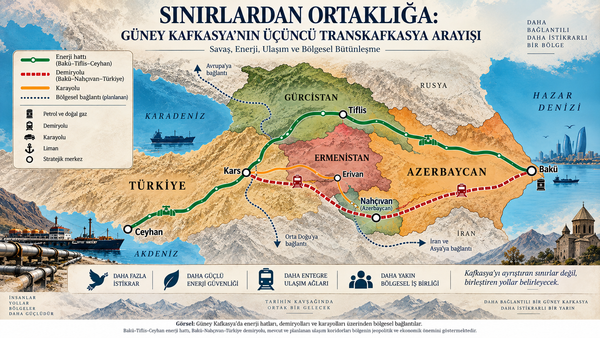
BORALTAN BRIDGE (!): There is no bridge named Boraltan on the Aras River. It never existed, neither in the past nor later. The name "Boraltan Bridge" is a fabrication. As you know, the Aras River changes direction from Tuzluca and enters the borders of Iğdır province, first drawing the Turkey-Armenia border and then the Turkey-Nakhchivan border. The Aras River leaves Turkish territory at the point where it meets the Karasu stream, which defines the Turkey-Iran border.
I surveyed all border villages from the point where the Arpaçay (Akhouryan) River, which draws the Turkey-Armenia border from the Arpaçay Dam to Tuzluca, merges with the Aras (Tuzluca) up to Dilucu. I questioned the existence of the Boraltan Bridge by conversing with village elders, especially. Without exception, all villagers heard the name Boraltan and the "massacre" from me for the first time. I made audio recordings when I deemed it important. Even in villages like Koçkıran and Cennetabat, many elderly compatriots born in Armenia, who crossed the Aras by swimming to Turkey in the 1930s, heard such a name for the first time.
Later, I conducted a multi-faceted national and international literature review. "Boraltan Bridge" is a completely fabricated name. Books were written, films were made, emotional exploitation was exaggerated, tears were shed on TV, and it became material for politics, all based on a fabricated name.
BORUALAN BORDER GATE: Due to the similarity in names, many people confuse "Boraltan" with Borualan. Moreover, since the name Boralan is used instead of Borualan in daily conversations, the confusion increases even more. The Borualan Border Gate, located in the Aralık district, the easternmost part of Iğdır province, connects Turkey and Iran. Although the work on the Turkish side was completed in 1988, it has not yet been opened because Iran has not built a customs gate due to security issues on its side. In other words, there was no Borualan or Boralan border gate in the 1940s. It is still not open for service. You might ask: Where does the name Borualan or Boralan come from? The journalist Mecit Hun answers this in the news he published under the title "Toprak Bayramı" (Land Festival) in the June 13, 1955 issue of his Pamukova newspaper. The news is as follows:
"Considering that the Sundays following the 11th day of June should be celebrated as Land Festival after the Land Distribution Law came into force, the Iğdır State Production Farm celebrated these two festivals together, also marking the second anniversary of its establishment. On this occasion, among the dignitaries invited to Dil, more than a thousand Iğdır villagers, enduring the fatigue of hundreds of kilometers of a magnificent road, gathered on the Boralan hill between the Russian-Iranian border by various means, in the joy and longing of this day."
DILUCU GATE / BRIDGE OF HOPE / BRIDGE OF LONGING: The Dilucu Border Gate, located in the Aralık district, the easternmost part of Iğdır province, connects Turkey with the Nakhchivan Autonomous Republic of Azerbaijan and was opened in 1992. The border gate, built over the Aras River, is called the Bridge of Hope or the Bridge of Longing. Its counterpart on the Azerbaijani side is known as the Sederek Border Gate. So, in the 1940s, this border gate and bridge did not exist.
SERDARABAT BRIDGE (!):
There is no bridge with this name in Iğdır. An Iğdır writer claims that the old name of the Serdarabat Bridge, as if it existed, was "Boraltan Bridge." There is no Serdarabat bridge, but there is the Serdarabad Dam and Regulator. According to the agreement made with the Soviet Union in 1927, the project was put into practice, and the dam was completed in 1937. Its purpose is to ensure that the water of the Aras River is equally divided between Turkey and Armenia, and also to enable the generation of hydroelectric energy in Kiti. The intake, tunnel, and conveyance canal of the Serdarabat Regulator were built between 1953 and 1959. There is a narrow pedestrian walkway on the Regulator, but this is not a bridge; it is used for technical protocol meetings.
You might ask where the name Serdarabat comes from. Today, there is a city named Armavir near Karakale in Armenia. The name of this city during the Soviet Union era was Hoktemberyan. Before 1935, the name of this city was Serdarabad. Since the agreement was signed in 1927, the name Serdarabad has remained from those years. In fact, my Iğdır readers of middle age and older will remember. The Alican gate was popularly known as the Malkara / Markara bridge, referring to the village of Margara on the Armenian side. After 1990, the name Alican became more commonly used.
ALİCAN BORDER GATE / MALKARA BRIDGE / MARKARA BRIDGE
The Alican Border Gate, located in the Karakoyunlu district of Iğdır province, is a border gate connecting Turkey and Armenia. Its old name is Malkara Bridge. The bridge, whose construction began for military purposes in the last years of the Ottoman Empire and was completed in 1890, is located between the Karakoyunlu district of Iğdır and the town of Margara in Armenia. Road vehicles can pass over the bridge. There is no railway. Since 1920, soldiers have been on duty 24 hours a day on both sides of the bridge.
Our writers' imagination is boundless, thank goodness. You might see someone come out and claim that the Alican bridge's name in the 1920s was "Boraltan." Şevket Süreyya Aydemir, who was a Turanist in his youth and later adopted communist views, describes the Iğdır region in 1919-1920 in his book "Suyu Arayan Adam" (The Man Searching for Water):
"Especially when we reached the Markara bridge over the Aras, which was now Anatolia, our sorrow and excitement reached their peak (Page 145)."
RAILWAY: Since there is no railway in Iğdır, train crossings are not possible.
IMPORTANT CONCLUSION: I call out to our President and the authorities: If it is proven that there was a bridge named "Boraltan Bridge" on the Aras River within the borders of Iğdır province, either today or in the past, I openly declare to the public: I will jump into the raging waters of the Aras from the Boraltan Bridge. But what if there is no such bridge?
Dear readers! I will return to the truth of the "Boraltan Disaster" later. For now, I am content with providing this general information.
PART 3
ETERNAL CONFLICT IN THE REPUBLIC OF TURKEY: THE PRINCIPLE OF MISAK-I MİLLÎ AND TURANISM
In the history of the Republic of Turkey, there is an internal conflict that became evident during the War of Independence and continued in subsequent years: supporters of Misak-ı Millî on one side and Turanists on the other. If we do not understand how this conflict arose, it will not be possible for us to understand Hüsnü Bingöl, the events of the Second World War, and the "Boraltan Bridge" polemic, which are our subjects.
THE PRINCIPLE OF MISAK-I MİLLÎ
Misak-ı Millî (National Oath / National Pact) is a six-article political manifesto. It was unanimously adopted on January 28, 1920, by the last Ottoman Parliament (Meclis-i Mebûsan) convened in Istanbul, the capital of the Ottoman Empire. The declaration contains the minimum peace terms and borders accepted by Turkey in the peace treaty that would end World War I. The final form of Misak-ı Millî was given at the Erzurum and Sivas Congresses. I do not want to give very detailed information. Misak-ı Millî, in short, defines the indispensable borders for the Ottoman Empire, which emerged defeated from the First World War, in the peace negotiations to be held. The borders of the Ottoman Empire envisioned by Misak-ı Millî largely overlap with the borders of today's Republic of Turkey. Being a supporter of Misak-ı Millî means, "We accept to be content with these borders. Otherwise, we will resist, and the war will continue." Indeed, that is what happened. The Greeks, French, and British did not recognize the Misak-ı Millî borders and launched an occupation movement. Mustafa Kemal and his friends also embarked on a struggle to seize or protect the Misak-ı Millî borders. They largely succeeded in these goals, except for Mosul and Kirkuk.
TURANISM
The definition of Turanism has constantly changed. It is a political view advocating the unity of Ural-Altaic peoples. It was put forward by Azerbaijani and Tatar intellectuals in Russia in the days before the 1905 Revolution and found wide resonance in Turkey after the declaration of the Second Constitutional Era in 1908. Turanist views, led by Ziya Gökalp, dominated within the Committee of Union and Progress administration. The deposed Ottoman Commander Enver Pasha was killed while trying to revive the idea of Turanism in Russia, which was experiencing a civil war, between 1918-1922.
MUSTAFA KEMAL AND ENVER PASHA
During the War of Independence, it was neither the British, French, nor Greek armies that frightened Mustafa Kemal. His real fear was Çerkez Ethem in the West and Enver Pasha in the East, eager to enter Anatolia at any moment. As the War of Independence continued, Mustafa Kemal, with ingenious tactics and strategies, defeated both the occupying enemy forces and got rid of Çerkez Ethem and Enver Pasha. He secured the Misak-ı Millî borders. He had no interest in Turanist ideology.
MUSTAFA KEMAL AND MEHMET EMİN RESULZADE
Mustafa Kemal remained firmly committed to the Misak-ı Millî view and based his politics on this principle. When the Misak-ı Millî borders were endangered, he was ready to sacrifice everything. We see the best example of this in his relationship with Mehmet Emin Resulzade.
WHO IS MEHMET EMİN RESULZADE?
Mehmet Emin Resulzade, born on January 31, 1884, was the first President of the Azerbaijan Democratic Republic, founded in 1918, and the founder of the Musavat Party.
Soviet armies destroyed the Azerbaijan Democratic Republic in April 1920. Mehmet Emin Resulzade hid in the mountains near Lahıc village. From there, he tried to organize a resistance movement. In August 1920, the Soviet army brutally suppressed the uprisings launched by the resistance organization in Ganja, Karabakh, Zagatala, and Lankaran. Mehmet Emin Resulzade was captured and brought to Baku. The death penalty awaited him. Coincidentally, Stalin was also in Azerbaijan. Stalin, having saved him from capture in 1905, released Resulzade, and they traveled to Moscow on the same train. Resulzade stayed in Moscow for two years. He taught at the Institute of Oriental Languages at the University. During his two years in Moscow, he met with people like Stalin, Sultan Galiyev, and Enver Pasha. In 1922, when news arrived that he had organized the Musavat party illegally in Baku, he decided to escape. He went to Leningrad under the pretext of doing research at the Institute of Oriental Languages. From there, he escaped to Finland by boat. He did not stay there long and came to Turkey via Germany.
In Turkey, between 1923-27, he published magazines named Yeni Kafkasya, Azeri Türkü, Odlu Yurt, and Bildiriş. However, these magazines were closed by Mustafa Kemal at Moscow's request. Between 1928-1931, Mehmet Emin Resulzade's articles were again published in newspapers and magazines in Turkey. Mustafa Kemal, needing Soviet assistance due to the Ağrı Dağı Rebellion, expelled Mehmet Emin Resulzade from Turkey at Stalin's request, or politely asked him to leave the country. Mehmet Emin Resulzade, along with Tatar leader Ayaz İshaki, who shared the same fate, left Turkey.
According to his wife Vanda (Leyla) Hanım, Mehmet Emin Resulzade established an association in England and continued his political activities. However, he was not happy working under British control. He moved to France and published a magazine called 'Journal Prometheus' in Paris.
In 1938, he went to Poland. He married Vanda (Leyla), the niece of Polish statesman Pilsudski. After Nazi Germany's invasion of Poland, he settled in Romania in 1940. In 1942, Resulzade went to Berlin at Hitler's invitation, along with representatives of other Caucasian peoples (Georgians and Armenians). Discussions were held on the independence of the Caucasus and Azerbaijan. Armenian General Dro, who came from America, was also in Berlin during those same days, by a twist of fate. According to a German writer, Mehmet Emin Resulzade, General Dro, and the Georgian leader participated in a meeting chaired by Hitler.
In the spring of 1943, Mehmet Emin Resulzade established the National Azerbaijan Committee in Berlin. However, Hitler did not recognize the committee, which made Azerbaijan's independence a condition for cooperation. Hitler favored a federation of Azerbaijanis, Georgians, and Armenians, or wanted to connect countries like Azerbaijan, Turkestan, and Uzbekistan to Turkey under the Turan umbrella. This was not in line with an independent Azerbaijan plan.
Hitler asked Resulzade to give a speech to the Azerbaijani units in the German army. Hitler was not satisfied with the speech and ordered Resulzade to leave Germany within 24 hours. Thereupon, Resulzade, who left Berlin and stayed in Romania until the end of the war, moved to Czechoslovakia, and from there to Switzerland, continuing his struggle as the Russians advanced westward. He came to Turkey in 1947. In 1949, he founded the "Azerbaijan Culture Association." He passed away in Ankara on March 6, 1955. His grave is in Cebeci Cemetery.
Some writers claim that Mehmet Emin Resulzade went directly to Germany in 1920, immediately after the collapse of the Azerbaijan Republic, and stayed there until 1947, while some writers claim that he never left Turkey. Such information is incorrect and contains serious and deliberate disinformation. The aim here is to hide from the reader the information that Atatürk expelled an Azerbaijani hero from the country. Mustafa Kemal, not only did not favor the idea of Turanism, but also prioritized protecting the Misak-ı Millî borders, taking into account the fact that he needed Soviet support in the ongoing Ağrı Dağı Rebellion and Stalin's demand for the return of Kars-Ardahan-Iğdır. Unable to withstand Stalin's pressure, he sacrificed Mehmet Emin Resulzade and removed him from the country. In later years, İnönü followed the same policy; when it became certain that the Nazis would be defeated, upon Stalin's threat to the Misak-ı Millî borders, he retired Marshal Fevzi Çakmak, targeted and imprisoned Turanist and idealist circles. Nuri Pasha, known for his Turanist views, fell victim to a suspicious accident.
MISAK-I MİLLÎ AND TURANISM DURING THE SECOND WORLD WAR
When the Second World War began, Turkey did not participate in the war, but another war broke out within Turkey: Misak-ı Millî supporters and Turanists confronted each other. Turanists favored entering the war on Germany's side. Misak-ı Millî supporters considered it a sacred duty to protect the existing borders. For this, they advocated neutrality as the most appropriate political stance.
I would like to remind you of the most important figures of these two groups that determined Turkey's destiny in those years:
Misak-ı Millî Supporters: President İsmet İnönü, Foreign Minister Numan Menemencioğlu, and Hüsnü Bingöl
Turanists: Marshal Fevzi Çakmak, Prime Minister Saraçoğlu, and Nuri Pasha (Enver Pasha's younger brother)
I assume one point has caught your attention here: How can a MAH (MIT) officer in Eastern Anatolia play an important role in the course of Turkish politics? Do not forget that in those years, the biggest threat to the Misak-ı Millî borders was Stalin's demand for the return of Kars, Ardahan, and Iğdır. Hüsnü Bingöl was the founder and director of the espionage and counter-espionage movement in this region. Perhaps it may be a very bold claim, but I would like to state now: If it weren't for Hüsnü Bingöl, it is very likely that Stalin would have attacked Kars, Ardahan, and Iğdır and perhaps incorporated them into Soviet borders. We will see this together in my upcoming articles.
The second point that will catch your attention will be Nuri Pasha. Nuri Pasha, the Conqueror of Baku, is the younger brother of Enver Pasha, a leading figure of Turanist thought. Nuri Pasha, who lived in Germany for many years, returned to Turkey in 1938 and began producing pistols, canteens, iron rods, gas masks, and bullets in Zeytinburnu.
When the Second World War began, Nuri Pasha met with German ambassador Franz von Papen in 1941, trying to gain German alliance by secretly supporting the Turanist movement in Turkey. Nuri Pasha believed that the first Turkic nations to integrate with Turkey would be the Azerbaijanis and Turkmens living close to Turkey's borders, and after them, other Turkic peoples living in the region extending to Tatarstan would integrate. For this reason, Turkey should fight against the Soviet Union together with Germany, and the Germans should form an army from Turkic Soviet prisoners and place it under Turkey's command.
PART 4
EXCERPTS FROM HÜSNÜ BİNGÖL'S LIFE IN IĞDIR
MİKAİL DEMİRCİ NARRATES
"I was born in 1927 in the village of Şöllü-Demirci, which remained within the borders of Armenia. My family, unable to withstand the pressures of the secret police CHEKA, fled to Turkey illegally in 1931. When the Surname Law was enacted, families from the village of Şöllü-Demirci took four different surnames: Demirci, Çöllü, Şöllü, and Alagöz.
There were good friendly relations between Azerbaijanis and Armenians. By the 1930s, the pressure from the secret police CHEKA was increasing, and they were arbitrarily arresting and imprisoning people.
One day they caught my father. They tortured him and asked:
"Tell us! Where are you hiding the weapons?"
My father insisted:
"We are villagers; we don't have weapons or ammunition."
CHEKA said, "We know you are hiding your weapons. You will attack the Soviet armies from behind in the war. But don't worry, when there is a war, we will send you to the front lines."
Indeed, when they fought the Germans, they sent those they suspected to fight on the front lines. A few of them fell captive to the Germans. After the war, they came to Turkey and settled. The person known as "Alman Muharrem" (German Muharrem) in Iğdır today, who is from the Caucasian Terekemes, experienced such an event.
My father, Timur Demirci, did not sit idle after bringing our family to Turkey; he regularly crossed the border illegally and brought relatives one by one to this side.
The village of Koçkıran (Dize) was the starting point. He would wait there during the day, cross the Aras at an opportune time at night, and reach his relatives. He would hide among them all day, and the following night, he would come back to this side in the opposite direction.
When reports intensified recently, he would cross the border and return the same night. My father's adventurous crossings were told with pleasure and excitement in family conversations for years. One of them was as follows:
A person named Muhtar, while being taken for interrogation by CHEKA, threw a handful of sand he scooped from the ground into the eyes of the police and ran towards the Aras River. He managed to cross the Aras, albeit with difficulty, and reached this side!
Hüsnü Bingöl was a good friend of my father's. His daughter Şükran was my classmate. Hüsnü Bingöl was a person who loved his homeland very much. In my opinion, he was the person who did the most good for this country after Atatürk.
Once, a person named Abdülzeki was caught. Abdülzeki had previously worked as a teacher and later left this position to work in the Tekel Directorate. Somehow, he was deemed suspicious and was caught by Hüsnü Bingöl and sent to Erzurum.
The year Abdülzeki was caught, I was a third-grade middle school student (1943-44). We were in history class. Our classmate Mahmut excitedly entered. He excitedly told our history teacher Hüseyin Gültekin:
"Teacher, I saw Abdülzeki Bey. They were taking him to Erzurum. His face resembled Namık Kemal so much!.."
"Get out of the class, you scoundrel! How can you compare a communist to a patriot like that!"
HAMİT ÜNVER OR, ALIAS, "PİÇ HAMİT"
Hamza Aygün narrates:
"Hamit Ünver is originally from the village of Persili, which is within the borders of present-day Armenia. After completing his high school education, he tried to pursue higher education, but before he had the opportunity, he married a Russian girl he met.
In the early 1930s, he illegally crossed the Soviet-Turkish border and settled in Iğdır with his wife, son Nazım, and daughter Sahibe. The government gave him a garden adjacent to the Topçu Primary School as a residence. This garden, with its beautiful peach trees, became known as "Hamit Bey's vineyard" for many years.
Hamit Ünver first worked as a shop assistant in the drapery store belonging to the brothers Hacı Gulem and Nağdali Parlar.
Hamit Ünver stood out among the immigrants who came to Iğdır with his intellectual personality and shrewdness. He was very intelligent. Unfortunately, he used his intelligence and all his energy to understand the working rhythm of the civil administration, such as the land registry office, population registration office, and customs office in the town, and the possible intrigues (!) that might be going on there. He broke the hearts of many people for no reason, thus making many enemies.
Hüsnü Bingöl had been closely following Hamit Ünver from the very beginning. He was disturbed by his alert and ubiquitous personality. Another issue that made Hüsnü Bingöl suspicious was Hamit Ünver's citizenship status. He did not want to become a Turkish citizen, boasting to his close friends, "I will become a German citizen." Annoyed by such conversations, Hüsnü Bingöl wrote a letter to the Ministry of Interior in the early 1950s, recommending Hamit Ünver's deportation.
One day, they put Hamit Ünver on a camel and sent him towards the Syrian (or Iraqi) border. The security forces accompanying him handed Hamit Ünver over to the governorate of a neighboring province; the journey thus slowly progressed towards the Syrian border. Finally, as this camel convoy passed through a province whose name I don't remember - Hatay or Şanlıurfa - its governor, having served as district governor in Iğdır before, recognized Hamit Ünver, took him in, and kept him with him. Then he sent him to Istanbul and allowed him to live there under surveillance.
In the 1950s, the American Government offered special visas to Russian-born individuals, inviting them to America and encouraging them to become citizens. Hamit Ünver and his family also applied for this visa and were waiting for their turn.
However, Hamit Ünver died suddenly of a heart attack in Istanbul in 1957 or 58. His children and wife later managed to go to America. His son Nazım died of cancer around the age of 30, while still single. His daughter Sabiha married an American and had two daughters. She currently lives near New Jersey.
Hamit Ünver's vineyard passed to the treasury. İsrafil Bey, the Chief Clerk from Ağrı, bought this vineyard. Later, that vineyard was divided into two and given to the brothers Hamit Keskin and İslam Tuna as settlement rights.
In those years, since the state gave 30 decares of settlement rights to the head of the family and 10 decares to the children, even siblings from the same parents took different surnames in the hope of benefiting from the "Settlement Law."
"UNCLE BEY" NICKNAME
The way people addressed Hüsnü Bingöl varied. While Kurdish notables would say "Hüsnü Beg," Azerbaijani notables and high-ranking state officials like district governors serving in Iğdır adopted the address "Hüsnü Bey" or "Beyefendim." The young, educated, and urbanized segment preferred to say "Bey Amca" (Uncle Bey).
AZİZ GÜNEY NARRATES
There was a man named Mustafa Hoca. He worked as an itinerant head teacher. This man's sole purpose was to imitate Hüsnü Bingöl. He envied everything about him; if he could, he would imitate all his movements like a shadow.
We were quite disturbed by the teacher's sycophancy. For this reason, we decided to play a trick on him to make him repent of this behavior!
Everyone knew that Hüsnü Bey would sit in the coffeehouse and smoke a nargile after dinner. We were sure that Mustafa Hoca would do the same. We found a way and made a deal with the waiter; he would put dry horse manure instead of tobacco in Mustafa Hoca's nargile!
As we predicted, Hüsnü Bey came and sat at the table after dinner. Without saying anything, the waiter immediately brought his nargile and carefully placed it in front of him. Mustafa Hoca also came and settled at the next table and ordered a nargile. We sat at Hüsnü Bey's table and explained the trap we set for Mustafa Hoca:
"Uncle Bey, he is imitating you, we will make him repent!"
He received our words with a half-serious, half-indifferent attitude.
Hüsnü Bingöl's hand reached for the nargile, he brought the hose to his mouth and began to draw deeply. No smoke came out.
There is a custom in nargile smoking culture: at first, wet tobacco is put in the nargile. For this reason, it is necessary to draw in vain for some time for the tobacco to dry and smoke to come out.
Mustafa Hoca also reached for his nargile. With the very first draw, his face was engulfed in smoke. One of his eyes was also on Hüsnü Bingöl.
Hüsnü Bingöl again reached for his nargile and began to draw as if emptying the hose. Again, no smoke came out. Mustafa Hoca also moved to his second attempt, and smoke covered the earth and sky as if coming out of a stovepipe. Mustafa Hoca, believing that Hüsnü Bingöl, who was an idol for him, was in a helpless (!) situation, approached him:
"Uncle Bey, it seems no smoke is coming from your nargile! Please take a puff from mine!"
"Get out of here, you scoundrel! Let me not see you!"
HACI EVLİYA YİĞİT NARRATES
One day, Hüsnü Bingöl and his friends were sitting and chatting in the Iğdır Municipality garden. Mecit Hun was also among the crowd. Hüsnü Bingöl, at one point, asked those around him in a way that aroused curiosity:
"What would be valuable in Russia?"
In those days, when espionage incidents were frequent and the slightest mistake could result in death, no one dared to open their mouth and answer.
Mecit Hun spoke up:
"Uncle Bey, I would like to answer your question, but I am a little hesitant..."
Hüsnü Bingöl:
"Don't be afraid, tell me!" he insisted, and Mecit Hun replied,
"Uncle Bey, by God, if we cut off your head and send it to Russia, we would undoubtedly get a lot of money in return."
(TO BE CONTINUED)
In my next article, I will cover the Nazi Muslim Legions and Kıyas (Alkazak) Bey.