Iğdır Once Upon a Time: Three Beautiful People
This essay introduces three remarkable figures from Iğdır's past—Nağı Odoğlu, Mir Ali Ural, and Hamit Hun—who embodied tolerance, humanism, and humor, enriching the region's cultural fabric.
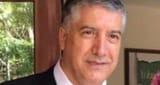
My dear readers! The new generation doesn't really know Iğdır's past and its human richness. Unfortunately, the right-left polarization that accelerated in Iğdır in the 70s, as it did all over Turkey, threw this human richness into the dustbin of history, leaving behind a generation that thinks in one dimension and cannot step outside certain molds. This is a sad situation. Unfortunately, this meaningless and shallow polarization still continues with full force.
I claim that the human richness living in Iğdır in the 1950s was unparalleled in any other province or district of Turkey. Intellectual development was at its highest level. Literature, art, journalism, friendship, humor, human love, tolerance, and the institution of kirvelik (godparenthood) were woven together in a magnificent and magical web. I wish I had the time to write about all these values separately. However, my time is also limited, and after all, I am a columnist. But I can do this: I can share with you three of the most prominent of these beautiful people. These three beautiful people, whose hearts were unconditionally filled with tolerance, humanism, humor, and compassion, were Nağı (Naki) Odoğlu, Mir Ali Ural, and Hamit Hun. As I commemorate all three with mercy, let's take a brief look at the lives of these three important figures:
NAĞI (NAKI) ODOĞLU
Nağı Bey was born in Erivan (Yerevan). As you know, in those years, the Iğdır and Erivan region was under Russian rule. The majority of Erivan's population consisted of Muslim inhabitants, especially Azerbaijanis. Nağı Bey completed his education in Erivan. His father was a Hacı (one who has completed the Hajj pilgrimage). He was involved in trade and agriculture. He owned considerable wealth with his bread factories, vineyards, and gardens. He had five children: Abbas, Bekir, Fahriye, Süheyla, and Ayten. Bekir Odoğlu was the owner of Çiçek Pasajı in Beyoğlu.
Nağı Bey's family had a very beautiful mansion in Erivan. The villa, crafted by an Armenian master, was adorned with various carvings and craftsmanship everywhere. The rooms opened onto special balconies called "şahniş," and bay windows covered with colored glass on three sides gave the house a palatial atmosphere, captivating those who saw it.
Unfortunately, when civil war broke out in the region in 1917, the entire family abandoned their magnificent mansion with its ornate pool surrounded by flowerbeds and scattered in all directions. The family finally reunited in Iğdır in 1920. They settled in Istanbul. However, Nağı Bey's heart remained in his ancestral home in Erivan. He was well-off in Istanbul. He continued his aristocratic life, but an unknown force drew him to Erivan. With the establishment of the Republic, when Erivan remained within the borders of the Soviet Union, Nağı Bey, hoping to be close to Erivan, loaded his children, who were studying in Istanbul's most distinguished schools, onto a truck and set off for Iğdır. The children were, of course, uncomfortable with their father's decision, but they could not object. Nağı Bey settled in the Armenian house in İdirmava – which today belongs to Hasan Alagöz. He restored the house with the help of Hungarian craftsmen. The house had a radio, a gramophone, and a piano. Nağı Bey was filled with a love for nature. He took up viticulture and gardening. He had two large vineyards, one big and one small. He obtained unique flavors specific to Iğdır by applying special grafting techniques to varieties of peaches, apricots, apples, and grapes. He spent most of his time between the two vineyards. He had two phaetons. Due to his love for animals, he did not allow whips to be used. The horses would also pace the dusty roads of Iğdır at a leisurely speed. His love for nature was so intense and sincere that it was difficult for him to pick fruits from the tree. One day, while he was on his way with his large phaeton to distribute the fruits he had filled into crates to friends and acquaintances, one of the horses stumbled, the crates overturned, and the fruits scattered onto the street. Nağı Bey looked at the fruits on the ground and muttered aloud:
"Oh, if only I hadn't picked you from your branches!"
Nağı Bey established one of Iğdır's first rice and cotton gin factories. He packaged peach preserves using a method he developed and participated in the İzmir International Fair in 1935, winning first prize. Immediately afterward, he exported preserves to Germany.
While pursuing all these endeavors with all his might, he would go to the village of Dize whenever he found the opportunity. His daughter Süheyla, who accompanied her father, describes one of those moments as follows:
"There was a village called Dize on the banks of the Aras River. The city of Erivan stretched out in all its majesty on the opposite bank of this village. On a good day, it was possible to discern all kinds of activities in the city center from the banks of the Aras even with the naked eye. Some days, my father would come to this village and sit silently on one of the slopes facing Erivan. That day, we were together again. My father's eyes lingered on Erivan for a while. His face became calm. I felt unknown longings and storms raging in his heart: his ancestral home, vineyards and gardens, his childhood and youth... And one day, everything was cut off like with a knife, his ancestral home was forbidden to him, the borders were closed. This incomprehensible injustice weighed heavily on his heart like a stone. My father suddenly broke his silence. He buried his face in his elbows and, unable to bear it any longer, burst into sobs. That day, I had solved the riddle that bound my father to Iğdır: the longing for his ancestral home!"
Nağı Bey spent most of his time among the trees, working tirelessly and without getting bored. To be honest, this love for trees did make his children a little jealous. His daughter Süheyla recounts:
"I had an important matter to discuss with my father. I went to him in the garden. He was walking among the trees with a large pair of scissors in his hand, carefully and lovingly. I waited in the distance. I said to myself, 'I'll talk to him when he takes a break from his work!' Minutes passed, my father neither took a break nor noticed me. Angrily, I stood in front of him, forcing my way between him and the tree:
"'Father, do you love these trees more than us?'"
"'Why do you feel such a thing, my beautiful daughter?'"
"'Didn't you make a promise to me yesterday? Did you forget?'"
"'No, no, my daughter! I love these trees for you, they are all yours, that's why I love them!'"
My father was quick-witted. He never let go of jokes and humor. But his love for nature was above everything else.
One day, our house was raided by order of MAH (National Security Service) Inspector Hüsnü Bingöl. Iğdır's first radio was in our house. When the MAH agents saw the radio, they took my father away in a hurry, saying, 'We caught the agent! So you were communicating with the Soviet Union through this radio!'"
Dear reader! Nağı Bey, whose heart was full of love for nature and humanity, was tried for execution in Erzurum, but after long investigations and interrogations, he was found innocent and released. I will discuss Hüsnü Bingöl in one of my later articles. Briefly, if I had to write about him, for Hüsnü Bingöl, people were divided into two categories: those who accepted his authority and those who didn't. He would somehow trap and neutralize those who resisted. It is rumored that Hüsnü Bingöl asked Nağı Bey to help him with counter-espionage, and Nağı Bey refused this request.
Iğdır does not know that all the fruits of today, such as apricots, peaches, apples, grapes, saralı, and karalı, were developed by Nağı Bey's special grafting techniques. Very few people know that these fruits have a unique taste specific to Iğdır. When you eat an apricot or an apple, please remember Nağı Bey and commemorate him with mercy!
When rumors of a Soviet occupation of Iğdır gained momentum between 1945 and 1947, the wealthy people of Iğdır moved their money and assets to Istanbul. Nağı Bey did not leave Iğdır. He gave his fortune to his son Bekir Bey and said:
"If I am to die, let me die in Iğdır! Being close to Erivan makes me happy."
Nağı Bey passed away a few years later and was buried in Iğdır. However, his grave is unknown today. He left us by planting his love for nature and humanity in the soil of Iğdır. May God have mercy on him! (Dear reader, I don't like to advertise my books, but I tried to immortalize Nağı Bey as the hero of the novel in my book titled "Aras Aras Goodbye Sona," which I wrote under the pseudonym Kevan.)
MIR ALI URAL
Mir Ali Ural was born in Ganja in 1897. His father was a clergyman. Mir Ali Ural went to Tiflis (Tbilisi) to get an education. After finishing high school, he started a business in Tiflis. He could speak Russian, Georgian, and Armenian fluently. One day, he crossed the border illegally and settled in Iğdır. He married Terlan Hanım, the daughter of Meşe Abbas, the most established family in İdirmava. In later years, he became interested in politics. He served as the Mayor of Iğdır between 1950 and 1960 (Fazıl Baykal was Mayor in 1956-57). People knew him as "Mireli," a shortened form of "Mir Ali." Uncle Mireli carried deep tolerance and love for humanity in his heart. During his ten years as mayor, he never engaged in factionalism or similar discrimination. Uncle Mireli has a famous saying that has now become historical: "Darıxmayın! İşler qaydasına göre gider!" (Don't worry! Things will somehow find their own solution.) In my opinion, Uncle Mireli's words should be frequently used as an Iğdır proverb and even hung on the walls in some institutions.
"Blind Hacı" Fear
In the 50s, the daily buying and selling prices of vegetables were written with chalk on a blackboard in front of the municipality. All traders and shopkeepers were obliged to comply with the prices.
Blind Hacı, whom everyone feared to death, was growing cucumbers in his garden. When he saw that the purchase price of cucumbers was 20 kuruş per kilo on the blackboard in front of the municipality, he quickly headed home. Soon after, he loaded several crates of cucumbers onto a phaeton and brought them in front of the municipality. And what did he see! Hadn't the purchase price of cucumbers dropped from 20 kuruş to 15 kuruş?!... Blind Hacı was very angry about this situation. "I'll curse the mother and wife of this municipality..." he muttered, swearing and walking towards the municipal building. Halil Çavuş, the municipal police officer, seeing Blind Hacı coming to the municipality in a frenzy, ran to Uncle Mireli in fear.
"Mr. Mayor, don't ask! Blind Hacı is coming here, cursing the mother and wife of the municipality."
Soon after, Blind Hacı entered furiously. Uncle Mireli respectfully rose from his seat and greeted him with a sweet voice:
"Oh, my brother Hacı! Welcome! Quickly, bring tea for Hacı!"
As soon as Blind Hacı sat down, my father asked:
"Tell me, Hacı! What do you want?"
Blind Hacı interjected: "The price of cucumbers was 20 kuruş a kilo this morning, now it's 15 kuruş!" Uncle Mireli understood the situation and calmed Blind Hacı:
"Hacı, the children wrote it wrong... We'll fix it now... Don't worry at all!"
"Someone else will..."
In the area where Gulem Çağlar's store was located, there was a small haberdashery shop belonging to a person named İsrafil. One day, a truck loaded with goods that had arrived from Istanbul accidentally hit an electricity pole in front of the shop while moving backward, bending the iron pole to one side. People from the public who witnessed this incident informed the municipal police officers Halil and Bahri Çavuş. The police officers took the driver between them and went to the municipality, and together they appeared before Uncle Mireli. Bahri Çavuş quickly summarized what had happened. Uncle Mireli asked the driver, who was standing sheepishly between the two police officers:
"Is the truck yours?"
"No, Mr. Mayor, I'm the driver!"
"Where are you from?"
"I'm from Trabzon."
Uncle Mireli felt sorry for the man and turned to the police officers:
"Let the man go! Someone else will come and hit it from the other side, and the pole will straighten."
Hüsnü Bingöl
Listening to radio stations broadcasting from Russia was forbidden for many years. The punishment for those who violated this ban was quite severe. But Uncle Mireli did not care about this punishment; he would sit by his radio at home and eagerly listen to news about the Caucasus, where he had spent his childhood and youth, by turning the tuning knob from one station to another.
One day, Uncle Mireli and Hüsnü Bingöl were sitting in a coffeehouse, chatting about new developments in the world. At one point in the conversation, Uncle Mireli gave a detailed account of developments in Russia and the Caucasus. Hüsnü Bey turned to Uncle Mireli in surprise:
"Ali Bey, where did you hear this news?"
Uncle Mireli answered without hesitation:
"From my radio at home!"
Hüsnü Bey's face tensed, and he looked sternly. A fear gripped Uncle Mireli. Hüsnü Bingöl suddenly smiled slightly, softened by Uncle Mireli's frankness, and they continued their conversation from where they left off.
Uncle Mireli passed away in 1964 due to a sudden heart attack. May he rest in peace!
HAMİT HUN
He was the eldest son of Ahmed Şemo, leader of the Gêloî Tribe. He was born in Iğdır in 1921. He started his secondary education at Kars High School and continued it at a private high school in Istanbul, but returned to Iğdır before graduating. In the 1940s, going from Iğdır to a private high school in Istanbul was certainly an important step. In later years, he married Fatma Hanım, the daughter of Newo Ağa, a notable from Doğubayazıt. He engaged in trade and animal husbandry.
Hamit Hun possessed a broad understanding of freedom and tolerance deep within his soul. He was the indispensable sultan of heartfelt conversations among the people and in their hearts. He always had a book or newspaper in his hand. He knew the Ottoman poetry corpus by heart. Sometimes a competent philosopher, sometimes a wizard of words who knew how to take people away from the troubles and hardships of the world, even for a moment, with his deep and meaningful literary and historical conversations. He would enliven Iğdır, which was stuck on the tip of the tongue, with his anecdotes and caricatures, in a sense liberating Iğdır. One cannot help but wonder how boring Iğdır would have been without Hamit Hun.
His anecdotes transcended tribes and factions. No one would take offense or seek revenge. According to rumor, there was only one person who desperately searched for Hamit Hun: the late Şişko Mehmet Efendi. The late Şişko Mehmet Efendi, who was an indispensable figure in Hamit Hun's caricatures, one day caught Hamit Hun eating in a restaurant. He loudly expressed his complaint:
"Oh, my dear! I bought myself a new fedora. Why do you draw me with my old fedora?"
Hamit Hun instilled self-confidence in the people of Iğdır by beautifying life with philosophical anecdotes and helped them overcome their troubles, even if only a little. His caricatures circulated from hand to hand, in a sense setting Iğdır's agenda. He passed away on March 28, 1998, due to a sudden heart attack. May he rest in peace.
BRIDE PRICE BARGAINING
The year is 1977. Kars Senator Sırrı Atalay is the President of the Senate, and Kars Deputy Kemal Güven is the Speaker of the Parliament. Both are close friends of Hamit Hun.
Although Hamit Hun was not very eager, he would occasionally attend bride price determination meetings out of respect for his friends. One day, he was invited to such a meeting again.
In the large hall, the bride's father and guests are sitting on floor cushions. Teas are being drunk. Just as the topic of the bride price is about to begin, an acquaintance whispers in Hamit Hun's ear:
"Hamit Bey, the boy's family is not well off at all. They can't afford a bride price. They would be very happy if you could help."
The meeting begins. The bride's father is bold:
"I want 50 sheep for my daughter."
Hamit Hun interjects:
"I saw Mecit Hun just now. He sends his regards. He said that he has a favor, and that you should take it into account."
The bride's father thinks for a moment, then composes himself and replies with a smile:
"Twenty sheep be sacrificed for Mecit Hun!"
Hamit Hun is pleased that the number has dropped to 30, but he is not satisfied with this:
"Last night, Sırrı Atalay called and said, 'I can't come due to my work, I have a favor, tell the bride's father to take this into account.'"
The bride's father again falls into deep thought, then composes himself and replies with a smile:
"10 sheep be sacrificed for Mr. Sırrı!"
The number drops to 20. Hamit Bey is pleased but not satisfied with this. He pulls out a crumpled piece of paper from his pocket and holds it in his hand:
"This morning, Speaker of Parliament Kemal Güven sent a telegram. He said, 'I have a favor, please take this into account.'"
The bride's father again falls into deep thought, then composes himself and replies with a smile:
"10 sheep be sacrificed for Mr. Kemal!"
The bride price has dropped to 10 sheep. Hamit Hun interjects one last time:
"Don't I have any favor at all?"
"I don't want any bride price. Take the girl and go."
Hamit Hun doesn't let go of the man:
"Will you only give your daughter to this young man who has the favor of so many valuable people?"
The man thinks for a moment:
"Alright, for your sake, I will also give ten sheep with the girl."
The man looks like he's about to burst from distress. He asks for permission and goes outside. His daughter is waiting outside for the news. As the man wipes the sweat from his forehead, he says to his daughter:
"There's someone inside, if he stays a little longer, my daughter, he'll take both you and all my possessions."
THE FIRST CIVIL RESISTANCE AGAINST A MILITARY COUP
(Dear reader! The anecdote you are about to read below is true. In a period when everyone was afraid and intimidated, this anecdote was told in every home, especially in the Eastern Anatolia Region, and in a sense became a justification for discrediting the Military Junta in the eyes of the public.)
These are the days following the 1980 Military Coup. Bad surprises await Hamit Hun, who is approaching sixty.
One of his three left-leaning sons is arrested and imprisoned. The other son flees to Europe. The third son is about to be caught... The family's economic situation is turned upside down. He spends all his money on lawyers and courts.
One day, when he is penniless, he falls ill, and because his condition is serious, he is transferred from Iğdır to a hospital in Erzurum with the help of his friends.
He stays in the hospital for a week. He recovers a little. On such a day, a pleasant and cheerful nurse enters the room with a survey paper in her hand. She speaks to Hamit Hun in a sweet tone:
"Uncle, our Council President, Mr. Kenan Evren Pasha, has launched a campaign for organ donation. Which organ would you like to donate?"
When he hears Kenan Evren's name, Hamit Hun's heart tightens, but he doesn't show it:
"My dear girl, my lungs are half-functioning due to tuberculosis I had in my childhood. I have gastritis in my stomach. My intestines are also problematic. My heart is skipping beats. As you know, I was brought here due to liver and kidney failure. The only healthy organ I have left is my reproductive organ."
The nurse immediately notes:
"Would you like me to add anything to the comment section?"
"If the Pasha gets tired of using it, I allow his three other friends on the Council to use it too."
The nurse girl finds what was said very serious, leaves the room in fear, and returns shortly with the doctor.
Doctor: "Mr. Hamit, is what you said true?"
Hamit Hun: "The nurse was very scared, and rightly so! Actually, I didn't mean all of it. Of course, that would be terrible. In that case, they should only use half of it."
ELECTIONS ARE APPROACHING
Mayoral elections within the tribe never pass without bloodshed or trouble. A relative who wants to be a candidate in the upcoming elections wants to benefit from Hamit Hun's political experience and goes to him:
"Hamit Bey, the elections are approaching, what should I do?"
"Go to the village cemetery and dig a few empty graves."
GIRTÎGEH (PRISON)
In every tribal house, there is always a young man in prison. This is the law of years. One day, Hamit Hun is sitting and chatting with an Azerbaijani friend and relatives from his tribe. The Kurdish relatives ask each other:
"Where is your eldest son now?"
The man replies as if with a little praise:
"Girtîgehe İstanbul e." (He is in Istanbul prison.)
"And where is your child?"
He also replies as if with praise.
"Girtîgehe İzmir e."
The Azerbaijani assumes that Girtîgeh must be something like a university. Hamit Hun asks his Azerbaijani friend:
"Kirve, what is your son doing?"
"May God punish him. He finished high school, couldn't go to Girtîgeh like your young men. He's studying at a two-year vocational school."
Hüsnü Bingöl
Everyone has a memory related to Hüsnü Bingöl, so why wouldn't Hamit Hun? Hamit Hun's stepmother, Zeyno Hanım, was the cousin of Kinyas Kartal, the leader of the Brukan tribe, so Hamit Hun had a close relationship with this family. He became friends with a person named Ahmet Kartal. Ahmet Kartal was skilled in lying and fraud.
One day, during a visit to Iğdır, he met Eşref Kaya, whom Hüsnü Bingöl highly valued, through Hamit Hun. He convinced Eşref Kaya that if he gave him money, he would buy a flock of sheep and graze them in the highlands, and then sell them in the autumn to make a lot of money. Eşref Kaya handed over his savings to Ahmet Kartal. Ahmet Kartal, of course, did not buy any sheep. At one point, Eşref Kaya became curious and went to the highlands, wanting to see the sheep Ahmet Kartal had supposedly bought. Ahmet Kartal showed a flock belonging to another ağa as if it were his own. Eşref Kaya was convinced and returned to Iğdır.
When autumn came, Ahmet Kartal disappeared. Eşref Kaya, realizing he had been defrauded, asked Hüsnü Bingöl for help. Hüsnü Bingöl's first question was through whom he had met Ahmet Kartal. When he learned it was Hamit Hun, Hüsnü Bingöl did not want to miss this opportunity and filed a lawsuit in Doğubayazıt against Ahmed Şemo, who, along with the Güneş family, resisted his authority in the Kurdish region. The trial lasted a long time. Ahmed Şemo went back and forth from Iğdır to Doğubayazıt by phaeton almost every week. On his return from such a journey, he fell ill and passed away. Since the lawsuit was filed against Ahmed Şemo, Hamit Hun escaped punishment.