Baharlı Neighborhood Once Upon a Time (PART THREE)
This essay argues that the renaming of Baharlı Neighborhood to 14 Kasım was a psychological punishment for its residents' political identity, urging the Iğdır Municipal Council to restore the original name.

MY CALL TO THE IĞDIR MUNICIPAL COUNCIL: BAHARLI NEIGHBORHOOD WANTS ITS NAME AND HONOR BACK
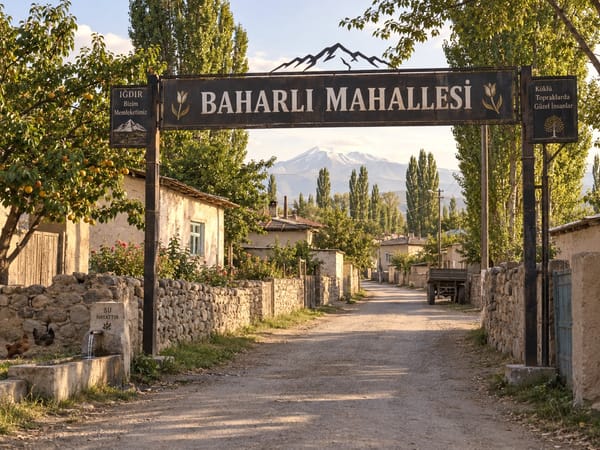
I was born in Baharlı Neighborhood. I am not writing this article merely to recall an old neighborhood name. I am writing to explain the past of a neighborhood whose youth were tortured, whose families lived in fear, and whose historical name was subsequently changed, and to articulate the objection I voice today.
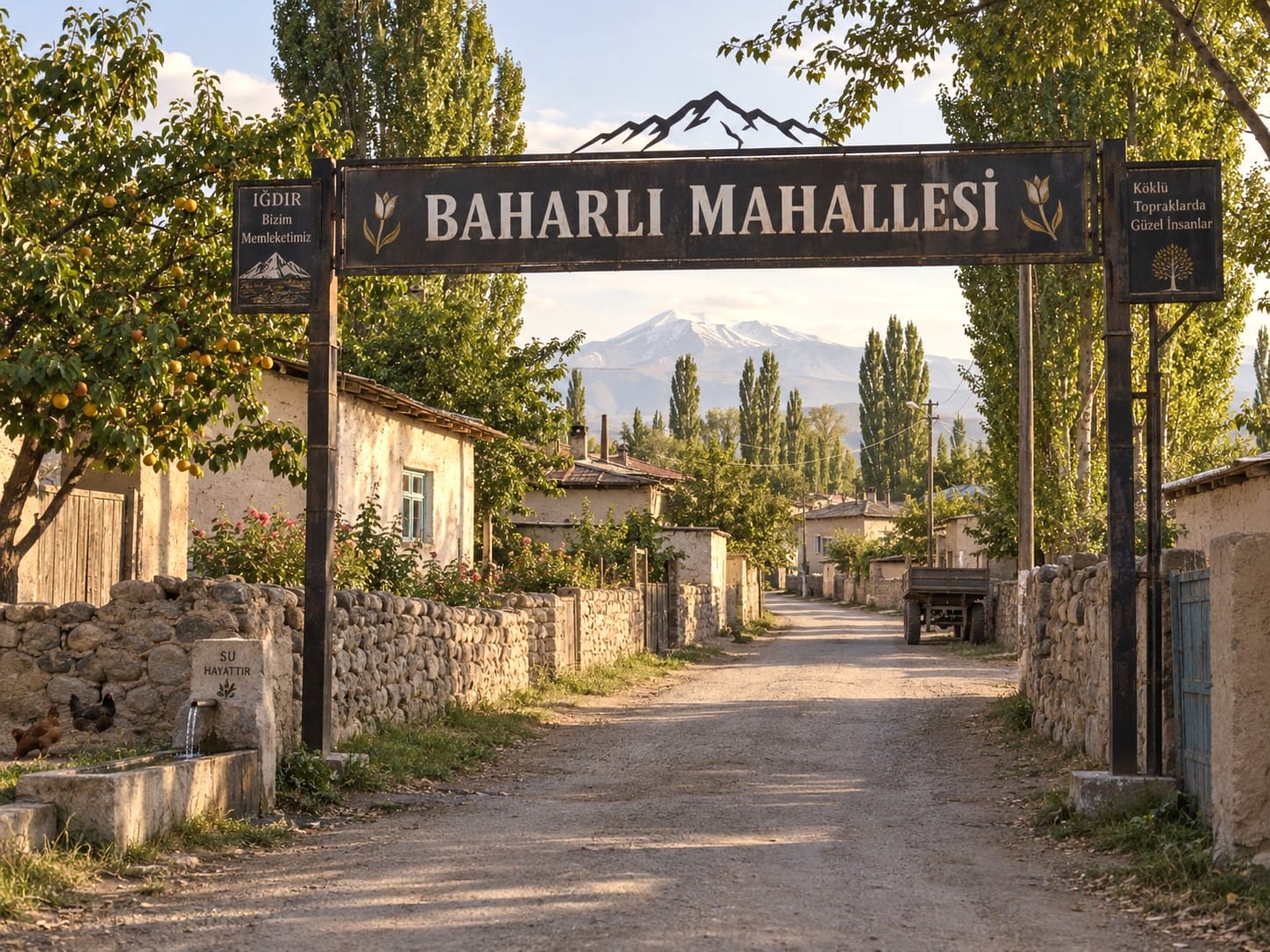
Today, instead of Baharlı Neighborhood, municipal records show 14 Kasım. However, the name of the place where I was born, of my family, our neighbors, and my childhood, is Baharlı. Even if the official name has changed, the name of my allegiance to my birthplace has not.
For this reason, I clearly state my call: Do not view the demand regarding Baharlı's name as merely an application for an address change. Listen to the people behind that name, the suffering they endured, and the objection they have carried for years.
First the Youth, Then the Neighborhood's Name
Baharlı's September 12th past involves an issue of political identity. To exclude this from the narrative would render a significant part of what happened invisible.
In the published testimonies of Baharlı regarding September 12th, it is recounted that the Terekeme youth's known proximity to leftist ideology increased the pressure on them. Detentions, torture, threats directed at families, and multiple young people being taken from the same house are part of this narrative. It is stated that before questioning what the youth did, they were questioned about which neighborhood they came from and what they thought.
My claim in this article is clear: The pressure applied to Baharlı's leftist Terekeme youth was continued as a psychological punishment directed at the same community through the changing of the neighborhood's name. I do not see these two stages as independent of each other.
The local historical aspect of this claim is as follows: I argue that the post-coup administration, by involving so-called local historians who supported its approach, used the interpretation "Iğdır was liberated not on November 12th, but on November 14th" as a justification for name changes. In my assessment, this interpretation united the renaming of the November 12th Primary School to Kurtuluş Primary School and the changing of the Baharlı name to 14 Kasım under the same political objective.
Therefore, I say, "First our youth, then the name of our neighborhood was targeted." What I am describing is not just the scars that torture left on the bodies and lives of the youth. I also see the breakdown in the sense of belonging caused by the removal of the neighborhood name as part of the same story. The first touched the lives of the youth, the second touched the place to which those youth belonged, along with their families.
History does not only live in sealed documents. It also lives in people's narratives, in families' memories, and in a name that, even years later, changes one's voice when spoken.
The meaning a community gives to past events is part of that community's history. Oral history also records human experiences, ways of remembering, and how the past is understood today.
For this reason, I attach importance to the remembrance of the name change as a political punishment.
When I recount Baharlı's past, I look not only at what the administrators decided but also at what those decisions left in people. This experience and sense of belonging are at the core of my objection to the removal of the neighborhood name.
When I speak of Baharlı's honor, I am not speaking of a value that anyone will bestow upon us. The shame of torture belongs not to those who suffered it, but to those who inflicted it.
Was Iğdır's Liberation November 14th or November 12th?
Both my father's school and my school were 12 Kasım Primary School.
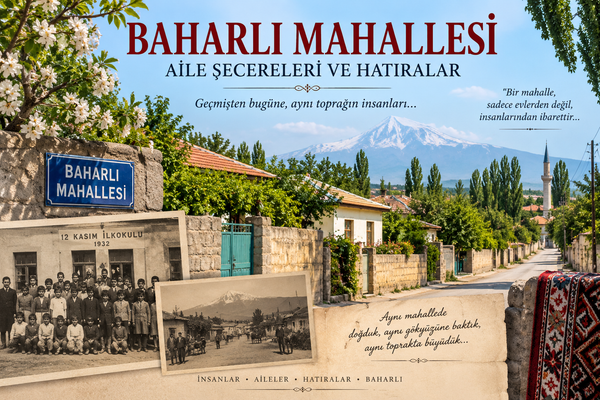
In our family archive, my father Mecit Hun is also in a school photograph dated 1932. I also attended and graduated from 12 Kasım Primary School in the 1960s.
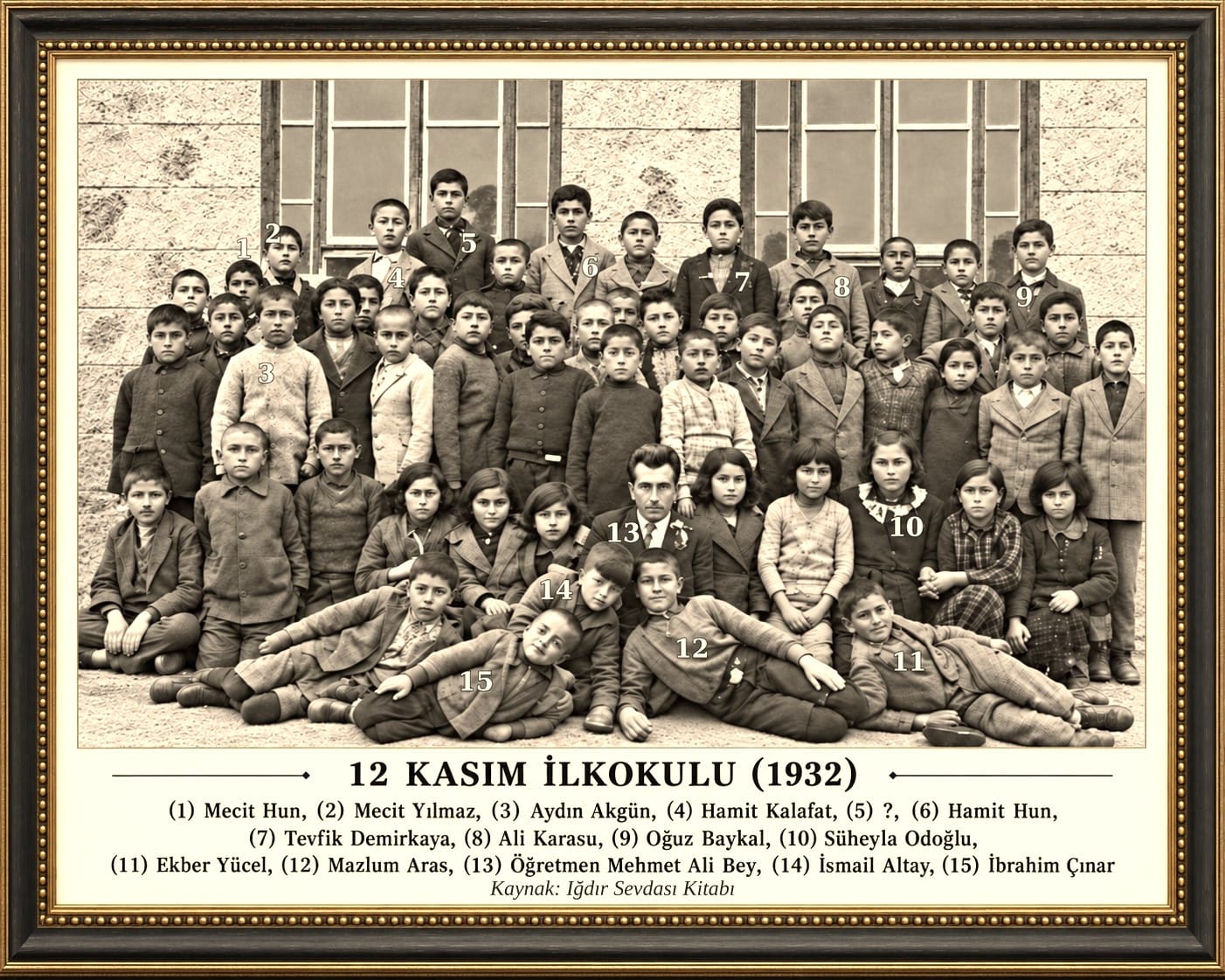
The name of the school during my father's student life and the name of the school to which my diploma belongs are the same: 12 Kasım Primary School.
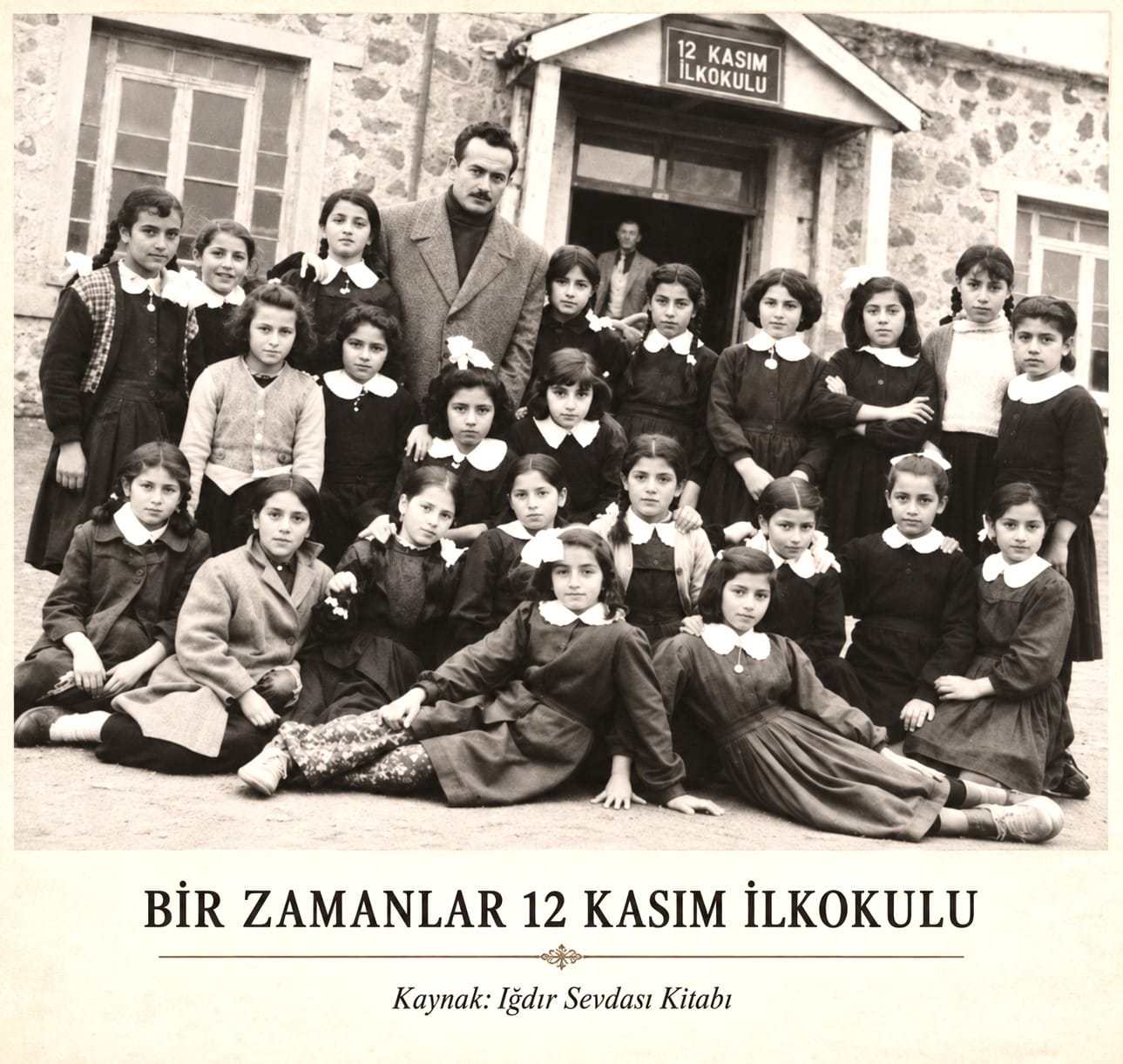
This name does not only live in our memory. The official record of the Ministry of National Education confirms that the school was opened in 1932 under the name 12 Kasım Primary School, taking its name from Iğdır's liberation day, and was renamed Kurtuluş Primary School in 1985. We are talking about a name that entered the lives of generations for fifty-three years.
The school's history explains the name change by stating that the liberation date was accepted as November 14th after examinations in military archives.
Therefore, I ask who prepared the November 14th assessment and who brought it to the decision-making process. The answer to my claim regarding the role of local historians in this process cannot simply be to repeat the school's new name.
How did those who advocated this view evaluate Kazım Karabekir Pasha's record? What kind of relationship was established between the historical interpretation and the decision to change the name?
My criticism is not based on conducting historical research, but on the claim that historical interpretation was turned into a justification for punishing a neighborhood due to its political identity. The past of a city cannot be explained by excluding the memories of the generations who lived that past. The school's old name, family photographs, and holiday news are also part of this discussion.
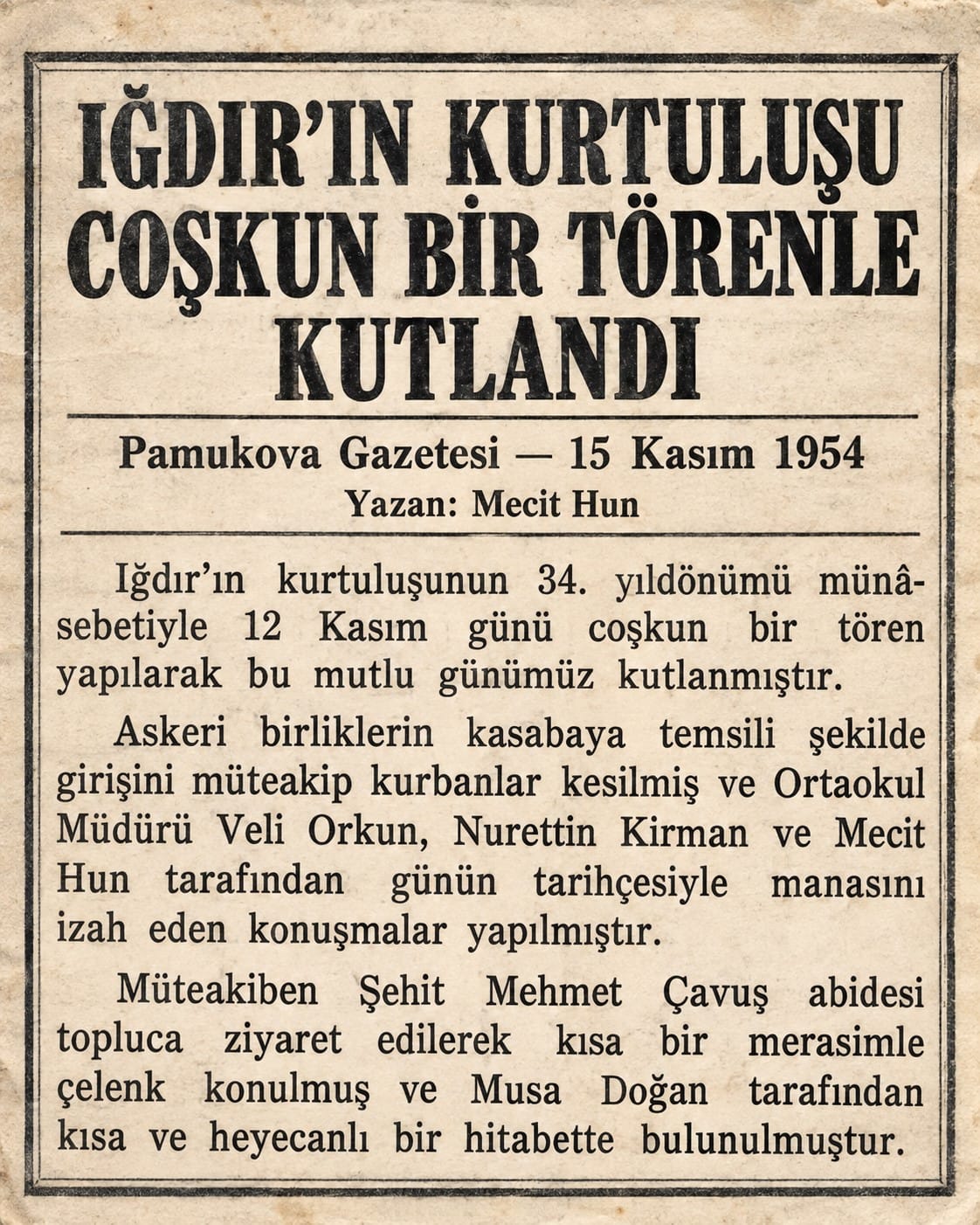
The headline of the news published in the Pamukova newspaper on November 15, 1954, by my father Mecit Hun was: "Iğdır's Liberation Celebrated with a Grand Ceremony."
The first sentence of the news is: "On the occasion of the 34th anniversary of Iğdır's liberation, a grand ceremony was held on November 12th, celebrating this happy day."
The day the newspaper was published is November 15th, and the day the ceremony was held is November 12th.
The news describes the symbolic entry of military units into the town, the speeches given, the visit to the Martyr Mehmet Çavuş monument, and the laying of wreaths. The speeches of Middle School Director Veli Orkun, Nurettin Kirman, and my father Mecit Hun are also recorded.
The liberation day I remember from my childhood is also November 12th.
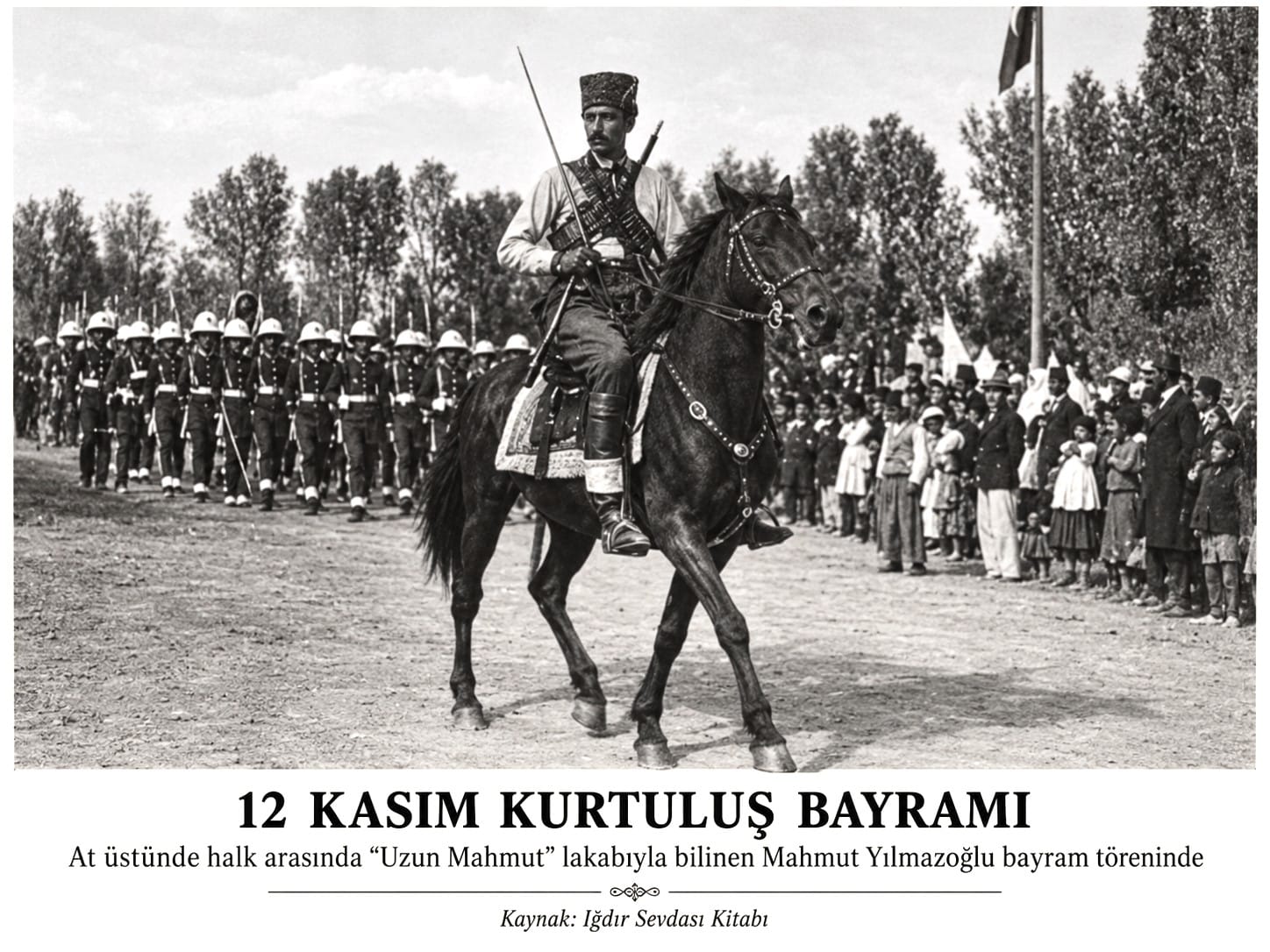
Kâzım Karabekir Pasha's record: November 12th
The sentence I previously published, citing page 902 of the 1960 Türkiye Yayınları edition of Kâzım Karabekir's work İstiklal Harbimiz (Our War of Independence), also gives the same date:
"The Armenians also evacuated Iğdır on 12 Teşrinisani (November) and withdrew to the north of Aras."
The date Karabekir gives for the evacuation of Iğdır is November 12th.
Therefore, the date I am referring to is not a new claim put forward today. It has a counterpart in my father's newspaper, in the school's old name, and in the record quoted from Karabekir.
To commemorate Karabekir's memory is not just to remember his writings in ceremonial speeches. It is also to explain how his record is handled in historical evaluations.
My Main Concern is Baharlı
I do not want this article to get lost in a historical debate. My main concern is Baharlı.
I evaluate the change regarding the liberation day, the renaming of the school, and the removal of the Baharlı name together within my own family memory and the neighborhood's September 12th past. For me, these are not the renewal of two unrelated signs.
The political connection I put forward is the targeting, first, of the youth's thoughts, and then, of the common name of the neighborhood.
When the name Baharlı is mentioned, I remember my father, my school, our neighbors, and the people whose stories I wrote. When I object to the removal of this name, I am saying that their lives are more enduring than a change in official records.
The erasure of a name from a sign does not mean that the bond people have with that name is also erased.
My Call to the Iğdır Municipal Council
In Iğdır, there was a name change that occurred at the request of neighborhood residents. The name of 12 Eylül Neighborhood was changed to Emek Neighborhood in 2010. According to the explanation at the time, the municipal council made the decision, the governorship approved it, and the sign was changed.
I want my request for the name Baharlı to be reinstated to be openly discussed. But let it be a discussion where not only documents but also people are heard.
Let those who recount the neighborhood's past be able to speak. Let the evaluations of those who see the name change as a continuation of political exclusion be recorded. Let different views also be expressed openly. Let the reasoning behind the decision to be made be known to everyone.
The process of changing a neighborhood name involves a municipal council decision and governor's approval. In Iğdır, a council decision for change needs to be submitted for the governor's approval. The Municipal Law also stipulates that the common wishes of the neighborhood residents should be taken into account when making a decision.
My call is for this demand to be put on the agenda and for the residents of the neighborhood to have a say about the place where they live.
The People of Baharlı Cannot Be Excluded From Their Own History
In this article, I am expressing a accumulated objection.
I do not separate the pressure the youth describe suffering due to their political identities from the meaning I attribute to the changing of the neighborhood name. I do not want to talk about one and remain silent about the other.
I am a child of Baharlı. I look at my father's school photograph, my own student years, and the stories of the neighborhood people from within the same past.
This is my call to the Iğdır Municipal Council: When you put the name Baharlı on your agenda, also put the people of Baharlı on your agenda. Discuss this demand with its historical records, oral testimonies, and the meaning it carries today.
Baharlı's past is not solely composed of decisions made about it by others. What the residents of Baharlı recount is also part of that past.
Neither the past nor the future of this neighborhood can be written by disregarding its people. Baharlı is not a place about which decisions are made; it is an honorable community whose voice must be heard.
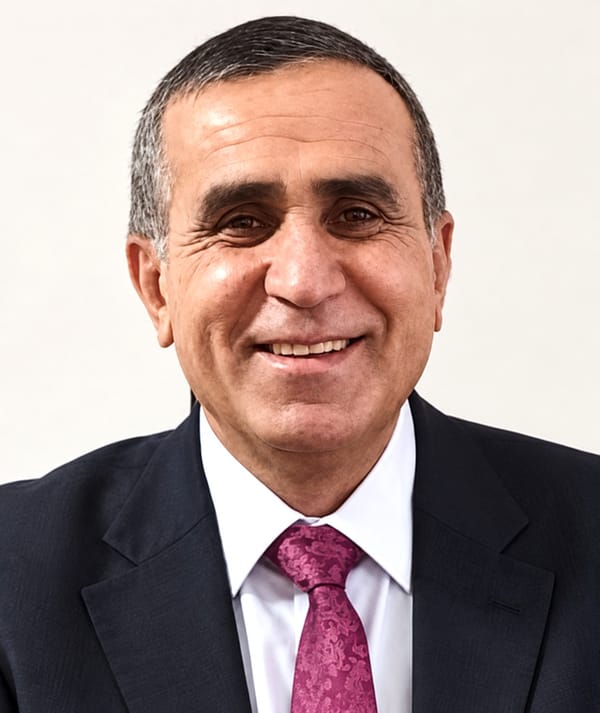
Sincerely, Mücahit Özden Hun
(ATTENTION: © Mücahit Özden Hun – HUN Academy / hunacademy.com. All rights reserved.)