Once Upon a Time, Baharlı Neighborhood and the Terekemes (Part One)
This article explores the history and memory of Baharlı Neighborhood in Iğdır through Mecit Taşan's poem, which meticulously records the lives and stories of its former residents.

THE MEMORY OF A NEIGHBORHOOD: MECİT TAŞAN’S BAHARLI NEIGHBORHOOD
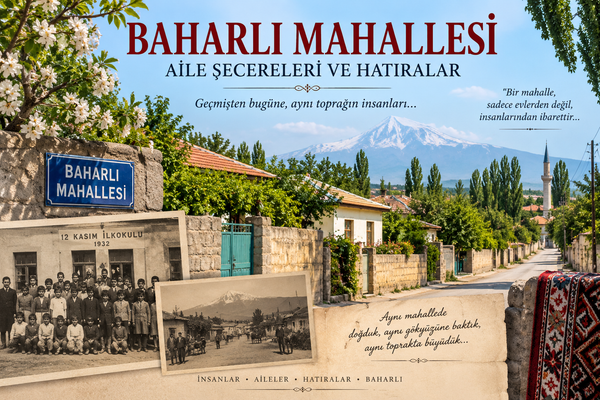
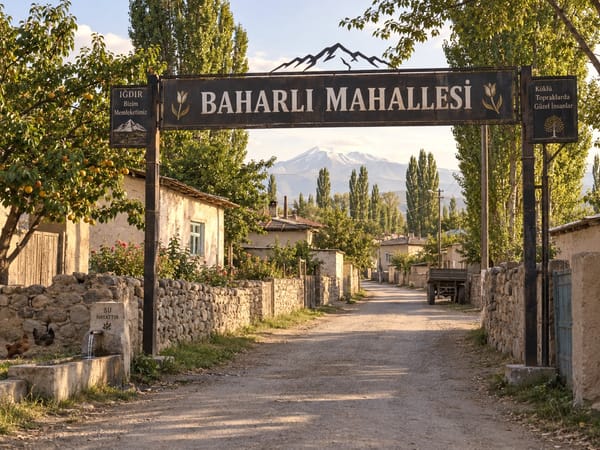
Some places are not just made up of streets, houses, and gardens. They live with their people; they gain an identity through their sounds, their weddings, their sorrows, their nicknames, their neighborliness, and the memories they leave behind. Baharlı Neighborhood is one such place in Iğdır.
Today, many of the old houses are gone. Some of the children who played in the courtyards of those houses have scattered to other cities, some to other countries. The children of families who once shared the same street now live all over the world. Some names are now only in memories, some faces remain in old photographs. The neighborhood cemetery, like a silent witness to an era, continues to carry the people of that old Baharlı within its bosom.
But a neighborhood does not entirely disappear when its people scatter. It continues to live as long as there are those who remember it.
This is exactly what Mecit Taşan has done.
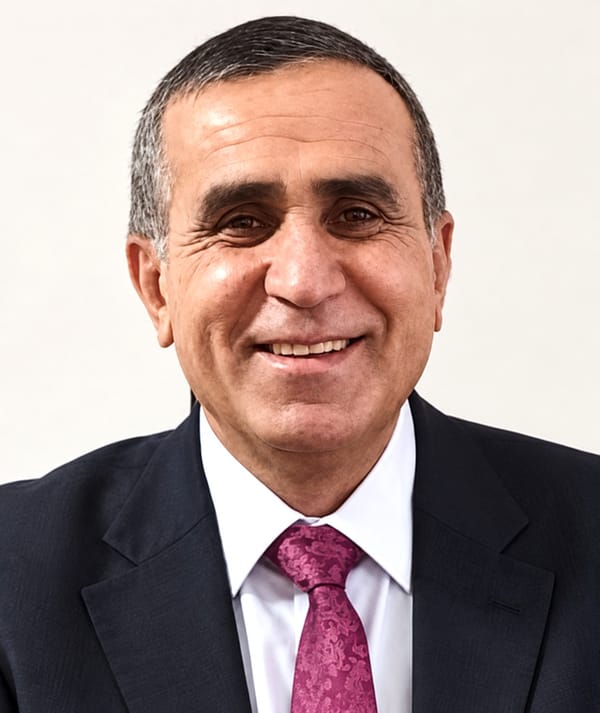
Born in Baharlı Neighborhood in 1950, Mecit Taşan spent his childhood and youth among the people of this neighborhood. After graduating from Atatürk University, Faculty of Agriculture, his professional life took him away from Iğdır; he worked for many years at the Adapazarı Sugar Factory. However, sometimes a person moves away from their birthplace, but their birthplace does not move away from them. Baharlı always continued to live in Mecit Taşan's memory. The fact that his grandfather, Nesir Taşan, is remembered as the first headman (muhtar) of Baharlı Neighborhood shows that his connection to this neighborhood was not limited to his own childhood.
Years later, when he looks back, he doesn't just see streets and houses. He sees people.
Camal Emi, Hacı Meherrem, İmoş Hala, Avşan Hala, Gönçü Ehmet Emi, Ayna Hala, Hamit Hun, Eşref Başaran, Mecit Hun, Nergiz Nene, Aşık Femil, and many more...
He remembers some by their profession, some by their character, some by a word they said, some by a sorrow they experienced. One has camels, one drives a phaeton, one cultivates a garden, one sets broken bones, one plays the saz, one is indispensable at weddings. Some died young, some went abroad, some carried the burden of the neighborhood for years. Throughout the poem, hundreds of people emerge from their doors again, walk through the streets, and take their place in old Baharlı.
That is why Mecit Taşan's poem "Baharlı Mahallesi" is not an ordinary poem.
This work is, in a sense, Baharlı's oral registry. It is a neighborhood album. It is a memoir.
And most importantly, it is a great debt of loyalty paid to those who are no longer with us.
The weight of exile and loss is felt in the very first lines of the poem. As Taşan remembers his old neighborhood, he does not only feel longing; he also thinks of the cemetery left behind, the scattered families, and the people who will never return. The feeling of yearning at the beginning of the poem also explains why hundreds of names that follow were recorded with such great meticulousness.
Another value of the work is that it is written in the Terekeme/Karapapak dialect.
Because language is not just made up of words. A society's worldview, humor, love, anger, manner of address, and memory live within the language. If Mecit Taşan had converted his poem to standard Turkish, it might have been easier to read; but the voice of Baharlı would have been lost. He chose to describe the neighborhood people in the language they spoke to each other. Thus, he left not only the people but also the way of speaking of an era to the future.
As the pages of the poem turn, one realizes this: there are no perfected heroes here. There are the real people of Baharlı. With their goodness, their anger, their jokes, their quarrels, their poverty, their wealth, their loves, and their losses...
Perhaps this is what makes the poem so sincere.
Mecit Taşan does not try to make anyone a great hero of history. He gives them something much more human than that: the right not to be forgotten.
Today, a significant portion of the old residents of Baharlı Neighborhood are no longer alive. Many of their children and grandchildren live in other cities, other countries. Time has demolished houses, changed roads, and distanced people from each other. But within this poem, the old neighborhood is still in its place. Phaetons pass through the street again, bread bakes in tandoors, Terekeme dances are performed at weddings, saz are played, fruits are gathered from gardens; people called "emi," "xala," "abla," "lele" come together again.
For this reason, Mecit Taşan's poem should not be read merely as a longing for the past. This poem is a document that carries the social memory of Baharlı Neighborhood into the future.
One day, the last people who knew those individuals will also leave us. Then, perhaps we will only be able to learn from these lines how some names were pronounced, by what nicknames some people were known, who was whose neighbor, who danced at weddings, who played the saz, who drove a phaeton.
Therefore, we owe Mecit Taşan thanks not only for writing a beautiful poem but also for saving the people of a neighborhood from oblivion.
Because the true history of cities is not written only in state archives.
Sometimes it lives on a tombstone, sometimes in a yellowed photograph, sometimes in the memory of an elder; and sometimes, as Mecit Taşan did, within a poem of 152 quatrains.
And thanks to this poem, the people of Baharlı are once again walking through the streets of their own neighborhood.
BIOGRAPHY
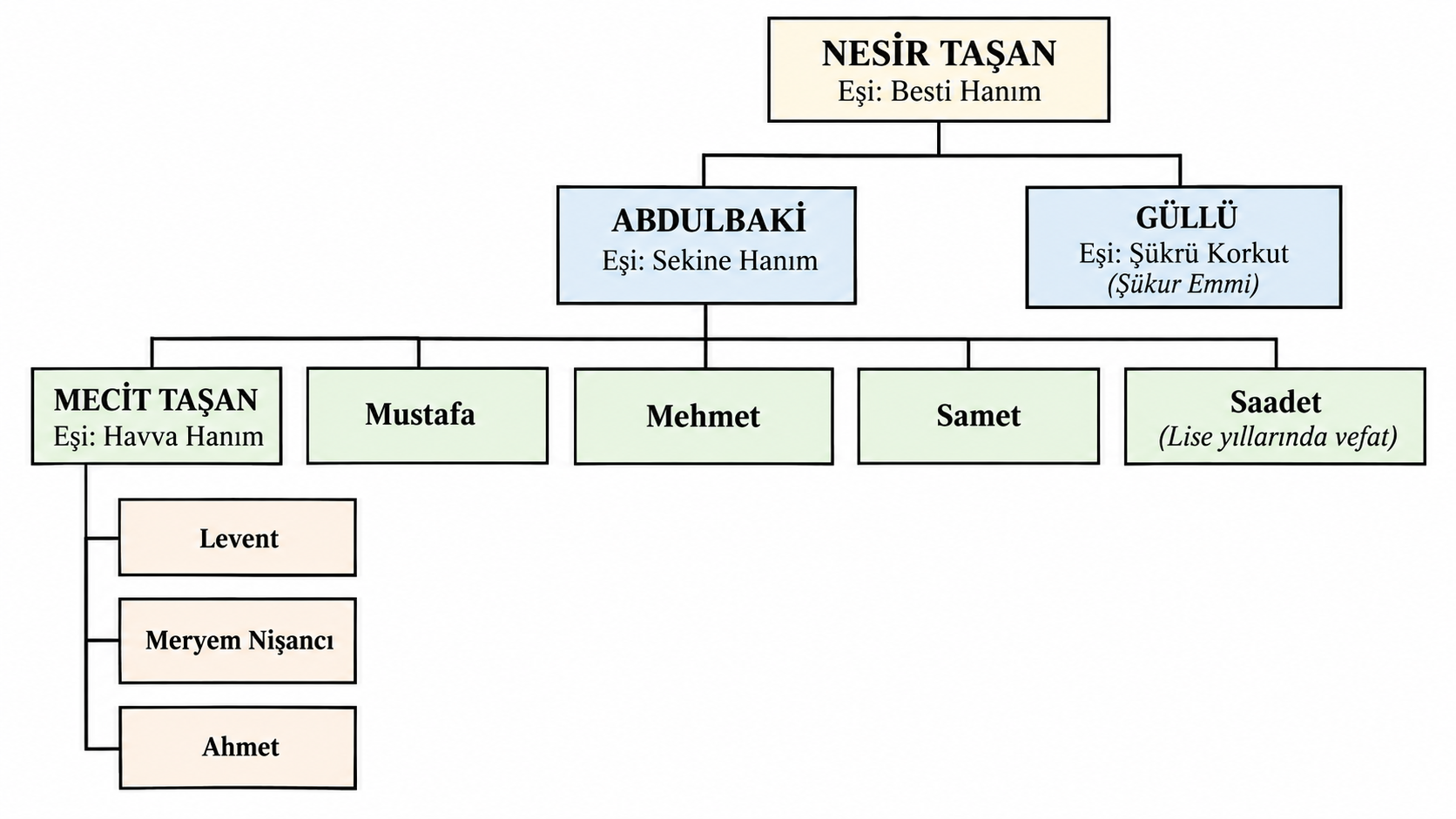
Mecit Taşan was born in 1950 in Iğdır's Baharlı Neighborhood. His father's name is Abdulbaki and his mother's name is Sekine. Mecit Taşan completed his primary, secondary, and high school education in Iğdır.
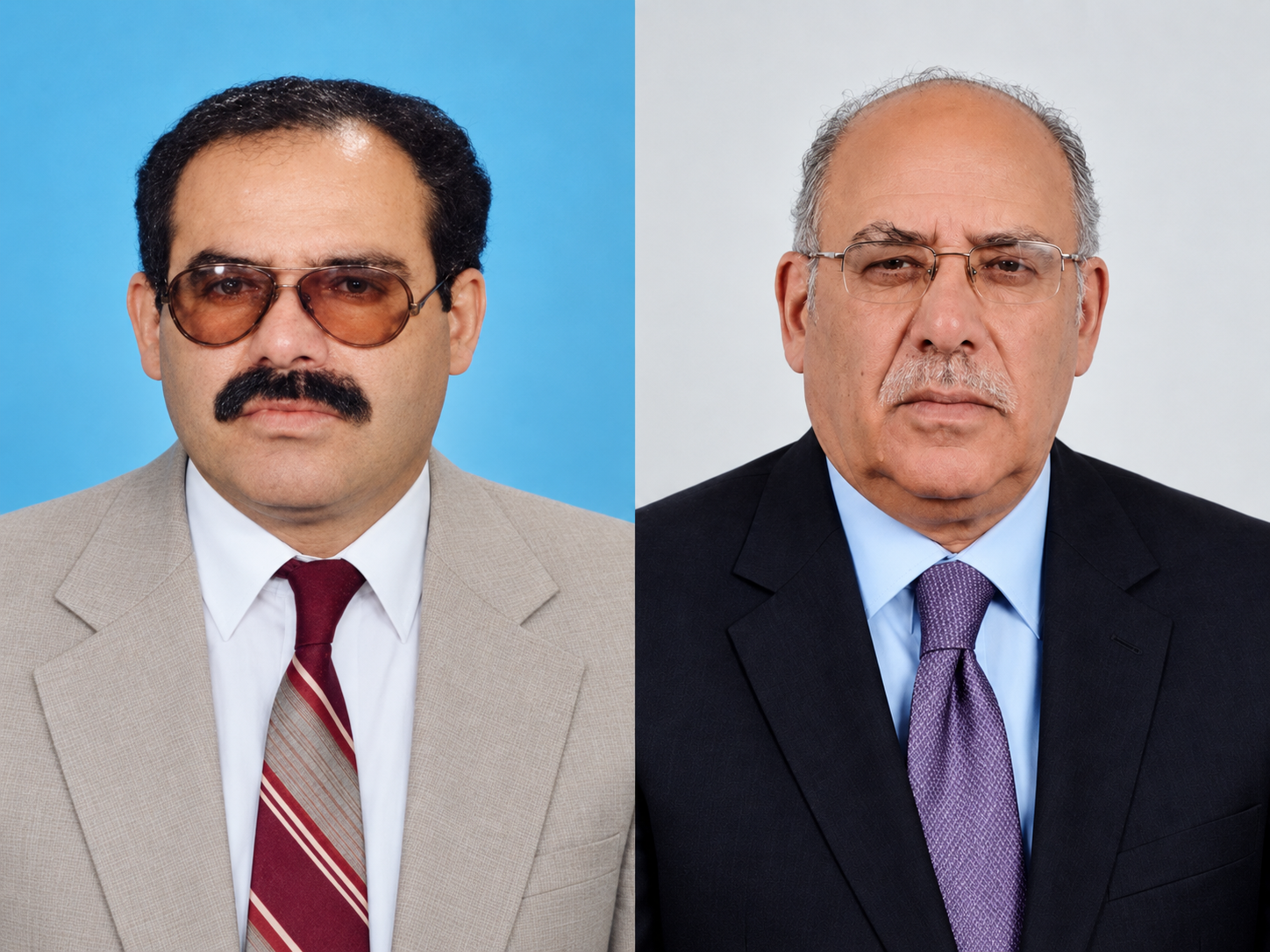
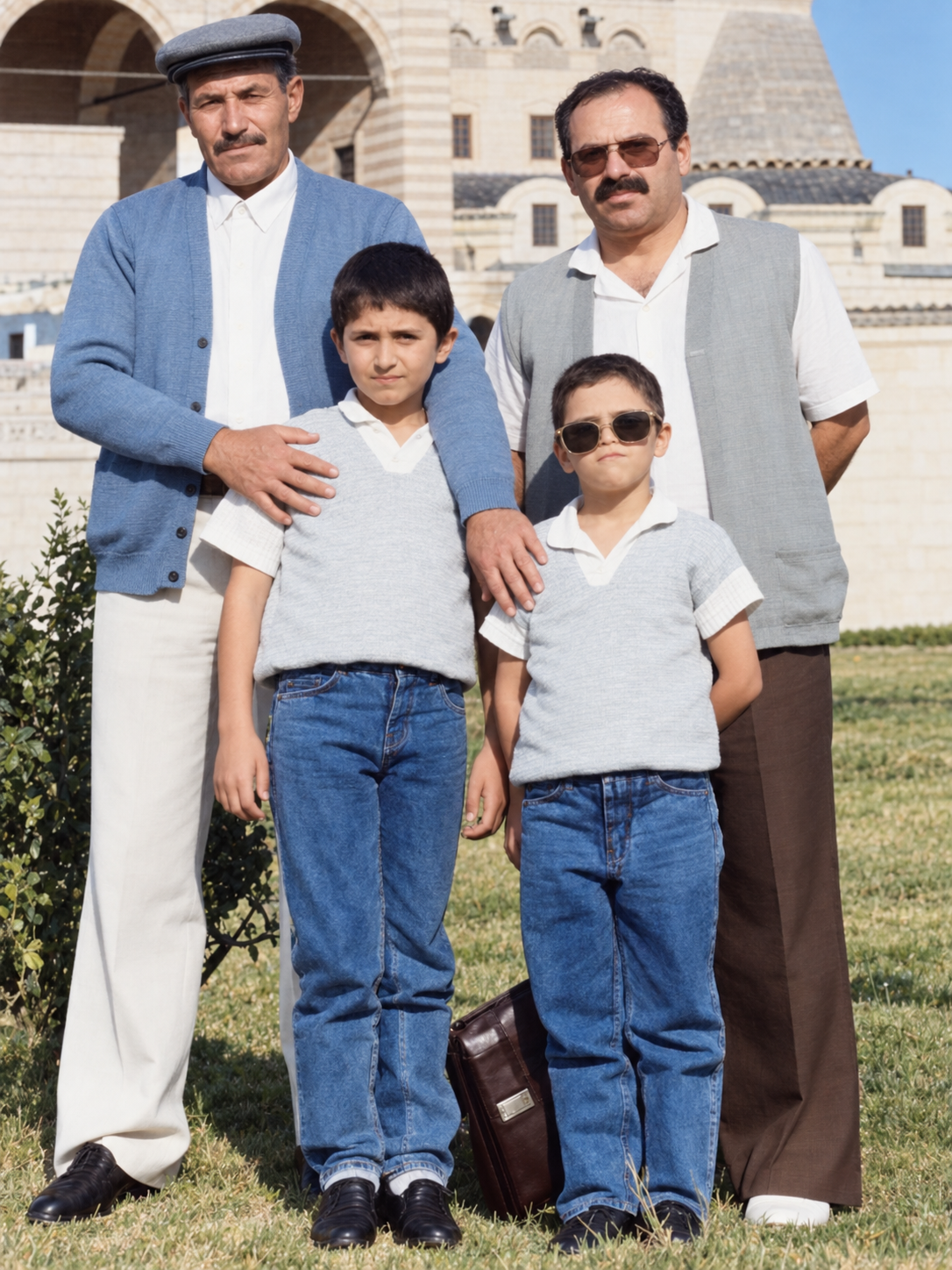
He graduated from Atatürk University, Faculty of Agriculture in 1975. He started working at the Sugar Company. He worked at Adapazarı Sugar Factory for 30 years and retired, but the company did not want him to leave, so he stayed on for another 10 years. Mecit Taşan, who is married to Havva Hanım, is the father of two sons and one daughter. His son Levent Taşan works at the Land Registry Office. His daughter Meryem Taşan Nişancı is a teacher. His youngest son, Ahmet Taşan, works as an expert mechanical engineer at TÜBİTAK. His grandfather, Nesir Taşan, is recorded as the first headman of Baharlı Neighborhood.
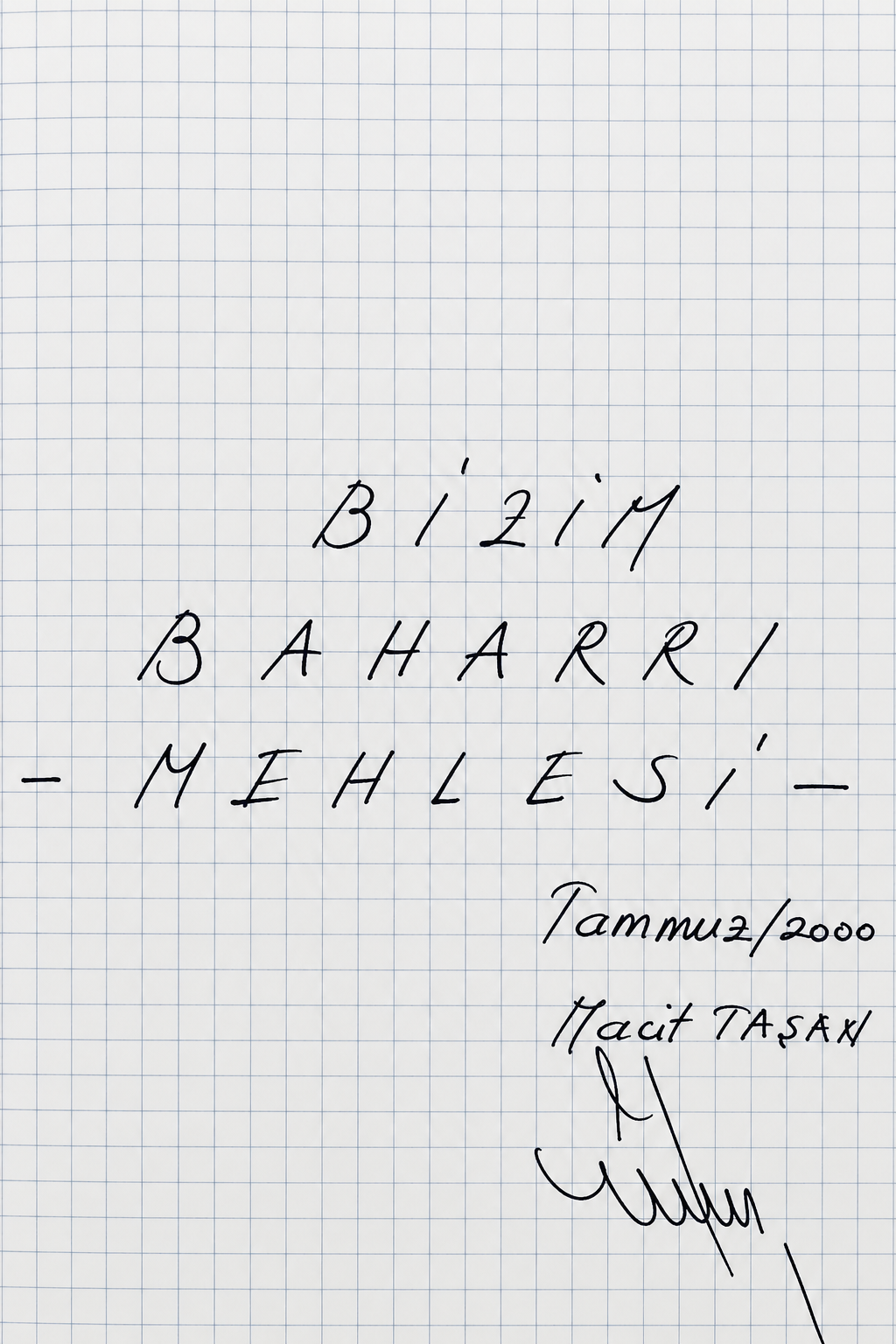
BAHARLI NEIGHBORHOOD POEM (Mecit Taşan, 2020)
I remember our own neighborhood
I can endure the pain of longing
We left each other
I can't enjoy wandering in exile
Those who knew value have turned to dust
The cemetery is filled with the dead
May their abodes be paradise
The gone are gone, only the new generation remains
In Baharlı, words are an unmistakable sign
That stout, dark-skinned Memmed Efendi
His flavor was unmatched at our weddings
He would dance the Terekeme game
Camal Emi used to summer in Aladağ
He loved Nazdı Qala and İmdad very much
With Eleddem Emi at our weddings
He would speak of Letifşah and Zarıncı
He has three daughters, one is Reyhan
Married to Suceddin, and also Meyman
Letfe Abla, Ebil Abi's wife
The third brother-in-law is Sığya Kerem
Hacı Meherrem also raised camels
His father was an aşık, Koç İskender
He knew mountains as mountains, plains as plains
İmoş Qalam, would wander from pasture to pasture
Akkan, Şéllo Enber, Necfe, Necife
Ğulus married the beautiful Maxbule
Some in Germany, some in Antalya
They left their homeland and went away
Macar Emi and brother-in-law Yaşar
Gudey, Terlan Abla live together
Oh Fate, who left children as orphans
May lightning strike your house too
Emine, Ferman, Nuriye, his daughter
Gülsüm's death made us cry
Our daughter Henife became an engineer
Take our greetings to them
Hesso Dayı would come and go on foot
He would lean on his thin cane
Memo, Ehmo are his sons
He also married off his two daughters
Where are Cemil Emi, Avşan Xala?
Pernise Xala had Calal
Ebil, Kamil, Şaroy, Mengeser Emi
Time took much from them too
That Muğsere Xala, she would smile so sweetly
Źiley Abla would say "I am the director's wife"
Letfe Abla, İreyze, Cavoy Xala
Were everywhere, in good and bad deeds
Ceyran, Ayten Yenge, Güner our sister
Our neighborhood married off all three
They were Mengeser Emi's children
Qurbannan, Suphan are our youths too
Calal Emi's were Cengiz and Nehir
Ayser, Şahin, Şevket did not suffer grief
Turgut and Edelet remain in my memory
I don't remember the tiny children
Gönçü Ehmet Emi was a good neighbor
Gülavatın Xala was his travel companion
We used to sell water, he was our master
He was a great man who showed me the way
Many died young, the late Letif
Hacı Şaban, İsmail, Qaqilli, Talif
Qulu, Zeynep sister, Zeĥre, Nahide
The past remains in my memory like yesterday
Şarabani, Dürrü Xala at every wedding
Would carry five-gold pieces, of every size
Seyran, Selbi were brides in that life
Their voices echoed, in autumn, in summer
Mürsel Emi, he had survived
He had become kin with Kör Hacı
Sehne Xala, Fatma, Eziz, Abbas
Turkan's daughter's face was covered in freckles
Sinexanım Xala, Urusdam Emi
Their time, their era also passed
Lezim was his brother, Rıza his son
They left the neighborhood, their home, their roof
Penah Emi, grew tall with sorrow and grief
He aged very quickly from the pain of losing a child
Ayna Xala would say "Oh, you helpless one"
She cried over many fields, pulled up many crops
Usenber Xala had also come from the village
She had stayed in our neighborhood for a while
I remember her daughter and son Bayram
Her husband Eleyber was shot in the arm
Eziz Hoca, he was my maternal grandfather
Tümen Nene, she endured much of our suffering
My uncle's death from falling off that mulberry tree
Gave them pains that bent their backs
He knew no evil, Misir Emi
Çimen Xalam, the most beautiful of beauties
Edil Emi, Eylaz became one
The end of Qurban did not turn out well at all
Nesifoğlu İsmail, a stonemason
Letif Emi, sometimes a phaeton driver, sometimes a bey
Good neighbor, Tükezban Xala's
Sorrows were compounded by the tip of the awl
Sandığ Xala and Emir Emi
They would argue, field after field
His brother Femil passed away quickly
Sorrow and grief took my laughing Xalam too
Eziz Emi suffered much from illness
He left Uğur an orphan when he was young
Qemsiye Xala remained a widow for a long time
She married Bığlı Niyaz
İsmail Emi also cultivated a garden
Quşdar Xalam would draw good designs
Ğulus's sons, Cavoy's daughters
Would shout when a thief came
Durmuş Emi, Sinoy Ğala I remember
We used to play in the ploughed field with their voices and smells
Now time has passed, we have become strangers
We were like relatives in those old days
Bala Memmed Emi would slaughter camels
His wife would get angry with neighbors very quickly
Benöyşe Xala, Ennaği Emi
Were old souls, everyone loved them
Our Cefer Emi was also raw and immature
He left Ğedeyce Xala helpless
Esgeri, Seferi, his daughter Süsler
The heart of the poor is a mountain
Hamit Hun was also a beloved person
Making good paintings was his job
Kınyaz, Yakup were my schoolmates
Their gardens were something invaluable
With Gülbahar Xala and Veli Emi
He would often come and go from that mill
His son Eli, daughters Narın, Tekin
Give my many greetings to Eli
Kerefoğlu Usuf Emi, an old man
That Şirin Xalam, whose voice instilled fear
Xelis brother, Köyser sister, Pompul girl
Come, oh lele, let me circle around you
Kite's son Bilal Emi, a bone setter
Broken bones, dislocations, oil, egg, and plaster
His sons Altay, Ğannar, and Beyler
Nazdı Ğala, daughter-in-law Asya is very good
Mehemmet Emi is also Kite's son
He loves commotion, he is full of it
He had a son named İsmail
Qudey Xala, was the flower of weddings and celebrations
Old neighbor, Müşravan's sons
Adil, Orhan are the ones I remember
May I be their sister, one of their daughters-in-law
Mengeser fed them xengel
Mikail Emi was also our relative
It was hard to get along with Banı Xala
His sons Behman were our friends
It's been a long time since I saw him
İman's son Hesen, a good man
Sometimes he chopped wood, sometimes he spread bricks
His son Allah Verdi, his wife Ergez
His wealth was a set of houses
And Menaf's son, Salah, Cefer are there
His mother Sultana found our neighborhood too small
Letife became their daughter-in-law
They settled in İzmir, stayed far away
Stonemason Şavan's luck did not smile
He did countless jobs, he wore himself out
I saw Tosko Eyperi was diligent
He was awake strangely before the rooster crowed
There was also Sarı Memet, he was in prison
Telli Fatma Xala, was angry at her fate
She had a daughter, they married her off
His sons were Hido, and Memiş
Emrasdan Emi also had mountains of troubles
I saw Seyfe Bıcım cry so much
Necife was their support
Fate tested its power on the poor
Ebilfez Emi, around whom I would circle
See how he charmed Şirin Xalam
I traveled with his son Cemo
We had taken a calf as an offering to the sheikh
Married to Başesen, Seyit the drummer
Yusuf the guard played the tulum well
Salo was a butcher, Şemseddin a shepherd
Bald Ebzer never ran out of faults
Perişan Ğala and her daughter Cemile
We used to go to school with her together
Qannı Memmet Emi was a brave man
His son Qeni would reach everywhere
Gulu person has not left my mind
He raised good buffaloes, both male and female
Seyfeddin, Vural, and his older brother
Selbi Abla is their sister
Hacı Ejder also had much wealth
With a crowd of children and two wives
Most of the neighborhood, Pirçoy, belonged to him
Alas, no one held him by the handle
İstifa Xala and her sister-in-law
Hacı Ejder's jokes never ended
Turan, Turgut, Malik, little Salih
Ayşe is their only sister
Şahoy and Oruç did not come from Pirçoy
They are like twins, very hard to recognize
Ayhan is a police officer, Orhan a barber
I wouldn't see them except at weddings
Namaz Emi also had many children
Pürze Xala, how many tandoors she would light
Nizameddin, Kerem, Süceddin, Kemal
Sometimes he would cut wood, sometimes he would make bricks
Eli Emi, used to work as a janitor
He respected everyone, big or small
His wife Qızey turned out to be untrustworthy
He had a son Cengiz and a daughter
Katta Şerif Emi would write and read
He would neither hurt enemies nor upset friends
Fatma Xala, six sons and a daughter
Her neighborliness was worth anything
Dursun, İsmail Abi, İbrahim, Turgut
Camal gives confidence, Salih gives hope
Hatce their sister was a neighborhood girl
All of them made Balıkesir their home
Eşref Başaran was a lord, rich
He had many camels, sheep, mountains, plains
On one side Şamama, Nevriye Xala
She was the best at playing the drum
Aydın, Tuncer Abi, Gündüz and Fikret
Cengiz, Cihad, brother-in-law Nejdet
Their sisters were brides in Bayazıt
That great wealth was divided into many places
Hidayet Emi also walked silently
He would pull his cap over his eyes
Qülavatın Xala was like a mare
When she got angry, she would curse everyone
Mecit Bey is an engineer, Kenan a teacher
Meryem girl, went to school for a while
His wife was chosen as the headman for the neighborhood
It means there were many who loved novelty
Eziz Emi was deaf in his ear
His son Eqil's face never smiled
Because he entered his vineyard secretly
He strangled Kelo Memo
Sığya Eli's end was also bad
Death quickly snatched Zübeyde Xala
Whatever happens to those who marry bad women
Know that it is deserved
Konyalı Ehmet also suffers much
He makes the best rifles and pistols
His wife was Lele, his son İhsan
They would always have a quarrel at every wedding
Katta Paşa Emi, an old lele
His garden is fenced, like a fortress
Boran, Zorva, Mecid, İsmail Emi
They would run to put the phaeton on the road
Zorva Emi, was once a headman
As far as I heard, he served well
Ziver Ğala, big İsmail Emi
My sister Köyser also married Boran
Kudret Abla, so beautiful and graceful
Let's also remember İsmet and Yavuz
She had a daughter Nejla, she was with us
It was like a fairy tale, going back to the old days
Hesen Bey, a beloved, respected person
He had three sons, the eldest Turan
Cihangir was the middle one, Atoş was educated
Everyone who knew them loved them
Mecit Hun, was a bey, a bey's son
He brought peace to so many difficult matters
Atilla was a deputy, Ehmet a merchant
Selahattin Bey was a general manager
Ezalxan Emi also sold a lot of salt
He was partners with my father, they cultivated grain
Yasin, Tosun, and Mesim
Terlan Xala, endured every hardship
Aboş and Muzafer were two brothers
They would harness phaetons, how nice it was to ride
Ziynet Xala, was their mother
Their house was at the end of the neighborhood
Nergiz Nene, always worked as a midwife
Qulu Emi, how many plums he sold
In his last moments, his eyes became blind
Death saved him from this pain
Bili Abla, director Zekir Abimiz
Cavoy, Telli Bayram are our kirve (godfather)
They had sons Nejdet, Cevdet
Our hearts remembered all of them
Duzcu Meherrem also came from Pirçoy
He bought some land from Hacı Meherrem
His wife Zahide and their children
Life also sent them into exile
Beyler Emi, was a bey in our neighborhood
He spent every day with Gülsüm Abla
Luck did not smile on İreyhan Abla
Memmeteli, Lütfü were his sons
Sefereli, Beyker Bey's brother
Playing cards became his companion
He had a daughter named Bahar
He was not happy with his wife Eprüz
Memmedeli and kirve Zekiye
They went into exile, to Germany
He had a son Dursun, daughters Leyla
I had sent her a tape as a gift
Hacı Ali Emi, was an old soul
Hacı Qöher left him alone
When he married Esli Xala
The Haji's true nature came out
Phaeton driver Meherrem, now a German Turk
Minoş Abla died, the pain did not end
Letife and Cengiz were left orphans
Fate's power had reached them
I didn't see the late İsağ Emi
Navat Xala would set up the wedding at home
İsa, Musa Emi were his sons
They always chose their morsels from what was lawful
İsa Emi, was my father-in-law, a police officer
Maral Xala, may she rest in peace
They also had three sons and three daughters
We used to sit side by side in life
My brother-in-law Memet and I were friends
We wandered much, day and night
They have Azer, Baycan, and Meral
Our sister-in-law Elvan set many tables
Suzan sister-in-law married …..
Meryem sister-in-law liked Hesen Bey
Selma and Cevdet, İbrahim Vildan
The last one left in that house was my sister …..
Allahverdi neighbor, his wife Gülüzar
He was an electricity master, he traveled with a motor
Kemal was left an orphan at a young age
Pervin, Perihan, Nermin, and Qeder
Hacı Esed Emi, Salatın Xala
Good neighbor, may your place be paradise
They had three daughters, three sons
Jujubes would fall from their garden onto the road
Nuri Bey was also a retired director
Leyli Hanım, how quickly she would get angry
Sabir, Şakir, Zakir was an engineer
Nadire and Meryem received good education
Turan Bey was an agricultural engineer
His wife Rafhan Hanım, everyone said she was good
They said she died in childbirth
His sister Tülay married Bey
Sekine Abla also became a widow at a young age
Erol and Gülsen were left without a father
Phaeton driver Meherrem wanted her
The new marriage was festive
I don't know Eli Bey very well
I call Hebbe Ablam, Fatma my kirve
Those beautiful neighborly relations are gone now
I consider them my helpers
Evdil Dayı, his son Şemil Emi
Merze Xala was the pillar of his house
Ziya and Nejdet, Bağdat and Hanım
The mother endured the suffering of four children
Another son of Şemil was Paşa Emi
Driving a phaeton was his job
Hesen, Hüseyin, Sedoş, Hürü
Peri Xala was everything to him
Qonça Xala lived with them
They had daughters named Türkan, Epruz
These sisters, symbols of honor and chastity
My poor mother loved them like her own daughters
Nesif's son, Nesir Dedem, a lele
He wouldn't say "Eyvallah" to what I said
He had no luck with marriage
Some went to water, some to flood
My father, Gülü Mamam were siblings
They stayed in Pirçoy with Şükrü Emi
My sister Dilber was their stepsister
If they stayed for one night, they moved five times
My father Abdulbari, my mother Cavoy
Mustafa, Mehmed, Samet, and I
Sedet was our sister, we lost her early
How can I forget Fatoş and Ehmed
We are four brothers, all four married
Havva, Nurcan, Emel, Nahide are our wives
My son, Levent, Ehmet, my daughter Meryem
Sedet, Tamer, Sekne, Hesen-Hüseyin
Hacı Emi has done much for us
My aunt Tuygun, may she rest in peace
My brother İsmail and I worked much
May my brother İsmet's place be paradise
Dilber married İsmail Abi
Bedir and Paşa, Kenan and Güner
Ayşe, Kezban, Sevda were sisters
Days and years are a measure of life
Eli, Veli, Meherrem, cousins
One side from Iğdır, one side from Pirçoy
Rebiye, Safiye, Birgül sisters
Married to Bayram, Behrem, Sabahattin
Hediye Ğala and Memmet Çavuş
The boys would race with life
Yunus, Bayram, Turgut, Turan
Gülgez and Yüksel and daughter-in-law Sedoş
Memmet Çavuş, his brother Ehmet Emi
They also left the neighborhood quickly
Sebehe Abla and her daughter Sakine
Only Enver, Osman are in my memory
Tinsmith Iranian Hüseyin Emi
Simzer Xala, eldest daughter Gülseren
Şöyket, Hesen, Heyder, Perihan, Gülsen
You cannot hold back the passing time
A Beşir Emi passed from this world
Esli Xala quickly lost her mobility
Neceddin, İzeddin were his sons
Fezle, Edle Xala, came to mind
Qelemzer Abla and Neceddin Emi
Güner sister, loves İzeddin very much
Mustafa, Memmet, Güler, Bayram, Selma
There are more, I don't even know their names
Musa Emi was a historical figure
His tandoor, lavash, spacious veranda
He was the owner of two sons and four daughters
He never upset Qöğerçin Xalam
Fatma Hoca, married Osman
Züleyha and Cemil, were a very good match
Yaguf and Adelet, Mustafa Pervin
….. played the saz much for Sonay
Muzaffer Ünal Bey, my primary school teacher
My late father was a good friend of his
Selma, Hülya, Cevdet, Bülent
What a good person she was, Hebbe Ablam
The late Enver Emi was a police officer
One of the few good people of the old days
May your place be paradise, Xeyrense Xala
She would argue, field after field
Orhan on one side, Aynur on the other
Cafer, Selçuk, Zafer, İrfan and Günnür
We cannot forget Atar Ğala
And Cemal, Kemal, the beautiful girl Şennur
Hacı Ağey, the neighborhood's mother of troubles
Her house is full, with people from mountains and plains
Abdurrahman writes amulets for everyone
Salman Emi, the madman of his own house
Cefer, Yusuf Tikko, and Kör Tahar
Şefki, Seve, Osman, and Muzaffer
They were the permanent guests of that house
Tuzluca, Güllüce, and Mollaqemer
Ağbaş Hacı, Minoş Abla, from Qecer
Everyone is happy with Adil and Zafer
Eldest daughter Cahide, and Hamiyet
Their house was not visible from the high wall
Seriye Xala, and a driver Hacı
Bayram and Yılmaz, the crown jewels of the house
Bestisi, Songül, Zeynep, his daughters
And his brother-in-law, a restaurateur
Mecit Hocam, sold his house very quickly
He went to İzmir with Tütüye Abla
Gürsel, Suat, his daughter Suzan
The wind blew, scattered everyone in different directions
Memmet Hoca and Müzeyyen Abla
Their house with a garden, overlooked the road
They have daughters who study, and three sons
İrfan, Doğan, and Abdulla
Muğder Emi, Qul Xala, their daughter Türkan
Müveddiyar, Cengiz, and Kahraman
Their houses, in Çıngılda, all alone
There weren't many who called or asked
Eyüp, Adil Emi were two brothers
Celal and Nazım were our companions
Behçet died very young, may his place be light
Hesen and Yaquf's garden work
Şahnaz Xala and Meşedi Emi
Müşkünaz Abla's arguing and bickering
Her husband Musa Emi, was from Meleyli
Fate's stone had also hit him
Qevil Emi and Sevgili Xala
Davut, Mecit, Kadir Emi, a fortress
Maral, Sura Xala, were sisters
Their houses opened onto both roads
Davut Emi, wanted to be a headman
Gülü Xala endured every hardship
Hesen, Hüseyin, Ayfer, Mail
Şüküfe, Asya were loved by everyone
Mecid Emi, Hebbe Abla in Iğdır
Kadir Emi, in Ağrı and İzmir
Fatma Abla, her sons, her daughters
Now they are all gathered in one place
Xıdır Emi, endured so many difficulties
Sometimes he drove a phaeton, sometimes he plowed the land
Xezel Xala, his life partner
She also passed away quickly due to sorrow and grief
Daughters Fatma, Necfe, and Rebiye
Hemit was interested in weddings for a while
Yusuf and Nevruz in the barber shop
Mecit Geloy at the government office
Mehemmet Emi was a living history
He was enjoying his time with Tacira Xala
He plays Yeşil Ördek when he drinks
His house is full of little rascals
Bebrem and Bayram are our brothers-in-law
Yemen, Kemal, Hanım, police officer İbrahim
Neriman, Irza, and Qurbettin
They were my late father's friends
The late Kerim Emi, to Ziver Xala
They didn't come to the neighborhood very often
Zeynep his daughter, Mustafa, Yusuf Abi
They stayed away from coming trouble
Hazara Xala, and Eli Emi
Their time, their era also passed
Alyar, Aydın, Nüsü, Letfe, Naciye
I never saw Nüreddin without a stone
Letif Emi, suffered from his wife
Meleyh Xala, never deviates from her path
Turgut and İsmail, and his daughters
I am amazed at their current state
Phaeton driver Elo, one day, did not see
His eldest son, did not achieve his desires
Helme Xala his wife, Sevim his daughter
Fate did not give them a chance for good days
Qarq Fere Xala, her son Nüreddin
Sebehe, Medine, Bela Xeyreddin
Qılas Xala, Hoca Mustafa Ünal
You taught discipline to students
Saray Xala and baker Haydar
His son Kazım, and Şişko Yılmaz are there
The late Ömer's nickname was Biliş
His wife, children, live in the neighborhood
Qannı Eziz, kin, with Keçel Salman
Qareş, Yılmaz, Esbendiyar, Ramazan
Dinçer's father, Qecerri Qasım
Suffered much, Kürt Xezel, and from his mother
Topal Qedir, was the headman of our neighborhood
How he would hop on one leg
He opened a shop, his sons Rehim, İrvaham
Everyone loved him, whether they voted for him or not
Keçel Qasım Emi, carried much sand
Salah, Samet Emi, and Allah Verdi
Qemerri İrvaham, a respected person
Everyone loved Beyçi Ayeddin
Ali Babuş, was a hoca in that neighborhood
Abbas Salah's son, tall in stature
Eli Bozo, Qıyas schoolmate
Phaeton driver İslam also grew old on the road
Sarı Memet, lives in that neighborhood
He often tilts his hat to the side
Pineçi Xelis's son is Şahin
How beautifully he plays both the wedding and the saz
Penah Emi's back also bent
He was the representative for the wedding feast
His son Meherrem is also a poor man
Blind fate smiled on them this much
Misdo Emi, Cemle Xala also passed away
He had many disagreements with his daughter Salatın
His son Cemil is my brother-in-law
How many difficulties he overcame alone
Aşık Femil Emi, a man of saz and words
He hosted many guests, me in his house too
Fikriye Abla was a good tailor
Those who came and went to her never diminished
Femil Emi's Terlan was famous
He had the best voice of his time
Lütfü, Yavuz, Şemo, and Nejmeddin
I was the teacher of his two daughters
Hebip Emi did not remain from Nigalay
His garden had peaches, plums, apples
He struggled much with his four sons
He was not destined to live as he wished
Aşık Kamil, played the saz, and also stole
A wrong record, caused him trouble
Brothers who boarded the train of exile
Kamil, Eli, Kahraman, and Dursun
Hacı Üseynalı, came from Iran
He has a shop, dating back to Noah's time
His son Yaşar, worked in sugar beets
Topal Mirze, sold much halva
My grandfather Eziz, Misir and Qedir Emi
They were three brothers, where are the other two?
Hatın Xalam, married to Qedir Emi
They love people from the heart
Hatın Xalam, mother of eight children
She loves guests, her garden is very beautiful
Meherrem is a police officer, Özlem a student
Gündüz's child, married to Qöşmen
İbrahim the teacher, with Fatma and Çiçek
Our sister Meleyh is married to Cafer
Bağdıyar, he was not the first either
May you have many good days, we wish this time
Mine Xala, miller Seyfeddin
His sons, Nuru and Seleddin
Yahya Hoca married Zahide
And our dear friend Şemseddin
Qaçax Kirve and his wife Pürze
They came to our neighborhood later
Their sons, Ehmet, İsmail, İbo
His daughter Azize is married to Cefer
Ömer, Xezel Ğala, Hemit Kirve
Where are Pineçi Resul and Kürt Emir?
Beyçi Feriz, Lezgi Emi, Fayiko
Heseney and his son Yaşar in one place
İso Dayı, raised many sheep
Selbo Xala called us her sons
Mustafa, Tajdin, Memer, Mecid
Everyone said good things, respected and loved them
İmamverdi Emi, works as a grocer
Photo Memmet person, takes good pictures
Ali Kor, Topal Meme, Ezizo
His uncle Tefiko, wanders the pasture
Hesen Bey, director of Donatım
Ayna Xala, girls, his son Timur
Nesip the teacher, and Mehrac
They left, together, Daşburun
Zehre Xala, blacksmith Müslüm Emi
Aydın Abi, Adnan, and Ayten
Emrah Emi, Bahar Xala, good neighbor
Nuri Emi, Sonalısı, Qurban
Merdan Bağcı had a shop
The foundation of his house was made of stone
His son Murad, suffered much from his father
He has a mark on his hand, from hot iron
Mir Mehemmet Emi, Qemsiye Ğala
His spring cart would set off early
Fatma girl, was their only child
She had joined Cahit, arm in arm
Hacı Elesger was also an old man
Ülker Xala, was like my own mother
Memmet, Eyper, Ehed, Hesen, Hüseyin
For Zeynep girl, eyes cried, heart burned
THE END
(ATTENTION: © Mücahit Özden Hun – HUN Academy / hunacademy.com. All rights reserved. Unauthorized copying, screenshotting and publishing, or re-sharing on other sites or social media accounts of all or part of this article is prohibited. For short excerpts, the author's name and hunacademy.com must be cited as the source. In case of unauthorized use, legal action will be taken under the Law on Intellectual and Artistic Works No. 5846.)