A Book Review and Critique
This article reviews Ferman Kerimzade's novel "Karlı Aşırım" (Snowy Pass), discussing its historical context, characters, and offering a critical perspective on its factual accuracy.

A BOOK REVIEW AND CRITIQUE
Dear Readers,
As time permits, I will occasionally introduce books published about the Iğdır region in this column and express my views. My aim is to instill a love of reading and to discover the richness we may not be aware of.
The book I have chosen today belongs to a famous Azerbaijani writer. The book is currently available on the market. The book contains the following information:
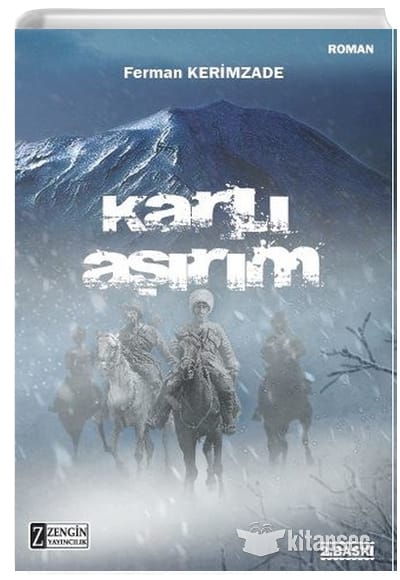
Book Title: Karlı Aşırım
Author: Ferman Kerimzade
Translated from Azerbaijani into Turkish by: Mehmet Irmak (This translation is proof that the Azerbaijani language is an independent language, contrary to being a dialect of Istanbul Turkish.)
Publication Year: 2017
377 Pages
Published by Zengin Yayıncılık.
First of all, I must immediately state that the original of this book was published in Cyrillic script in 1971 in Baku, during the Soviet Union era. Therefore, I wish they had put a note on the back cover saying "Original Publication: 1971 Baku." Also, the book's title should have been translated into Turkish. The Turkish phrase "Karlı aşırım" doesn't mean anything. In my opinion, the book's title should have been "Karlı Geçit" (Snowy Pass).
I would like to give a brief introduction to the late author Ferman Kerimzade:
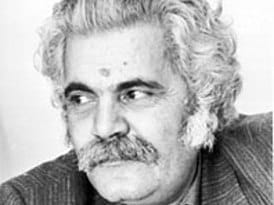
Ferman Kerimzade was born on March 3, 1927, in the city of Büyük Vedi in the Vedi Rayon (region) of Armenia. He completed his primary education in this city and his high school education in the city of Şahseven in Beyleqan Rayon. He then completed his education at the State Art College. He began his career as a teacher. He held various positions at the newspaper "Yükseliş" (Ascension). This time, he went to Moscow. He graduated from the Screenwriting Department of the State Institute of Cinematography. He worked at State TV and Radio and also wrote columns for some newspapers. He became a special correspondent for the Literature and Art newspaper. He never gave up writing novels and screenplays.
His daughter, Ms. Yegane, describes a segment of this exceptional personality's life as follows: "During the 1988 events, Vezirov (a politician) called my father to him. He wanted him to take a prominent role in the events in his region. My father distributed money to those in need in the region and helped them buy clothes and other necessities. I remember very well when the local people, fleeing as refugees from Western Azerbaijan (Karabakh), hid in the reeds to avoid being caught by Armenian forces. My father went to help these refugees with soldiers from Nakhchivan. My father always used to say: 'Live among people, die among people.'"
My father was brave. He undertook important tasks in rescuing refugees. He moved from one place to another. First, he was in Terter. He went to Kelecer. While returning from Kelecer, a woman and her five children were left helpless. As soon as the woman saw my father, she threw herself at him and started crying: "I have no one! I'm left on the streets!" My father spoke harshly to some men who were watching: "Be men! You've left this woman with five children helpless." My father was so angry that he suffered a brain hemorrhage. He became paralyzed. He passed away at 4 AM at the doctor's house (March 17, 1989). He was 52 years old.
SNOWY PASS
The book refers to events that took place in Azerbaijan and Nakhchivan between 1917 and 1930. The book has two protagonists: Abbaskulu (Abbasgulu) Bey and Kerbelayı İsmail. (Here, I would like to add a note: It would have been better if the translator had used the term "Kelbayı," which is used in Turkey, instead of "Kerbelayı.")
All the characters in the book are taken from real life and events. If you wish, let's first briefly get to know Abbaskulu Bey. I briefly included Abbaskulu Bey's life in my book titled "Kurdish-Azeri Iğdır Republic."
ABBASKULU BEY
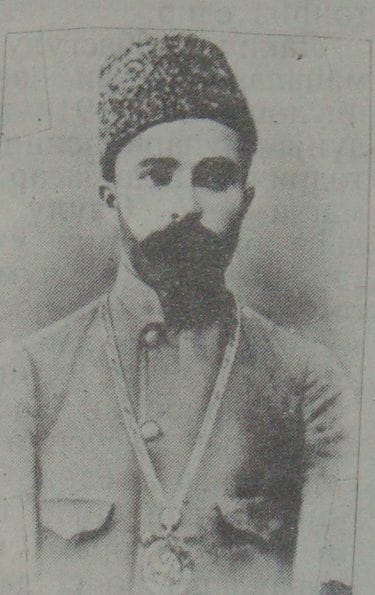
He was born on February 24, 1886, in the village of Büyük Vadi, near Erivan. He lost his father at a young age. In 1894, he started attending the two-year Russian-Tatar school in his village. In 1902, he began cultivating the lands inherited from his father. After the February Revolution (February 23, 1917), he dedicated his life to the struggle with the communists.
Red Battalion
In early 1918, in an environment where Dashnak attacks against Azerbaijanis were increasing in Nakhchivan, Erivan, Dereleyez, Zengezur, and surrounding regions, Şadlinski, using his influence over the people, organized an armed resistance called the "Red Battalion" consisting of volunteers against these attacks. Throughout 1918-1919, he commanded militia forces formed against Dashnak gangs. In the spring of 1920, the Red Battalion, under the leadership of Şadlinski, made a name for itself by taking part in the front lines of the conflicts in the Nakhchivan region during the Russian Civil War. This movement also marked the beginning of communist organization in Nakhchivan. The unit, initially consisting of 200 Azerbaijanis, grew with the participation of other nationalities. Initially, the Red Battalion showed great resistance against the Dashnaks, but unable to hold out against the superior forces of regular Dashnak units, they crossed into Iranian territory with the local population. They first settled near the city of Hoy, and then around the city of Merend.
On July 28, 1920, after Soviet rule was declared in Nakhchivan, he accepted the invitation of the Revolutionary Committee and Nariman Narimanov, and came to Nakhchivan with 200 comrades from the Red Battalion. Şadlinski was initially tasked with protecting the borders of Nakhchivan. Later, he led the struggles against the Dashnaks around Zengezur. He established Soviet rule in Nakhchivan and ended the Dashnak occupation supported by the British. In return for these services, he was awarded the Order of the Red Banner by Nariman Narimanov.
After returning to Vedi, he worked in some industrial enterprises in Armenia. Finally, he was appointed as a manager of a cement plant. In 1930, he was murdered by unidentified individuals.
THE NOVEL'S PLOT
Abbaskulu Bey is assigned by Nariman Narimanov, Chairman of the Council of People's Commissars of Azerbaijan, to establish Soviet order in Nakhchivan. During the collectivization (Soviet Agricultural Production Cooperative) process, Kelbayı İsmail and his assistant Gemlo, who are influential in the region, resist him. Abbaskulu Bey invites them to join the Soviet administration. To persuade them, he appears before Kelbayı İsmail. Gemlo, like a devil, constantly whispers evil ideas into Kelbayı İsmail's ear. Abbaskulu Bey cannot persuade the influential Kelbayı İsmail. As he leaves, he is brutally murdered by Gemlo and his men. The Red Battalion pursues Kelbayı İsmail and Gemlo for revenge. Kelbayı İsmail and Gemlo cross the Aras River and take refuge in the village of Yukarı Çiftlik, which is part of Aralık.
Kelbayı İsmail always feels remorse for the murder of Abbaskulu Bey. He expresses his feelings as follows: "Abbaskulu Bey, of all the mistakes I allowed to be made in my life, your murder was the biggest. Even if God forgives this mistake of mine, I will not."
CRITIQUE
The author used a fluid, conversational language. I consider it a book that will appeal to all types of readers. The author developed a fictional narrative using the names of real-life individuals. There are many contradictory points in the novel, which weakens the book's credibility in the eyes of the reader:
Firstly, when Kelbayı İsmail takes refuge in the village of Yukarı Çiftlik, the homeowner says that Mustafa Kemal once hosted him in one of his rooms. Of course, this is not true. Mustafa Kemal never set foot on Iğdır soil.
Secondly, according to the book, Gemlo traps and kills Abbaskulu. This is not true. Abbaskulu Bey was killed by unidentified individuals in 1930 while working at a cement factory in Armenia.
Thirdly, Abbaskulu Bey died in 1930, but for some reason, Kelbayı İsmail was able to resist the Soviets until 1936, and at that time, he decided to come to Iğdır.
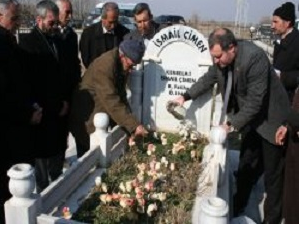
There is a true fact that most people from Iğdır do not know: Kelbayı İsmail Bey escaped from the Soviets and crossed over to Iğdır, settled in Taşburun, and lived a poor life. When the surname law was enacted, he took the name of his birth village (Çimen). He passed away in 1948. He was buried in the Taşburun cemetery. For many years, no one had any information about him. Recently, a monumental tomb was built through the initiative of the Azerbaijani Consulate in Kars. Kelbayı İsmail is a historical figure. I thank those who claimed his grave and had it built. I wish him to rest in peace in the soil of Iğdır. May God have mercy on him!