A Book Review and Critique: Ali and Nino
This review praises Orhan Aras's Turkish translation of "Ali and Nino," while offering a critique of certain linguistic choices and historical interpretations within the text.

A BOOK REVIEW AND CRITIQUE: ALI AND NINO
Dear readers!
Years ago, while pursuing my doctorate at the University of Freiburg in Germany, I bought and read the book "Ali und Nino" from a street vendor (1997). The subject matter, being related to the Caucasus, made the book even more interesting to me. I was delighted to hear that this magnificent work had been translated into Turkish by my esteemed compatriot Orhan Aras, who lives in Germany. When I read the book in German, I was captivated and wondered why there wasn't a Turkish translation, questioning myself. In subsequent years, Turkish translations of the book were made, but none could compare to Orhan Aras's translation. We witness Orhan Aras's special sensitivity in preserving the meaning of sentences while also prioritizing fluency. Let's not forget that translating a book is as valuable and important as writing one. Above all, it is essential for the translator to embrace the author's content and to be familiar with the social and cultural structure in which the events take place. I congratulate my brother Orhan Aras for this very valuable work.
WHO IS ORHAN ARAS?
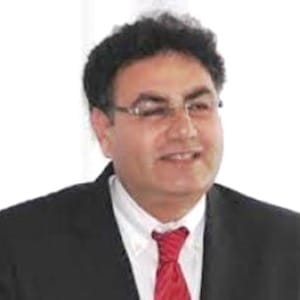
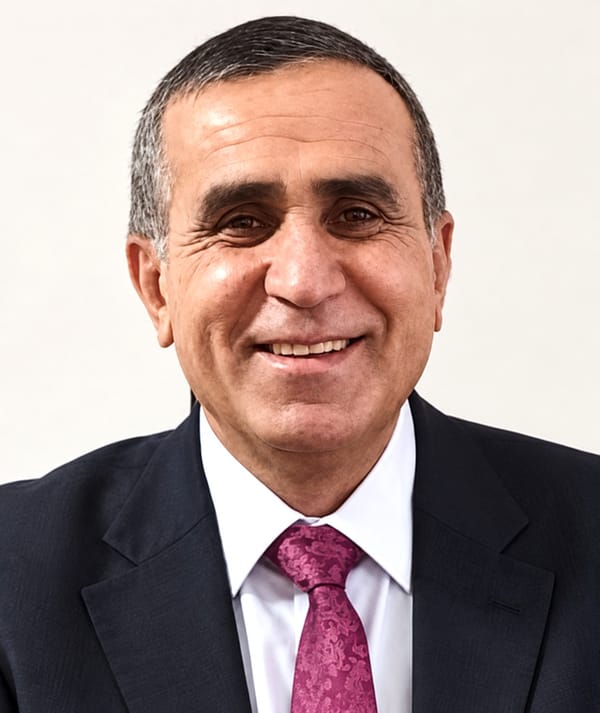
The book's translator, Orhan Aras, was born in Iğdır in 1963. He completed his primary and secondary education in Iğdır, and his higher education in the provinces of Artvin, Kars, and Erzurum. He currently resides in Germany. He has authored many valuable books as a poet, writer, and academic. He holds a doctorate degree. Orhan Aras is a member of the German Writers' Union and an honorary member of the Azerbaijan Writers' Union. He is also the editor-in-chief of Referans magazine, published in Germany. Orhan Aras has various novels, poetry, and essay books published in Turkish, German, and Azerbaijani Turkish.
HIS WORKS:
Turkish: Ayrılığın Rengi Hüzün (The Color of Separation is Sorrow) (2002), Aşklar Daha Ölmedi (Love Has Not Died Yet) (2003), Son Cennet (The Last Paradise) (2008), Kaşgar’dan Berlin’e Portreler ve Kitaplar (Portraits and Books from Kashgar to Berlin) (2013), Oryantalist mi (Orientalist?) (2017), Ah Türkiye Ah (Oh Turkey, Oh) (2017).
German: Deutschland Gib Mir Ein Wenig Liebe (Germany Give Me a Little Love) (Hamburg, 2008).
Azerbaijani Turkish: Hoşgördük Güzel Yurdum (Hello, My Beautiful Homeland) (Baku, 2007), Son Cennet (The Last Paradise) (Baku, 2017).
WHO IS THE AUTHOR OF THE BOOK, KURBAN SAID?
At first glance, seeing the names "Kurban" and "Said," you might conclude that the author is a Muslim. The reality is quite different! Kurban Said is not the real name of a person. It is a pen name of an author. But whose? I also published a few of my books under the pseudonyms "KEVAN" and "BEN KEVAN." There is no answer to the question of why an author might not want to use their real name when writing a book. If you wish, let's take a look at the real names and pseudonyms of some of our famous authors:
PSEUDONYM REAL NAME
Orhan Kemal Mehmet Raşit Öğütçü
Aziz Nesin Mehmet Nusret Nesin
Kemal Tahir Kemal Tahir Demir
Nurullah Ataç Ali Nurullah Ata
Yaşar Kemal Kemal Sadık Gökçeli
After this brief information, let's turn to the pseudonymous author named Kurban Said. Who was this author? What was his real name? Where was he from? I'm sorry! There are hundreds of articles written on this subject. All of them contradict each other. In my opinion, you will have to be content with the information Orhan Aras provides on the front and back covers of the book. However, there is one thing I can say with 100% certainty from the author's observations and his approach to the subject: The author is not a Muslim. In those days, Baku was the only city where oil was extracted and distributed to the world. Thousands of foreigners came and lived in Baku for many years. One of their children penned this book. The author himself was actually in love with the girl named Nino, but while writing his book, he created a love story between Nino and a young Azerbaijani man named Ali to reflect the cultural and social richness to the reader. The author cannot be of Russian origin either, because the depiction of Russians in the book leads us to such a judgment. Most likely, the author could be of German or French descent. You can draw a parallel between Kurban Said and Pierre Loti. There is a definite influence of orientalism in the writing. In those years, the passion for orientalism was popular among German and French intellectuals.
ALI AND NINO
THE PLOT
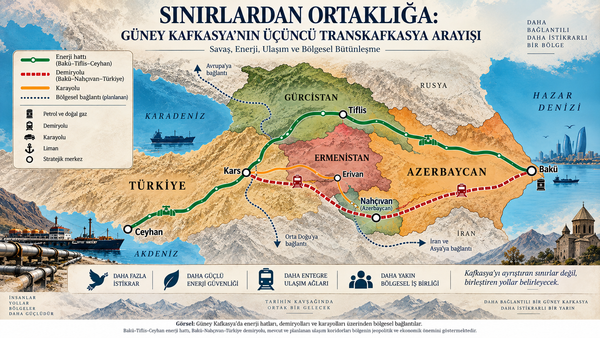
The year is approximately 1910. As you know, with the Treaty of Turkmenchay in 1829, the lands of Northern Azerbaijan were incorporated into the borders of Tsarist Russia. The largest city in Northern Azerbaijan is Baku. The story begins in Baku. As I wrote earlier, in those years, Baku and its surroundings were the only place in the world where oil was extracted. The richest people of Europe and America were there for investment. The money they earned went to Europe. Workers from all over the Caucasus flocked to Baku to find jobs in the oil wells.
The main subject of the book is actually hidden on the first page: The language of education in Baku is Russian. A class in a Russian school... 30 Muslim, 4 Armenian, and students of other nationalities... The teacher opens a discussion topic: Is Baku within the borders of Europe or Asia? A heated debate ensues. Some students claim it is within Asia, others within Europe. Europe is modernity; Asia is primitiveness. But Ali does not think so. Ali is a young Azerbaijani man. Nino is a very rich and noble Georgian girl. There is a 2-3 year age difference between them. They are in love with each other. While the author conveys the developing love between the two young people, he also introduces the social and cultural structure to the reader. In addition, political events such as World War I, the establishment of the Azerbaijani State, and the Soviet overthrow of the Azerbaijani State add richness to the book's content.
CRITIQUE OF THE BOOK AND TRANSLATION
The book is written in a fluent style. It is a must-read for anyone interested in the geography of the Caucasus. It perfectly and impartially conveys how Armenians, Georgians, Azerbaijanis, and other peoples quickly became friends and how quickly they came to hate each other.
The original title of the book is "Ali und Nino." The word "UND" in German can mean "AND" or "WITH" depending on the context. When we talk about Turkish love stories, we use the conjunction "İLE" (with), as in Kerem İLE Aslı, Leyla İLE Mecnun. I wish my brother Orhan had translated the book under the title "Ali ile Nino."
My other criticism is that my brother Orhan used the word "Tartar." As we know, the name "Tartar" is not widely used in the world. It might be a typo. It should have been "Tatar." This time, another serious error emerges. In those years, Russians called Azerbaijanis "Tatar." Today, the region whose capital is Kazan is called Tatarstan, and its people are known as Tatars. Half of the Tatars are Sunni Muslims, and the other half are Christians. In the book, Ali is introduced as a "Tatar." Since Russians knew and called Azerbaijanis "Tatar," the word "Tatar" was used in the original text. It would have been better if my brother Orhan had used an expression like Azeri / Azerbaijani for Ali, because we understand from the book that Ali is from the Ja'fari sect. There is no Shiism among the Tatars in Kazan. For example, when an average reader who knows Istanbul Turkish reads the book and sees the word "Tatar" or "Tartar" for Ali, will they understand that Ali is an Azerbaijani? I don't think so. An Azerbaijani reader from Iğdır will also remain hesitant for a long time when reading the book, because on the very first page, there is a phrase like, "There were 30 Muslims in the class." This general description misleads the reader.
Despite everything, I congratulate my brother Orhan Aras for bringing us such a book and especially for engaging the reader with its fluent language. I wish him success in his new endeavors. I also thank him for his contribution to the cultural richness of Iğdır.