Cognitive Revolution, Epic Films, and Elections
This essay explores the "cognitive codes" that shape Turkish elections, comparing them to epic films, and includes two anecdotes.

Dear Readers,
Our country is heading for an early election on May 14th. Elections in Türkiye have always reminded me of "epic" films. I have been a voter and cast my ballot in many countries (France and the USA). I was either directly involved in election campaigns or an observer of them.
I have witnessed this: a reality has always repeated itself in our country. Since my childhood, elections in Türkiye have always been characterized by an "epic film" narrative and enthusiasm, and after a brief, intense turmoil, like a flash in the pan, everything would become as calm as a suddenly subsided hurricane. Don't worry, it will be the same again.
The reason for this lies in the "cognitive" codes of our country. If you wish, let me take up the three different topics I mentioned in the title and then try to connect them.
COGNITIVE REVOLUTION
In the 1970s, the word "bilişsel" (cognitive) had either not yet been invented by purist Turkish linguists or had not come into use. In psychology and philosophy books, even textbooks, the word "kognitif" was used instead of "bilişsel."
For a period of my life, especially during my years in France, I worked as a Software Engineer. During these years, I encountered the word "cognitive" in the professional journals I read. One of the foremost topics for Software programmers is acquiring the ability to develop "algorithms." I'm sorry, purist Turkish linguists have not yet found an equivalent for the word "algoritma." An algorithm can be defined as a designed or followed path to solve a specific problem or achieve a particular goal. Those with strong cognitive abilities are successful in developing algorithms, and thus maintain the same success in Software Engineering.
Now it's time for the definition of the word "Cognitive":
WHAT IS "COGNITIVE"?
The word "cognitive" is an abstract concept. That is, we cannot touch it or weigh it on a scale. It is a natural product of the human brain. All brain functions you can think of, such as thought, language, intuition, memory, recall, planning, etc., fall within the definition of "cognitive."
The most important question that has occupied scientists has been: In the historical journey of humankind, which came first: the ability to think or language?
Today we know that humans first learned to think and then created languages. The creation of languages further developed thought, and with the invention of writing, humanity's cognitive ability accelerated even more. The smartphones and computers that surround our daily lives today are the result of this cognitive development. There is no doubt that we are experiencing a "cognitive" revolution in these days when smart robots and programs like CHAT GPT, which can speak like humans, have entered our daily lives.
Let's delve a little deeper into our topic and clarify the expression "Cognitive Code."
NOAM CHOMSKY AND COGNITIVE CODE
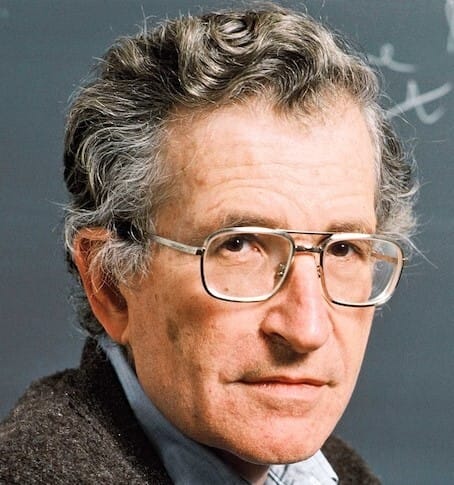
Noam Chomsky
Noam Chomsky is an American linguist, philosopher, cognitive scientist, historian, social critic, and political activist. He is known for his libertarian socialist and anarchist views. Chomsky was born on December 7, 1928, in Philadelphia, to an Ashkenazi (European) Jewish immigrant family. He studied linguistics, mathematics, and philosophy at the University of Pennsylvania. In 1955, he completed his doctorate at the same university. Noam Chomsky is currently a faculty member at MIT University. Despite being 95 years old, his mind is still clear. He holds the title of the most cited living scholar.
It is impossible to summarize Noam Chomsky's thoughts in one article. I will take his most important thesis and try to clarify the expression "Cognitive Code." Chomsky's famous theory is known in English as "transformational-generative grammar." It can be translated into Turkish as "dönüşümsel gramer teorisi" (transformational grammar theory). Chomsky briefly states this: Languages, contrary to popular belief, are not connected to the environment in which they are lived. This ability is innate. He calls this the "cognitive code." A child acquires the best ability to use cognitive codes through the language learned from their mother. They do not use languages learned later with the same efficiency.
For this reason, Chomsky says that nothing can be more important than the "Mother Tongue," that preventing it is the greatest crime against humanity, and that it means destroying the innate natural rights of humans. He is right!
Why did I make this explanation: In Türkiye, voter behavior and election rivalries have been ingrained in the minds of voters as a "cognitive code," meaning they are, in a sense, innate. They repeat themselves for years without losing their characteristic features and content.
EPIC FILM
To give coherence to the expressions in the title, I must provide a definition of "epic film."
Epic films are grand films. These films typically depict significant historical, mythological, or fantastical events. Epic films deal with large-scale stories involving the struggle between good and evil, or the flow of history, or a quest that shapes the destiny of a civilization. The hero often faces seemingly insurmountable difficulties and must overcome great hardships to achieve their goal. They also explore themes of sacrifice, redemption, and the greater good.
Some epic films that come to mind are: Ben-Hur, Doctor Zhivago, Troy, The Message, Gone with the Wind, The Lord of the Rings, Gladiator, El Cid, Seven Samurai, Ran, Kagemusha, Gladiator, Spartacus, Lawrence of Arabia, Quo Vadis, The Ten Commandments, Alexander the Great, War and Peace, The Last Emperor, Titanic.
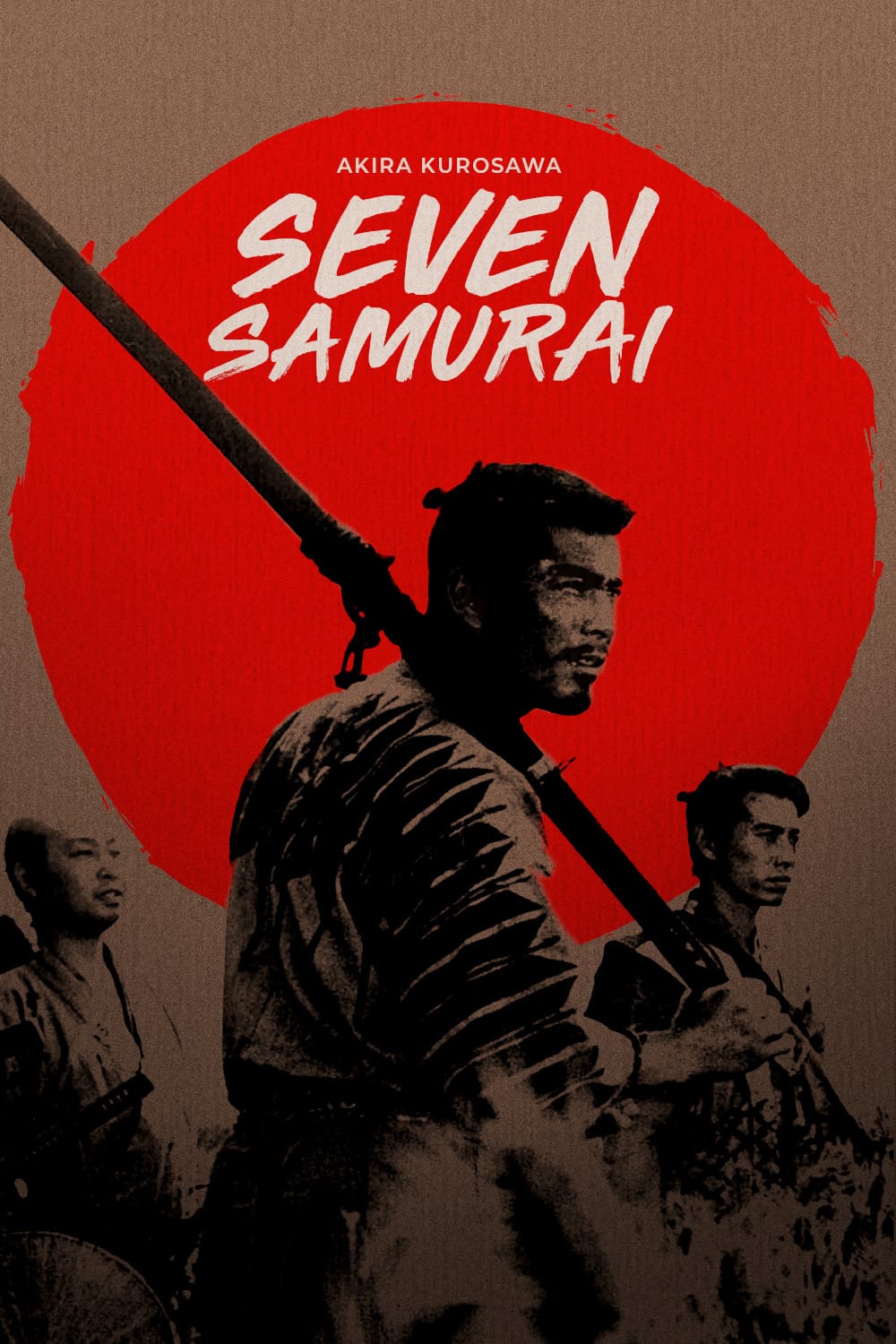
The poster for Seven Samurai, one of my favorite epic films
CONCLUSION
Election campaigns in Türkiye, just like in epic films, are built upon enthusiastic themes such as heroism, betrayal, collapse, revenge, rebirth, sacrifice, courage, cowardice, defiance, and grand dreams. This reality is etched into our genes as a "Cognitive Code." Do not be afraid, be calm! After the elections, you will feel as relaxed and peaceful as if you were watching a Kemal Sunal film.
ANECDOTE... ANECDOTE... ANECDOTE...
The painful events we have experienced and witnessed in recent months and weeks have weighed heavily on my soul, just as they have on yours. My sister Süheyla Aksoy, who lives in Germany, didn't like the tone of my voice on the phone, so she told me two anecdotes to cheer me up. I wanted to share these anecdotes with you.
YOU RUINED US
In a South American country famous for its military coups, the dictator one day gathers his advisors around him for a situation assessment:
"We closed the unions, silenced the workers. The universities and students are now under our control. We imposed censorship. Newspapers are afraid to write anything. However, there are three newspapers that are still trying to get out of our control. We must find an excuse, whatever it takes, to close these three newspapers."
The next day, the advisors place one copy of each of the three newspapers on the dictator's desk. Together, they look at the front pages of the newspapers lined up side by side on the table.
The first newspaper's front page has a fire news story. A huge picture of flames engulfing a building covers the entire page.
The second newspaper's front page has a picture of a child covering the entire page.
The third newspaper's front page has a picture of a prostitute covering the entire page.
The dictator looks at the pictures, unable to make sense of them. He asks his advisors for an explanation. One of them steps forward:
"Mr. President! Everything is crystal clear: These three newspapers are trying to tell Your Excellency, 'You ruined us, you son of a bitch.' Let's close these newspapers immediately."
"BOX NO. 8"
A doctor hangs an ambitious sign on the door of his practice: "All diseases 100% treated. Consultation fee is 500 Euros. If the disease is not treated, four times the consultation fee will be refunded."
A cunning man reads the sign and says to himself: "I can make good money from this. I'll go in, pay 500 Euros. I'll invent a disease that the doctor can't cure. He'll have to pay me 2000 Euros. I'll make a profit of 1500 Euros."
With this intention, the man enters the practice and tells the doctor his complaint:
"Doctor! I have no taste in my mouth at all! Is there a cure?"
The doctor tells the nurse to bring Box No. 8. The doctor opens the box, puts about a teaspoon of its contents into the man's mouth. The man shouts in disgust:
"This is shit! How could you do this?"
The doctor immediately adds:
"You see, I cured you. You had no taste in your mouth, now you've started to taste."
The man leaves the practice, angry at having lost 500 Euros. He intends to get his money back, no matter what. This time, he returns to the doctor, feigning another illness.
Man: "Doctor! I've caught amnesia. Is there a cure?"
The doctor tells the nurse to bring Box No. 8.
As soon as the man hears the phrase "Box No. 8," he pleads with the doctor:
"No! No! Doctor! There's shit in Box No. 8. I don't want it."
The doctor immediately adds:
"You see, I cured you. You had amnesia, now you remember the past."
The man again leaves the practice, angry at having lost 500 Euros. He intends to get his money back, no matter what. This time, he returns to the doctor, feigning another illness.
Man: "Doctor! I am impotent. Is there a cure?"
The doctor tells the nurse to bring Box No. 8. As soon as the man hears the phrase "Box No. 8," he curses:
"Fuck you, your Box No. 8, your nurse, your whole family, your past and present..."
The doctor immediately adds:
"You see, I cured you. You were impotent. Now you're fucking everything in sight, sir."