Document, Falsification, and Information
This article critically examines a document from the Turkish Grand National Assembly archives concerning Iğdır's history, exposing numerous historical inaccuracies, fabrications, and distortions.

DOCUMENT, FALSIFICATION AND INFORMATION
(Dear Readers! Two days after my article below was published (September 23), I reached out by phone and then email to Prof. Dr. Haluk Selvi, who included the polemical text in question in his book “TELEGRAMS SENT TO THE TURKISH GRAND NATIONAL ASSEMBLY FROM ANATOLIA DURING THE NATIONAL STRUGGLE,” published by the TBMM. I sincerely assumed that this text had been archived by others and that Mr. Selvi had simply taken it from the archive as is. In the email he sent me, he admitted that he had authored the text himself. Then, with a defiant and accusatory attitude, he did not neglect to threaten me with LEGAL action. Ignoring and downplaying all errors, he merely tried to concede that he had incorrectly written the death date of Cihangiroğlu İbrahim Bey. If a professor of TURKISH REVOLUTION HISTORY hangs and kills the late Cihangiroğlu İbrahim in 1919, rest assured that he has similarly strung up the history of Iğdır. TBMM publications are as valuable as TBMM archives. We are facing a professor who cannot grasp this. The judgment is up to my readers.)
Dear Readers!
My original intention this week was to publish the eighth part of my serial article titled “HISTORY OF IĞDIR 1945-65.” However, due to an unexpected text I received from a friend, I abandoned this plan. I was forced to write the article you are about to read with a sigh of "Ah!" Why did I sigh "Ah!"? The easiest thing in this world is to be a chauvinist and a racist. Whether you are a Kurd, an Azeri, a Turk, a German, a French, or whatever else comes to mind, once you become a chauvinist or a racist of a nation or sect, your job is easy because you will view the world through a single window.
The most difficult thing is to evaluate events from a democratic and universal perspective. I want to emphasize this before I begin my article, as I strive for this. I have no quarrel with the personal lives or characters of people, living or deceased. I do not feel so worthless as to view life through such a simplistic window. I wish a healthy life to the living and God's mercy to the deceased. I am only concerned with individuals' actions, thoughts, and theses. However, since the culture of criticism has not taken root in our society, I know that families show sensitivity and take offense. Writing this, knowing that, is difficult for me, but as an intellectual, I am obliged to.
On the other hand, without criticism, it is impossible to sift through truths and falsehoods. We are faced with a terrible dilemma, the cost of which is always high! Despite everything, I choose the difficult path and write my critical article. Having said all this, we can now collectively examine the text my friend sent me.
First, I would like to present the Turkish Language Association's definition of the word TAHRİFAT (falsification) in the title. Tahrifat means "to corrupt or alter the original form of something."
My readers who have overheard television debates have frequently heard this sentence: "Speak with documents, sir (or madam)! Please do not speak with fabricated things, or things you've heard here and there!"
We will soon see how meaningless the above sentence is. By "document," written documents are, of course, meant. That is, you are asked to prove your claim by basing it on a written document and an important source.
The text my friend sent me is a TBMM archive document found in a book edited by Prof. Dr. Haluk Selvi. In this article, I naturally exempt Mr. Selvi (I exclude him). As an editor, he did his job, collecting and publishing the documents. In fact, I must express my gratitude for this work.
The archives of the TBMM, the General Staff, the Ottoman Empire, and the Presidency are sources that students preparing master's or doctoral theses, or researchers wishing to write books in Turkey, refer to with one hundred percent belief in their accuracy, without any doubt. I, too, have spent a considerable amount of time in these archives. My friend, for this reason, sent me the text from the TBMM archive and added a somewhat sarcastic note: "My friend, the TBMM archive documents contradict you and your writings!"
I am quoting the TBMM archive document, which my friend sent me and which was published in Prof. Dr. Haluk Selvi's book, verbatim:
“Iğdır, which lived under Russian occupation for many years, took action to determine its own destiny after the collapse of the Russian Tsardom in the last years of the First World War, and decided to form a large government by uniting with Kars, Ardahan, Revan (Yerevan), Sharur, and Nakhchivan in the Caucasus, where problems were increasing. In this government, whose center was the village of Ali Kamerli in Iğdır, Ekber Tufan and Eleşref Bey represented the Iğdır Region. At this time, the Iğdır National Committee was established and began its activities. The South-Western Caucasian Government and the Aras Turkish Government, which had a very short lifespan, waged great struggles against the Armenians who wanted to take advantage of the vacuum in the region and occupy it. On December 7, 1918, the Aras Turkish Government, which was fighting for independence, prevented the Armenians from crossing the Aras River thanks to the power of the Iğdır National Committee. It pushed back the Armenians, who could not descend into the Sürmeli basin, as far as the Develi train station near Yerevan. The battles of Avşar and Küllük also took place during this process. During these battles, the Kars Region suffered heavy damage, and it was decided to establish a new government in Kars. The South-Western Caucasian Republic, established on March 3, 1919, called on the Iğdır administration of Ekber Tufan for help and loyalty. The people of Iğdır responded positively and provided significant assistance through Meşhedi Bilal Toksöz. Later, ANZAC soldiers under British command came to the region, disbanded this administration established in Kars, and executed İbrahim Cihangiroğlu by hanging. While high-ranking officials were exiled to Malta, Ekber (Tufan) from Iğdır, Meşhedi Bilal (Toksöz), and Ali Mirza Bey escaped from exile.
Meşhedi Bilal (Toksöz), Muhtar Bey of Sultanabad, and Hüseyin Zengi attended the Erzurum Congress representing the Iğdır National Committee. With the Treaty of Gümrü, signed at the end of the Eastern Operation, which was the first victory of the Grand National Assembly of Turkey, Iğdır was included in Turkish territory.
Iğdır, which remained under Armenian occupation between 1917 and 1920, was liberated from this occupation on November 14, 1920, and from this date onwards, they supported the wars on the Western Front. The people of Iğdır donated 500 liras to the children of soldiers martyred during the Battle of Sakarya, and civil servants working in Iğdır also agreed to provide 1,000 kuruş in monthly aid.”
Dear Readers!
I have presented the text with reference number (TBMM Archive File:3 6/1-7) to your attention without changing a single period or comma. First, I would like to list the claims contained in this short text:
- Iğdır took action to determine its own destiny after the collapse of the Russian Tsardom.
- Iğdır decided to form a large government by uniting with Kars, Ardahan, Revan (Yerevan), Sharur, and Nakhchivan.
- In this government, whose center was the village of Ali Kamerli in Iğdır, Ekber Tufan and Eleşref Bey represented the Iğdır Region.
- At this time, the Iğdır National Committee was established and began its activities.
- On December 7, 1918, the Aras Turkish Government, fighting for independence, prevented the Armenians from crossing the Aras River thanks to the power of the Iğdır National Committee.
- It pushed back the Armenians, who could not descend into the Sürmeli basin, as far as the Develi train station near Yerevan. The battles of Avşar and Küllük also took place during this process.
- The South-Western Caucasian Republic, established on March 3, 1919, called on the Iğdır administration of Ekber Tufan for help and loyalty.
- The people of Iğdır responded positively and provided significant assistance through Meşhedi Bilal Toksöz.
- Later, ANZAC soldiers under British command came to the region, disbanded this administration established in Kars, and executed İbrahim Cihangiroğlu by hanging.
- While high-ranking officials were exiled to Malta, Ekber (Tufan) from Iğdır, Meşhedi Bilal (Toksöz), and Ali Mirza Bey escaped from exile.
- Meşhedi Bilal (Toksöz), Muhtar Bey of Sultanabad, and Hüseyin Zengi attended the Erzurum Congress representing the Iğdır National Committee.
- Iğdır, which remained under Armenian occupation between 1917 and 1920, was liberated from this occupation on November 14, 1920, and from this date onwards, they supported the wars on the Western Front.
I have listed the claims above. Let's now examine this text item by item. Let's see how much of it is true and how much is fabrication and falsification.
MÜCAHİT ÖZDEN HUN'S ANALYSIS:
- This information is incorrect. The Russian Tsardom ended on October 25, 1917. From January 1918, Armenia, Azerbaijan, and Georgia united to form the Trans-Caucasian Democratic Republic (SEYM) on April 22, 1918. Iğdır was also under SEYM administration. There were no problems. However, SEYM dissolved on May 26, 1918. On May 26, Georgia, and on May 28, 1918, the Democratic Republics of Azerbaijan and Armenia were established. Iğdır was included within the borders of the Democratic Republic of Armenia.
In short, there was no national movement in Iğdır between October 25, 1917, and May 28, 1918. Therefore, the statement "Iğdır took action to determine its own destiny after the collapse of the Russian Tsardom" is incorrect.
2. The second item above states: “Iğdır decided to form a large government by uniting with Kars, Ardahan, Revan (Yerevan), Sharur, and Nakhchivan.”
This information is also incorrect. The leaders of this region never came together to form a common government. Everyone worked in their own region. On one side, the National Council and the South-Western Caucasian Republic centered in Kars, and on the other side, the Aras Turkish Republic centered in the city of Nakhchivan... Apart from these short-lived republics, there is no other organization to be taken seriously. Ali Mirze Bey, Kerem Güneş, and Şamil Bey had militia forces under their command, but they did not establish a Republic or a National Committee or anything of the sort.
3. The third item is also completely fabricated. Two lies are presented at once. First, supposedly, the Muslim (Azeri and Kurdish) leaders in Iğdır, Kars, Ardahan, Revan, Sharur, and Nakhchivan formed a government with its center in the village of Alikamerli in Iğdır, and Ekber Tufan and Eleşref Bey represented the Iğdır Region at a meeting held in Alikamer village.
Completely fabricated! I am astonished at how they shamelessly brought this lie into the Parliament Archives. In those years, Alikamerli was an Armenian village. The Armenians of Alikamerli village evacuated the village and moved towards Yerevan in November 1920. It is truly comical that they chose the Armenian-inhabited village of Alikamerli as the capital (center) for such a large government. The second lie is that such an effort and search never occurred in the region extending from Kars to the city of Nakhchivan. Such an intention existed, but it never had a chance to be implemented. Everyone had to fight in their own region.
Date of Establishment Date of Collapse
Aras Turkish Republic November 3, 1918 June 26, 1919
South-Western Caucasian Rep. January 16-17, 1919 April 14, 1919
If you look at the dates above, the South-Western Caucasian Republic was established (if we disregard the previously existing National Council) and collapsed while the Aras Turkish Republic was still in existence. That is, there is a period when the two Republics coexisted, but there was no attempt or consultation to unite them. However, İbrahim Cihangiroğlu Bey, who first served as Minister of Defense in the Aras Turkish Republic and then as President in the South-Western Caucasian Republic, could have united both Republics. However, such a need did not arise in practice; each Republic was concerned with expanding its own borders.
As a result, each Republic was responsible for its own region. The interesting thing is that not a single delegate from the Iğdır region was present at the establishment of either Republic. For example, the South-Western Caucasian Republic convened on the condition of 1 delegate for every 10,000 inhabitants, but there was no delegate from Iğdır. If it is claimed that there was, I would like to draw your attention to the fact that it is a fabrication.
4. I repeat the fourth item: "At this time, the Iğdır National Committee was established and began its activities." Look at this, on the one hand, a government is established from Kars to Nakhchivan with Alikamerli as its center, and the Muslim people of Iğdır do not trust this government centered in Alikamerli, so they establish their own National Committee. Completely fabricated. A National Committee was never established in Iğdır. It is a later fabrication by chauvinist and racist writers.
5. The fifth item contains the following statement: "On December 7, 1918, the Aras Turkish Government, fighting for independence, prevented the Armenians from crossing the Aras River thanks to the power of the Iğdır National Committee."
This is also a lie! Armenians were always present on the right bank of the Aras, i.e., in Iğdır and its vicinity, until November 1920, and they kept the region under their control. I would like to ask the author of this text the following question: If the heroic (!) Iğdır National Committee (!) did not allow the Armenians to cross to the right bank of the Aras, who carried out the massacres and genocides in Kucak, Oba, Hakmehmet, and other villages against the Muslim (Kurdish and Azeri) population in 1919? I repeat: The Iğdır National Committee / Executive Committee / Iğdır Republic, etc., never existed. It is a fabrication by Iğdır's chauvinist and racist writers in chorus. I must confess that since the lies have infiltrated the TBMM archives, their yeast has worked, but from now on, they will not find customers for that yogurt.
6. In the sixth item, our skillful and clever master writes: "(The Aras Turkish Republic) pushed back the Armenians, who could not descend into the Sürmeli basin, as far as the Develi train station near Yerevan. The battles of Avşar and Küllük also took place during this process."
Yes, that is correct. There was an Aras Turkish Republic established with Nakhchivan city as its center. The Aras Turkish Republic was established on November 3, 1918, in the days following the Armistice of Mudros (October 30, 1918). It encompassed the following cities: Sharur, Dereleyez, Ordubad, Serdarabad (city), Uluhanlı, Vedibasar, Kemerli, Mehri, etc. That is, it covered the cities and region on the left bank of the Aras. It had no connection with Sürmeli (Iğdır plain).
There is a text in the source named (Azərbaycan Respublikası MDƏYTA) that states:
“The territory of the Aras Turkish Republic was 8696 km². The capital of the Republic was Nakhchivan city. Its territory included the districts of Nakhchivan, Sharur – Dereleyez and Ordubad, and the regions of Serdarabad, Ulukhanlı, Vedibasar, Kemerli, Mehri, etc.”

Nakhchivan Autonomous Republic and Azerbaijani State sources state that the capital of the established Republic was Nakhchivan City, but our Iğdır chauvinist racist writer claims that the capital was Iğdır. Forgetting that the center of Iğdır was in the hands of Armenians in those years, they are selling cress to the cress seller.
The Aras Turkish Republic operated between November 3, 1918, and June 26, 1919. During Iğdır's most difficult days, that is, in the summer months of 1919 (especially July, August, and September), when the Armenian genocide began, neither the Aras Turkish Republic nor the South-Western Caucasian Republic existed. The Kaça-Kaç (flight and escape) also began in the summer months of 1919.
The activity of the Aras Turkish Republic remained limited to the present-day Nakhchivan autonomous region. Iğdır's racist chauvinist writers extend the Aras Turkish Republic to the right bank of the Aras. They even present Melekli as part of this republic in their books.
General El Eşref Bey also provided external assistance to the Aras Turkish Republic. Let's not forget that General El Eşref Bey was over 90 years old in these years. Look around you and imagine how much service a person of this age could provide to the activities of a political movement.
Dear readers! Without a doubt, the late Nihat Çetinkaya and Nizamettin Onk are important figures raised by Iğdır. However, knowingly or unknowingly, they have made attempts to spread much misinformation or to falsify existing facts. I respect individuals, but I must say that I am in conflict with their thoughts and theses.
While writing about the Aras Turkish Republic, it has become necessary to open a parenthesis here. If you click the link below, it will take you to the Wikipedia page.
(https://tr.wikipedia.org/wiki/Aras_T%C3%BCrk_Cumhuriyeti)
There is a paragraph that states:
“Representatives of the people of Nakhchivan, Sharur, Sürmeli district (Iğdır-Tuzluca-Aralık) and the southern regions of Revan (along the Aras) came together and officially established the Aras Turkish Republic, centered in Iğdır, on November 3, 1918. (Nihat Çetinkaya) In another source on the same subject, it is stated that the name of the established government was the Iğdır National Republic. (Nizamettin Onk)”
The information that the capital of the Aras Turkish Republic was Iğdır and that its name was the Iğdır National Republic does not reflect the truth. Students and researchers will go to the Wikipedia page and, without any doubt that they are writing a scientific (!) book, will base their theses on this information. Those who committed this falsification have unfortunately caused great harm to our Iğdır. The name of the Aras Turkish Republic was never the Iğdır National Republic. This is fabricated information.
It is true that the Aras Turkish Republic was initially designed to be centered in Iğdır, but it never had a chance to be implemented. Let's assume that the capital of the Aras Turkish Republic was Iğdır. In those years, the city center of Iğdır was predominantly populated by Armenians. It was not a suitable place for the Aras Turkish Republic at all. Let's even assume that the Aras Turkish Republic was indeed established with Iğdır as its center and that Iğdır remained the capital of this Republic until its collapse. Today, the building where the Aras Turkish Republic was established in Iğdır should have remained as a museum for us. Such a building exists, but it is not in Iğdır; it is in Nakhchivan City.
I continue my writing from where I left off:
Cihangiroğlu İbrahim Bey, born in Gümrü in 1874, served as Minister of Defense for about a month during the establishment of the Aras Turkish Republic, then moved to Kars and was elected president of the South-Western Caucasian Republic, which was established in place of the Kars National Council on January 17 and 18, 1919.

To examine the claim in the fifth item, we need to look at where the villages of Avşar and Küllük are located. Avşar village is currently within the borders of Armenia. It is close to the border. Since Avşar village is on the left side of the Aras, there is no problem. So, where is Küllük village? Küllük is a village connected to the center of Iğdır. Iğdır Airport is within its borders. That is, Küllük is on the right side of the Aras. The master of falsification writes that the Armenians did not remain on the right side of the Aras because they were pushed back to the other side of the Aras by the Iğdır National Committee (!), and then he talks about the battle of Küllük on the right side of the Aras. What a contradiction!
We now know that this statement is a fabrication because the presence of Armenian military power in the Iğdır region continued uninterrupted until November 1920.
7. I repeat the statement in the seventh item above: “The South-Western Caucasian Republic, established on March 3, 1919, called on the Iğdır administration of Ekber Tufan for help and loyalty.”
Now let's look at the lies in this statement: The South-Western Caucasian Republic was established as a reaction to the Armistice of Mudros (Agreement) signed on December 1, 1918. On January 17 and 18, 1919, 131 representatives (delegates) attended the congress held in Kars under the chairmanship of Dr. Esat Oktay Bey, and at the congress, the name of the Kars National Islamic Council was changed to Cenûb-i Garbî Kafkas Hükûmet-i Muvakkata-i Milliyesi (South-Western Caucasian National Provisional Government). Cihangirzade (Cihangiroğlu) İbrahim Bey was elected as its president. The British ended the existence of the government on April 19, 1919. So, the South-Western Caucasian Republic lasted for about 4 months.
As you can see, there are two pieces of incorrect information and distortions:
Firstly, the South-Western Caucasian Republic was established on January 17 and 18, 1919, not on March 3, 1919, as the author claims.
Secondly; it is not possible for the South-Western Caucasian Republic to ask Hacı Ali Ekber Tufan for help and loyalty because there is no such formation in Iğdır as the Iğdır Executive Committee / Melekli National Republic / Iğdır Republic / Iğdır National Committee, as claimed. All these names are fabrications. How can Hacı Ali Ekber Tufan alone provide help and show loyalty? Soon after, 8 months later, in August 1919, Hacı Ali Ekber Tufan would go to Doğubayazıt and ask for help from the Kurdish Hamidiye Regiments. If there had been a militia formation or committee in Iğdır, it would have prevented the massacres and genocides committed by the Armenians in 1919.
Considering this fact, the gravity of the situation increases even further. Let's assume that Iğdır was the capital of the Aras Turkish Republic, as claimed by the late Nihat Çetinkaya. How is it possible then that the later established South-Western Caucasian Republic could request loyalty and assistance from Hacı Ali Ekber Tufan, a villager from Melekli, who was within the borders of the Aras Turkish Republic? In this case, the interlocutor should have been the Aras Turkish Republic Government, not Hacı Ali Ekber Tufan.
8. The eighth item states, “The people of Iğdır responded positively and provided significant assistance through Meşhedi Bilal Toksöz.”
This is not true. Meşhedi Bilal Toksöz was not politically active in those years. This name was added later. This is a blatant falsification. The author constantly tries to highlight the name of Meşhedi Bilal Toksöz.
At the end of this article, I included the memoirs of the late Şefi Öcal. When he went to Aralık (Başköy), he did not mention the name of Meşhedi Bilal Toksöz. Where was Meşhedi Bilal Toksöz while the late Şefi Öcal was running around trying to help his people? In the province of Bayazıt or in Iranian Azerbaijan?
9. The ninth item interested me the most. It says, "Later, ANZAC (Australian-New Zealand) soldiers under British command came to the region, disbanded this administration established in Kars, and executed İbrahim Cihangiroğlu by hanging."
The author is so confident in himself and his arrogant falsification that he even writes that İbrahim Cihangiroğlu was EXECUTED BY HANGING. Poor pen! İbrahim Cihangiroğlu was exiled to Malta for 1 year. After returning, he served as the Mayor of Kars between 1921 and 1927. He passed away on May 19, 1948, in a state of distress. I would really like to expose this ill-mannered author who describes İbrahim Cihangiroğlu, a great man of struggle, in this way.
10. The tenth item is also quite interesting: "While high-ranking officials were exiled to Malta, Ekber (Tufan) from Iğdır, Meşhedi Bilal (Toksöz), and Ali Mirza Bey escaped from exile."
This item is also completely fabricated. There was no such exile in 1919. First of all, British soldiers never set foot on the Sürmeli plain. Since there were no British soldiers to search for and apprehend them, why would these three individuals flee and hide? Only the government members of the South-Western Caucasian Republic were sent into exile in Malta. Of these, Ali Rıza Bey (Ataman) managed to escape in Batum, and Fahrettin Bey (Erdoğan) was saved from exile because he was in Erzurum.
To elaborate on this raid, British Lieutenant Colonel Preston sent word on April 12, 1919, that he would visit the Assembly, requesting the presence of the Head of Government, the Executive Board, and the Assembly members. On April 13, at 4:00 PM, during the visit, gunshots were heard from outside, and the Assembly was raided by the British. In this way, the British disbanded the Government and arrested 12 prominent members. Foreign Minister Fahrettin Erdoğan Bey escaped because he was in Erzurum. Interior Minister Ali Rıza Bey (Ataman) also found an opportunity and managed to escape in Batum.
Apparently, the poor author is confusing two different historical periods. Of course, our esteemed author has the right to "muddle" things after so many lies. There was a moment when Hacı Ali Ekber Tufan and Ali Mirze Bey fled into exile. After the Sheikh Said Rebellion in 1925, the Government issued the Law on the Exile of Aghas and Beys in 1926. Hacı Ali Ekber Tufan, rebelling against this unjust practice, fled to Armenia, and Ali Mirze Bey fled to Iran. In addition to Kurdish leaders, three Azeri leaders were also affected by this exile law. The names of these three Azeri leaders are: Hacı Ekber Tufan, Paşa Ekinci (father of Fikret Ekinci), and Hüseyin Ali Başkentli.
The name of Meşhedi Bilal Toksöz is not mentioned in the 1926 exile. The author constantly tries to insert the name of Meşhedi Bilal Toksöz at every opportunity, trying to assign him the role of a historical figure. The tendency for the master of falsification to be from Başköy (Aralık) is strengthening.
11. Another lie: “Meşhedi Bilal (Toksöz), Muhtar Bey of Sultanabad, and Hüseyin Zengi attended the Erzurum Congress representing the Iğdır National Committee.”
Two LIES with one stone: Firstly, when the Erzurum Congress convened, there was no organization called the "Iğdır National Committee" in Iğdır. In fact, such a committee never existed. Secondly; no one from Iğdır participated as a delegate in the Erzurum Congress.
The Erzurum Congress was held between July 23 and August 7, 1919. In those years, Iğdır was not under Ottoman rule. Only delegates from regions under Ottoman rule participated in the Congress. On the other hand, between July 23 and August 7, 1919, Kaça-Kaç (flight and escape) and massacres were taking place in Iğdır. The Azeri population was either fleeing to Iranian Azerbaijan, taking refuge in Melekli under the protection of Hacı Ali Ekber Tufan, or being subjected to genocide. At such a time, when Iğdır was overwhelmed with problems and everyone was concerned for their lives, no one cared about the Erzurum Congress.
Despite all these adversities, let's assume that the Muslim people in Iğdır gathered and sent Meşhedi Bilal Toksöz, Muhtar Bey of Sultanabad, and Hüseyin Zengi to the Erzurum Congress (for some reason, all of them are of Azeri origin???). You can access the list of participants in the Erzurum Congress by clicking the link below: (https://tr.wikipedia.org/wiki/Erzurum_Kongresi_delegeleri_listesi)
As you can see in this list, there is no one born in Kars, Ardahan, or Iğdır. Fahrettin Erdoğan from Kars participated, but he was born in Sivas, meaning he was born within the borders of the Ottoman Empire. When the Erzurum Congress began, the South-Western Provisional Government had collapsed. For this reason, Fahrettin Erdoğan and his delegation went to Erzurum to represent the Elviye-i Selâse, and on July 19, 1919, they applied to the Congress Presidency to participate in the congress, but their application was rejected. The main reason for this was that Fahrettin Bey, whose name was on the list as the Minister of Foreign Affairs in the South-Western Caucasian Republic, had escaped exile in Malta. If he had been caught, he would have been immediately sent to Malta.
Let's not forget that during the Congress, British Commissioner Lieutenant Colonel Rawlinson was closely monitoring the developments. So much so that one day before the Congress was completed, on August 6, British Commissioner Lieutenant Colonel Rawlinson had a three-and-a-half-hour meeting with Mustafa Kemal. After Mustafa Kemal informed Rawlinson about the "National Pact" adopted that day, he promised to send the declaration, which would take its final form the next day, by telegram. The text of the declaration was delivered to Rawlinson by Kazım Karabekir by telegram on August 7, before it was announced to the public. As you can understand, without Rawlinson's approval, neither could the Congress convene nor could the Congress declaration be published, or Rawlinson could have dispersed the Congress if he had wanted to. Although there would have been resistance and conflict, considering the conditions of the time, this resistance would not have lasted long. This truth was always hidden from us!

The British prevented those who were not Ottoman citizens from participating in the Congress, and even issued an arrest warrant for Fahrettin Erdoğan, despite being an Ottoman citizen, because he went to Erzurum to represent the Elviye-i Selâse. Fahrettin Bey had served as the Minister of Foreign Affairs in the government where Cihangiroğlu İbrahim Bey, who pioneered the establishment of the South-Western Caucasian Government, was the President. He had escaped exile in Malta but was wanted everywhere. The British wanted to capture Fahrettin Erdoğan and send him to Malta. Fahrettin Erdoğan could not participate in the Congress activities; he hid by fleeing from corner to corner. He fled to Oltu. Although he could not participate in the Congress as a delegate, his name was added to the list as an "honorary delegate" in later years. Under such circumstances, our clever fraudulent author sees no harm in writing that the three-person delegation supposedly from Iğdır participated in the Congress as delegates, waving their arms freely.
The interesting thing is that while Iğdır could not send delegates to the nearby Aras Turkish Republic and the South-Western Caucasian Republic, it seems strange that it sent delegates to the Erzurum Congress.
ADDITIONAL INFORMATION: WHAT IS ELVİYE-İ SELÂSE?
In Arabic, the word "selâse" means "three." After the Tanzimat, the administrative unit between the Vilayet (province) and the Kaza (district) in the Ottoman Empire was called Liva. Its other name is Sancak. The administrators of a Sancak are called Mutasarrıf (District Governor). The Arabic plural of "Liva" is "Elviye." In this case, the word Elviye-i Selâse means "Three Sancaks." These are Kars, Ardahan, and Batum. These three sancaks came under Russian control during the 1877-78 Ottoman-Russian War. Iğdır is not included in this region because Iğdır, that is, the Sürmeli region, remained under Russian rule since 1828. The Three Sancaks were reincorporated into Ottoman territory with the Treaty of Brest-Litovsk signed on March 3, 1918, but according to the Armistice of Mudros signed on October 30, 1918, the Ottomans were forced to evacuate this region. Thereupon, the South-Western Caucasian Republic was established, but when the Erzurum Congress convened, this Republic had been disbanded by the British. Fahrettin Erdoğan participated representing the Elviye-i Selase, but there was neither a committee nor an organization with the name "Elviye-i Selase." Fahrettin Erdoğan was, in a sense, playing his own tune.


On the other hand, those who participated in the Erzurum Congress were awarded the Independence Medal with a red ribbon. Do these Iğdır families have Independence Medals? The only person from Iğdır deemed worthy of the Independence Medal is Ali Rıza Ataman, originally from Kağızman, due to his being a Member of Parliament in the Grand National Assembly of Turkey, which opened on April 23, 1920. We know that Ali Ilgaz, a military veteran, received a Certificate of Merit and a Veteran's Medal, but Ali Ilgaz is not from Iğdır. We commemorate Ali Ilgaz, who hoisted the first Turkish flag on the municipality building, with mercy.
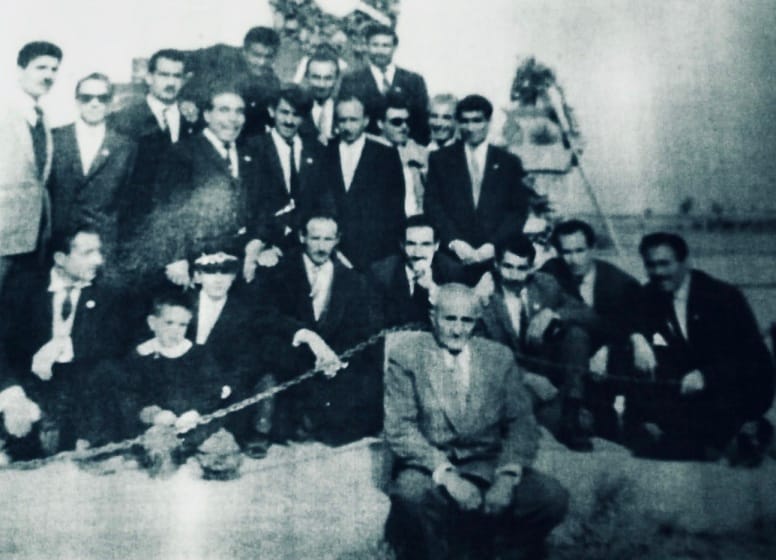
If you notice, Meşhedi Bilal Toksöz appears again here. Previously, it was also claimed that Şefi Öcal participated in the Erzurum Congress. What can I do? Lies are coming at me from all sides.
Our esteemed author has decided to make Meşhedi Bilal Toksöz a hero, so we now consider Meşhedi Bilal Toksöz's participation in the Erzurum Congress normal (!), right? Let's assume that Muhtar Bey, one of the Sultanabat beys, also went to the Erzurum Congress. Who is the third person, Hüseyin Zengi?
There is a family with the surname Zengi. The late Cabbar Bey and his children (Kerem Zengi, Feyzullah Zengi, Kasım Zengi, and Paşa Turan), originally from the village of Zengibasar in Armenia, came and settled in Iğdır after 1920. Hüseyin Zengi is from this family and came and settled in Iğdır after the Erzurum Congress. In this case, Hüseyin Zengi's participation in the Erzurum Congress does not seem possible. These statements should not cause us to ignore a reality. A person belonging to the Zengi family waged an relentless struggle against the Dashnak gangs. This name is the late Kerem Zengi.

I would like to add one last detail regarding the Erzurum Congress. Prof. Dr. Haluk Selvi has done the most comprehensive work on this subject. His book titled "Erzurum in the National Struggle" (2000) is a valuable work that I have had at hand for a long time. I recommend it to readers interested in the subject.
12. In the twelfth item, exhausted by the lies he has told, the author begins to contradict himself. There is a statement that says: “Iğdır, which remained under Armenian occupation between 1917 and 1920, was liberated from this occupation on November 14, 1920, and from this date onwards, they supported the wars on the Western Front.”
However, in the fifth item, the author stated that the Iğdır National Committee did not allow the Armenians to cross to the right side of the Aras. Now he states the truth: "Iğdır was under Armenian occupation between 1917 and 1920." Yes, that is correct. During these dates, the Armenians ruled the Sürmeli (Iğdır) plain. Ali Mirze Bey, Ahmed Şemo, Kerem Bey, and Şamil Bey resisted the Armenian forces by taking refuge in the mountains. Apparently, we are dealing with an author who forgets his own lies. The aim is to confuse the reader's mind and insert deliberate theses.
CONCLUSION:
We know that the above text was written after the Surname Law was enacted in 1934 because the individuals in the text are introduced with their surnames. It is highly probable that this text was written retrospectively after the 1970s. It is very disturbing to see 12 FUNDAMENTAL ERRORS in such a short text. Furthermore, it is a source of additional sadness that they have instrumentalized the name of the late Meşhedi Bilal Toksöz, who served as the Mayor of Aralık and held a respected place among the people, for their malicious intentions and plans full of falsification.
I call out to all students, researchers, and readers: No matter the source, you must be skeptical and questioning. I understand that the biggest concern for students is to submit and have their theses accepted as soon as possible. They confidently and assuredly include the TBMM Archives as a reference in their theses. However, errors and falsifications are spreading like a virus through written theses and books.
I make a call:
- The guilty author of the text, STAND UP and ACCOUNT FOR YOURSELF!
- I call on the TBMM: This text must be immediately removed from the archive.
- Students and researchers! If you cut corners and refer to archive information without questioning it, the hand of history will be at your throat. The information about Iğdır in the TBMM Archive is full of falsifications and lies originating from deliberate and chauvinistic pens.
The late Gurci Selçuk was a 90-year-old Kurdish woman who did not speak Turkish. She had never been to school. She had no published books. Similarly, the late Hamza Aygün was a middle school graduate. He was literate but had not published any books. The stories told by these two distinguished people, whom I included in Iğdır Sevdasında, are a thousand times more valuable than the TBMM archives. The oral memory of the people, when conveyed as it is, is much more valuable than written documents. I strongly recommend that researchers conduct fieldwork.
Having said all this, I once again present to my readers the memoirs of the late Hacı Ali Ekber Tufan and Şefi Öcal, written in their own hand and published in Mecit Hun's PAMUKOVA newspaper in 1954. I also deemed it appropriate to add a short text by Mecit Hun, also written in his own hand in 1954, concerning the year 1920.
MEMOIRS OF HACI ALİ EKBER TUFAN (IN HIS OWN HAND)
PAMUKOVA NEWSPAPER: November 17, 1954 Year: 1 Issue: 45
OWNER MECİT HUN
ON THE OCCASION OF LIBERATION
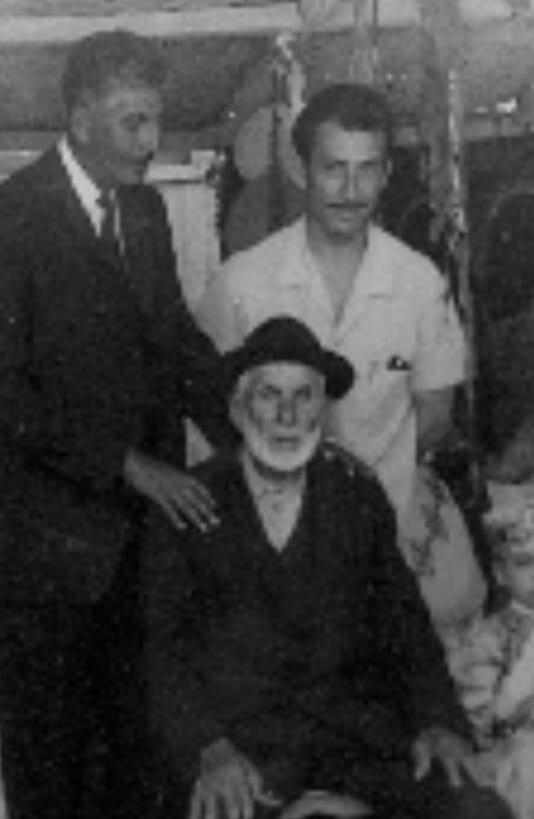
“I will not talk about the efforts we made and the humble services I rendered regarding the awakening of national sentiment (duygu) and the inclination (eğilim) of the Islamic-Turkish world (dünyası) towards unity (birliğe) after the tension and struggle between Turks and Armenians in 1905. However, I find it useful (görmekteyim) to mention some memories of the liberation.
(NOTE: With the word “Naçizane” (humble), the late Hacı Ali Ekber Tufan tries to present his extraordinary efforts to us in a humble way. This shows his greatness. Mücahit.)
In 1334 (1918), our Army withdrew from the Caucasus and Iran, and Division Commander Ali Kemal Bey asked Major Mehmet Bey for 4 people to organize the people.
With Mehmet Bey's approval (uygun görmesiyle), Fettah Güneş, son of Hamit Bey, Tayfur, son of Ali Bey (Tayfur Kederli, son of Eli Ağa from the Brukan Tribe. Mücahit), Ağabey from Melekli village, and I were assigned. It was decided to send a delegation to Yakup Şefki Pasha in Kars (huzurunda) to bring officers to organize the people in an orderly (düzenli) manner with ammunition and rifles. (It is understood from this sentence that there was no organization in Iğdır or Melekli until this date. Mücahit)
The delegation that went consisted of the late Ali Eşref Bey (Güneş) and Rıza Bey from Revan. Since Yakup Şefki Pasha could not provide assistance due to the circumstances of the day, the delegation returned empty-handed, and the disheartened people were forced to leave Iğdır and go to Iran. The people of Çobankere and Revan settled in Xoy; the people of Saraçlı, Gödekli, and Ahuralı settled in Karaköse and Erzurum. Of course, we, who remained weak, could not succeed (başarılı) in establishing the organization (örgüt).
(The late Hacı Ali Ekber Tufan writes in his own hand that he could not establish an organization, but chauvinist and racist writers have resorted to all kinds of falsifications and fabrications to attribute all organizations to him. Mücahit)
Meanwhile, I went to Şeril with my family, and my relatives Esat, Kurban, Medet, and Celil went to Doğubayazıt. After a while, they came and brought us to Doğubayazıt via Iran (yoluyla).
Meanwhile, the Armenians began to oppress (baskıya) the Muslims in Iğdır and its vicinity and prepare for massacres, and they had besieged (kuşatmışlardı) Melekli, the most common refuge for Turks, from the direction of Kire (i.e., Mount Ağrı). At that time, together with Abbas, a merchant from Söğütlü Neighborhood who was a refugee (göçmen) in Bayazıt, we went to Division Commander Cavit Bey and explained the situation. After a few days of waiting, they officially informed us that they could not do anything for us, but that it would be beneficial to meet with the tribal leaders.
Immediately, we later (daha sonra) applied to Bayazıt Deputy Şevket Bey. Şevket Bey called Sheikh İbrahim Bey, Abdülvahap Bey, and Zorzade İzzet Efendi, and after a short consultation (danışmadan), they decided to save Melekli by participating in person. However, since Şevket Bey's action necessitated his resignation from the writing department (yazı işleri bürosundan), İbrahim Ağa, known as BroHesso Telli (bilinen), was sent in his place.
This tribal force inflicted heavy casualties (can kaybı) on the Armenians, rescuing nearly 3000 Turks and bringing them to Erhacı. At that time, the Armenians had also started massacres. Those who escaped the sword and oppression took refuge in Erhacı.
In Kerimbeyli, an officer named Cengiz Bey was establishing an organization (örgüt), and on the other hand, soldiers were being sent to the Bulakbaşı position. This new organization spread (yayıldı) to Erhacı, and the scattered forces there were sent to the army to gather in a trained (eğitilmiş) manner. Hacı Xanlar (Hanlar) Bey, Şefi Öcal, Hasan, son of Melekli Mirza Memet, and Hanife, daughter of Ali Hüseyin, had great efforts in the organization in Erhacı. They were also collecting provisions. A few days later, the accumulation in Erhacı attacked Iğdır. At first, the Armenians, who mistook this crowd (kalabalığı) for soldiers, fled, but later (daha sonra), realizing the situation (bilgi sahibi), they returned to Iğdır. Thereupon, the people of Erhacı were forced to retreat to Orgof. From there, they went to Bayazıd and crossed into Iran.
Thus, due to both Armenian atrocities (zulmü) and lack of provisions, all the people of Iğdır had withdrawn to Iran. We mostly settled in Senger, Tazeköy, and Kişmiş Tepe near Hoy. After spending the winter here, we returned to Bayazıd. At this time, the Army began preparations for the occupation of Iğdır, and Gündeli Süleyman, along with a few soldiers, accompanied by Melekli Cevat Han, Yusuf, son of Abdullahoğlu, and Feyzullah, son of Salman, came to Bayazıd.
My brother Eset, Hüseyin, son of Bahçeli, and Haşim, son of Abbas, were volunteers in the military unit marching on Iğdır. We could not take Iğdır the first time. On the second attempt, with the participation (katılımıyla) of the tribal regiments (Hamidiye Regiments), Iğdır was occupied on November 12, 1920.
(NOTE: Dear readers! The late Hacı Ali Ekber Tufan clearly states in his memoirs that he was unsuccessful in establishing an organization. Names such as the Iğdır Executive Committee, Iğdır National Committee, or Iğdır Republic were fabricated after Hacı Ali Ekber Tufan's death and deliberately introduced into the literature. Furthermore, the name of Meşhedi Bilal Toksöz is not mentioned anywhere. Mücahit)
MEMOIRS OF THE LATE ŞEFİ ÖCAL (IN HIS OWN HAND)
MEMORIES OF LIBERATION
PAMUKOVA NEWSPAPER NOVEMBER 15, 1954 Year: 1 Issue: 44
“The liberation of Iğdır was celebrated on 12.11.1954 with the vitality and excitement we desired. With the symbolic demonstration, we relived the memory of 34 years ago and the excitement of that happy day. Our children, blending (birbirine katarak) the memories of that day with their national feelings, conveyed them to us from the podium.
One of the speakers was Mecit Hun. When he spoke about the heroes of the liberation, he also mentioned my name. But perhaps due to the shortness of time, there were many other names. That is why I decided to publish (yayınlamaya) my memoirs to talk about these names and to convey the day of liberation that I personally experienced in the most accurate (doğru) way.
In the days preceding (önce gelen) the liberation, we had fled to D.Bayazıt to escape Armenian oppression. There, we gathered and decided to pour out our troubles to Regiment Commander Firuz Bey. Firuz Bey had received orders for the occupation of Iğdır but could not give the order to move due to lack of transport (deve, at gibi taşıma araçları). We told him that we were hungry and naked, and that our homes and villages were under enemy occupation, asking for his help. Firuz Bey, after explaining the existing impossibilities, said that if we could secure the camels of the Çobankereli people living near Başköy, he would reunite us with our homes and land. I immediately took on this task. I set off with two soldiers assigned to accompany me, carrying letters from Firuz Bey addressed to the tribal leaders (liderlerine) at the foothills of Ağrı, to deliver them to Başköy. The letters were to be given to the late Ali Mirza (Yiğit), Ahmet Şemo (Hun), and Yusuf, brother of Gur Hasso. We spent the first night at Ahmet Şemo's house. After welcoming us very well and providing the necessary assistance, he sent us to Ali Mirza's house. The next day, after delivering Yusuf Ağa's letter, I went to Başköy with the men they provided to help, and to the house of Hacı Cafer oğlu Mehmed from Çobankere.
When I met Hacı Cafer oğlu Mehmet, known as Kelbayı (bilinen), we, who were exhausted by migration (göç), war (savaş), and misery, embraced each other. Kelbayı Mehmet asked the reasons for my arrival. I told him that I had a very important request for him, that I had been sent by Regiment Commander Firuz Bey, that the military preparations for the occupation of Iğdır were delayed due to lack of transport (at, deve gibi araçların eksikliği), and that if they would lend their camels for a while for this service, they would march on Iğdır. Kelbayı Mehmet immediately spoke to his cousin Meşedi Elekber and said, 'We have known you since Tsarist Russia and we have endless faith in you. Not only our camels but also our children are sacrificed for the Turkish army.'
The camel owners were immediately called. Kelbayı Mehmet explained the situation to them as follows: 'My brothers, the man sitting in my tent is Şefi Bey from Iğdır. The two men with him are Turkish soldiers. Our army wants to march on Iğdır and expects our help. We will send our camels to transport provisions and ammunition. Therefore, everyone should prepare their camels, and we will set off for Bayazıd early tomorrow morning.'
(NOTE: Dear Readers! While the late Şefi Öcal was struggling to reach Çobankere village via Aralık, where was Meşhedi Bilal Toksöz from Aralık? Meşhedi Bilal Toksöz's name is everywhere in the TBMM archive. This name was added to the archives later; the archives were falsified. The real heroes, as we see, are Hacı Ali Ekber Tufan and Şefi Öcal. In the TBMM archives, instead of Şefi Öcal from the Sultanabat Beys, the name of Muhtar from Sultanabat appears. These are deliberate falsifications. Mücahit)
MECİT HUN'S ACCOUNT OF THE YEAR 1920 (IN HIS OWN HAND)
“From the summer of 1920, the national forces in Iğdır had also begun to organize (örgütlenmeye). Two honorary (gönüllü) regiments, which had just been organized, made their first attack (saldırıya) in September 1920 in the direction of Kamışlı (Selim) along with the 8th Regiment. After the Armenians were completely pushed back from the old border and driven into the Iğdır plain and partly across the Aras River, the organizational (örgütçü) spirit dominated the entire Aras valley.
The Hamidiye Regiments in Karaköse (Ağrı) also began to march on Iğdır. The situation in October 1920 was as follows:
The Karakale-Küllük line was held by the honorary (gönüllü) Ayrım under the command of Şamil Bey, son of Hasanali Bey (Ayrım);
The Karakale-Tuzluca line was held by the Hamidiye regiments under the command of Resul Bey, son of Eyüp Papa;
The Küllük-Iğdır line was held by a Cavalry Squadron and 4 cannons under the command of Brigade (Tugay) Commander Abdulkerim Bey;
The Orgof-Erhacı-Halfeli line was held by the honorary (gönüllü) Zilan under the command of Kerem Bey, son of Hamit Bey (Güneş);
The Kültepe-Yarmalar line was held by the Celâli Hamidiye under the command of Sheikh Abdülkadir (Kotan);
The Karakoyun-Taşburun line was held by two Celâli Hamidiye under the command of İsa Bey, son of Ahmet Bey (Konyar), and İbrahim Ağa (BroHeski Telli);
The Taşburun-Hasanhan line was held by the honorary Celâli Regiments under the command of Ali Mirza Bey (Yiğit).
The local (yerel) forces (Ali Mirza Bey) on the Iğdır-Taşburun line were reinforced by military units under the command of Firuz Bey, commander of the 17th Regiment stationed on the Karakoyun hills, and the Saraçlı Hamidiye regiment under the command of Veli Bey from Gilesor, İsrafil Bey from Gerger (Retired Chief Physician İsrafil Gökçe), and Hüseyin Bey.
Division Commander Cavit Pasha's headquarters was in Orgof. The military and local forces, having taken their positions in an orderly manner, waited for the liberation of Kars for a while. However, minor skirmishes were taking place.
The Armenians, realizing that they could not resist the forces of the National Struggle, crossed the Aras and defended Iğdır with a small force. Finally, after a 7-day armistice (ateşkesten) concluded (karşılıklı anlaşma) on November 5, the Liberation forces, marching on Iğdır from three directions, occupied this corner of the Homeland. Since there were no Armenian military forces in the town, there was no fighting, and thus Iğdır was annexed to the Homeland today, 34 years ago.”
(Mecit Hun also writes that Iğdır was taken without a fight. I find it difficult to understand who was martyred. Mücahit)
(NOTE: In this article, written by Mecit Hun in 1954, while his kirve (godfather) Hacı Ali Ekber Tufan was still alive, we do not encounter the name of any other civilian militia force or person of Azeri origin, except for Şamil Bey. (Since Şamil Bey's second wife was of Kurdish origin, the Şemkan tribe in Tuzluca was under Şamil Bey's command.)
If you wish, I would like to open a parenthesis here and include the late Ziya Ayrım's brief conversation with his father Şamil Bey:
“My father and I started descending the hill arm in arm. ‘Father, why did you marry a Kurd?’ I asked.
‘My son, if I hadn't made that marriage, you wouldn't exist. On the other hand, the enemy was strong. We needed to form an alliance with the tribe.’
Now we can continue again:
If there had been a serious militia force under the command of Hacı Ali Ekber Tufan, Şefi Öcal, or other figures during the days of entering Iğdır (the first weeks of November 1920), I have no doubt that Mecit Hun would have included their names in his article above without any discriminatory thoughts. The late Hacı Ali Ekber Tufan already tells us in his memoirs that such a force did not exist. I want my reader to know that Mecit Hun, whose semi-nomadic family went to the summer pastures in April/May, continued his schooling by staying at the house of his kirve (known by the nickname EsadaMazan), the late Esat Ogan from Melekli. He even stayed at the late Esat Ogan's house during the years he taught at the Middle School before and after his military service. The most important person Mecit Hun relied on and received help from in Iğdır was the late Talat Tufan. This friendship continued until their deaths.
The truth is bitter, but we must accept it. There was no Iğdır Republic army, no Iğdır Executive Committee army, no Melekli Republic army, no Iğdır National Committee army. And there was certainly no Meşhedi Bilal Toksöz. Do not tell me that Meşhedi Bilal Toksöz or Muhtar Bey of Sultanabat or Hüseyin Zengi liberated Iğdır or Aralık with an army of 40-50 thousand soldiers.
From 1960 onwards, we are now discarding the history of Iğdır written with the fairy tales of chauvinist and racist writers, and we respectfully salute the true heroes.
In your presence, I once again call out to the Tufan family and Mr. Nizamettin Onk: Please publish the precious memoirs of Hacı Ali Ekber Tufan Bey as they are. This important document of Iğdır's history must reach the readers. I have prepared the SECOND EDITION of the late Veli Orkun's book titled IĞDIR HISTORY AND GEOGRAPHY for publication. It will meet the readers soon. I do not agree with many theses in the book, but it is our responsibility to leave the reading and evaluation of the book to researchers and readers. If assistance is needed in terms of editing or printing, I would like to state publicly that I volunteer to bring the late Hacı Ali Ekber Tufan's memoir notebook to my people as a book. Mücahit)
I wish patience and a bright future for our Iğdır, which is drowning in an ocean of lies and falsifications, and searching for truth and identity with great difficulty.
Sincerely,