Tribal Structure and Feudalism
This article clarifies the distinction between tribal structure and feudalism, arguing against their common misidentification, especially in the context of Iğdır's tribal history.

TRIBAL STRUCTURE AND FEUDALISM
Dear readers!
Previously, I published an article on the historical development of tribes, sharing my views on tribes and tribalism with the public. Readers who did not have the chance to read that article can click the link on the side to access it. (http://hunacademy.com/asiretcilik-ve-toplumsal-gerceklik/)
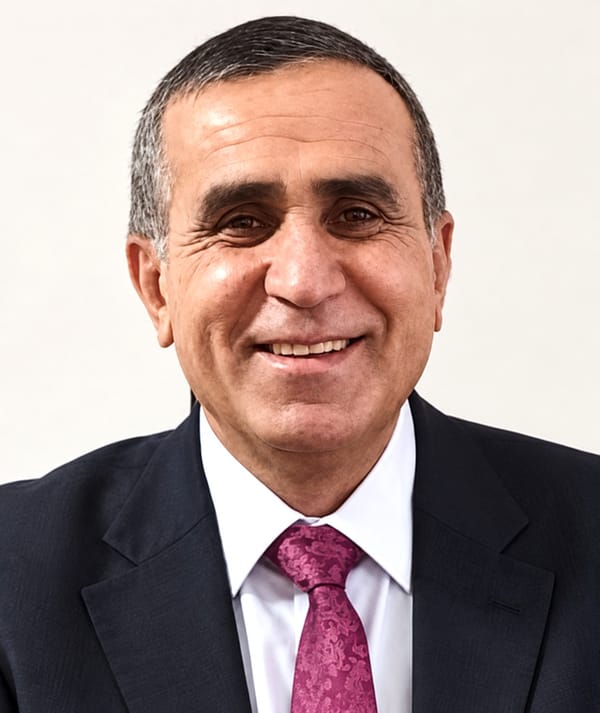
I want to explain why I had to address this topic a second time. Especially some party executives and members on the left wing make a serious mistake by treating Feudal Structure and Tribal Structure as equivalent in their writings and discourses. The Balıkesir Vatan Party Provincial Chairman, originally from Iğdır, in a social media correspondence, used my family surname to supposedly talk about "THE FEUDAL DESPOTISM OF THE HUN FAMILY" in his own mind, and for this reason, he criticized another writer from Iğdır who did not include this in his article. Thus, I believed it became necessary to briefly compare Feudalism with Tribal Structure to bring clarity to the confusion. Let's first examine the basic characteristics of feudal society:
FEUDALISM
- The layers defining feudalism are King, Seigneur, Vassal, and Serf.
- Serf means a peasant working on the land. The Vassal, or Ağa (landlord), owns the land. The Serf has no claim to the land. Serfs kept enough of the products they produced to meet their own food and clothing needs, delivering the rest to the Vassal, or Ağa. The Vassal, in turn, paid their taxes to the Seigneur, and the Seigneur to the King, at rates determined by law.
- Agricultural production is essential to speak of feudalism. The serf is a peasant bound to the land.
- Serfs were tied to the land, and when the land changed hands, the serfs also entered the service of the new master.
- What differentiated serfs from slaves was that they could not be bought and sold individually. Serfs were obliged to work on the land allocated to them.
- They could not leave their place without the permission of their landlord.
- The Vassal, or Ağa, could easily detain women working as serfs for their own pleasure, and if necessary, seize their produce by exerting pressure on the serfs.
- Serfs who wished to marry or change jobs had to obtain permission from the Vassal.
- They had no rights before the law.
- The Vassal, or Ağa, had the right to kill any serf they wished.
- The only way out of serfdom was to be freed or to escape.
Of course, this list can be extended, but I believe it gives a general idea. Now let's move on to the TRIBAL STRUCTURE IN THE IĞDIR REGION:
- Tribes are established by blood ties. For example, the Geloylular in Iğdır unite at the seventh ancestor. The Alamıho and Karaçöllü tribes, at the ninth ancestor, also unite with the Geloylular as children of a father named ESKO (İskender).
- Leadership in tribes does not pass from father to son. For example, after the death of my grandfather Mısto Şexali, who led the Geloylu tribe, the leadership passed not to his own son, but to his distant cousin Ahmed Şemo. When Ahmed Şemo passed away, the tribal elders (Hacı Haşem, Temıre Gule, Mıhemmede Hesen, and others) forcibly persuaded Mecit Hun, who was struggling to enter university, to take over the leadership of the tribe. If tribal leadership passed from father to son, after Ahmed Şemo's death, the leadership should have passed to Hamit Hun, his son, who was four years older than Mecit Hun. This situation is more or less the same for all tribes living in the region.
- Tribes are not tied to the land. However, in feudal society, attachment to land is indispensable. For example, although my tribe, the Geloylular, brought water to state lands, they still show no interest in the production of agricultural products such as vegetables, grains, and fruits. For them, land means growing grass to feed their animals. We raised livestock for years, baled excess grass and sent it to Trabzon, but we didn't even plant a single tomato.
- Tribes are semi-nomadic. Therefore, they are not tied to a single place.
- In the village, every tribal member has their own house and land. Their title deed is in their pocket.
- The tribal leader does not have the right to kill a tribal member they dislike.
- When an important decision is made within the tribe, the elders of the tribe gather and exchange ideas. There is no tribe governed by the command of a single person.
- In a tribal structure, a tribal member does not need to obtain permission from the tribal leader to marry.
- The tribal leader cannot arbitrarily use the women of the tribe for their own pleasure.
- In a tribal structure, there is no such thing as paying taxes to the tribal leader. Everyone owns their own money.
- If there is a blood feud between one tribe and another, tribal members help collect blood money as much as their means allow.
- When a blood feud occurs within the tribe, the tribal leader intervenes between the parties, gathering the elders of the tribe to mobilize for peace as soon as possible.
- The tribal structure has always existed in primitive communal society, slave society, feudal society, capitalist society, socialist society, and post-socialist society.
- For example, in countries like Kyrgyzstan, tribes changed their form during the Soviet era but continued their existence. We know that while the Soviet Union tried to weaken or even eliminate tribal, religious, and national identities, it also had to create regional political identities, meaning to continue tribalism in a modern sense. Even Stalin's repressive policies did not significantly alter the power of clans and tribes in the region. The same applies to China.
- In a tribal structure, the tribal leader does not exploit the tribe. They neither collect taxes from them nor have any other material expectations.
- Sometimes they ask why Mecit Hun has large lands within the borders of Iğdır and Karakuyu, but ordinary Karakuyu villagers do not have that much land. I want to provide an explanation for this situation: When the Mount Ararat Rebellion ended, due to the forbidden zone, the Geloylular were forced to leave their ancestral lands such as Adetli, Kolukent, and Karahacılı. Through the efforts of their leader Ahmed Şemo, the Geloylular settled in Karakuyu village in the autumn of 1930. In the following years, some of the Geloylular preferred mountain villages like Taşlıça and Aliköçek. For many years, the Iğdır Municipality borders extended right up to Karakuyu village. Karakuyu village was engaged in animal husbandry but had no pasture. In fact, these lands belonged to the Sultanabatlı Azeri Beys before the Kaça-Kaç (flight). Mecit Hun gathered the elders of the tribe and told them they could win the case with a good lawyer. Money was collected within the tribe and handed over to Mecit Hun. Mecit Hun came to Ankara. He filed a lawsuit. After years of court proceedings, the area from Karakuyu village to the Doğubayazıt road was accepted as the pasture of Karakuyu village. After Mecit Hun won the case, he again gathered the tribal elders and asked the tribal council, especially my grandfather Hacı Haşem, to decide on the distribution of the acquired lands among the tribal members. According to the decision taken, the lands were distributed among the tribal members by measuring with a rope. The lands owned by Mecit Hun were given to Mecit Hun by my grandfather Hacı Haşem and other elders of the tribe by their own decision. Mecit Hun did not forcibly take anyone's property. I want all this reality to be known by the new generation of Geloylu youth. In short, I would like to remind you that the settlement of the Geloylu tribe in Karakuyu village was thanks to Ahmed Şemo, and the acquisition of the Karakuyu pasture came under the control of the tribe thanks to his son Mecit Hun.
- In conclusion, I say this: No tribal leader in the Iğdır region has ever coveted the honor or money of the tribe, or is aware that they do not have such a right. Their duty has been to ensure the general administration of the tribe and, when problems arise, to gather the elders of the tribe to ensure they make sound decisions.
In conclusion, the Tribal Structure has no relation to Feudalism. Writing "FEUDAL MECİT HUN" is the pinnacle of ignorance. Climbing to the pinnacle of ignorance is also an achievement. I congratulate you.