Researcher Mücahit Hun: The Serhat Region and Caucasus History Behind "Iğdır Sevdası" – Part 1
This article explores the life and works of Mücahit Özden Hun, focusing on his deep connection to Iğdır and the complex historical and ethnic dynamics of the Serhat region and the Caucasus.

Faik Bulut wrote for Independent Turkish
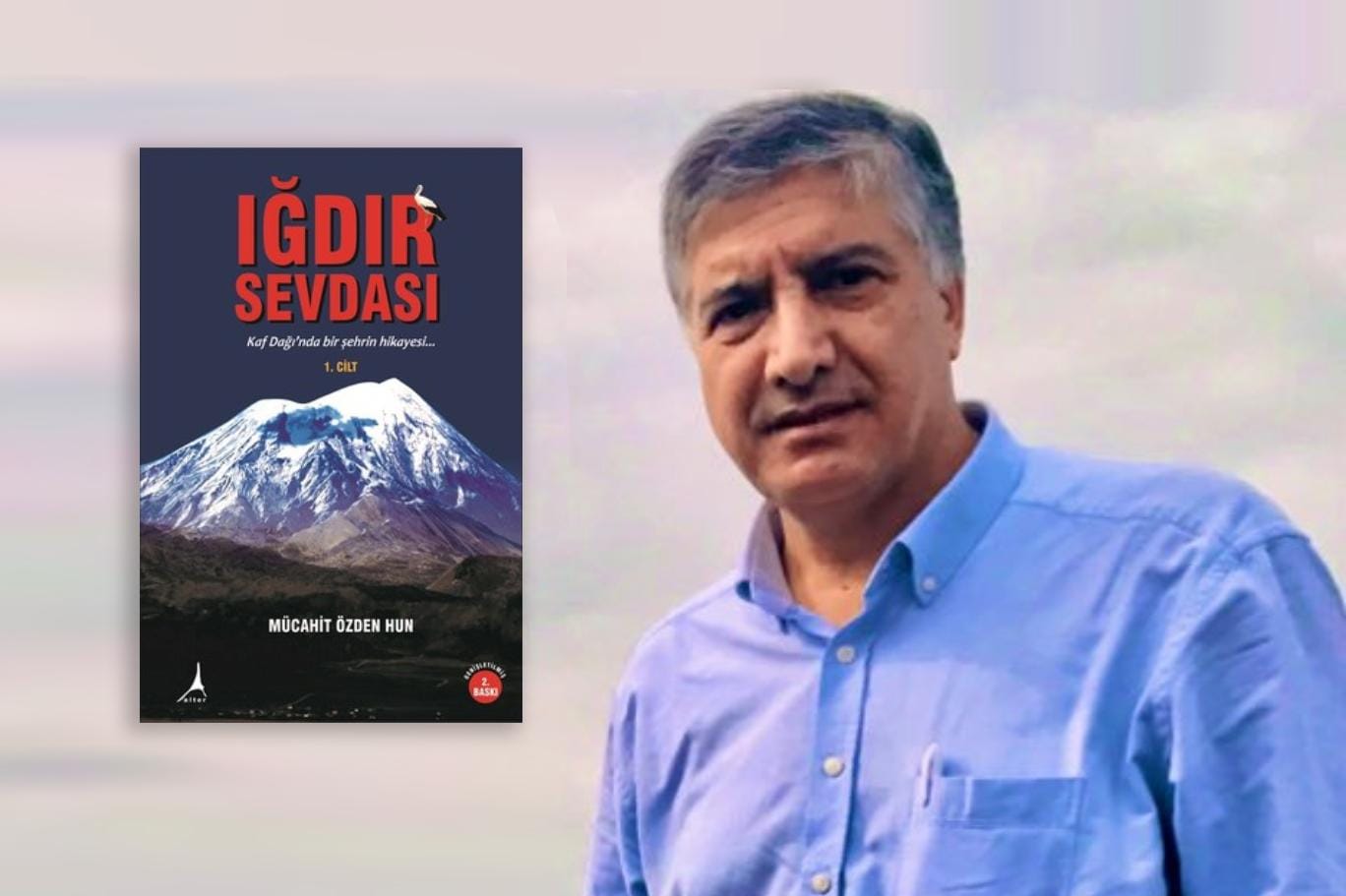
Collage: Independent Turkish
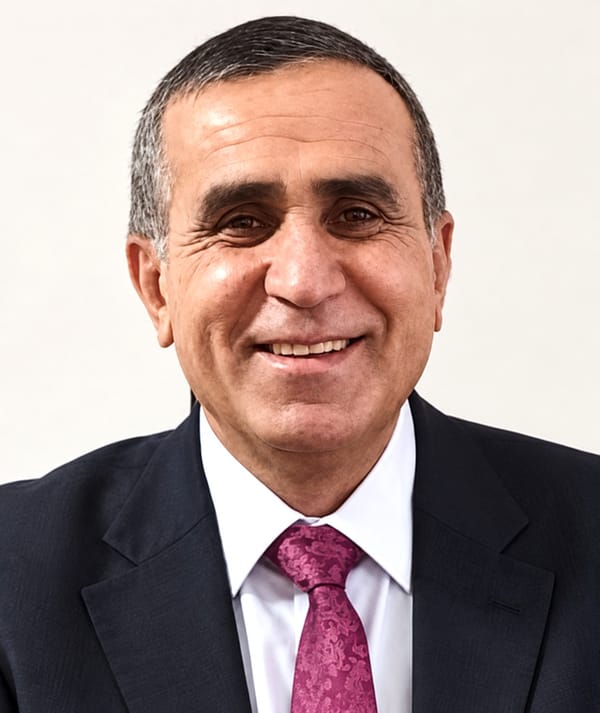
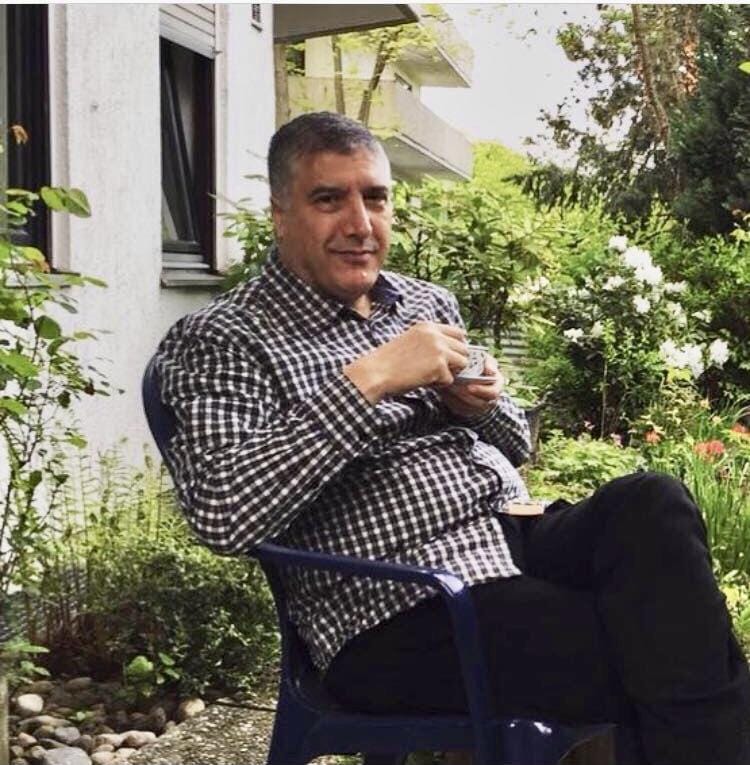
Mücahit Özden Hun, born in Iğdır in 1958, is a writer of the younger generation. He graduated from the Electrical Engineering Faculty of Istanbul Technical University. He worked as a communication and IT manager in many local and foreign (such as Belgium, France) companies.
He completed equivalency and political economy certificate programs in Electrical Engineering at Sorbonne and Paris XI Universities. He received the French Government's "Special Mission" award.
He earned an MBA in Finance from Wharton Business School at the University of Pennsylvania in the USA. He pursued a two-year doctoral and economics program at the University of Freiburg in Germany.
He consulted for various companies. He completed his doctorate in economics at Bishkek University in Kyrgyzstan. He worked as an English editor/translator in different organizations. He served as an instructor at the Turkish-American Association.
Mücahit Hun, who knows about 10 languages, has written 26 books. Most of his works concern events (such as war, ethnic conflict, rebellion, massacre, migration, forced displacement, exile, longing, love-passion) in the border regions of Azerbaijan, Armenia, Georgia, Iğdır, Kars, Ağrı, and Iran.
On the back cover of Mücahit Hun's book, "Aras Aras," we read the following:
At the beginning of the twentieth century, Trans-Caucasia was a region where different religions were practiced and different languages were spoken by Azeris, Armenians, Georgians, Kurds, and many others. With the mystery of the Aras and Kura rivers, it was as magnificent and ostentatious as a colorful Tabriz carpet woven intricately.
But suddenly everything changed. It was as if the fire stolen by Prometheus from the gods had fallen into the heart of this unparalleled beauty. The ethnic and political balances, painstakingly woven, were overturned.
On one side, the Ottoman, Russian, and Iranian empires were drawing their last breath; on the other, the nation-state ideal born with the French Revolution, which seductively exploited the ethnic sentiments of peoples with diabolical skill, and finally, the birth pangs of socialism.
The enthusiastic excitement in the hearts of ethnic nationalists rushing to establish their own states. Innocent loves drowned in a spiral of delirium where logic ceased to exist, and the struggle for life of ordinary people…
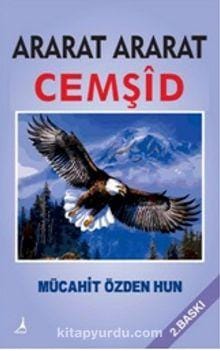
The following sentence on the back cover of the fictional-documentary novel "Ararat Ararat: Cemşid" (where Ararat is the name of the fictional hero in the book), which is now in its second edition, is quite striking:
Kurdistan… For some, it evokes disgust, fear, primitivism, betrayal, empty dreams, and unnecessary stubbornness… For others, it is roots, history, ancestors, revenge, resistance, identity, and an ownerless homeland in their hearts.
The Kurdish people... They breathe with difficulty under the burden of the vast heritage bequeathed to them by centuries. Even dreams are shattered. Peace, happiness, and love are still far away... The only feeling blossoming in their hearts is rebellion...
Idealism, pure spirit, sacrifice, courage, economic gain, political ambition, betrayal, revenge, apostasy, cowardice, emotional exploitation; all intertwined, a Gordian knot. There is no Alexander the Great to untie the knot, nor a Zaloğlu Rüstem to stand firm for democracy…
And Ararat (the fictional hero in the novel) pleaded to the sky: Oh, Almighty God! Wash away this centuries-old pain and blood with your holy water and bring it to an end…
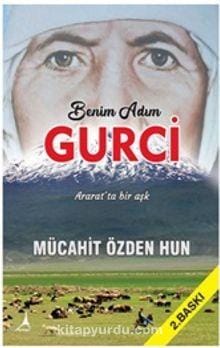
On the back cover of the novel titled "Benim Adım Gurci" (My Name is Gurci), which deals with a love story in the Mount Ağrı region, we see tribal customs:
In Kurdish, "eşîr" means tribe, clan, or sept… The rule is unchanging. People gather around the leader, woven together by blood ties. As a whole, they brave the difficulties of nature and social life…
A tribe is a living and dynamic social entity. Important events that they experience are specially narrated orally from generation to generation. They become epic. This adds strength and meaning to the tribal identity.
The ninety-year-old female protagonist of the novel was most saddened by the departure of beautiful and brave people among them:
'Only another beauty can destroy a beauty. I never forgot my past. I always lived with it, because a beauty that could make me forget it has not yet emerged…'
Kurds and Turks living in provinces other than Ağrı, Iğdır, Kars, and Ardahan are not sufficiently aware of Trans-Caucasian events.
Most of the time, they have been content with some distorted, rote information from official sources that are often unrealistic. This is because the provinces of Kars and Ardahan remained under Russian rule for approximately 40 years between 1877-1878 and 1917.
Iğdır, on the other hand, was under Tsarist control between 1828-1917 and within the borders of the Erivan Khanate during the 1747-1828 period. In a sense, it was not affiliated with the Ottoman Empire for 170 years.
Therefore, Iğdır developed a unique social fabric, different from Kars and Ardahan; it later felt a sense of alienation from the Republic of Turkey, to whose borders it was added.
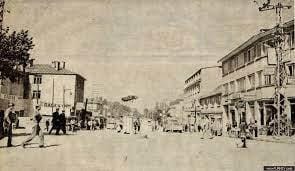
This is why the interview with local intellectual Mücahit Hun is important. Let's take a look:
- In a conversation in the early 2000s, Tarhan Erdem, former CHP Secretary-General, politician, and journalist-writer, spoke highly of your late father, Mecit Hun. Your father, one of Iğdır's CHP figures, was also an influential political personality and a renowned community leader who published a local newspaper. Could you tell us about your tribe and family so that readers can get to know them?
My father, Mecit Hun, was born in May 1925 in the yayla (mountain pasture) of Mount Ağrı. His father was Ahmed Şemo (Ehmedê Şemo), leader of the Gêloî tribe; his mother was Fatma Hanım, daughter of Ali Mirze Bey. He belonged to a family of eight children, including the only daughter born to his stepmother, Zeyno (Zeynep) Hanım.
I would like to briefly mention the Gêloî tribe: The Celalî tribe is divided into three main branches: Xelkî, Sakî, and Birxkî (Hesesorî). Gêloî is a sub-branch of the Xelkî tribe.
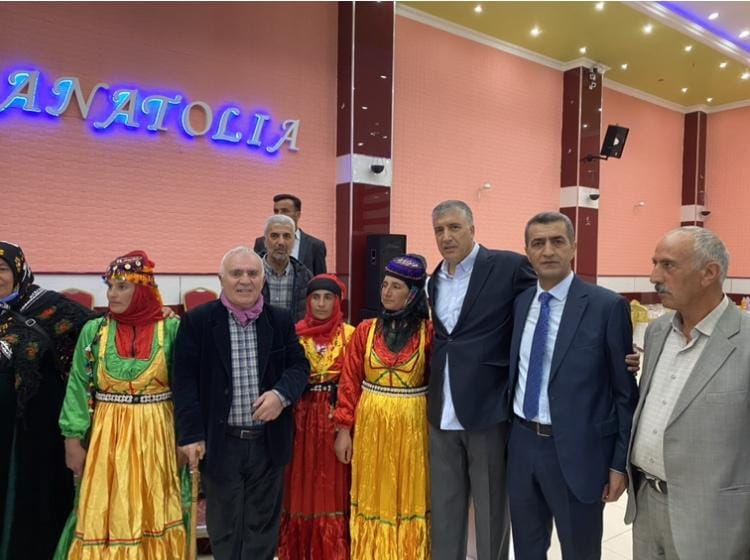
An event organized to end a long-standing feud between families belonging to the Geloî tribe. The original women's clothing belongs to the tribe members.
According to our recent research, the Gêloîs broke away from the Pinyanişî tribe in the Hakkâri region 300 years ago, first moving to Iranian Kurdistan and then settling in the Sürmeli Plain (Iğdır and its surroundings). Over time, they came to see themselves as part of the Celalî tribe.
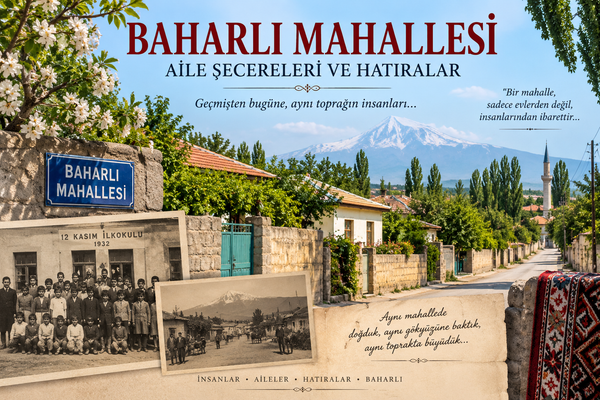
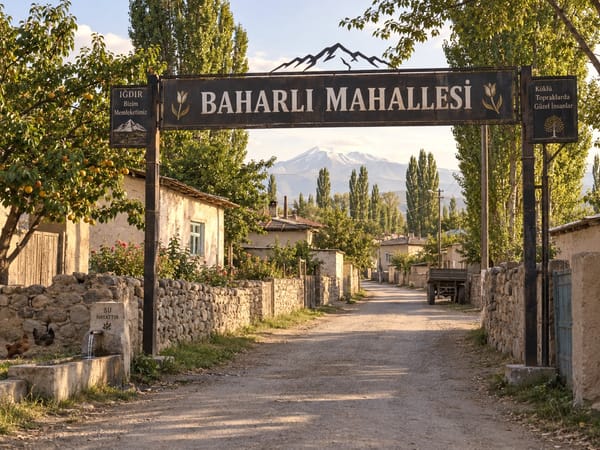
When the village of Adetli, where Mecit Hun's family resided, was declared a forbidden zone due to the Mount Ağrı Rebellion, our chief (grandfather) Ahmed Şemo settled in the Baharlı neighborhood of Iğdır (1930).
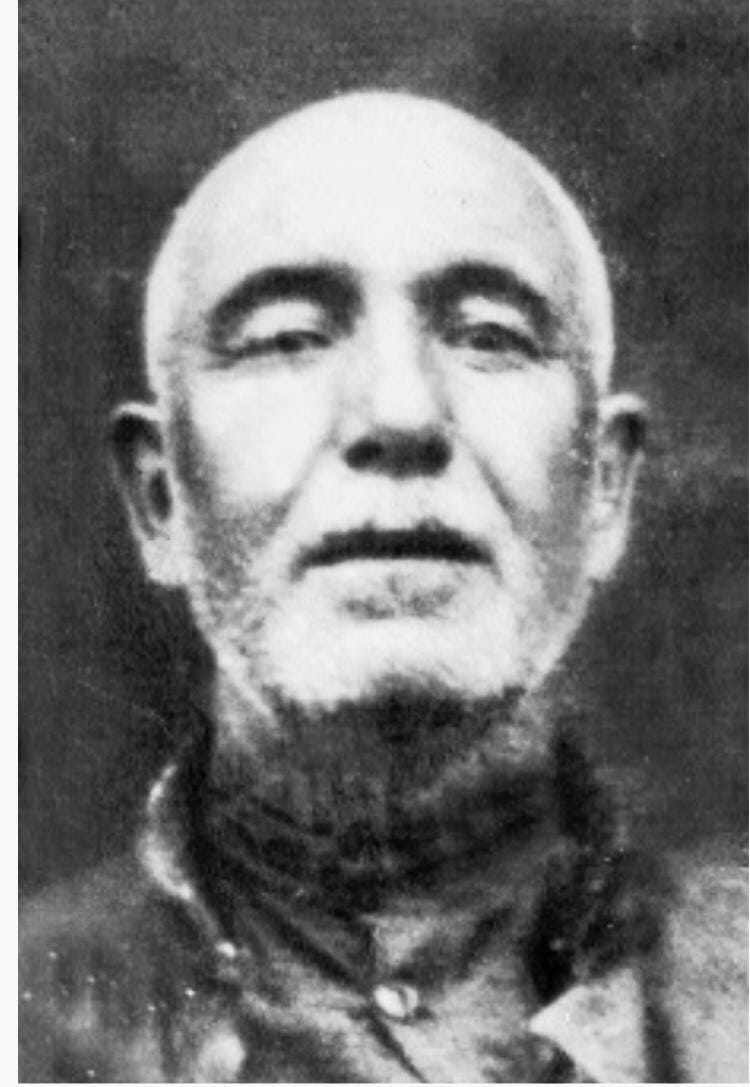
My father started primary school in 1932. In 1940, he finished Iğdır Middle School and continued to Erzurum High School. In those years, there was a rivalry between his father Ahmed Şemo and Hüsnü Bingöl, an inspector of MAH (Milli Emniyet Hizmeti, today's National Intelligence Organization - MİT).
Mecit Hun applied to Ankara Law Faculty. However, his criminal record, which arrived by telegram from Iğdır, stated:
Mecit Hun is the child of a Kurdish nationalist family. His admission to the faculty is not appropriate!
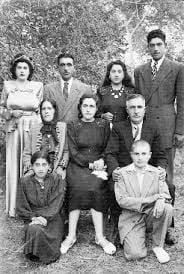
Here, I would like to open a parenthesis for my readers: Numan Efendi, a member of the Gêloî tribe and one of the secret pioneers (responsible for correspondence) of the Mount Ağrı Rebellion, was killed in Iğdır in the autumn of 1930. Among the people, there was a belief that the killer of Numan Efendi was the Azerbaijani gang leader İshak Bey.
Ultimately, two prominent Kurdish leaders of the period, Ahmed Şemo and Kerem Güneş, gave money, weapons, and horses to an uncle and nephew from Suveren village, and had İshak Bey killed in the city center of Ağrı.
The killer was caught and confessed everything. Ahmed Şemo and Kerem Güneş were arrested and thrown into a cell in Erzurum Prison. They were subsequently tried for execution. After bribing the judge, they were acquitted a year later and returned to Iğdır.
Precisely at that time (in the autumn of 1932), Hüsnü Bingöl, who was serving in military intelligence with the rank of Cavalry Major in Kars, resigned from his post and settled in Iğdır as a civilian, in the capacity of MAH President for the Eastern Anatolia Region. When Hüsnü Bingöl arrived in Iğdır, Ahmed Şemo and Kerem Güneş had been released.
Major Bingöl maintained a distance from the members of these two families until his death and tried to intimidate them whenever he found an opportunity. First, he confronted Ahmed Şemo.
He found an excuse and had a lawsuit filed against my grandfather Ahmed Şemo in Doğubayazıt. My grandfather frequently traveled by phaeton from Iğdır to Doğubayazıt, repeatedly crossing the arduous path known as Çille Pass, to attend court. During one such journey, he fell ill and passed away in the spring of 1944.
Since Kerem Güneş had passed away earlier, Hüsnü Bingöl this time confronted his brother Naci Güneş, arrested him on charges of espionage (!), and sent him to Erzurum for trial. N. Güneş, who was imprisoned there for 3 years, was released with the DP coming to power in 1950 and returned to Iğdır.
Hüsnü Bingöl established close friendly relations with all Kurdish tribes except the Ahmed Şemo and Güneş families, and utilized these groups in his counter-espionage network.
As mentioned above, due to the telegram sent by Hüsnü Bingöl, Mecit Hun returned to Iğdır without being able to register at the Faculty of Law. He worked as a substitute teacher at the middle school in the district. After his father's death, he joined the army.
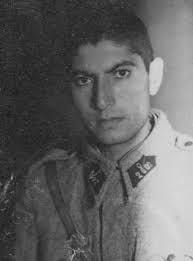
While Mecit Hun was serving in the military in Polatlı, Ankara, he gave mathematics lessons to President İsmet İnönü's two sons at Pembe Köşk.
While Mecit Hun was serving as an Artillery Cavalryman in Polatlı, the then President İsmet İnönü visited Polatlı. On that occasion, he sought someone to give mathematics lessons to his two sons (the late Erdal and Ömer İnönü).
Mecit Hun, who was known to be the top student of Erzurum High School, was assigned this task. Thus, he frequently went to Pembe Köşk to give mathematics lessons to the two brothers.
My father developed an interest in politics and journalism thanks to his friendship with Cengiz Ekinci (later a Member of Parliament), an Azerbaijani from Kars who published Iğdır's first newspaper.
In October 1952, he published the newspaper Dil (Language) using a mimeograph. Simultaneously, he launched Fırıldak (Pinwheel), the region's first and last humor newspaper. On February 16, 1953, together with Cezmi Öztekin, he published the newspaper Şarkın Dili (Language of the East) in Iğdır and Ağrı using a pedal system, and on July 30, 1954, he published the newspaper Pamukova in Iğdır.
Pamukova, in terms of content, was the first serious intellectual polemic newspaper of the East and Southeast. In those years, Mecit Hun was the first to use the concept of "Rule of Law," which is the foundation of Social Democratic thought.
Here I would like to make a note: President Celal Bayar commissioned a Kurdish Report in 1959. Mecit Hun was one of the 37 "Kurdish nationalist" leaders listed in this report. The report contained the following statement about Mecit Hun:
MECİT HUN is the son of AHMET ŞEMO, chief of the Geloi clan, an extreme Kurdish nationalist and owner of the newspaper 'Dil'.
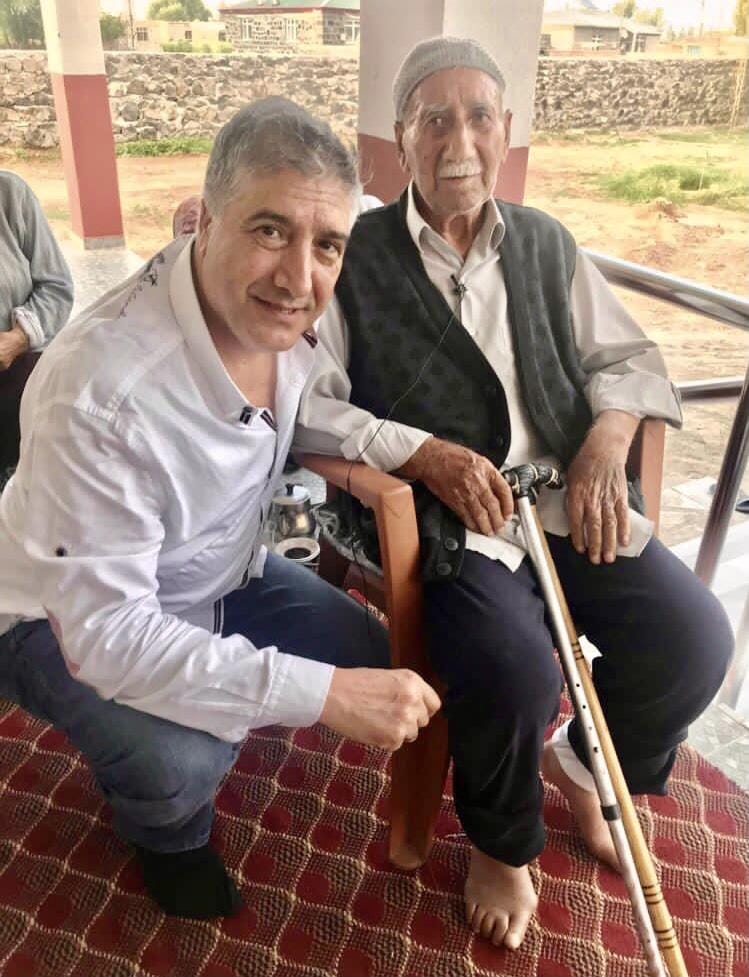
Since the three newspapers Hun later published were not mentioned in the report, the "Mecit Hun" entry in Celal Bayar's Kurdish Report must have been prepared in 1952 and remained in that form.
In 1952, Hüsnü Bingöl was still on duty in Iğdır. Preparing such reports was entirely Hüsnü Bingöl's responsibility. It is understood that Hüsnü Bingöl maintained his stance against Ahmed Şemo, and continued it against his son Mecit Hun throughout his tenure.
Hun, who served as the Iğdır District Chairman of the Millet Party between October 1950 and January 1953, resigned from his position when a closure case was filed against his party. On October 25, 1954, he joined the Democrat Party, but his active membership lasted only until December. After falling out with the party management and leaving, he continued his political struggle along the lines of "Independent Democrats."
In the local elections held in 1955, he ran on an independent list with Fazıl Baykal and served as Deputy Mayor.
In 1958, he joined the CHP as Deputy Chairman, with Musa Turan (uncle of the late Hacı Cihangir Turan) as District Chairman. In October 1959, he became the CHP Iğdır Provincial Chairman.
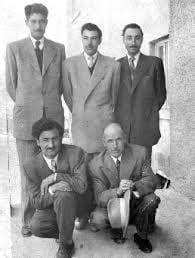
He continued this duty uninterrupted until 1980. During these years, Mecit Hun also served as a member of the Municipal Council.
In the 1977 General Elections, M. Hun, who was a candidate for Kars deputy from the CHP, lost in the primary election.
The 1980 Military Coup disrupted Mecit Hun's political career, like many other politicians, and his troubled years began. From this date until his death, he felt responsible for guiding politics from the outside and drawing the general framework, rather than actively engaging in it firsthand.
In the 1990s, with the lifting of the ban on the CHP, he took on the responsibility of organizing the party as the CHP Iğdır Provincial Chairman. However, the CHP General Headquarters dismissed Mecit Hun from the CHP Provincial Chairmanship as retaliation for his son (Kars Deputy Atila Hun) changing parties.
Mecit Hun not only held the chieftainship of the Gêloî tribe, to which he belonged, but also led a significant segment of society in Eastern Anatolia, without distinguishing between Kurds, Azeris, and Terekemes.
For those who don't know, I want to add a note: In the Southeast, tribal chieftainship passes from father to son, and the tribe is based on agriculture. The tribal chief can buy and sell villages.
Tribe members serve the ağa as "maraba" (tenant farmers). In Eastern Anatolia, such a situation does not exist. Tribes are semi-nomadic. They generally have little interest in agriculture. The elders of the tribe decide who will be the chief.
The same applies to Mecit Hun. His father passed away in the spring of 1944. He himself planned to reapply to the Faculty of Law in the autumn of the same year.
The leading figures of the tribe, called "rûspî" (white-bearded, wise man) in Kurdish, held a meeting; they asked Mecit Hun to take over the leadership of the tribe. If tribal leadership passed from father to son, his older brother Hamit Hun, who was 4 years older than Mecit Hun, would have been expected to be the tribal chief.
Mecit Hun moved to Ankara in 1992. He resided in Ankara until his death on January 29, 1998.
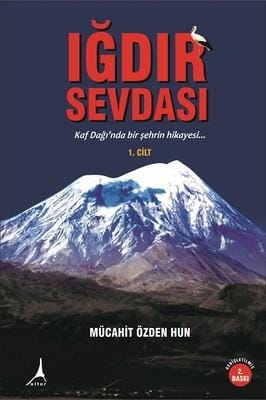
- You have written 26 books. Most of them are about political and social issues in Iğdır and its surroundings (Doğubayazıt, Ağrı, Kağızman, Kars, Yerevan, Baku, Nakhchivan, Iranian border cities). Your first work is the three-volume "Iğdır Sevdası" (Iğdır Love/Passion). What is this love for Iğdır, and where does it come from?
I completed primary and secondary school in Iğdır. Our neighbors were Terekeme and Azeri, and our relatives were Kurdish. In the summer, we would go to the yayla (mountain pasture). I had bonded with my neighborhood friends, and our souls had become one. When I went to Kabataş Boys' High School as a boarding student, Iğdır and my friends were always on my mind. This desire to return actually instilled "Iğdır Sevdası" in my heart and mind unknowingly during those years.
Due to my professional work abroad, I was away from my parents for many years. My father passed away in Ankara on January 29, 1998. When he was buried in Iğdır on January 30, and I arrived in Iğdır on January 31 via plane from Germany-Ankara-Kars, I shivered with a strange feeling.
Not being able to see my father off on his last journey, the changing streets of the city, my childhood friends scattered everywhere, new buildings, disappearing greenery, people engaged in a race for money and profit, all strengthened my longing and love for the Iğdır of the past.
When I returned to Ankara, my father's typewriter was on the table. He had started writing his memoirs. He had completed about 30 typewritten pages, and one page was left unfinished in the typewriter. My heart ached.
That day, I promised myself: "Hopefully, one day I will publish my father's memoirs as a book." Finally, in 2000, such an opportunity arose.
My father had made a list of personalities whose lives he planned to write about in order. Instead of publishing the 30 pages of memoirs, I decided to include the names on the list in the book, in accordance with my father's wishes. Some of those on the list had passed away, and most were scattered across Turkey and Europe. After two years of chasing and research with the discipline of a detective, I completed the book.
I conducted approximately 1000 interviews to understand both them and the events that took place in Iğdır and its vicinity.
Meanwhile, I unknowingly learned about my father's past (for example, I didn't know he had published a newspaper). On the other hand, I had gained very valuable information about Iğdır's recent history (Mount Ağrı Rebellion, Hüsnü Bingöl Period, etc.).
Only a great "love" can make a person do such arduous work. With this thought, I deemed it appropriate to name my book "IĞDIR SEVDASI" (Iğdır Love/Passion).
- You describe the social relations and portraits of both Kurdish and Azeri personalities in Iğdır city center and its region. While there are common points between Kurdish and Azeri communities, there are also antagonisms. What are the sources and reasons for these?
To answer this question properly, I must briefly provide some information about the history of Iğdır. Without going too far back, I would like to state that Iğdır (Sürmeli Plain) remained under the administration of Tsarist Russia between 1829 and 1917. By 1917, when the Russian Revolution took place, four ancient peoples lived intertwined in the region covering today's Iğdır province:
a- Sunni Kurds
b- Êzdî Kurds
c- Shiite Azeris
d- Armenians
During the Tsarist Russian period, the Ottoman-Russian border passed near the village known today as Suveren (formerly Orgof). For this reason, Iğdır and its surroundings served as an outpost for Tsarist Russia. Naturally, in addition to the four ancient peoples I mentioned above, a significant number of Russian soldiers and their families were also settled in Iğdır.
After the 1917 Russian Revolution, when Lenin withdrew the armies from the front, Russian soldiers and civilians in Iğdır left Iğdır. Only the four ancient peoples remained.
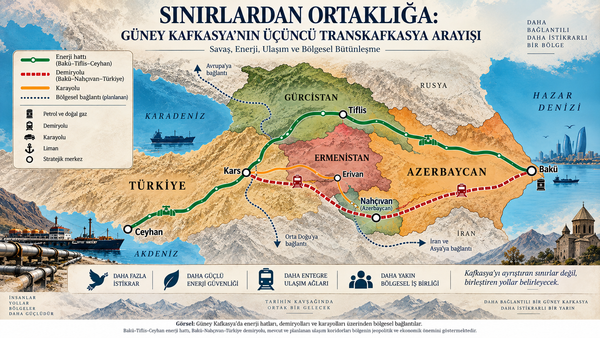
On April 22, 1918, the Trans-Caucasia Republic, encompassing Armenia, Azerbaijan, and Georgia, was established. During this period, the Iğdır region was calm. The Russians had completely withdrawn. There was no sign of hostility yet among the remaining four ancient peoples.
The Trans-Caucasia Republic collapsed on May 26, 1918, and was replaced by the Republics of Armenia, Azerbaijan, and Georgia. The Iğdır region remained within the borders of the Republic of Armenia, established on May 28, 1918.
A year passed. During this period, there was no hostility or conflict in the Iğdır region. The Republic of Armenia went to general elections in June 1919. The Muslim population (Sunni Kurds and Azeris) did not vote.
This situation cast a shadow over the legitimacy of the Republic of Armenia. The established Armenian Government took action to remove the Muslim population from the Sürmeli (Iğdır plain and its surroundings) region.
In August 1919, the most painful days in Iğdır's history began. Armenian forces attacked the Kurdish village of Kucak, massacring over 300 inhabitants. They then attacked Azeri and Kurdish villages located in the plain. They committed genocide in Hakmehmet, Oba, Küllük, and other Azeri villages.
The Brukî and Redkî tribes, whose villages were located in the plain, were also forced to migrate and seek refuge in the Ottoman Empire. The Redkî tribe settled in Muş; the Brukî tribe settled in Van. Kurdish tribes whose villages were in the mountainous region and Azeris in Tuzluca resisted the Armenian forces. When the Êzdî Kurds sided with the Armenians,
a civil war broke out in the Sürmeli plain. At that time, no similar civil war had occurred anywhere in Ottoman territory. Great powers like Russia, the Ottoman Empire, and Britain had no military buildup or presence in the Iğdır region.
The flight of a large part of the Azeri population to Iranian Azerbaijan due to fear of massacre is known among the people as "Kaça-Kaç/Kırxın/Vayi Vurum" (in Kurdish, breve ha breve or reva fıllan û bisilmanan). The people, enduring pain and tragic events, sought refuge in Iranian Azerbaijan but were not well received there either.
Some of the population took refuge in the village of Melekli in Iğdır. The population of Melekli quickly exceeded 3000 people. Armenian forces besieged the village. When the village elder Hacı Ali Ekber (Tufan) Bey could not get the help he requested from the Ottomans, he applied to the Hamidiye Regiments in the Doğubayazıt Sanjak.
Bıro Heskî Tellî (İbrahim/Brahim Ağa), serving in the Hamidiye Regiment under the command of Sheikh İbrahim Bey, rescued Melekli from the siege with the cavalry unit he brought with him and helped the civilian population go to Iranian Azerbaijan.
The civil war in Iğdır ended in favor of the Muslim population in November 1920. Iğdır was included within the borders of the Grand National Assembly (BMM). This time, Iğdır received a large migration of wealthy Azeri people fleeing from Azeri villages in Soviet Armenia and from the Soviet regime in Azerbaijan.
Azeris, crossing the Aras River with great difficulty, settled in Iğdır. While the ancient Azeris in Iğdır defined themselves as "Bu taylı" (the settled population living on this side/passage); they called the Azeris who came across the Aras as "O taylı" (the immigrant group coming from the other side/passage).
I must immediately add that there was a friendship established through the "kirvelik" (godparent-like) bond between the "Bu taylı," meaning the ancient Azeris settled in the Iğdır region, and the Kurds. They even went to the yayla (mountain pasture) together.
Economically, they also played complementary roles. Since Azeris engaged in agriculture and Kurds in animal husbandry, there was an exchange between the two groups in terms of product diversity.
While there was no hostility between the ancient Azeris and Kurds settled in the Sürmeli plain, the newly arrived "O taylı" (immigrants from Armenia and Azerbaijan), generally wealthy Azeris, upset the social balance in Iğdır. Since the "O taylı" Azeris embraced Turanism and Azeri nationalism wholeheartedly, a tripartite structure emerged in Iğdır.
In the 1950/54/57 General Elections, Baku-born Azeri Samet Ağaoğlu became a Minister from the DP. Abbas Çetin, born in Çobankere, a village now in Armenia, and his sister Tezer Taşkıran, born in Shusha, gathered politicians around them in the region due to being "O taylı" (immigrants from the other side).
Thus, the concept of "Azerbaijani Diaspora" emerged. Soon after, with Mehmet Emin Resulzade, who was expelled from Turkey by Atatürk, returning to Turkey, this movement gained strength by forming associations.
The ancient settled Azeris resisted the economic and political strengthening of the "O taylı" (expatriate/immigrant) Azeris, but when their leader Nurettin Kirman was killed in 1957, the "O taylı" Azeris took control in Iğdır.
This situation also marked the beginning of what is known as the "Kurdish-Azeri conflict." In the 1970s, when right-left clashes occurred, the "O taylı" and "Bu taylı" Azeris merged (or rather, the "Bu taylı" Azeris accepted the superiority of the "O taylı," meaning immigrant Azeris, and assimilated into them). Thus, a new bipolar structure emerged.
Unfortunately, the Azeri-Kurdish polarization continues to be effective and present in Iğdır.
***In the second part of the article, the controversial "Iğdır National Republic" issue, the conflict between Armenian committees and Azeri-Kurdish regiments, and the recent political history of Iğdır will be discussed.
*The ideas expressed in this article belong to the author and do not necessarily reflect the editorial policy of Independent Turkish.
© The IndependentturkishMORE DETAILS ABOUT:MÜCAHİT ÖZDEN HUNIĞDIR
https://www.indyturk.com/node/474486/t%C3%BCrki%CC%87yeden-sesler/ara%C5%9Ft%C4%B1rmac%C4%B1-m%C3%BCcahit-hun-i%C4%9Fd%C4%B1r-sevdas%C4%B1n%C4%B1n-arkas%C4%B1nda-yatan-serhat