A Week's Interview with Akay Hoca
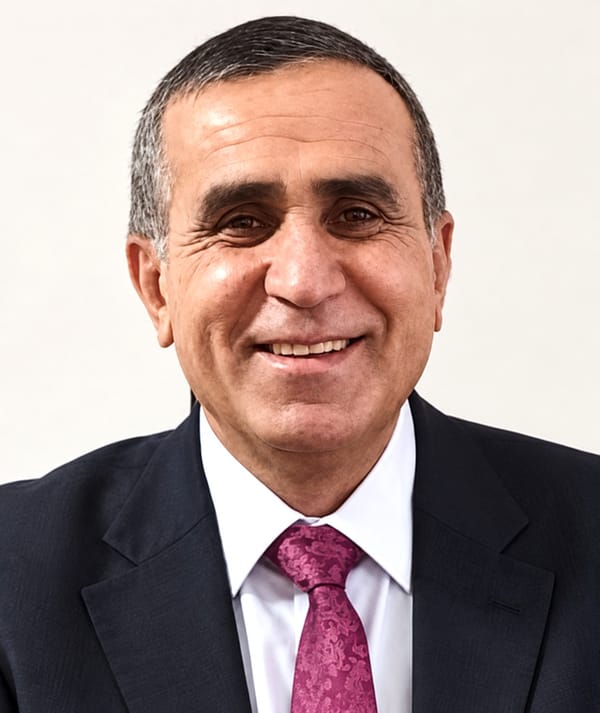
This interview introduces Akay Aktaş, a prominent figure from Iğdır, chronicling his life from a passionate youth during revolutionary days to a respected teacher and veteran journalist.
Dear Readers!
In today's article, I want to introduce you to a significant figure from Iğdır, a passionate young man from revolutionary days, a teacher who educated hundreds of students, and finally, a veteran journalist. If you ask how I first met Akay Hoca, I must admit it happened under circumstances I wouldn't have preferred. In 1998, I came to Iğdır from America due to my father's passing. A newspaper clipping was being passed around in our condolence house. The name of the journalist who wrote the article was Akay Aktaş. Akay Hoca, whose name I first became familiar with then, had written a realistic article about my father, imbued with the weight of grief from his death. When I asked who he was, they pointed to a gentleman in the crowd. This way, I had the chance for a one-sided acquaintance. I folded the newspaper and put it in my pocket. When I returned to Ankara, I preserved it among my father's writings. When I published my book titled "Iğdır Sevdası" in 2002, I included this valuable article. Years passed. In 2007, when I ran as an independent social democrat candidate, I had a brief, impromptu meeting with him. Again, years passed. This time, I became a columnist for the online newspaper "IĞDIR’A BAKIŞ," owned by Akay Hoca. Since then, we have had hundreds of phone calls and interviews. Of course, our face-to-face conversations over tea whenever I visited Iğdır were never lacking.
Akay Hoca is an important personality who has won all our hearts with his intellectual accumulation, interest in politics, firm stance against social injustices, outspokenness, and warm friendship. The purpose of this interview is to introduce Akay Hoca to you in all his aspects, to share with you the story of the rise of a valuable individual.
QUESTION_1: Dear Hoca! First, could you please provide information about your family? I would appreciate it if you could include your family tree and extended family members.
My family roots trace back to Iravan (Yerevan). My late grandfather was a respected merchant known among the people as Hoca Molla Mehemmed Ahundzade. He married Seyran Hanım, daughter of Abbas, from the notables of Iravan. They had 7 sons and one daughter.
In those years, cotton was cultivated on a very large scale in Iğdır. Due to the cotton trade, my grandfather often visited Iğdır. One day, he made his second marriage to Urgiye (Rukiye) Hanım, daughter of İsa Bey from the Sultanabat Beys. Rukiye Hanım gave birth to two sons and one daughter. Their names are as follows: Seriye-Asker-Yılmaz. My grandfather, to be honest, did not sit idle; this time, he made his third marriage to Zehra Hanım from Küllük village. The main reason for this marriage was Rukiye Hanım's desire to reside in Iravan. After all, she was a Bey's daughter. She wanted to live in a big city like Iravan and prioritize her children's education.
My father, Asker, had the opportunity to go to school in Iravan. He finished the Iravan Rüştiye (junior high school). My grandfather also had one son and two daughters from Zehra Hanım, whom he married from Küllük village. Their names are as follows: Şamil Yaşar (who continued his profession as a greengrocer), Şefika, and Hediye. Şefika Hanım is the paternal grandmother of Gündüz Güneş Bey, a beloved figure in Iğdır, who is a judge, lawyer, and politician.
QUESTION_2: As you know, from 1920 onwards, Iravan and Iğdır were separated by the Aras River forming the border, and families were torn apart. What was the impact of this event on your family?
To be honest, answering this question is difficult for me. When emotions, longing, and separations get involved, one's heart tightens, and one's throat chokes up. In those years, in Iravan, which remained within the borders of the Soviet Union, Azeri mahnılar (songs) would be broadcast for about half an hour every day at three in the afternoon. I remember very well that my late father, between 1955 and 1965, would impatiently sit by the Iravan radio every day, waiting for three o'clock. What he loved most was silently listening to the mahnılar of the famous composer Şefika Ahundova, who had remained in that region (Iravan). He would become emotional involuntarily, almost crying. The longing for his sister and family would weigh on his heart, filling him with yearning and nostalgia.
In the early years of the Soviet Union, a population exchange agreement was signed between Turkey and the Soviet Union. My father's mother and relatives, being from this side (Iğdır) and unable to endure the pressures of the Soviet regime, chose to come to Turkey. The state provided them with a place of settlement. My family's first choice was to settle in the city center and Sultanabat village. Soon after, my family bought three houses. My family settled in one, and they rented out the other two.
QUESTION_3: What did your father do after coming to Iğdır?
My father was educated in Iravan. In that period, being a junior high school graduate was considered a significant achievement. My father, who was single, served as a Chief Watchman between 1942 and 1944. In those years, the Iğdır Police Station was on Kars Street, opposite today's BP station. Coincidentally, my mother's family home was directly opposite the Police Station, so it wasn't difficult for my father and mother to meet. My father married Gülsüm Bentürk Hanım. The Bentürk family belonged to the same tribe as the Gulem-Hüseyin Çağlar brothers. My mother started primary school but dropped out in the fourth grade. In those years, since girls' education was not prioritized, no one was bothered by my mother leaving school unfinished.
My father knew Armenian and Russian very well, in addition to Turkish. In those years, for many reasons, Soviet and Turkish officials would meet to discuss various issues and try to find solutions. On such days, my father would also attend the Russian-Armenian protocol meetings in Karakale and act as an interpreter in three languages.
My uncle Yılmaz Aktaş was a high school graduate. For a short period, he worked as a teacher in Iğdır. Later, he started working as a customs enforcement officer.
My maternal grandmother's family was massacred by Armenians during the "Kaça-Kaç" years (flight and escape), and no one survived. This trauma was so deep that no one in the house would mention my grandmother's family or their names to avoid recalling the painful memories.
Both my maternal and paternal grandmothers, having grown up in Iravan, had acquired urban culture; they were serious in their demeanor and speech, knew proper etiquette, and were industrious women. Their culinary culture, as well as their repertoire of tapmaca (riddles) and nağıl (folktales), was quite extensive. Especially my paternal grandmother, Rukiye Hanım, used to treat patients with various homemade remedies. In those days when there were no pharmacies, such homemade medicines were valued, and those who made them were respected in society.
We are four siblings, three boys and one girl. In order of age: Akay, Gökay, Moray, and Müberra. Considering the meanings of the names my father gave his children, it is possible to understand that he was a man of culture.
QUESTION_4: Could you tell us a little about yourself?
I was born in Iğdır on June 30, 1947. There was once a house belonging to our family where today's MERİNOS building stands. That's where I was born. My childhood was comfortable and peaceful. My father had friendly relations with the district's well-known bureaucrats and politicians. Everyone knew and loved my father. This made my father a respected and authoritative figure within the family. When we saw our father, we would become quiet, and an atmosphere of seriousness would naturally settle in the house. As the first child in the family, my relatives doted on me, sometimes spoiling me unnecessarily. As a natural result of being spoiled and valued, I grew up as a child who constantly read books, even showing off my knowledge when necessary, appearing cultured but not understanding normal household chores, unable to do anything with my hands, always relying on others, and being whiny.
My father, with the habit of being educated, constantly bought books, would retreat to a corner of the house, and spend most of his time turning book pages. One wall of our house was a huge library. My father also always had newspapers like Cumhuriyet, Hürriyet, etc., and Akbaba magazine under his arm when he came home. To be honest, I grew up among these books and newspapers, with the smell of paper, without even realizing it.
One day, Ahmet Birdoğan from Erzurum, the Iğdır Population Officer, became our neighbor. His son, Nejat Birdoğan, was a literature teacher and also a respected folklorist. After becoming neighbors with Ahmet Birdoğan, our two families visited each other frequently. Nejat Hoca also had a considerable library. This situation turned into an opportunity for me; I started reading books far beyond my age and education level.

In short, my childhood was spent in an aristocratic and cultured family environment. I lived my childhood to the fullest, easily getting almost everything I wanted, and my life was cherished. I was among the first in the district to wear cloth trousers and dress shoes. Of course, I was full of swagger. We lived in one of the first houses in the district to have electricity, and we also had one of the first radios in the district.
The most unfortunate aspect of my childhood years was a psychological trauma I experienced related to my mother. My mother had probably hired a wet nurse for me so that her body wouldn't be deformed. Of course, no one could foresee that my mother not breastfeeding her own baby would lead to a biological and psychological communication disorder later on. Years later, in the "Child's Motor Development" class at Gazi Education, I would understand the seriousness of the lack of love that not being breastfed by my mother had created in my soul. The feeling of being "rejected" by my mother must have permeated me, as in later years I struggled with youth problems such as oppression, torture, imprisonment, attacks, exile, and exclusion. When I added the pride of coming from a cultured and aristocratic family to this psychological disconnect, the roadmap for my future life would, in a sense, be determined automatically. Impulsiveness, quick decisions, and marital incompatibility would not leave me alone; I would, in a sense, struggle in a life full of ups and downs. If I tell you that I have been married four times, I might be able to explain the state of mind I want to describe to you better.
QUESTION_5: Who were your family friends?
In those years, the wealthy mostly came from families involved in agriculture and animal husbandry. My father didn't need to endure such hardship. My father used to sell clotted cream in front of the pharmacy known as "Aliye Hanım's Pharmacy" in those years. With the addition of two house rents, my father had no financial difficulties. Besides, in those years, let alone luxury or overly comfortable living, ordinary consumer goods were also quite rare. My father and your father, Mecit Hun, were close friends. Our families would visit each other, and my mother, so to speak, socialized with the cream of the crop in the district. Interestingly, the friendship between my father and Mecit Hun continued among their children in later years. Among other family friends, I can mention valuable names such as Kurban Doğan, Oktay Yeşilyurt, Yüksel-Aysel Ersoy, Cengiz Candemir-Vural Avşar, Koray Sonyol.
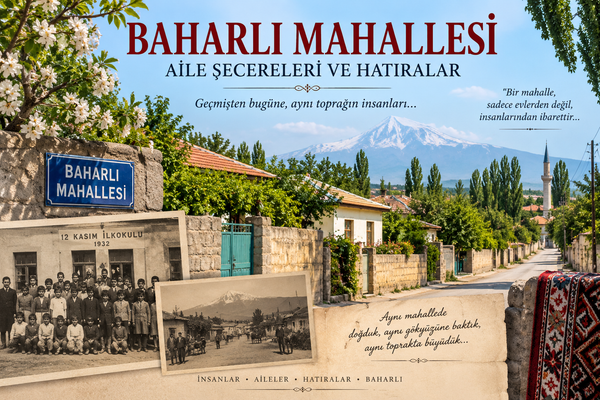
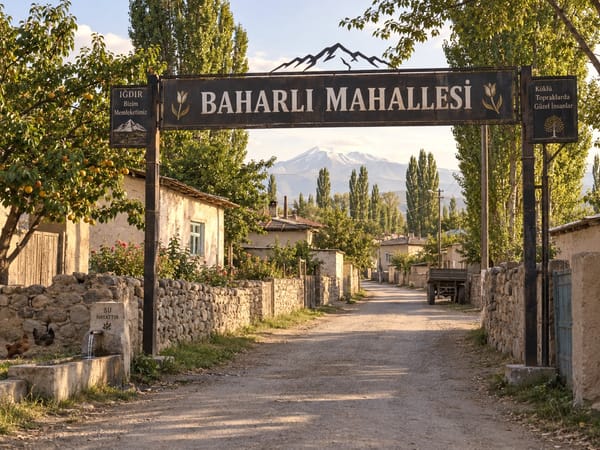
QUESTION_6: Hoca, between 1965-76, we had a patisserie called Piknik Salon. I'll never forget one day when your late father came to our house in Baharlı Neighborhood and taught my mother how to make clotted cream. He didn't forget to warn my mother, 'Don't ever tell anyone our secret.' My mother kept her word; despite much pleading, she didn't even tell her sister the secret of making clotted cream. That's when I understood that making clotted cream was not a task to be taken lightly. Where did your father learn to make clotted cream?
Gulem Çağlar's nickname is Kaymakçı Gulem (Gulem the Clotted Cream Maker). Their mother, Nazlı Çağlar, is my mother's aunt (father's sister). Gulem Çağlar's first wife, Aunt Ece, was a true Iravan lady. Since my maternal grandmother was also from Iravan, there was a friendship and closeness between them. They knew very well how to make clotted cream. My father spent a significant part of his time with my maternal grandmother and her relatives. He took advantage of this opportunity to learn the intricacies of making clotted cream and carefully observed the process. In the summer months, buffaloes would be taken to the pasture in herds, and after returning in the evening and lying down to ruminate, they would be given cottonseed. Cottonseed would improve the quality of buffalo milk. The milk would be placed in a large zinc basin, cooked to the right consistency, and then kept at a suitable low temperature with burnt sheep kermes for a long time, wrapped in cloth. With the gentle but prolonged effect of the heat, the fat of the milk would rise to the top, but the duration and timing had to be adjusted carefully. Otherwise, the clotted cream could burn and turn yellow or remain raw. Even removing the clotted cream from the basin with a skimmer without damaging its integrity required skill. Besides this, talent and habit were other factors affecting the quality of the clotted cream.
QUESTION_7: Who were the regulars at your father's clotted cream stall?
As I mentioned before, my father set up his stall and sold clotted cream in front of Aliye Hanım's Pharmacy, right next to Mehmet Esed Bey's coffeehouse. The prominent figures of Iğdır would come there and enjoy their breakfast. In fact, my father's stall was also a meeting place. While enjoying my father's delicious clotted cream, they would discuss the day's political situation in the newspaper, and also tell jokes from Akbaba magazine and laugh. Occasionally, I would stand close to them and eavesdrop on their conversations. Among the regulars, the first names that come to mind were Mecit Hun, Cihangir Turan, Aziz Güney, Paşa Turan, Mehmet Gülten, Uzun Mahmut... well-known figures of the district.
QUESTION_8: Where did you start primary school? Who were your teachers?
I attended primary school at 12 Kasım. I was a successful student. I finished primary school with an honor certificate. In those years, there was a different practice. Those who graduated from primary school were also subjected to final exams by a special committee of teachers. In short, it was not possible to finish primary school effortlessly as it is today. Therefore, even finishing primary school was met with respect and had a certain value in terms of cultural and knowledge level.
My primary school teacher was Emine Hanım. Since I learned to read and write before starting school, my teacher couldn't pay much attention to me. This led to a mismatch in the classroom. They found a solution by having me skip the second grade and start from the third grade. This situation also caused trauma for me. It was like the shortness of breath you feel when you climb stairs two or three steps at a time instead of one by one.
In the fourth grade, my teacher was İsmet Demirel, and in the fifth grade, it was Tevfik Karasu. I finished primary school as the top student.
QUESTION_9: Where did you continue your secondary education? Were you a good student?
In those years, the Iğdır Secondary School building was located where the current Telekom building stands and the building opposite it. I was one of the best in the class. My teachers Nizamettin Onk, Turan Atasever, and Nejat Birdoğan directed me more towards Culture, Turkish, History, Geography, and Civics lessons. Due to my love for reading, I enjoyed these lessons and increased my knowledge.
QUESTION_10: What kind of games did you play with the neighborhood children? Did you have any interesting memories?
It was truly a great pleasure to get together with the neighborhood children. I was very good at playing with a spinning top. I had a spinning top made of boxwood. We would tightly wrap the string around the top and throw it to make it spin around itself. Whoever's top spun longer would be the winner. The quality of the string used to spin the top was very important. My aunt (my father's sister) Seriye Yeşilçimen used to make this string, which we called "kaytan." I was also quite successful in playing with knuckle bones and wooden swords. Unbeknownst to me, I had acquired such a talent that when I voluntarily tried it with my friends who were taking fencing lessons in the Physical Education Department in Ankara, they were quite surprised by my success. I was unsuccessful at foil (a type of fencing game), but they had a very hard time defeating me in swordplay.
When winter came, our chances of playing outside decreased. We would spend time indoors playing five stones, cards, and checkers. No one could beat me. I must proudly admit that I still maintain this skill.
One day, my cousin (aunt's son) and cousin (aunt's daughter) and I were invited to a relative's house to eat jam. As we were walking down the street, two dogs started chasing us. I had a limp. My cousin and cousin quickly ran away. I had only one option left. I crouched down and held my breath as if playing dead. I had either heard this from adults or read it somewhere. The dogs circled around me. They eventually left in despair. Whenever I remember that incident, I still feel as if my knees are giving way.
QUESTION_11: Was your limp congenital? Did you receive treatment?
As a child, I had a partial and mild case of polio. Unfortunately, there were no treatment options in those years. In later years, I didn't prioritize treatment. My limp remained with me as my alameti farikam, my distinguishing feature.
QUESTION_12: I know you're a fan of Texas and Tom Mix, like me. When did you first encounter these books?
I think I encountered these books in primary school, in the 3rd or 4th grade. It must have been 1956. In Iğdır, there was a bookstore belonging to Yetim Hüseyin and his son Hamit. They sold these kinds of comic books there. Hamit was engaged to my aunt's (father's sister) daughter, Sevim. For this reason, I was considered to have an advantage. That's how I first encountered comic books like Texas-Pecos Bill-Kinova and Tom Mix. I still enjoy reading them to this day. Moreover, I have downloaded and archived all issues of these books from the internet. Let me remind you that my archive is open to anyone who is curious.
(Dear readers! Akay Hoca generously opened his archive to me as well. I read the comic books loaded on the hard drive with pleasure and full of childhood memories whenever I feel bored. Mücahit)
QUESTION_13: Where did you continue high school? Were you involved in political activities during your high school years?
When I graduated from junior high, there was no high school in Iğdır. Upon the recommendation of my teachers, I enrolled in Istanbul Kabataş Erkek Lisesi (Kabataş Boys' High School) in the 1961-62 academic year. Imagine a 14-year-old child going from one end of Turkey, Iğdır, to the other end, Istanbul, to attend high school! My uncle was a retired civil servant in Istanbul and owned a drapery shop in Nişantaşı. I had hoped he would help me and be there for me to overcome the psychological trauma of being away from my family. Loneliness and longing for family prevailed, and I returned to Iğdır without finishing Kabataş Erkek Lises, enrolling in Kars Alpaslan Lises. Since the school had a dormitory, I didn't have the problem of renting a house.
QUESTION_14: When did you truly get acquainted with politics?
During my high school years, political activities were not very widespread, or almost non-existent. Hayati Tuncer (son of İbat Bey from the Sultanabat Beys), originally from Iğdır but living in Kars and earning his living as a tradesman, was my relative. He became my guardian in high school. In later years, he took on the role of Provincial Chairman of TİP (Workers' Party of Turkey) in Kars. It was through Hayati Bey that I first had the chance to encounter LEFT-wing thought and ideology.
In the 1965 parliamentary elections, Hayati Tuncer was the Kars Provincial Chairman of TİP. We worked politically to ensure that TİP's Kars candidate, Adil Kurter, won. Adil Kurter was elected as a Member of Parliament thanks to the National Remainder system applied in those years. In later years, together with Halit Güneş, Ahmet Develi, Rahim Bağcı, and Atila Hun, we distributed magazines and leaflets. Of course, our political work had a price: from time to time, we were taken to the Police Headquarters and either reprimanded or threatened.
QUESTION_15: Where did you go to university? Were there student protests? Which political view did you feel close to?
Our house was damaged in the 1962 Iğdır earthquake. My family faced economic difficulties. I graduated from Kars Alpaslan High School in 1964, but due to an unfortunate incident, I had to interrupt my education. My father's death deeply shook me, as it did the entire family. I temporarily worked as a substitute teacher or took on jobs like timekeeper at DSİ (State Hydraulic Works).
After a long break, in 1968, I ranked third in the Turkish department of Trabzon Fatih Education Institute, but neither Trabzon nor the school environment opened my soul. I felt like I was suffocating. I took a medical leave and transferred to Ankara Gazi Education Institute.
Gazi Education was perfect for me. In those years, the activities of the Federation of Idea Clubs were quite popular in schools. Doğu Perinçek was the General Chairman. For some reason, even in those years, I didn't feel a personal closeness to Doğu Perinçek. In the congress held in 1969, we, as friends from the East, supported Ertuğrul Kürkçü. Ertuğrul Kürkçü won the presidency, and the name of the Federation of Idea Clubs was changed to DEV-GENÇ. As a member of the '68 generation, I want to say this: I have always been proud and honored to belong to this generation.
QUESTION_16: Were you ever arrested? How long were you detained? For what incident were you arrested?


With the intensification of student protests and the increase of Doğan Avcıoğlu's supporters in the army, the March 12 Memorandum, with its left-leaning facade, was issued. The government fell. A coalition supported by AP-CHP and the Güven Party was formed. Faruk Sükan, who had previously earned the nickname "Poisonous Detective," was appointed Minister of Interior. He did not delay in proving that he deserved the nickname "Poisonous Detective." The Nihat Erim government, formed after March 12, began a hunt for leftists and intellectuals. Young people and intellectuals were rounded up and crammed into prisons without interrogation, without evidence, without basis.
Israeli Consul General in Istanbul, Ephraim Elrom, was kidnapped by THKP-C leader Mahir Çayan and his friends on Monday, May 17, 1971. Çayan and his friends demanded the release of imprisoned revolutionary militants in exchange for Elrom's freedom. The government rejected this demand and, with Operation Sledgehammer, which went down in history, began rounding up university students who had been involved in actions at one time, calling it MAKABLE ŞAMİL (meaning retroactive effect), a legal absurdity. In Ankara alone, 8,000 university students were detained overnight. I was also caught in that frenzy. Thanks to the nationalist youth from Iğdır, they had informed on me and given my name. In prison, we could only sleep two or three people in shifts on one bed. We were released shortly after, without even having our statements taken.

QUESTION_17: When did you graduate from university? When did you start teaching?
I graduated in June 1971. On 30/06/1971 (which is also my birthday), I was assigned to Siirt Kurtalan for compulsory service. However, within a week or two, I was taken by police from Ankara and handed over to the Ankara Altındağ Martial Law Command. I was arrested by martial law and placed in Mamak Military Prison. The reason given was my participation in political actions as part of the Gazi Dev-Genç group and being an accomplice (responsible for complicity) in attempting to alter, change, and abolish the constitution. I was tried under Article 146/3 of the Penal Code. However, it took 15 months for our group to have its turn in court. We were all acquitted, but the time we spent in prison was a loss. The only good thing about what happened was that we had ample opportunity to read books in prison. We also had the chance to get to know famous people like Muzaffer Erdos and Professor Mümtaz Soysal up close.
We saw that dialectical materialism and socialism were not at all as written in books. Öner Yağcı (now writing for Cumhuriyet newspaper) from our group would often shout in the ward: "Uncle Muhsin, help!" Muhsin Batur was the Air Force Commander, and there was a perception that he was supposedly a social democrat. He was going to stage a coup and save us!
Mao's famous saying, "Imperialism is a paper tiger," was a hollow slogan uttered to agitate young people. We would slowly learn through bitter experience that far from being a paper tiger, it was a complete monster.
When the Denizler (Deniz Gezmiş and his comrades) were taken to be executed, we rioted in the wards. The iron doors of the wards opened inwards due to an architectural flaw. When we propped beds against the doors, the soldiers couldn't get in. We managed to resist for a week with bread and pastries in the ward, but when the Denizler were executed, we ended the riot.
I was released, but I was listed as a military deserter!! While in prison, I was supposed to have my military registration done!! They immediately handed me over to the military recruitment office. Accompanied by two gendarmes, we traveled by train to Kars and then to Iğdır. Our first stop was the Military Recruitment Office. They did my registration and released me. I returned to Ankara. I obtained a document from the Martial Law Command stating that I was not wanted and set off for Siirt Kurtalan. There were searches at every turn. One of the police officers conducting checks in Adana was from Iğdır. He told his superiors that he knew me and that I was a notorious "anarchist." Since he couldn't pronounce the word "anarchist," he called me "anarchic." The bus continued its journey. I stayed in custody for two days. Ankara was contacted. It was understood that the document I had was genuine and that I was not wanted, so I was released again.
I went to Kurtalan and started my duty. Two days before the execution of the Denizler, a group from Iğdır, led by Sefer Şimşek, had hijacked a plane to Sofia. As a result of the investigation into this, about two months after the hijacking, a team from Ankara took me from Kurtalan back to Ankara, on the grounds that I was from Iğdır and might have known Sefer Şimşek. I was held in custody for 11 days, but what a stay! I experienced such torture and torment that the 15 months I spent in prison felt like a special holiday in Antalya, where beatings and torture were mandatory. I must add that Atila Hun also suffered from the Sofia plane hijacking incident and was detained.
It was understood that I had no connection with the hijacking, as I was in prison in Mamak at that time. I was released. I returned to my duty. A month later, I was dismissed from my position by a commission of Ministry General Directors, who deemed me objectionable. For about two years, I lived in misery and destitution, sleeping on benches in the Ankara cellars and at the TCDD train station.
We took the matter to the Council of State. The TÖB-DER (Teachers' Union) management took on the cases of those in my situation and filed lawsuits. The Council of State naturally issued a stay of execution. I was reinstated. The General Director called me into his office and said:
"My son, if you go back to Siirt Kurtalan, you will suffer there. I will send you to Şereflikoçhisar. It's like a small Moscow there. You'll get lost there," he said, and so it happened. In May 1976, I had my assignment transferred to Iğdır. Meanwhile, right-left incidents had flared up considerably, the Ecevit government had fallen, and MC (Nationalist Front) governments had been formed in its place.
Our ordeal was not over. In 1977, I was exiled to Bitlis Mutki due to constant complaints from politicians from Iğdır who disliked me. People from Iğdır flooded the Bitlis Governor with petitions and anonymous letters. He was forced to take me to the center. In those years, since the late Aziz Güney had won the tender for the construction of the Mutki Ziraat Bank, I had frequent opportunities to meet him, and these meetings somewhat alleviated the feeling of loneliness within me.
In 1979, I came back to Iğdır. After the September 12 coup, I was exiled to the villages of Ardahan and Tuzluca Demirbahçe. That is, I was sent into exile from one school to another without even unpacking my suitcase. Meanwhile, I had gotten married and had a son and a daughter, but I was constantly touring village schools like an inspector.
QUESTION_18: How did you start your career in journalism?
As I mentioned before, I had a very good relationship with books. I constantly read, thought, and debated. On the other hand, due to my profession, I read and evaluated tens of thousands of student essays. I made a special effort to give them the grades they deserved. Meanwhile, I must also state that I was inclined to write anecdotes and articles. In 1996, I started writing articles for ÇAĞDAŞ Newspaper under the pseudonyms Toshiba-AYKIRI. I wrote a very, very harsh article about the then-Governor Şemsettin Uzun. The newspaper's circulation and my popularity suddenly skyrocketed. Naturally, such articles continued. So, I am not a partisan or crony journalist. On the contrary, I became a respected, and somewhat feared, writer who criticized even the highest echelons of the state without batting an eyelid. Treasurers, district governors, mayors, and department heads also received their share of my harsh and merciless criticisms. Soon, documents and information began flowing to me from all channels and segments of society. Thus, I became a journalist who addressed the problems of Iğdır and criticized based on evidence. After retiring in 1998, I started publishing my own newspaper. Until yesterday, journalism had a characteristic of respectability. Now, everyone writes on their Facebook page and pretends to be a journalist. As they say, when jackals multiply, the lion retreats to its den; I, too, started to move into the background.
QUESTION_19: What advice would you give to young people?
Today's youth doesn't read. They are not at peace with books. We are already a society that reads very little. When youth also stays away from reading books, it is certain that a social problem awaits us in the future. Young people are currently caught up in the dizzying developments in technology, wandering in the virtual world with their smartphones. However, so much misinformation circulates in the virtual environment, and most of it is insufficient and incomplete in terms of content. I recommend that they do not look at events and debated topics one-sidedly, but also give credence to opposing views and evaluate them through research.
QUESTION_20: How do you see the future of Iğdır?
Iğdır is a province based on agriculture and animal husbandry. Unfortunately, both these sectors have been pushed into the background for various reasons. Agriculture and animal husbandry no longer bring money; they have turned into an occupation that has lost its importance.
The opening of the fertile and productive lands of the Iğdır Plain to development and settlement due to wrong political decisions has been a complete disaster. The drainage and evacuation canals opened in the 1960s filled up and became inoperative due to this irregular and rapid urbanization. As a result of excessive and rapid migration, and also due to the connivance of short-sighted, inadequate, and imprudent politicians, distorted and crooked urbanization accelerated the closure of these canals, reducing the power of agriculture. The groundwater level, which had been lowered by these canals, began to rise again.
The biggest danger awaiting Iğdır in the coming decades is the rising groundwater level. I would like to elaborate on this issue: The rising groundwater level means the rise of alkaline, salty, calcareous water containing heavy metals. In other words, agriculture will become more difficult, plants will not grow, and the plain will turn into a barren, unproductive, unpleasant desert. I have addressed this issue several times in my newspaper column, but to no avail! Not content with this, I brought it up in the Governorship Coordination meetings. DSİ (State Hydraulic Works) officials mumbled, stating that this would cost trillions, that the state needed to intervene, and that they did not have such a problem on their agenda.
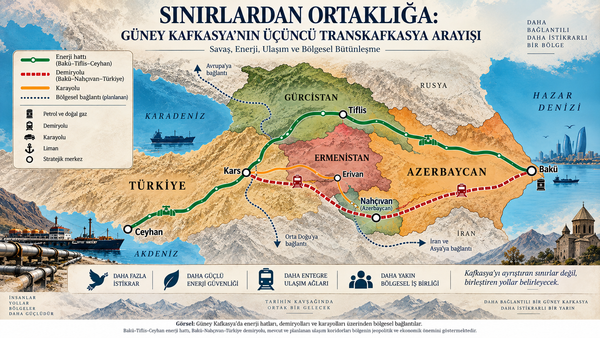
After Azerbaijan's rightful and proud victory against Armenia, I hope things will settle down in the region. I hope Armenia understands its reason for existence, draws a line under the past, normalizes its relations with Turkey, and trade gates open. Then, both Armenia and Iğdır will become vibrant trade centers. In this regard, I am hopeful about the future of Iğdır. We have no animosity or enmity towards the Armenian people. It cannot be. The Armenian people should not pay the price for the wrong attitudes of their leaders. The pains and tears of history should illuminate our future, not be a pretext to increase enmity.
(Dear readers! I thank my esteemed Hoca Akay Aktaş, who shared his family, childhood, difficulties, exiles, prisons, and finally his years in journalism with us. Mücahit)