Afghanistan, Islam, and Imperialism
This essay explores the Taliban's takeover in Afghanistan, re-evaluating American imperialism through the lens of Adam Smith's "laissez-faire" and a unique "laissez-les régner" military strategy, contrasting it with traditional imperialism and cultural imperialism.

Dear Readers:
With the Taliban forces seizing power in Afghanistan and NATO forces completely withdrawing from the country (August 31), a new era has begun, especially in the Islamic world. Let's try to summarize what has happened by taking a journey from the general to the specific, and together, let's look at what the coming years might bring. Furthermore, in this article, I will attempt to offer a new perspective on the frequently mentioned concept of 'American imperialism'.
LET THEM DO IT!!
Adam Smith, the father of capitalism and the Scottish Enlightenment, and a renowned economist, has a famous saying that has gone down in history: “Laissez-faire,” meaning “Let them do it!” Adam Smith used this slogan to express that the state should not interfere with or intervene in the economy. In a language we can understand, Adam Smith continues:
“Oh, state, you don't need to interfere with the economy! AN INVISIBLE HAND already regulates market relations in the most optimal (appropriate) way. Don't meddle in the market! Don't intervene by issuing rules and laws. Sit back and relax!”
American capitalism, social structure, and military strategies are largely constructed based on Adam Smith's theory. Writers or experts who do not live in America or do not understand the 'American spirit' have been making interesting assessments regarding the recent events in Afghanistan, with conspiracy theories and scenarios following one after another. However, for an ordinary American, the events are so simple and clear that they cannot make sense of these events being perceived as a "Gordian knot" or explained by "ingenious conspiracy theories" by foreigners. Taking this contradiction into account, in this article, I want to evaluate the events in Afghanistan, which have topped the world agenda in recent weeks, within the framework of the Islamic world.
AMERICAN MILITARY STRATEGY: “LAISSE-LES RÉGNER” (LET THEM RULE!)
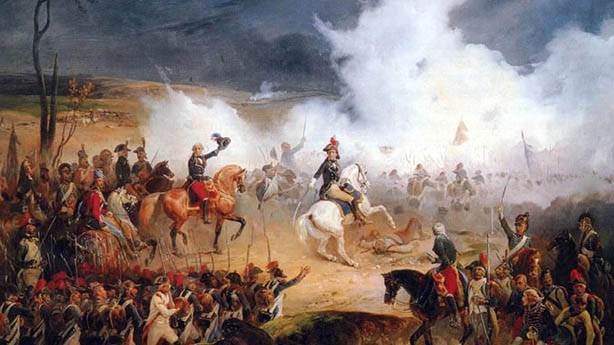
We can say that since its declaration of independence on July 4, 1776, America has built its military strategy on the basis of "Laisse-les régner," similar to Adam Smith's famous phrase "Laissez-faire." Without understanding this military strategy, it is impossible to correctly interpret America's military operations or wars, and most importantly, American Imperialism.
(NOTE: “Laisse-les régner” is a French expression. It is pronounced as “Lese le renye.” It can be translated into Turkish as “Let them rule themselves!” or simply “Let them rule.”)
Much has been said and written about America's military interventions, military support, or direct wars. And it continues to be written... But none of it is satisfactory or realistic. Nowadays, "American hatred" is being pumped everywhere, and everyone is blowing with all their might into this balloon of hatred that will soon burst. Similar hate speeches have been experienced many times, but each time the pieces of the bursting balloon remained in the hands of those who blew it. When it was thought, 'After this event/defeat, America will never recover,' America continued to shape world politics even stronger than before, as if nothing had happened. Since explaining the secret of this miracle (!) is difficult, writers have tried to explain the situation with conspiracy theories and absurd scenarios instead.
Those who cannot properly analyze the American spirit and social dynamics, or who try to draw similar conclusions by comparing America with other countries, have thought that America would become insignificant after every defeat, but unfortunately, no political scientist or writer has been able to correctly analyze America's glorious resurgence each time. Instead, they have contented themselves with shouting, 'Down with American Imperialism!' as if punching an empty tin can. In this article, I will try to fill this gap, which I consider important.
THE THEORY OF IMPERIALISM
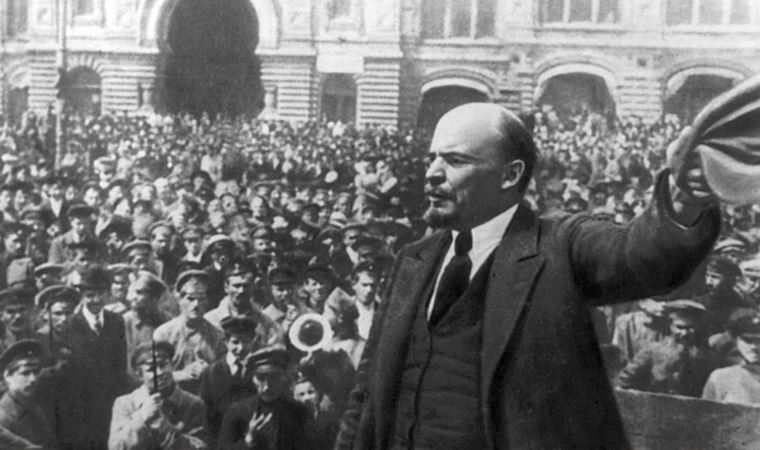
Before addressing the American understanding of colonialism and American imperialism, answering the question "What is imperialism?" would be the most accurate and logical approach. When "imperialism" is mentioned, the first thing that comes to mind is the book "Imperialism, the Highest Stage of Capitalism," written in 1918 by Vladimir Ilyich Lenin, the founding leader of the Soviet Union. In this work, Lenin deeply examines imperialism and, consequently, colonialism. In this work, which has been passed down from generation to generation as a handbook for over a century, Lenin conveys to the reader his examination of the colonialist understanding pursued by rich countries, especially in Western Europe, in poor countries, using the fundamental concepts of Marxist theory.
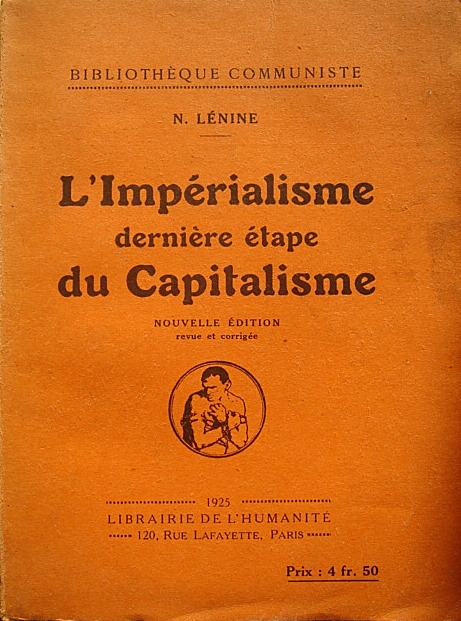
Lenin's theses put forward in this book can be summarized under the following main headings:
- The accumulation of capital resulting from intensive production reaches such a level that, as a result, monopolies (giant companies holding the world market) and economic oligarchies (companies secretly agreeing on the same price) have emerged. The export of capital to other countries has gained importance. Thus, international capitalist partners and states sharing the world have been established.
- As capitalism develops, the shortage of raw materials becomes evident. As competition conditions among rich capitalist countries intensify, efforts to control raw material resources on Earth also accelerate among these countries.
- This ambition and desire initiated the process of imperialist countries colonizing poor countries.
- A proletarian revolution is impossible in developed capitalist countries because these countries provide their workers with a relatively high standard of living and various opportunities, preventing workers from reaching a revolutionary consciousness. For this reason, a workers' revolution can only be possible in less developed countries. (Lenin contradicts Marx with this thesis. According to Marx, undeveloped countries cannot build socialism because capitalism has not yet used all its power or carried out its exploitation there.)
- Lenin claims that undeveloped countries can form a federal structure by uniting among themselves, thereby resisting imperialist countries and establishing socialism within themselves. In later years, Lenin cites the formation of the Soviet Union by the unification of 15 Republics after the October Revolution and the Russian Civil War as evidence for this thesis.
- A revolution starting in undeveloped countries can excite workers in developed capitalist countries and trigger uprisings in these states. In his works, Lenin hoped that the October Revolution, carried out in a backward country like Russia, could also ignite a revolution in a developed capitalist country like Germany. Lenin continues his thesis, predicting that the developed country that makes the revolution will thus establish socialism and help undeveloped countries.
- The territorial division of the world by imperialist powers, i.e., colonialism, has been completed.
LENIN'S GREAT ERROR
Before addressing Lenin's error, we need to agree on another reality. Lenin was not a philosopher, a thinker, or the leader of a new philosophical movement. His work on philosophy, "Materialism and Empirio-criticism," is more an attempt to reinterpret or, in a sense, prove Marxist theory. It is not an original work. The prominent features of leaders like Lenin, Mustafa Kemal, Bolívar, and Gandhi are their ability to produce ingenious plans to overcome the difficulties they encountered in building a new nation and to overcome seemingly impossible situations.
The philosophical evaluations or theses of these personalities have unfortunately been relegated to the dustbin of history. For example, Mustafa Kemal Atatürk's 'Sun Language Theory,' a linguistic theory arguing that Turkish was one of the first languages in world history, lost its importance with Mustafa Kemal's death, and no further work has been done on this subject.

Lenin wanted to give a philosophical essence to his work 'Imperialism,' but in a sense, he drowned in misconceptions. We can list these important errors according to the alphabetical order above:
- As Lenin claimed, it was not 'monopolistic companies' but, on the contrary, 'rich countries' that shared poor countries among themselves. This situation was also true for the period before Lenin. In Lenin's time, monopolistic companies were protected by the state, and most were family businesses. In the 19th century, the most important companies were in areas such as railway construction, oil production, steel production, meat cutting and packaging, and electricity production. All companies established for this purpose were family businesses, meaning their shares were not bought and sold. For example, America's largest steel producer was the Andrew Carnegie family. Similarly, Standard Oil, the world's largest oil-producing company, belonged to the John Rockefeller family. Monopolies were not prohibited as they are today.
Today, such a situation does not exist. On the contrary, states have established special institutions to prevent monopolies. I would like to give an example: In the 1990s, the American government repeatedly sued Microsoft, the world's largest company, on the grounds of being a monopoly, and at one point, even demanded its closure. Today in Turkey, for example, a state institution called the Information Technologies and Communication Authority (BTK) has been established to prevent monopolistic practices by companies such as Vodafone, Turkcell, and Avea. In other words, the "Monopolistic Capitalism" that Lenin focused on has now died.
2. Experiments in so-called socialist countries like the Soviet Union, China, Albania, and similar ones have disproven Lenin's thesis that socialism would succeed in underdeveloped countries. Socialism has not succeeded in any country.
3. Lenin claimed that undeveloped countries could form a federal structure by uniting, thereby resisting imperialism and establishing socialism within themselves. This thesis also remained unsubstantiated. Although Lenin cited the unification of 15 Soviet Republics to form the Soviet Union as an example, there is a reality he overlooked: even before the Bolshevik Revolution, these lands were within the borders of Tsarist Russia and acted as a whole. It was as if these countries were independent before the Bolshevik Revolution but united to carry out the Bolshevik Revolution, which is not true.
4. Lenin foresaw that the revolution in backward countries like Russia could trigger a socialist revolution in rich countries like Germany, but he was mistaken.
5. Lenin evaluated colonialism, or imperialism, as territorial division and monopolistic capitalism. This is also a great misconception. Lenin did not take cultural imperialism into account and failed to grasp the unique character of American imperialism.
CLASSICAL COLONIALISM / IMPERIALISM
Classical colonialism began with the discovery of America in 1492 and continued its existence until the Second World War. In classical colonialism, rich European countries shared the world among themselves, either by agreement or by war. For example, Belgium, with an area of 30,000 km², militarily occupied the Central African country known today as the Democratic Republic of Congo (Zaire), which has an area of 2.4 million km². The entire country was considered the private property of the King of Belgium. Although the King of Belgium transferred this authority to the Belgian Parliament in 1908, there was no change in colonial administration.
In all classical, i.e., land-based, colonies, the basic rule is this: the colonial power appoints a colonial governor to the colonized region. Legislative, executive, and judicial power are concentrated in the hands of the governor. The local population has no rights such as participating in elections or representation. Another example is the USA itself. The USA was a British colony and was governed by a Colonial Governor sent from England and representing the British Queen.
Unfortunately, Lenin's theory of Imperialism is based on territorial division. It is shallow and insignificant because it merely summarized a period preceding his own. He failed to foresee the new forms that imperialism would take afterward, namely Forced Cultural Imperialism, Voluntary Cultural Imperialism, and the unique characteristics of American Imperialism.
FORCED CULTURAL IMPERIALISM
The concept of cultural imperialism has unfortunately been greatly distorted. We can define it most accurately as follows: The colonial country first wants to sell the goods it produces to the citizens of its colony. For this, it primarily tries to impose its own language and religion. The transfer of these cultural values to the colonial country forms the basis of Forced Cultural Imperialism. The passive assimilation of local languages belonging to colonized peoples in Africa and the forgetting of local cultures can be given as examples of forced cultural imperialism.
The colonial country resists, as much as possible, the sale of goods from other colonial countries in its own colonies. For example, England established cotton, tobacco, and tea plantations in its colony of West America (present-day Virginia, Georgia, North Carolina, South Carolina, Alabama, etc.). It transported the raw materials obtained to England, processed them in factories, and manufactured clothes, cigarettes, and tea. Then it sent these products back to the USA and sold them to the colonial people. For this process to be successful, the colonial country had to forcibly impose its own values on the colonial people. If the Native Americans of North America had forgotten their languages and spoken English, and forgotten their religions and adopted Christianity, they would undoubtedly not have been subjected to genocide. It would not be wrong to say that the Native Americans, rightly, preferred to die rather than compromise their languages and religions.
VOLUNTARY CULTURAL IMPERIALISM
This concept, which I call "Voluntary Cultural Imperialism," was addressed by the Frankfurt School, particularly by Max Horkheimer and Theodor W. Adorno, under the name 'Cultural Imperialism.' Horkheimer and Adorno argued that culture itself is an industry and that cultural products have become commodities. They cite names like Hollywood, Coca-Cola, and McDonald's as examples. According to the Frankfurt School, America is trying to impose its culture on the world using the symbolic names mentioned above.
When we consider global reality, we witness that Voluntary Cultural Imperialism is actually practiced by all countries. America does not force anyone to drink Coca-Cola, go to McDonald's, or watch Hollywood movies. Nor does it threaten any country with weapons to do so.
I want to give an example: I lived in France between 1986 and 1992. The French Government took many measures to reduce America's cultural influence. The government tried to promote French signs instead of English ones, and French films instead of American films. All the measures taken were in vain. The French started drinking more Coca-Cola, going to McDonald's more, and watching more Hollywood movies. Moreover, France itself fit the definition of an imperialist country and was in no way in the status of a colonial country. France succumbed to American cultural values despite very strong anti-American measures. The reason for this is the American value system, which I will discuss in the paragraph titled 'American Imperialism' below.

In short, cultural imperialism is not as significant a factor as the Frankfurt School exaggerated. The interesting part is that France was trying to close its society to America's cultural values, but it was also exporting cultural imperialism to other countries with its fashion, perfume, and gastronomy.
Developing countries like Turkey, Mexico, and Brazil are also in this position. We know that Turkish, Mexican, and Brazilian TV series are widely watched in many countries. Turkey, Mexico, and Brazil do not threaten any country with weapons or sanctions to watch their TV series productions. Everything happens on a voluntary basis.
In short, those who highlight 'Cultural Imperialism' as a threat today are on the wrong path. At one point, there was a call to boycott French products because France recognized the Armenian Genocide. French perfumes were spilled on the ground, and wine bottles were broken. This paranoia lasted a few weeks. Then everything was forgotten. Today, we continue to use French products again.
If you wish, let's try to understand the essence of American military strategy by examining a few recent American wars.
KOREAN WAR
The Korean peninsula unfortunately experienced a tragic 20th century. In 1905, when Russia was defeated in the Russo-Japanese War, Japan occupied Korea. Korea was brutally governed by a colonial governor. When Japan was defeated in World War II in 1945, the northern region was occupied by the Soviet Union, and the southern region by the USA. Thus, two Koreas were established, one socialist and the other capitalist. In 1950, North Korea, with the support of the Soviet Union and China, attacked South Korea. The war lasted three years. The USA established NATO.
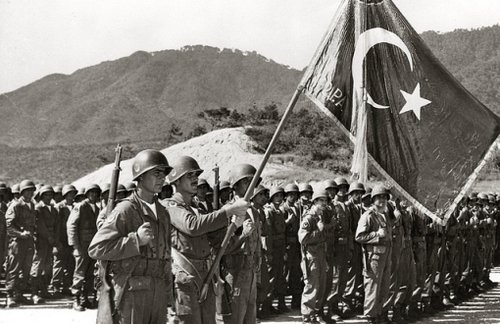
When Turkey became a NATO member on February 18, 1952, it sent troops to the Korean War. The war, which ended in 1953, had no victor. The 38th parallel remained the border. The USA established a military base in South Korea against a possible North Korean attack. While North Korea was influenced by the way of life and philosophy of the Soviet Union and China, South Korea was particularly influenced by the USA.

After the 1988 Seoul Olympics, South Korea made a giant leap. It built a society based on American values. Entrepreneurship, sense of duty, and inventiveness formed the foundation of university education. Soon, South Korea succeeded in entering every home in the world with its brands like Samsung and Hyundai. South Korea undoubtedly achieved this success by synthesizing the social values it adopted from the USA with its own traditional values.
The USA did not interfere in the country's governance; elections resulted according to the preferences of the South Korean people. "Down with US Imperialism" is a pleasant slogan, but if there were no USA, South Korea would not be able to produce world brands today.
VIETNAM WAR
The USA became involved in the Vietnam War between 1963 and 1973. Similar to Korea, this time North Vietnam received support from the Soviet Union and China, while South Vietnam received support from the USA. The USA lost the war but left behind American values. In its early years, unified Vietnam relied on the Soviet Union and China. However, since South Vietnam had been under US influence for 10 years, this entrepreneurial spirit soon encompassed all of Vietnam.
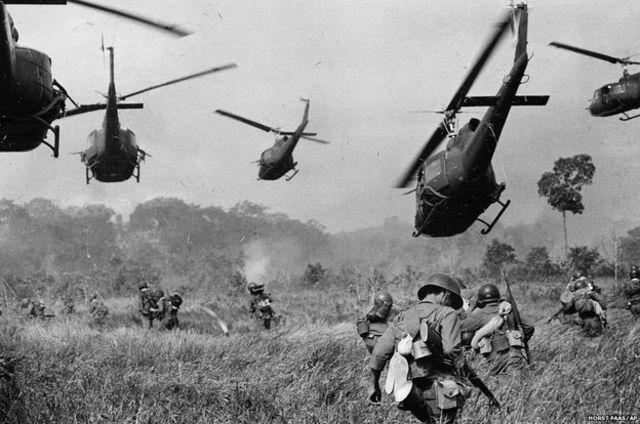
Despite the USA causing great massacres in Vietnam, the newly established Vietnam drew closer to the USA. It even fought a border war with China, which it had once supported. Today's independent Vietnamese state, based on the US value system it acquired from the US stationed in South Korea, has moved away from a socialist economy and is now a major player in the world economy with a competitive and capitalist economic revolution. If there had been no 10-year US occupation, Vietnam would today be a closed state like North Korea, with its people struggling with hunger.
THE VALUE SYSTEM OF AMERICAN IMPERIALISM
One of the most common political slogans in the world is, "Down with American Imperialism!" This statement has become a cliché. However, the realities are very different. The essence of the US's "colonialism or imperialism" policy cannot be understood without considering the US's value system.
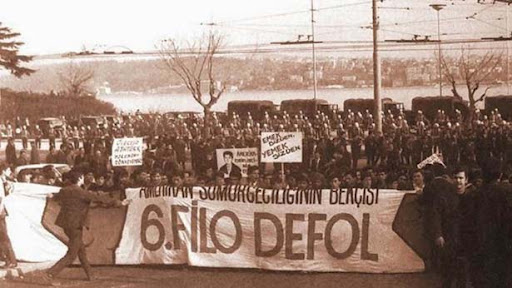
We can summarize the US value system under the following subheadings:
- INDIVIDUALISM: Unfortunately, the translation of the concept of 'Individualism' into Turkish is often rendered or understood as 'Selfishness, looking out for one's own interests.' However, in American society, 'Individualism' is given a completely different meaning. A person with a strong sense of individualism can be translated as someone who has the right and ability to form their own thoughts independently and to determine their own future without being influenced or directed by anyone.
In America, children are exempt from parental domination as early as 6-7 years old. If parents impose something the child doesn't want, they encounter resistance. They have to explain what they want to the child in a logical way. Phrases like 'I am your father. You will do what I say,' don't work on American children. Giving orders or applying pressure is not possible. From the age of 18, young people leave the family and pursue their own goals. They plan and realize their own futures. It is not possible to hold parents responsible for their children's successes or failures. This is precisely what American individualism is.
- ENTREPRENEURIAL AND INVESTMENT SPIRIT: One of the most important values of American society is the encouragement and prominence of the entrepreneurial spirit. An American individual sees society and their environment as a world of opportunities. They make extraordinary efforts to fill gaps. They get to work without overthinking to achieve their plans, and they mature their ideas during the process.
- INTERNALIZING COMPETITIVENESS: American society encourages competitiveness and, in a sense, has accepted it as a social value. It can be said that the engine of continuous change in America is the spirit of competitiveness. Socialism has not been able to develop because it hindered competitiveness within its own world, even 'cursing' it as a trap of capitalism!
- PRAGMATISM, OR A WAY OF THINKING FOCUSED ON PRACTICAL RESULTS: The word 'Pragmatism' has been translated into Turkish as 'Utilitarianism.' A big mistake! The word 'Utilitarianism' inherently contains a negative and unfavorable definition. However, the word 'Pragmatism' carries a different meaning for Americans. Let's take a look at the concept of 'pragmatism' as understood by Americans:
Another important aspect of American society is its pragmatism, meaning they keep themselves away from unnecessary thoughts or tasks and act in accordance with the requirements of real life. If a behavior or thought has no real-life counterpart, they avoid it. They like to brainstorm for the fastest and easiest solution. They have a flexible thought system. They immediately abandon an endeavor they believe will not yield results, and they never regret their mistakes.
- NOT DWELLING ON THE PAST: American society has a forward-looking character. It knows that it has committed massacres, genocides, discrimination, etc. in the past, but it does not turn this into an obsession or fixation. Individuals have also learned not to feel ashamed of their past mistakes, but rather to learn from them. The ability to talk about and laugh at the shames or mistakes we subconsciously hide is a strong point of the American individual.
- PUSHING BOUNDARIES: The American individual strives to push their talents to the limit. Every individual's interests and talents are, of course, different. Pushing the boundaries of their strengths and talents, and thus confronting their own reality, should be seen as another value of American society.
- FREEDOM OF BELIEF: In American society, the necessity of religion and the existence of God are accepted without question: American society respects freedom of belief. Except for a few sectarian cults, it does not show interest in radical religious ideas. It is at peace with itself and its faith. It does not question the existence or non-existence of God. In this sense, it is peaceful. Even if it is atheist, it is peaceful.
- OPENNESS TO INNOVATION: No other society has as much self-confidence in adopting innovations or giving a chance to something new that has been invented as American society. In every sense, 90% of the world's inventions originate from America. China, Japan, or European countries are 40-50 years behind America in this sense, or they are busy giving a new form and interpretation to what Americans have invented. For example, China, which is often praised, has offered nothing new to humanity in terms of technological revolution.
- ACCEPTING MISTAKES: America is a society open to self-criticism. It committed the Native American genocide, and then it made the most important films about it itself, bringing it to the attention of humanity. It caused brutal massacres in Vietnam, but it also made the films that brought these massacres to the world's attention. It practiced slavery or discrimination against Black people for centuries, but American writers and directors brought this issue to humanity's attention in the most excellent way. Individuals also readily accept their mistakes but focus on the needs of today without dwelling too much on the past.
- HUMAN AS THE BASIS OF WORK AND BUSINESS: For Americans, humans are the essence of working life and the natural extension of human activity. They have an understanding that can be summarized as "If you live, then you must work." The most important characteristic that defines human personality or makes an individual human is that they work and produce. If an individual earns money without working, for example, by inheriting and doing nothing, society does not value this individual. The concept of 'rent-seeking' is one of the fundamental concepts that American society finds distasteful. According to Americans, individuals should work. What kind of work you do is not important. An individual can be an apartment caretaker, a shoe shiner, or a CEO. Americans do not evaluate individuals based on the work they do. Everyone who works has equal status and value.
- EQUALITY: The greatest goal of communist thought was to create an 'equal society.' In my opinion, Americans have already achieved the ideal of an 'equal society.' I want to give an example: I want to consider Microsoft, the world-renowned company founded by Bill Gates. Anti-Americans think: Bill Gates, as the owner of Microsoft, applies any price he wants and exploits the world. However, Bill Gates's share in the company is only 1.8%. The remaining shares are owned by Americans and world citizens. I want to say this: Bill Gates does not exploit the world alone. This is true for all American companies. In other words, 'Monopolistic Capitalists' in the sense Lenin understood, i.e., family businesses that hold all the wealth of the company alone, are now a thing of the past.
There is a fundamental maxim in the American Declaration of Independence: 'All men are created equal.' Although situations contrary to this occur in daily life, every American sincerely believes in and respects people's right to equality.

- NON-FORMALITY: Americans are distant from 'formal' or official relationships. Even children call their parents by their first names. People use their first names when introducing themselves. They even go further, answering like this:
'My name is Elizabeth, but please call me Betty.'
'My name is William, but please call me Bill.'
When I lived in France, I constantly heard terms of respect like Monsieur, Madam, Mademoiselle. For seven years, my name remained 'Monsieur Hun.' When I came to America, I had to use the name 'Mücahit.' Since it was difficult to understand and remember, I first had to settle for 'Muja,' then 'Kevan,' and finally 'Ben.' Because Americans use first names, this helps create a sense of 'equality' in society. Since children also call their fathers by their first names, there is no hierarchy within the family.
- FUTURE, CHANGE, AND PROGRESS: American society faces the future. It does not carry the past into the present, or in other words, it does not construct or live its present by taking the past into account. They consider those who dwell too much on the past as mentally fixated. According to Americans, the past is a place to learn lessons, not to serve the purpose of carrying the revenge of past sufferings into the present.
American society is based on the principle of continuous change. It dislikes stagnation. It starts each day with new expectations. The "nod your head and collect your salary" approach has no equivalent in America. They try to earn the salary they receive.
- SERIOUSNESS AND SUCCESS IN WORK LIFE: Americans love to work 24/7. 'Deadline,' meaning finishing a job on time and properly, is the main goal of work life. I lived in America for nearly ten years. I never saw an American planning a vacation. In Europe, everything was the opposite. For example, the French and Germans make sure to finalize their vacation plans a year in advance. According to Americans, going to the beach and lazily lying on the sand is nothing more than a waste of time. On the other hand, Americans always know how to maintain their seriousness in the work they undertake. There is no room for gossip or chatter in the workplace.
- HONESTY: One of the fundamental principles and expectations of American business and family life is the concept of 'honesty.' Honesty finds its place in private life and is also one of the indispensable values of business life.
- SELF-CONFIDENCE: Americans possess an unquestionable self-confidence, no matter how difficult the task assigned or how ignorant they may be about the subject at hand. I have never seen an American say, 'I can't do this job,' or 'This is not my area.' Americans combine an extraordinary motivation and curiosity to adapt to any task with their innate self-confidence and act accordingly.
- VALUE OF TIME: Americans know the value of time best in the world. Squeezing a lot into a short amount of time and successfully completing it is one of the indispensable values of American culture.
AMERICAN IMPERIALISM AND THE VALUE SYSTEM
As I wrote earlier, the vast majority of international experts, political scientists, or writers have not understood the essential nature of American imperialism. Some experts regard Americans as 'land occupiers,' while others try to explain American imperialism with the definition of 'cultural imperialism.'
From 1900 to the present, the USA has not occupied any country in the sense of classical colonialism. As you know, in classical colonialism, the colonial country views the occupied territories as part of its own country and governs the colony with a governor. The USA has occupied countries but has never planned to stay for a long time. Even when the USA occupied a country, it did not prevent elections from being held or the country from being independent in its internal administration. For example, it occupied Iraq but paved the way for the establishment of a parliament proportional to the population of Shiites, Sunnis, and Kurds. In such a process, Talabani, of Kurdish origin, became the President of Iraq. It is impossible to see a similar structure in other colonies. Therefore, the cornerstone and slogan of US imperialism can be summarized with the maxim "LET THEM RULE."
Some experts want to explain American imperialism based on the concept of 'Cultural Imperialism.' This is also quite erroneous! America does not pressure any country to use its products. Unfortunately, the founders of the 'Cultural Imperialism' theory, the Frankfurt School, made a flawed assessment.
The true power of American imperialism is the value system I listed above. When America occupies a country, the people of that country become acquainted with this value system and adopt it without any coercion. This is because these values are universal and in line with the requirements of the age.
Even when America leaves an occupied country, the allure of its value system continues to grow in that country. This value system, which facilitates daily life, such as individualism, self-confidence, and pragmatism, causes the peoples of the world to follow America. I want to give an example: America occupied Iraq and caused massacres. China and Russia remained neutral during this process or condemned America. Let's assume we ask anyone on any street in any city in Iraq today the following question: "Which country would you like to live in? USA, China, Russia..." The answer you will get is clear: USA. Because American social values open the way for individuals to develop themselves and help individuals confront their own reality and abilities.
Neither classical colonialism nor the theory of cultural imperialism can make sense of this answer from an Iraqi individual, because both theories disregard the 'American value system.' In short, modern humans need the American value system to escape the oppression of family, society, and the state. This is the real reason!
Here I want to open a parenthesis: Süleyman Demirel, Turgut Özal, Bülent Ecevit, Erdal İnönü, and other figures who dominated Turkish politics for more than half a century, all either studied or interned in America and became acquainted with American social values. For example, Süleyman Demirel won an American Fulbright scholarship in 1948 and went to America for a year, and upon his return, he was appointed head of the Dams Department. Süleyman Demirel was then awarded a scholarship from the Eisenhower Foundation in 1954 and went to America again to conduct research on irrigation and electricity, and upon his return in 1955, at the age of only 31, he became the General Director of State Hydraulic Works. If he had not had his education and internship in America, Süleyman Demirel would never have been appointed to this position and would not have entered political life. This also applies to all other leaders.
ISLAM AND CHRISTIAN ENLIGHTENMENT
I wanted to address Islam and Christianity together to facilitate understanding. Leaving aside minor sectarian fragments and schisms, Islam and Christianity are divided into two main branches:
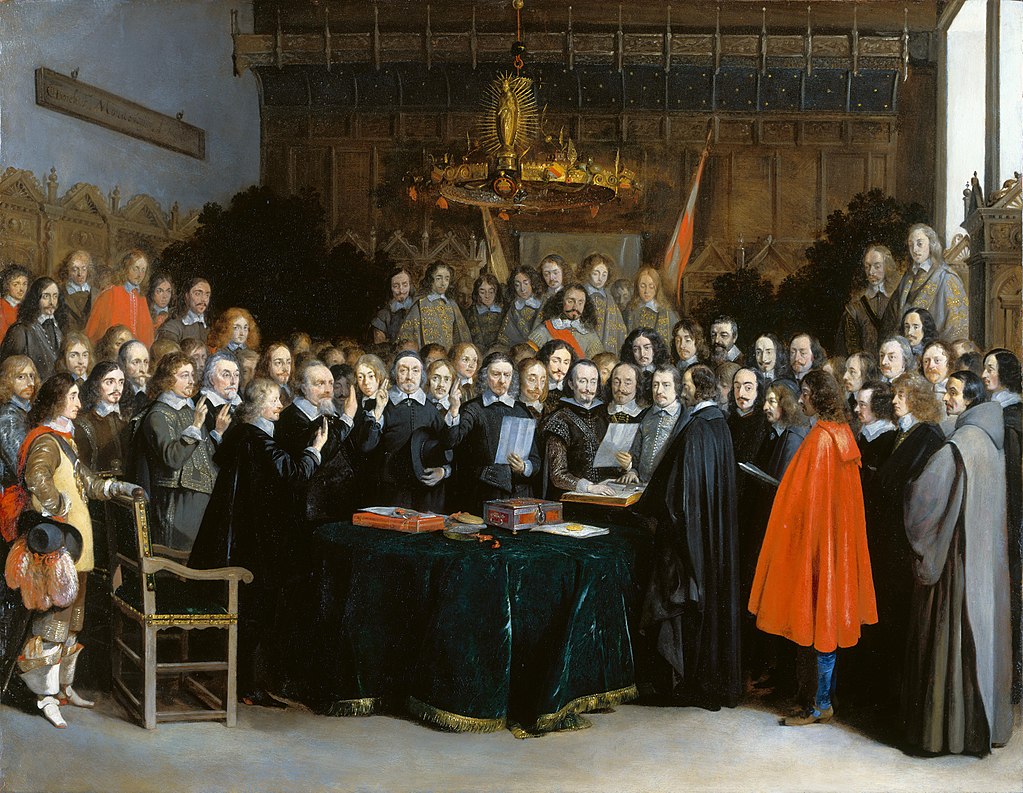
Christianity split into two in 1054: Orthodox and Catholic. The hatred between them reached such a point that during the Fourth Crusade (1204), the Crusader army, composed of Catholic soldiers, burned and destroyed Orthodox Istanbul, establishing the Catholic Latin Empire of Constantinople in its place. From that day on, the chasm between the two sects deepened. In the 16th century, Martin Luther initiated a rebellion against the Catholic sect and, consequently, the Pope in Rome. He declared the Protestant religion. In the 14th century, the Hundred Years' War took place between Protestants and Catholics. Protestantism gained general acceptance. Thus, the 'Enlightenment' period began in Christianity. From that day on, the animosity between Orthodox, Catholics, and Protestants also ended. With the Treaty of Westphalia in 1648, sectarian freedoms were guaranteed.
A similar situation occurred in Islam. With the Battle of Karbala on October 10, 680, Islam was divided into two main sects: Shiites and Sunnis. The division and hatred between the two sects accelerated. The Sunni Umayyad state was overthrown by a Shiite uprising, and the Abbasid state was established. The Abbasids brutally massacred the Umayyad dynasty. Only one member of the dynasty escaped, fleeing to North Africa, where his mother's tribe was located. When Abbasid spies went to Morocco to kill the last Umayyad dynast, the Umayyad dynast gathered forces and landed in southern Spain, won the battles he encountered, and established the Umayyad Caliphate of Córdoba. The animosity between Shiites and Sunnis reached its peak with the Battle of Chaldiran between the Sunni Sultan Selim I and the Shiite Shah Ismail. Since that day, the hatred and enmity between Shiites and Sunnis have continued uninterrupted. In other words, Islam has not yet found peace within itself.
Today, Iran sees itself as the protector and leader of Shiites worldwide. While helping Shiites in Yemen, it has also taken on the task of supporting Shiite Hezbollah in Lebanon and Alawite-origin Bashar al-Assad in Syria. While religious conflict has ended in Christianity, unfortunately, the reckoning between the two sects in Islam has not yet concluded.
AFGHANISTAN AND THE FUTURE OF THE REGION
There are four major threats facing Afghanistan and the region:
- Shiite-Sunni civil war in Afghanistan
- Ethnic civil war in Afghanistan (NOTE: Pashtuns make up 42% of Afghanistan's population. They are followed by Tajiks (27%), Uzbeks (9%), Hazaras (9%), Turkmens (3%), and Balochs (2%). Other ethnic groups, including Nuristanis and Pashayis, make up 8% of the population.)
- Sectarian war between Sunni-majority Afghanistan and Shiite-majority Iran
- ISIS internal coup
It would be useful to look at the Shiite population in Afghanistan and neighboring Muslim countries.
- 30% of Pakistan's population of nearly 170 million is Shiite.
- 20% of Afghanistan's population of 30 million is Shiite.
- Over 90% of Iran's population of nearly 80 million is Shiite.
- In India, where over 1 billion people live and 160 million are Muslim, 35% of the Muslim population is Shiite.
All of the Hazara ethnic group in Afghanistan are Shiite. When the Taliban seized power, their first act was to massacre the Hazara ethnic group. Neighboring Iran is, of course, quite disturbed by this situation. It is highly probable that sectarian tensions will increase in the coming months.
POSSIBILITY OF AN ISIS INTERNAL COUP
ISIS (Islamic State of Iraq and Syria) is a Salafi jihadist organization that aims to establish a caliphate state. Let's not forget that Salafi Bin Laden fought for many years in Afghanistan. ISIS, in a sense, implicitly claims to have a spiritual legacy and thus a say in power in these lands.
ISIS and the Taliban may have collaborated to expel NATO forces from Afghanistan, but in such a period without foreign powers, the power struggle between the two groups will accelerate.
There is a big difference between the two organizations. The Taliban has a structure that is closed to technology and the Internet. ISIS, on the other hand, is the organization that uses the Internet most effectively in the world. Furthermore, while the Taliban is a local organization primarily based on the Pashtun ethnic group, ISIS members consist of militants from all Muslim countries. Under these circumstances, ISIS has a psychological, if not military, superiority over the Taliban. It is highly probable that ISIS will carry out an internal coup and take power from the Taliban over time. ISIS considers Afghanistan a 'ready meal' and wants to use it as a base to implement its jihadist policies.
THE CHINA FACTOR
First and foremost, I would like to add this: China owes its technological revolution to America. Since 1990, American universities have been teeming with Chinese students. Many students were caught stealing technology and sent back to China. On the other hand, American (and European) companies shifted their investments to China, taking into account cheap labor. With the synthesis of these two factors, China has made a giant leap in technology. In short, China's technological revolution is not a result of its own internal dynamics of Socialism but has emerged entirely under American influence.
Afghanistan and China are neighbors. It is known that during the 20-year presence of NATO allies in Afghanistan, the Taliban received logistical support from China. China's foreign policy is based on a strategy of 'indirect intervention.' China, unable to directly confront NATO or America, plans to increase its influence in the region by supporting organizations similar to the Taliban. Unfortunately, this policy is unlikely to yield the desired results. First and foremost, the Uyghur nation lives in the region between China and Afghanistan. We can foresee that the Uyghurs, whose national rights, identity, and land have been usurped, will be further oppressed under the Taliban regime, and under these circumstances, organizations similar to the United Nations will intervene in the first stage, and NATO allies will make moves to encircle China in the second stage.
THE RUSSIA FACTOR
The Iranian Islamic Revolution, which erupted in 1979, initially caused an anti-imperialist sentiment and stance among all Muslims, regardless of Shiite-Sunni-Alawite divisions. Iran seized this opportunity to try to "export the revolution" to all Muslim countries. For a few years, it succeeded in this endeavor. Soon, the Sunni world not only closed its doors to the values of the Iranian Islamic Revolution to prevent Shiite dominance, but the Iraq-Iran war, in a sense, brought the Sunni-Shiite separation back to its old pattern. With Bin Laden and ISIS, the Sunni world, in a sense, took over the "anti-imperialist" jargon from Iran and appropriated it.
After establishing regime control in Afghanistan, its first act will be to export the Sunni Islamic Revolution to neighboring Muslim countries. The country most fearful of this or likely to suffer damage is Russia. Since the Soviet era, Russia will not want to see Taliban-like governments in power in its satellite states such as Uzbekistan, Turkmenistan, Kyrgyzstan, Kazakhstan, and Tajikistan, and will therefore try to blockade and suffocate Afghanistan. One of the reasons for future tensions and wars will probably arise as a result of this mutual challenge.
In short, if we say that the USA, with its "Let them rule" philosophy, plants its social values like a seed in the soil of countries and then suddenly withdraws its troops, and under these circumstances, a new war in Afghanistan appears on the horizon, we would not be exaggerating our prediction.