The 1905 Revolution and a Napoleon in Yerevan
This article explores the 1905 Russian Revolution's impact on the South Caucasus, focusing on the ethnic conflicts in Yerevan and the surprising role of Prince Napoléon Louis Joseph Jérôme Bonaparte in restoring order.

In history, there are significant years when every empire cracks from within, and the old order shakes under its own weight.
1905 was such a period for the Russian Tsardom.
That year, Russia was both defeated abroad and deeply shaken internally. The empire, which had governed vast territories for centuries with an army, bureaucracy, police, and the idea of loyalty to the Tsar, suddenly began to doubt its own strength. The defeats against Japan in the Far East were not merely military failures; they were a major psychological blow that shattered the myth of the Russian state's invincibility.
Russia had underestimated Japan. The state apparatus in Petersburg believed the war would be short, and the Russian army and navy would easily prevail. But the war did not go as expected. Port Arthur fell. The Russian navy suffered one of the most devastating naval defeats in history.
When news of these defeats reached every corner of the empire, people did not just ask what was happening at the front. They began to ask a deeper question: Was the Tsarist order truly strong?
This question was dangerous. Because an empire appearing weak externally encourages all suppressed unrest internally. Workers begin to speak louder about working conditions, peasants about land issues, intellectuals about political freedoms, and national communities about their identities and futures.
Bloody Sunday, which occurred in Petersburg on January 22, 1905, became the turning point for this accumulated anger. Thousands of workers, led by Father Georgi Gapon, marched towards the Winter Palace to present a petition to the Tsar. They saw themselves not as enemies of the Tsar, but as loyal subjects seeking justice. However, soldiers opened fire on the crowd.
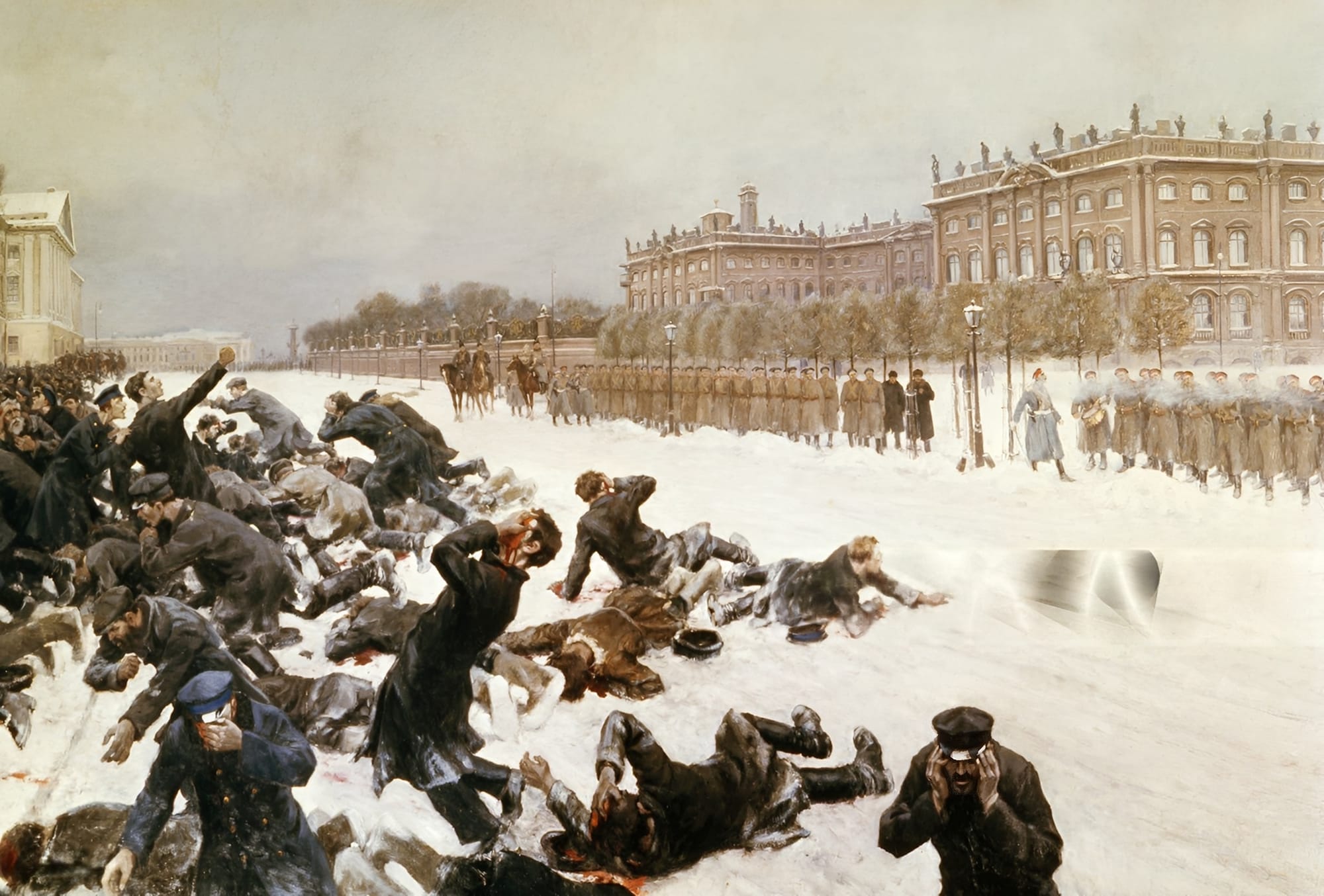
On that day, not only people died; the traditional trust in the Tsar was also severely wounded.
After Bloody Sunday, strikes, demonstrations, peasant movements, student actions, and military unrest began in many parts of Russia. The 1905 Revolution was thus born. As the center shook, state authority also loosened in the distant regions of the empire. The South Caucasus became one of the places where this loosening was felt most dangerously.
Because the South Caucasus was not an ordinary province. It was a complex region where the legacies of Russia, Iran, and the Ottoman Empire intertwined; where Armenians, Azerbaijanis, Kurds, Georgians, Russians, Jews, Lezgins, and other communities lived side by side. When the state was strong, this complex structure could be maintained by a strict administrative balance. But in 1905, the balance began to break down.
The first major scene of disaster was Baku.
At the beginning of the twentieth century, Baku was not just a Caucasian city; it was one of the most important centers of the oil age. Oil derricks, refineries, foreign capital, local rich, working-class neighborhoods, strikes, socialist organizations, nationalist circles, and ethnic rivalry were all concentrated in the same city.
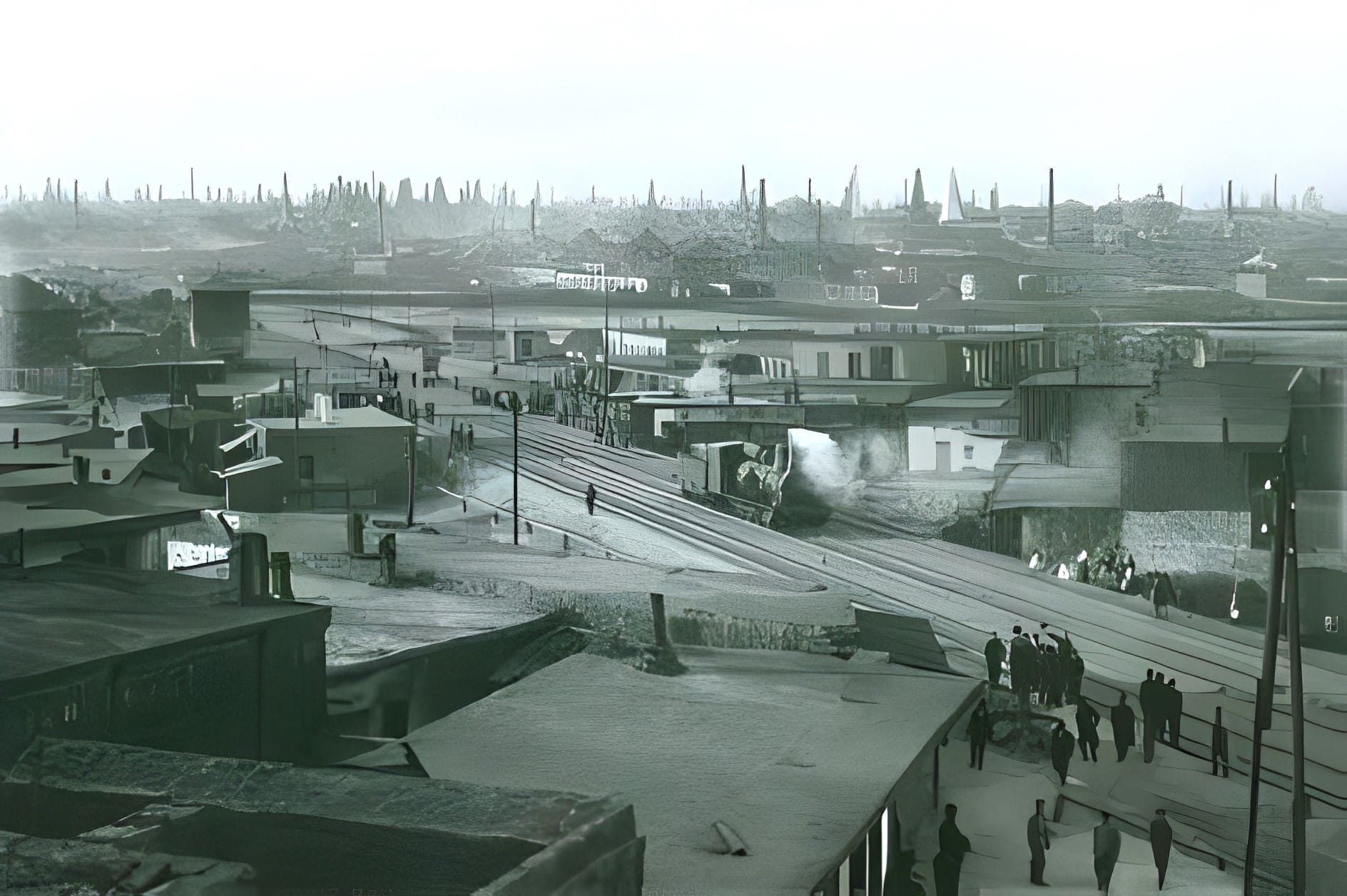
The city was growing, getting richer, but also hardening. On one side were large families, companies, and intermediary classes benefiting from oil wealth; on the other were workers toiling under harsh conditions, poor neighborhoods, and politicized youth. Baku's wealth was dazzling; but in the shadow of this wealth, great inequality, anger, and distrust were accumulating.
Baku was multi-ethnic; but this multi-ethnicity did not always translate into true coexistence. Armenians, Azerbaijanis, Russians, Jews, and other communities lived in the same city. However, they often resided in separate neighborhoods, social circles, and had different economic opportunities.
Armenian merchants, industrialists, bankers, and educated middle classes were influential in Baku's economy. Azerbaijanis, while having a significant population in the city and its surroundings, felt marginalized in modern education, municipal administration, and administrative positions. As the oil city grew, not only wealth but also envy, fear, and political rivalry grew.
(NOTE: In the official Russian language of that period, Azerbaijanis were often referred to as "Tatar" or "Caucasian Tatar." Therefore, the term "Armenian-Tatar conflicts" found in old sources describing the 1905 events does not refer to Crimean or Kazan Tatars in today's sense; it refers to Azerbaijanis in the South Caucasus.)
The Armenian-Azerbaijani conflicts that began in Baku in February 1905 quickly plunged the city into bloodshed. A murder, a funeral, mutual rumors, and the indecisive attitude of the state shattered the already tense social fabric. Neighborhoods began to fear each other. News heard in one street turned into calls for revenge in another neighborhood. People were no longer afraid only of the other side's weapons, but also of rumors.
To describe these conflicts simply as "two peoples attacked each other" would be incomplete. In Baku, many crises intertwined simultaneously: the class divide created by the oil economy, labor movements, revolutionary organizations, the presence of Armenian political movements, the feeling of backwardness among the Muslim/Azerbaijani community, distrust of Russian rule, and the power vacuum created by the 1905 Revolution.
The state was both present on the ground and ineffective. There were police, soldiers, officials; but the authority to ensure justice and security had weakened. Therefore, the conflict that began in Baku did not remain a local event. The fire in the oil city quickly turned into a wave of fear spreading throughout the South Caucasus.
Nakhchivan, Shusha, Ganja, Yerevan, and surrounding regions were affected by this wave. News was often exaggerated, and an attack in one city turned into a call for revenge in another town. Armenians and Azerbaijanis lived side by side, even intertwined, in many places. They used the same markets, the same roads, the same water sources, the same administrative centers. But in 1905, this intertwining became the basis not for common life, but for mutual fear. When the state weakened, everyone sought to ensure their own security by their own methods.
The Erivan Governorate also became one of the centers of this conflagration.
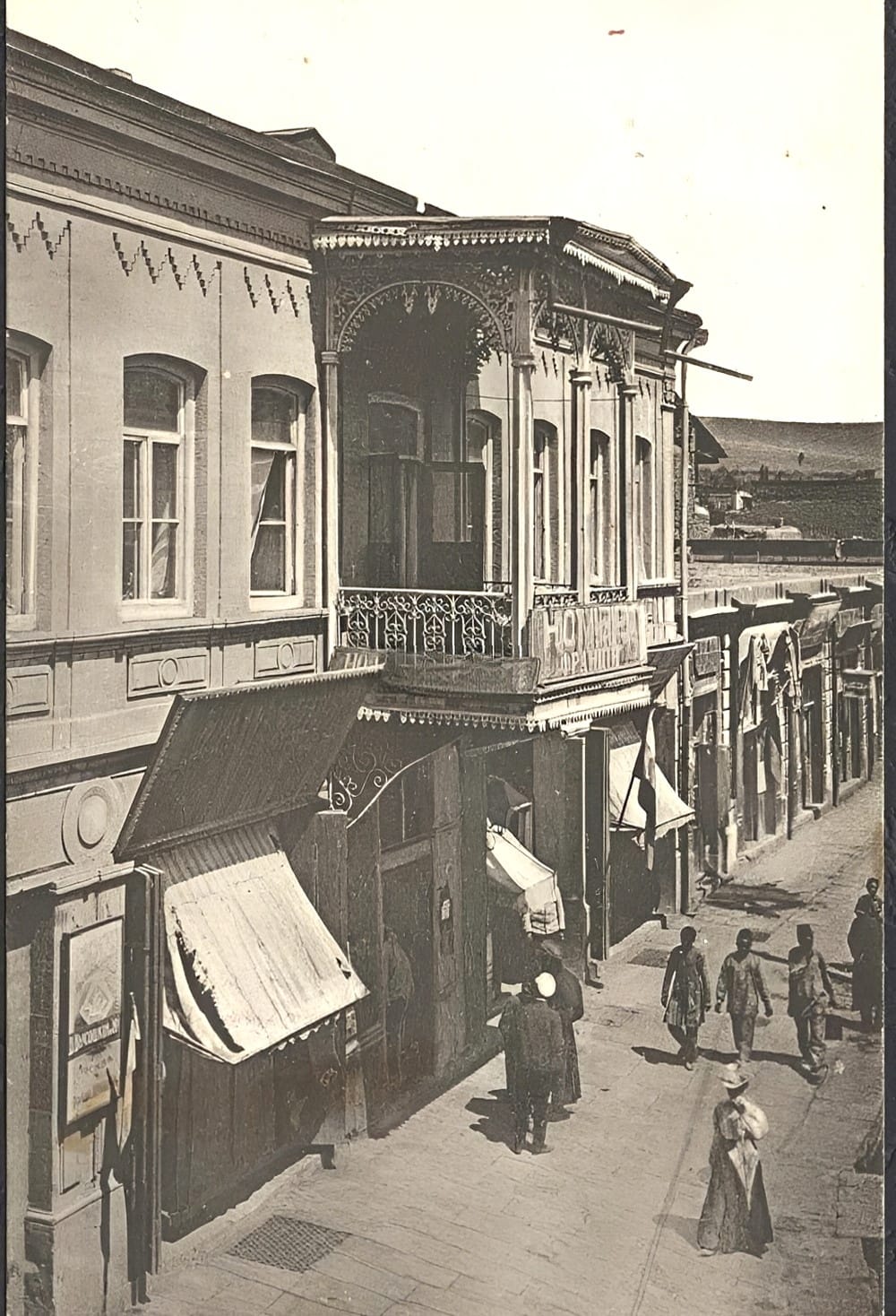
The Erivan Governorate during the Tsarist era was not limited to present-day Yerevan. The Ararat plain, Nakhchivan, Sharur, Surmali, and the area around present-day Iğdır were part of the historical memory of this vast administrative world. The city of Yerevan and its surroundings were a mixed area where Armenians and Azerbaijanis had significant populations. These communities, who met in markets, neighborhoods, inns, village roads, and administrative centers, no longer looked at each other with the same eyes in 1905.
The conflicts in Yerevan on June 5–6, 1905, showed the Tsarist administration that the situation could not be controlled with ordinary measures. The existing military and civilian personnel did not inspire confidence. Some local commanders were accused of partiality, some officials were deemed incompetent, and others could not establish the authority to prevent the events.
For Count Illarion Vorontsov-Dashkov, the Tsarist governor-general in the Caucasus, the problem was no longer just a matter of public order. Imperial authority was disintegrating in the South Caucasus. It became clear that this fire could not be extinguished with local commanders, police measures, and ordinary administrative methods.
At this point, a remarkable figure with extraordinary powers was sent to Yerevan:
Napoléon Louis Joseph Jérôme Bonaparte.
This name is surprising at first glance. Because when Napoleon is mentioned, Paris, Corsica, Austerlitz, and Waterloo come to mind. Yet, in 1905, a prince from the Bonaparte dynasty was to serve in Yerevan in the service of the Russian Tsardom.
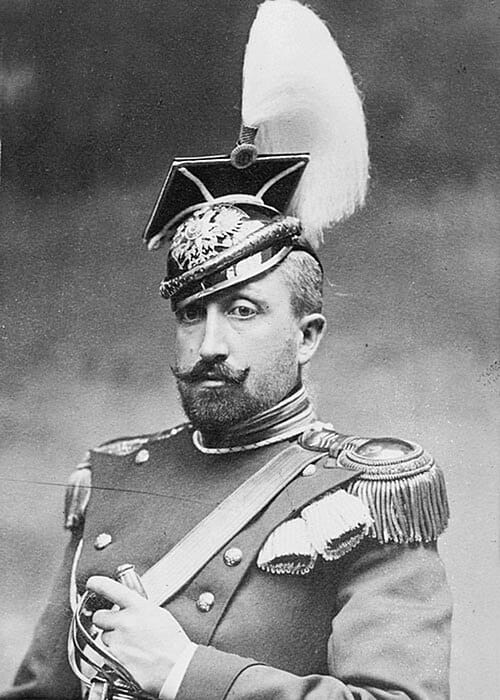
Prince Louis Bonaparte was born in Meudon, France, on July 16, 1864. He was the grandson of Jérôme Bonaparte, Napoleon's youngest brother. His father was Napoléon-Jérôme Bonaparte, and his mother was Maria Clotilde, daughter of King Victor Emmanuel II of Italy. Thus, Louis Bonaparte belonged to both the Bonaparte dynasty and important family ties of European aristocracy.
However, carrying the Bonaparte surname in France was not easy. This name was not just a family name, but also a political memory. For Republican France, the name Bonaparte carried the shadow of the past empire and a possible dynastic return. Louis Bonaparte therefore could not pursue a comfortable career in the French army. He first served in the Italian army, then joined the Russian Imperial army around 1890.
He rose through the ranks of the Russian army. In 1895, he became a colonel. In the early 1900s, he served in cavalry units in the Caucasus. In 1905, as the conflicts in Yerevan escalated, he was given an extraordinary assignment. It would not be accurate to view him as a long-term, ordinary civilian governor of Yerevan. A more precise statement is this: Prince Louis Bonaparte was assigned temporary, extraordinary, and military-administrative powers to restore order in Yerevan during the 1905 crisis.
One of the most striking details in contemporary accounts is that only the signature "Napoleon" appeared under the military proclamations published in the streets of Yerevan.
This signature carries all the irony of the story. Not in Paris, but in Yerevan; not in the service of the French army, but of the Russian Tsardom; not a victory proclamation, but an order for public order – a "Napoleon" signature...
Prince Louis Bonaparte did not remain merely an official giving orders from behind a desk in Yerevan. He recalled General Alikhanov-Avarsky, who was criticized for his harshness and partiality on the Nakhchivan line, and then went to Nakhchivan to see the situation on the ground. This detail shows that he was not just a symbolic dynastic figure, but acted as a military-administrative manager who went into the field.
In October 1905, Yerevan was again in turmoil. Gunshots rang out. Panic began in the city. According to the contemporary account of Italian diplomat and writer Luigi Villari, Prince Louis Bonaparte saw the fire from where he was staying; he took two of his aides and went into the street. He had previously positioned troops at strategic points. Thanks to this, the soldiers quickly secured critical areas of the city.
Then he gave a harsh and clear order. Anyone who did not lay down their weapon, who fired, who continued to fight, would be shot. The most striking order attributed to him was:
"If you are going to shoot, shoot to kill."
These words demonstrate the harshness of the Tsarist understanding of order in 1905 Yerevan. The state could not re-establish public order, but tried to achieve silence through fear. The sense of justice had weakened; but the military order still worked.
With Bonaparte's intervention, the conflicts in Yerevan were quickly suppressed. Artillery units were also kept on standby. It was announced that houses from which shots were fired could be shelled if necessary. But this was not needed, and order was restored in the city. The next day, shops began to open. Within a few days, Yerevan appeared calm from the outside.
However, this was not a true peace. It was a fragile silence achieved by military measures. People could reopen shops, streets could become crowded again, markets could be re-established; but trust between neighbors would not return with the same ease.
The events of 1905-1906 left a deep distrust between Armenian and Azerbaijani communities. The conflicts that began in Baku and spread to Nakhchivan, Shusha, Ganja, and Yerevan held an important place in the bitter memory of subsequent years. When the South Caucasus experienced major upheavals again in 1918, the fears of 1905 were still alive.
Prince Louis Bonaparte's career in the Russian army continued after 1905. In 1910, he retired with the rank of lieutenant general and withdrew to the family estate of Prangins in Switzerland. During the First World War, he again undertook some military-diplomatic duties; he died in Switzerland in 1932.
His days in Yerevan did not find extensive coverage in history books. But history is not only made up of well-known wars, treaties, and rulers. Sometimes a small detail is enough to understand the spirit of an era.
In 1905 Yerevan, there was such a detail: a Bonaparte prince serving in the Tsarist army was trying to restore order in a city shaken by conflicts. Behind him was one of Europe's most famous dynastic names, and before him was the bloody reality of the Caucasus, which the empire struggled to control.
This encounter is one of history's strange ironies: the name Napoleon, years after Waterloo, appeared this time not on fields of victory, but under proclamations of public order in the streets of Yerevan, in the shadow of Ararat.
Sincerely, Mücahit Özden Hun