From Borders to Partnership: The South Caucasus' Search for a Third Transcaucasia and Regional Integration
This essay explores the historical attempts at regional integration in the South Caucasus and proposes a new model for a "Third Transcaucasia" based on economic cooperation and shared interests, rather than political unification.

Dear Readers,
The South Caucasus is a small geographical area on the world map. However, when viewed from a broader perspective, it immediately becomes clear that this small region is located in one of the world's most important transit areas. To its east lie the Caspian Sea and Central Asia, to its west Anatolia and the Black Sea, to its north Russia, and to its south Iran. Land and railway routes, energy pipelines, and historical trade routes stretching between Asia and Europe converge in this region.
Today, the South Caucasus has three independent states: Azerbaijan, Armenia, and Georgia. However, looking at the recent history of these three countries reveals an interesting fact. Within the last century, the South Caucasus was unified twice under a single political structure. The first was the Transcaucasian Democratic Federative Republic, which lasted only a few weeks in 1918; the second was the Transcaucasian Soviet Federative Socialist Republic, established in 1922 and existing until 1936.
These two experiences emerged under very different conditions. The 1918 structure was an attempt by Georgian, Armenian, and Azerbaijani political forces, which emerged in the region after the collapse of the Russian Empire, to remain under one roof. The 1922 structure, on the other hand, was part of a completely different political order, determined by the Soviet system and Moscow. Nevertheless, the two experiences had one common aspect: the idea of three societies, which could not be entirely separated geographically, economically, and in terms of transportation, being considered within the same regional structure.
From this, an important question arises for today. Can a third model of regional integration be established, based on common economic interests and mutual interdependence, without abolishing the sovereignty of Azerbaijan, Armenia, and Georgia? The "Third Transcaucasia" we are referring to here is not about the three countries uniting to form a single state. On the contrary, it is a new form of relationship that can be built on developing transportation, energy, trade, and economic cooperation through common institutions, while preserving the borders and sovereignty of independent states.
THE GEOGRAPHY WHERE THREE EMPIRES INTERSECTED
For centuries, the South Caucasus was one of the regions where major power struggles between the Ottoman Empire, Iran, and Russia took place. Especially at the beginning of the 19th century, Russia's expansion southward fundamentally changed the political map of the region. Russia annexed Eastern Georgia in 1801; after its wars with Iran, it further expanded its dominance in the South Caucasus with the Treaty of Gulistan in 1813 and the Treaty of Turkmenchay in 1828. As a result of the Treaty of Turkmenchay, the Erivan and Nakhchivan Khanates also passed to Russia.
The Tsarist rule, which lasted for approximately a century, did not only change state borders. New roads and railways were built, cities grew, trade relations developed, and the different communities of the region increasingly became part of the same economic area. While Tbilisi became an important administrative and cultural center, Baku transformed into one of the most important economic centers of the Caucasus with the development of the oil industry.
During this process, Armenians, Georgians, Azerbaijani Turks, Russians, Kurds, Jews, and other communities lived side by side or intertwined in many places. This intertwining would later become a major problem during the drawing of nation-state borders. This was because populations did not live in neat areas that could be easily separated on a map. Villages, towns, and cities belonging to other communities could be found among regions where one community was in the majority.
Therefore, explaining the border problems that emerged at the beginning of the 20th century solely by the policies of external powers would be incomplete. The rivalry between Russia, the Ottoman Empire, and Iran undoubtedly deeply affected the political and demographic structure of the region. However, the local nationalisms that developed later, conflicting territorial claims, economic interests, and security concerns were also among the important causes of conflicts.
THE AGE OF NATIONS REACHES THE CAUCASUS
The ideas of popular sovereignty, citizenship, and nation that emerged from the French Revolution of 1789 spread across Europe throughout the 19th century and increasingly to the empires surrounding Europe. It would certainly not be correct to say that modern nationalisms in the South Caucasus were solely a direct result of the French Revolution. Modernization in Russia, the spread of educational institutions, newspapers, printing presses, relations with Europe, and the emergence of new intellectual classes were also important parts of this process.
Towards the end of the century, Georgian, Armenian, and Azerbaijani intellectuals began to think more intensely about the language, history, and political future of their own societies. Modern political organizations emerged, newspapers were published, and different national programs began to take shape. Thus, increasingly distinct national identities and political goals emerged among the peoples living as subjects of Tsarist Russia.
These developments did not only create a cultural awakening. They also brought with them a problem that would lead to serious conflicts in the future: the inclusion of the same territories in the national imaginations of different societies. Indeed, in 1905–1906, severe clashes occurred in various parts of the Caucasus between Armenians and Azerbaijani Turks and Muslim communities, who were mostly referred to as "Tatars" in Russian documents of the period. Thus, by 1917, it was no longer possible to speak of a calm geography where no problems had ever occurred between communities.
1917: AS THE EMPIRE COLLAPSED
The Russian Revolution of 1917 overturned all balances. The Tsarist regime collapsed, and then the Bolsheviks seized power in Petrograd. However, the main political forces in the South Caucasus did not accept Bolshevik rule, and first the Transcaucasian Commissariat, and then in early 1918, the Transcaucasian Sejm, were formed in Tbilisi. Initially, not all of the region's important political actors were thinking of immediately breaking away from Russia and forming three separate states; the idea of broad autonomy within a democratic Russia or a common regional structure was still strong.
But the speed of events outpaced the plans of politicians. The Russian army was disintegrating and withdrawing from the Caucasian front, World War I was continuing, and the Ottoman army was advancing eastward. With Soviet Russia signing the Treaty of Brest-Litovsk on March 3, 1918, the status of Kars, Ardahan, and Batumi came back onto the agenda. When the South Caucasus administration did not accept the terms of Brest-Litovsk, relations with the Ottoman Empire became even more strained.
The region now had to determine its own security, foreign policy, and political future. The Azerbaijani, Armenian, and Georgian political representatives had two main options: to establish separate states or to remain within a common political structure despite all differences. Initially, the second option was chosen.
THE FIRST TRANSCAUCASIA: A FIVE-WEEK REPUBLIC
On April 22, 1918, the Transcaucasian Democratic Federative Republic was declared. The new state, with its capital in Tbilisi, was governed by Georgian Mensheviks, Armenian Dashnaks, and Azerbaijani political representatives. In this respect, the 1918 experience was an attempt by the three major political societies of the South Caucasus to live together within a common federation.
The logic of this endeavor was quite strong at first glance. The region's railways, trade routes, and economies were interconnected; populations were intertwined, and security problems often knew no borders. Even where the borders would pass if three separate states were established was not certain. In such an environment, a federation could, at least in theory, be seen as a solution that could prevent territorial disputes from escalating into interstate wars.
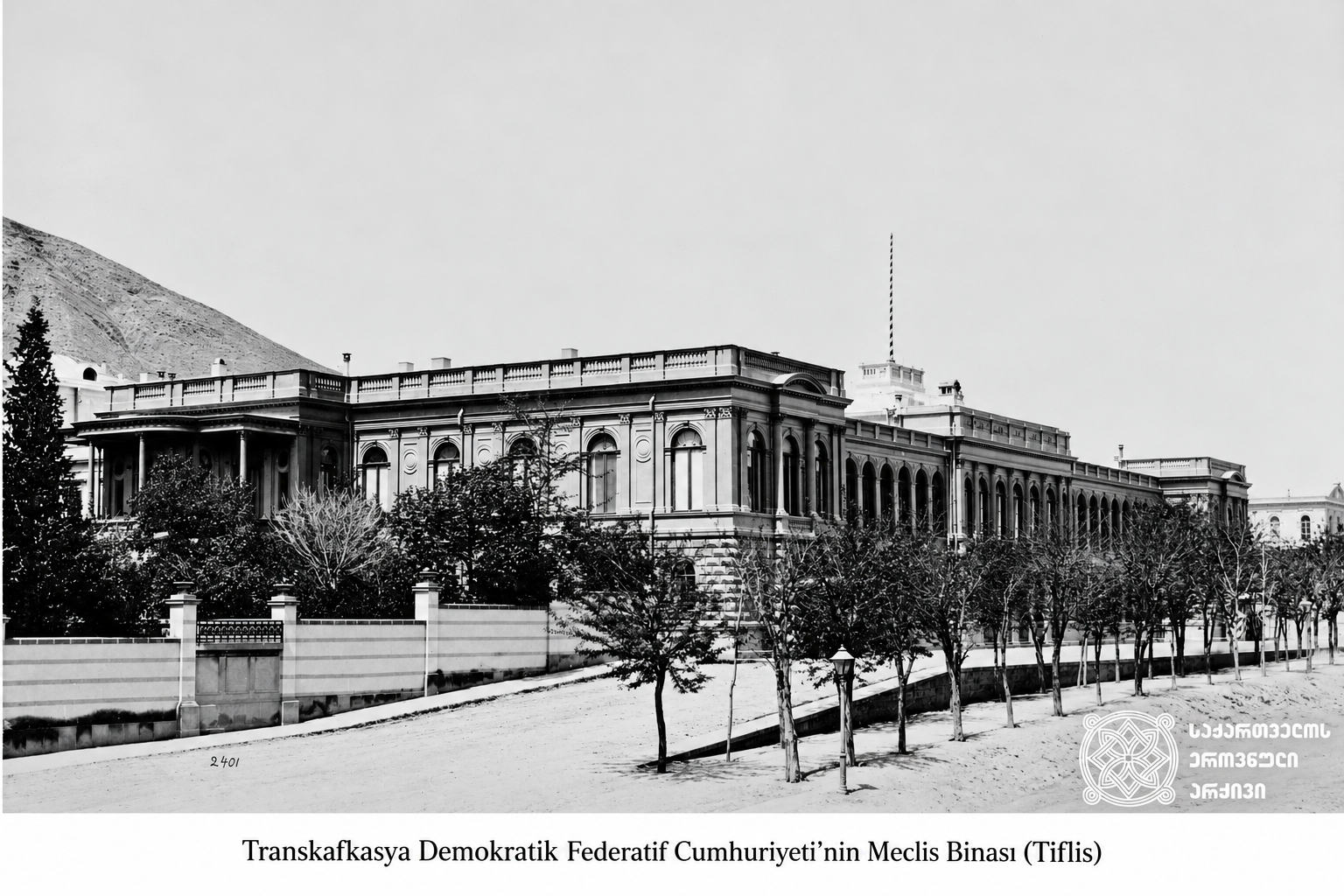
However, establishing a common state was not enough to create a common foreign policy. In the face of the Ottoman advance, the threat perceptions and foreign relations preferences of Georgian, Armenian, and Azerbaijani political circles differed. While the Georgian leadership sought Germany's support, Armenian political circles viewed the Ottoman advance as a direct security threat, and the relations of Azerbaijani political actors with the Ottoman Empire developed on a different basis. These divisions became clearly apparent during the Batumi negotiations.
Finally, Georgia declared its independence by separating from the federation on May 26, 1918, and the Transcaucasian Democratic Federative Republic dissolved. Two days later, on May 28, Azerbaijan and Armenia also emerged as independent states. Thus, the first Transcaucasian experience, which began on April 22, ended in approximately five weeks.
THE FEDERATION DISSOLVED, PROBLEMS REMAINED
The establishment of three independent states did not eliminate the problems in the South Caucasus. On the contrary, some disputes that were previously within a common administrative structure now turned into interstate border problems. This was because the old imperial administrative borders and the new national movements' understanding of their historical and ethnic borders did not overlap.
After 1918, various border disputes occurred between Azerbaijan, Armenia, and Georgia. The intertwining of populations was not a problem that could be solved simply by drawing a line on a map. When discussing which state a region would belong to, the security, property, and political future of the different communities living in that region also became part of the discussion.
This period demonstrated an important truth of South Caucasian history. The loss of power by great empires in the region did not automatically bring peace. External interventions and great power rivalry were important; however, there were also border, security, and sovereignty issues that local actors could not resolve among themselves. In other words, attributing the failure of the 1918 Transcaucasian Republic solely to external powers would be to overlook the region's own internal dynamics.
Perhaps the most important lesson of the first Transcaucasian experience lies here. Living in the same geography and having a common past is not enough on its own to establish a long-lasting political union. For the union to continue, the parties must believe that they gain more economic and political benefits when they live together than when they live separately.
THE SHORT LIFE OF INDEPENDENT REPUBLICS
The three independent republics that emerged in 1918 did not last long. As the Bolsheviks gained the upper hand in the Russian Civil War, Moscow's influence over the South Caucasus increased again. The Azerbaijan Democratic Republic ended in April 1920 with the intervention of the Red Army; Armenia was Sovietized in the same year, and Georgia came under Soviet rule in 1921.
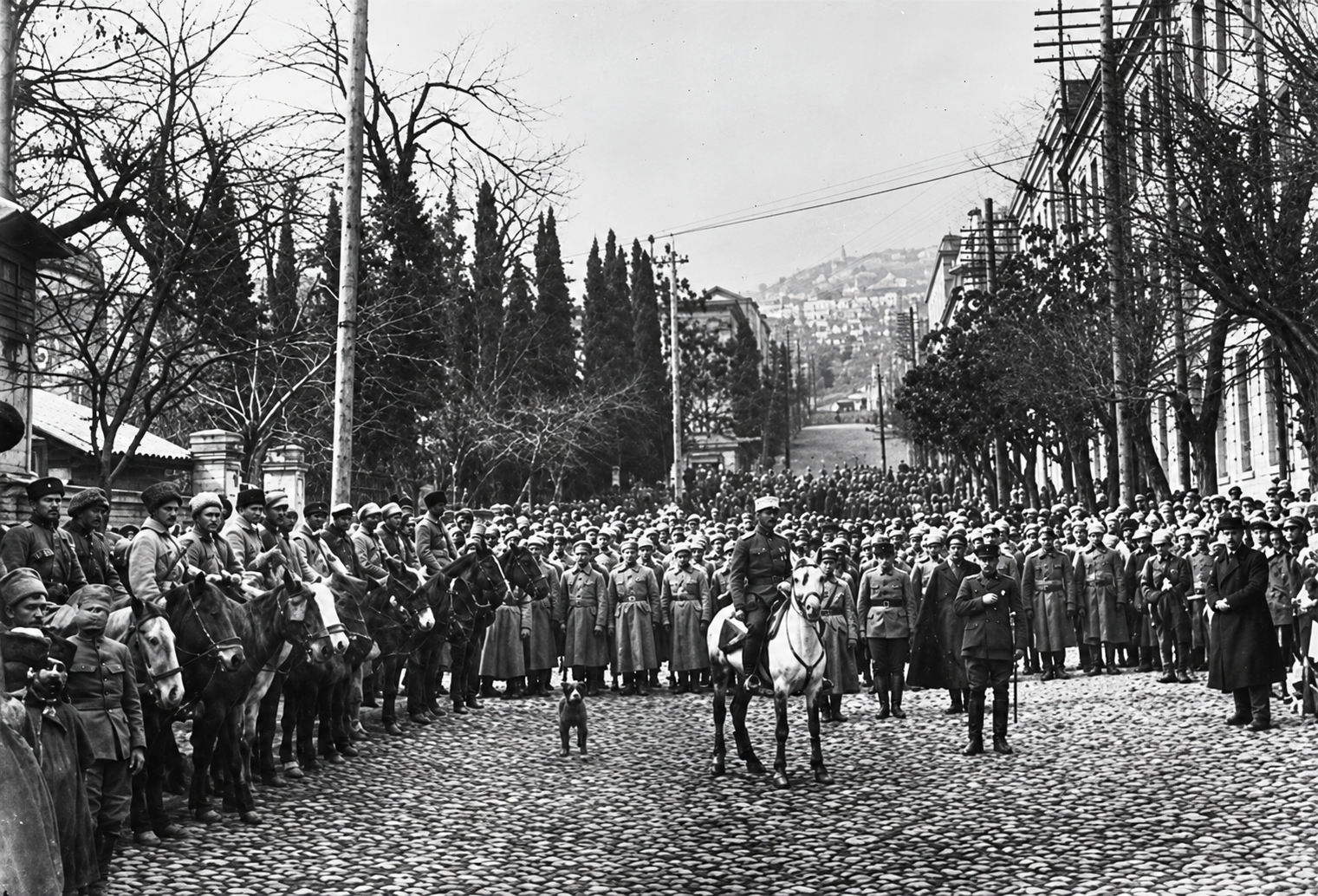
It is important to distinguish the dates correctly here. The three republics did not disappear simultaneously in 1920; the Sovietization process extended over 1920–1921. As a result, the independent political order that had emerged a few years earlier with the collapse of the Russian Empire was replaced by the Soviet system.
THE SECOND TRANSCAUCASIA
Instead of directly making Azerbaijan, Armenia, and Georgia separate founding republics of the Soviet Union, the Soviet administration first united them in a common Transcaucasian structure. On March 12, 1922, a federative union was formed between the three Soviet republics; on December 13, 1922, the Transcaucasian Socialist Federative Soviet Republic was established. In the same month, when the Soviet Union was formed, this federation became one of the founding units of the USSR.
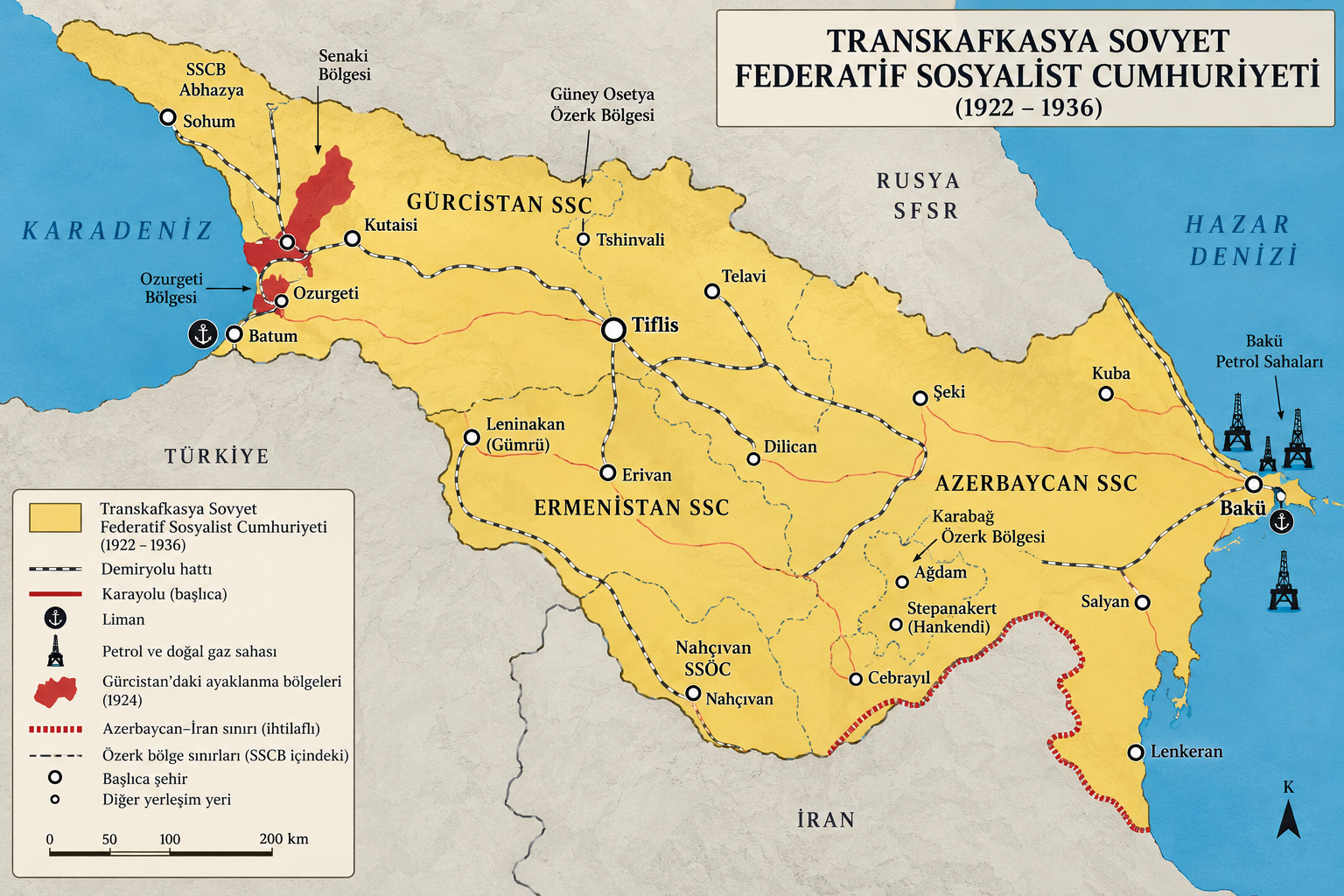
It would not be correct to equate this second Transcaucasia with the 1918 experience. The 1918 federation was a short-lived and rather fragile attempt, established by an agreement between different national political movements. The 1922 federation, on the other hand, was part of a centralized political structure determined by the Soviet Communist Party and Moscow. The fact that there were those within the Georgian political cadres who opposed this federation and wanted Georgia to join the USSR directly shows that the structure was not entirely undisputed.
The Transcaucasian Soviet Federative Socialist Republic continued to exist until 1936. With the 1936 Soviet Constitution, the federation was abolished; Azerbaijan, Armenia, and Georgia thereafter continued their existence directly as union republics of the USSR. Thus, the second Transcaucasian experience, which lasted approximately fourteen years, also came to an end.
1991: INDEPENDENCE RETURNS
With the dissolution of the Soviet Union in 1991, Azerbaijan, Armenia, and Georgia once again became independent states. However, the regaining of political independence did not mean that the economic and transportation systems inherited from the Soviet era would continue in the same way. Due to new borders, wars, and security problems, some previously functioning railways and roads were closed or lost their importance.
Especially the Karabakh conflict between Azerbaijan and Armenia determined the political and economic geography of the region for many years. The wars led to heavy human losses, displacement, and the development of deep distrust between the two societies. Thus, the routes of roads in the South Caucasus began to be determined not only by geography and economy, but increasingly by security and politics.
One of the most striking examples of this situation can be seen in energy pipelines.
BAKU–CEYHAN LINE: GEOGRAPHY TRANSFORMED BY POLITICS
The Baku–Tbilisi–Ceyhan oil pipeline, which transports Caspian oil to the Mediterranean, starts in Azerbaijan, passes through Georgia to Turkey, and opens to the Mediterranean at Ceyhan. Today, this route may seem perfectly natural to us. However, during the project's preparation phase, Georgia was not the only option.
The environmental assessment documents for the Baku–Tbilisi–Ceyhan project clearly state that the routes through Iran and Armenia were also examined as alternatives. The same documents indicate that the political conditions of the time did not allow for a pipeline through Armenia and Iran, and therefore the Georgia and Turkey route was preferred.
In large energy projects, not only distance but also many factors such as terrain conditions, cost, financing, security, international politics, and the attitude of transit countries are evaluated together. However, another conclusion can be easily drawn. If there had been no political conflict between Azerbaijan and Armenia, an energy route reaching Turkey via Armenia could have been one of the real and serious options. This situation shows that political hostility in the South Caucasus affects not only diplomatic relations but also multi-billion dollar infrastructure decisions and the economic geography that future generations will use.
ZANGEZUR: FROM BORDER PROBLEM TO COMMON TRANSPORTATION
A similar issue is seen today in the connection between Azerbaijan's mainland and Nakhchivan. The transportation link, widely referred to as the "Zangezur Corridor" in Azerbaijan, is a strategic route for Azerbaijan that could provide direct access to Nakhchivan and from there to Turkey. For Armenia, the main issue is that any transportation system passing through its territory must operate within the country's sovereignty and legal order.
Therefore, the word "corridor" itself does not carry the same political meaning on both sides. However, recent documents reveal a new approach suggesting that the transportation issue can be addressed within a framework of common economic interest, moving beyond merely a sovereignty debate.
The joint declaration signed in Washington on August 8, 2025, envisioned an uninterrupted transportation link between Azerbaijan's mainland and Nakhchivan via Armenia. The same text explicitly stated that this link should operate on the basis of respect for the sovereignty, territorial integrity, and jurisdiction of the states, and should also provide mutual benefit for Armenia in terms of international and domestic transportation.
This approach became more concrete in 2026 within the framework of the transportation project called TRIPP. The framework agreement of May 2026 links the multimodal transportation system passing through Armenian territory not only to connecting Azerbaijan and Nakhchivan but also to the idea of connecting the Caspian basin to a wider trade network extending to Europe. The document particularly emphasizes that Armenia's sovereignty and jurisdiction over the said route will continue.
Thus, the question arises whether a geography previously seen only as a conflict zone can also be a transportation area that can generate common gains. Whether this approach succeeds or not; it is not possible to say definitively today. However, the discussion of transportation itself as one of the tools for peace and regional economic integration is a remarkable change for the South Caucasus.
THE LESSON FROM FRANCE AND GERMANY
At this point, it might be useful to look at Europe's recent history. Today, when looking at the relations between France and Germany, it is not easy to remember that the two states saw each other as one of the main security threats only a few generations ago. The Franco-Prussian War of 1870–1871, followed by World War I and World War II, left an extremely heavy historical legacy between the two societies.
When World War II ended in 1945, it was certainly not possible for the historical enmity between France and Germany to disappear within a few years. Nevertheless, the founders of Europe developed a very important method: first, to link the fundamental economic and strategic interests of the two countries. They tried to base peace not only on goodwill but also on mutual interest.
On May 9, 1950, French Foreign Minister Robert Schuman proposed placing French and West German coal and steel production under a common high authority. This resulted in the European Coal and Steel Community, which included France and West Germany, as well as Italy, Belgium, the Netherlands, and Luxembourg. At the heart of Schuman's idea was to link economic interests so closely that a new war between France and Germany would become extremely difficult not only politically but also materially.
The interesting aspect of this model for the South Caucasus is that European integration did not begin by establishing a common constitution or a single state. The beginning was extremely concrete: coal and steel. First, common economic interest was created; political and legal integration developed later, over many years.
WHAT COULD BE THE "COAL AND STEEL" OF THE SOUTH CAUCASUS?
Of course, Western Europe of the 1950s is not the same as today's South Caucasus. Their security environments, the size of their states, their relations with great powers, and their historical experiences are different. Therefore, the European Union model is not a ready-made recipe that can be directly transferred to the South Caucasus.
However, a method from the European experience can be examined: instead of expecting the parties to love each other, create common areas of interest that will make them need each other. For the South Caucasus, such an area does not have to be coal and steel. Energy pipelines, railways, roads, electricity grids, border trade, ports, and transit routes extending from the Caspian to Anatolia and the Black Sea can serve a similar function.
Azerbaijan's energy resources, Georgia's geographical location opening to the Black Sea, and Armenia's place in regional land transportation do not have to be competing elements. When appropriate political conditions are created, these can turn into complementary economic advantages. Similarly, Turkey, Iran, and the Central Asian countries east of the Caspian can also become natural extensions of such a transportation network.
The fundamental issue here is not for Azerbaijanis and Armenians to forget what happened in the past. The historical memories of societies cannot be expected to be erased by a few agreements. The more realistic question is: Does the cost of a new conflict gradually increase for states that use each other's railways, profit from each other's markets, and benefit from the safe operation of the same transit lines?
This is precisely the intellectual contribution that the European example offers to the South Caucasus. Economic integration may not solve every political problem; but economic interdependence can make the preservation of peace more valuable.
WHAT KIND OF STRUCTURE COULD THE THIRD TRANSCAUCASIA BE?
When "Third Transcaucasia" is mentioned, one should not imagine a new state, a new capital, or a common flag. Re-establishing the 1918 federation may not be suitable for today's conditions; the 1922 Soviet model, on the other hand, is entirely a product of a different political system. Today's conditions allow for discussion of other models where independent states can form common institutions while preserving their own sovereignty.
In such a system, Azerbaijan, Armenia, and Georgia can maintain their own state structures, parliaments, armies, and foreign policies. In return, institutional cooperation can be developed in areas such as common transportation planning, railway operation, simplification of customs procedures, electricity and energy connections, environmental issues, trade, and border crossings.
This structure does not need to go as far as the European Union. Europe took decades to reach its current state, and initially, a union with such broad powers was not envisioned. The important thing is that integration should start not with very grand political goals, but with areas that produce concrete benefits in the daily lives and economies of the parties.
From this perspective, the first question for the South Caucasus may not be "Can the three countries unite?" Perhaps a more appropriate first question is, "Can the railways of the three countries be reconnected?" Because even though starting trains may seem like a much smaller step than agreeing on a common constitution, it can create economic relationships that can change how societies view each other in the long run.
THE HISTORICAL BURDEN ON THE PATH TO PEACE
It would not be realistic to underestimate the problems facing such a model. The distrust between Azerbaijanis and Armenians did not emerge in a few years, nor will it disappear with a few diplomatic meetings. Wars, massacres, forced migrations, displacements, and lost loved ones have left deep scars on the memory of both societies.
Moreover, the ways in which the parties narrate the past are often very different. Individuals seen as heroes in the national memory of one society may be evaluated in a completely different way in the historical narrative of the other. Even the naming of the same cities, regions, and historical events sometimes becomes a subject of political debate.
The issue becomes even more complex when Georgia's own security concerns, Russia's historical and current influence, Turkey's relations with Azerbaijan and Armenia, Iran's border and transit policies, and broader international competition are added to the regional equation. Therefore, it would not be correct to think that all problems will automatically be solved simply by opening economic lines.
However, the exact opposite should also be questioned. Waiting for all historical and political disputes to be resolved could mean postponing economic cooperation to an uncertain future. Europe's experience has shown that, in some cases, political reconciliation can develop not as a prerequisite for economic cooperation, but as its result.
WHAT DOES GEOGRAPHY SAY?
When we momentarily remove the colors of political borders from the map, the economic logic of the South Caucasus becomes clearer. Baku is on the western shore of the Caspian; to its west are Georgia and Armenia, and further west, Turkey and Europe. While Georgia opens to the Black Sea, Armenia, as a landlocked country, needs the transportation networks of its neighbors. Nakhchivan, although separated from Azerbaijan's mainland, shares a direct border with Turkey.
Beyond the Caspian lie Kazakhstan and Turkmenistan. For goods to be transported from these countries to Europe, the South Caucasus is a natural transit region between Central Asia and Anatolia and Europe. When considered in a north-south direction, the strategic importance of the same region emerges between Russia, Iran, and markets further south.
The economic value of such a geography is directly proportional to the openness of its routes. Closed borders, unused railways, and routes extended for political reasons impose costs not only on one country but on the entire region. Peace and cooperation, on the other hand, can enhance the economic value of the same geography.
Therefore, looking at the future of the South Caucasus solely with the question "which territory belongs to whom?" may not be sufficient. Sovereignty and border issues are certainly of fundamental importance for states, but in addition, the question "how can more prosperity be generated together from this geography?" can also be asked. There is a significant difference between three economies working against each other and three economies benefiting from each other's opportunities.
FROM TWO HISTORICAL EXPERIENCES TO A THIRD MODEL
In 1918, Georgians, Armenians, and Azerbaijanis tried to remain within the same federation, but this experience lasted only a few weeks. In 1922, Soviet power reunited the same three republics under a common Transcaucasian structure, and this second structure continued until 1936. The first was based on the fragile compromise of independent political actors, while the second was based on the Soviet central system.
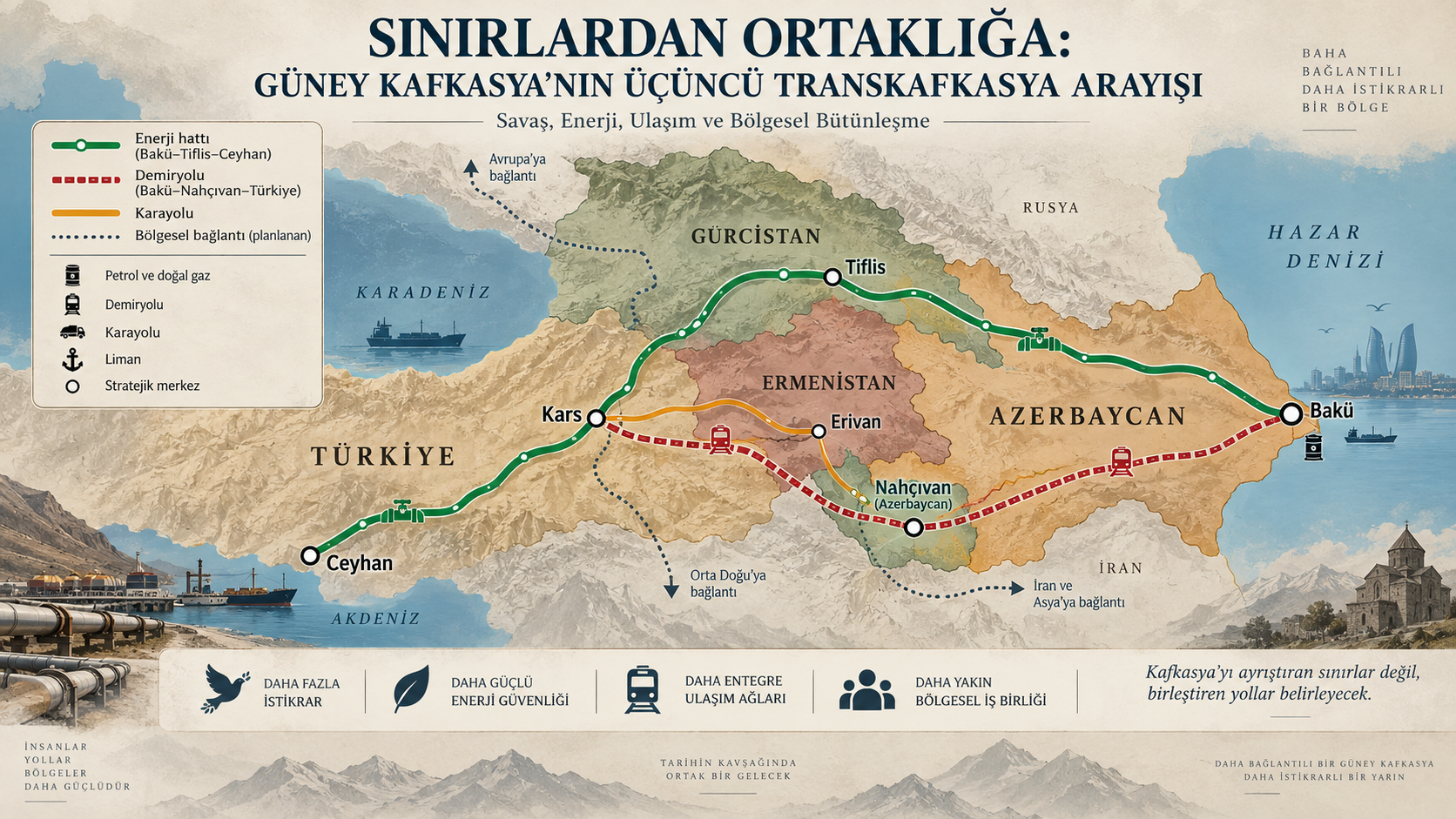
If a third model is considered today, it does not need to be a copy of the past two structures. The main issue today may not be to eliminate political borders, but to change their economic function. A system where people and goods move more easily, transportation lines are connected, and countries benefit economically from the stability of their neighbors can be entirely different from previous Transcaucasian experiences.
Therefore, the concept of "Third Transcaucasia" here is not a proposal for a new state, but a thought experiment. The question is not whether Azerbaijan, Armenia, or Georgia will give up their independence. The real question is whether three independent states can create common areas of interest without infringing on each other's sovereignty.
CONCLUSION: PERHAPS A RAILWAY FIRST, NOT A CONSTITUTION
The last two centuries of South Caucasus history show us two different realities simultaneously. First, there are severe conflicts, wars, and deep historical distrust among the societies of this region. Second, it is not easy for the same societies to be completely separated from each other in terms of geography, transportation, and economy.
Oil from Baku must still reach the west. Goods from Central Asia will seek a route to Europe after crossing the Caspian. Nakhchivan will want to establish more direct transportation links with Azerbaijan's mainland; Armenia will evaluate the economic consequences of participating more broadly in regional trade routes; and Georgia will continue to benefit from its position between the Caspian and the Black Sea.
The real issue is whether these routes will operate despite each other or thanks to each other. The three states of the South Caucasus can either remain in a mutually exclusive competition to create alternative routes, or they can develop another model that combines the economic value of their own territories with the routes of their neighbors. Which one will happen will depend on political choices, security conditions, and what kind of future societies want in the long run.
European integration does not give us a single, directly applicable recipe. But the example of France and Germany offers an important historical insight: peace between states that have warred for centuries can be strengthened not only by agreeing on the past, but also by creating common interests that would be lost if war were to break out in the future. This was the fundamental logic behind the Schuman Plan's pooling of coal and steel.
The coal and steel of the South Caucasus may be oil, natural gas, electricity, railways, and transit trade. Perhaps the first big step of the future will not be drafting a new constitution or declaring a new federation. Reopening a once-closed railway, starting mutual freight trains, or an energy pipeline providing economic benefits to all parties could be a much more realistic start.
If one day there is talk of a "Third Transcaucasia," it does not have to have a common flag or capital. Perhaps its true symbol will be a train from Baku reaching Nakhchivan and Turkey via Armenia; goods from Erivan reaching the Caspian and Central Asia via Azerbaijan; and goods from the entire region reaching the Black Sea via Georgia.
For over a century, borders have separated the peoples of the South Caucasus. The real question of the 21st century is not whether these borders will disappear; it is whether borders can cease to be walls and transform into transit points for economic partnership.
Perhaps the South Caucasus' third Transcaucasian experience will begin not with establishing a state, but with reconnecting roads.
Sincerely, Mücahit Özden Hun