Murder in Cairo!
The author recounts a terrifying encounter in Cairo where he was mugged and, believing he had killed his assailant, spent days in fear before a surprising discovery.
Dear Readers,
The summer heat and holiday mood must have relaxed your mind and increased your desire to read. So, on such a day, I wanted to come before you with an incident that happened to me.
***
CITY OF HOUSTON
It was August 1997. Chevron, the oil company I worked for in Houston, wanted to expand its investments in the Middle East.
These were the years following the collapse of the Soviet Union. Energy resources around the world were rapidly changing hands, and new investment opportunities were emerging. Chevron was also seeking a cooperation agreement with the Egyptian General Petroleum Corporation (EGPC) to conduct joint exploration activities in the Red Sea, Mediterranean Sea, Gulf of Suez, and the Sinai Peninsula.
Preliminary discussions between the two companies had taken place in Houston, and it was decided that the second meeting would be held in Cairo.
I was perhaps one of the most important, if not the most important, experts of Middle Eastern origin in the company. I knew French, and I also understood Egyptian Arabic (very different from other dialects!) to some extent.
To be honest, the real American engineers in the company were cautious about choosing which foreign country they would be sent to. The Muslim Brotherhood's acts of violence against European and American tourists in Egypt were frequently reported in the press.
Company management had difficulty sending personnel to countries like Venezuela, Colombia, and Nigeria, where kidnappings for ransom were common. Kidnappings for ransom did not result in death; negotiations were held, and ultimately the company paid the requested money. However, the Muslim Brotherhood did not need to kidnap; they killed tourists on sight. Given this, it was inevitable that I would go to Cairo to encourage the team.
CAIRO
It was my first trip to Cairo. What would be discussed at the meeting was clear. We had worked for days on detailed information about the projects. Our geological engineers, who would conduct field exploration, had a dozen questions. Our counterparts, the EGPC engineers, needed to enlighten us on this matter. I was also to prepare a report on the political and investment environment of the exploration area.
When our plane landed at Cairo airport, a scorching heat greeted us. We collected our suitcases and went outside. Taxi drivers were pushing each other, trying to get customers. Everything was dilapidated and, unfortunately, dirty. In short, after the US, Cairo seemed very disorganized and frightening.
My American friends, who had never even stepped out of Texas, let alone the US, were scared by the sight. They clung to me like chicks seeking refuge with their mother hen, as if the Muslim Brotherhood was about to kidnap or shoot us at any moment. We got into two taxis and set off.
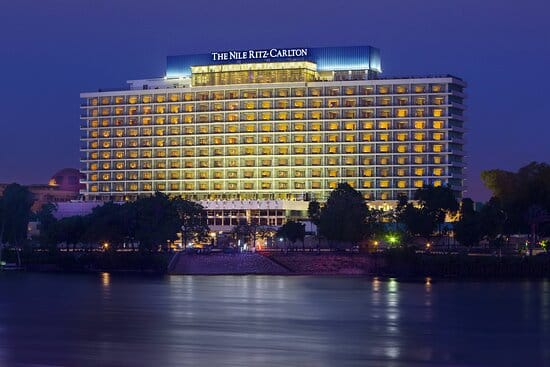
After spending hours stuck in traffic, we finally arrived at The Nile Ritz-Carlton Hotel in Tahrir (Freedom) Square. As we entered through the door, it felt as if we had come to another world. The coolness of the air conditioning, the distant view of the Nile River, the hotel's spacious lobby, and its cleanliness put us at ease. The rooms were also spacious and excellent. My American friends chatted and laughed, saying, "You could kill me, but I won't step out of this hotel." Their spirits had lifted. It was 9 AM. We parted ways, agreeing to meet for dinner. Everyone eagerly retreated to their rooms.
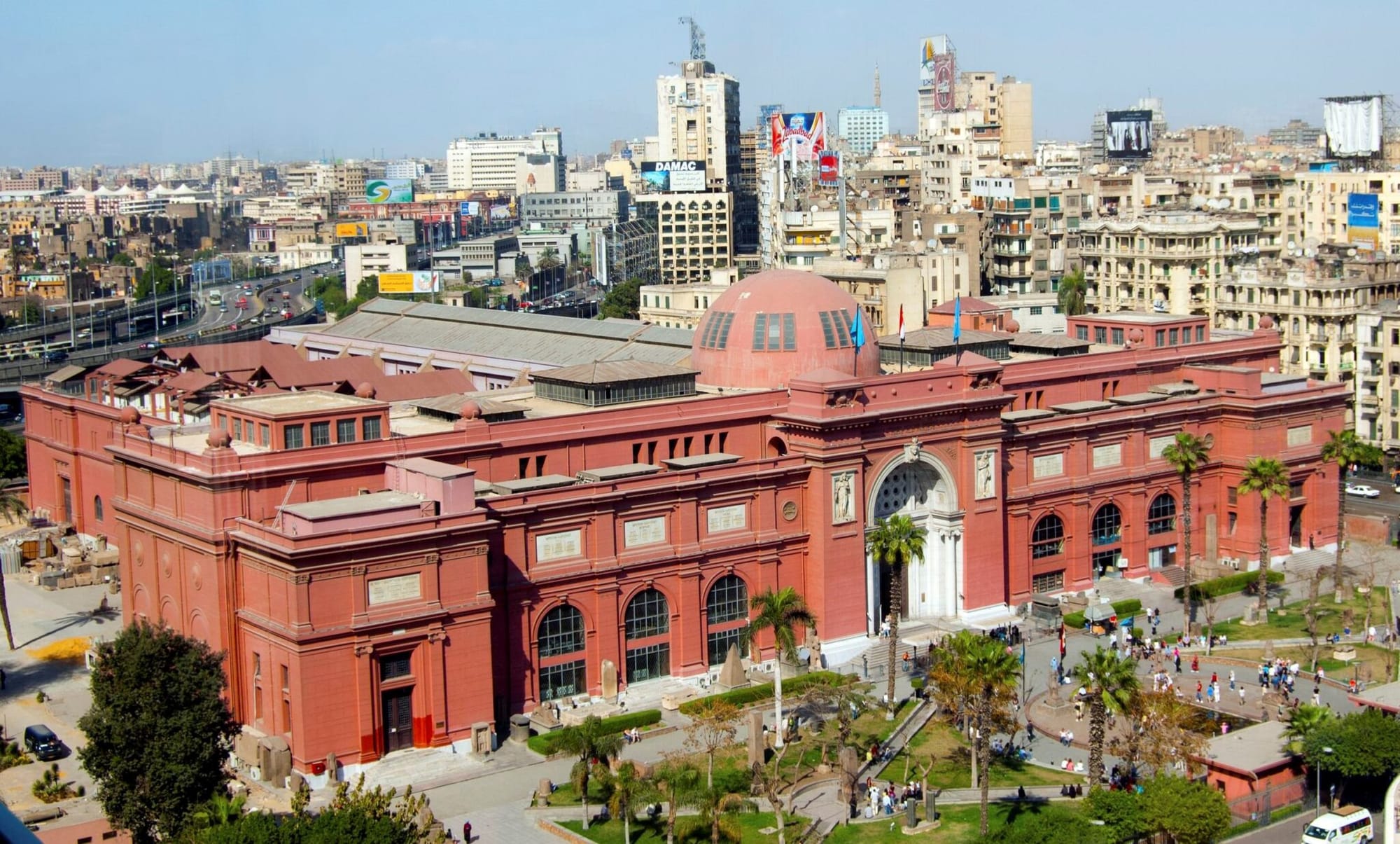
My curiosity about language and culture drew me outside. I had a whole day ahead of me. Taking the English-Arabic (Egyptian Arabic) phrasebook I had almost memorized, I went out to Tahrir Square. The Cairo Archaeological Museum was not far. I stayed in the museum until evening. I paid 50 dollars for a private guide. The guide preferred to speak French. He was knowledgeable about his subject, and his explanations impressed me.
DAY TWO: THE MEETING
Upon returning to the hotel, I called the EGPC official. They wanted to host us at the EGPC building, but my American friends were unwilling to leave the hotel. I gently explained the mood of my friends to the EGPC official and tried to persuade him. The EGPC team came to the hotel on the second day, in the afternoon.
There was a spacious meeting room. Our Egyptian colleagues were pleasant and sociable people. It was an enjoyable meeting. Mutual information exchange was completed. I also took notes necessary for preparing my report. We left with the hope of having a second meeting if necessary.
My American friends were eager to return to Houston as soon as possible. They had no plans to visit the pyramids, Al-Azhar Mosque, museums, or take a felucca ride on the Nile. Their only wish was to reunite with their families before they died. But there was one thing they forgot: we had come to Cairo for a week!
DAY THREE: SALADIN AYYUBI
My Egyptian friends recommended that I see Qala Salahaddin (Saladin's Citadel). I took a taxi to the citadel. Is there any other city where the Kurdish Saladin Ayyubi is so beloved? The name "Saladin" was in the common language, part of daily life. Everyone knew he was a Kurdish Sultan and did not Arabize him.
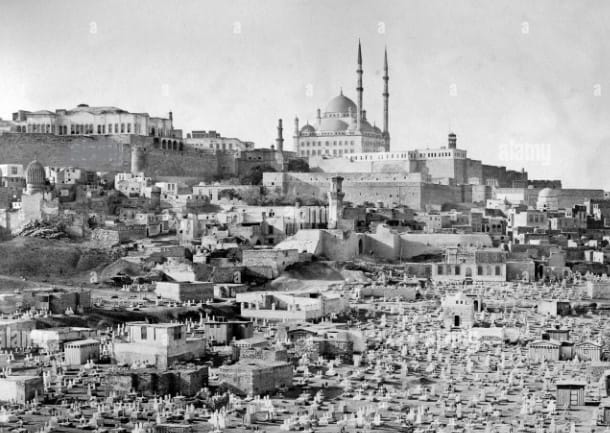
I hired a private guide. Speaking English, the guide meticulously conveyed historical information about the Citadel. I had read several books and encyclopedias published in French and English about Saladin Ayyubi. Meeting the material and spiritual legacy of Saladin Ayyubi, one of the most important figures in Kurdish history, perhaps the foremost, in Cairo, evoked a pleasant feeling within me.
Saladin Ayyubi, who conquered Cairo with his uncle Shirkuh at the request of the Turkish Sultan Nur ad-Din, declared himself Sultan of Egypt after his uncle's death. He began the construction of the citadel in 1176 to protect the city against the Crusader armies pouring in from Europe. When Sultan Nur ad-Din passed away, he settled in Damascus and established the Ayyubid State.
Inside the citadel, there was also the Muhammad Ali Pasha Mosque, built by Muhammad Ali Pasha of Kavala in the 1830s.
I was very surprised when the guide introduced Muhammad Ali Pasha as belonging to a Kurdish family whose ancestors were from Diyarbakır. In our history books, Saladin Ayyubi was taught as "Turk" and Muhammad Ali Pasha as "Albanian."

I first learned that Saladin Ayyubi was Kurdish from the French CEO of the company I worked for in Paris, and out of curiosity, I read books and encyclopedias written about him. Saladin Ayyubi's grandfather Shadi, father Najm ad-Din, and uncle Shirkuh, upon an invitation, left Divin (today a ruined place within Armenia's borders) on the banks of the Aras River, on the other side of Iğdır, and settled in Tikrit, Iraq. However, very soon after, due to a feud, on the night Saladin Ayyubi was born, his family set off again, reached Mosul, and came under the protection of the Turkish Sultan Imad ad-Din Zengi (Nur ad-Din Zengi's father). When Nur ad-Din Zengi became Atabeg, he appointed Najm ad-Din as the Commander of Damascus Citadel. Shirkuh, the greatest military genius of Kurdish history, was also honored as a General, i.e., Army Commander. (It was his uncle Shirkuh who taught Saladin Ayyubi the art of war.)
Similarly, Muhammad Ali Pasha's family migrated from Diyarbakır to Konya and then to Kavala due to a blood feud. Muhammad Ali Pasha was born in Kavala (Greece). He went to Egypt as a soldier. There was a problem of governance and disorder in Egypt. He gathered the Kurds remaining from Saladin Ayyubi's time, seized power, and declared himself Governor. In 1811, he had the Mamluk (professional soldiers / slaves of Caucasian origin) Beys collectively killed during a ceremony (Citadel Massacre), strengthening his power. Muhammad Ali Pasha is considered the founding father of modern Egypt.
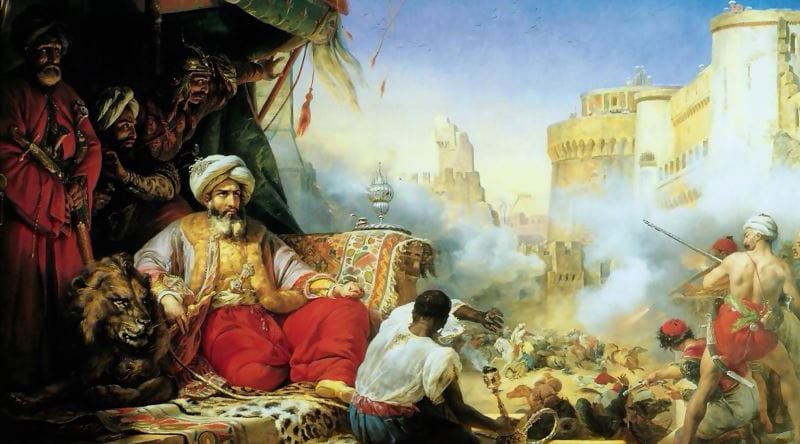
The guide continued: "There are three Golden Ages in Egyptian History: The first is the era of the Pharaohs, the second is the era of Saladin Ayyubi, and the third is the era of Muhammad Ali Pasha (the Khedival Era)."
The fact that both names were "Kurdish" evoked a strange feeling within me. At that moment, it was impossible for me to hide my anger towards the history books in Turkey. (I wanted to add a note that the first Kurdish newspaper, "Kurdistan," was published in Cairo in 1898 by Mikdad Midhat Bedirhan, and Cairo Radio had been broadcasting regularly in Kurdish since 1957.)
DAY FOUR
I had my breakfast late and went out. I had a friend who was a lecturer at the American University in Cairo. We had graduated from the same school. I had told him I would visit him when I arrived in Cairo.

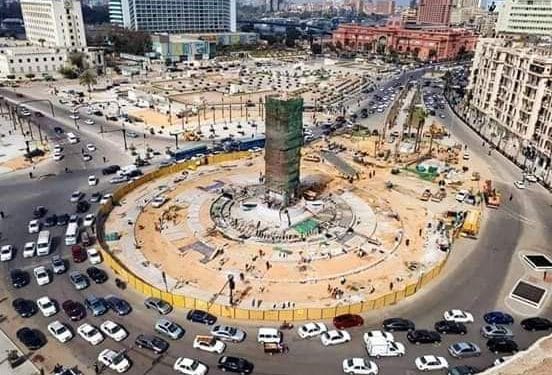
The American University building was on the other side of Tahrir Square. I had to cross the street to get there. There were no pedestrian crossings, and no one seemed to obey traffic lights.
The city's wide main roads converged at Tahrir Square, with tens of thousands of cars moving slowly, barely an inch apart. It was impossible to cross. As I wondered what to do, a well-dressed gentleman with a tasseled fez approached:
"I'm sure you're a foreigner, am I wrong?"
It was impossible for me to hide the truth.
"Yes! I'm American!"
"I'm an American admirer."
He pointed with his hand to the American University building in the distance:
"I graduated from the American University. One of my sons is also continuing his education in America. Did you come as a tourist?"
"No! We had business meetings."
"My name is Anvar! Your name?"
"Mucahid!"
"Ah, what a beautiful name: Mucahid, Mucahid…."
He pointed to the hotel:
"Are you staying at the Ritz-Carlton?"
"Yes!"
"A very good choice! The owner is my friend. It's a safe place. I love its pool. How long will you stay?"
"We have a few more days."
I couldn't help but ask:
"What do you do?"
"Me? I do the most beneficial work in the world. Would you like me to tell you?"
"Please do!"
"I studied botany. In recent years, I have conducted serious studies on curing cancer with plants. The plant extract I am currently working on treats all kinds of cancer. It's a miraculous plant! It only grows along the Nile. Herodotus was not wrong when he said, 'The Nile gives life to Egypt.' Soon it will give life to all humanity."
"Really? Have you ever tried it?"
"What do you mean! I've saved hundreds of lives."
He showed me the medal pinned to his lapel:
"A state medal! You understand, don't you? Would you like to see my laboratory? It's useful to have some of this plant extract with you. You know how life is. The drugs on the market don't solve cancer. They make patients even sicker with radiation therapy. I will put an end to this nonsense."
The gentleman spoke confidently. His politeness, his excellent command of English, his demeanor, and his attire inspired confidence.
"Yes, I would like to see your workplace."
"It's not far! In that building you see ahead!"
Ahead, there was a stone building with a magnificent facade.
"Okay, let's go! But how will we cross?"
"Don't worry. This is my job. Follow me!"
The gentle, refined man suddenly changed, fearlessly plunged between the cars, punched their hoods, shouted in Arabic, stopped the cars and cleared a path, allowing us to cross.
I thought we would enter through the front door of the beautiful building.
"The entrance to my laboratory is from the back facade..."
Turning around the building and entering the street that opened to the back facade, I was astonished. In a narrow street, a human torrent flowed like water. All kinds of small shops were side by side, intertwined. We struggled to push through the crowd. Poverty and weariness seemed to have settled on people like a silent sorrow.
We stopped somewhere. We went down two steps. The gentleman, reaching into his pocket for the key, must have noticed the apprehension on my face, for he mumbled reassuringly:
"Don't worry! Cairo is a safe city. There's nothing to fear!"
We entered through the broken-down door. The gentleman turned on the lights. He closed the door from behind, turning the lock three times.
Inside, there was a heavy scent of perfume and spices. While I expected a modern laboratory, I found myself in a shop smaller and more cluttered than the neighborhood grocery store in Iğdır from my childhood.
The gentleman picked up a skewer-like object leaning against the wall next to the door. He turned to me. His facial expression and tone of voice suddenly changed:
"Hand over your money, or I'll kill you. You'll be food for the crocodiles in the Nile River!"
I flinched in shock and fear. He was right. He could easily kill me, put my body in a sack in the middle of the night, and throw it into the Nile River. No one would find a trace of me.
Since I frequently traveled abroad, I had developed a habit. I would put about 1000 dollars in cash into a stringed wallet and hang it around my neck under my shirt, with the wallet under my armpit. I would carry about 200 dollars in my regular wallet.
The threat was serious. The polite gentleman was gone; in his place stood a ruthless psychopath, eyes darting, roaring with pleasure like a lion cornering its prey, ready to kill. I was helpless:
"Okay! Okay! I'll give you all my money."
I moved slowly, racking my brain for a way to escape this predicament. There was a bottle full of liquid on the table. I slowly took out 200 dollars from my wallet and placed it on the table. My aim was to make him approach the table.
The gentleman pounced on the table like a greedy wolf, trying to quickly grab the money. I acted swiftly, grabbed the bottle, and brought it down with all my might on the back of his neck. The bottle shattered, and the man collapsed to the floor. The skewer in his hand flew to one side, and the money scattered to the other. He lay motionless on his back.
I picked up the 200 dollars from the floor and put it in my pocket. A fear gripped me: had the man died? I had to get out of the shop as soon as possible. There was a small window above the door, covered with a sheer curtain. The key was in the door. I turned the lock twice and peeked outside. The street was sometimes crowded, sometimes empty. Since it was midday, the human torrent had disappeared. If I left the shop like this and the man had died, the neighbors could describe me to the police.
I don't remember how long I waited. On one hand, I was looking at the motionless man on the floor, and on the other, I was planning to slip out into the street at an opportune moment and escape. Just then, dozens of porters, carrying loads on their backs, started passing by the door, one after another, just like in Mahmutpaşa, Istanbul. Seizing this opportunity, I darted into the street, bent down, mingled among them, and we walked quite a distance together. At the first chance, I broke away from them and ran off. I returned to the hotel and locked myself in my room.
Only one question gnawed at my mind: Had the man died? If he had, would the police find my trace? Oh no! My life would be spent in Egyptian prisons! What could I do? To whom could I tell my troubles? I was helpless!
I spent a sleepless night. The first thing I did the next morning was to buy English, French, and Arabic newspapers and check the news sections. I was looking for a headline in the Arabic newspapers like: "قتل صاحب متجر" (A shop owner was killed!) No! There was no such news, but I was filled with fear. I couldn't share this information with anyone.
We still had three days until our flight. I feigned illness and didn't leave my room. My spirit was drained; I had become half-dead. Living with such guilt was a great punishment. I couldn't help but remember Dostoevsky's Crime and Punishment, seeing myself as "Raskolnikov," who killed the old pawnbroker woman.
Every time the door knocked, I was overcome with sadness, thinking, "I've been caught! The police are here!" only to see the cleaning ladies when the door opened.
It was flight day. We had to leave the hotel at 11 AM. I met my friends in the lobby. Everyone was happy to be returning to Houston. But I was struggling with the fear that "I will definitely be caught at the airport."
As we drove off in two taxis, the man I thought I had killed by hitting him with a bottle was standing a little further ahead, neatly dressed, with his tasseled fez, chatting with another foreigner. From his body language, I understood that he was trying to lure his new prey by speaking politely, just as he had done to me. To my friends' astonishment, I let out a laugh! I was relieved!