On İsa Mert's Novel "My Love or My Struggle"
This essay reviews İsa Mert's two-volume novel "My Love or My Struggle," exploring its portrayal of a generation's ideals, broken dreams, and unfulfilled loves amidst Turkey's turbulent 1970s and 1980s.

A Generation's Ideals, Broken Dreams, and Unfinished Love
On Wednesday, October 21, 2026, my wife and I met with Iğdır-born author İsa Mert at a patisserie on Turan Güneş Street in Ankara, at his invitation. I had known İsa Mert's name from the press and his literary works before, but this was my first time meeting him. It was particularly meaningful for me to meet an author who grew up in Iğdır's Yaycı village, experienced the political turmoil of the 1970s, and transferred the memories of this period into his two-volume novel, My Love or My Struggle (Ya Sevdam Ya Kavgam).
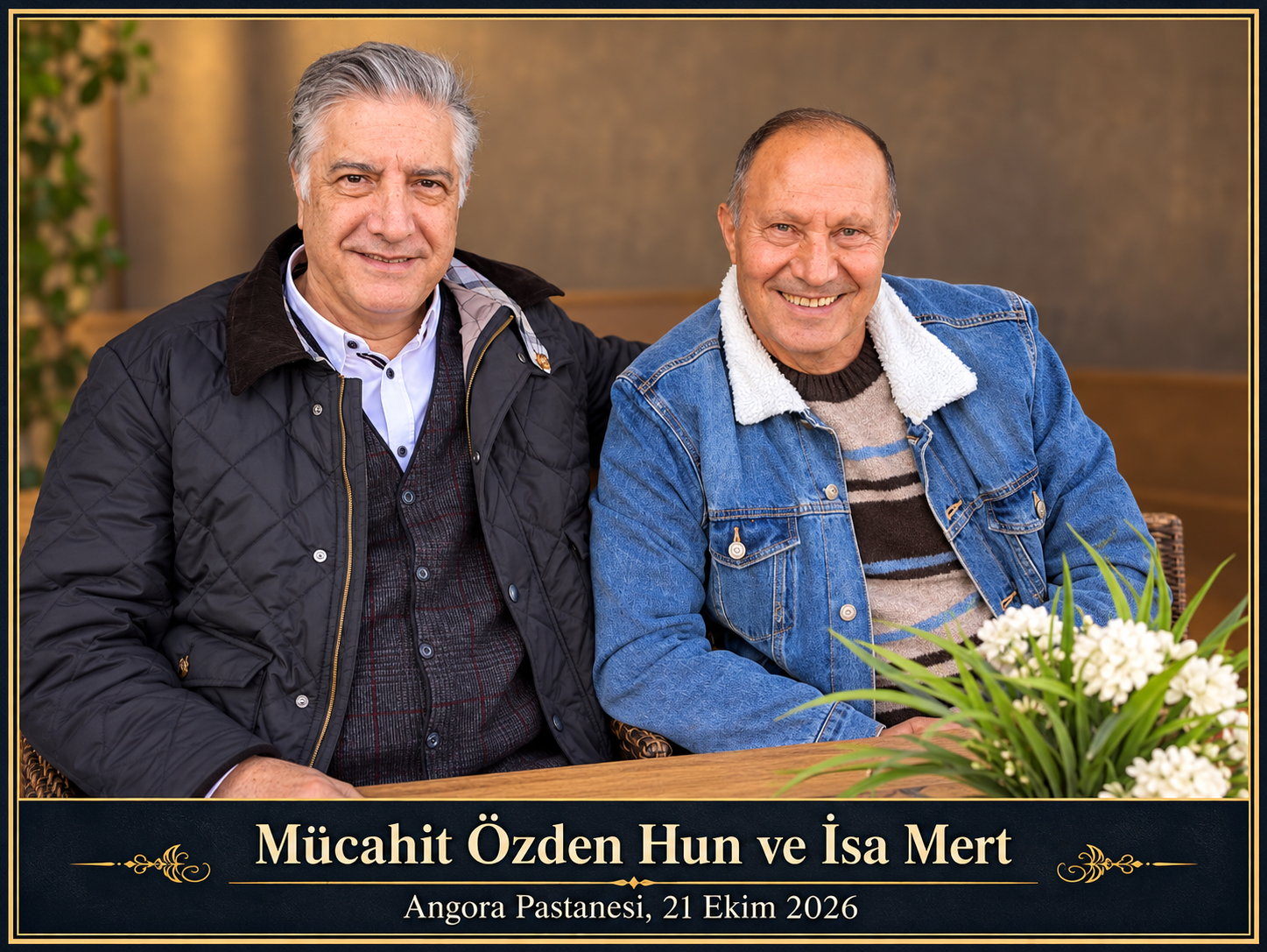

Our conversation was not merely a literary gathering centered around two newly published books. It was also an opportunity to reflect on the years we left behind, the history of Iğdır, and the social transformations experienced by a generation. Because the life narrated in İsa Mert's novel is not just one person's personal adventure. It is the story of a generation that grew up in one of Turkey's most turbulent periods, became acquainted with political ideas at an early age, and tried to live love, family, friendship, and struggle within the same life.
İsa Mert represents himself as Mert in his work, which combines autobiographical elements with fiction. The protagonist of the novel is born in Yaycı village, Iğdır. The family separation that begins with his father going to Germany for work, his mother's sacrifice, his introduction to the Ülkücü (Idealist) movement, his love for Hilal, the pains caused by the September 12 military coup, and the political disappointments of later years form the main stops of this long life story.
However, what makes the novel truly interesting is not so much these events themselves, but how they shaped a person's character and what traces they left on his soul.
A Country's Divided World
Turkey in the 1970s was a turbulent period where political polarization spread to almost every area of society, and different ideas gradually turned into a fierce struggle. The division between right and left extended from university corridors to high school classrooms, from factories to workers' neighborhoods, from city squares to village coffeehouses. People began to be defined not only by the ideas they defended but also by which newspaper they read, which association they frequented, and with whom they befriended.
Political polarization eventually began to affect even the natural relationships of daily life. People living in the same neighborhood, attending the same school, and working in the same field drifted apart. Bonds of neighborliness, kinship, and fellow townsfolk could lose their former unifying power in the face of ideological differences. People who had known each other since childhood began to look at each other with suspicion because of their political preferences.
One of the most thought-provoking aspects of this polarization was its spread to even the small villages of Anatolia. The political struggle in the cities also affected the limited and interconnected social life of the villages. Political debates in big cities were sometimes re-experienced in a small village's coffeehouse, school, or family dinner table.
Young people growing up in such an environment found themselves in major ideological struggles before they had sufficiently known life. Adhering to a political idea was not just about adopting certain principles. It was also about joining a community, making friends, gaining acceptance, being protected, and carving out a place for oneself in life. Political identity gradually became an inseparable part of personal identity.
İsa Mert's novel begins in a small village in this Turkey. The political ideas that enter the daily life of Yaycı village create an impact strong enough to determine the future of Mert, who is still a child. Thus, the country's great political struggle finds its echo in a child's personal world.
Father Goes to Germany, Family Stays Behind
The great labor migration from Turkey to Germany in the 1960s was a hope for a better future for hundreds of thousands of families. Men who wanted to escape economic difficulties, provide better opportunities for their children, and secure their families' livelihoods went to work in unfamiliar countries. However, this migration had a heavy human cost, affecting not only those who left but also those who stayed behind.
While workers who went to Germany toiled under difficult conditions in factories, mines, and various industries, their wives, children, and elderly family members who remained behind continued to live in the villages of Anatolia. The burden of household expenses, children's education, and daily life problems often fell on the shoulders of women. The money sent by their husbands did not eliminate every difficulty, and families sometimes tried to survive with their own limited means.
The children of these families experienced a different kind of deprivation. Their fathers were alive but not with them. Paternal love could be limited to news from afar and short vacation periods, rather than the natural intimacy of daily life spent together. Years later, returning fathers sometimes realized there was a deep distance between them and their children, whose growth they had not witnessed.
Mert's story emerges from this social reality. When his father went to Germany to work in 1965, Mert was only two or three years old. His childhood was shaped by his mother's love and sacrifice in his father's absence. For Mert, growing up amidst the economic difficulties and family responsibilities of village life, his mother was not only a source of love but also the fundamental, reassuring pillar of his life.
One of the novel's most important, yet silent, heroes is this mother. She does not pursue grand political ideals, give speeches in squares, or participate in struggles that attract public attention. However, her daily struggle to keep her family afloat is one of life's unseen acts of heroism.
Mert's attachment to his mother, therefore, cannot be evaluated merely as a child's natural love. Within this love are traces of years of shared loneliness, financial hardship, and mutual solidarity.
The father's absence, on the other hand, emerges as another element shaping Mert's personality. Such a deficiency felt in childhood can lead a person to seek other relationships and affiliations that will provide self-confidence. This psychological possibility should also be considered when evaluating Mert's extraordinary attachment to the political circles he would soon encounter.
The Ülkü Ocakları (Idealist Hearths) Transformed into a Sacred Sanctuary in a Child's Eyes
Mert's encounter with the Ülkü Köy Derneği (Idealist Village Association) opened in Yaycı village is one of the most important turning points in the novel. This place, which he encountered at an age that could still be considered childhood, gains a much greater meaning in his eyes than an ordinary political association.
Mert goes to the association every morning with great enthusiasm. He sweeps the floors, waters the earthen ground, arranges the furniture, and waits for his friends to arrive. He does all this not out of obligation, but with a great inner joy. Serving the association has ceased to be a daily task for him and has almost become a sacred responsibility.
The Ülkü Ocağı (Idealist Hearth) is almost a sanctuary in Mert's world. Going there means entering a world where he feels safe. He meets elders who guide him, friends who share the same ideas, and people united around a common ideal. The idea of Turan gives a powerful meaning to his youthful dreams.
Explaining this attachment solely through political ideology would prevent us from fully understanding Mert's inner world. Because in a child developing such a strong sense of belonging, the needs for acceptance, protection, feeling valued, and being part of a community can also be influential.
Growing up in his father's prolonged absence, Mert found a new environment in the association that understood and accepted him. There, he not only learned political ideas. He developed his personality, formed friendships, and began to see himself as part of a greater purpose.
One of the most psychologically meaningful scenes in the novel is the sweeping of that association building. Because this small act carries a stronger meaning than long political speeches.
Mert, sweeping the earthen floor of the association, is not just cleaning a space; he is also building his own identity.
This attachment, which began as a refuge in his childhood, would eventually become one of the most defining elements of his life. In all the conflicts he would experience with his love, his family, and his political circle in later years, the strong traces of this initial belonging would be visible.
Two Separate Worlds in the Same Family: The Alienation of Father and Son
One of the most striking contradictions in the novel is the clash between the political ideas of the father, who comes from Germany, and those of the son, who has acquired an Ülkücü identity in Turkey.
The father, during his years in Germany, developed an affinity for social democratic ideas. Influenced by Europe's political and social environment, he developed a different worldview. When he returns to Turkey, he finds a son passionately devoted to the Turan ideal.
The father's comparison of Mert to Nazis is the harshest expression of this alienation. The father, living in Germany and close to social democratic ideas, evaluates his son's nationalist attachment through the historical experiences of the country he lived in. However, he struggles to understand how Mert sees himself, with what emotions he is attached to this idea, and why he developed such a strong political identity.
For Mert, the situation is more painful. His father, whom he longed for throughout his childhood, rejects his political identity with a harsh comparison instead of understanding him when he reappears years later. The son not only fails to find the closeness he expected from his father but also feels that his most defining ideas are being devalued.
Here, not only two political views but two different life experiences confront each other. The father spent years in the working world of Europe. The son grew up in a small village in Anatolia, amidst political polarization. Two people from the same family now attach different meanings to the same words.
The real tragedy of this conflict is not the absence of love between them. It is the difficulty two people who could love each other have in understanding each other because they lack a shared life experience.
Through this father-son relationship, İsa Mert also narrates one of the invisible fractures created in families by Turkey's labor migration to Europe. Being abroad is not just an economic issue. It is a long process that changes people's thoughts, personalities, and family relationships.
Satılmış: The Man Who Tries to Elevate Himself by Diminishing Others
One of the most psychologically striking characters in the novel is Mert's brother-in-law, Satılmış. Satılmış is left-leaning, while Mert is devoted to the Ülkücü ideology. However, explaining their animosity solely through the right-left conflict would overlook the character's fundamental personality problem.
Satılmış's behavior towards Mert is less a political disagreement and more a personal reckoning that developed within family relationships. His marriage to Mert's sister removes him from being an external political rival. He is within the family, knows Mert's life intimately, and uses the opportunities this closeness provides against him.
Satılmış constantly tries to belittle Mert, spread rumors about him, and put him in difficult situations. The novel states that Satılmış was behind the tip-off that led to Mert's arrest. Moreover, his interventions are not limited to political life. He also tries to create obstacles to Mert's desired marriage with Hilal.
The personality we encounter here is someone who seeks his own value in the devaluation of others.
Satılmış's fundamental weakness is his inability to assert himself through positive achievements. Mert's being respected by his peers, forming friendships, committing to a political ideal, and developing a personality seem to highlight Satılmış's own inadequacies. Therefore, he sees diminishing Mert as a way to prove his own existence.
Satılmış represents the person who, unable to realize himself, seeks satisfaction by preventing the realization of others.
For him, Mert's failure turns into a personal success, and his unhappiness into a secret satisfaction. He tries to feel powerful to the extent that he makes another's life difficult. However, this behavior actually reveals not his strength, but the poverty of his inner world.
Satılmış's tragedy lies here. By occupying himself with Mert's life instead of building his own, he places the person he hates at the center of his own existence. He believes he will grow by diminishing Mert, yet with every attempt, he diminishes his own personality a little more.
The literary value of this character lies not so much in representing a political opposition as in showing the destructive consequences that can arise from a person's inability to confront their own inadequacies.
If Satılmış's inner world, the sources of his jealousy, and why he constantly compared himself to Mert had been explored in greater depth, a much more complex and powerful novel character could have emerged. Because the task of literature is not only to show evil but also to make us ponder how and why a person can become a carrier of evil.
Satılmış's presence adds another dimension to the novel's main conflicts. While the right-left struggle rages in the streets of Turkey, Mert is forced to contend with a personal animosity within his own family circle that cannot be explained solely by political ideas.
Sometimes, the greatest danger a person faces is not a political rival, but a close relative who knows them intimately and can interfere in their life.
Politics' Shadow Extending to Schools, Teachers, and Police
The political polarization of the 1970s created an environment that also affected educational institutions and public services. While political divisions occurred among students, the attitudes of teachers and school administrators were sometimes evaluated based on their political identities. The police force could not remain entirely unaffected by the political polarizations of the period either.
In such an environment, people could even harbor concerns about whether they would be treated fairly due to their political views. The weakening of trust in institutions by politics was one of the most dangerous consequences of social fragmentation.
Mert's tension with the school principal is one of the scenes in the novel that reflects this atmosphere. The principal, stated to be left-leaning, is described as pressuring Ülkücü students. Mert and his friend, one night, try to scare him by firing three shots near the principal's house.
This incident demonstrates how political polarization can lead to dangerous consequences for young people's behavior. A student being wronged does not justify resorting to intimidation with a weapon. However, in the political atmosphere of the time, people's inability to adequately see the injustices they inflicted on others while trying to remedy the injustices they suffered themselves is an important indicator of social disintegration.
Such scenes in the novel should be read not merely as events that prove the protagonist's righteousness, but as examples of the political and moral impasses into which a generation was driven.
Because powerful literature should be able to reveal not only its protagonist's virtues but also their mistakes and contradictions.
September 12: Days When Guns Were Silenced, Law Was Bruised
The September 12, 1980 military coup left deep marks on Turkey's political and social life. The military administration, claiming to end years of political violence, carried out widespread detentions and arrests. However, during this period, legal safeguards were severely damaged. Torture, ill-treatment, political pressures, and long detentions inflicted difficult-to-heal wounds on the lives of many people from different viewpoints.
In İsa Mert's novel, Mert is also among the victims of this period. He is taken from his village home by gendarmes, sent to prison, and tortured. The political circle that gave him confidence in his youth is no longer able to protect him from the state's oppressive mechanisms.
Moreover, the novel states that his brother-in-law Satılmış's tip-off was influential in Mert's arrest. Thus, the personal animosity that began within the family gains a dimension that leads to severe consequences in an environment where legal safeguards are weak. The rivalry, once sustained by rumors and attempts to belittle, has now become part of a process that threatens a person's freedom and bodily integrity.
One of the great contradictions created by September 12 emerges here. Young people who had struggled with each other for years due to their political views now face the same military administration's pressures. The ideas of right-wing and left-wing youth are different, but the pain, fear, and attacks on human dignity experienced in prisons have no political identity.
One of the points where the novel gains human value is the narrator's sensitivity to the suffering of people outside his own political circle. Especially his expression of sorrow over the execution of a left-wing youth reveals the existence of a conscience that can transcend political division.
Lawyer İbrahim, who appears before Mert during this dark period, is one of the most meaningful human figures in the novel.
Lawyer İbrahim stands by Mert in his most difficult days, gives him unconditional support, and defends his rights. In a period when the law was bruised and people lived in fear and uncertainty, such solidarity gains meaning beyond a mere professional duty.
Lawyer İbrahim holds a special place in terms of the novel's understanding of heroism. Because heroism is not always about being at the forefront of political struggle or making sacrifices for grand ideals. Sometimes the greatest courage is to be able to defend a person's rights in an environment dominated by fear.
Lawyer İbrahim's sacrifice thus holds an important place not only in Mert's personal life but also in the moral world of the novel.
A Love Trying to Survive Amidst All These Struggles
In Mert's life, there is another emotion as strong as political struggle: his love for Hilal.
The love between two young people from the same village, which began during their student years, tries to survive over time amidst the obstacles created by political conflicts, family relationships, and economic expectations. When Hilal goes to Ağrı Girls' Vocational Health High School, distances emerge between them. While letters and photographs try to bridge this distance, the two young people dream of the days they will live together in the future.
However, life does not test their love only with separations. As time progresses, their differing expectations also become clear.
Hilal wants Mert to have a stable job, to move away from political struggle, and to build a secure future together. Mert, on the other hand, equates abandoning his political ideas with abandoning his own identity and past.
The love and struggle that form the title of the novel thus confront each other as two different approaches to life.
The most powerful symbol of this conflict is the pen with the grey wolf (bozkurt) sign on it. This pen, bought for his brother by the elder brother of an Ülkücü youth killed in Germany, is later given to Mert. It is no longer an ordinary object. It has transformed into a spiritual value representing the memory of a lost friend, political allegiance, and past pains.
Hilal taking the pen, scratching off the grey wolf sign, and calling Mert to choose between love and struggle is one of the most striking scenes in the novel.
In this scene, a great political and emotional conflict is concretized on a small object. For Hilal, the erasure of the sign could be the beginning of her beloved man's distancing himself from the dangerous political environment. For Mert, the same action is a severe intervention directed at his past, the memory of his friends, and the values to which he is attached with his whole being.
It is not easy to say that one side is entirely right and the other entirely wrong here. Hilal's desire for a peaceful and secure family life, as much as Mert's desire to protect his political identity, are realities of their personal worlds.
The tragic aspect of the novel lies not in two people no longer loving each other, but in their inability to build the same life while still loving each other.
Moreover, there is an old resentment from the previous generation hanging over this love. Mert's father, in his youth, wanted to marry Hilal's mother, Meral, but this marriage did not happen because he was poor. Years later, when he opposes his son's desire to marry Hilal, the disappointment he experienced in the past resurfaces.
Thus, the unfulfilled loves of two generations are intertwined. The father's past resentment turns into another obstacle in the path of his son's future.
In addition to all this, Satılmış's rumors and interventions also complicate the relationship between the two young people. Therefore, Mert and Hilal's love tries to survive not only against political ideals and economic difficulties but also under the pressures created by family memory and personal animosities.
It is this multifaceted conflict that makes the love story in İsa Mert's novel so compelling.
From Mert to Mete: Changing Life, Unchanging Ideals
Mert's journey to Istanbul, meeting new people, starting work, and later settling in Ankara constitute the novel's second major transformation. We are no longer facing the young man who grew up in Yaycı village, but an adult who has encountered life's difficulties, paid the price for political struggles, and begun to live in different environments.
Mert's change of name to Mete is a striking symbol of this transformation. However, despite the name change, there is no significant break in his political allegiance. The nationalist ideas he adopted in his youth continue to hold an important place in his later life.
Yet, as time progresses, one of Mete's biggest disappointments comes not from his political rivals, but from the people with whom he once shared the same ideals.
His belief that some of his old comrades, whom he encountered during his visit to the Azerbaijan Association in Ankara, were seeking positions and status in changing political conditions deeply shakes him. He believes that the people he once saw as heroes of the political struggle have moved away from the values they once defended and are pursuing personal interests.
This encounter is one of the sections of the novel that requires the most reflection.
There is a striking contrast between Mert, who as a child in Yaycı village swept the earthen floor of the association without expecting anything in return, and Mete, who years later believes that political ideals have turned into a pursuit of personal gain.
Once, serving the association was a sacred duty. Now, he sees some of his old idealist friends using the same political past as a stepping stone for personal advancement.
Of course, people changing their minds over time or adopting other political preferences is not, in itself, a moral problem. A person can question old beliefs and develop new ideas through lived experiences. Mete's real disappointment, however, stems not so much from a sincere change of thought as from his belief that ideals once considered sacred are being used for personal gain.
Mert, who as a child accepted his political circle as almost flawless, sees in adulthood that the same world can also be shaped by human weaknesses, calculations of interest, and personal expectations.
However, this disappointment does not make him abandon his political ideas. Mete tries to separate people's weaknesses from the ideals he defends.
Thus, a strong continuity is formed between the young Mert at the beginning of the novel and the adult Mete at the end. Mert is a young man who loves his political world without questioning it sufficiently. Mete, on the other hand, is an adult who has seen the flaws of that world, experienced disappointments, but has chosen to maintain his allegiance.
The inclusion of developments in the Caucasus during the dissolution of the Soviet Union is another indicator of this continuity. The narration of Mete going to Nakhchivan with Abbas and providing military training to young Azerbaijani Turks reveals that his Turanist idea retains its place in his life.
Thus, the search for political identity that began in the small association building of Yaycı village meets with developments in the Caucasus years later.
İsa Mert's Literary Style and Narrative Technique
When evaluating My Love or My Struggle from a literary perspective, it is first necessary to focus on the relationship the author establishes between memory and fiction. Because the work develops from the perspective of a person at the center of what he experienced, not from a neutral narrator observing events from the outside.
The first-person narration, which becomes evident in the sections I was able to examine, gives the work a strong sense of lived experience. The narrator does not merely convey what he saw and experienced. He also directly shares with the reader the emotions the events aroused in him, his judgments about people, and his political thoughts.
This narrative choice is one of the most distinctive features of the novel. The author does not approach his own past like a detached historian. He feels no need to hide his pain, joy, anger, longing, and disappointments. Even if the reader does not share the narrator's political views, they can understand why certain events gained importance in his world.
However, this intimate narration also has a natural limit. Since events are largely shaped by what Mert saw, felt, and remembered, the inner worlds of other characters may not appear with the same clarity. Figures like the father, Hilal, and Satılmış often gain meaning within their relationships with Mert.
Here, the fine line between autobiographical narration and the art of the novel emerges. A memoirist recounts past events filtered through their own memory. A novelist, on the other hand, must, starting from the same events, give independent existence to characters, making visible not only their relationships with the protagonist but also their own inner contradictions.
İsa Mert's narrative sometimes carries the characteristics of both these genres. On one hand, there is a memoir with a strong sense of lived experience; on the other, there is a novelist trying to unite events within a fictional whole.
This situation strengthens the sincerity of the work while potentially limiting the psychological depth of some characters.
From Plain Narration to Enthusiastic Discourse
One of the striking features of İsa Mert's language is the transitions established between the plain narration of daily life and the enthusiastic discourse of political allegiance.
When the author speaks of his mother, his childhood, village life, and personal relationships, he uses a more direct and heartfelt narration. In contrast, when he moves to topics such as the Turan ideal, nationalism, political struggle, and sacrifice, the emotional intensity of the narration increases.
Especially in sections containing political ceremonies, speeches, and ideological evaluations, a language approaching rhetoric becomes evident. The narrator not only explains his political ideas but also presents them as an expression of passionate allegiance.
This narration helps us understand the political atmosphere of the period and the protagonist's world of thought. However, sometimes the direct explanation of an idea can make it difficult for events to create their own dramatic effect.
Because the novel's task is not merely to explain why an idea is important. It is also to show what consequences that idea produced in human life, how it changed people, and what contradictions it confronted them with.
İsa Mert's narration creates a stronger literary effect when it moves from sections where political ideas are directly explained to the concrete events of daily life.
The Difference Between Narrating and Experiencing Events
Two different tendencies are observed in the author's narrative technique. The first is the chronological recounting of events one after another. Where people were, which meetings were held, who said what, and what developments occurred are often listed within the natural flow of a memoir.
This method allows the reader to easily follow the events. Especially the names of people, places, and dates related to the political and social environment of the period give the narrative a documentary quality.
However, the constant summarization of events by the narrator can limit some scenes from creating their own dramatic effect.
The second tendency is the direct dramatization of events through conversations, actions, and emotional reactions. When the narrator focuses on a specific encounter, the characters' behaviors, conversations, and reactions begin to carry the tension of the event. The reader no longer just learns what happened; they can also feel the fear, uncertainty, and emotional weight of the moment being experienced.
From a literary perspective, the difference between these two methods is important.
Saying that a person is afraid does not create the same effect as showing their fear through their actions. In the first, the reader gains information. In the second, they enter into the described situation.
The most powerful scenes in İsa Mert's novel are those moments when events are not merely recounted but are made visible within human relationships.
The Symbolic Power of Objects and Spaces
One of the most fruitful literary features of the novel is that some objects and spaces transcend their ordinary meanings to acquire symbolic value.
The Ülkü Köy Derneği in Yaycı village represents Mert's search for security and belonging. This is not just a space for political organization, but a spiritual realm where his personality was formed.
The pen with the grey wolf sign transforms into a symbol of the conflict between political allegiance and love. Hilal scratching off the sign on the pen concretizes the ideological separation between the two lovers without needing long explanations.
Mert's change of name to Mete is another detail that can be interpreted in terms of identity and continuity. The new name expresses the protagonist's desire to maintain his intellectual allegiance to his past despite the changes in his life.
Istanbul and Ankara are also not just cities where events take place. They are spaces where Mert, moving away from the narrow and familiar world of the village, encounters new people, observes changing political relationships, and confronts the complex realities of adulthood.
All these details bring political ideas and psychological conflicts out of abstract expressions and make them visible. This is one of the elements that strengthens the literary value of the novel.
Psychological Depth of Characters
At the center of the novel is Mert, who possesses a strong political allegiance. While his thoughts, feelings, and personal struggles form the main axis of the narrative, other characters often become prominent through their functions in Mert's life.
The mother represents love and sacrifice. The father is the source of distance and intellectual alienation. Hilal makes visible the conflict between love and ideals. Satılmış stands out as the representative of personal animosity and destructive jealousy. Lawyer İbrahim reminds us of conscience, solidarity, and adherence to the law.
Each of these characters carries one of the novel's fundamental issues. However, a novel character merely representing a specific idea or moral quality is not enough to fully reveal their literary potential.
For example, being able to see more closely the reasons for Satılmış's evil, Hilal's fears about her own future, or the feelings created in the father by the relationship he could not establish with his son, could have enriched the story from different angles.
Strong novel characters exist not only through what they do but also through what they want to do but cannot, through what they say as much as what they keep silent, and through their inner contradictions that others cannot see.
İsa Mert's novel possesses very rich material for such psychological deepening.
The Sincerity of Memory and the Aesthetic Responsibility of the Novel
In autobiographical works, the author's closeness to their own past lends sincerity to the narrative while making critical distance difficult. This tension is also felt in İsa Mert's novel.
Mert narrates his political allegiance and the pains he experienced with intense emotionality. Most of the events in his life gain meaning within his own world of values. This approach makes it easier for the reader to get closer to the protagonist's inner world. However, it can sometimes limit a sufficiently multifaceted evaluation of other people's behaviors and different political ideas.
The success of literature is not sought in showing that its protagonist is always right. On the contrary, the protagonist's ability to confront their own mistakes, contradictions, and shortcomings gives the narrative a stronger human depth.
For this reason, it is important that an event such as Mert firing a gun to scare the school principal is evaluated not only as a result of the injustices the protagonist experienced but also as an action that requires us to question his own moral limits.
The author's sensitivity to the suffering of people outside his own political circle, on the other hand, points to moments when the narrative can transcend this limit. Especially the sorrow felt over the execution of a left-wing youth is a meaningful detail where a common human feeling, beyond political identity, becomes visible.
The fundamental strength in İsa Mert's narration is his desire to sincerely convey what he experienced. The fundamental limitation, however, is that this sincerity sometimes does not leave enough room to develop events and characters independently of the narrator's perspective.
Nevertheless, the most important literary potential of the work is clear. While narrating a political life story, İsa Mert also tells why a person became attached to an idea, what they lost for that attachment, and how they came to terms with their own past years later.
The literary power of the novel becomes evident not so much in the moments when political ideals are explained, but in the scenes where the human repercussions of those ideals become visible.
Conclusion: To Understand the Spirit of an Era
İsa Mert's novel My Love or My Struggle is not just one person's life story. It is a valuable testimony that allows us to understand the hopes, fears, loves, political passions, and disappointments of a generation that grew up in one of Turkey's most turbulent periods.
Although a political struggle lies at the heart of the novel, the real story is the story of a person trying to establish himself within this struggle.
Here, there is a father who went to Germany, a mother who tries to keep her family afloat despite all difficulties, a child who seeks a new world of belonging in his father's absence, a young man who grows up amidst political polarization, a person caught between his love and ideals, and an adult who experiences disappointment years later in the face of his own friends' changes.
In addition to all this, there is also a character like Satılmış, who chooses to make another's life difficult instead of realizing himself. This character reminds us that conflicts in human life do not only stem from political ideas. Weaknesses such as jealousy, feelings of personal inadequacy, and inability to tolerate another's happiness can sometimes lead to much more destructive consequences than political disagreements.
We do not have to adopt Mert's political ideas. We may find some of his actions wrong, or evaluate his perspective on events as one-sided or incomplete. However, this critical approach should not prevent us from understanding the pains, sacrifices, and disappointments in his life.
What makes a novel valuable is not only that the reader finds people similar to themselves but also that they can get to know the world of people who think differently from them.
Between the child who saw the association in Yaycı village as almost a sacred sanctuary and Mete, who years later is shaken by his old idealist friends' pursuit of positions and status in Ankara, lies a long and arduous life path. On this path are longing for a father, a mother's love, political conflicts, torture, friendship, personal animosity, love, and separation.
However, despite all these upheavals, Mete chooses to remain loyal to the ideals he adopted in his youth. This continuity is one of the most distinctive features defining the novel's protagonist.
Nevertheless, the main question the novel leaves with the reader is not whether a person abandons their ideals. The more important question is what they experienced for those ideals, what they gained, what they lost, and what kind of person they ultimately became.
Because lifelong adherence to an idea does not, in itself, justify or validate all actions. A person's true greatness is measured as much by their loyalty to their beliefs as by the respect they show for the lives, sufferings, and rights of others.
The value of the two-volume work My Love or My Struggle lies not only in the events it narrates but also in showing with what emotions the people of an era looked at the world, what they believed in, what they struggled for, and what prices they paid.
History books often tell us when and how events occurred. Literature, on the other hand, makes us feel the traces those events left in people's hearts and memories. İsa Mert's novel, despite its aspects that could be further developed literarily, offers a significant contribution in this second area.
Therefore, I believe that the two-volume work My Love or My Struggle is an indispensable read, especially for those who want to understand Turkey in the 1970s and 1980s, the effects of right-left polarization extending to the small villages of Anatolia, and the deep fractures this period created in the human soul.
The novel can help not only those who lived through those years to look back and confront themselves but also subsequent generations to understand the social and political conditions in which their parents grew up.
I congratulate İsa Mert for his courage in bringing his personal memories together with the possibilities of literature and for his effort to transmit the human stories of an era, which are on the verge of being forgotten, to future generations. I sincerely recommend this two-volume work to those interested in our recent history, to those who want to know the spiritual world of a generation, and to all readers who try to understand the human repercussions of different political ideas.
Because truly understanding the past is not just about investigating who was right. It is also about comprehending why people thought as they did, why they acted as they did, and what traces their lived lives left on them.
Perhaps the image that will remain longest in memory from the novel is that small pen in Hilal's hand. The grey wolf sign on it has been scratched off. But the erasure of that sign has not removed the meaning Mert attached to his past. The pen carries all the contradictions of a life where love and political allegiance, personal happiness and sacrifice for an ideal, confront each other.
In 1970s Turkey, political struggles did not only take place in the streets. They came between fathers and sons, divided family dinner tables, spread to school desks, separated lovers, and left indelible marks on the lives of a generation. Moreover, the source of some wounds was not so much political disagreement as the jealousies, fears, and personal reckonings that a person carried within themselves.
İsa Mert's novel My Love or My Struggle is the story of a person trying to preserve his identity, love, and beliefs amidst great historical upheavals. It is also a valuable window into the past for those who want to understand a generation's struggle, dreams, and losses.
Mücahit Özden Hun
Ankara, October 22, 2026