From Ikhwan al-Safa to the Iran War: Humanity in the Dock
This essay reflects on the 10th-century Ikhwan al-Safa's "Dispute Between Animals and Humans" to critique humanity's self-proclaimed superiority and its justification of violence, especially in current conflicts.

Dear Readers,
If someone were to say today, "There is a philosophical text in the history of Islamic thought where animals put humans on trial," many would be surprised. Yet, approximately a thousand years ago, a mysterious intellectual community known as Ikhwan al-Safa did precisely that.
The phrase "Ikhwan al-Safa" literally means "Brethren of Purity" or "Purified Brethren." This name reflects not only a circle of thought but also an ideal of moral and spiritual discipline. Emerging in the 10th century, most likely around Basra, this enigmatic community developed a comprehensive intellectual project that brought together religion, philosophy, mathematics, and ethics within the same mental horizon, in an era marked by political turmoil, sectarian divisions, and intense intellectual struggles. This group, which did not openly reveal its identity, believed that humans could mature not only through knowledge but also through inner purification. Therefore, the treatises they left behind were not merely academic texts but a grand intellectual and moral journey that called upon humanity to rethink itself, its power, and its place in the universe.
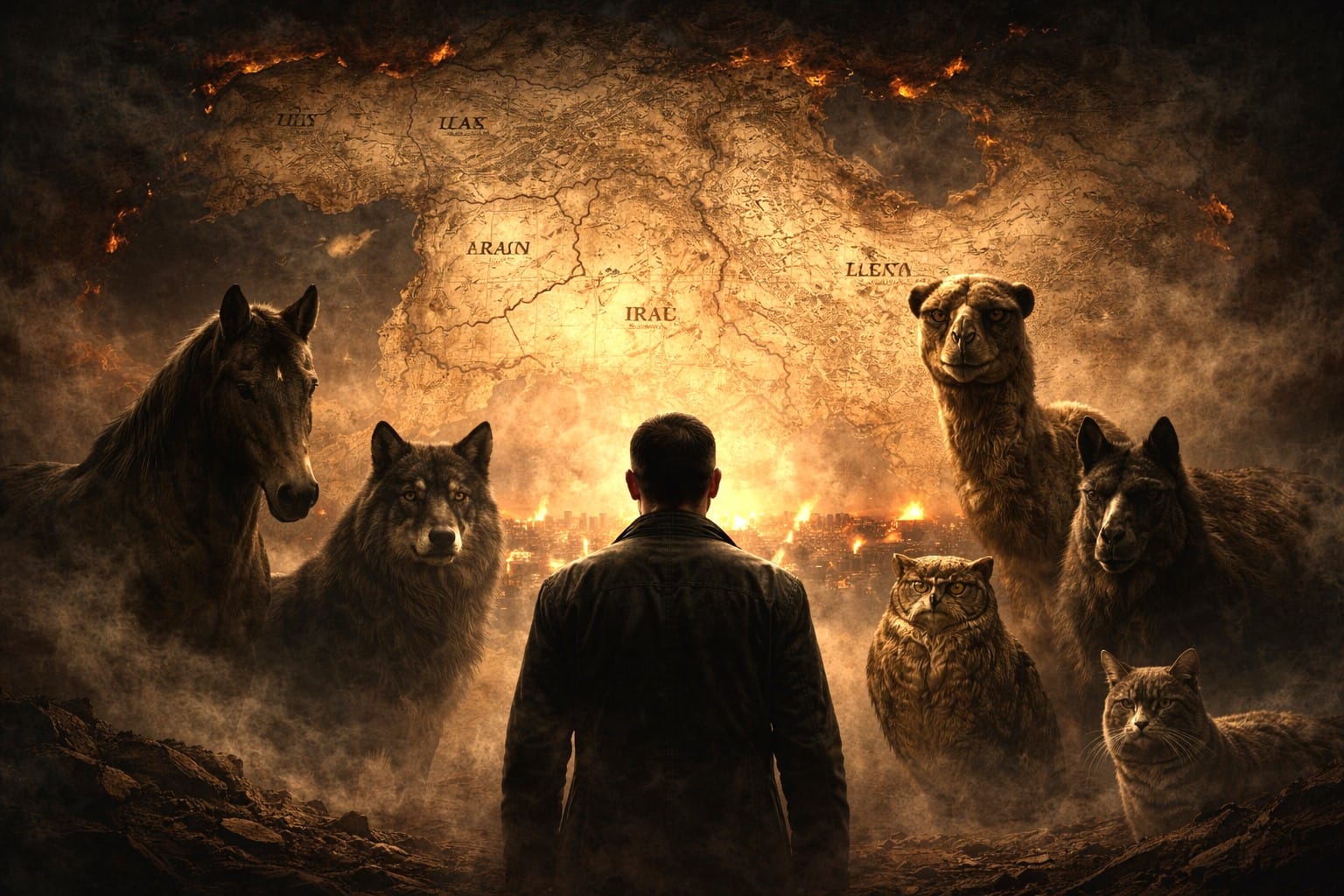
One of these treatises, "The Dispute Between Animals and Humans," at first glance appears to be an allegorical story. But upon careful reading, it becomes clear that this is not just a story, but a profoundly deep text that questions humanity's moral legitimacy on Earth. It is not only animals speaking here; in fact, it is the very sense of justice that speaks.
The central case of the text is striking: Humanity considers itself the master of the Earth, viewing other living beings as creatures given for its service. It exploits them, hunts them, kills them, uses them, and justifies all of this with the claim of being "intelligent" and "superior."
The animals' objection is simple yet devastating:
"If you are truly more intelligent and superior, why are you not more just?"
The genius of Ikhwan al-Safa emerges precisely here. For the dispute is ostensibly between humans and animals; but in reality, what is being judged here is the grand narrative humanity tells about itself. Throughout history, humanity has declared itself "intelligent," "civilized," "disciplined," "chosen," and "superior." Yet, it has often produced the greatest destruction on Earth.
Precisely for this reason, this thousand-year-old text should be re-read today.
Because even though centuries have passed, humanity's way of justifying itself has not changed much.
Yesterday, humanity saw nature as being at its service; today, it views all geographies as part of its security map. The mentality that exploited animals yesterday now codes cities as "strategic targets," energy infrastructures as "legitimate tools of pressure," and civilian life as an "unavoidable cost." When we look at the wars in our region today, especially the growing conflagration around Iran, Ikhwan al-Safa's ancient question resurfaces:
Is humanity truly the representative of reason and justice?
What is happening in the Middle East is not merely an inter-state military tension. It is also a bitter tableau of how modern humanity legitimizes its own violence with certain concepts. Cities are bombed, energy and civilian infrastructure are threatened, and the lives of children and families are erased under the shadow of the language of "geopolitical necessity."
But humanity, throughout history, has often committed its greatest atrocities not with crude language of savagery, but quite the opposite, with lofty concepts:
- in the name of security,
- in the name of order,
- in the name of civilization,
- in the name of necessity,
- and sometimes even in the name of peace.
"You are not just powerful; you also use your power under the guise of truth and justice."
This is also the most dangerous aspect of today's war rhetoric.
Bombs do not only destroy buildings; they also pollute words. Expressions like "defense," "preemptive strike," "strategic target," and "necessary response" often obscure the true face of suffering. And it is at this point that humanity distances itself from its own conscience.
Therefore, "The Dispute Between Animals and Humans" deserves more than to be read as a "manifesto for animal rights" in the modern sense. It is, in fact, an early moral case written against humanity's self-centered arrogance.
And this case has not been closed.
Today, in the skies over Iran, in the rubble of Gaza, on the Lebanese border, along the Iraq and Syria line, and even in all the war images that have become commonplace on our screens, the same question circulates again:
Who truly possesses reason?
Is it humanity, which declares itself superior, or the being that does not oppress?
Perhaps the true greatness of Ikhwan al-Safa lies in having foreseen this question a thousand years ago and placed it before humanity.
Because in the court they established, animals ostensibly speak. But in reality, the one sitting in the dock is always the same: Humanity.
And humanity, even today, makes the same defense:
I am more intelligent.
I am more powerful.
I am more civilized.
I am right.
But the Earth says something else.
Cities say something else.
Graves say something else.
Orphans, exiles, silent creatures, mute stones, and burnt horizons say something else.
Perhaps it is time to return to that old case once again.
Because what truly elevates humanity is
neither its technical superiority,
nor its military capacity,
nor its power of destruction.
The only thing that will elevate humanity is the morality of being able to limit its power.
And if humanity has lost this, then the question the animals asked in that court a thousand years ago stands before us today with all its weight:
"Are you truly superior, or merely more dangerous?"