The Most Important Contemporary Kurdish Painter: Arif Sevinç
This article introduces Arif Sevinç, a prominent contemporary Kurdish painter, exploring how his traumatic childhood and political imprisonment shaped his art and activism.
Dear Readers!
Every great artist is influenced by the family environment in which they were born and raised, the historical and social identity of their city, and their experiences in childhood and early youth. These values unconsciously settle and take root in their subconscious. At the first opportunity, the artist uses their fingers, or a pen or brush in hand, to write their poetry or novel, transfer their painting to canvas, or compose their music, thus coming to terms with their past.
Yaşar Kemal carried the murder of his father, who was killed while praying in a mosque before his eyes when he was a child, as a rebellion in his heart. The books he wrote were, in a sense, to extinguish the fire of this rebellion. His other pain was the accidental loss of his right eye to a knife when he was a child.
Sometimes, the pain of love settled in hearts caresses and brings forth the artistic impulse. The famous Mexican painter Frida Kahlo expressed her feelings in an interview: "Two great pains in my life led me to art: First, when I was 17, the bus I was on collided with a tram on my way home; one of the tram's iron bars entered my left hip and exited through my pelvis. I had 35 operations throughout my life and experienced its physical pain. Second was my love for Diego Rivera (the famous Mexican artist)..."

The famous Norwegian painter Edvard Munch experienced successive traumas in his childhood. His mother and older sister died young from tuberculosis. One sister received psychological treatment. His brother died at a young age. Munch, who had a weak physical constitution, struggled with all these pains. Painting knocked on his door as a savior.

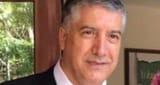
As I write all this, my fingers are eager to introduce you to the greatest master of contemporary Kurdish painting, Arif Sevinç.
ARİF SEVİNÇ'S BIOGRAPHY
Arif Sevinç was born in Doğubayazıt in 1959. His father's name is Muzaffer, and his mother's name is Nafiye.

He is a member of the Gêloî (Geloylu) Tribe, a sub-branch of the Celali Tribe. He completed primary and secondary school in Doğubayazıt and high school in Kayseri.

During his years at Kayseri High School, he worked on charcoal drawings, encouraged by his art teacher. He also held his first exhibition at the same high school.

In the years following the September 12, 1980 military coup, in 1982, while he was a student at Dicle University Faculty of Education in Diyarbakır, he was arrested for political reasons.

Arif Sevinç with his friends
He was imprisoned for over 4 years in Diyarbakır No. 5 Prison. He was subjected to severe torture. In the summer of 1986, he regained his freedom.
Arif Sevinç did not remain idle; he reflected his experiences of detention, interrogation, and imprisonment on canvas. He exhibited his paintings in 1987 at the Mülkiyeliler Foundation Hall in Ankara under the title "Haberin Var Mı Taş Duvar" (Do You Know, Stone Wall). Later, he opened his second exhibition at the Adana Branch of the Human Rights Association. Every year, he regularly participates in the traditional mixed exhibition organized by the Human Rights Foundation in Izmir.

Arif Sevinç, who was deeply involved in politics, took part in various legal Kurdish parties and organizations such as the Kurdistan Socialist Party (PSK), Kürt-Kav, Freedom Road Foundation, Democracy Party (DEP), Democracy and Change Party (DDP), BDP (Peace and Democracy Party), TEVKURD, and HAK-PAR, assuming various levels of responsibility. Arif Sevinç continues his political struggle as the Deputy Chairman of HAK-PAR.
Arif Sevinç held solo exhibitions in Switzerland and Germany in 2008, in Diyarbakır-Keçi Burcu in 2009, and in Istanbul KÜRT-KAV in 2012. He also engaged in various branches of painting, such as poster design, cover design, and caricature. He continued his painting and caricature work without interruption.

Between 1989 and 2014, he wrote articles for the newspapers Azadî, Dengê Azadî, Ronahî, Hêvî, Roja Teze, Dema Nû and the magazine Deng, published by Evin Yayıncılık, and took on various responsibilities as a representative or editor-in-chief at Deng Publishing House.
Arif Sevinç is married and has one daughter.
HIS CHILDHOOD AND YOUTH
Arif Sevinç describes his childhood and early youth in Doğubayazıt as follows:
"My childhood passed under a severe assimilation policy in Doğubayazıt, a district of Northern Kurdistan.
My father would scold my mother at every opportunity, saying, 'Don't speak Kurdish in front of the children.' Despite the prohibition, my mother would still occasionally murmur Kurdish words, sing Kurdish lullabies, and lament in Kurdish when she cried. My mother would say the names of herbs and plants not taught in school in Kurdish: Sêbiske, gizêr, tolîk, selmance, cehtirî, punk, etc.
The door of our earthen house faced the magnificent Mount Ararat. Oh Bayezid! What a beautiful city you are!
On one hand; Mount Ararat, whispering to man to rebel, to be strong, to stand 'qurre' (proud), and on the other hand, the magnificent Ishak Pasha Palace, inspiring a delicate, artistic soul...
Of course, that's not all!
Castle ruins from the Urartians, dilapidated houses remaining from the Old Bayezid city, the temple of love where Kerem and Aslı are believed to have spent time together, and finally, 'The Monk's Garden'...
Carved into the mountain were a female figure, a male figure, and a goat figure carved between them. This passage, whose entrance was adorned with these carvings and reliefs, was given a name by the people: 'Qula Bizinê' (Goat's Hole).
Also, there was an old, unpretentious stone structure. Whenever we visited Ishak Pasha Palace, we would always stop by, visit the tomb inside, and offer prayers.
My mother would say that the one lying there was 'Xani Baba'. The people of Bayazıt had made it a tradition to swear by the name 'Xani Baba' in their daily lives.
Who was this Xani Baba?
When the people of Bayazıt quarreled, when a fight broke out, they would say, 'Ma devra Biro’ye? (Is it Biro's time?)'
Who was this 'Biro'?
What had happened in Biro's time?
In spring, on our way to Ishak Pasha Palace, we would pass by a place known as 'Gora Fille' (Non-Muslim Cemetery). There was a beautiful spring. Oh my God! How pleasant the water bubbling there was! I wonder why they called it 'Gora Fille'?
Who were these 'Fille' (Non-Muslims)? Where had they gone, leaving their 'Gor' (graves) behind?
Mount Ararat, Ishak Pasha Palace, Ahmedê Xani, Biro Heskî Tellî, Gora Fille, The Monk's Garden, Qula Bizinê, Urartian ruins, the secretly listened-to Yerevan Radio, and my mother's Kurdish pleas and lullabies...
All these concepts intertwined and rose in my heart and mind like ivy. The Turkist education and assimilation practices at school had taken over my consciousness with a distorted and artificial feeling. It was at such a time that I encountered the magazine named 'Özgürlük Yolu' (Freedom Road).
The articles I read in the magazine invigorated my soul. I pushed aside the state's years of efforts to alienate us from our language, culture, and nation in primary, middle, and high school. Every concept that had bothered my mind since childhood gained meaning. Everything that was covered up and hidden became clear.
As I read, especially Kemal Burkay's magazine Özgürlük Yolu and the newspaper Roja Welat, I became conscious of being Kurdish. I loved it. I was proud. I was amazed by the richness of the Kurdish language and culture.
And every day, this admiration grows even more.
I proudly carry our historical and cultural values, which the colonizer ignored, forbade, and humiliated, onto my canvases. I continue my work in Kurdish politics and painting with great pleasure and dedication."

A BITTER EXCERPT FROM ARİF SEVİNÇ'S LIFE
Arif Sevinç, a reader of the magazine Özgürlük Yolu, encountered prison while he was a third-year student in the History department at Diyarbakır Education Institute:
"Özgürlük Yolu was a magazine that discussed the Kurdish issue. We were regular readers of the magazine. When September 12th happened, they rounded up and took away our intellectuals, our professors, our teachers."
Arif Sevinç says that they started hearing that those who were caught and taken away were tortured, and even killed, in prison. One day, the school he attended was raided by soldiers, and over 300 students were detained. Their homes were searched.
Arif Sevinç and the detained students had their eyes blindfolded. They were taken to a military barracks. They underwent torture. Arif Sevinç summarizes his state of mind during those years:
"We were students, we were young. We were sensitive to issues. We were trying to discuss and understand."
Arif Sevinç and his friends were held in custody for 45 days. Their hands on their knees, eyes blindfolded, hungry, thirsty... As if this wasn't enough, they were subjected to electric torture with wires attached to their genitals and fingers. Other tortures followed: falaka (beating the soles of the feet), sleep deprivation, toilet prohibition...
They hoped they would be released in court, believing they were innocent. However, the prosecutor ordered their arrest, sending Arif Sevinç and his friends to Diyarbakır Prison. They thought, "We'll be more comfortable in prison than in custody," but they soon realized they were wrong.
They were lined up. While standing at attention, they met the torturer whose name they would never forget: Captain Esat Oktay Yıldıran. After being beaten, they were put into cells. They stayed in cells for 1 month. 17 people were crammed into a cell meant for 1 person. It was impossible to lie down or stretch out. Torture sessions began. Several times a day, they were taken to the corridor and beaten with pickaxe handles and planks marked "HAYDAR".
"After beating us for about an hour, they would force us into the sewage channel in front of the cells. We would crawl in the sewage, our mouths and noses covered in blood. They forced us to drink the sewage. Then, covered in the filth and wetness of the sewage, we would be crammed back into our cells. I don't know how a person can endure this. Sometimes I think, honestly, even I can't believe what I went through."
After a month of cell hell, they clung to a new hope, thinking they would move to wards. "Maybe we'll be more comfortable in the ward," they thought.
"Because we were very hungry. When a person is hungry for a long time, all their thoughts are about food. The pain of a beating passes after an hour or two, but you can't forget the hunger."
In front of Ward No. 29, they were beaten until their hands, arms, and feet were bruised. After the torture session, 60 people were crammed into a ward that would barely hold 20.
"They had taught us about 50 military marches. We would be woken up early in the morning and sing the marches loudly while marching in place until 9:00. Then we would go out for air and line up in military formation. We would march vigorously, lifting our legs so high they touched our chests. One of us would step forward and read Atatürk's life story, and we would repeat it loudly. And we would do this without sitting or resting until evening... We had no hope of release; the important thing was to survive the day without dying."
When Arif Sevinç was released after 4 years of torture, he couldn't rejoice:
"I couldn't believe I was out, that I was free. Because they had taken some of our friends away from us before, saying 'we're releasing you,' and then killed them. When they said, 'You've been released,' we perceived it as being taken to execution. The gallows were already there. The rope was dangling in the air. They weren't hanging us, but they made us feel as if they would."
As soon as Arif Sevinç was released, he was taken to the military recruitment office:
"I didn't go to the army immediately. They gave me a few days' leave. I hid and avoided military service for about 4 years, as much as I could."
To escape the traumas he had experienced, he returned to painting, which he had done since high school. In about 6 months, he created 35 paintings. He opened his first exhibition in 1987 at the Mülkiyeliler Foundation hall in Ankara.
A SELECTION OF ARİF SEVİNÇ'S PAINTINGS


LAST WORDS TO THE TORTURERS (Mücahit)
"Oh torturers! You reigned. Without regard for rights or law, you locked up young people and intellectuals in prisons. Your tortures were varied... You took sadistic pleasure. You shattered and destroyed human identity. You trampled human dignity and values. You subjected them to falaka, inserted truncheons. You forced them to drink sewage water. You thought you were teaching the prisoners a lesson (!).
Do not forget, a canvas, a few tubes of oil paint, a few brushstrokes were enough to demolish your magnificent reign. Today, humanity recognizes your repulsive face from Arif Sevinç's paintings. Today, humanity embraces the values that have emerged from the dark page of Kurdish History through Arif Sevinç's brush.
Oh, you fake exalted (!) epauletted gentlemen! Do not forget, your era is over. The hog bristles in Arif Sevinç's brush are more valuable than you. Continue to live knowing this. This is Arif Sevinç's revenge on you."