Iğdır in the Memoirs of a District Governor (1945-47)
This article examines the memoirs of Sadık Artukmaç, District Governor of Iğdır from 1945-1947, to shed light on the region's history during a critical post-WWII period.
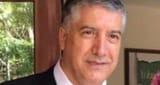
Dear Readers:
First and foremost, I wish you all a happy, healthy, and peaceful new year.
I wanted to start the new year with an article about the past of our Iğdır. I hope you find it interesting.
Dear Readers,
When writing the history of a city or region, all types of documents must be considered down to the finest detail. The most accurate information reaches the reader when field research, interviews, memoirs, and historical documents overlap.
The history of Iğdır is prone to manipulation and distortion due to a lack of documents. An understanding where almost everything said was accepted as "true" prevailed for many years. Our Iğdır must piece together its history like a "puzzle" to reveal a chronological account that leaves no room for doubt.
One of the most important documents concerning Iğdır is memoir books. Sadık Artukmaç, who served as District Governor in Iğdır for 1 year and 9 months (September 1945-June 1947) during Iğdır's most critical period at the end of World War II, published his memoirs in 1995 under the title "A Life Story." In his 206-page book, he dedicates 17 pages (pages 42-59) to his experiences in Iğdır. (I have included these pages in their original form at the end of my article.)

The main intention of my article today is to evaluate Sadık Artukmaç's accounts in light of the information we already possess, to get a little closer to the truth.
First, let's briefly look at the biography of Mr. Sadık Artukmaç, the author of the memoir and former District Governor of Iğdır:
WHO IS SADIK ARTUKMAÇ?
 Sadık Artukmaç was born on February 17, 1910, in Yozgat. His father's name was Ömer Hayrettin, and his mother's name was Fethiye. In 1928, he passed the exams and attended Ankara Boys' High School as a boarding student. He graduated from high school in the 1930-31 academic year. Sadık Artukmaç graduated from Ankara Law Faculty in 1936. He served as an officer at the Ankara Directorate of Finance and PTT General Directorate, an officer at the General Directorate of Local Administrations, an officer in the Republican People's Party; District Director in Elmadağ, Dikmen; District Governor in Şarkışla, Divriği, Iğdır, Kağızman, Sarıkamış, Çorlu, Şile, Aksaray; Head of the Rural Affairs Department at the General Directorate of Local Administrations in the Ministry of Interior, Member of the Laws and Decrees Review Department at the Prime Ministry, Deputy Director General of Land Registry and Cadastre, Assistant Legal Advisor at Türkiye İş Bankası, Author, Yozgat Member of the Republican Senate (October 15, 1961-October 14, 1973), and Secretary Member of the Republican Senate Presidential Council. Sadık Artukmaç was elected to the Republican Senate from Yozgat for the CHP in the general elections of October 15, 1961. In later years, he resigned from the CHP, first joining the Republican Peasant Nation Party (CKMP) and then the Justice Party (AP). His wife, Mahmure Hanım, was a Physics-Chemistry teacher. During their years in Iğdır, she served as the principal of Iğdır Secondary School. Artukmaç, who retired in 1975, has ten published books on administrative law. He was married with three children. |
SADIK ARTUKMAÇ'S YEARS IN IĞDIR
When Sadık Artukmaç was assigned from Divriği to Iğdır, he asked his friends and acquaintances about Iğdır. The answers he received were disheartening: "It's swarming with mosquitoes. A hotbed of malaria and a deprived region."
With these fears, Sadık Artukmaç set foot in Iğdır on September 3, 1945. World War II had just ended. Nazi Germany surrendered on May 8, 1945; the Japanese on August 15, 1945, and the war had ended on both fronts. However, Iğdır, as a district bordering three countries, faced significant dangers. Let's evaluate it step by step:

1. On the Iranian border, the Mahabad Kurdish Republic was established in January 1946 with the support of the Soviet Union. Iğdır bordered the Mahabad Kurdish Republic between January 1946 and December 1946. Sadık Artukmaç served as District Governor in Iğdır during this period. On the Iranian side, the Governor of the Maku Region of the Mahabad Kurdish Republic was Sheikh Abdülkadir Bey. Sheikh Abdülkadir Bey was also the leader of both the Sakan (Sakî) tribe and the Celali tribe on the Iranian side.

2. During World War II, Soviet citizens who had joined the German army and fought alongside the Nazis, especially soldiers of Caucasian and Central Asian origin, sought countries to flee to and hide in after the war ended. When it became clear that the Nazis would be defeated, İnönü declared war on Germany and Japan on February 23, 1945, as a formality. This meant he accepted the decisions made at the Yalta Conference. One of the most important articles of this Conference was the immediate surrender of Soviet soldiers captured by the allies to Stalin.
Initially, İnönü did not make much noise about Soviet citizens who had served in Nazi-collaborator legions being interned in Turkey. In fact, there were many refugee camps in Turkey in those years. These camps housed people of all nationalities fleeing the war. The Allies, in accordance with the treaty, handed over Soviet prisoners to the Soviet Union. A bitter end awaited the soldiers.
Since Turkey had declared war on Nazi Germany at the last minute, it was obliged to hand over the Soviet soldiers in Nazi uniforms who came to it, in accordance with the agreement, to Stalin. However, these Soviet soldiers in Nazi uniforms, believing Turkey to be a neutral country, had sought refuge in Turkey as a last hope. Turkey detained these soldiers in the Yozgat camp. Stalin demanded their immediate surrender. Otherwise, he threatened to attack Kars, Ardahan, and Iğdır.
These soldiers were handed over to the Soviets at the Tiknis/Akyaka/Kızılçakçak gate on August 6, 1945. District Governor Sadık Artukmaç, who took office on September 3, 1945, does not mention this event. This is another proof that the "Boraltan Bridge" legend is false and fabricated.
3. District Governor Sadık Artukmaç's wife, Mahmure Hanım, became the principal of Iğdır Secondary School (September 3, 1945). At that time, Mecit Hun was teaching Algebra, Geometry, Physics, Chemistry, and Biology as a substitute teacher. Mecit Hun was conscripted into the army in January 1946. Due to a shortage of teachers, the District Governor also taught "Turkish" as a substitute teacher.
4. District Governor Sadık Artukmaç emphasizes the importance of cotton production, animal husbandry, and viticulture and horticulture in Iğdır. Its peaches and grapes are famous. The wine made from its grapes is delicious. He mentions the name of Naki (Odoğlu) Bey. His wine is so delicious that US Government Advisor Max Thornburg praises it.
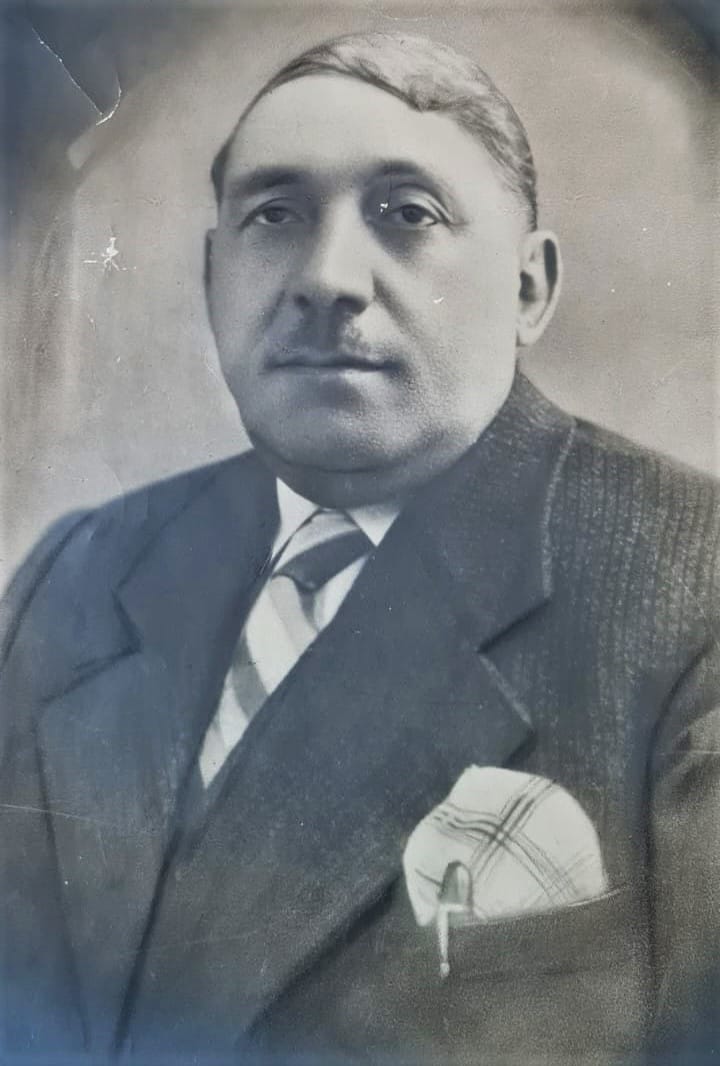
Who is Max Thornburg?
 Max Thornburg was born on October 10, 1892, in California, USA. He was an oil executive and US Government advisor. He graduated from the University of Berkeley as a Chemical Engineer. He worked for famous oil companies. He was appointed as an international consultant on oil matters by the government. For this purpose, he traveled the world. On one such journey, on June 15, 1947, he found himself in Iğdır. The District Governor hosted him in Taşburun and offered him Naki Bey's wines. Thornburg said: "I have never drunk such good wine in my life. I will say this everywhere I go." Max Thornburg's purpose was to prepare a report on the countries he visited and submit it to the US Government. He compiled his views on Turkey in a book:  |
5. We know that Nağı Bey produced canned peaches and exported them to Germany. District Governor Sadık Artukmaç confirms this. He mentions that they were sent to Istanbul and Ankara. Oh, if only! If only Nağı Bey had opened Turkey's largest wine factory in Iğdır. If only he could have canned and sold Iğdır's products in larger factories! This once again shows how many opportunities our Iğdır missed.
6. Max Thornburg asks, "You grow cotton. Why don't you open a textile factory?" We all learn a bitter truth: Marshal Fevzi Çakmak is against establishing factories in border regions (we understand he specifically means Iğdır). Because he believes that these factories would be captured in a possible attack by the enemy (the Russians), and all that effort would be wasted. This is how we learn why Republican Turkey did not invest in Iğdır. Thornburg continues his advice: "Build roads to Kars and Doğubayazıt, open up to the domestic market." Iğdır would get a serious chance to address its road problem for the first time in 1950, during the Democratic Party (DP) era.
7. Sadık Artukmaç states that the Soviet border was disciplined. We should not forget that we owe the disciplined border immediately after World War II largely to Hüsnü Bingöl.
8. Sadık Artukmaç states that the Iranian border was problematic. He is right because during his term as district governor (September 1945-June 1947), the Iranian border changed hands three times: The situation on the Iranian border during Sadık Artukmaç's 1 year and 9 months in office was as follows:
September 1945-January 1946: Russian Occupation
January 1946-December 1946: Mahabad Kurdish Republic
December 1946-June 1947: Pahlavi Dynasty
The difficulties were great. We understand that there was a serious power vacuum on the border. However, I consider Sadık Artukmaç's portrayal of all three periods as "Russian Occupation" to be an erroneous view.
9. Sadık Artukmaç states that Azeri Turks and Kurds lived in the city center of Iğdır. He mentions that there was mutual love and respect between them. He praises the people. They are free-thinking and progressive. They know how to laugh and have fun. He states that the villagers and townspeople consist of civilized people. He says that musical family gatherings are a tradition and that the people were influenced by Russian culture.
We know that all these accounts are true. We know that the tension between Azeris and Kurds began with the Democratic Party (DP) coming to power in 1950, and the first serious break occurred with the veto of Abdürrezzak Güneş (Edê Bey) by the DP in the 1954 elections.
Furthermore, Sadık Artukmaç mentions the games of Kazaska and Dimme. Kazaska is a Russian folk dance. It is danced by hitting the knees on the ground. I do not know if these games are still played in Iğdır.
(Dear readers! My esteemed teacher Akay Aktaş sent me an article explaining these games. I quote it verbatim: "These games were only played by playful couples in our childhood. My late mother loved these games and played them very well. Also, the late Nahide Selçuk, the mother of Timur Selçuk Bey, was quite talented in this regard. The Kazaska game was played in pairs. This game was mostly of interest to the aristocratic class. Since it was a difficult game, it was abandoned and forgotten by later generations. In a sense, it was similar to the Cha-Cha dance.")
10. ERROR: Sadık Artukmaç makes a historical error. He mentions "40 years of Russian occupation." However, Iğdır (Sürmeli Region) had been under Russian rule since 1828; meaning the Iğdır Region (Sürmeli) remained under Russian rule for 90 years.
11. He writes that the church in the center of Iğdır was closed. We know that the church was demolished in 1950, and the Central Mosque was built with the same stones.

12. There is a large park in the city center left over from the Russians. It is forested and lush green. Sadık Artukmaç mentions a casino in the park. Officials and officers gather here after working hours. They play bridge, backgammon, chess. They eat and drink.
We know from Mecit Hun's memoirs that this casino belonged to Rahim Bey. Mecit Hun recounts:
"Rahim Bey's casino (club) from Yerevan was a more luxurious seating area than today's standards. It was managed with great meticulousness and discipline. Outside, there was a front garden separated from the main street by a fence. Iğdır's leading merchants, tradesmen, and bureaucrats would sit here, drink tea, smoke nargile, and chat when the weather permitted.
Those who wanted to play games would sit inside. There were mostly parlor games like bridge and bezique here. Only certain people could enter. Anyone wishing to meet someone inside would inform the attendant at the door and wait for the person they were looking for.
I could not enter Rahim Bey's casino until I reached high school age. I always waited outside for the people I wanted to meet. Rahim Bey, the very neatly dressed owner, never sat down; he would check the cleanliness and order of his establishment.
By 1937 and subsequent years, this place became an even more important meeting and seating area. Trade with the Russians had begun from the Markara (Alican) bridge, and a rush of foreign businessmen had started in Iğdır. Iğdır was taking on the appearance of a city at this time. I will describe the movement that trade with Russia brought to Iğdır and the region in those days in a separate discussion.
Again, in those years, we had a very well-maintained, habitable park. Many people from Iğdır or officials working in Iğdır would come to this park in the municipal square with their families in the evenings and sit until late at night."
13. Sadık Artukmaç states that his predecessor (the district governor before him) was named Nacit Akat. According to the news in Bugün Gazetesi, Naci Akat was appointed District Governor of Iğdır on July 22, 1942, while he was the District Governor of Karaisalı (Adana).

| Who is Hüsamettin Tuğaç?
 His full name is Ahmet Hüsamettin Tuğaç. His family is originally from Karacemirli village in Şemkir Rayon, Azerbaijan. He was born in 1889, Hasankale (Erzurum). He graduated from the War Academy. During World War I, he was taken prisoner by Tsarist Russian forces on the Caucasian Front. He recounts his experiences during this period in his work Bir Neslin Dramı (The Drama of a Generation). He served as Military Attaché in Tiflis, Tehran, and Vienna, Officer in the General Staff Intelligence Department, Director of Mobilization in the Ministry of Interior, Director General of Supply and Distribution in the Undersecretariat of Provisions, Author, Ağrı Deputy in the VII. Term (1943) of the Grand National Assembly of Turkey, and Kars Deputy in the VIII. (1946) and IX. Term (1950). He was awarded the Medal of Independence. Hüsamettin Tuğaç passed away on January 2, 1975.  Year 1930. April 23rd Holiday. Hüsamettin Tuğaç, his eight-year-old daughter Solmaz, and Mustafa Kemal Atatürk Hüsamettin Tuğaç, who spoke German, French, Persian, and Russian, was married with two children. |

SADIK ARTUKMAÇ AND HÜSNÜ (BİNGÖL) BEY CONFLICT

Sadık Artukmaç served as District Governor of Iğdır for about 1 year and 9 months. In the 2nd-3rd month of his governorship, he faced a serious problem. A National Security Inspector (the MIT of that time) named Hüsnü (Bingöl) Bey bypassed the District Governor and gave orders to the Gendarmerie and Police organizations, arresting and interrogating individuals he suspected of being communists or smugglers without a court order, and imprisoning them in a private prison. Sadık Artukmaç had, of course, never encountered such a situation before. He rolled up his sleeves to put this insolent person (!) in his place. What surprised him was that his predecessor, District Governor Naci Akat, had not objected to this situation.
Sadık Artukmaç summoned the Gendarmerie Commander and the Police Chief and reminded them that the practice was wrong. They agreed. Thereupon, Sadık Artukmaç initiated a new practice and gave an order: "You will not arrest anyone without my written permission and approval."
Hüsnü Bey was disturbed by this situation. They met face-to-face. Sadık Artukmaç rejected Hüsnü Bey's request. Perhaps Hüsnü Bey was being rejected for the first time. This news spread among officials and officers, if not among the public. Hüsnü Bey's authority was shaken.
Hüsnü Bey appealed to Kars Governor Esat Onat Bey. The situation was serious. The Governor came to Iğdır and warned the District Governor: "You are free in every matter, but you must get along well with Hüsnü Bey. If you wish, I can have you transferred to Ardahan. There is also a secondary school there. Your wife can continue to work at the secondary school."
Sadık Artukmaç's answer was negative. One of the things that bothered Sadık Artukmaç was that Hüsnü Bey, despite being retired, walked around in a Major's uniform.
Hüsnü Bey probably appealed to Hüsamettin Tuğaç, who was then a Kars Deputy, and asked for help. Hüsamettin Tuğaç arranged for a chief advisor from the Erzurum General Inspectorate to go to Iğdır. Sadık Artukmaç was disturbed by this situation. The rumor and information he received was that Hüsamettin Tuğaç was a close relative of Hüsnü Bey. This information is correct.
Hüsnü Bey's daughter, Şükran Bingöl, states the following (Source: Iğdır Sevdası)
"One sister of Corps Commander Fahri Belen was married to Kars Deputy Hüsamettin Tuğaç, and another sister was married to my uncle. Hüsamettin Tuğaç and my grandfathers grew up in the same town and the same neighborhood in the Caucasus."
Sadık Artukmaç introduces Hüsamettin Tuğaç as the "Ağrı Deputy." Since the "1946 General Elections" were held on July 21, 1946, we understand that this conflict occurred before this date. Because Hüsamettin Tuğaç, who was previously an Ağrı Deputy, entered parliament as a Kars Deputy in the elections of July 21, 1946.
SADIK ARTUKMAÇ-RESUL TANER CONFLICT
World War II had just ended. Gas, cloth, and essential necessities were distributed to the public with ration cards. It was a single-party era. Resul Taner was the CHP District Chairman. He held power and authority.
According to Sadık Artukmaç's account, one day Resul Taner visited him. He requested that the ration cards be distributed primarily to CHP member citizens. Sadık Artukmaç vehemently opposed this suggestion and, in his own words, "threw" Resul Taner out.
In June 1947, Sadık Artukmaç was suddenly transferred to the Kağızman district governorship. Sadık Artukmaç was in great shock. He sought two culprits behind this: Hüsnü Bey and Resul Taner.
| Who is Resul Taner? (Source: Iğdır Sevdası)
Resul Taner's birth year is between 1901-1904. His birthplace is Kamerli town. Since his family was well-off, he went to Moscow for his education. He returned to Kamerli after receiving his middle school or high school diploma. During the war years, all his siblings migrated together to Başköy. After the death of his father Hacı İbrahim, Resul Taner took over the factory management. Between 1933-36, in addition to a flour mill operating with a simple engine, he built a German-made cotton gin factory. He also brought and installed the first Lathe-Milling system to Iğdır that year. In 1936, he established the Paddy Factory, which was considered a significant investment for Iğdır's conditions at the time. The Paddy Factory was in the same garden as the other two factories. This huge building, built on a 100 square meter area and under a single roof, was Iğdır's largest factory. One of two specially produced engines by an Art School in Germany was installed in Bombay (India), and the second was installed in the factory established in Iğdır. Resul Taner passed away in January 1950, before reaching the age of 50, due to heart failure. Resul Taner was the Chairman of the Chamber of Commerce and the CHP district chairman. He continued these duties uninterrupted until his death. |
DETERMINATION OF THE IĞDIR DILUCU BORDER

Dilucu starts from the point where today's Kâzım Karabekir Agricultural Enterprise is located and extends in a shape truly resembling a "tongue." There has been no settlement in the Dilucu region, neither in the past nor now. The importance of Dilucu lies in this: To the north, it borders the Aras River (at that time) with the Soviet Union, and to the south, it borders Iran with the Karasu Stream. The Dilucu region today is a buffer zone where the southern border of Armenia, the Nakhchivan border, and the Iranian border are separated by two natural borders, namely the Aras River and the Karasu Stream. States have historically used rivers or similar natural barriers as borders.
Sometimes speculative articles appear in the Iğdır press, claiming that Mustafa Kemal Atatürk bought the "Dilucu" section with money to serve as a gateway to the Turkic Republics. This is not true. The importance of Dilucu is that it is located between two rivers. We already understand this from Sadık Artukmaç's memoirs. If it had been bought with money, the border demarcation would have been done long ago. For the first time since the Republic was founded, this region would be visited, and border stones would be placed.
The Soviets requested from Turkey, specifically from the Iğdır District Governorship, that border stones numbered 1, 2, and 3 be placed. For this, delegations from both countries needed to meet in Dilucu. The Soviets had made this request before, but for some reason, the Turkish side remained silent on the matter. The reason for this was the insecurity of Dilucu.
Sadık Artukmaç states that the Dilucu region was marshy and reedy, and that bandits from Iran, in a sense, roamed freely in this area. Sadık Artukmaç, as an idealistic district governor, was in favor of placing the border stones and securing the border with mutual signatures, no matter what.
Sadık Artukmaç makes two errors in this account:
The first point where Sadık Artukmaç was mistaken was that not the Dilucu region itself, but the area that needed to be crossed to enter Dilucu, was marshy and reedy. Sadık Artukmaç ordered the District Gendarmerie Commander and the Taşburun sub-district director to burn the reeds. According to his account, the flames of the burning reeds could even be seen from the Iğdır district center.
The Dilucu region starts from where today's Kâzım Karabekir Enterprise is located and extends southward. What was in the place of the Kâzım Karabekir Enterprise in 1946?
In this region, there were 12 Brukan villages until 1919. Since the villages were established on flat land, in 1919, during the "Kaça-Kaç" (flight) period, the Brukan Tribe could not withstand the attacks of Armenian commandos, abandoned their villages, and sought refuge in the Ottoman Empire. An ironic situation occurred. The Ottoman Empire settled the Brukan Tribe in the abandoned Armenian villages in Van, which had been vacated due to the 1915 Armenian Deportation. From that day on, no one settled in the region where the abandoned Brukan villages in Iğdır were located. In 1953, to control the floods caused by the Aras River, a State Production Farm was established in the area of the 12 villages, under the management of the late Ziya Ayrım.

Sadık Artukmaç forms a committee. He brings an Artillery Colonel from Erzurum. He receives help from the military unit in Orgof (Suveren). He sets off with a fully equipped squad. He takes Iğdır Mayor Osman Ataman, who speaks Russian very well, as an interpreter.
The delegation, on horseback, sets off towards the Dilucu region in the spring of 1946. Sadık Artukmaç mentions ruined villages in the burned reed area and states that they were destroyed during the Sheikh Said Rebellion.
Sadık Artukmaç is mistaken in this statement. The Kurds of the Iğdır region did not participate in the Sheikh Said Rebellion. The Sheikh Said Rebellion was essentially a Zaza-Sunni rebellion. The Kurds of the Iğdır region were Kurmanj-Sunni. Far from participating in the rebellion, when the Sheikh Said Rebellion ended in defeat, Bro Heski Telli captured the leading rebel leaders who wanted to flee to Iran at the border and handed them over to Turkish authorities himself.
The reason why the villages Sadık Artukmaç saw were in ruins is this:
The Ağrı Mountain Rebellion ended in defeat in 1930. The state declared Ağrı Mountain and the surrounding Kurdish villages a forbidden zone.
VILLAGES IN THE FORBIDDEN ZONE DECLARED AFTER THE AĞRI MOUNTAIN REBELLION (Source: Mecit Hun / Iğdır Sevdası)
The following villages were included in the forbidden zone after the Ağrı Mountain Rebellion:
ARALIK DISTRICT
Gomık / Gömük (evacuated by the state in 1993)
Dilican (not re-established after 1930)
Ahura (Yenidoğan)
Tezharaba (not re-established after 1930)
Çetindere (not re-established after 1930)
Maksozillo (Esenkaya)
Atıcı (not re-established after 1930)
Karahacılı
Kolikent
Adetli
Hıdırlı
KARAKOYUNLU DISTRICT
Kafirköy (İslamköy)
Beri (Aktaş)
Taraş (Yazlık)
Bulakbaşı
IĞDIR CENTER
Korhan
Belelak (hamlet connected to Kavaktepe village)
Abdolak (hamlet connected to Kavaktepe village)
Kavaktepe
Gevrolar (Orta Gevro, Yukarı Gevro) (hamlet connected to Suveren)
Karagüney
Caf (hamlet connected to Suveren village)
Elmagöl
The forbidden zone was lifted by the Democratic Party (DP) in 1950.
The reason why the villages Sadık Artukmaç saw were in ruins is not the Sheikh Said Rebellion. It is due to the decision of the Forbidden Zone taken by the state after the Ağrı Mountain Rebellion, which caused these villages to be uninhabited, i.e., abandoned, for 16 years (1930-46).
As the delegation proceeds towards Border Stone No. 1, at the very tip of the "tongue" in the south, they are attacked by Iranian bandits who use Dilucu as pasture. Sadık Artukmaç states that Osman Ataman was very scared during this attack. However, Osman Ataman is the nephew of Ali Rıza Ataman, one of the heroes of the National Struggle and the Minister of Interior of the Southwest Caucasian Republic. It is very difficult to understand! The delegation reaches an agreement with the Russians, and then the border demarcation protocols are signed at the Markara (Margara / Alican) bridge in the following days.

GENERAL KURTCEBE NOYAN IN IĞDIR
Sadık Artukmaç intends to teach the Iranian bandits a lesson. He frequently distributes weapons to civilians whose herds are stolen or who are attacked. We know that due to the Forbidden Zone, only the Azeri population is allowed to live in this region. All the Kurdish villages I listed above are empty and abandoned. Not even a single Kurd is allowed to enter the Forbidden Zone. From this narrative, I infer that the armed civilians were Azeris.
This time, another question comes to mind: Did the Azeri population within the borders of today's Aralık and Karakoyunlu districts raise large herds in those years? I don't know the answer. In short, there is no answer as to which civilians were armed! The Kurds were loyal to Hüsnü Bey. I believe they would not have acted with the District Governor without Hüsnü Bey's permission and approval. Generally, the Azeri community was the target of Hüsnü Bey's wrath. Since the District Governor confronted Hüsnü Bey as soon as he took office, it is certain that this situation was met with joy by the Azeri people.
It is mentioned that 150 Mauser rifles were distributed to the civilian population. Considering that distributing Mauser rifles to Kurds would be risky at a time when the wounds of the Ağrı Mountain Rebellion had not yet healed and the Mahabad Kurdish Republic was established, it is highly probable that the civilians killed in Iran were Azeris. Without Hüsnü Bey's approval, the District Governor might have wanted to prove to the people of Iğdır that he did not take Hüsnü Bey into account with such a sensitive operation.
The civilians and soldiers organized by the District Governor act together and pursue the Iranian bandits. Due to the pursuit, they penetrate 30-40 km into Iran. Three Iğdır civilians are killed in the clash. To avoid diplomatic problems with Iran, the bodies are brought back within Turkish borders. In the months when the incident occurred (Spring 1946), the border region of Iran was under the control of the Mahabad Kurdish Republic.
Despite all precautions, information that Turkish soldiers and civilians had entered Iranian territory armed was conveyed to General Kurtcebe Noyan, Commander of the Third Army in Erzurum (probably by Hüsnü Bey). It was a sensitive period. To avoid an international crisis, General Kurtcebe came to Iğdır. He learned the details of the incident. He listened carefully to the District Governor and agreed with him.
Meanwhile, the District Governor complained about Hüsnü Bey, whom he could not overcome. General Kurtcebe summoned Hüsnü Bey, held a meeting at the Officers' Club. He reprimanded him for walking around in uniform. He made him wear civilian clothes. This was the second blow to Hüsnü Bey's authority and prestige.
| Who is General Kurtcebe Noyan?
His real name is İsmail Hakkı Kurtcebe Noyan. He was born in Sivas in 1888. He graduated from the War College in 1909, the Infantry Class School in 1911, and the War Academy in 1920. In the same year, he moved to Anatolia and participated in the Turkish War of Independence. (After the war, he was awarded the Red Striped Medal of Independence) In 1937, he was promoted to Brigadier General. As a Brigadier General, he served as Acting Commander of the 2nd Cavalry Division. In 1938, he was promoted to Major General. As a Major General, he served as Commander of the 2nd Cavalry Division and Acting Commander of the 5th Corps. In 1941, he was promoted to Lieutenant General. As a Lieutenant General, he served as Commander of the 5th Corps, Head of the General Staff Operations, and Acting Commander of the 3rd Army. In 1946, he was promoted to General. As a General, he served as Commander of the 3rd Army, Secretary General of the Supreme Defense Council, and Member of the Supreme Military Council. On June 6, 1950, he was appointed Commander of the Land Forces. He passed away on May 7, 1951, while serving as Commander of the Land Forces. He was married with two children. |

PANIC AMONG THE CIVILIAN POPULATION
World War II continued with full intensity. Throughout and immediately after the war, the people of Iğdır lived in semi-fear: What if the Soviets attacked Iğdır!
From 1941 onwards, the wealthy people of Iğdır abandoned Iğdır, fearing a Soviet attack at any moment. A situation like this occurred: one family member would take money and gold and go to Ağrı, Erzurum, or Istanbul. For example, from the brothers Hacı Gulem Parlar and Hacı Nağdali Parlar, Hacı Nağdali Parlar settled in Ağrı in 1941, taking whatever was light in weight and heavy in value. Similarly, from the brothers Bağır Aras and İbrahim Aras, İbrahim Aras preferred Istanbul. Nağı Odoğlu's wife and children also settled in Istanbul in 1943. Nağı Bey did not want to leave Iğdır. He was truly a lover of Yerevan. He loved Iğdır because of its proximity to Yerevan.
In August 1946, rumors spread among the public that the Soviet army was moving to attack Iğdır, Kars, and Ardahan. The people of Kars and Ardahan took to the roads towards Erzurum. Soldiers and their families in Iğdır also set off towards Erzurum. Sadık Artukmaç did not want the civilian population to take to the roads. He met with the Gendarmerie Commander and the Police Chief and did not allow a single civilian to leave Iğdır. He issued a shoot-to-kill order. So much so that Mayor Osman Ataman pleaded, "The Russians know me and my family. They will kill us!" The District Governor did not allow Osman Ataman to leave. (This was the second time Osman Ataman was seized with fear.)
Furthermore, we learn that there were no motorized vehicles in Iğdır in those years, and the Soviet army had high motorized power.
THE END OF MALARIA

Representative image of spleen enlargement due to malaria. (Once upon a time in Iğdır, people with swollen bellies due to malaria would writhe helplessly on every street corner)
Iğdır has been a lake or swamp since ancient times. The waters receded over time, but marshy areas still cover a significant region. Malaria is the bane of Iğdır.
We learn from Sadık Artukmaç's memoirs that Dr. Şevki Savuç, the Head of the Malaria Control Organization, took his duty seriously. Sadık Artukmaç writes that malaria had almost completely disappeared. We know from the newspapers published by Mecit Hun in the early 1950s that this information is not true. Malaria continued to be the bane of Iğdır for many years. In the 1960s, these swamps were drained when two parallel canals were dug, encircling Iğdır like a ring. It is possible that the District Governor may have taken credit for this by making such a statement.
TWO SUCCESSFUL STUDENTS: MUSTAFA AŞULA AND CAFER TAŞKINSU
Sadık Artukmaç also taught Turkish at Iğdır Secondary School, where his wife was the principal, as a substitute teacher. He speaks admiringly of two of his students: Mustafa Aşula and Cafer Taşkınsu. On this occasion, let's briefly look at the lives of these two personalities, the pride of our Iğdır:
Who is Mustafa Aşula?
 Mustafa Aşula was born in Iğdır in 1930. His father, Zülfikâr Aşula, immigrated to Iğdır from Kamerli town in Armenia. Zülfikâr Bey's profession was barbering. He was a clean-mannered, well-dressed, and humble craftsman. He had one son and one daughter. His son, Mustafa Aşula, is one of the rare statesmen raised in Iğdır. After completing primary and secondary school in Iğdır, he graduated from Kars Alparslan High School as a leyli mecani (boarding student). He graduated from Ankara Faculty of Political Sciences in 1955. He earned a Ph.D. in Law from Ankara University in 1959. In 1959, he joined the Ministry of Foreign Affairs and served in various capacities. After serving as Consul General in San Francisco and Ambassador to Libya, he became Assistant Undersecretary responsible for Economic Affairs at the Ministry of Foreign Affairs in 1985, then Permanent Representative to the OECD, Ambassador to Pakistan, and finally Ambassador to Kazakhstan. Mustafa Aşula retired in 1995 due to age limit. In the 1999 Turkish General Elections, he was a parliamentary candidate for the Virtue Party in Ankara's 1st district, 6th place, and in the 2002 Turkish General Elections, he was a parliamentary candidate for the Democratic Left Party in Iğdır's 1st place, but he was not elected in either election. Mustafa Aşula proved himself to the town with his diligence during his primary and secondary school years. In his secondary school years, he had a successful French teacher named Saniye Hanım. In a school play spearheaded by Saniye Hanım, Mustafa Aşula played the lead role, winning the audience's admiration by speaking French throughout the performance. Mustafa Aşula's success was talked about in the town for days. Mustafa Aşula, who stayed away from Iğdır for 50 years, returned to Iğdır via Azerbaijan and Nakhchivan. Mustafa Aşula, who speaks English, French, and Arabic, works for a company in Ankara. He is married with two daughters. Mustafa Aşula passed away in Ankara on July 17, 2020. He was buried in Gölbaşı Cemetery. May God have mercy on him! |
| Who is Cafer Taşkınsu?
Cafer Taşkınsu was born in Iğdır in 1928. He is the son of Reşit Taşkınsu. Cafer Taşkınsu is one of those who continued their education after graduating from Iğdır Secondary School. After graduating from ITU Electrical Engineering department, he served as Department Head at TEK for many years. He was very sensitive and helpful towards his fellow townspeople. One of them was Hacı Akyüz. Hacı Akyüz describes Cafer Taşkınsu as follows when recounting his life: (Source: Iğdır Sevdası)  "After returning from military service, in 1970, I joined TEK with the special interest and help of my very valuable fellow townsman Cafer Taşkınsu. I started working as an administrative deputy manager at the Zonguldak Çatalağzı plant, Turkey's largest thermal power plant. I was young and aggressive. I did my work carefully and worked with enthusiasm. However, this was not enough for me to be successful. My older colleagues made it a matter of honor to take orders from a 24-25 year old young man. Soon after, as complaints about me increased, the general manager came to the plant to investigate the incident on site. When I made a very successful presentation at the budget preparation meeting attended by all TEK administrators across Turkey, the general manager put aside the suspicions raised about me and praised my work: 'I don't want to lose a successful employee like you. However, staying here will not be peaceful for you either!' At Cafer Taşkınsu's suggestion, I accepted to work at the Seydişehir Gas Turbines plant. However, soon after, realizing that I had been assigned a much less responsible position, I began to look for an opportunity to resign." |
OSMAN ATAMAN AND RIZA YALÇIN CONFLICT
On May 26, 1949, there was a mayoral election. Two candidates faced each other: Osman Ataman and Rıza Yalçın. We understand from Rıza Yalçın's complaint to District Governor Sadık Artukmaç that Osman Ataman had won previous elections by "fraud." Rıza Yalçın was determined this time. He surrounded the Municipal Building, where the ballot boxes were kept for secret counting, with his men.

Here, I want to inform my readers about an important issue: In the 1946 local and general elections, the rule of "open voting, secret counting" was applied. For example, in the mayoral election, you cast your vote openly for the candidate you support in the presence of the election board. At that moment, everyone sees and knows who you voted for. Then the ballot boxes are taken to a secret place and the votes are counted. Of course, this is a "dubious" election method. Turkey adopted a more democratic method with the principle of "secret voting, open counting" starting from the 1950 elections.
Since the votes were cast openly, Rıza Yalçın knew how many votes he received and that he won, thanks to his men at the ballot boxes, but he also feared the secret counting fraud. The District Governor also supported Rıza Yalçın. The votes were counted fairly. Rıza Yalçın won the elections with a large majority of votes. In the 1950 local elections, Mir Ali Ural became the Mayor. Rıza Yalçın later became the CHP Iğdır District Chairman in place of Bağır Aras and entered parliament as a Kars Deputy from the CHP list in the 1954 elections.
ORGOF (SUVEREN) WATER
For many years, Iğdır obtained its drinking water using a primitive method. In front of every house, there was a large or small water distillation stone, depending on the wealth. The clayey and muddy waters of the Aras River from the canals and streams flowing through the city were placed in distillation stones, and clean (!) water would drip into buckets drop by drop from a small hole at the bottom.

The District Governor undertook the project of bringing clean spring water from Orgof (Suveren) village to the Iğdır city center, but he was transferred before he had the chance to complete the project.
The new Mayor, Rıza Yalçın, successfully completed this project. His son, Lawyer Ataman Yalçın, states (Source: Iğdır Sevdası)
"Rıza Yalçın was the first to bring electricity to Iğdır. The project of bringing drinking water to Iğdır from Orgof also fell to my father. One of the services my father took pride in was buying the Narınçoğlu vineyard and opening it as the town's most beautiful cemetery.
My father was so happy with the Narınçoğlu Cemetery (Modern Cemetery) project that when he came home, he told my mother, 'Wife, I did a very good deed today. I bought a lush green cemetery among the trees for the municipality.'
When Rıza Yalçın passed away, he was buried in Narınçoğlu."
AN AZERI NAMED HAFIZ FROM BAŞKÖY (ARALIKLI)
We understand best from the anecdote below that Iğdır was a deprived or neglected region in those years. (In those years, Iğdır was a district of Kars)
Sadık Artukmaç writes:
"In the Başköy sub-district of Iğdır, there was a pleasant and very intelligent Azeri Turk named Hafız, about 60 years old. He would make witty yet very polite and meaningful speeches.
Hafız, whom I visited and stayed with in Başköy, once told me: 'District Governor, a law is passed in this country. This law limps in Sivas; it becomes paralyzed in Erzurum, and it dies in Kars.'"
ADDITIONAL INFORMATION
From Sadık Artukmaç's memoirs, we understand that the following personalities served in Iğdır between September 1945 and June 1947:
- Brigade Commander: Brigadier General Hüsnü Ersü

Hüsnü Ersü (1893-1956)
- Government Doctor: Dr. Haydar Tuğral
NOTE: (After this article was published, Mr. Haluk Odoğlu, the son of the late Naki Odoğlu's brother Amcabey, sent me a PDF of the AÇIK SÖZ newspaper dated February 15, 1937. I am including the news item from the newspaper as it is. I thank Mr. Haluk. Mücahit)


IĞDIR, PRODUCING 400,000 KILOGRAMS OF COTTON ANNUALLY
Social and economic life at this most important customs point in the Eastern Provinces
Iğdır (From our special correspondent)
Iğdır is the most important customs point in the Eastern provinces. The revenue here reaches millions.
Here, a very beautiful and spacious army house and two border guard posts built along the border are buildings that fill one's chest with pride. In addition to these, an excellent headquarters building has also been constructed. Our esteemed officers, Colonel Ethem Şevki Alptekin, built these valuable buildings without money or burdening the treasury, solely through his own ingenuity. This commander showed his presence in Iğdır in every sense and left here amidst great affection to go to Sarıkamış.
Behind the headquarters, a very valuable nursery enclosed by wire is also his work. In this nursery, he had many poplar and elm saplings planted, and thus the timber for future necessary constructions has been prepared in advance.
The cotton and paddy factories operated by Nakdeli (Hacı Nağdali Parlar is meant here. Mücahit) and his partners (Naki Odoğlu) are the most important of all. In Iğdır, 400,000 kilograms of cotton and 240,000 kilograms of paddy are produced annually.
Both the cotton and paddy factories have three diesel engines working in pairs, and a linter (ginning) machine that extracts cotton from the seeds a second time. There is no doubt that the regular operation of eight machines together is the greatest factor of success in economic life. These factories also provide livelihoods for hundreds of workers and laborers, and the sustenance of 2000 masters and laborers and their children comes from here every year.
The efforts of the two young (Naki Odoğlu's two sons. Mücahit), enterprising and hardworking brothers named Abbas and Bekir Odoğlu are commendable for the existence of our country.
Although there are many cafes and casinos in Iğdır, among them, casino owner Rahim has won everyone's affection.
Therefore, the leading figures of Iğdır all frequent this place. Its location also pleases everyone, and in season, fine music ensembles from Istanbul play here.
PAGES RELATED TO IĞDIR IN DISTRICT GOVERNOR SADIK ARTUKMAÇ'S MEMOIR:
(Note: Since this book was purchased second-hand from the "Nadir Kitap" website, the lines within the pages do not belong to me. Mücahit)