Azerbaijan Azerbaijan
This essay explores the history of Azerbaijan, focusing on its division by the Treaty of Turkmenchay, the short-lived Azerbaijan National Government, and the suppression of the Azerbaijani language in Iran.

(Note: I dedicate this article to my brother Şener Gödekli, son of my late uncle İsmail Gödekli, who lived in Berlin.)
INTRODUCTION
4-5 days ago, I came to Iğdır with my wife Şeval for a meeting of the Iğdır University Development Foundation Board of Trustees. Iğdır is a sacred name, a sacred land for me. My soul has been kneaded with Azerbaijani and Kurdish identity; the unforgettable memories and deep imprints of my childhood have shaped my personality in this city.
I know that those who want to stir up the "cauldron of chauvinism" in Iğdır are still not idle. Those who throw wood into the fire to spread gossip and slander are not few, but they should know that their end is near. Iğdır is being reborn with its unifying identity.
FORBIDDEN LANGUAGE: AZERBAIJANI LANGUAGE (AZERI)
I was learning Persian at a foreign language institution in Ankara. Our teacher was an Azerbaijani woman from Tabriz. One day, she said she would go to Tabriz for a short holiday. I can read the Azerbaijani language in both Cyrillic and Latin alphabets without difficulty. I wanted to get acquainted with the Azerbaijani language written in Arabic script. I asked my teacher to bring me books by Samed Behrengi written in Azerbaijani in Arabic script when she returned. My teacher hesitated: "Since the Azerbaijani language is forbidden, these books are published illegally. It won't be good for me if I get caught with the books at the border."
These words pierced my heart like a knife. Forbidden languages, forbidden books still held sway. Humanity still couldn't show the maturity and courage to overcome this.
I didn't insist. Our teacher returned a few weeks later with 4-5 books and secretly handed me the package. They were Azerbaijani books written in Arabic script... She had taken a risk. I appreciated her action. There are approximately 20-25 million Azerbaijanis in Iran, but they are deprived of their mother tongue. This is a blatant violation of human rights. I strongly condemn it.
THE TREATY OF TURKMENCHAY AND A DIVIDED AZERBAIJAN

On February 10, 1828, the Treaty of Turkmenchay was signed between Tsarist Russia and the Qajar Dynasty in Iran. The country of Azerbaijan was divided into North and South Azerbaijan. For almost 200 years, Azerbaijan has been divided by the Aras River. Sometimes hopes for reunification revived, but efforts were short-lived.
WORLD WAR II
When World War II ended in 1945, leaving behind 40-50 million deaths and endless suffering, the struggle for freedom of subjugated peoples rose as a hope. In western Iran, the Azerbaijan People's Government with Tabriz as its capital, and the Mahabad Kurdish Republic with Mahabad as its capital, declared their independence as two neighboring and sister republics. However, both had a short lifespan; what remained was the silence of heartbreaking memories and stifled hopes.
From 1930 onwards, Europe was rapidly changing. In Germany, Adolf Hitler advocated for the superiority of the "Aryans." The ancestry of Iranians also traced back to Aryans. Reza Shah, who ascended to the Iranian throne after overthrowing the Qajar Dynasty, had lost control of his country's administration and oil fields to England, the world's greatest military power at the time. The Shah wanted to establish a "fully independent Iran." For this purpose, he made a secret agreement with Hitler. He changed the name of the state to "Iran," meaning "Land of the Aryans."
Although Iran claimed to remain "neutral" in the polarization in Europe where war drums were beating, it made a strategic agreement with Germany. Germany ranked second in Iran's foreign trade. Gasoline was smuggled from Iran to Germany. Iran did not stop there; it appointed German engineers and consultants to the most important positions in the state and defense sectors.
In the early years of World War II, the undisputed victory of Nazi Germany was met with great satisfaction in Iran. Hitler had a secret plan to leave all of the South Caucasus and 16 of the most important cities in Central Asia under Iranian sovereignty. Iran thought it had seized a great opportunity and began to dream of a "Greater Iran."
AZERBAIJAN NATIONAL GOVERNMENT (Azərbaycan Milli Hökuməti)
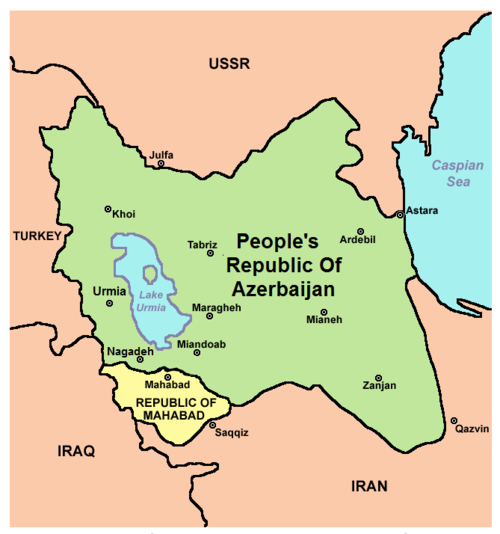
Azerbaijan National Government and Mahabad Kurdish Republic
What was expected did not happen. Nazi Germany was defeated in World War II. A power vacuum emerged in Iran. It was at such a time that the Azerbaijan People's Government was established on December 12, 1945. This republic, founded with a thousand hopes and excitement, continued its existence for approximately one year until it was disbanded on December 13, 1946, by the Shah's army with the support of the USA and England.
During the short-lived Azerbaijan National Government, the following important decisions were made:
- Azerbaijani would be taught as the official language in schools
- The first university would be established in Tabriz
- Women would be given the right to vote
- The lands of the aghas (landlords) would be distributed among the peasants
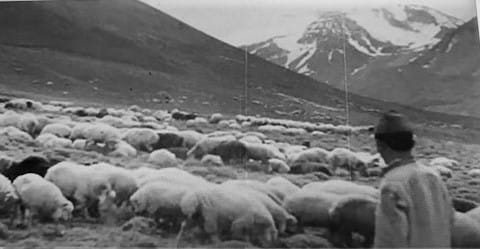
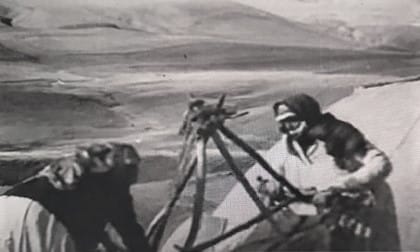
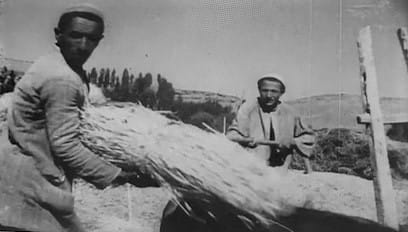
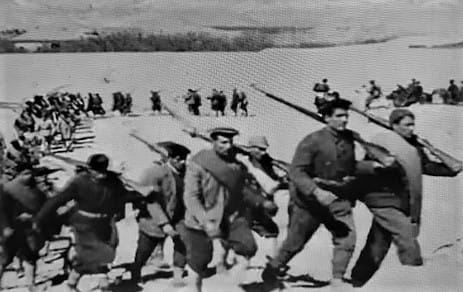
In 1947, one year after the collapse of the Azerbaijan People's Government, director Esfir Shub combined these film fragments in the Soviet Socialist Republic of Azerbaijan (North Azerbaijan), creating the documentary film Arazın O Tayında (On the Other Side of the Aras). For many years, this film remained hidden in archives as a heartbreaking symphony of a lost hope.
SEYID CAFER PİŞEVARİ
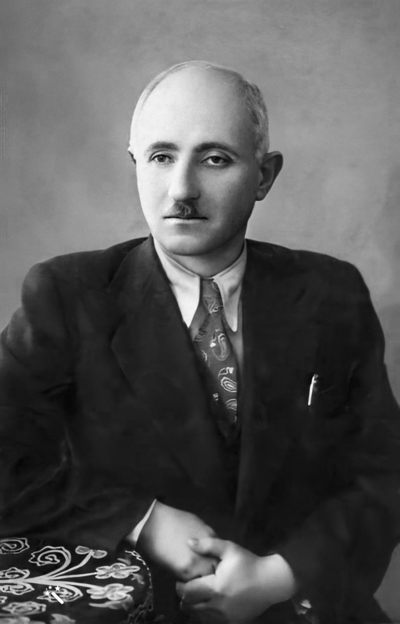
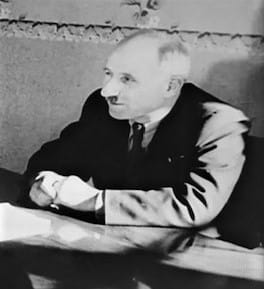
Seyid Cafer Pişevari, the president of the Azerbaijan People's Government, was born on August 26, 1892, in the village of Zeyve in the Xalxal region of Ardabil. His family was engaged in farming. Since "Seyid" families generally lived in Zeyve village, this village was also known as "Seyidler Zeyve'si" (Zeyve of the Seyids) among the people. Pişevari belonged to a family of five children. He learned to read and write at the age of five. He read every book he got his hands on with great curiosity. He had a strong memory.
In 1905, he went to Baku. He worked as a teacher. Pişevari, who was in Baku during the 1917 Russian Revolution, was influenced by Nariman Narimanov, one of the founders of the Azerbaijan Communist Party, and others, and adopted communist ideology. In 1918, he started working for the Azerbaijan newspaper, publishing articles that sought political solutions to improve the situation of the Iranian peoples.
In 1924, he was imprisoned by Reza Shah. Later, he founded the Azerbaijan Democratic Party. Between 1945 and 1946, he served as the founding President of the Azerbaijan National Government, with Tabriz as its capital. When the government was disbanded, he went to North Azerbaijan, and from there to Russia. On June 11, 1947, he died in Moscow in a suspicious traffic accident in which his driver survived.
THE FILM "ARAZIN O TAYINDA"
The film begins with a view of the Aras River, which separates South and North Azerbaijan. The narrator begins to speak as if sighing deeply, saying, "The Aras River: the border between Soviet Azerbaijan and Iranian Azerbaijan."
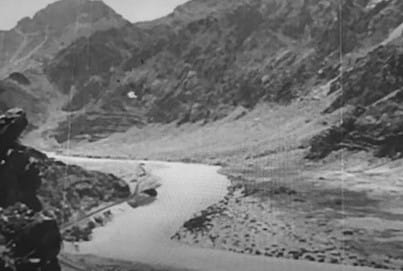
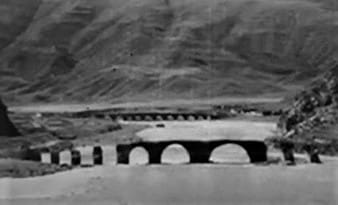
The voice continues: "Now these bridges that separate the two sides once united the two Azerbaijans. Aras, Aras! How precious and sorrowful this word is. Aras! The river that divides Azerbaijan into two!"
Köşki balaban Araza baxar,
Arazın suyu gözlerdən axar.
Ay Araz, quru, axma bir zaman,
Ay bizi oda yandırıb yaxan.
(Note: "Köşki Balaban" is the name of a type of game played by young people, especially on the banks of the Aras River. Also, the word "Od" means "Fire." Mücahit)

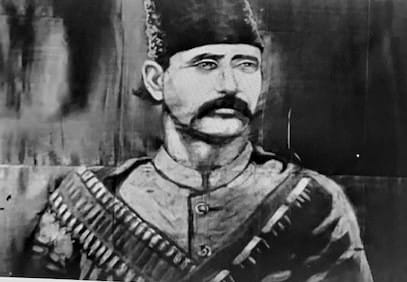

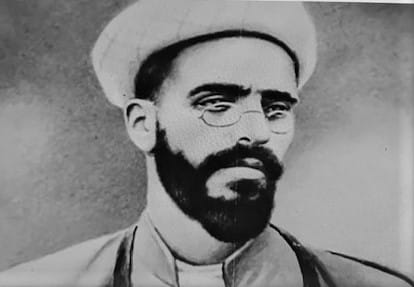
1905 Revolution: Settar Khan, Baghir Khan, and Sheikh Mehmed Ghiyaban, who spearheaded the Azerbaijani struggle


The following two tabs change content below.