Summer Spray
This essay by Mücahit Özden Hun covers diverse topics from a Brazilian bank heist and a wrongful conviction in the US to Hitler's Aryan ideology, Israeli facts, and a humorous anecdote about Kinyas Hun.

Dear Readers:
While struggling with the scorching heat in Ankara, my sister Leyla in Germany called:
“Alan and I are going to the village of Laax in Switzerland tomorrow. We’ll climb mountains, wander through plateaus, have a barbecue at the house we rented, etc., etc.”
Alan is my nephew. He was planning to reach the village of Laax in Switzerland from Darmstadt, Germany, in 3-4 hours with his latest model Tesla car.
The next day, pictures and short videos started pouring into my WhatsApp. Mountain landscapes, animals grazing on plateaus, small streams, waterfalls, narrow paths through the forest…
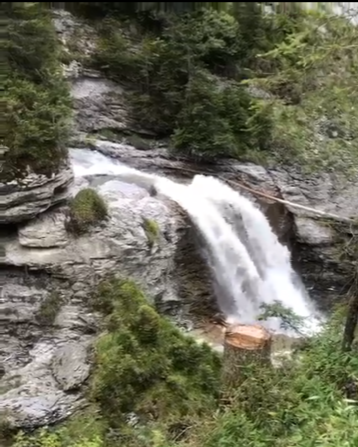
One video showed a roaring waterfall. As I writhed in the heat in my room, this video, which I watched, relaxed me as if I were in Switzerland, so I watched it repeatedly. The water splashing from the waterfall seemed to reach me in drops, creating a summer spray effect on me. Then, disconnected events, one after another, came to life in my mind.
FERNANDINHO FROM BRAZIL
No! No! I do not intend to talk to you about football stars like Pelé or Ronaldinho.
If we were to rank the films we watch most in our lives, war films would probably come first, and bank/museum robberies second. Like most of you, I enjoy watching films about robberies. Hollywood, in its vastness, shot two films in Turkey: "Five Fingers / Baş Parmak" in Ankara, made in 1952, and "Topkapı" in Istanbul, made in 1964. Both are about robberies. (Note: I especially recommend watching "Five Fingers".)
That's it! While watching the refreshing videos from Switzerland that Leyla sent, I wanted to write to you about an interesting but true bank robbery that happened in Brazil. The name of the great "intellect" who planned this robbery is Luis Fernando Ribeiro, or as he is legendary among the people, Fernandinho.
Why did the name "Fernandinho" become legendary? Since 2005, Brazil has faced hundreds of bank robbery attempts, large and small. Some were successful, some were detected at the last minute. In all of them, the robbers tried to achieve their goals by digging tunnels. For example, in 2017, robbers dug a 600-meter tunnel in the city of Sao Paulo. They were caught at the last minute, just as they were about to pull off a $330 million heist. If this heist had been successful, it would have earned the "title" of the biggest robbery in history. Fernandinho went down in history as the first person to start the tradition of robbing banks by digging tunnels in Brazil. I would like to briefly touch upon Fernandinho's tunnel-digging robbery operation.
***
Fortaleza, on the Atlantic coast, is Brazil's fourth-largest city. It is the capital of the state of Ceará. Each state has its own Central Bank.
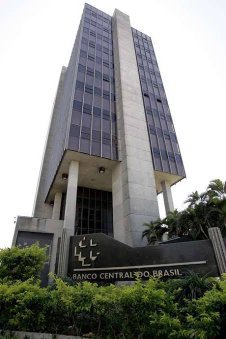
On the morning of Monday, August 8, 2005, officials of the Central Bank of Fortaleza called the police to report that the bank had been robbed. The police were surprised because the Central Bank was very well protected and had not been the target of any robbery attempt until that day.
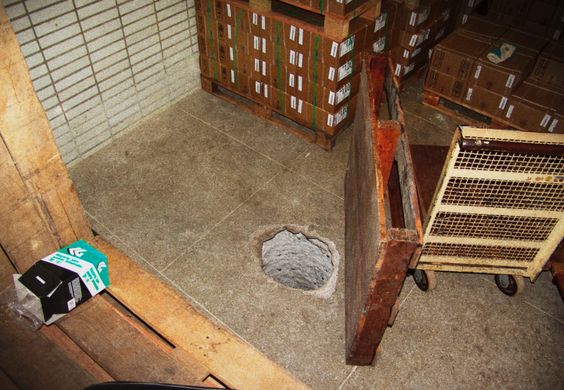
The police immediately arrived at the bank. When they descended to the ground floor where the Central Bank's reserves, valued at 164 million Reais (80 million dollars / 3.5 tons in weight), were stored, they saw a hole opened in one corner of the room. Money was scattered everywhere. To avoid being traced, the robbers did not touch newly printed, serially numbered banknotes; instead, they filled sacks with bundles of currency in circulation.
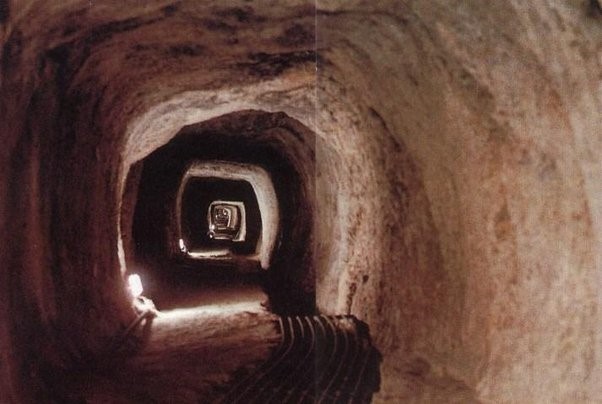
The narrow hole in the floor opened into a tunnel. A weak, slender police officer wanted to descend through the hole, but his chief prevented him. After all, the robbers might still be hiding in the tunnel or have set booby traps to prevent pursuit. However, the brave officer did not listen to his chief. He descended into the tunnel through the hole. He crawled through the 70-meter-long tunnel. When he reached the end of the tunnel, he encountered another tunnel, opening upwards, four meters high, with a wooden ladder inside. The police officer was careful. He slowly climbed the steps of the ladder, lifted the wooden cover, and found himself in a room. There was no one around. The surroundings were covered with white powder to erase fingerprints. The hall and rooms were crammed with bags full of soil. The investigation began immediately.
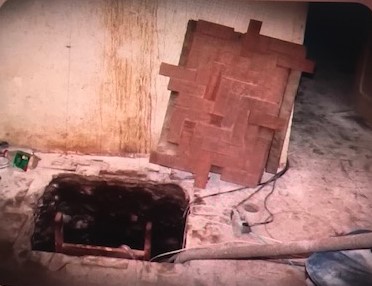
The situation became clear: The robbers rented a small house 70 meters away from the bank, registered the house's address with the Chamber of Commerce as the headquarters of an artificial turf selling company to avoid suspicion, and then painted the house green. When the time came, they rolled up their sleeves to implement their plan. The tunnel digging process, which would last three months, thus began.
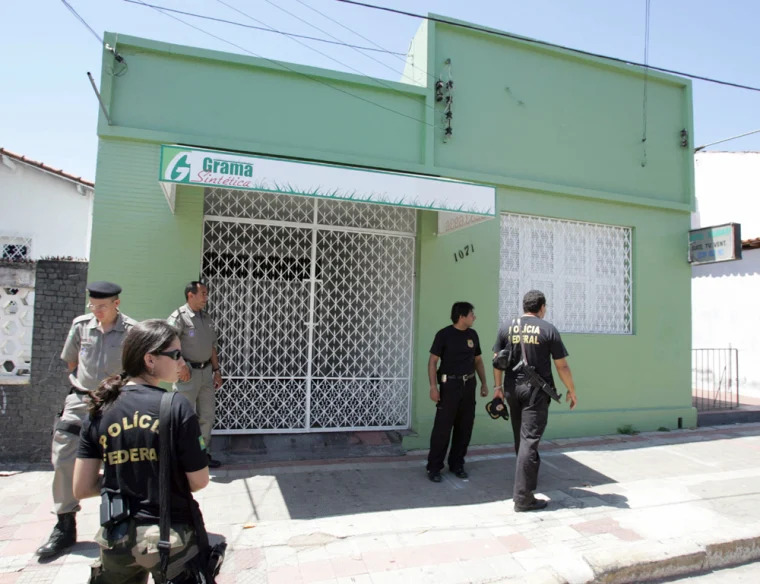
The 34 robbers worked day and night in three shifts, with 7 people in the tunnel at a time; they only used shovels and pickaxes to avoid making noise. In the first few weeks, a truck regularly came, picked up bags full of soil, and left. After a while, suspicion arose among the neighbors. This time, the robbers were forced to stack the bags in the rooms. When there was no more space in the rooms, they scattered the soil in the backyard of the house, as if doing landscaping work.
The robbers took every precaution. To prevent collapse, they supported the tunnel walls with 900 wooden and iron poles and continued digging. Thus, they reached the ground floor of the bank. They waited for the weekend holiday to drill through the bank's concrete floor.
The robbers in the tunnel and the house communicated via telephone lines to coordinate. In addition, a hose was extended into the tunnel to meet the workers' water needs. They used the water both to moisten the soil for digging and for their own needs. The tunnel was 78 meters long, 1.7 meters high at the entrance, and 70 cm wide.
The robbers began drilling through the concrete floor from 7 PM on Friday. They made a small hole and reached the compartment where the money bundles were stored. There were cameras around, but those in the control room did not notice what was happening because the cameras' field of view was blocked.
The police intervened and launched a comprehensive investigation. After a long chase, 8 robbers were caught, and some of the money was seized. The remaining robbers and money disappeared.
The confession of the captured robbers shed light on the incident:
The city of Sao Paulo, 2370 km away from Fortaleza, is the largest city in Brazil and South America, with a population of 22 million. Like every Brazilian city, Sao Paulo also has shantytowns where the poor live. Even the police cannot enter these areas. Life is difficult in this poor and crowded neighborhood. Poverty and unemployment push young people into crime. Drug use and carrying weapons are considered ordinary and natural even for elementary school-aged children. Fernandinho grew up in such an environment and acquired a considerable fortune from drug sales.
(For those curious about the brutal poverty in Brazil's big city shantytowns and the mafia life that young people are a part of, I recommend watching the 2002 film Cidade de Deus / City of God.)
One day, Fernandinho befriended a criminal who had escaped from prison four times by digging tunnels. Fernandinho said he wanted to rob the Fortaleza Central Bank by digging a tunnel and was willing to pay the necessary 3 million Reais for it. They formed a group of 34 people and went to Fortaleza. They bribed a bank employee who worked there and knew the locations of the security cameras, and obtained information about the security on the ground floor. The bank employee made some changes on the ground floor to block the cameras' field of view.
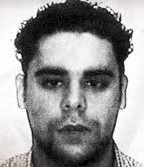
After the robbery, Fernandinho took the largest share and disappeared. However, this money would bring him trouble. In the shantytown where he was hiding, everyone planned to take this money from Fernandinho. On October 7, 2005, two individuals dressed as police officers, introducing themselves as police, cornered Fernandinho in a nightclub, handcuffed him, took him to an unknown location, and demanded a ransom from his family. They received $890,000 but did not keep their word and killed Fernandinho.
After the Fortaleza Central Bank robbery, robbing banks by digging tunnels became fashionable in Brazil's big cities. Some of these were prevented, but most were successful.
Even today, robbing banks by digging tunnels is a favorite method for robbers in Brazil. The robbers also act "loyally," remembering Fernandinho, who showed them this path, with mercy and building parks and schools in his memory.
THE INNOCENT CULPRIT
Every citizen wants to believe that the judiciary's decision is fair. However, this does not always happen.
In 1977, in Memphis, USA, two individuals forcibly entered a house and raped the female homeowner. The woman identified one of her attackers as her 22-year-old neighbor, Lawrence McKinney.
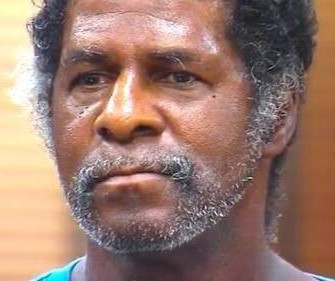
Lawrence was sentenced to 115 years in prison for theft and rape. After a long legal battle, a DNA test in 2009 proved Lawrence innocent. Lawrence was released after spending 31 years in prison. The Tennessee State Prison Directorate issued a check for $75 as compensation. Lawrence, who spent 31 years unjustly in prison, would start a new life with $75 (!).
Lawrence was astonished: "You took my life, and now you're giving me a $75 check," he protested. Moreover, due to an identity card issue, he had to wait three months to cash the $75 check. Lawrence appealed to the State Governor, requesting $1 million in compensation. The State Governor rejected this request, citing Lawrence's "bad" behavior during his prison years as the reason.
Justice is the most sacred right. However, it is unfortunately not always possible to say that the judiciary grants this "sacred right" to citizens.
WHAT WAS HITLER'S ULTIMATE GOAL?
Historians have always wondered about the answer to this question. What was Hitler's ultimate goal?
The common consensus is this: Hitler wanted to establish the Great Aryan Empire. For this, he was planning to conquer a large region to create "Lebensraum," meaning "Living Space." After the Soviet Union, it would be the turn of the Middle East and North Africa. Hitler believed that the Aryan race originated in the Middle East and spread from there to the world.

Until 1935, the word "Persia" was used. Cyrus, who founded the Achaemenid Empire, belonged to an ethnic group called Parsa. The Greeks, therefore, called Cyrus's country "Persia." The Ottomans and Arabs called Iran "Bilad-i Acem / Land of the Acem."
Hitler was gaining power in Europe and propagating Aryanism. To win the friendship of the Germans, the Shah of Iran stipulated that foreigners should refer to his country as "Iran" instead of "Persia" starting from March 21, 1935. "Iran" meant the country of the Aryan race.
If Hitler had conquered the Soviets, his most important allies would have been the Persians, Kurds, Ossetians, and other peoples belonging to the Aryan race.
WE ARE ALLERGIC TO POISON
Immediately after the declaration of the Soviet Union, Lenin established the secret police organization called "Cheka" on December 5, 1917. "Cheka" was ruthless. In later years, the name of "Cheka" changed many times, eventually becoming known as "KGB," but they never gave up the habit of using the word "Chekist" among themselves.
One of Cheka's most important tasks was to poison important foreign and domestic statesmen. For example, a foreign statesman would visit the Soviets, high-level negotiations would take place on the subject. The final stage of the negotiation would be reached. They would sit at the table. Poison would be added to the guest's tea. If the negotiation concluded positively as desired, the guest statesman's death would be prevented by immediately offering tea containing an antidote. Otherwise, may God have mercy on him!
Two foreign statesmen, knowing this, went to visit the famous Chekist Putin, who had a KGB background. Their aim was to negotiate oil sales. They sat at the table. Before the negotiation began, Putin wanted to offer tea to his guests himself. Of course, there was no poison in the tea. However, both statesmen quickly raised their hands in a "no" gesture, saying, "Thank you very much, Mr. Putin! We are allergic to poison." Putin loved this joke, accepted all his guests' requests, and ensured they left satisfied.

ISRAELI REALITY
I would like to list some interesting facts about Israel, founded on May 14, 1948, with an area half the size of Konya and a population of 10 million (20% of the population is Arab):
- Israel is the country that has increased the number of trees and forests the most in the world.
- It is the country with the most museums per capita in the world.
- The surface of the Dead Sea is 430 m below sea level, making it the lowest surface level in the world.
- The world's largest solar energy production center has been established in Israel's Negev Desert, covering an area of 80 square kilometers.

The world's largest solar energy production center (Ashalim Power Station)
5. Israel has the highest number of university graduates per capita in the world.
6. Israel is the country with the highest concentration of entrepreneurial companies in the world.
7. Israel is the only country in the world where both men and women are subject to compulsory military service. Men are obliged to serve for three years, women for two years.
8. Israel is the only country in the world where cultivation is done in the desert. The Negev Desert, which covers 60% of the country, is becoming greener every year, agricultural areas are being opened, and animal husbandry is being carried out.
KINYAS HUN'S ANECDOTE
KURSI NAŞİN
Kinyas Hun was bothered by everyone sitting at his table. He believed that those who would honor his table should have earned it. But who would listen? Anyone would pull up a chair, approach the table, say things that were not in Kinyas Hun's lexicon, annoy him, and then slip away without paying for their tea.
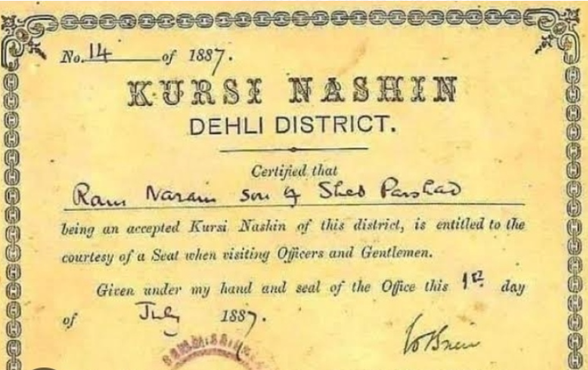
One such day, Kinyas Hun read an interesting news item in the newspaper: When India was a British colony, Indians had to carry a "Sitting Certificate" called "Kursi Naşin" to be able to sit on a chair in a place where there were British people.
Kinyas Hun was delighted by this news. From that day on, he started asking those who came to his table, "Do you have a Kursi Naşin certificate? If so, you can sit!" People couldn't make sense of this question and would say "No!" and leave.
One of his friends asked curiously:
"Kinyas Abi, how can I get a Kursi Naşin certificate?"
"You need to apply to the District Governorship."
His friends, longing for Kinyas Hun's pleasant conversation, applied to the District Governorship, writing petitions such as, "I respectfully request that a Kursi Naşin certificate be issued to me to earn the right to sit." When the petitions piled up, the District Governor became curious and wrote to Ankara asking what a "Kursi Naşin Certificate" was.
The answer he received was interesting: "Kursi Naşin is a residence permit given to foreigners. Such a document is not required for citizens. Showing a T.C. identity card is sufficient."
The District Governorship responded to the applications: "Showing your T.C. identity card will be sufficient."
His friends would approach Kinyas Hun's table, take out their identity cards and hand them over, and Kinyas Hun would carefully examine the identity cards, accept those he wanted, and reject those he didn't, saying, "This picture doesn't resemble you at all. Get lost immediately! Don't let me see you again."

(I commemorate those who have passed away with mercy. May their resting places be in heaven!)