The Ransom Crisis in Venezuela
The author recounts a harrowing experience from 1997 when a colleague was kidnapped in Venezuela, highlighting the dangers faced by foreign workers in regions plagued by organized crime.
Dear Readers:
A text we read or an image we see can, without our conscious effort, bring back to life events from the past that we thought we had forgotten. It can even refill our hearts with the terror, fear, and disappointment that weighed on us during those difficult times.
It was just a few days ago. While browsing a Mexican newspaper online, I read about an American citizen who traveled to Mexico, was kidnapped by the mafia, and whose family was asked for ransom. This immediately transported my mind back to the summer months of 1997.
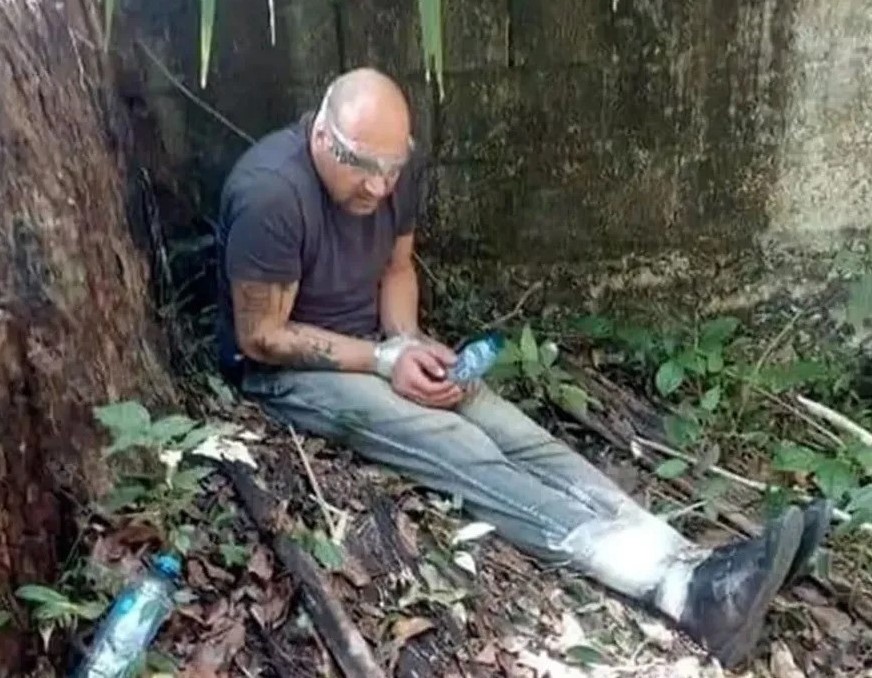
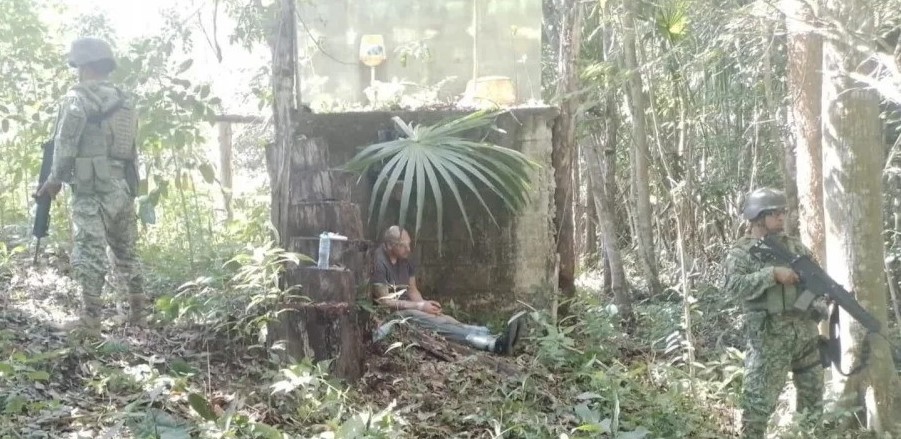
In countries like Mexico, Colombia, and Venezuela, there are specialized mafia organizations that kidnap tourists, especially Americans, and demand ransom. The same scenario always repeats: a person is kidnapped. Their hands, feet, and eyes are bound. They are allowed to make a phone call to their family. They are told that the demanded ransom must be deposited into a bank account in the Bahamas, otherwise they will be killed. To emphasize the seriousness of the situation, pictures of American tourists who were executed because their ransom was not paid are also sent to their families.
This situation is particularly common in Venezuela, where anti-American sentiment is at its highest. Kidnapping gangs specifically target employees of oil companies, negotiating with wealthy oil companies and transferring millions of dollars into their accounts.
FROM PLANO TO SAN RAMON
In May 1995, after graduating with an MBA (Finance) from the Wharton Business School at the University of Pennsylvania (in Philadelphia), I received many job offers. However, most of the offers came from companies providing services in the field of IT Management. But I was eager to work in a new industry. Soon after, I accepted an offer from an oil and natural gas company called ARCO. I started working as a "Planner" at the ARCO Research and Development Center in Plano, a suburb of Dallas (today an independent city with over 200,000 inhabitants). My job was to analyze the Net Present Value (NPV) of investments and projects to determine their profitability and to present these findings to management.
At the end of two years, a new general manager was appointed. When he wanted to change my job description, I left the company. A few weeks later, I started working at Chevron Oil and Natural Gas, headquartered in San Ramon, California. Returning to California's peaceful and pleasant weather after Plano's stifling and humid climate made me happy.
Chevron is a multinational energy company that operates in many different regions worldwide, playing a significant role in the global energy sector. The company is involved in both the exploration and production of traditional oil and natural gas resources, as well as the exploration, production, and marketing of chemicals.
Chevron had signed a contract with the Venezuelan Government, obtaining significant concessions as the sole foreign company for oil and natural gas exploration and extraction. The company did not want to miss this opportunity. Since they would be working on joint projects with the Venezuelan National Oil Company, Petróleos de Venezuela, S.A. (PDVSA), they specifically required employees to know Spanish.
SAN RAMON
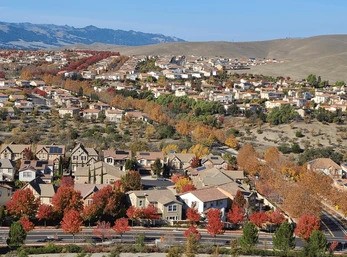
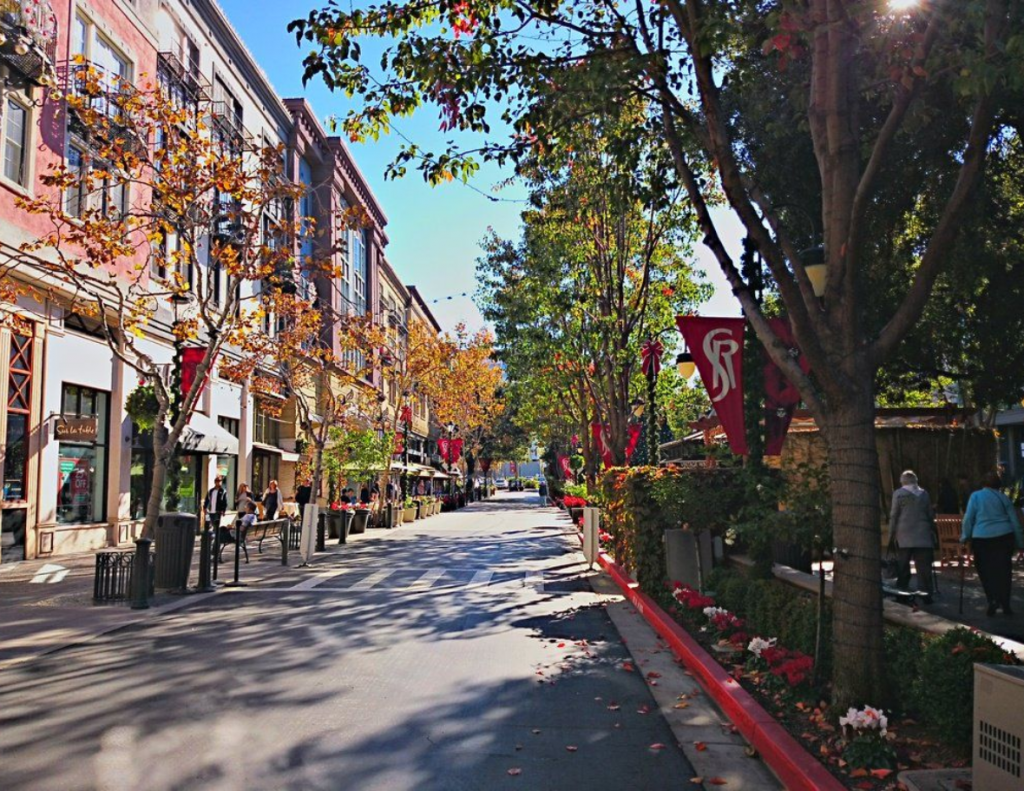
The city of San Ramon is considered part of the San Francisco Bay Area. Home to various technology and energy companies (Chevron), San Ramon has been a city since 1983. It stands out for its quality of life, educational opportunities, natural beauty, safe neighborhoods, and high standard of living. In addition to Chevron, many other important companies such as AT&T, General Electric, and IBM conduct their statewide operations from this city.
I settled into a studio near Central Park. I was comfortable. What impressed me most was that the city's quality of life was above US standards. It offers extensive facilities that support an active lifestyle, including parks, walking and cycling paths, community activity centers, and sports facilities. Furthermore, its proximity to San Francisco allows city residents to enjoy the cultural and entertainment opportunities offered by the large metropolis.
PREPARING FOR VENEZUELA
In my second week at the company, a meeting was held with 20-30 participants. Most of the attendees were engineers from various fields: Petroleum, Chemical, Mechanical, Civil, Geophysics, Environmental, Electrical, and Geology. Only John and I were the two employees with MBAs. John was an American whose native language was Spanish. In the US, this group is known as "Latino" or "Hispanic." California was incorporated into the Spanish Empire in 1769. When Mexico gained its independence in 1821, California remained within the borders of the Mexican state. After long wars, it became a US state from 1850 onwards. Today, 40% of California's population is of Latino origin.
John was successful. He had studied Business Administration at Stanford University, focusing on logistics. Like me, he hoped to build a career in the energy sector. His greatest desire was to establish his own company in the future and sell petroleum products to global markets.
***
The company's General Manager took the podium. Using a slide projector, he began to provide information about Venezuela. He paused carefully on a slide showing the country rankings by proven oil and natural gas reserves:
"Look carefully at this ranking. The largest portion of the world's oil and natural gas reserves is in Venezuela. However, Venezuela ranks low in global oil and natural gas production. Our company (Chevron) has signed a special concession agreement with the Venezuelan Government. Now, only our company will have the right to operate in Venezuela. We do not want to miss this important opportunity. We will cooperate with the Venezuelan National Oil Company PDVSA in both oil exploration and extraction, and in the distribution of crude oil to world markets."
The General Manager was excited. Indeed, it would be a great experience for us too.
"Complete your preparations. You are leaving next week."
Proven oil reserves (billion barrels)
- Venezuela 304
- Saudi Arabia 259
- Iran 209
- Canada 170
- Iraq 145
- Kuwait 102
- United Arab Emirates 98
- Russia 80
- Libya 48
- USA 44
NOTE: In the oil industry, "proven reserves" refers to the quantity of natural resources that are proven to be recoverable from known reservoirs with a high degree of confidence under existing economic and operational conditions.
CIUDAD GUAYANA
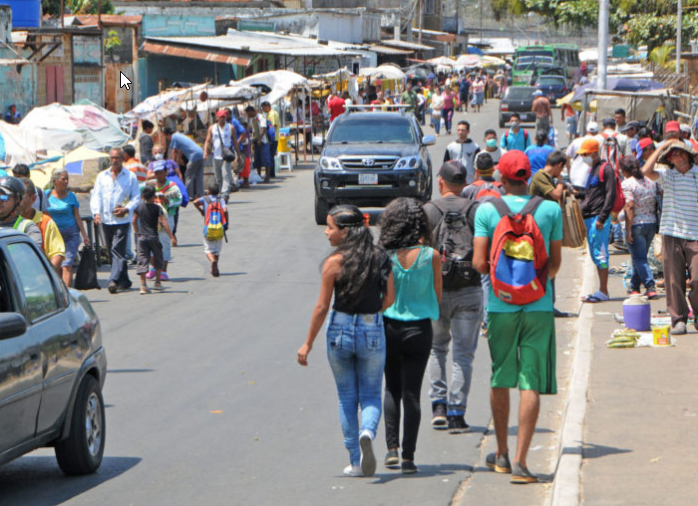
A week later, we set off from San Francisco to Caracas, the capital of Venezuela. John and I sat side by side. To be honest, John didn't seem very happy with this assignment. "We might have to stay in Venezuela for many years," he said, immersing himself in a gloomy scenario. Latinos in the US feel close to Mexico but speak disparagingly of other Spanish-speaking countries. "I heard the food is terrible. We're going to be so bored! And the girls are very ugly."
Having to listen to John's complaints throughout the flight made me, without intending to, reconsider my decision.
After an 8-9 hour flight, we arrived in Caracas. After a 3-4 hour wait at the airport, we took another flight from Caracas to a city called Ciudad Guayana. After a 1-1.5 hour flight, we arrived in Ciudad Guayana.
Ciudad Guayana is the largest city in Venezuela's Orinoco Oil Belt. The Orinoco Oil Belt has one of the world's largest heavy crude oil reserves. It provides a significant portion of Venezuela's oil production.
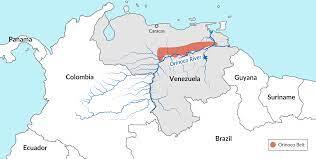
Ciudad Guayana is considered an important center due to its connections with the oil industry. The city is located at the confluence of the Orinoco River, the second longest river in South America after the Amazon, and the smaller Caroni River. It is one of the country's important industrial and commercial centers. It also hosts large industrial facilities such as hydroelectric power plants, and iron and steel plants. The Guri Dam, one of the world's largest hydroelectric projects, is located near the city.
The Orinoco River is an important transportation route within Venezuela, providing access to many remote areas and serving as a critical artery for trade. The river is a vital resource, especially for transporting goods to inland regions and for the livelihood of the local population. Furthermore, the river and its surrounding areas have been both a source of life and a cultural center for many indigenous communities for centuries. This region possesses a rich heritage reflecting the history, culture, and traditions of indigenous peoples.
Ciudad Guayana hosts various educational institutions, including universities and technical institutes. These institutions offer training programs tailored to the industrial needs of the region. Additionally, the city has art galleries, museums, and cultural centers, which emphasize Ciudad Guayana's importance not only as an industrial hub but also as a cultural and educational center.
***
At the airport, they met us and distributed us to hotels in the city. John and I checked into the InterContinental Hotel. The rooms were comfortable, and the service was of high quality.
Chevron had a small meeting center in the city. Every day after breakfast, we would meet there for a general assessment. Employees from PDVSA also attended the meetings, mostly speaking Spanish and sharing their thoughts on the work program with us.
I had been working for oil companies for almost three years, but I hadn't yet seen crude oil in its true sense. One day later, they took us as a group to an oil field in the Orinoco region, whose name I can't recall now. It was then that I first witnessed how oil is extracted from underground and transferred to a central point through pipelines. The engineers would now stay at the construction sites built in this region, conducting measurements in the field with their Venezuelan colleagues.
Towards evening, John and I were brought back to Ciudad Guayana. Our task was to perform various calculations based on the information provided by the engineers, while also calculating the profitability of the operation and finding more suitable solutions for logistics issues.
***
About three weeks had passed. It was a Sunday. It was around noon. I was sitting in the hotel lobby, working on my laptop. John appeared in front of me:
"Let's go eat out!"
"John, the steakhouse at the hotel is delicious. If you want, we can eat dinner out tonight."
John, looking a bit bored, said, "I'm going for a walk. See you tonight."
I had eaten in many restaurants in the city, but none of them made steaks as delicious as the one at the hotel. Since the chef was French, he prepared his meals with a flavor that reminded me of my days in Paris years ago. Each time, I thanked him in French. He had come here from Lyon, France, because his wife was Venezuelan. He was also extremely happy to speak French with me and valued our friendship. What I loved most was that he specially served me Lyon mustard, which he had brought from France.
After dinner, I retreated to the lobby again. I was drinking coffee and doing complex financial calculations. Dinner time was approaching, but John was nowhere to be seen. Yet, we had agreed to have dinner out together. I waited for a long time. I ended up having dinner at the hotel and then went to my room.
It was the middle of the night. The phone rang. On the other end was Chevron's manager responsible for Venezuelan operations. Since my student days at Wharton, I had been using the name "Kevan" instead of "Mücahit." Americans, even my wife, struggled to pronounce "Mücahit," making strange sounds. I was tired of trying to teach them the correct pronunciation. According to official records, I was born on December 9th (my actual birthday is November 4th), so I am a Sagittarius. Since Sagittarius is called "Kevan" in Kurdish, I had adopted this name. It was easy to pronounce.
"Kevan, they've kidnapped John."
I jumped out of bed.
"What are you saying, Liam? Who kidnapped him?"
"John was attacked by a group while walking on the street, quickly put into a car, and taken out of the city. They just called me. They're asking for ransom. Come to the center immediately! I'm sending police to the hotel. I want you to go out with them."
We gathered at the center. We informed the Head Office in the US about the situation. The General Manager's voice sounded tearful.
"Is John alive? You must be sure of that."
We waited for the phone to ring until morning. Towards noon, John's kidnappers called again. Liam asked:
"Is John alive?"
"Yes!"
"I want to hear his voice."
"I'll call back in a few hours."
We settled into waiting. A great disappointment seemed to have ripped our souls from our bodies. We were silent. The room was packed with plainclothes and uniformed police.
The phone rang again. Liam answered. John's voice was on the other end. After hanging up, Liam turned to us and the police:
"John is alive. They're asking for $5 million in ransom. They'll send us the account where the money should be deposited via email."
Towards evening, the company's email address received the account number of a bank in the Bahamas where the money was to be deposited.
We were reluctant to leave the center. Food was brought in from outside. We eagerly awaited the phone to ring, while continuously consuming coffee. Some of us fell asleep with our heads on the table.
"Liam, is John's family aware of the developments?"
"I don't know! That's the General Manager's problem."
Towards noon, the phone rang again. The voice on the other end threatened: "If you don't deposit the money within two days, we will execute your friend."
This information was conveyed to the Head Office as it was. An official, probably a CIA agent, from the US Embassy in Caracas frequently met with Venezuelan officials to assess the situation.
At one point, I had a conversation with a Venezuelan policeman. He told me, almost laughing:
"Something I don't understand is that these kinds of incidents happen very often in Venezuela. Didn't your company warn you?"
"No!"
"Big mistake! A few months ago, they kidnapped another American. They took ransom from his family and released him."
Since John was Latino, he looked very much like Venezuelans. I asked curiously:
"John isn't a typical white American. How did they know he was a US citizen?"
"Probably hotel staff passed this information to the mafia group. We are investigating this, but I don't think we'll find any serious clues. You are also in danger. I want you to know that."
Of course, I didn't relay what was said to Liam.
***
Three days later, John was released. Since the negotiations were kept secret, I would never learn how much money was paid to the mafia group. The police took John for questioning. Towards evening, they brought him back to the hotel and left him there. They also stationed a few police officers at the door. John wanted to return to the US.
"Kevan, if you're smart, you'll come with me. This place is very dangerous."
I asked a few questions, but John was not willing to talk. He hadn't yet recovered from the shock of the incident. He was depressed.
A few days later, we told Liam that we wanted to return to the US. Liam reluctantly accepted our request.
The next day, while flying from Caracas to San Francisco, John recounted his experience:
"Since it was Sunday, the streets were quiet. As I was about to turn onto a street, I was punched in the face. They quickly put me into a car and took me out of the city. After hours of driving, they took me to a wooded area. They took me out of the car. Armed men were communicating with each other with walkie-talkies. They laid me on the ground among the trees, and tied my hands, feet, and eyes. I begged them not to kill me. I told them I was my parents' only child, that my mother had heart disease, and that if I died, my mother wouldn't be able to bear the pain and would die. They didn't care. They occasionally gave me bread and water. I had to stay alive for the large ransom they would receive. Since my eyes were bound, I don't remember how many days passed. One day, they put me in a car and left me in an unknown place. They called the police and told them where I was."
***
The next day, we were at the company's headquarters in San Ramon. There was a deep silence. That day, I packed my belongings and returned to Plano. My three-month adventure with Chevron ended this way.