Bulgarian Immigrants from Deliorman to Iğdır
This article explores the 1937 migration of Bulgarian Turks from Deliorman to Iğdır, detailing their arduous journey, settlement, and integration into Turkish society, enriched by personal anecdotes and historical newspaper accounts.
Dear Readers, when Nihat Öner, one of Iğdır’s young researcher-writers, sent me an article titled “New Kinsmen in the Homeland,” published under the pseudonym “Fuad Araslı” in the November 9, 1937 issue of Doğu Gazetesi, which was once published in Erzurum, I wanted to publish this article as it was and also share some information, however brief, about the Bulgarian immigrants settled in Iğdır with you, my esteemed readers. The Treaty of Lausanne (July 24, 1923) is the main text that ensured the international recognition of the Republic of Türkiye. In this treaty, the articles on compulsory population exchange only covered the population exchange between Greece and Türkiye. There is no specific article regarding Turkish/Muslim immigrants living in Bulgaria who wished to come to Türkiye. The ‘Turkish-Bulgarian Residence Agreement’ was signed in 1925 between Bulgaria and Türkiye, where Turks experienced the most difficulties. The “Settlement Law” of 1934 is the most important legal framework that systematized the Republic of Türkiye’s immigrant settlement policy. Turkish/Muslim immigrants from Bulgaria were settled in Iğdır under this scope. The purpose of the Settlement Law was to settle immigrants coming to Türkiye in empty or strategic regions. Accordingly, the state would provide immigrants with houses, land, animals, and agricultural tools. The journey of the Bulgarian Turks to Iğdır began in the summer of 1937, at the Port of Varna… The immigrants, coming from the forested and mountainous Deliorman region, were encountering the sea and ships for the first time. The steamer that would bring the convoy to Iğdır set off for Trabzon, 1100 km away. The Black Sea was turbulent and rough. The steamer swayed constantly. Those in the convoy were in a miserable state. As if the captain of the ship was responsible for the roughness of the sea, an old immigrant on deck called out to the captain from afar: “Hey! Captain Aga, you keep taking the ship over wavy hills. Why don’t you drive it a little over fallow, flat places! The kids keep throwing up, look!” After a tiring and tedious three-day sea voyage, the convoy of 400 households (1800 people) reached Trabzon. They also had their cows, oxen, and horse carts with them. The immigrant convoy probably followed a route like this to Iğdır: From Trabzon to Erzurum → Horse carts, ox carts, and walking convoy From Erzurum to Kars → Railway From Kars to Iğdır → Military Trucks + animal carts mixed transport
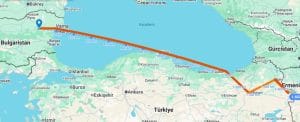
The route followed by Bulgarian immigrants: Deliorman-Varna / Varna-Trabzon / Trabzon-Erzurum / Erzurum-Kars / Kars-Iğdır (Total 1750 km) Migration Route and Distances Shumen → Varna (port) ≈ 95 km By road – with ox carts Varna → Trabzon (sea voyage) ≈ 1,100 km (sea line) Steamer via Black Sea Trabzon → Erzurum ≈ 290 km By road – over mountain passes Erzurum → Kars ≈ 190 km Railway / By road Kars → Iğdır (final destination) ≈ 75 km By road TOTAL 1750 km
The purpose of this migration, which began in the summer of 1937 and lasted 25 days, was not merely to change countries; this journey, which started with days of walking with ox carts from Deliorman to Varna port, then reaching Trabzon with hope across the rough waters of the Black Sea, and from there to the sharp mountain winds of Erzurum, the steppes of Kars, and finally the borderlands of Iğdır, was much more than a mere relocation. This migration was an epic march of land, identity, hope, and the will to survive. Every step carried not only a physical distance but also the destiny of a people.
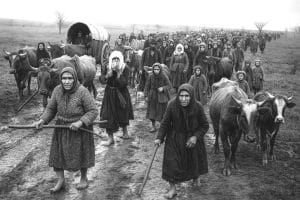
Representative immigrant convoy traveling between Trabzon and Iğdır As soon as the immigrants arrived in Iğdır, the state built rows of houses for them. These beautiful, villa-like houses were so similar to each other that the immigrants sometimes got confused and entered someone else's house, thinking it was their own.
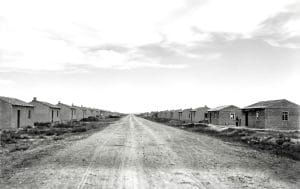
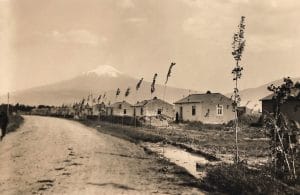
Houses built for Bulgarian immigrants in Iğdır on the Melekli road... (1937) The immigrants brought a new culture and a new understanding to Iğdır. In a short time, they embraced and integrated with the local people. İSMAİL AĞIRKAYA NARRATES
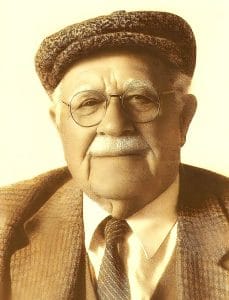
I would like to share some anecdotes about this. The late İsmail Ağırkaya, one of Iğdır's important figures, narrates: "In 1937, Bulgarian immigrants settled in the Iğdır region, bringing with them beautiful breeds of cows... My father fell in love with these white or blue cows with dark eyes. We sold all our local breed cows and bought immigrant cows. Immigrant cows were twice as expensive. For every two local cows, we could only buy one immigrant cow. From that day on, we started cattle breeding professionally. Thanks to these cows, our milk yield increased significantly. During the summer pasture season, when these cows went in herds, they looked like a pure white cloud from afar. People would point to each other and say enviously, 'Bahçeli Bey's cows are going.'" HAMZA AYGÜN NARRATES
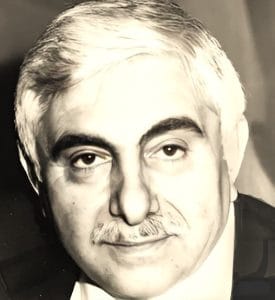
Our great treasure, the late Hamza Aygün, the hidden memory of Iğdır, also narrates: "Bulgarian immigrants came to the country from the Deliorman region of Bulgaria. They were transported by ships from Varna to Trabzon with all their movable property – corn cobs, oxen, cows, horse carts – and about 400 households were settled in Iğdır. (1937) Villa-like houses were carefully built for these families on Iğdır's four main streets – Kars Street, Melekli Street, Doğubayazıt Street, and Halfeli Street. The roofs of the houses were covered with tin. They had three rooms, a living room, and stables in the garden. With the arrival of the immigrants, the face of Iğdır changed, and the town's population increased by two thousand. The best fields of Iğdır were allocated to them. Among the very good and pure-hearted immigrants were talented and skilled artisans. These families, who also introduced wrestling to Iğdır, organized competitions among themselves every year, and the public enjoyed watching them. Most of the immigrants eventually left Iğdır and migrated to other provinces and districts. Those who remained became Iğdırlı, completely integrated with the local people. Among my acquaintances, I can remember the following names:
- Hasan Kocakayalar
- Mümin Bey Postman
- Halil Bey Municipal officer
- Hasan Usta Shoemaker
- Ali Boncukçu
- Recep Ağa
- Hasan Ağa Ali Boncukçu's father-in-law
- Pharmacist Hasan Bey Worked as an apprentice with Pharmacist Edip Bey
- Carpenter Ahmet Bey
- İsa Topal Land registry officer
The immigrants, who came from the mountainous and forested Deliorman region, were immediately afflicted with malaria upon their arrival in Iğdır; without exaggeration, several people died every day. 80% of those who came were forced to leave Iğdır. Since they could not sell the settlement rights, houses, and lands given to them – there was a ten-year sales ban – the families who left struggled with hardship for a long time in the places they went to. I wish mercy to all who died and long lives to those who remained." “OH, THOSE IMMIGRANT GIRLS” (Hamza Aygün narrates) Bulgarian immigrants came to Iğdır in 1937. They settled in about 50-100 houses built by the state on Bayazıt, Halfeli, Melekli, and Kars streets. These houses, with their tin-covered roofs, were as showy as villas. The young men of the neighborhood would gather and go near these "new houses." We would walk proudly in front of the houses, flirting with the blue-eyed, blonde immigrant girls. Their laughter and waving hands would flatter our youthful spirits, and sometimes we would fall in love. Many friends later married immigrant girls and lived happy lives. One of them was Halil Çavuş, a municipal police officer and a friend of Bahri Yiğit. CARPENTER AHMET (Hamza Aygün narrates) He is a Bulgarian immigrant. His elder brother, Hasan Bey, worked as an apprentice with pharmacist Edip Bey. There was a closeness between the well-known carpenter of Iğdır, Halit Usta, and Edip Bey, due to both being from Erzurum. In this way, Hasan Bey had placed his younger brother Ahmet as an apprentice with Halit Usta. Halit Usta quickly trained Ahmet Bey into a respectable carpenter. With his skill and talent, he called his impressive apprentice "Mışko Ahmet" in his unique style. Ahmet Bey passed away at an early age. May he rest in peace.
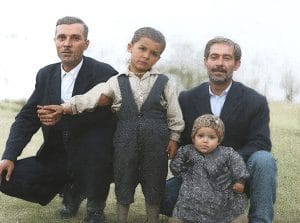
Bulgarian Immigrants in Iğdır (Carpenter Immigrant Ahmet on the far left)
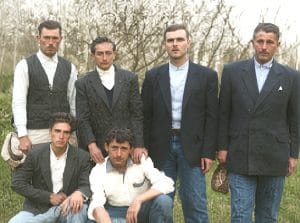
Bulgarian Immigrants in Iğdır (Third from left, standing: Carpenter Immigrant Ahmet) “MY FELLOW COUNTRYMAN, OCCUPANCY FEE” (The late Mehmet Yiğit narrates)
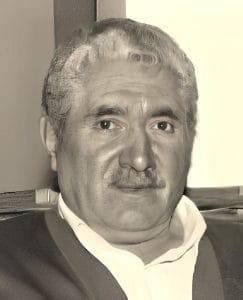
Mehmet Yiğit, grandson of Ali Mirze Bey It was the years when Bulgarian immigrants came and settled in Iğdır. One day, one of the immigrants passed away. In those years, since there was no means of transport other than horse or ox carts, they placed the deceased on an ox cart, covered it, and set off towards the municipal cemetery, passing through the city center in this state.
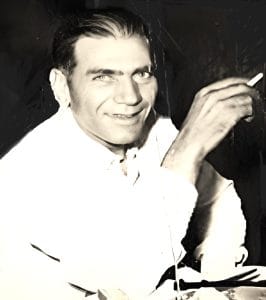
The beloved figure of Iğdır: Bahri (Yiğit) Çavuş Bahri Çavuş, a municipal officer unaware of the funeral, blocked the path of the immigrant leading the ox: "My fellow countryman, you need to pay an occupancy fee for this cart," he said. The immigrant was annoyed by Bahri Çavuş's officiousness but calmly replied: "Alright, Officer Bey! Come, I'll pay you the occupancy fee right away," he said. Bahri Çavuş followed the immigrant with a triumphant air. When they reached the back of the cart, the immigrant suddenly lifted the cover over the deceased: "Here is your occupancy fee, Officer Bey!" he said. As soon as Bahri Çavuş saw the deceased lying stretched out in the cart, he quickly ran away and never again in his life went near ox carts. AN ARTICLE IN MECİT HUN’S “DİL” NEWSPAPER DİL newspaper is Mecit Hun's first and Iğdır's third newspaper. DİL newspaper, which began its publication life on July 9, 1952, was printed as a single page on a duplicator. The latest issue available (Issue: 130) is dated April 17, 1953.
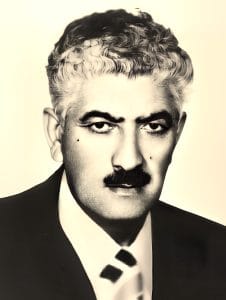
Mecit Hun IMMIGRANT NEIGHBORHOODS October 20, 1952 Mecit Hun Year: 1 Issue: 17 After the installation of electricity facilities (...), the lighting needs of the neighborhoods built for our immigrants by the government have not been met to this day. As we recall, the necessary investigations were carried out in this vicinity in due time, and the necessary funds for extending the electricity network in all four directions were brought to our municipality's disposal. It is our collective wish that our municipality implement this initiative as soon as possible, both to meet the rightful needs of these fellow citizens and to beautify the town. We draw the attention of the esteemed municipal council. FUAT ARASLI’S ARTICLE IN “DOĞU” NEWSPAPER
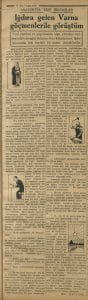
The newspaper clipping Nihat Öner sent me... I present the article below for your attention NEW KINSMEN IN THE HOMELAND (November 9, 1937) (Note: Italicized explanations in parentheses are mine) I met with the Varna immigrants who came to Iğdır These kinsmen, busy settling into their newly built and ongoing houses, will be a very useful element in Iğdır's agriculture. There are four main roads entering the town of Iğdır: Kars road, Halfeli road, Bayazıt road, and Markara road (the road leading to the Markara border gate or Melekli Road). Those who have seen the district before would surely be surprised if they came again now. In these four entrances (main entry points), instead of the long-standing dilapidated walls and house ruins, you now see rows of houses facing each other (symmetrical) on the right and left of the highway. These are immigrant houses, some of which have been completed and some are still under construction. The immigrants, who came from Varna after a twenty-five-day journey, were partly accommodated in these completed houses and partly in nearby villages. Now, I am among the immigrants settled in the new neighborhood on the Kars road. A young and energetic man greets us in house number 6. This is the immigrant teacher Şaban. I introduced myself and said, "Welcome." — "Welcome to you too, brother." — "How are you, are you happy with the migration and the journey?" — "How could we not be happy? Is such a question asked to someone who has come to their homeland? And don't call this migration. We left our home in Bulgaria and came to our ready home in our own homeland. Everywhere we stayed along the way, we received unforgettable warm hospitality from both the Government and our blood brothers." While talking, my eyes were drawn to the scenes (images) that were very new to me. Since they had only arrived three days ago, they hadn't fully settled yet, and many of their belongings were outside. I see that their belongings are as original as their characteristics (personal features). The men's attire is generally (in general) Anatolian attire. A narrow pair of trousers with an embroidered waistcoat made of shawl and a wide sash around the waist, without fail (definitely). The women, starting from children aged 10, sometimes wear blue shalwar. They cover their heads with a white veil and the lower part of their body from the shoulder with a black maşlah (long and thick covering) resembling a kind of cape. Here are a few women sitting in a circle (circularly) on the ground in front of a house. All of them are wearing black maşlahs (long and thick coverings) and white headscarves. They are eating corn kebabs. When they saw me approaching, they tried to cover their faces. When I told them I was a journalist and wanted to take pictures, they gladly accepted, and I took a cheerful pose of them. At this moment, the teacher (muallim) Şaban pointed to a young man approaching from afar and said: — "This is also a teacher. His name is Hüseyin." I immediately recognized this idealistic Turkish child, who, a couple of hours earlier at the acquaintance ceremony in front of the Community Center, had shed tears of emotion under the sacred shadow of the Turkish flag while making the children he had trained sing the Tenth Anniversary March. He warmly shook my hand and said: — "Thank God, we have finally met our Atatürk, whom we have longed for for years." — "So, did you like our country?" — "What can I say, we are farmers. That's why we attach great importance to the land. After passing Trabzon, we were a little intimidated by the barren mountains we encountered. But when we came to Iğdır, this very fertile place, we were very happy. It is certain that we will establish a very prosperous (comfortable and peaceful) life here. As I said, even if this were not the case, we would still be happy. Because our main goal was to meet our Atatürk. Thousands of thanks to God, this wish has come true. The government is looking after us like a father. The district governor and the doctor come to us several times a day, ask about our well-being, and address and fulfill even our smallest wishes with great importance." We continue our investigation while talking between the two teacher friends. The sun, which appeared after a rain that lasted a day or two, has brought all the neighborhood people out into the street. In front of every house, there is a feverish activity of repair and settlement. Among them are blacksmiths, carpenters, and even mechanics. They do all their work themselves. Their household items and clothes are so clean; if it weren't for the original attire of our eastern villagers – the women – they would be indistinguishable from city dwellers. In a word, they are a valuable innovation for Iğdır's agricultural and social life and a charming ornament for the district. Hüseyin narrates: Their ship journey coincided with an unprecedented stormy period in the Black Sea for years, and they named a baby boy born on the ship, which swayed like a cradle on terrifying waves, Coşkun Ahmed. I wanted to see the inside of their houses. Mr. Hüseyin said, "Come, see my house," and plunged through the door of the first house we came across among the houses that were all the same size and looked alike, and immediately came out with a face flushed with embarrassment: — "Excuse me, we came to the wrong one," he said. And Şaban interjected: — "Our houses are all the same. Every time we want to go inside, we have to look at the number on the door. The other night, didn't I accidentally walk into my neighbor's house, thinking it was my own? But we'll get used to it in time, of course." Leaving the light of the radium (gas lamp light) hanging in the middle of the street behind us, we slowly leave the neighborhood in the evening darkness mixed with light fog. The two teacher friends are talking: — "Let's subscribe to a few newspapers. Let's make the house on the corner a reading room, and in the evenings, we'll gather the neighborhood people here and read newspapers to them." At this moment, an old man lighting a fire in front of his door called Şaban and said, "Write on this envelope." I looked; he was writing in new Turkish. He understood my curiosity: — "We learned this original writing while we were still in Bulgaria," he said. I look at the teachers, who are fading away like silhouettes in the midst of the mutually smoking chimneys, getting darker. What happiness. Sometimes a person cannot see a friend they miss very much for many years, and cannot find the opportunity. How could a village, a city's entire population, meet a century-old longing? This is how great the work achieved by the powerful hand of the republic is. It is enough to express how much these kinsmen of Iğdır and their Iğdırlı counterparts, in a word; these brothers whose blood, language, and religion are one, missed each other, with a single event, with the tears that flowed mutually during the acquaintance and meeting ceremony. The land of Iğdır will certainly not be ungrateful to these citizens who came from distant lands longing for it. And Iğdır's situation in all areas will rise and gain strength even more from this fraternal fusion. Signature: FUAT ARASLI WHO IS FUAT ARASLI? He is originally from Yerevan. In the years of the Kaça-Kaç (flight) in 1919, he crossed the Aras river and settled in Kızılzekir village, Iğdır. Fuat Bey later went to Kars. There, he engaged in photography. He worked as a correspondent for some newspapers. After 1950, he became a successful journalist by publishing a newspaper named "Kars." Fuat Bey's sister was the wife of Şefi Öcal, one of the beys of Sultanabat. He himself married Leyla Hanım, the sister of Hasan Erdoğan, a former Kars Deputy, from Sarıkamış. His son Doğan Araslı was elected as a deputy from CHP in the 1973 and 1977 elections.
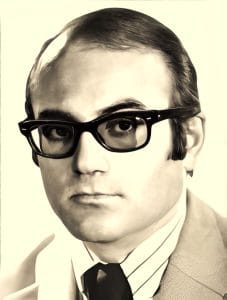
Kars Deputy Doğan Araslı