The Silent Hero of Space: Laz Scientist Behçet Açıkmeşe
This article tells the story of Behçet Açıkmeşe, a Laz scientist from Turkey who developed critical algorithms for NASA's Mars missions, and reflects on his journey from a mountain village to a leading figure in space exploration.
Dear Readers,
The phone rang unexpectedly. It was my nephew, who shares my surname. He didn't mince words:
“Uncle, I have a gentleman from America with me. When he saw my surname was ‘Hun,’ he asked, ‘Do you know Mücahit Özden Hun?’ His name is Behçet. He wants to talk to you.”
For a moment, I froze. “Behçet?” I thought to myself. Was he referring to that quiet Laz engineer I had met in Los Angeles twenty-two years ago, in the shadow of the Gulf War?
Behçet could have been one of the hundreds of students I sent to America for Master's and PhD studies while teaching GRE-GMAT courses at the Turkish-American Association in Ankara; I had so many names in my memory... But the fact that he hadn't forgotten my surname after all these years and was still asking about me left an indescribable warmth in my heart.
Then lights flashed in my mind: that barbecue party in Los Angeles, the lonely evenings of immigration, that quiet Laz young man walking the corridors of NASA in Los Angeles... And today, the name behind the Mars landing algorithms that have left their mark on world space literature. The memory flowing through my veins suddenly became clear: “Behçet Açıkmeşe.” That humble engineer had now transformed into a scientific hero, shedding light on humanity in the darkness of space. And I, with the surprise greeting of an old friend, felt my heart beating fast, right in the middle of this bridge built between past and future.
***
Like the Fırtına Stream flowing silently through the deep valleys of the Black Sea, Behçet Açıkmeşe from Ardeşen carved his own path without making a sound. His journey from the mountain village where he grew up speaking Laz to the algorithms that landed on Mars is both a story of science and belonging... Behçet Açıkmeşe is a name that Ardeşen, one of the misty mountains of the Black Sea, silently gifted to the history of world science.
Our paths crossed with Behçet Açıkmeşe in 2003, in Los Angeles. Both of us had come to the USA as immigrant students, like two rivers flowing into the same sea from different directions. I had completed my MBA degree at Wharton Business School in 1995. Afterwards, I returned to Turkey and conducted field research and interviews for my book “Iğdır Sevdası” between 2000 and 2002. When my book was published in March 2002, I was in Germany, with my sisters.
That same year, I had divorced my American-Chinese wife, and was left with an indescribable fatigue and resentment. It was a period in my life dominated by aimlessness. A Hungarian friend I knew from my Paris years was living in Los Angeles. He invited me with the dream of developing a business project together. I accepted. On March 20, 2003, the day I set off from Frankfurt to Los Angeles, the world was plunging into a different crisis: the Second Gulf War had begun. Markets were in turmoil, and uncertainty had permeated every area.
I stayed with my Hungarian friends for a while. There were big ideas, big projects, but the market was scattered, and so was my soul.
In America, it's a tradition; social bonds are often formed at a barbecue party. That's where I met Behçet Açıkmeşe. A bond was immediately formed between us. The loneliness of immigration, concern for homeland issues, sensitivity to the cultures we were born and raised in... We had a lot in common.
After a while, I left my Hungarian friends. That's when Behçet hosted me in his home with great sincerity. I was a guest in his humble home in Los Angeles for a week. During the day, I worked a temporary job, and in the evenings, Behçet and I had long conversations. We talked about the state of Turkey, the distance between science and politics, our identities, our languages.
What impressed me most was his genuine attachment to his Laz identity. He championed the Laz language, and the thought that this ancient language might disappear in a few generations was like a silent lament in his heart. As our conversation continued, he handed me a Laz dictionary. As I carefully turned the pages, I remembered the neglected reality of my own mother tongue, Kurdish. Behçet, with a determined expression, argued that the state should protect Laz and other local languages. He had given his daughter a Laz name; even this was his silent but determined resistance.
The fact that we both came from different paths and were talking about Laz and Kurdish, our homeland and human dignity on an American evening, became a light for me in the darkness of that period.
WHO IS PROF. DR. BEHÇET AÇIKMEŞE?
Ardeşen is a place steeped in the richness of nature, but one that hasn't been able to fully convey this richness to the world. People from here are usually "silent but deep." Loyalty to Laz identity, a sense of humor, and an upright stance are the cornerstones of the Ardeşen character.
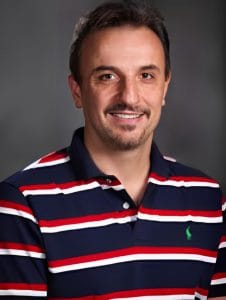
Behçet Açıkmeşe was born in 1970 in Ardeşen, Rize, to a family of Laz origin. Due to his father's civil service, he spent his childhood in various regions, completing primary school in Ünye, Ordu, and high school at Samsun Anatolian High School. After graduating from Middle East Technical University (METU) with a degree in Civil Engineering in 1992, he went to the USA for his master's and doctoral studies. He successfully completed his master's in mechanical engineering and his doctorate in aerospace engineering at Purdue University. Following his academic education, he specialized in space technologies and autonomous control systems, directing his career in this direction.
In 2003, Behçet Açıkmeşe began working in the guidance and control analysis group at NASA's Jet Propulsion Laboratory (JPL) in California. It was around this time that I had the chance to meet him.
During his approximately ten years at JPL, Behçet Açıkmeşe worked on advanced space projects such as satellite formation flying, asteroid and comet flyby operations, as well as planetary landing systems.
During this process, he developed new mathematical methods to solve autonomous navigation and landing problems for spacecraft; thanks to one of these, the "lossless convexification" technique, previously difficult-to-solve optimal control problems became real-time computable, enabling pinpoint landings on planetary surfaces.
JPL's research provided a significant innovation by paving the way for NASA to use precise landing technologies in future missions. Behçet Açıkmeşe was part of the team for the Mars Science Laboratory (MSL) mission sent to Mars, and was the name behind the critical algorithms developed for the EDL (Entry, Descent, Landing) process of the Curiosity rover, which landed on Mars on August 6, 2012.
Specifically, during the "sky crane" phase, he designed the guidance and control system necessary to direct the rocket-powered landing vehicle that lowered Curiosity to the surface to a safe distance. As Curiosity was being lowered to the surface by crane cables, at an altitude of approximately 20 meters, Açıkmeşe's algorithm activated, moving the upper landing stage away with the help of thrusters. In this way, the rocket crane crashed at a safe point 650 meters away from the surface, without falling near Curiosity, and the vehicle was undamaged. Behçet Açıkmeşe's colleagues at JPL even humorously suggested naming the artificial crater created by the rocket module "Behçet Crater." I think they should have not only suggested it but also given the deed to Behçet Açıkmeşe.
When NASA's Perseverance rover was lowered to the surface by crane cables during its landing on Mars on February 18, 2021, the algorithms developed by Behçet Açıkmeşe ensured that the landing stage flew safely away after releasing the vehicle during this "sky crane" maneuver. The "fly-away" algorithm developed by Behçet Açıkmeşe was so successful that it was adapted and used for the Perseverance vehicle, which landed on Mars on February 18, 2021, after the Curiosity mission in 2012.
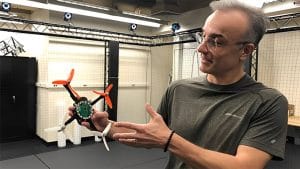
The goal was to land at least 200 meters away from the landing zone; indeed, Curiosity's landing stage crashed at a distance of 650 m, and Perseverance's landing stage crashed at a distance of 700 m in a controlled manner.
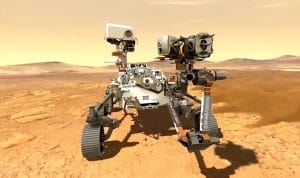
The Perseverance spacecraft that went to Mars, using Prof. Behçet Açıkmeşe's algorithm.
***
Seattle and Ardeşen are like two sister cities that speak the language of rain and know every shade of green. Both cities receive abundant rainfall throughout the year and stand out with their lush nature. Seattle's forested structure on the Pacific coast resembles Ardeşen's green geography surrounded by mountains on the Black Sea coast. Furthermore, both have areas where the sea and mountains intertwine, suitable for outdoor activities such as hiking and water sports. In this respect, although they are located on different continents, they are two geographies similar in their understanding of living intertwined with nature.
Thus, in 2013, Behçet Açıkmeşe left JPL in Los Angeles and settled in Seattle, USA, where he began working as a faculty member in the Department of Aeronautics and Astronautics at the University of Washington. Behçet Açıkmeşe, who currently holds the title of professor at this university, conducts research on autonomous systems and optimization-based control techniques. The real-time computing algorithms developed in his laboratory provide solutions to challenging problems such as spacecraft making their own decisions during missions (e.g., instantly determining their landing trajectory).
MOTHER TONGUE LAZ AND FAMILY
Prof. Dr. Behçet Açıkmeşe encountered his mother tongue, Laz, in his childhood. Due to his father's job, he grew up with his family in various districts of Adıyaman, Siirt, and Sinop; during summer holidays, he returned to his hometown of Ardeşen. Therefore, his connection with Laz was limited to a few months of summer holidays, and although he internalized the language, he did not have the chance to practice speaking it fluently. Despite this, his sense of belonging to the Laz identity and language always remained strong.
This connection is also evident in the names he gave his children. Behçet Açıkmeşe has two daughters, and the first name of both is Laz. He named his elder daughter "Teona"; this word, frequently encountered in Ardeşen, means "field of light" in Laz. His younger daughter's name is "Mira"; in Laz, it means "face." Since his wife is Chinese, second names of Chinese origin are also added to both daughters' names: Teona Lei and Mira Mei. Thus, two different cultures come together in a graceful balance within the names.
AND A JOKE...
One day, NASA officials came to the Black Sea and found Temel the Laz.
“You're the first human to go to Mars, what do you want?” they asked.
Temel thought, “I want two things,” he said. “One is Laz börek, and the other is Behçet Açıkmeşe's algorithm.”
NASA was surprised: “We understand the Laz börek, but what will you do with the algorithm?”
Temel replied:
“Well, if Behçet Açıkmeşe's algorithm is there, I'll land safely on Mars... but how I'll get back, I don't know!”
And so they say, Temel is still on Mars... but he's in good spirits!