The Wealth of Nations: Humanity
This essay argues that human capital, particularly education and a strong sense of responsibility, is the true wealth of nations, rather than traditional economic indicators, and includes humorous anecdotes from Iğdır.
Dear Readers: Fundamental economic concepts such as inflation, foreign exchange, growth rate, unemployment, interest rates, etc., have become a part of our daily lives. It seems there is no one among us who doesn't eagerly follow daily exchange rates. We often hear, "The price of a liter of gasoline is this much, a gram of gold is this much, the dollar is this much..." In such times, there is a tendency to pin our hopes on a certain party, a certain politician, a certain institution. As if everything will improve if different parties and different leaders come to power. Opposition parties seize this opportunity, winking and saying, "Give us a chance, and we will save you." Don't worry, even if you try all the parties, the result will be more or less the same. This is because, today, no political ideology in our country brings up the HUMAN factor, which is the true indispensable element of economic wealth. Yet, today, the foundation of the wealth of nations is neither oil, nor foreign currency, nor gold reserves, nor the outdated concept called 'productivity'. The sole source of the wealth of nations is now only HUMANITY. Nations must make the biggest investment in EDUCATION. Raising individuals with a high sense of responsibility should be the primary priority not only for nations but for all humanity. Societies composed of individuals who perform their duties properly and have a high sense of responsibility always endure. Economic variables have always existed in different forms throughout history and will continue to exist. In other words, a PERFECT society in economic terms will always remain a utopia (a dream). It is not possible for us to prevent economic upheavals. However, the most important force that will sustain society in such times is for employees to be individuals with a high SENSE OF RESPONSIBILITY. After the Great Earthquake of February 6th and the General Elections, inflation has accelerated in our country. Prices are constantly rising, and the disarray in the market is shaking social balances. In such times, the only thing we want to see is the presence of employees with a high sense of responsibility, who do not turn this situation into an opportunity, and who perform their assigned duties properly and without delay. It is essential for employees to perform the duty entrusted to them properly, without discrimination based on race, religion, language, age, gender, etc. Also, in such times, it is particularly important for managers in both the public and private sectors to delegate authority correctly and assign tasks to competent individuals. I would like to give an example: South Korea's area is one-seventh of Turkey's. A fierce civil war took place on the peninsula between 1950 and 1953. Millions of people died. The country's economy was devastated. South Korea launched an Education Mobilization in 1980. It prioritized education and people as the most important investment. South Korea, which is 95% dependent on foreign sources for minerals and oil, rose to become the world's 13th largest economy thanks to innovation (invention) and the unique technologies it developed. It quickly reaped the rewards of its investment in people and education. Today, South Korea dominates world markets with its giant companies such as Hyundai, Samsung, Kia, LG, and Posco (Iron and Steel). The wealth of nations has changed over centuries. I would like to briefly summarize this: MERCANTILIST ECONOMY Mercantilism is derived from the French word "mercantalisme," meaning "merchant mentality." The mercantilist approach in economics gained importance from the 16th century onwards. According to this doctrine, which continued until the 18th century, if states wanted to increase their economic and political power, they should set the basic principle of increasing the amount of gold and silver in the country. In other words, the more gold and silver reserves a country has, the richer it is. In short, mercantilism is an economic policy designed to maximize exports, acquire gold and silver in exchange for goods sold, and thus constantly increase gold and silver reserves for a strong economy. CHANGING ECONOMY AND IMPORTANT ECONOMISTS The science of economics begins with the Scotsman Adam Smith. We can list the important theorists of economic systems from Adam Smith to the present day as follows: ⁕ Adam Smith (1723-1790) Scottish ⁕ David Ricardo (1772-1823) Dutch-born Jew ⁕ Karl Marx (1818-1883) German-born Jew ⁕ John Maynard Keynes (1883-1946) English ⁕ Milton Friedman (1912-2006) American-born Jew As you noticed, these five famous economists, in a sense, came into the world in a chain reaction, one after another, and examined the sources of economic wealth with their new theories. ADAM SMITH AND LIBERAL ECONOMY
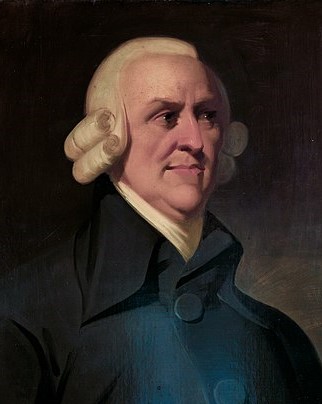
Adam Smith The fundamental principle of Adam Smith's economic thought is the concepts of unlimited freedom and the invisible hand. According to him, while individuals maximize their own interests, that is, while people struggle for their individual interests, an "invisible hand" in a sense puts things in order, and the best result is achieved as a society. For this reason, Adam Smith advocated that there should be no state intervention in the economy. This understanding gained meaning with the phrase "Laissez Faire," meaning "Let them do." With his understanding of freedom in economics, Adam Smith opposed the mercantilist thought that preceded him, which was based on protectionism, and advocated liberalization in both the political and economic arenas.
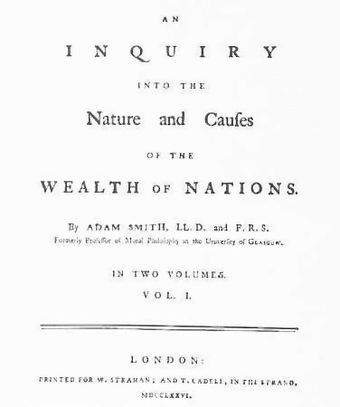
Adam Smith's most important book, "The Wealth of Nations" DAVID RICARDO
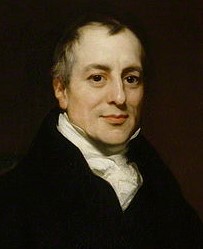
David Ricardo David Ricardo introduced the "labor-value" theory to the science of economics. While Adam Smith explained the value of a good by the amount of labor used for its production, i.e., the number of workers, Ricardo departed from this understanding, explaining the value of a good by the amount of labor used in its production. Karl Marx took this definition from Ricardo a step further, formulating the "Surplus-Value" theory. Ricardo also argued that states could benefit from the "Comparative Advantage" principle. He emphasized that each country could produce a certain product or service more cheaply than other countries and should take advantage of this. KARL MARX
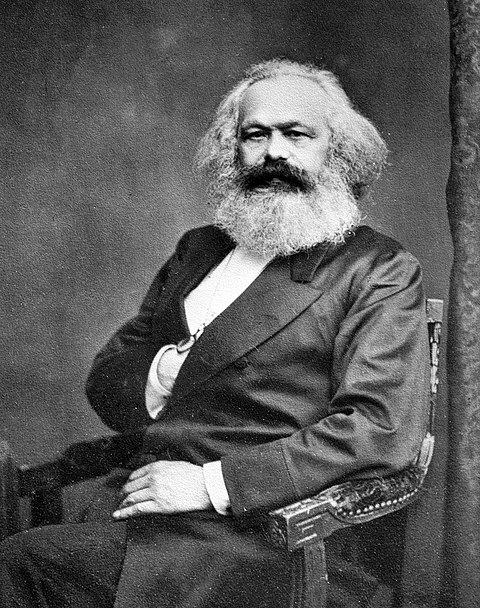
Karl Marx
Karl Marx bases his explanation of the general structure of societies on class struggle. According to Marx, there is a continuous, irreconcilable conflict between the ruling class (employers) who control production and the propertyless working class (workers). However, this conflict will end if the proletariat (working class) seizes power by force. Marx expresses the individual and humanity as products of social conditions. If we want to change humanity, we must change social conditions. For this reason, Karl Marx believes that the salvation of humanity is possible with socialism, which will end the exploitation of labor (the employer's theft of surplus value). This will be achieved through the dictatorship of the proletariat, i.e., complete state control. JOHN MAYNARD KEYNES
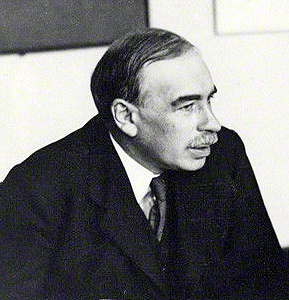
John Maynard Keynes
Keynes is, in a sense, a synthesis of Adam Smith and Karl Marx. He advocates a mixed economy where both the state and the private sector coexist. Keynes argues that the private sector alone will not be sufficient and calls for state intervention. He believes that state intervention is inevitable for full employment and price stability. Furthermore, according to Keynes, the government should reduce its spending and implement low taxes. MILTON FRIEDMAN
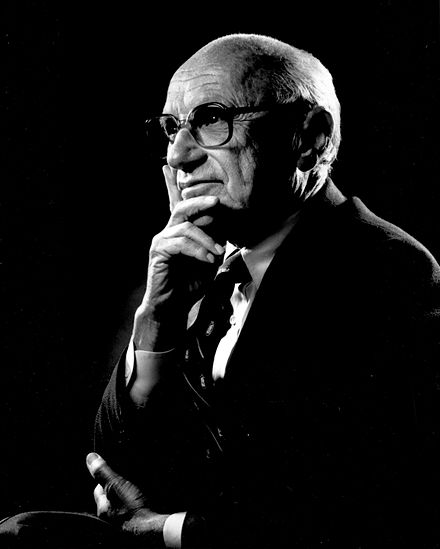
According to Friedman, most economic instabilities are monetary in origin. Therefore, he argues that monetary policy is more effective than other economic tools. Friedman expresses his view by saying, "Inflation is always and everywhere a monetary phenomenon." Friedman sees the main cause of inflation in the unnecessary and excessive increase of the money supply by governments. CONCLUSION: History proves to us that economic variables will always exist. Economic models will follow one another. Ups and downs are inevitable. In such times, the only force that will increase the country's resilience is the HUMAN factor. Today, we know that a public or private sector employee who does not perform their assigned duty properly is committing THEFT OF SURPLUS VALUE due to union rights and job security. In the 19th century, Karl Marx emphasized the "THEFT OF SURPLUS VALUE" by employers. However, today, employees commit "THEFT OF SURPLUS VALUE" by wasting time, with the understanding that they cannot be fired anyway. The country's economy suffers its greatest loss in this sense. The only way to prevent this is to invest in education and raise HUMANS with a high sense of responsibility. ANECDOTE…. ANECDOTE…. ANECDOTE… ANECDOTE…. ANECDOTE… ANECDOTE…. THE FEDORA In the 1950s, the fedora became fashionable in Iğdır. The town's notables, wealthy individuals, and bureaucrats competed to wear fedoras. The influence of foreign films watched at the Aras Cinema (1948), jointly operated by Aziz Güney and Ali Orkun, was undoubtedly undeniable in this. Hamit Hun also put on an expensive fedora. His biggest problem was that when he went to the city club or coffeehouse, someone would cleverly swap his fedora for theirs and steal it. Hamit Hun had grown tired of buying an expensive fedora every time. In the early 1950s, one day, Hamit Hun went to visit his relatives in Doğubayazıt with his fedora. He was almost the only one in the district wearing a fedora. Everyone else wore other hats. The townspeople kept looking at Hamit Hun and whispered among themselves: "Ez texmîn dikim ew fileh e" (I think he must be a non-Muslim). Hamit Hun, who was devout, was disturbed by these insinuations. Towards evening, he went to visit a relative. The house was crowded. One of them found the fedora strange and spoke sharply: "Mr. Hamit, give up this fedora that Christians wear. It is not appropriate for our religion!" Hamit Hun couldn't stand it: "Oh, I can't understand you people. When Atatürk issued the Hat Law (1925), you said, 'It's an infidel's work,' and didn't wear it, even rebelled. Now you all wear hats. Don't worry, soon you will all wear fedoras like me. My only request is, when you come to Iğdır, don't swap your fedoras with mine!" According to legend, after that day, the fedora became fashionable among the notables and leading figures of Doğubayazıt. WHO DID I VOTE FOR? Hamit Hun had cast his vote. As he returned home, his Kurdish friends asked curiously: "Mr. Hamit, who did you vote for?" "For the Kurd!" "Destê we xweş be!" (Well done!) His Azeri friends also asked: "Mr. Hamit, who did you vote for?" "For the Azeri!" "Well done, kirve!" In the evening, Hamit Hun's Azeri and Kurdish neighbors came to his house. They were confused. The Azeri neighbor stepped forward: "Mr. Hamit, you told me you voted for the Azeri, but my neighbor says you voted for the Kurd. Which is true?" "When I cast my vote, I pray for the Azeri to win, but I vote for the Kurd. Sometimes I pray for the Kurd to win, but I vote for the Azeri. Now you tell me, who do I vote for?" RADIANT FACE In the 1960s, the mayor of Iğdır was Hüseyin Akbulut from the Justice Party. Hamit Hun was a staunch CHP supporter. Hacı Ömer Şark, a factory owner and one of Iğdır's leading notables, was also a staunch Justice Party supporter. In the summer months, Iğdır would be scorching hot. The heat would be so unbearable that shops would close for 3-4 hours, and people would stay indoors. Towards evening, the municipal watering tanker would tour the main and side streets, watering the roads, and a slight coolness would fill the district. People would then leave their homes and go back to the bazaar. However, since the side roads were dirt and gravel, the pressurized water from the tanker would cause a lot of dust during watering. For this reason, those who saw the watering tanker would run away to avoid the dust. It was getting dark. Hamit Hun was walking from home towards the bazaar. As he passed in front of Hacı Ömer Şark's factory, Hacı Ömer Şark, who was sitting comfortably on a chair in front of the factory, invited Hamit Hun for tea. As they drank tea and chatted, the watering tanker appeared in the distance. It was approaching, raising a cloud of dust. Hamit Hun wanted to move away. Hacı Ömer Şark spoke suggestively: "Mr. Hamit, there is a blessing even in the dust raised by the Justice Party Municipality." Hamit Hun was forced to stay put. The watering tanker passed by them, and both were covered in dust. Their faces were white with dust. When things calmed down, Hamit Hun finally composed himself, wiped his face with his handkerchief, and brushed off his clothes. At that moment, his eyes fell on Hacı Ömer Şark. His face was pure white. Hamit Hun was filled with fear, as if he had seen a ghost. Hacı Ömer Şark, seeing Hamit Hun's anxiety, asked: "Mr. Hamit, what happened, why are you looking at me like that?" "Hacı, you were right! There was a blessing in the dust of the Justice Party Municipality. Your face has become as white as light." THEY DON'T KNOW THE LANGUAGE In Iğdır of yesteryear, there were rows of houses with gardens. Sometimes, for some reason, neighboring women would have a verbal spat, shouting curses at each other from behind the wall. As Hamit Hun walked to the bazaar, the mutual verbal spat between two neighboring women had just begun: "Tike tike olasan!" (tike: piece, meaning "may you be torn to pieces!") "May your name be cursed!" "Seni görüm cavan ölesen!" (cavan: young, meaning "may you die young!") "May your children be orphans!" "May you be a widow!" "May you never see a good day!" "Görbagor olasan!" (görbagor: to perish, meaning "may you perish!") "May God bring you across people who don't know the language!" Hamit Hun walked through the curses. The last curse he heard, "May God bring you across people who don't know the language!" remained in his mind. He repeated this phrase a few times in his head. When Hamit Hun reached the city center, a group of three French tourists appeared before him. Hamit Hun, with his posture and attire, gave the impression of having lived in Europe. The French surrounded Hamit Hun, showering him with questions in French. Hamit Hun sweated with discomfort, barely managing to escape from them. Then, a group of English tourists appeared. They also surrounded Hamit Hun, showering him with questions in English. Hamit Hun sweated with discomfort, barely managing to get away. Finally, he found a coffeehouse and sat down to drink tea. A deaf-mute relative from the mountain villages, seeing Hamit Hun, happily sat at his table. He tried to communicate with Hamit Hun using hand gestures. Hamit Hun couldn't make sense of it, he sweated, raised his hands in the air, "Oh God! Today, I became a victim of the curse, 'May God bring you across people who don't know the language!' Hopefully, next time, the curse, 'May you be a widow!' will come true." ARCHAEOLOGICAL SHEEP In Iğdır, near Taşlıca Village, there is a historical structure from the Anatolian Seljuk period, once known simply as "Caravanserai" by the public, and today referred to as "Ejder Caravanserai." In the 1960s, the Caravanserai was in ruins. Its roof had collapsed, and its walls were on the verge of collapsing.
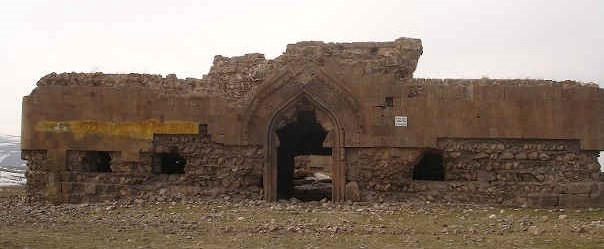
Ejder Caravanserai in the 1960s Hamit Hun, who was interested in history and archaeology, whenever he visited his relatives in Taşlıca village, would pass by the Caravanserai, feel sad about its ruined state, and as soon as he returned to Iğdır, he would write to the District Governorship requesting its repair. However, one district governor would come, and another would leave. He would get no results. To be honest, no one cared. It was the 1960s. One day, a new district governor arrived in the district. Hamit Hun accompanied the district governor, helping him visit historical sites and plateaus. When they arrived at the Caravanserai, the District Governor was saddened by what he saw: "Mr. Hamit, we must repair the Caravanserai!" "No, Mr. District Governor! Taşlıca village, a little further on, belongs to my tribe. The Caravanserai is a resting place for my tribe's sheep. Shepherds protect the sheep in the caravanserai from the midday heat, rain, and hail." "But that's not right, Mr. Hamit! This is a very important historical structure! It's not a barn!" "Well, as you deem appropriate, sir!" Hamit Hun said this, perhaps hoping that the Caravanserai would be repaired. Time passed. No repairs were made. The District Governor was also reassigned. As the District Governor was about to leave Iğdır, he shook hands with his friends who came to see him off. When it was Hamit Hun's turn, he extended his hand: "Mr. Hamit, seeing you reminded me of the Caravanserai. Unfortunately, we couldn't repair it! It remained a barn." "Mr. District Governor, seeing you also reminded me of the Barn. Thank God, there were no repairs. My tribe will be able to use the caravanserai as a barn. Thus, we will continue to raise sheep of high historical and archaeological value for our country and homeland." THE BATH ATTENDANT'S DIVAN It was a sunny spring morning. Hamit Hun was walking from his house towards the bazaar. On such a beautiful day, Hamit Hun involuntarily hummed a couplet from the famous poet Fuzuli's ghazal: Beni candan usandırdı cefâdan yâr usanmaz mı Felekler yandı âhımdan murâdım şem’i yanmaz mı (Meaning in contemporary Turkish: My beloved has tired me to death, will she not tire of cruelty? The heavens burned from my sigh, will the candle of my desire not yet burn? Will I not attain my wish?) The neighborhood residents walking to the bazaar with Hamit Hun had heard a small part of the couplet. They thought Hamit Hun was angry at someone and muttering to himself. They asked curiously: "Mr. Hamit, who has tired you to death?" "Who else! Fuzuli!" "Who is this Fuzuli?" Hamit Hun was inwardly annoyed at the neighborhood residents who didn't know the great Fuzuli: "The bath attendant! Every time he scrubs me so hard that I get tired of my life." "Oh! Oh! Don't let that man scrub you again." "I'm helpless. The man has a huge divan (an anthology of his poems)." The neighborhood residents understood the word "divan" as "sofa." "Mr. Hamit, don't lie on that man's sofa again. You'll lose your life, I swear!"